
This post contains affiliate links. We may earn a small commission when you buy through our links — at no extra cost to you.
If snoring has turned your bedroom into a nightly battle, you’ve probably already bought a gadget or two that ended up in a drawer—mouth guards that hurt, strips that peeled off, pillows that felt like bricks. The real problem isn’t that these products don’t work; it’s that they weren’t matched to your actual snoring cause or comfort tolerance.
The biggest mistake we see is quitting too soon. Many snoring aids—especially mouth guards, chin straps, and positional devices—need a break-in period of a few nights for your body to adjust. Jaw soreness, funny sleeping positions, or minor skin irritation often fade, but if you bail after one bad night, you’ll never get to the relief.
This guide focuses on that fit: matching the right type of aid to how you snore and how you sleep, so you can pick something you’ll actually use through the entire night. From adhesive strips to a simple clip-on ball, we’ve surfaced the ones that real users can tolerate long-term, not just the ones with big marketing claims.


Best for Nasal Congestion Snorers
Breathe Right Nasal Strips
Key Features
- Type: Adhesive nasal strip
- Target Snoring Cause: Nasal congestion
- Fit & Comfort: Hypoallergenic, clear strips
- Reusability & Durability: Disposable, 44 strips
- Ease of Cleaning: No cleaning required
- Price: Budget
Breathe Right Extra Strength strips lift the sides of the nose, widening nasal passages to improve airflow and reduce snoring caused by congestion or colds. The clear, hypoallergenic material stays discreet and requires no break-in period — effects are immediate. For anyone whose snoring stems from a stuffy nose, this is the most straightforward fix available.
The strips’ grip depends heavily on skin preparation. On clean, dry skin they stay put through the night, but oily or moist surfaces can cause peeling before morning, and some residue may remain after removal. A quick wash and dry before application resolves most adhesion issues.
Best suited for people who snore primarily due to nasal congestion, allergies, or temporary breathing difficulty — and want a drug-free, portable option without a bulky device. Not meant for snoring that originates from mouth breathing or sleep apnea, nor for those with very sensitive skin prone to adhesive reactions.
Pros
- Immediately reduces snoring and improves breathing by opening nasal passages without medication.
- Clear, hypoallergenic material allows daytime or travel use without drawing attention.
- Consistent quality across a large user base ensures dependable performance for nasal-congestion snorers.
Cons
- Adhesive may peel off during the night on oily or moist skin, and residue can be difficult to remove.
- Can cause irritation for users with very sensitive skin.
An affordable, immediate tool for nasal-congestion snorers — effective when skin prep is part of the routine, with a tradeoff that’s manageable for most.
Best for Severe Snorers, Durable
Somnofit-S Mouth Guard
Key Features
- Type: Boil-and-bite mouth guard
- Target Snoring Cause: Oral airway collapse (jaw)
- Fit & Comfort: Boil-and-bite custom fit, 40% smaller
- Reusability & Durability: Durable biomedical polymer, long-term
- Ease of Cleaning: Rinse and air-dry
- Price: Premium
FDA-cleared, Swiss-made, and 40% smaller than typical mouth guards, this boil-and-bite appliance tackles severe snoring that nasal strips can’t address. The adjustable fit is easy to set up, and build quality holds up over time. Jaw pain, tooth pressure, and gum soreness can surface during the break-in period — a trade-off that not everyone tolerates. It’s best for heavy snorers without TMJ issues who are prepared for a week of adjustment.
Pros
- Noticeable snoring reduction from the first night
- High build quality and sturdy materials
- Easy boil-and-bite molding and setup
Cons
- Jaw pain, tooth pressure, or gum soreness can occur during initial weeks; some users stop using it.
A durable, FDA-cleared mouth guard that can quiet severe snoring, as long as you’re willing to push through a sore jaw for the first week — if not, the top pick’s immediate comfort is a better match.
Best for Back Snorers Only
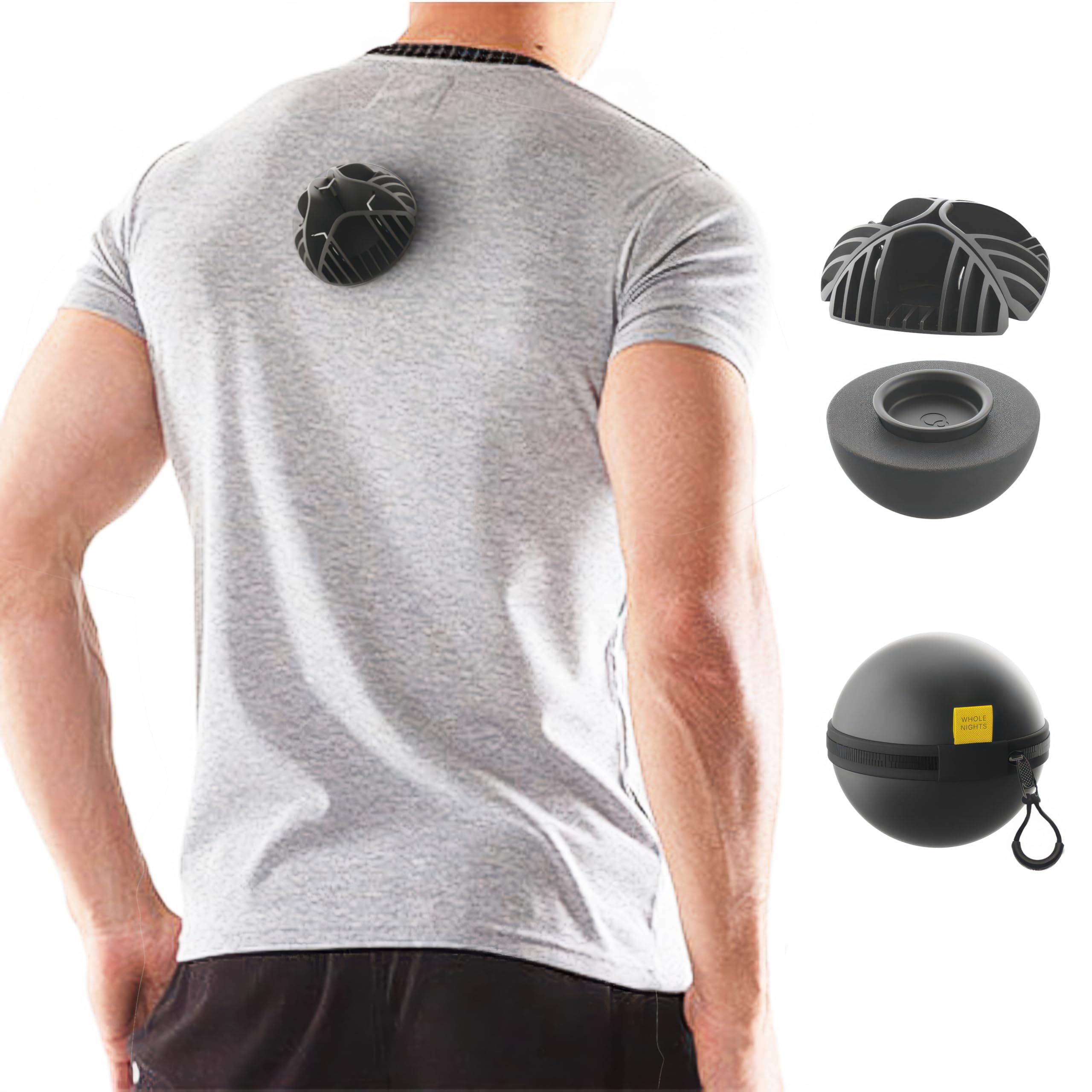
Calma Clip v2
Key Features
- Type: Clip-on positional ball
- Target Snoring Cause: Back sleeping (positional)
- Fit & Comfort: Soft foam ball, secure clip
- Reusability & Durability: Reusable, washable foam
- Ease of Cleaning: Wipe clean
- Price: Mid-Range
The Calma Clip v2 offers a minimal, reusable alternative to the classic tennis-ball-in-a-pocket trick. Instead of needing a specific shirt, its soft foam ball attaches with a plastic clip to any snug top, keeping you off your back all night. The approach delivers strong snoring elimination for those whose throat vibrations only happen when supine. Expect a brief adjustment period while your body learns to stay on its side—light discomfort fades after a few nights. This device works only for confirmed back-only snorers; side or stomach snorers will see no benefit.
Pros
- Nearly erases snoring for back snorers by preventing supine sleep.
- Clips onto any close-fitting shirt in seconds—no separate garment or laundry routine.
- Stays securely positioned all night without shifting.
Cons
- Adapting to side sleeping can cause minor discomfort during the first few nights.
- Only effective for back snorers; side or stomach snorers cannot benefit.
For a confirmed back snorer tired of adhesive strips or mouthguards, this clip-on ball is a fair-priced, travel-friendly way to silence the night—as long as you’re ready to spend a few nights adjusting to your side.
Best for Mouth Breathers, Cpap
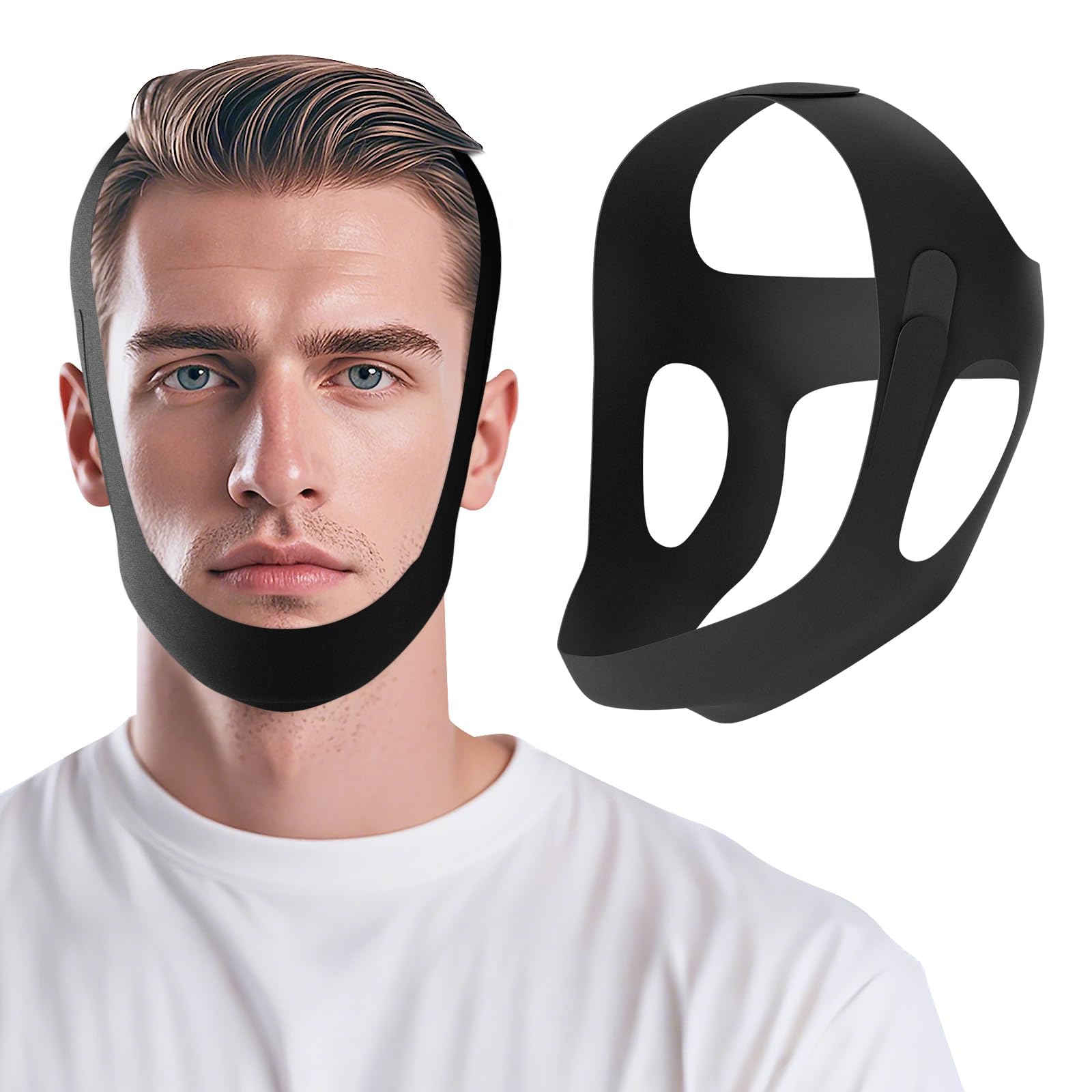
OHALEEP Chin Strap
Key Features
- Type: Adjustable chin strap
- Target Snoring Cause: Mouth breathing
- Fit & Comfort: Seamless 0.7mm, 4-sided adjust
- Reusability & Durability: Reusable, machine-washable
- Ease of Cleaning: Machine washable
- Price: Budget
This chin strap focuses on mouth breathing rather than nasal airflow, providing a soft, gentle hold that works alongside CPAP therapy or on its own. The seamless 0.7mm spandex blend is breathable, leaves no marks, and stays comfortable through the night. It’s best for open-mouth snorers and CPAP users seeking a gentle alternative to rigid chin straps. However, the one-size design can fit loosely on smaller heads, causing the strap to ride up or shift. For those it fits, the washable, adjustable construction offers consistent jaw support without stiffness.
Pros
- Stops mouth-breathing snoring by gently supporting the jaw and keeping the mouth closed
- Soft, seamless design prevents facial marks and stays comfortable all night
- Adjustable four-sided fit and machine-washable material make nightly use simple
Cons
- Can fit loosely on smaller heads, causing it to ride up or cover the mouth
A comfortable, effective, and machine-washable chin strap at a budget-friendly price, with the only real caveat being fit for petite heads.
Best for Side Sleepers
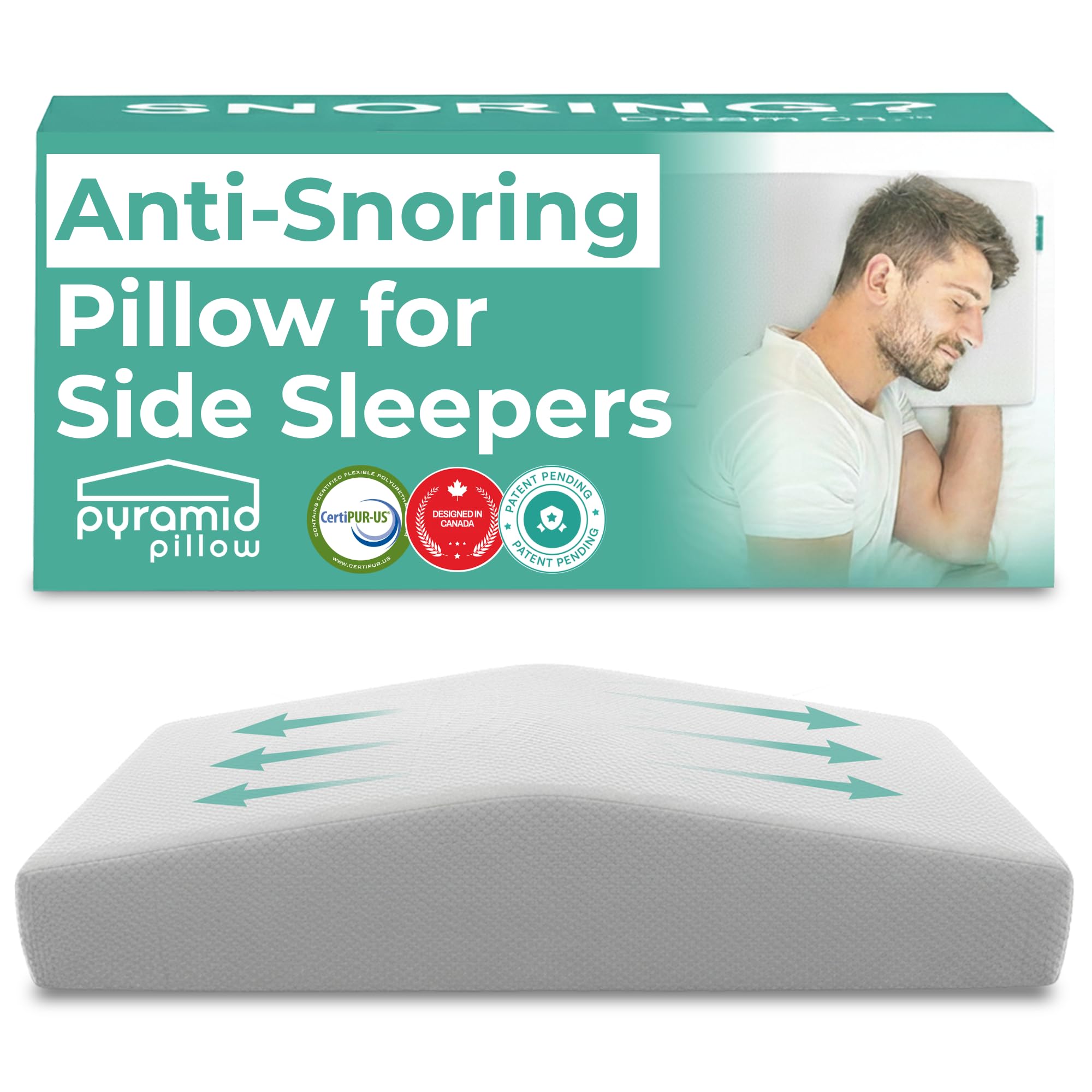
Pyramid Pillow Anti-Snoring
Key Features
- Type: Inclined memory foam pillow
- Target Snoring Cause: Head and neck alignment
- Fit & Comfort: Medium-firm memory foam
- Reusability & Durability: Long-term pillow, washable cover
- Ease of Cleaning: Removable washable cover
- Price: Mid-Range
The Pyramid Pillow offers an appliance-free route to snoring reduction — a memory foam pillow with a 9.5° incline that aligns the head and neck to keep airways open for side sleepers. Unlike the top pick’s adhesive strips, this pillow works passively: no application, no residue, just sleep.
It’s designed for side sleepers looking for a simple, long-term replacement for their regular pillow, especially if head elevation eases their snoring. The medium-firm memory foam may feel overly hard for those who love a soft pillow, and back sleepers won’t see the same benefit. Firmness can cause occasional morning headaches. For side sleepers who prefer sturdy support, comfort and snoring reduction hold up well.
Pros
- Snoring volume drops notably for side sleepers who benefit from head elevation
- Memory foam delivers a comfortable balance of support and gentle give
- Removable machine-washable cover simplifies upkeep
Cons
- Firmness can lead to morning headaches for those accustomed to soft pillows
For side sleepers who tolerate a firm feel, the Pyramid Pillow turns snoring management into something you don’t have to think about — just sleep on it.
Best for Sensitive Skin, Value
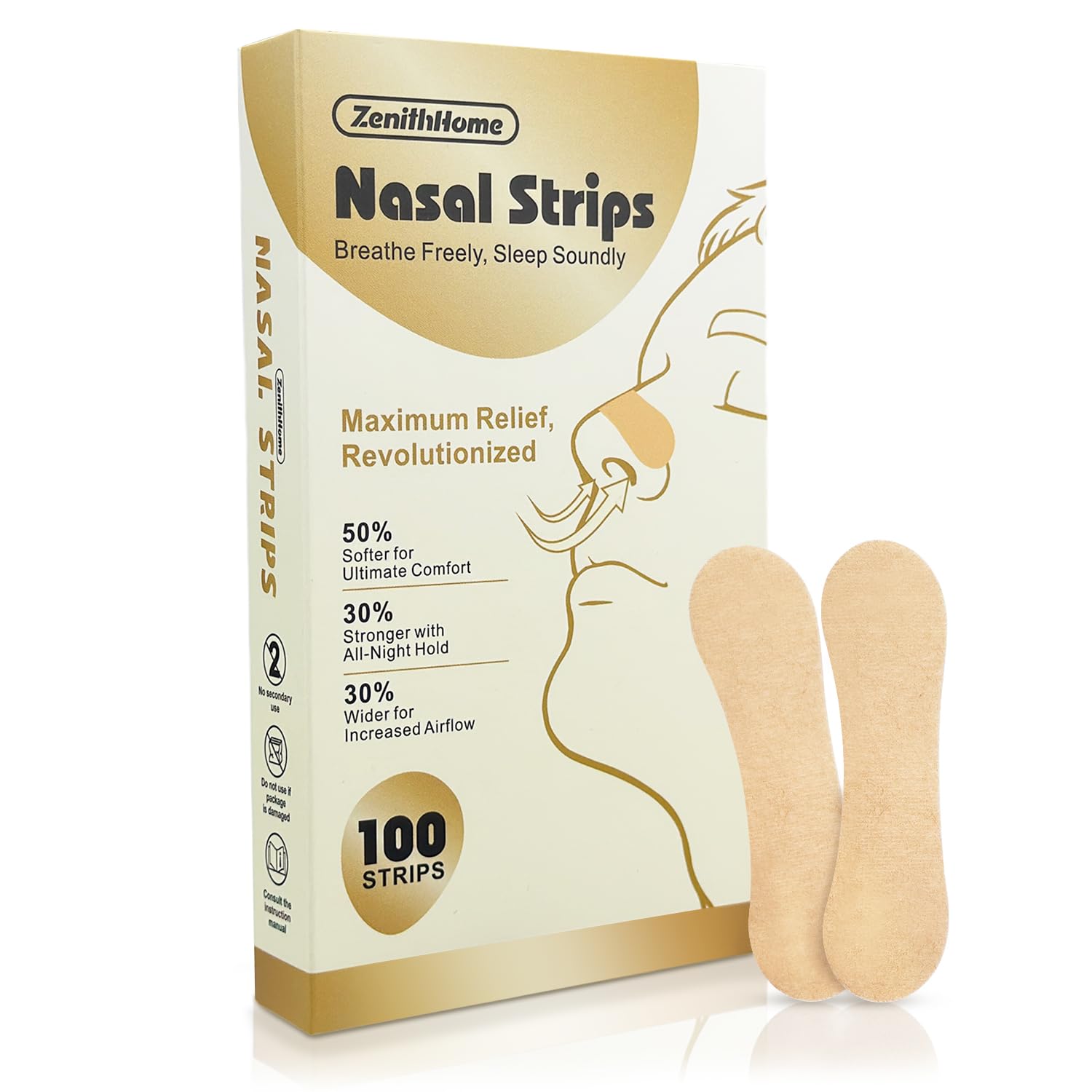
ZenithHome Nasal Strips
Key Features
- Type: Adhesive nasal strip
- Target Snoring Cause: Nasal congestion
- Fit & Comfort: Sensitive-skin adhesive, wider bands
- Reusability & Durability: Disposable, 100 strips
- Ease of Cleaning: No cleaning required
- Price: Budget
The ZenithHome strips combine exceptional adhesion with gentle removal, making them a standout for sensitive skin. Breathing improvement is consistent across use. Long-term reliability across nightly wear is unconfirmed, placing them behind the established top pick for those who prioritize a proven history over a higher strip count.
Pros
- Stays firmly in place all night without causing skin irritation
- Opens nasal passages for noticeably easier breathing and restful sleep
Cons
For budget-conscious nightly users who want a high strip count and prioritize skin comfort over brand longevity, this is a smart alternative — provided you’re okay trading decades of market feedback for a better per-strip price.
Best for Contoured Strip Fans
ZzzQuil Sleep Nasal Strips

Key Features
- Type: Adhesive nasal strip
- Target Snoring Cause: Nasal congestion
- Fit & Comfort: Contoured 4-way pull, gentle hold
- Reusability & Durability: Disposable, 52 strips
- Ease of Cleaning: No cleaning required
- Price: Budget
ZzzQuil’s contoured 4-way pull lifts nasal passages with a shape that sidesteps the flat, linear pull of strips like Breathe Right. The result is effective for snoring relief and better sleep. Adhesive reliability can be a gamble—strips may peel off before morning. This makes them a reasonable alternative for users who dislike the feel of flat strips but don’t demand airtight all-night adhesion.
Pros
- Matches or beats name-brand strips in reducing snoring and opening nasal breathing.
- Improves overall sleep quality by easing nighttime breathing.
Cons
- Adhesion can fail before morning, even on clean, dry skin.
The larger 52-count box suits those who prefer ZzzQuil’s contoured shape over flat strips and can tolerate occasional adhesion hiccups.
Best for Back Snorers, Cheap
Snoring Solutions T-Shirt

Key Features
- Type: Positional T-shirt
- Target Snoring Cause: Back sleeping
- Fit & Comfort: Cotton, snug compression
- Reusability & Durability: Reusable, machine-washable
- Ease of Cleaning: Machine washable
- Price: Budget
The back pocket stops back sleeping, directly reducing position-dependent snoring, and the cotton fabric makes it comfortable for nightly use. However, the shirt can shrink noticeably in length after washing—ordering a size up is necessary to avoid a poor fit. The Calma Clip offers a more precise and adaptable positional solution for those who want a closer fit.
Pros
- Prevents back sleeping to reduce position-dependent snoring, no electronics required.
- Comfortable cotton fabric integrates easily into a nightly routine.
Cons
- Length may shrink up to 3 inches after washing, affecting overall fit.
A low-tech fix for confirmed back snorers who don’t mind sizing up and prefer a simple T-shirt approach.
Best for Budget Nasal Dilator
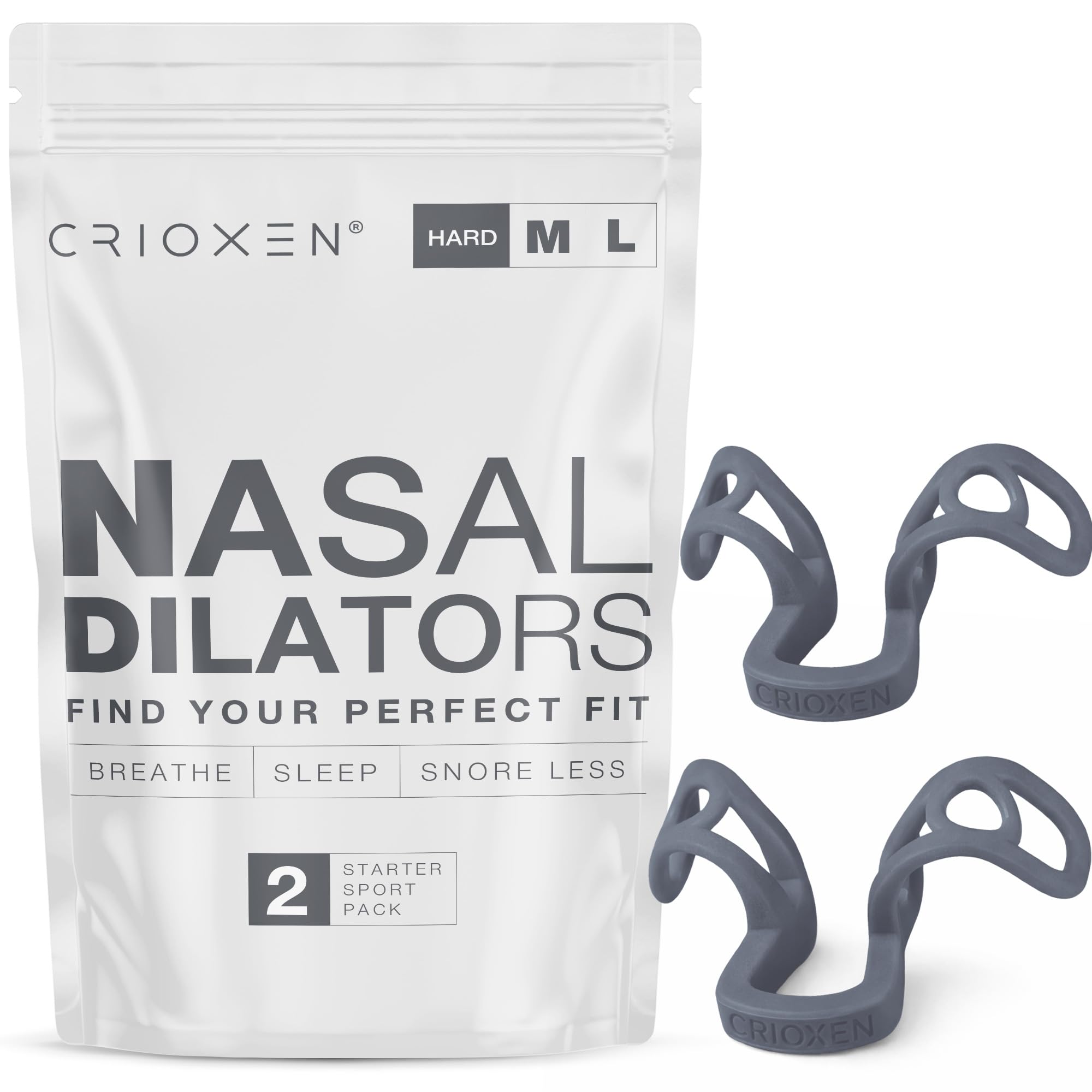
Crioxen Nasal Dilators
Key Features
- Type: Internal nasal dilator (hard)
- Target Snoring Cause: Nasal airflow restriction
- Fit & Comfort: Hard silicone M/L size
- Reusability & Durability: Reusable 2-pack
- Ease of Cleaning: Rinse with soap
- Price: Budget
These hard silicone inserts widen nostrils for noticeably easier nighttime breathing and stay in place once set. The reusable design keeps per-use cost very low. Some users experience initial rawness or tenderness during the adjustment period, which pulls them out of the top tier for sensitive nostrils or first-time users. For those who can tolerate a brief break-in, the airflow payoff is strong.
Pros
- Noticeable increase in nasal airflow supports easier breathing and snoring reduction.
- Secure fit stays in place through the night for most users once correctly positioned.
Cons
- Initial nostril tenderness or minor skin rawness may occur during the adaptation period.
If you don’t have sensitive nostrils and can handle a short adjustment, these dilators deliver meaningful airflow improvement at minimal cost.
Best for Reusable Dilator Fans
SleepRight Breathe Aids

Key Features
- Type: Internal nasal dilator (reusable)
- Target Snoring Cause: Nasal airflow restriction
- Fit & Comfort: Silicone internal prongs
- Reusability & Durability: Reusable 4 count, 20+ days each
- Ease of Cleaning: Clean with mild soap
- Price: Mid-Range
The SleepRight Breathe Aids deliver a strong airflow boost, claiming 58% more breathing room, and avoid the adhesive of external strips. However, sharp silicone edges can cause internal nostril sores or discomfort, making it a love-it-or-hate-it option. It’s best reserved for adhesive-intolerant users with moderate congestion who don’t mind internal devices.
Pros
- Opens nasal passages to ease breathing and reduce snoring effectively.
- Adhesive-free silicone eliminates skin irritation and is reusable for 20+ nights per aid.
Cons
- Can cause internal nostril soreness and pressure pain from sharp silicone edges.
A workable choice for adhesive-intolerant nasal breathers who don’t mind internal dilators and are willing to risk some soreness — but first-timers with sensitive noses should steer clear.
Best for Ultra-Budget Curious
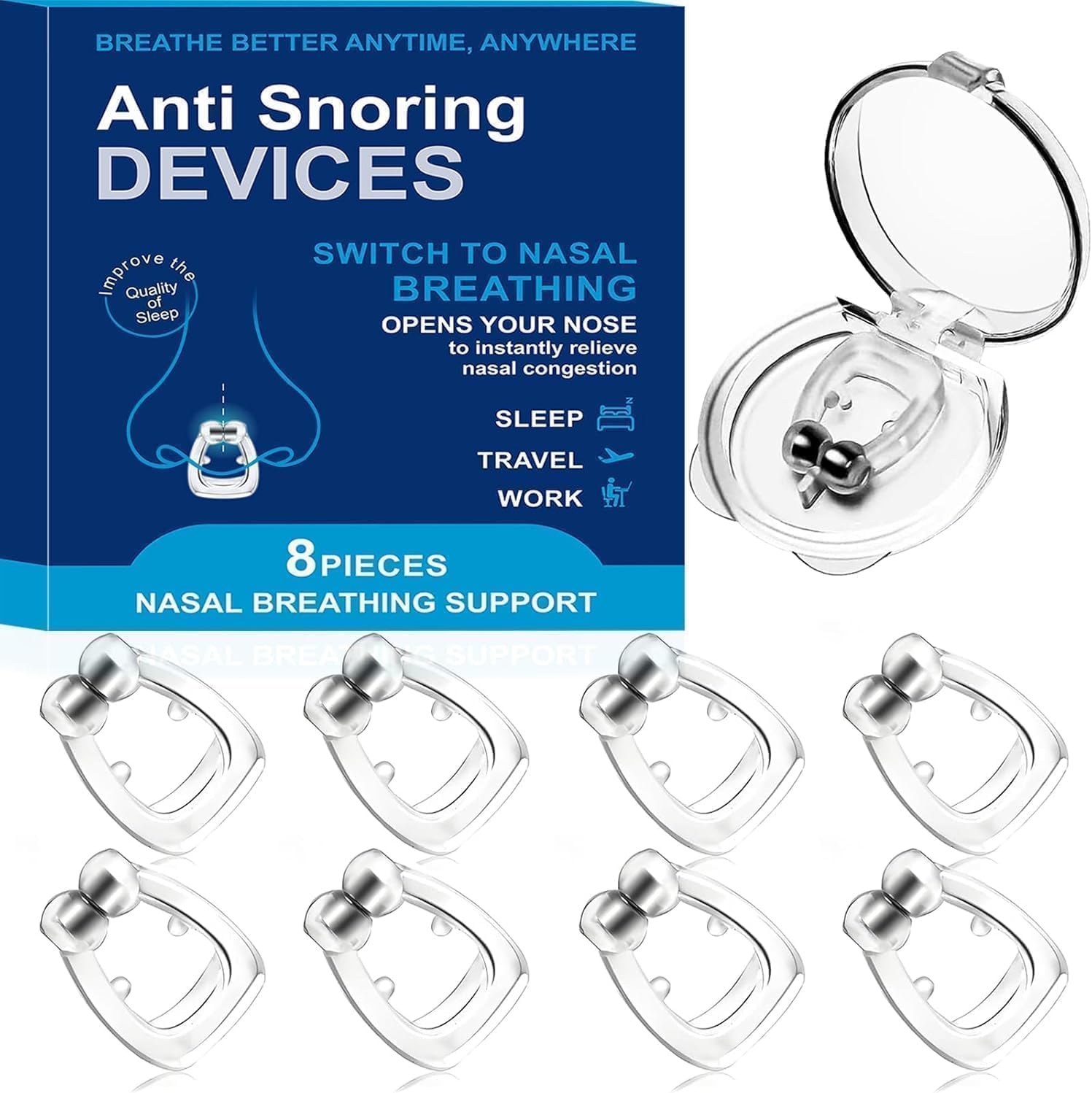
Aikaplus Magnetic Nose Clip
Key Features
- Type: Magnetic silicone nose clip
- Target Snoring Cause: Nasal airflow widening
- Fit & Comfort: Magnetic adjustable tip, 8 pcs
- Reusability & Durability: Reusable 8 pieces
- Ease of Cleaning: Wipe clean
- Price: Budget
The magnets are designed to gently pull nasal passages open, and some may notice easier breathing. Effectiveness is inconsistent, however, and the clip may provide no snoring reduction at all. It’s a low-risk experiment for budget shoppers, not a replacement for strips or dilators.
Pros
- Nostril widening may improve nasal airflow for some users.
- Compact and travel-friendly, with eight pieces included.
Cons
- Effectiveness varies — may not reduce snoring at all.
For those with mild snoring and curiosity about magnetic therapy, this set offers a no-risk trial at a budget price; anyone needing consistent relief should consider nasal strips or dilators instead.
How to Choose
The single most important step is matching your snoring trigger—nasal congestion, mouth breathing, or back sleeping—to the right device type, because using the wrong aid for your cause guarantees it won’t work.
Types of Snoring Aids
Snoring aids fall into broad categories: external nasal strips that pull nostrils open, internal dilators that widen passages from inside, mouth guards that pull the lower jaw forward to open the airway, chin straps that keep the mouth closed, positional aids that prevent back sleeping, and pillows that elevate or align the head. Each targets a distinct mechanism.
The biggest mistake is assuming all snoring is nasal and buying strips. If you breathe through your mouth while sleeping or only snore on your back, a strip will do almost nothing. Identify your trigger first—observe whether you sleep with your mouth open, wake up with a dry mouth, or snore only on your back—and choose accordingly.
Fit and All-Night Comfort
Even the most effective snoring aid is useless if you can’t sleep with it. Mouth guards, for instance, advance the jaw and often cause tooth or jaw soreness for the first 3–7 nights, but this usually subsides. Positional aids like a clip-on ball or a tennis-ball shirt feel strange initially, but your body quickly adapts.
Hidden discomfort can derail a purchase: chin straps that fit loosely on smaller heads slide up over the mouth, nasal dilators with sharp edges cause sores, and some pillows are simply too firm. Always check fit for your anatomy; if a product comes in only one size, verify return policies before committing.
Matching Your Snoring Cause
Snoring stems from three main causes: a blocked or narrow nasal passage, a collapsed soft palate or tongue that vibrates when mouth breathing, or lying on your back causing the tissues to obstruct the airway. Identifying which one applies to you is the key to picking correctly.
A practical test: if you snore only on your back, start with a positional aid like the Calma Clip. If your nose feels stuffy or you have a cold, a nasal strip or dilator will likely help. If you wake up with a dry mouth and your partner says you sleep with your mouth open, a chin strap or mouth guard addresses the oral airway. Combining a strip with a chin strap sometimes works for mixed causes, but don’t jump to complex combos until you’ve tried one type on its own.
Reusability and Durability
Nasal strips are disposable—use once and toss—with per-night costs of a few cents. They’re great for travel or occasional use but generate waste. Chin straps, dilators, mouth guards, and positional aids are reusable for months or years, but they require a higher upfront investment and regular cleaning.
Durability varies enormously: a cheap silicone dilator may tear after a few weeks, while a Swiss-made mouth guard can last years. A washable cotton positional T-shirt may shrink after a few washes, altering fit. If you’ll use the aid nightly, invest in the most durable option your budget allows to avoid frequent repurchases.
Ease of Cleaning
Mouth guards and internal nasal dilators go inside your body and need daily cleaning—rinse with soap and water, and let air-dry. Neglecting this can lead to bacteria buildup and bad breath or even oral infections. Chin straps, shirts, and pillow covers are machine-washable, making weekly maintenance simple.
Nasal strips require zero cleaning, which is a major convenience if you’re prone to forgetting hygiene routines. However, that convenience comes at the cost of daily waste. Choose based on your willingness to add a 2-minute cleaning step to your nighttime routine.
FAQ
Why does my anti-snoring mouth guard hurt my jaw and teeth?
Most mouth guards work by protruding the lower jaw to keep airways open, which places pressure on teeth and jaw joints. This often causes soreness for the first 3-7 nights. To minimize it, gradually increase wear time: start with an hour before bed, then wear all night. If pain persists beyond a week or is sharp, stop using it and consult a dentist—it might not fit your bite.
How can I make nasal strips stay on all night?
Wash your nose with soap and water to remove oil, then dry thoroughly before applying the strip. Avoid moisturizers or lotions on the nose area. Press firmly for 10-15 seconds, focusing on the edges. If strips still peel off on very oily skin, use an alcohol wipe before application to degrease.
Do nasal strips help with snoring from a deviated septum?
They can partially help by mechanically widening the nasal passages externally, improving airflow. However, a deviated septum is a structural issue that may require more internal expansion than strips can provide. If strips don’t reduce snoring, consider a nasal dilator or an ENT evaluation for surgical options.
How long does it take to get used to sleeping with an anti-snoring chin strap?
Most people adapt within 2-3 nights. The light pressure keeping the mouth closed can feel odd initially, but soft, seamless straps minimize that. If you wake up feeling claustrophobic, try wearing it for a 1-hour nap first. A properly fitted chin strap shouldn’t cause jaw pain—if it does, it’s too tight or not the right style for you.