
This post contains affiliate links. We may earn a small commission when you buy through our links — at no extra cost to you.
Many sleep-tracking smartwatches promise advanced AI insights, yet their batteries tap out before you even wake up — forcing you to choose between sleep data and a charged watch for the day ahead. The real problem isn’t a lack of features; it’s that a dead watch can’t track anything.
Battery endurance is the unsung hero of overnight monitoring. If you have to remove the watch every evening to charge, those sleep stages, readiness scores, and SpO2 trends disappear. The right smartwatch stays on your wrist through multiple nights, capturing the full story without adding a charging chore to your bedtime routine.
This guide spotlights watches that balance genuine multi-day stamina with sleep insights that go beyond a simple graph — so you wake up to a full charge and a clear picture of your recovery, not a black screen.



Best for All-Day Wellness Tracking
Garmin vívoactive 5
Key Features
- Battery Life: Up to 11 days
- Sleep Tracking Depth: Score, coaching, nap detection, HRV
- Health Sensor Suite: HR, stress, SpO2, Body Battery
- Comfort & Weight: Lightweight, comfortable
- Ecosystem & Subscription: Free, no subscription
- Price: Mid-Range
The vivoactive 5 delivers sleep tracking that goes beyond basic stage logging: a daily sleep score, personalized coaching, and automatic nap detection give you a clear picture of recovery without paying extra for insights. This depth of analysis is backed by a wrist-based HRV status that helps contextualize your overnight data against stress and exertion—useful for anyone adjusting training or managing sleep hygiene.
Real-world battery life routinely hits seven to ten days, which means the watch stays on your wrist through multiple nights without needing a mid-week charge. That endurance is the difference between a sleep tracker that works and one that becomes a daytime-only device. The AMOLED display is bright enough for outdoor workouts, and the lightweight design makes it easy to forget you’re wearing it overnight.
This watch targets health-conscious buyers who want actionable wellness metrics—Body Battery, stress trends, HRV—without a subscription and without the daily charging that undermines continuous sleep monitoring. The tradeoff: Bluetooth connectivity can be inconsistent with some phones, occasionally requiring a re-pair, and a small number of units may arrive with battery capacity that drains faster than expected. Neither issue breaks the experience for most users, but they are worth checking during the return window.
Pros
- Sleep tracking with score, coaching, and nap detection, no subscription required
- Routinely lasts 7–10 days on a charge, enabling uninterrupted overnight monitoring
- Lightweight and comfortable for 24/7 wear, including sleep
- Holistic health dashboard with Body Battery, HRV, stress, and fitness age
Cons
- Bluetooth connection can drop or fail to sync with certain phones
- Battery capacity in a few units may degrade or arrive below specification
If consistent sleep and health monitoring without subscription lock-in is your priority—and you can accept occasional Bluetooth hiccups—the vivoactive 5 delivers that core mission better than any other smartwatch in its price range.
Best for Samsung Phone Users
Samsung Galaxy Watch 7
Key Features
- Battery Life: Up to 30 hours
- Sleep Tracking Depth: AI Energy Score, apnea detection
- Health Sensor Suite: HR, ECG, BIA, SpO2
- Comfort & Weight: Slim, 40mm AMOLED
- Ecosystem & Subscription: Samsung Health, free
- Price: Premium
Samsung packs its most personalized sleep and wellness AI into this compact watch. The Energy Score uses overnight data—sleep stages, heart rate variability, and activity—to serve a single daily readiness figure, while the FDA-cleared sleep apnea detection monitors for breathing disruptions. No other Galaxy Watch combines these AI-driven insights, giving Samsung Health users a depth of health feedback that the older Galaxy Watch 6 Classic doesn’t offer.
The 40mm AMOLED panel hits 2000 nits and stays sharp under direct sun, all wrapped in a slim, lightweight body that wears more like a bracelet than a gadget. A Cream colorway and clean lines keep it modern and unobtrusive, making it easy to dress up or down.
This watch is built for Samsung smartphone owners who want cutting-edge sleep analytics and can adapt to a daily charging rhythm. Battery life is the defining tradeoff — with overnight sleep tracking enabled, a full 24-hour stint is unlikely without a morning top-up. If uninterrupted multi-night monitoring matters, a longer-lasting wearable from the top pick tier eliminates that routine. Non-Samsung Android or iOS users lose core features like Energy Score and sleep apnea detection, so the watch stays firmly inside Samsung’s ecosystem boundary.
Pros
- AI-powered Energy Score and FDA-cleared sleep apnea detection offer personalized wellness insights.
- Deep Samsung ecosystem integration ensures smooth notifications and app connectivity.
- Bright 2000-nit AMOLED display housed in a slim, stylish 40mm case.
Cons
- Battery life demands daily charging, and a midday top-up may be necessary when sleep tracking is active overnight.
Samsung phone users ready to charge every morning will unlock the most advanced AI sleep insights in the Galaxy Watch family. For those who need multi-night sleep tracking without a midday top-up, a wearable with week-long endurance serves that mission better.
Best for Style-Savvy Budget Users
Amazfit Active 2 Premium
Key Features
- Battery Life: Up to 10 days
- Sleep Tracking Depth: Stages, BioTracker analysis
- Health Sensor Suite: HR, SpO2, stress
- Comfort & Weight: Leather strap, sapphire glass
- Ecosystem & Subscription: Zepp app, no subscription
- Price: Mid-Range
The Amazfit Active 2 Premium packs a material and display package that normally demands a much higher price. The sapphire crystal and included leather strap bring a polished, jewelry-like presence while the 1.32-inch AMOLED screen stays legible in direct sun at 2000 nits. Combined with up to 10 days of battery life, it sidesteps the nightly charging ritual that undermines continuous sleep tracking on many competitors, making it a practical overnight companion straight out of the box.
Health monitoring covers the full day without a subscription. Steps, heart rate, and SpO2 trends, along with sleep duration and light/deep/REM estimates, are captured and presented in a clean Zepp app. The watch handles multi-sport outdoor sessions with GPS maps and turn-by-turn navigation — features that are rare at this price — while feeling responsive and light on the wrist during daily wear.
This watch is for the style-conscious buyer who values premium build and multi-day endurance over clinical-grade sleep staging. Sleep stage differentiation may not have the rigorous validation of dedicated sleep trackers from Garmin or Fitbit, so it is better suited to spotting long-term patterns than diagnosing sleep disorders. Those who need deep integration with third-party health platforms will also hit a wall, as the Zepp ecosystem remains more self-contained than some alternatives.
Pros
- Premium sapphire glass and leather strap with 10-day battery at a mid-range cost
- Bright 2000-nit AMOLED display stays clear outdoors
- All-day activity and sleep tracking with no mandatory subscription
Cons
- Third-party app support is limited, which may restrict sharing health data outside the Zepp ecosystem
- Sleep stage classification may not match the precision of clinically validated trackers, so it works best for trend-watching rather than detailed analysis
If your priority is a sharp-looking smartwatch that tracks sleep trends reliably and lasts over a week without a charger, the Active 2 Premium delivers exceptional hardware value. For sleep stage accuracy that approaches clinical insight, the top pick — with deeper validated sleep coaching — remains the better choice.
Best for Fitbit Loyalists
Fitbit Versa 4
Key Features
- Battery Life: 6+ days
- Sleep Tracking Depth: Sleep Profile, Score, smart wake
- Health Sensor Suite: HR, SpO2, skin temp, stress
- Comfort & Weight: Lightweight, comfortable
- Ecosystem & Subscription: Google Health, Premium optional
- Price: Mid-Range
The Versa 4 balances a comfortable, lightweight design with a multi-day battery and built-in GPS, offering a more practical alternative to the sensor-heavy smartwatch in this lineup. Unlike the health-focused sibling that packs ECG and stress sensing, this model trims the clinical extras while keeping Fitbit’s core sleep tools and active zone minutes intact. The result is a watch you can wear continuously, track steps and overnight recovery, and leave the charger behind for most of the week.
This watch is built for Fitbit loyalists who check the app’s social feed, enjoy the Daily Readiness Score, and want a device light enough to wear around the clock. Casual fitness enthusiasts will appreciate automatic activity logging and the straightforward readiness guidance, which suggests whether to push or rest based on sleep and heart rate variability. Built-in GPS adds phone-free run and walk mapping for those who use those modes occasionally.
After the included 3-month Premium membership ends, the most revealing sleep breakdowns — Sleep Profile, detailed sleep stages, and the Readiness Score — move behind a subscription paywall. Separately, some units have become unresponsive after months of ownership, displaying a red X error that may require replacement. Registering the watch upon purchase and keeping proof of warranty can ease a potential claim.
Pros
- Lightweight, comfortable design that’s easy to wear day and night
- Multi-day battery life, commonly reaching 5-6 days between charges
- Reliable step and basic exercise tracking with Active Zone Minutes
- Built-in GPS and 40+ exercise modes for phone-free outdoor workouts
Cons
- Sleep Profile, Daily Readiness, and deep sleep insights require a Fitbit Premium subscription after trial
- Some units may stop responding or show a red X error after several months
For those already comfortable in Fitbit’s ecosystem who value sleep tracking and multi-day battery over advanced heart metrics, the Versa 4 remains a capable daily companion — just budget for the Premium subscription and be prepared to use warranty support if hardware issues surface.
Best for Professionals Wanting Analog
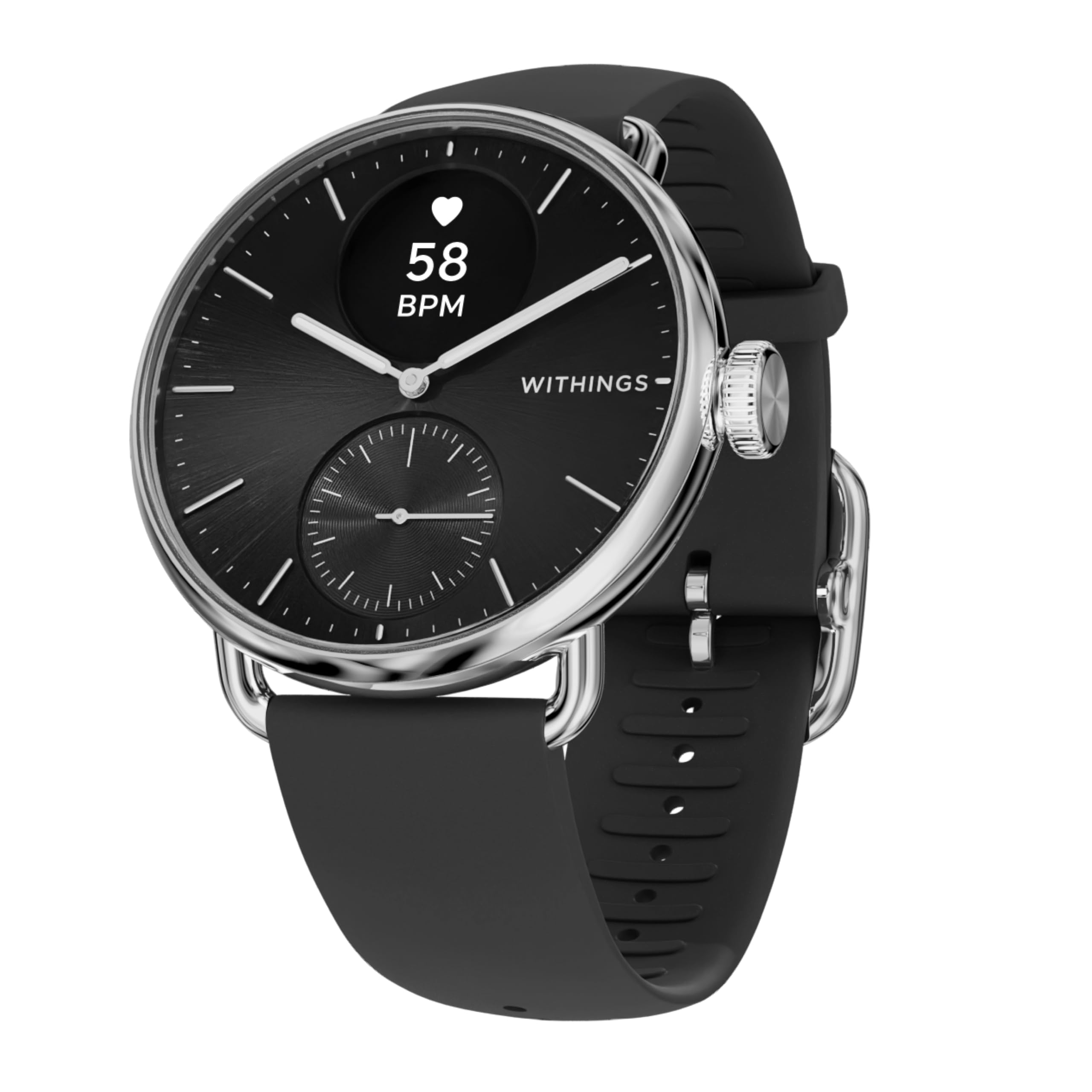
Withings ScanWatch 2
Key Features
- Battery Life: 30–35 days
- Sleep Tracking Depth: Stages, breathing tracking, Vitality Score
- Health Sensor Suite: Medical-grade ECG, HR, SpO2, skin temp
- Comfort & Weight: Classic analog design
- Ecosystem & Subscription: Withings app, Premium optional
- Price: Luxury
The ScanWatch 2 stands apart from everyday smartwatches by packing a medical-grade ECG sensor and a month-long battery into an elegant analog design. Its 0.63-inch OLED display only lights up when needed, preserving the understated look of a traditional dress watch while still delivering heart rate, SpO2, and skin temperature readings. Garmin’s vivoactive 5 may lead on sleep coaching, but no competitor matches this battery life in a form that passes for a classic timepiece.
Where the ScanWatch 2 compromises is in tracking precision. Sleep stage detection and step counts can differ noticeably from dedicated sport watches or chest straps — enough that data-minded users may find the gaps frustrating. The charging cradle also demands careful alignment; some units have shown inconsistent charging or battery drain, though the overall endurance means charging is a once-monthly event.
This hybrid is best suited to professionals and minimalists who want to monitor heart health and sleep patterns passively, without bright screens or constant notifications. Its small display limits interactivity, so it won’t replace a full smartwatch for messaging or navigation. Those who need highly accurate sleep staging or heavy fitness tracking should look at the vivoactive 5 instead; for a beautiful wristwatch that quietly tracks your health, the ScanWatch 2 is a distinctive alternative.
Pros
- Lasts a full month on a single charge, enabling uninterrupted sleep and heart rate tracking without nightly top-ups.
- Elegant analog design that looks like a classic watch, with medical-grade ECG capability for at-home heart health checks.
- Discrete health monitoring that doesn’t demand attention — no buzzing notifications or bright screen to disturb sleep or meetings.
Cons
- The charging cradle requires careful pin alignment and occasional restarts; some units may show rapid battery drain after charging.
- Sleep stage data and step counts can be inconsistent, with notable differences compared to dedicated fitness watches or chest straps.
Choose the ScanWatch 2 if you value a refined analog aesthetic and extreme battery life over granular sleep accuracy — it’s the only hybrid that quietly delivers medical-grade ECG in a non-smartwatch form.
Best for Latest Garmin Enthusiasts
Garmin vívoactive 6
Key Features
- Battery Life: Up to 11 days
- Sleep Tracking Depth: Score, coaching, smart wake, nap, HRV
- Health Sensor Suite: HR, stress, fitness age
- Comfort & Weight: Lightweight
- Ecosystem & Subscription: Free, no subscription
- Price: Premium
The standout addition on the vívoactive 6 is the smart wake alarm, which senses your sleep stage and vibrates gently within a set window to avoid waking you from deep sleep. This sits on top of refined sleep coaching that delivers sleep score, HRV status, and personalized guidance. Backed by up to 11 days of battery — and often two weeks in lighter use — and Garmin’s comprehensive running and multisport analytics, the watch feels like a meaningful step up for those who want the alarm nudge that the top-pick vivoactive 5 lacks.
Daily step and heart rate accuracy stays high, frequently matching chest strap readings more consistently than Fitbit or other wrist-based trackers. The AMOLED display stays bright outdoors, and the sleep insights provide actionable data like the sleep score and nap detection without any subscription. Battery endurance means multi-night sleep tracking is effortless, removing the common smartwatch weakness of dying mid-sleep.
This watch targets runners, triathletes, and fitness-focused users who treat sleep coaching as essential training input and want the gentle morning alarm. However, the interface can feel overwhelming at first, with settings buried in a dense menu system — first-time Garmin buyers should expect a learning phase. More critically, the price premium over the otherwise very similar vivoactive 5 is only worth absorbing if you’ll daily-drive the new smart wake alarm or value the latest operating system polish.
Pros
- Smart wake alarm gently vibrates at your lightest sleep phase, making mornings less jarring.
- Battery lasts up to 11 days and often reaches 2 weeks in real-world use, removing daily charging anxiety.
- Step count and heart rate tracking closely mirror chest strap data, surpassing common Fitbit accuracy.
Cons
- Garmin’s layered menu system can feel unintuitive for first-time users, requiring time to master.
The vívoactive 6 fits runners and multi-sport athletes who want the newest sleep coaching and a smart wake alarm atop Garmin’s training ecosystem; if those extras don’t excite you, the older vivoactive 5 provides the same foundational health tracking for less.
Best for Large Display Lovers
Samsung Galaxy Watch 6

Key Features
- Battery Life: 1–2 days
- Sleep Tracking Depth: Advanced Sleep Coaching, snore detection
- Health Sensor Suite: BIA, HR, ECG, SpO2, temp
- Comfort & Weight: 44mm large display
- Ecosystem & Subscription: Samsung Health, free
- Price: Premium
The 44mm AMOLED screen offers expansive, bright visuals for health dashboards, and the BIA sensor, heart rate, and sleep stage tracking deliver detailed wellness metrics. Battery endurance rarely exceeds two days, which means tracking sleep requires planning daily top-ups around your routine. For those seeking more advanced sleep AI and apnea detection, the Galaxy Watch 7 provides newer insights at a similar price.
Pros
- Expansive 44mm AMOLED display with sapphire glass provides clear, vivid health dashboards.
- Accurate sleep stage and heart rate monitoring for comprehensive wellness insights.
Cons
- Battery lasts 1–2 days, requiring daily charging that breaks overnight wear continuity.
- iOS compatibility is limited, missing full health features and syncing for iPhone users.
If a large, premium display matters more than multi-day battery life and you’re within Samsung’s ecosystem, the Galaxy Watch 6 remains a sharp health partner — especially if you don’t mind charging while you shower.
Best for Advanced Stress Monitoring
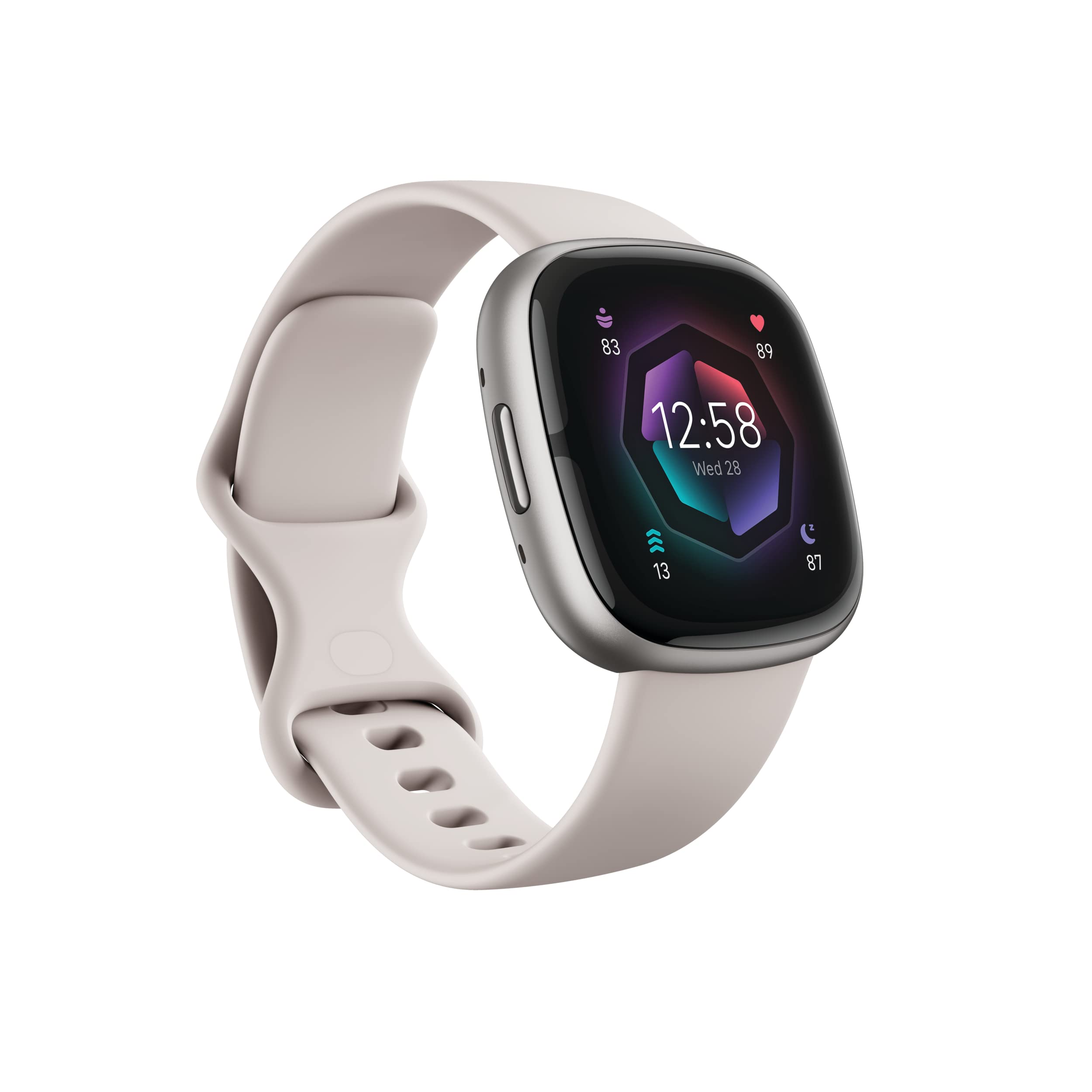
Fitbit Sense 2
Key Features
- Battery Life: 6+ days
- Sleep Tracking Depth: Sleep Score, smart wake, DnD mode
- Health Sensor Suite: ECG, cEDA stress, SpO2, skin temp
- Comfort & Weight: Sleek, comfortable
- Ecosystem & Subscription: Premium subscription optional
- Price: Mid-Range
The Sense 2 stands out with its continuous electrodermal activity (cEDA) sensor for all-day stress tracking and an ECG app for heart rhythm checks, wrapped in a slim, comfortable design that lasts up to six days on a charge. Sleep tools include a smart wake alarm and do not disturb mode, deepening Fitbit’s overnight insights. Hardware reliability can be inconsistent — watches may stop functioning or display a red X after a few months. Bluetooth syncing may also stumble, with occasional drops that interrupt data upload. Buyers who need set-and-forget dependability will find this a gamble; those willing to accept possible trade-offs for Fitbit’s unique stress-sensing features may still see value.
Pros
- Continuous cEDA sensor tracks all-day stress and provides a daily stress management score.
- Slim, lightweight design with multi-day battery life for comfortable overnight wear.
- On-demand ECG allows heart rhythm assessments directly from the wrist.
Cons
- Bluetooth may occasionally disconnect, causing sync interruptions and missed notifications.
- Hardware longevity can be limited — watches may stop powering on or show a red X after a few months.
The Sense 2 suits buyers who prioritize continuous stress sensing and on-demand ECG over absolute hardware consistency, and are comfortable with periodic sync troubleshooting.
Best for Budget Casual Users
Yoever Alexa Smart Watch

Key Features
- Battery Life: 7–30 days (~1 week)
- Sleep Tracking Depth: Basic sleep stages analysis
- Health Sensor Suite: HR, SpO2, stress
- Comfort & Weight: Basic build, lightweight
- Ecosystem & Subscription: GloryFit app, free
- Price: Budget
The Yoever Smart Watch packs Alexa voice control, Bluetooth calling, and a battery that lasts a week into a sub-$50 package. Setup is simple, and the 1.91-inch display makes health stats easy to read. For casual users wanting step counts, heart rate trends, and basic sleep duration, it covers the essentials without complexity. However, the sleep tracking relies on movement patterns rather than validated staging — fine for noticing rough overnight trends but not for clinical-grade analysis. Bluetooth connectivity can also drop, requiring occasional re-pairing, which interrupts notifications. This watch suits light wellness tracking and budget-minded buyers who prioritize calling and voice assistant features over precision sleep data.
Pros
- Built-in Alexa and Bluetooth calling at a budget-friendly price.
- Simple setup and intuitive interface for new smartwatch users.
- Solid step, sleep, and heart rate tracking for daily wellness routines.
Cons
- Sleep analysis is basic — suitable for tracking duration trends, not validated sleep stages.
- Notifications can drop and Bluetooth may need re-pairing in some cases.
A capable budget companion if you value voice assistant and call support over deep sleep metrics, and can tolerate occasional connection hiccups.
How to Choose
The single most important factor in a sleep-tracking smartwatch is battery endurance — a watch you have to charge every evening can’t track your overnight recovery.
Battery Life
Advertised battery claims often assume light use without always-on display or continuous sleep tracking. In reality, enabling sleep monitoring and overnight SpO2 can drain a watch 30–50% faster than the spec sheet implies. If a watch barely lasts 24 hours under ideal conditions, adding an 8-hour sleep session makes a midday recharge mandatory.
Look for a minimum of 4–5 days of real-world use. Multi-day endurance lets you forget about the charger and wear the watch through back-to-back nights, establishing a seamless baseline. A watch that dies before morning leaves you with a gap in your data and a dead device for the day.
Sleep Tracking Depth
Not all sleep tracking is equal. Basic watches only show rough light/deep/REM stages, often missing naps and waking moments. More advanced platforms deliver a sleep score, coaching insights, heart rate variability (HRV), and some even detect sleep apnea tendencies. The difference isn’t just data volume — it’s whether you learn why you feel tired or simply see a graph.
Accuracy can vary by brand. Algorithms tuned to a specific population may misinterpret your sleep if you’re a shift worker or an atypical sleeper. Trend-watching over weeks is more valuable than obsessing over a single night’s stages. Prioritize watches that show long-term patterns and connect sleep quality to daily readiness, stress, and recovery.
Health Sensor Suite
Heart rate accuracy is the foundation of sleep tracking — erratic readings produce misleading sleep stage estimates. Wrist-based optical sensors work well for most, but dark skin tones, tattoos, and loose bands can degrade accuracy. Additional sensors like SpO2 and skin temperature add context: low blood oxygen during sleep may flag potential breathing issues, though it’s not a medical diagnosis.
Electrocardiogram (ECG) and stress sensors like cEDA paint a fuller picture of your autonomic nervous system overnight. However, those extras often increase power draw, further pressuring battery life. Decide which metrics you’ll actually use — a watch with every sensor but one-day battery may end up on the nightstand, not your wrist.
Comfort and Weight
A watch you dread wearing to bed undermines the whole purpose. Weight, band material, and case thickness determine whether you’ll keep it on consistently. Slim designs under 12mm and soft silicone or leather straps make all-night wear nearly forgettable. A heavy, bulky watch can disrupt your sleep itself — you’ll fidget with it and wake more often.
The band matters as much as the watch body. Look for quick-release bands that let you switch between a sport strap for day and a softer band for sleep. Even a perfectly comfortable watch can become a distraction if the buckle digs into your wrist during side-sleeping.
Ecosystem and Subscription
Some brands gate deeper sleep analysis — like long-term trends, readiness scores, or detailed sleep profiles — behind a monthly subscription. For example, Fitbit’s most insightful sleep features require Fitbit Premium. Garmin and Amazfit provide full coaching without ongoing fees. Factor that recurring cost into your budget over the watch’s lifespan.
App usability also matters. A laggy or counter-intuitive phone app can discourage you from reviewing your sleep data. Look for platforms that clearly surface weekly and monthly trends, integrate with Apple Health or Google Health if needed, and don’t bombard you with upselling prompts for paid plans.
FAQ
Why does my Samsung Galaxy Watch battery only last one day with sleep tracking turned on?
Galaxy Watches pack a bright, pixel-dense AMOLED display and power-hungry AI features that run health algorithms continuously overnight. The always-on display and constant heart rate monitoring create a heavy drain. To extend runtime, turn off always-on display and limit notifications, but if you want multi-day endurance for uninterrupted sleep tracking, a Garmin or Amazfit with longer battery is the practical alternative.
How accurate is Garmin sleep tracking compared to Fitbit?
Both brands produce reliable sleep stage estimates for most users, but Garmin’s sleep coaching and HRV integration give more actionable insights. Fitbit’s Sleep Score is easy to understand and trend over time. In lab comparisons, Garmin’s algorithms tend to match polysomnography more closely, especially for deep sleep and wake detection, making it the stronger choice for data-hungry sleep optimizers.
Can a smartwatch with blood oxygen monitoring improve my sleep apnea detection?
An SpO2 sensor can spot chronic low oxygen trends overnight, and Samsung’s sleep apnea feature is actually FDA cleared as a screening tool. But no wrist-worn device replaces a formal sleep study. Use the watch data as a conversation starter with your doctor — if you see repeated dips below 90%, share that pattern. For diagnosed apnea, a CPAP machine remains the treatment, not a smartwatch.
Do I need a subscription to see my sleep score on Fitbit?
Basic sleep stage breakdown and the nightly Sleep Score are free, but Fitbit Premium (around $10/month) is required for deeper analysis like the Sleep Profile and daily Readiness Score. Garmin and Amazfit deliver comparable coaching and recovery metrics without any recurring payment, so if you want full insight without ongoing costs, skip the subscription ecosystem.