This post contains affiliate links. We may earn a small commission when you buy through our links — at no extra cost to you.
Many sleep trackers lock detailed analytics behind monthly fees, turning a one-time purchase into an ongoing expense. Others suffer from battery degradation that leaves you charging daily within months. The real challenge is finding a device that delivers accurate sleep stage data without either trap.
This guide focuses on the specific specs that matter: sensor quality, battery longevity, and the actual cost of ownership. Whether you prefer a ring or wristband, we highlight the trade-offs between upfront price and long-term value.



Best for Sleep Optimization, No Sub
RingConn Gen 2
Key Features
- Sleep Stages: Light, deep, REM
- HRV & Stress: HRV, stress, temp
- Battery Life: 10–12 days
- Form Factor: Ring
- Price: Premium
The RingConn Gen 2 is the first smart ring to include sleep apnea monitoring (AHI tracking) alongside detailed sleep stages, all accessible through a free app with no subscription required. Its thin, comfortable design fits under gloves or sheets without snagging, and the battery holds 10–12 days depending on finger size — the charging case extends that to over 150 days.
Sleep tracking is the ring’s strongest feature: it records light, deep, REM, and wake periods with consistency that rivals dedicated sleep bands. The apnea detection runs in the background and surfaces a daily AHI score, which is rare at this price point. Step and distance counts, however, can run high — especially during slower walking or household tasks — so the ring is best used for sleep and resting metrics rather than activity logging.
This ring is for anyone who prioritizes sleep quality and wants to keep an eye on breathing patterns without paying monthly fees. It’s not a training tool — athletes chasing recovery or strain scores will get more from a WHOOP band or a Garmin watch. Sizing requires care: the available sizes may not accommodate very small fingers, and a loose fit can compromise sensor accuracy.
Pros
- Sleep apnea monitoring with daily AHI score, no separate prescription needed
- All features accessible through free app — no subscription required
- Comfortable, thin profile that stays put during sleep and wears well under clothing
- Battery lasts 10–12 days per charge, with a case that holds months of juice
- Swim-proof to 100m, so it survives showers and pool laps without issue
Cons
- Battery longevity may shorten after several months of use — some units lose capacity faster than expected
- Step and distance tracking can over-estimate, especially during non-walking movement
If sleep monitoring is your priority and you want no subscription surprises, the RingConn Gen 2 delivers the most clinically relevant sleep data in a ring form factor at a competitive price.
Best for Budget Sleep Smartwatch
Amazfit Bip 6
Key Features
- Sleep Stages: Automatic stages, score
- Battery Life: 14 days
- Form Factor: Smartwatch
- Price: Budget
The Amazfit Bip 6 packs sleep stage analysis, sleep score, and nap detection that rival dedicated sleep wearables twice its price. Its automated tracking picks up naps reliably and the morning reports are detailed enough to guide habit changes — no subscription needed.
Where it pulls ahead of simpler bands like the Fitbit Inspire 3 is the 1.97" AMOLED screen, onboard GPS with free offline maps, and Bluetooth call handling. For runners who want turn-by-turn navigation without carrying a phone and still want solid sleep data, this is a strong alternative to screenless bands or rings.
The trade-off: some units have shown reliability problems within the first few months, and Bluetooth calling occasionally drops or requires re-pairing. If you primarily need sleep tracking and can live with the possibility of an early replacement, the Bip 6 delivers where it matters most — accuracy and battery life.
Pros
- Sleep stage accuracy and nap detection that matches pricier wearables
- Two-week battery on a single charge, plus rapid recharging
- Bright 2000-nit AMOLED display and built-in GPS with free maps
Cons
- In a quiet bedroom, occasional Bluetooth call pairing drops may be a nuisance — less noticeable for text-only users
- Some units stop functioning after several months, so expect possible variance
If sleep tracking is your priority and you’re comfortable with a smartwatch’s extra features — plus a small reliability gamble — the Bip 6 offers the best sleep data per dollar in this category.
Best for Entry-Level Sleep Tracker
Fitbit Inspire 3
Key Features
- Sleep Stages: Sleep score, stages
- HRV & Stress: Stress management
- Battery Life: Up to 10 days
- Form Factor: Wristband
- Subscription: Fitbit Premium optional
- Price: Budget
The Inspire 3 delivers a straightforward sleep and activity tracking experience at an entry-level price. It automatically logs sleep stages and provides a daily Sleep Score, while continuous heart rate monitoring with SpO2 adds health context. Step counting is notably consistent, and the device is comfortable for all-day wear. With 50m water resistance, it tracks swims, and the battery lasts up to 10 days, reducing charging frequency.
Setup is quick via the Fitbit app, and the interface is intuitive. However, connectivity between the tracker and phone can be intermittent – some users have experienced hiccups that require reconnection. In a small number of cases, the device has been noted to stop syncing or functioning after several months of use.
This tracker suits budget-minded buyers who want basic sleep and activity metrics without paying for advanced features. It’s also a natural fit for existing Fitbit users who want a low-cost companion. But if you need deep sleep analytics beyond a daily score or expect the device to last years without issues, consider a more robust option like the top-pick sleep ring, which offers sleep apnea monitoring and greater longevity.
Pros
- Solid step tracking and activity monitoring
- Good overall device quality and ease of use
- Up to 10-day battery life with 24/7 heart rate and SpO2
Cons
- Long-term reliability can be uncertain – some units have been reported to cease working or syncing after extended use
- Bluetooth sync between the tracker and phone may drop, requiring manual reconnection
A budget-friendly entry point into Fitbit’s ecosystem for basic step and sleep tracking – best for those who can tolerate occasional sync issues and uncertain longevity.
Best for Athlete Recovery Focus
WHOOP 5.0
Key Features
- Sleep Stages: Detailed stages, recovery
- HRV & Stress: HRV, strain, recovery
- Battery Life: 14+ days
- Form Factor: Screenless band
- Subscription: Required ($30/mo after 1yr)
- Price: Premium
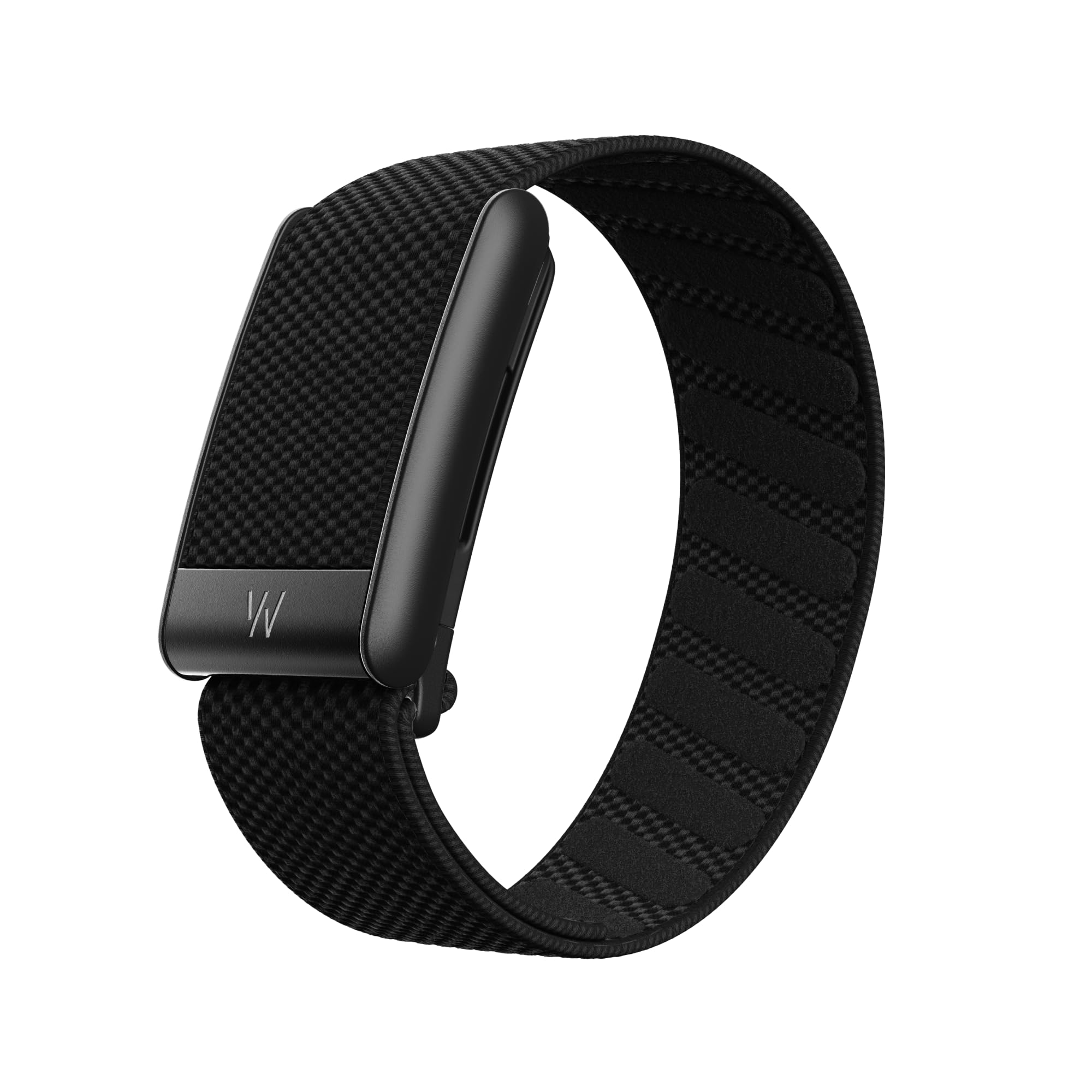
The WHOOP 5.0 focuses on training load and recovery rather than general sleep tracking, offering strain coaching and HRV-based readiness scores that go beyond what the top sleep ring provides. Its screenless, ultra-lightweight band stays out of the way during workouts and sleep, and the battery lasts over two weeks while being charged without removal.
This tracker suits fitness enthusiasts who want to optimize their training and recovery using daily strain targets and sleep-quality feedback. However, the initial purchase includes only a 12-month membership; after that, a $30 monthly subscription is required to keep the device functional. Heart rate and calorie-tracking consistency can vary during high-intensity exercise, which affects some of the calculated metrics.
Pros
- Detailed recovery score and sleep stage analysis help fine-tune training intensity.
- Lightweight, durable band with 14+ day battery that charges while worn.
- Coaching insights offer actionable guidance on strain, sleep, and recovery trends.
Cons
- Heart rate and calorie tracking can be inconsistent during higher-intensity workouts.
- Ongoing subscription cost after the first year adds significant long-term expense.
A powerful tool for athletes who will use its recovery and strain data daily — less justifiable for casual sleep-only buyers due to the recurring membership fee.
Best for Lifestyle Sleep Ring
Oura Ring 4
Key Features
- Sleep Stages: Stages, readiness score
- HRV & Stress: HRV, temperature, stress
- Battery Life: Up to 8 days, 5 typical
- Form Factor: Ring
- Subscription: $5.99/mo after 1 month
- Price: Luxury
The Oura Ring 4 combines a refined sleep-tracking app with a comfortable ring form factor that’s easy to wear all day and night. However, the RingConn Gen 2 offers similar sleep insights without a subscription fee, making it the better value for most sleep-focused buyers.
The app delivers detailed sleep stage analysis, a daily readiness score, and cycle tracking for women’s health, all presented in a clean interface. The AI Advisor adds personalized suggestions based on your trends, which Oura ecosystem users will appreciate.
This ring suits users already invested in the Oura ecosystem who prioritize style and readiness scores over total cost. The $5.99/month subscription adds up over time, the silver finish can show scratches from daily wear, and battery life can drop to daily charging after several months — trade-offs that are easier to accept if you value the polished app experience.
Pros
- Detailed sleep quality analysis and daily readiness scores help track recovery and rest.
- Comfortable for all-day and all-night wear with a slim, lightweight ring.
- Comprehensive women’s health tracking includes cycle predictions and ovulation insights.
Cons
- Silver finish can show scratches from daily wear.
- Ongoing subscription of $5.99/month after the first month adds to the total cost.
- Battery life can decrease noticeably after several months, requiring more frequent charging.
For buyers already in the Oura ecosystem who accept the added cost and care, this ring delivers refined sleep tracking. Others should consider subscription-free alternatives like the RingConn Gen 2.
Best for Extreme Battery, No Screen
SOUYIE DS10
Key Features
- Sleep Stages: Light, deep, REM
- HRV & Stress: HRV, stress, BP
- Battery Life: 20–30 days
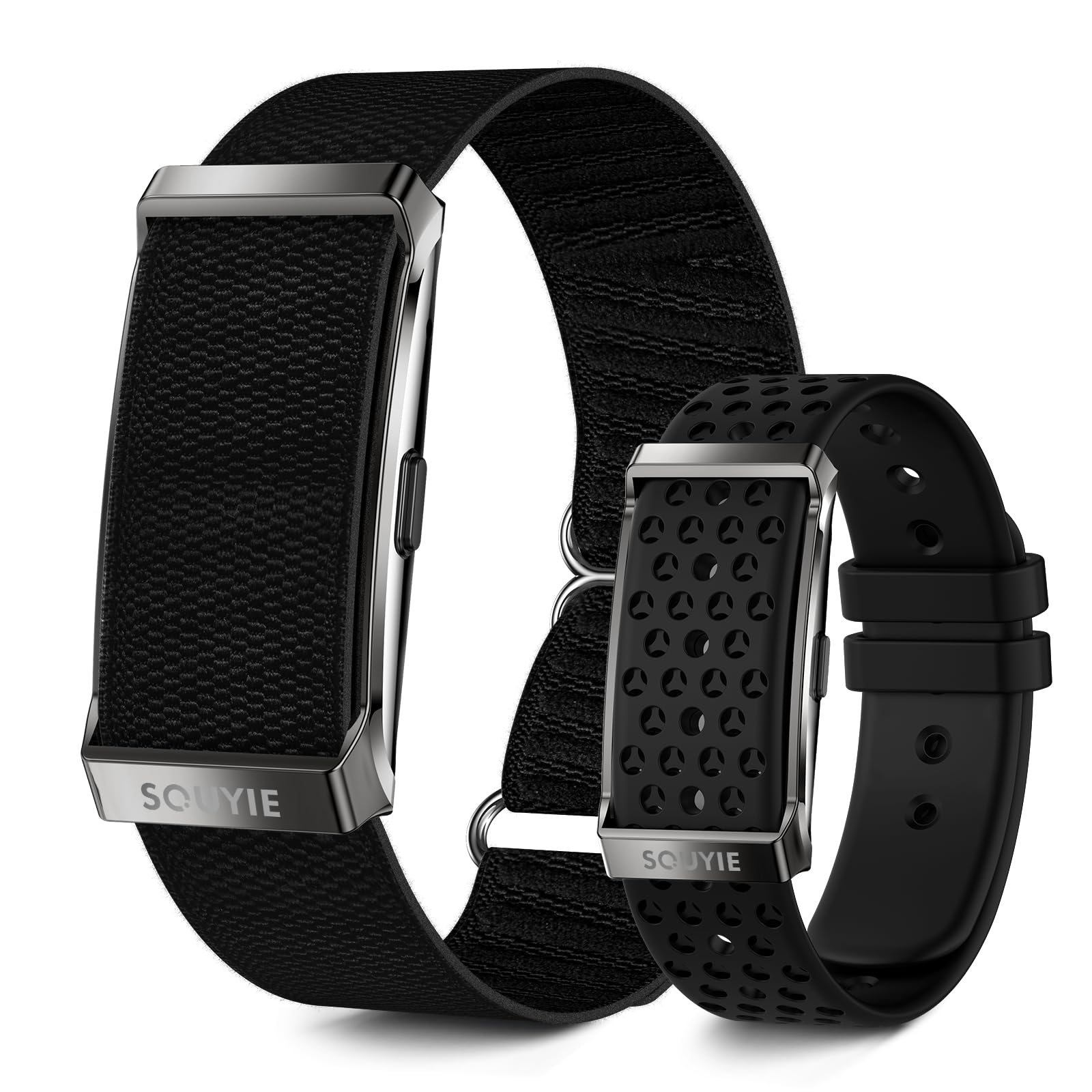
- Form Factor: Screenless band
- Price: Mid-Range
The SOUYIE DS10 strips away the display to deliver a remarkably lightweight health tracker that lasts 20–30 days on a single charge. It tracks heart rate, sleep stages, blood pressure, and stress continuously, and early user feedback points to good accuracy — particularly for heart rate and sleep staging. The included two-band kit ensures a comfortable fit for different wrist sizes.
However, this is still a relatively new product with a small user base. Long-term durability under daily wear — especially during exercise or sleep — is not yet established. Shoppers who need a longer track record may prefer a more established alternative, but for early adopters seeking a subscription-free, screenless band with extreme battery longevity, the DS10 is a compelling option.
Pros
- Battery lasts 20–30 days between charges, eliminating weekday charging worries.
- Weighs only 18.4g with a slim band, comfortable for 24/7 wear including sleep.
- Heart rate and sleep stage tracking show good agreement with dedicated sensors.
Cons
- No on-device display means checking stats requires pulling out your phone — less convenient for quick glances.
- With a modest number of units in circulation, long-term durability under daily wear remains unverified.
For those who prioritize extreme battery life and a distraction-free experience over on-device glanceability, the DS10 offers strong health tracking at a fraction of WHOOP’s ongoing cost — just keep in mind its long-term track record is still being written.
Best for Analog Style, Ecg
Withings ScanWatch 2
Key Features
- Sleep Stages: Stages, breathing
- HRV & Stress: ECG, heart rate, temp
- Battery Life: 30 days
- Form Factor: Hybrid watch
- Price: Luxury
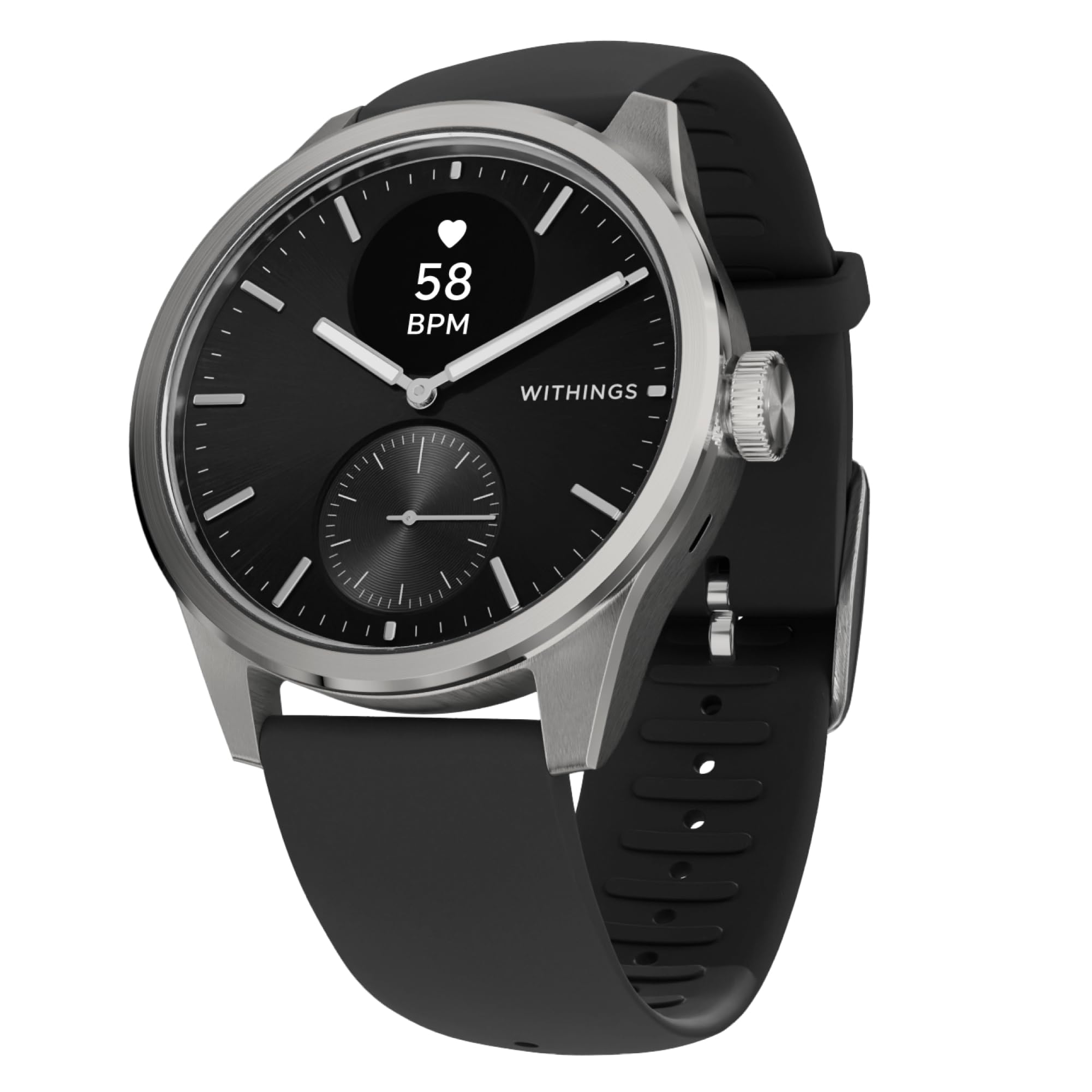
Withings ScanWatch 2 hides a medical-grade ECG sensor and 30-day battery inside an analog watch with sapphire glass — a genuinely elegant design for everyday wear. Its health monitoring for heart rate, SpO2, and temperature is thorough and reliable. But the sleep tracking, while present, lacks the precision of dedicated sleep trackers: light sleepers may find wake detection inconsistent. Combined with a premium price, this makes more sense for style-conscious buyers who want occasional ECG and basic overnight metrics than for anyone prioritizing detailed sleep analysis.
Pros
- Classic analog watch design that passes as a traditional timepiece
- Medical-grade ECG readings available on demand for cardiac monitoring
- 30-day battery life reduces charging frequency to once a month
Cons
- In a quiet bedroom, sleep stage detection can miss wake periods for light sleepers — better suited to average sleepers
- Some units have shown intermittent charging behavior, requiring a reset or cable swap
Best for someone who wants an elegant everyday watch with health extras — not for sleep tracking as a primary need.
Best for Budget All-Rounder
FITVII FINO 2

Key Features
- Sleep Stages: Stages, reports
- HRV & Stress: Heart rate, BP, stress
- Battery Life: 3–4 days
- Form Factor: Smartwatch
- Price: Budget
The FITVII FINO 2 delivers a sleek design and a full suite of health sensors at a price that’s hard to beat. For general wellness checks and casual step tracking, the watch works well enough. However, those looking for consistent sleep stage analysis or dependable blood pressure readings will want to look elsewhere – heart rate and SpO2 readings can vary, and the sensor accuracy is not on par with dedicated sleep trackers. Additionally, some units have experienced charging issues or stopped functioning within weeks, making long-term durability a concern for daily use.
Pros
- Very affordable with comprehensive health sensors
- Sleek design and comfortable for daily wear
Cons
- Blood pressure and heart rate readings can show notable variation during active periods
- Charging may become intermittent after a few weeks, affecting daily use
A budget-friendly option for casual health monitoring, but not recommended for users who need accurate sleep stage data or long-term reliability.
Best for Budget Ring Intro
prxxhri Ring
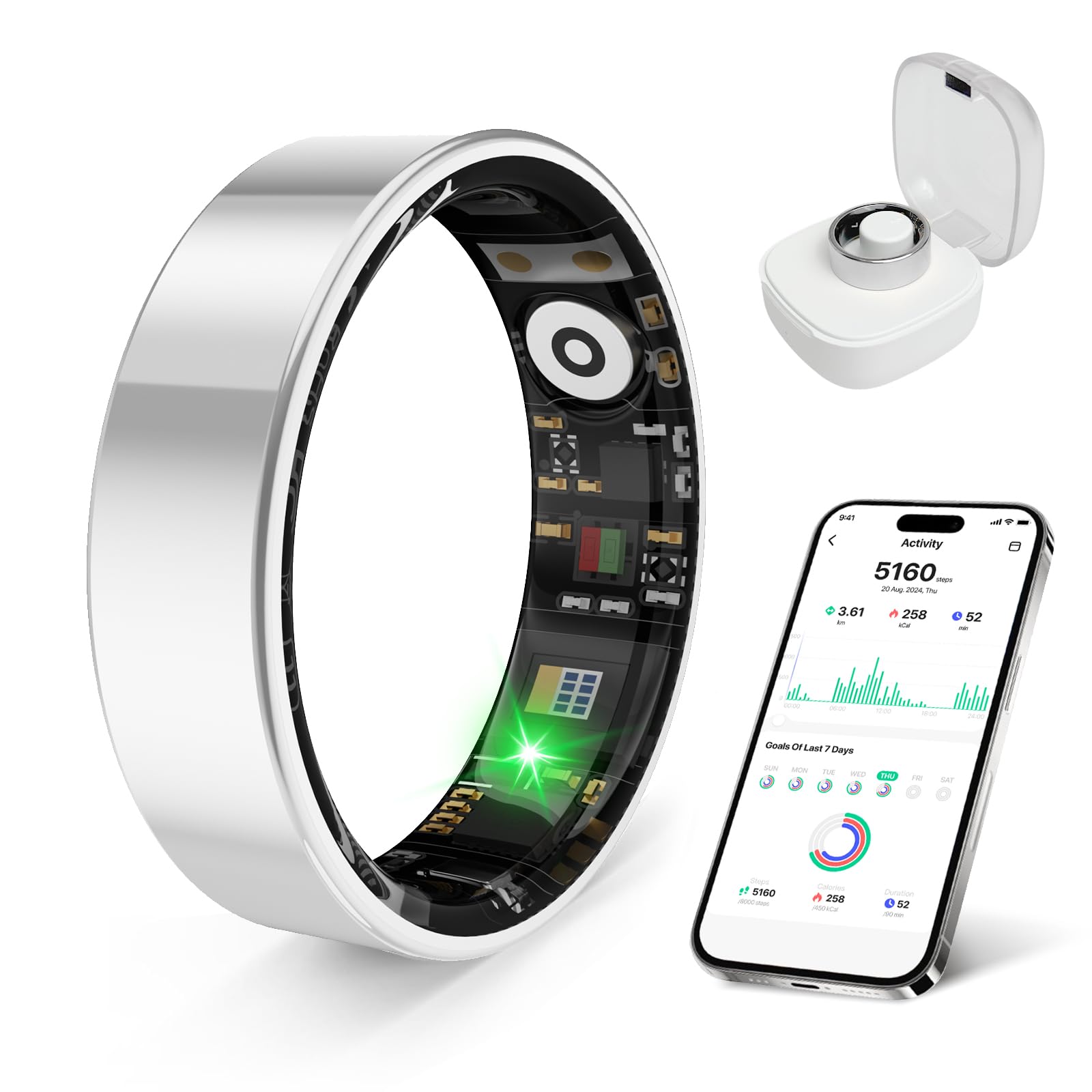
Key Features
- Sleep Stages: Sleep cycles
- HRV & Stress: Stress index
- Battery Life: 2–3 days
- Form Factor: Ring
- Price: Budget
The prxxhri Ring delivers the core promise of a smart ring — comfortable 24/7 wear and basic sleep/stress tracking — without locking you into a monthly fee. It’s lightweight enough to forget you’re wearing it, and the IP68 water resistance handles showers and swims. However, the battery lasts only 2–3 days between charges (the included case gives extra top-ups), and the step and sleep data can vary from one wearing position to another. That trade-off is fine if you’re curious about health trends rather than counting on pinpoint accuracy, but anyone who needs deep sleep stage analysis or week-long battery life will find the limitations frustrating compared to pricier rings like the RingConn Gen 2.
Pros
- No ongoing subscription for full sleep and stress tracking
- Lightweight and comfortable for all-day and overnight wear
- 80m water resistance suitable for swimming
Cons
- Battery life of 2–3 days means frequent recharging compared to rings that last a week or more
- Step counts and sleep stage recognition can be inconsistent, especially during light movement
Best suited for first-time smart ring buyers who want to test the form factor without a subscription commitment, as long as they accept more frequent charging and approximate health data.
How to Choose
The sleep tracker you choose must balance sensor accuracy, comfort during sleep, and the true long-term cost of ownership.
Sleep Stage Analysis
Sleep stage detection relies on accelerometer movement patterns combined with heart rate variability. Optical sensors on the wrist or finger estimate light, deep, and REM sleep, but accuracy varies significantly between brands. Devices that only use motion (e.g., basic trackers) often confuse stillness with deep sleep, making them less useful for anyone with restless sleep.
For reliable stage data, look for a tracker that records both HRV and movement. Rings like the RingConn and Oura typically perform well here because they have a stable finger contact, while wristbands can lose accuracy if worn loosely.
HRV & Stress Monitoring
Heart rate variability (HRV) is a key metric for recovery and stress, but it requires consistent, snug sensor contact throughout the night. Wrist-based optical sensors can produce unreliable readings if the band shifts during sleep. Rings maintain better contact for HRV, but require correct sizing—too loose and data drops, too tight and circulation is affected.
Trackers that measure HRV alongside stress scores (like WHOOP and Oura) provide more actionable recovery insights, but the data is only useful if you wear the device 24/7. A low HRV reading might indicate poor sleep, dehydration, or illness, not a device error.
Battery Life & Charging
Battery life dictates how often you need to take the device off, which directly impacts sleep tracking continuity. Most lithium-ion batteries in wearables degrade after 6–12 months, reducing runtime by 20–40%. A tracker that starts at 14 days may need daily charging after a year, making it impractical for nightly use.
Consider charging convenience: rings often come with a charging case that extends total battery, while wristbands require removing the band. Screenless bands (SOUYIE, WHOOP) can be worn while charging, eliminating data gaps.
Form Factor
Rings are less obtrusive for side sleepers and generally more comfortable for all-night wear, but they require precise sizing and can feel tight in warm weather. Wristbands and watches are easier to put on and remove, but may cause wrist discomfort or snag on bedding. The choice often comes down to whether you prioritize sleep comfort or daytime usability.
Hybrid watches like the Withings ScanWatch offer a compromise: analog face with hidden health sensors, but they tend to be bulkier on the wrist than a dedicated sleep ring.
Subscription Cost
Some of the most capable sleep trackers—Oura and WHOOP—require ongoing subscription fees for full analytics. Over two years, Oura costs an extra $144, WHOOP over $500. These fees fund algorithm updates and cloud storage, but several no-subscription competitors (RingConn, Amazfit, SOUYIE) now offer similar sleep metrics at a lower total cost. The trade-off is that subscription platforms typically provide more detailed coaching and long-term trend analysis.
If you intend to use the tracker for more than a year, calculate total cost of ownership. A premium ring with a subscription may end up costing more than a mid-range watch with comparable features and no monthly fees.
FAQ
Why does my sleep tracker show different sleep stages than my partner’s device?
Different trackers use proprietary algorithms and sensor placements (wrist vs. finger) which interpret movement and heart rate variability differently. Variations of 10–20% in stage duration are normal. Focus on consistent trends from a single device rather than comparing absolute numbers across brands.
Can a smart ring track sleep apnea accurately without a prescription?
The RingConn Gen 2 is the first consumer smart ring to offer sleep apnea monitoring (AHI estimation). It provides a screening-level indicator, not a medical diagnosis. If you suspect sleep apnea, a clinical polysomnography is still the gold standard. The ring can help identify patterns worth discussing with a doctor.
How tight should a sleep tracking ring be to get accurate heart rate data?
The ring should fit snugly enough that it doesn’t spin on your finger but still allows easy removal. Too loose and the optical sensor loses contact during REM sleep, causing missed readings. Too tight and blood flow can be restricted, skewing HRV. Most brands provide a sizing kit; always test the fit before committing.
Do sleep trackers with subscription fees provide better long-term insights?
Subscription services like WHOOP and Oura continuously update their algorithms and provide personalized coaching, trend reports, and community features. Over 12 months, the added cost can be justified if you actively use the insights for training or health goals. For casual users, no-subscription trackers like the RingConn Gen 2 offer similar sleep metrics without ongoing fees.