
This post contains affiliate links. We may earn a small commission when you buy through our links — at no extra cost to you.
Snoring feels like a universal problem with a simple fix, but the reality is that no single device works for everyone. The most common misstep is buying the highest-rated product without first identifying whether the snoring stems from nasal blockage, mouth breathing, or sleeping on your back.
This guide sorts solutions by root cause, matching each device to the specific airway obstruction it was designed to solve. A nasal strip won’t help a jaw collapse, and a mouthguard can’t correct a congested nose—knowing the difference eliminates wasted trials.
Comfort is the hidden variable that separates return-worthy gadgets from nightly essentials. Most devices need an adjustment period, but when the right fit meets the right cause, the payoff is immediate silence for your partner and deeper rest for you.


Best for Nasal Congestion Snorers
Breathe Right Clear Strips
Key Features
- Device Type: Nasal strip
- Fit Adjustability: None (adhesive placement)
- Material Comfort: Hypoallergenic flexible fabric
- Effectiveness for Snoring Cause: Nasal congestion
- Price: Budget
Breathe Right Extra Strength strips deliver immediate nasal passage opening with 50% stronger bands than the original — no drugs, no wait time. A flexible spring-like band adheres across the nose, physically lifting nostrils outward to reduce airflow resistance. For snoring caused by nasal congestion — due to allergies, colds, or a deviated septum — that mechanical lift can turn a blocked nose into a clear airway. The relief is instant, and the strips work without any drowsy side effects. They come in a 44-count pack with consistent build quality from an established brand.
These strips suit anyone who needs a portable, non-pharmaceutical breathing aid: frequent flyers, seasonal allergy sufferers, and side-sleepers with a stuffy nose. The clear design is discreet enough for daytime use. They won’t solve snoring rooted in the throat or soft palate, nor will they prevent back-sleeping positional snoring. For some, the adhesive bond may weaken before morning, especially if skin is oily or lotions are used. Skin irritation or sticky residue can occur, making them less ideal for those with very sensitive skin or adhesive allergies.
Pros
- Immediately opens nasal passages for easier breathing
- Significantly reduces snoring when nasal congestion is the cause
- Consistent quality from a well-established brand
Cons
- Adhesive may lose grip during the night, especially on oily or lotion-prepped skin
- Can cause skin irritation or leave sticky residue, problematic for adhesive-sensitive users
For nasal congestion that fuels snoring, these strips are an affordable, no-fuss first step — just skip them if your snoring stems from the throat or sleeping on your back.
Best for Jaw-Based Snorers
Somnofit-S Mouth Guard
Key Features
- Device Type: Mouthguard
- Fit Adjustability: Boil-and-bite, 5-position strap
- Material Comfort: Biomedical polymers
- Effectiveness for Snoring Cause: Jaw-based/mouth breathing
- Price: Premium
The Somnofit-S works at the snoring source — the throat — by repositioning the jaw, a different mechanism from the nasal strips that lead this category. A boil-and-bite process creates a custom fit, and the medical-grade polymer feels substantial yet compact. The five-position strap lets you fine-tune mandibular advancement for your airway.
It’s suited to snorers with throat-based obstruction or mild sleep apnea who want a reusable, adjustable alternative to CPAP. Jaw soreness and tooth pressure can surface during the break-in phase; those with TMJ conditions or sensitive teeth are better off skipping it. This mouthpiece won’t help if your snoring stems from nasal congestion.
Pros
- Delivers noticeable snoring reduction from the first few nights of use
- Medical-grade polymer feels durable and gentle inside the mouth
- Straightforward boil-and-bite customization with precise jaw positioning
Cons
- Initial jaw soreness or tooth pressure can occur as your mouth adjusts
If throat-based snoring is your issue and you’re willing to work through a short adjustment period for a reusable, FDA-cleared appliance, the Somnofit-S offers a compelling path to quieter nights.
Best for Mouth-Breathing Snorers
OHELEEP Chin Strap
Key Features
- Device Type: Chin strap
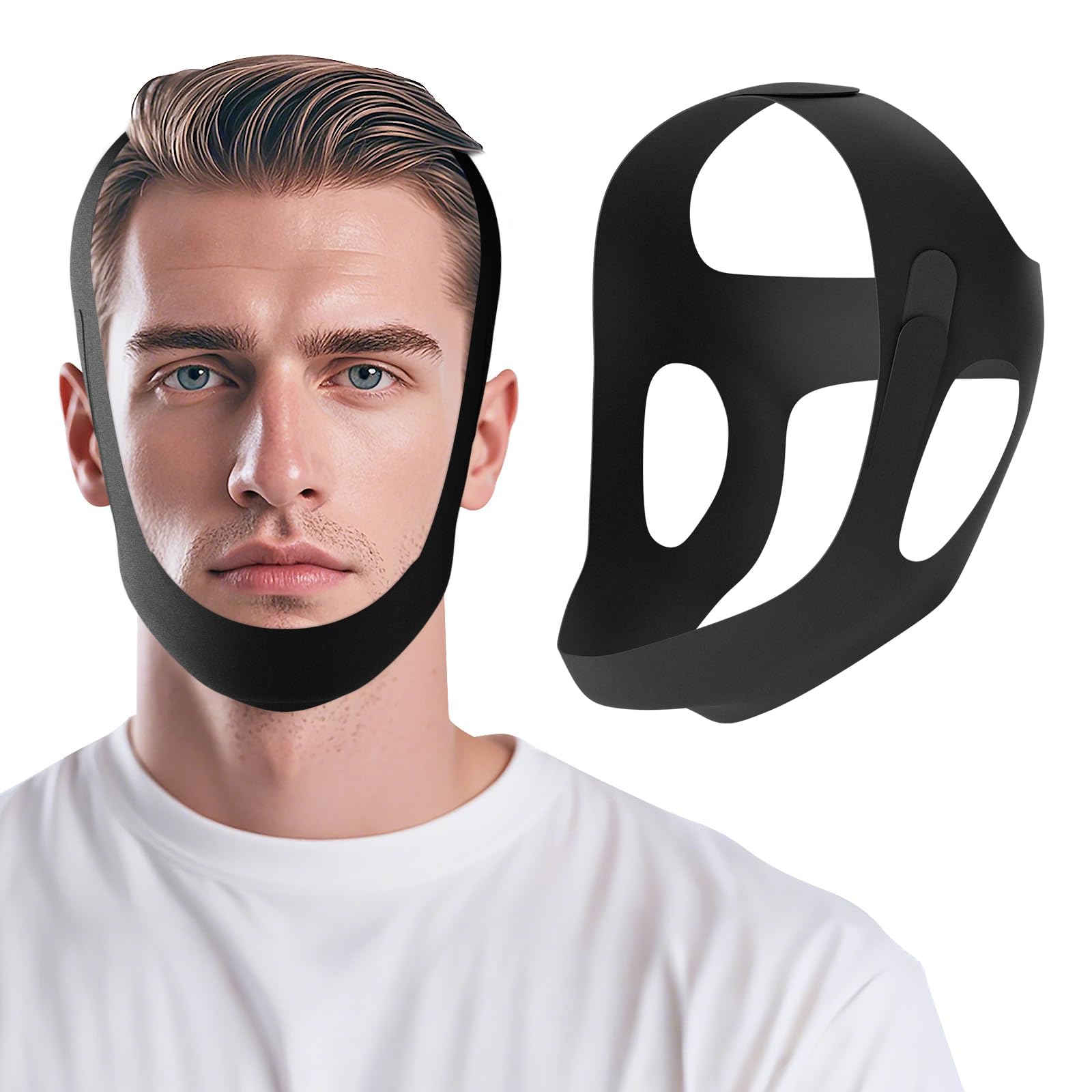
- Fit Adjustability: Fully adjustable (top, back, sides)
- Material Comfort: Spandex-nylon blend, 0.7mm
- Effectiveness for Snoring Cause: Mouth-breathing
- Price: Budget
The custom-fit mouthguard in this set relies on mandibular advancement to reduce throat-based snoring, which can cause jaw soreness. This OHELEEP chin strap takes a different path: it simply keeps the mouth closed with a soft, breathable spandex-nylon wrap that requires no dental contact. That makes it a non-irritating choice for mouth-breathers and CPAP users who snore because their jaw drops open during sleep. The strap’s adjustability across the top, back, and sides helps secure most heads, but those with smaller head circumferences may find it runs a bit large and can slip without meticulous tightening.
Pros
- Stops mouth-breathing snoring by holding the jaw closed
- Soft, breathable fabric stays comfortable throughout the night
- Provides noticeable snore reduction for sleeping partners
Cons
- Medium sizing may run large on smaller head circumferences, causing the strap to slip unless tightly adjusted
For mouth-breathers and CPAP users who want a non-invasive solution that avoids dental pressure, this chin strap is a budget-friendly, comfortable pick — just confirm your head size isn’t on the petite end.
Best for Back Snorers
Calma Clip v2
Key Features
- Device Type: Positional aid
- Fit Adjustability: Clip-on, no adjustability
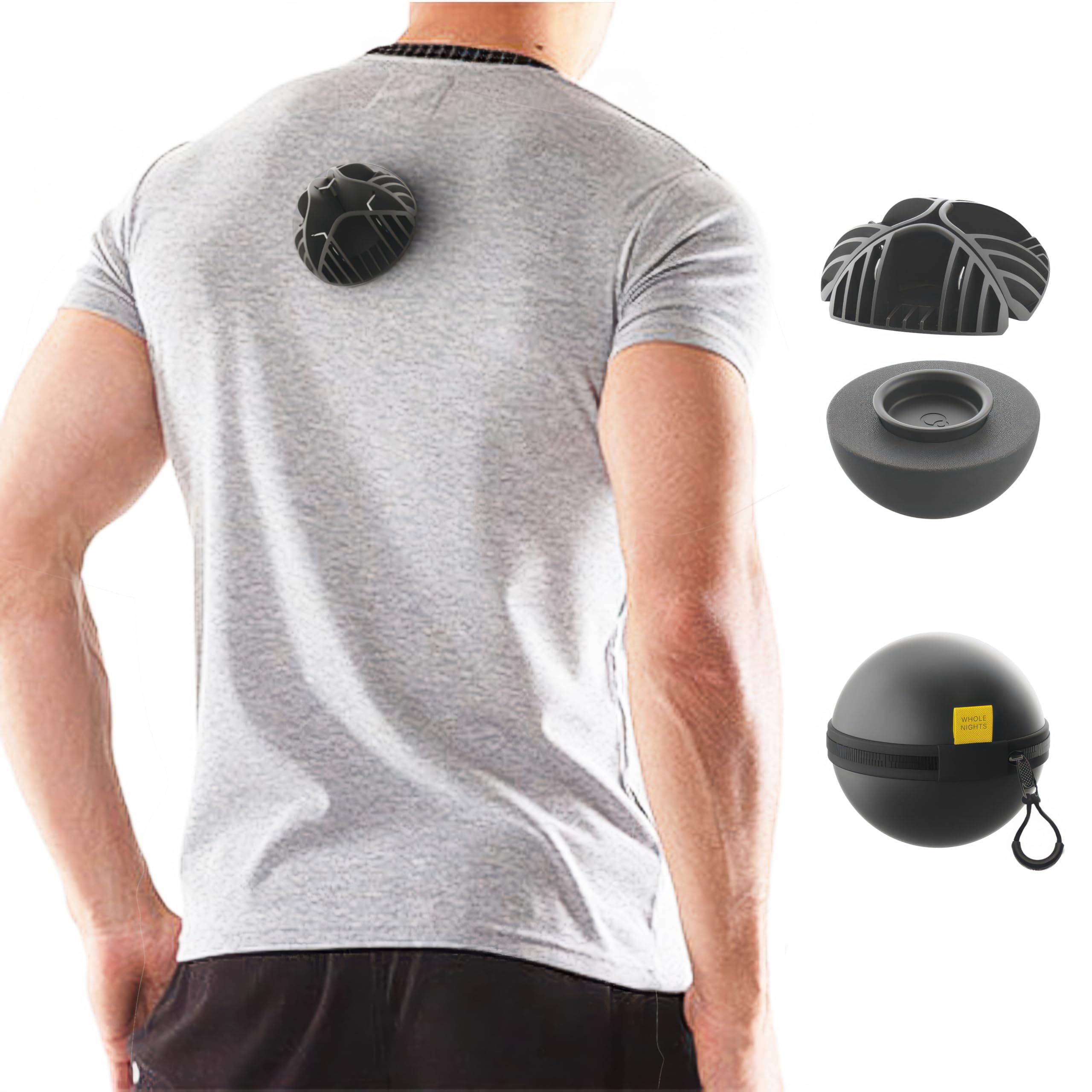
- Material Comfort: Foam ball, plastic clip
- Effectiveness for Snoring Cause: Back sleeping position
- Price: Mid-Range
The Calma Clip v2 offers a simple solution for back snorers: a foam ball that clips onto any shirt, physically nudging you onto your side when you roll onto your back. It suits those who dislike mouthpieces or facial straps and haven’t found relief from pillows or wedges. Unlike nasal strips that open airways, this targets positional snoring at its source. The ball can cause a pressure sensation during the first few nights as your body adjusts. It’s not for side or stomach snorers, and very restless sleepers may dislodge it.
Pros
- Keeps you on your side to reduce positional snoring.
- Clips easily onto any shirt with no setup.
- Stays securely in place during normal sleep movements.
Cons
- The clip may dislodge with very restless tossing, letting you roll back.
If your snoring stems from back sleeping and nasal remedies have fallen short, this clip-on ball offers a straightforward positional fix — just plan on a short adjustment period to the pressure.
Best for Budget Nasal Strips
ZenithHome Nasal Strips
Key Features
- Device Type: Nasal strip
- Fit Adjustability: None (adhesive placement)
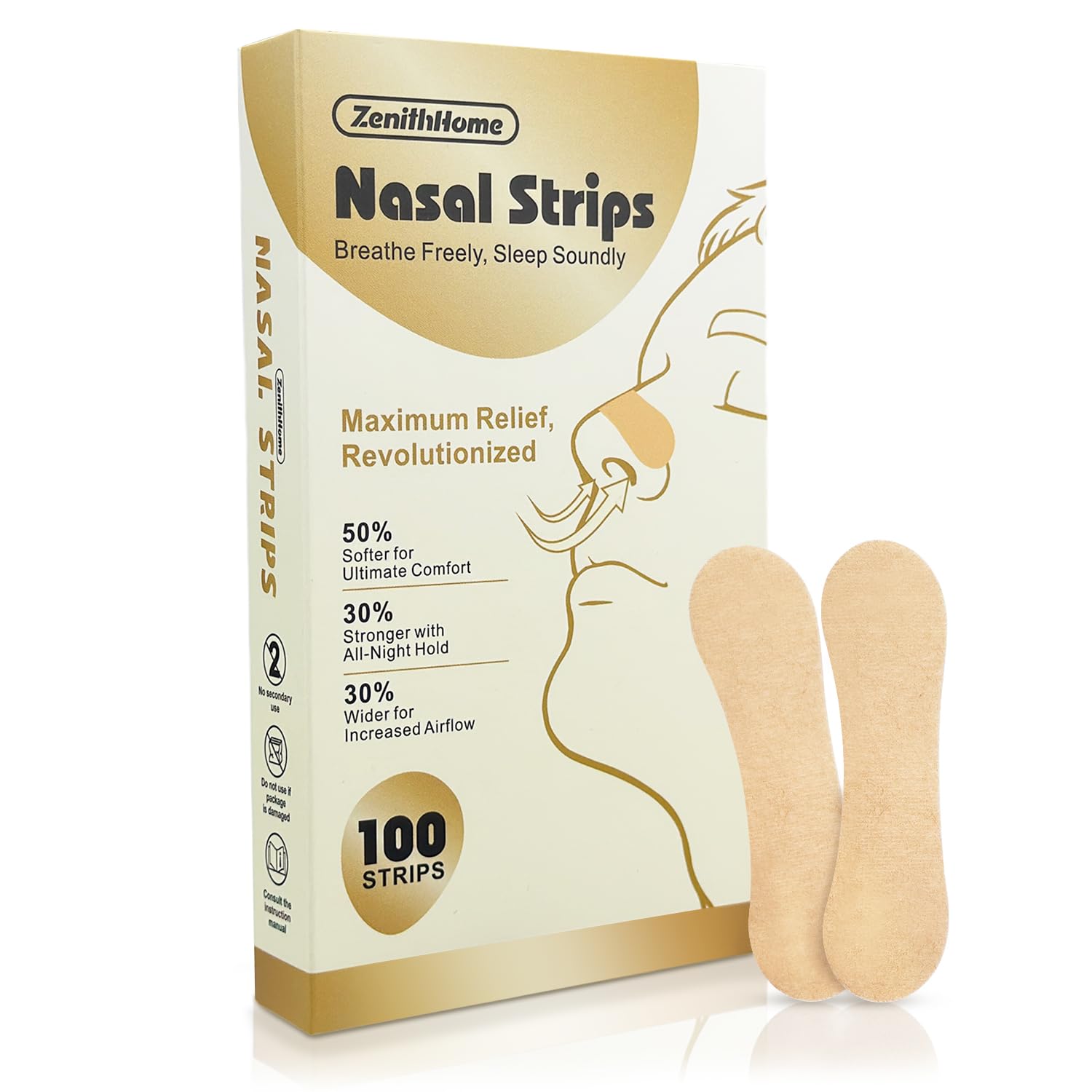
- Material Comfort: 4-layer gentle adhesive fabric
- Effectiveness for Snoring Cause: Nasal congestion
- Price: Budget
ZenithHome strips combine a 4-layer design and gentle adhesive that stays put overnight without residue, making them the gentlest option for sensitive skin in this set. The claimed 31% airflow increase helps congestion-driven snoring, but they lack the maximum dilation of Breathe Right Extra Strength, suiting mild to moderate cases better.
Pros
- Improves nasal airflow for congestion-related snoring
- Adhesive stays secure overnight and peels off without residue — gentle on sensitive skin
Cons
- May not provide enough lift for snorers who need maximum nasal expansion — Breathe Right Extra Strength offers a stronger pull
Ideal for sensitive-skin snorers who want a gentle, bulk-pack nasal strip for mild to moderate congestion — not for those needing maximum dilation.
Best for Experimental Trial
Aikaplus Magnetic Nose Clip
Key Features
- Device Type: Nasal clip
- Fit Adjustability: No adjustability
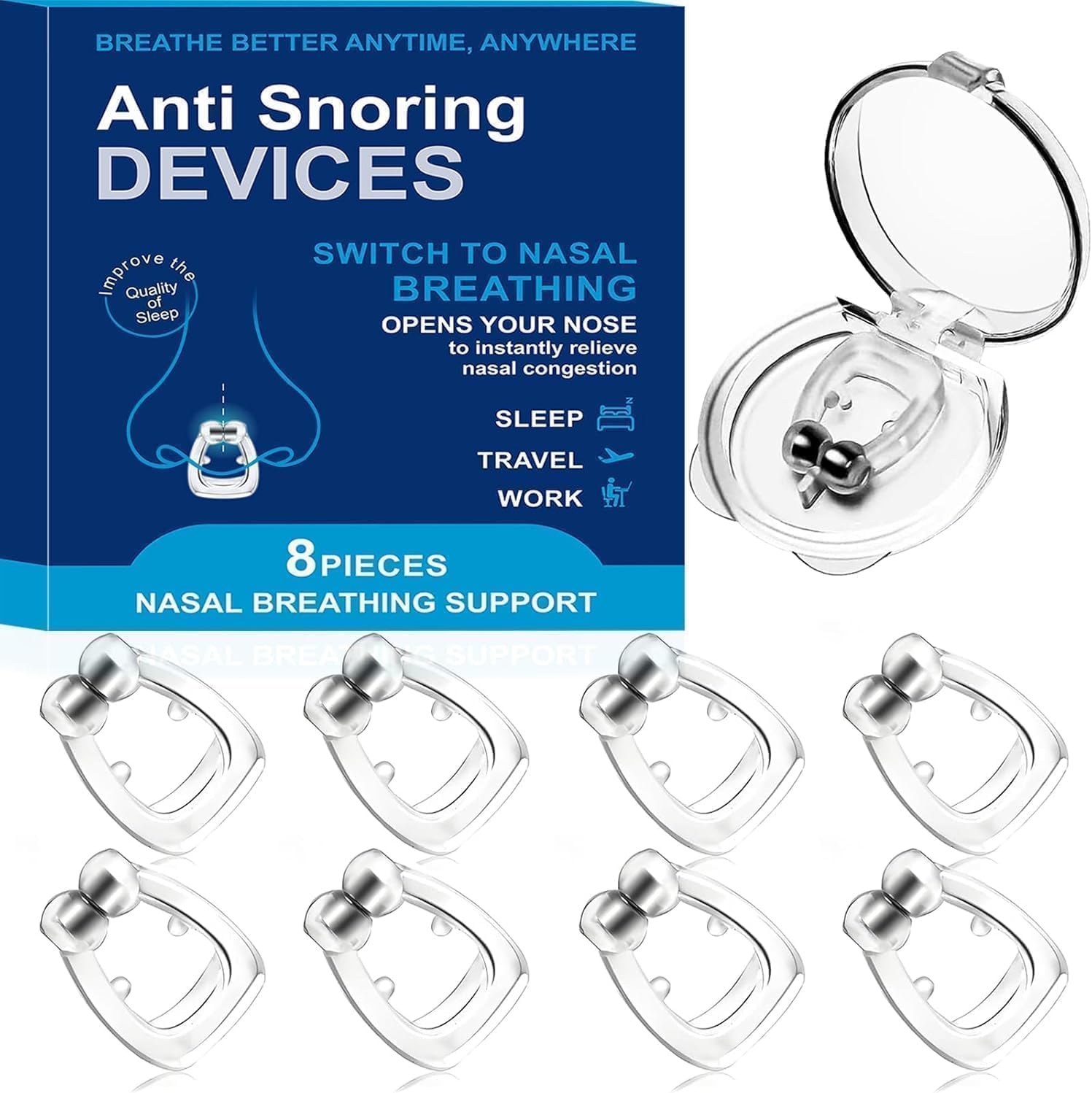
- Material Comfort: Silicone, plastic
- Effectiveness for Snoring Cause: Nasal airflow (limited)
- Price: Budget
The eight-piece magnetic clip set provides a low-cost trial for nasal breathing improvement, with some users experiencing better airflow. Effectiveness is inconsistent, and limited evidence makes this a gamble — it suits the curious experimenter, not someone needing a dependable anti-snoring device.
Pros
- May improve nasal airflow for some users, potentially easing congestion-driven snoring.
- Includes eight clips for hygiene rotation and travel convenience.
Cons
- May cause initial sneezing or a pressure sensation for some.
A very inexpensive pick for the curious who want to test magnetic nasal dilation and are prepared for uncertain results.
How to Choose
The most important step before buying any anti-snoring device is identifying whether your snoring originates in the nose, throat, or sleeping position.
Identify Your Snoring Trigger
Snoring originates from three main pathways: nasal blockage, mouth breathing (often from jaw position), or sleeping on your back. Matching the device to your cause is essential—placing a nasal strip when your obstruction is throat-based won’t silence snoring.
Nasal strips instantly enlarge nasal valves for congestion, allergies, or a deviated septum. Mouthguards reposition the jaw to open the airway, while chin straps keep the mouth closed. Positional aids prevent back sleeping, the position most likely to cause tongue collapse.
Fit and Adjustability: Why Customization Matters
Devices that allow individual adjustment reduce pressure points and improve efficacy. Boil-and-bite mouthguards can be remolded for a precise fit, but jaw soreness is typical for the first few nights. Chin straps with multi-point adjustments accommodate different head sizes, yet the tension must balance hold without discomfort.
Non-adjustable items like nasal strips rely on correct placement and skin preparation; getting it wrong leads to mid-night peel-off.
Material and Skin Sensitivity: What You’ll Wear All Night
The material against your skin determines overnight wearability. Biomedical polymers in mouthguards are durable but may transmit pressure to teeth. Spandex-nylon blends in chin straps breathe well but can slip if too smooth. Nasal strip adhesives must be hypoallergenic—some users develop rashes even with sensitive-skin formulas.
Adhesion Reality for Nasal Strips
Adhesive longevity directly affects success. Strips that lose grip cause snoring to resume. Washing your nose with soap and water, drying thoroughly, and pressing firmly for 10 seconds improves adherence. Certain brands use stronger acrylic adhesives that hold better through humidity but may leave residue.
FAQ
Why does my anti-snoring mouthguard hurt my jaw in the morning?
Jaw soreness and tooth pressure are typical during the first one to two weeks as your muscles and temporomandibular joint adjust to the new bite position. Start by wearing the mouthguard for shorter periods and gradually increase. If pain persists beyond two weeks, the device may be over-advancing your jaw—stop use and consult a dentist.
Do nasal strips work if I breathe through my mouth while sleeping?
Nasal strips only widen the nasal valve; if you breathe through your mouth because of nasal congestion, they may resolve the congestion and allow you to breathe through your nose. However, if mouth breathing is habitual or due to throat obstruction, strips will have little effect.
How can I tell if my snoring is from my nose or my throat?
Pinch your nose shut and breathe through your mouth—if silence results but you still snore when nasal breathing is possible, the obstruction is likely nasal. Alternatively, try sleeping on your side; if snoring stops completely, back sleeping is the cause. If neither test changes the snoring, throat structures (soft palate, tongue) are probably involved.
Will a chin strap stop snoring if I have a deviated septum?
A chin strap keeps your mouth closed, which can prevent mouth breathing, but a deviated septum causes nasal obstruction. If your nose is blocked, closing your mouth won’t restore airflow and may even make breathing feel restricted. Treat the septum obstruction first with external nasal strips or a dilator before relying on a chin strap.