
This post contains affiliate links. We may earn a small commission when you buy through our links — at no extra cost to you.
Most wedge pillows promise relief for a laundry list of conditions — acid reflux, snoring, post-surgery recovery. But when sleep apnea is your real target, the single spec that matters most is elevation height. A 5.5-inch lift may barely touch your airway, while a 10-inch wedge can feel more like a backrest and leave you sliding or waking with neck strain.
This guide ignores the multi-purpose marketing and instead matches pillows to the height, sleep position, and CPAP setup that actually open the airway overnight. Whether you need a gentle incline, a firm recovery wedge, or a dedicated cutout for your mask, the picks here are filtered for breathing improvement first.



Best for Moderate Apnea Relief
Kolbs Wedge 7.5"
Key Features
- Elevation Height: 7.5 inches
- Dimensions (W x L): 24" x 24"
- Cover Material & Washability: Jacquard, machine washable
- Price: Mid-Range
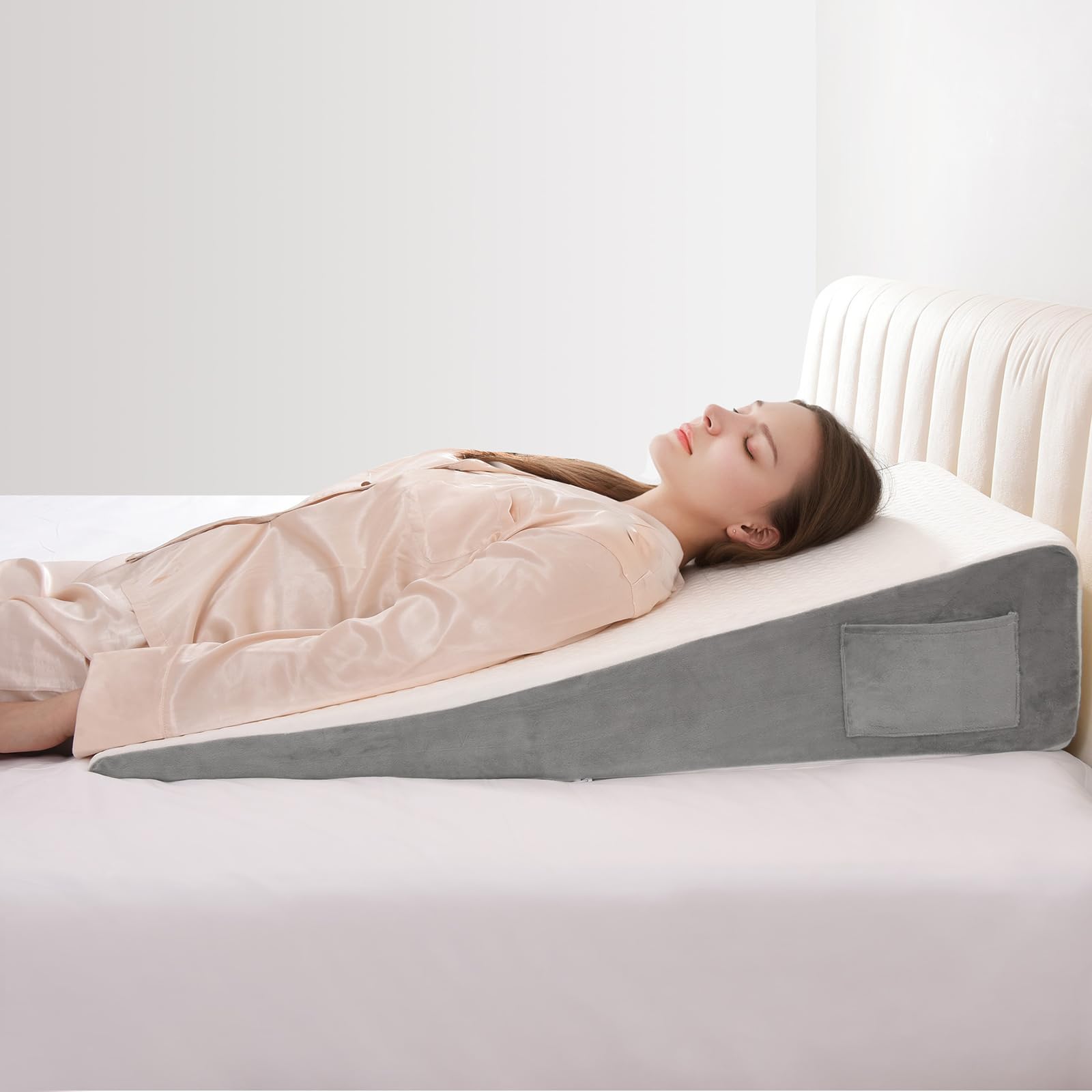
The Kölbs 7.5-inch Wedge combines a 1.5-inch memory foam top with a high-density medical-grade core to give back sleepers the exact angle needed for airway opening. Night after night, it holds its shape without compressing, providing steady support for sleep apnea, acid reflux, and post-surgery recovery. The foam doesn’t soften into a flat slope over time, so the intended incline stays intact. A removable, machine-washable jacquard cover adds practical ease.
Adults managing moderate sleep apnea, COPD, or chronic heartburn benefit most from its structured, firm surface. The memory foam layer adds some initial give, but the overall feel is firm — back sleepers typically adapt quickly, while those accustomed to plush pillows may notice neck or back pressure at first. A thin topper or a break-in period of a few nights often smooths that transition. FSA eligibility keeps the mid-range price practical.
Pros
- Consistent, comfortable support for sleep apnea and acid reflux relief
- Well-made with long-lasting durability
- Effectively reduces snoring and improves breathing during sleep
Cons
- Firmness can feel too hard initially, potentially causing neck or back discomfort
For back sleepers relying on elevation for breathing, this wedge stays where you set it — firm, stable, and durable.
Best for Cpap Side Sleepers
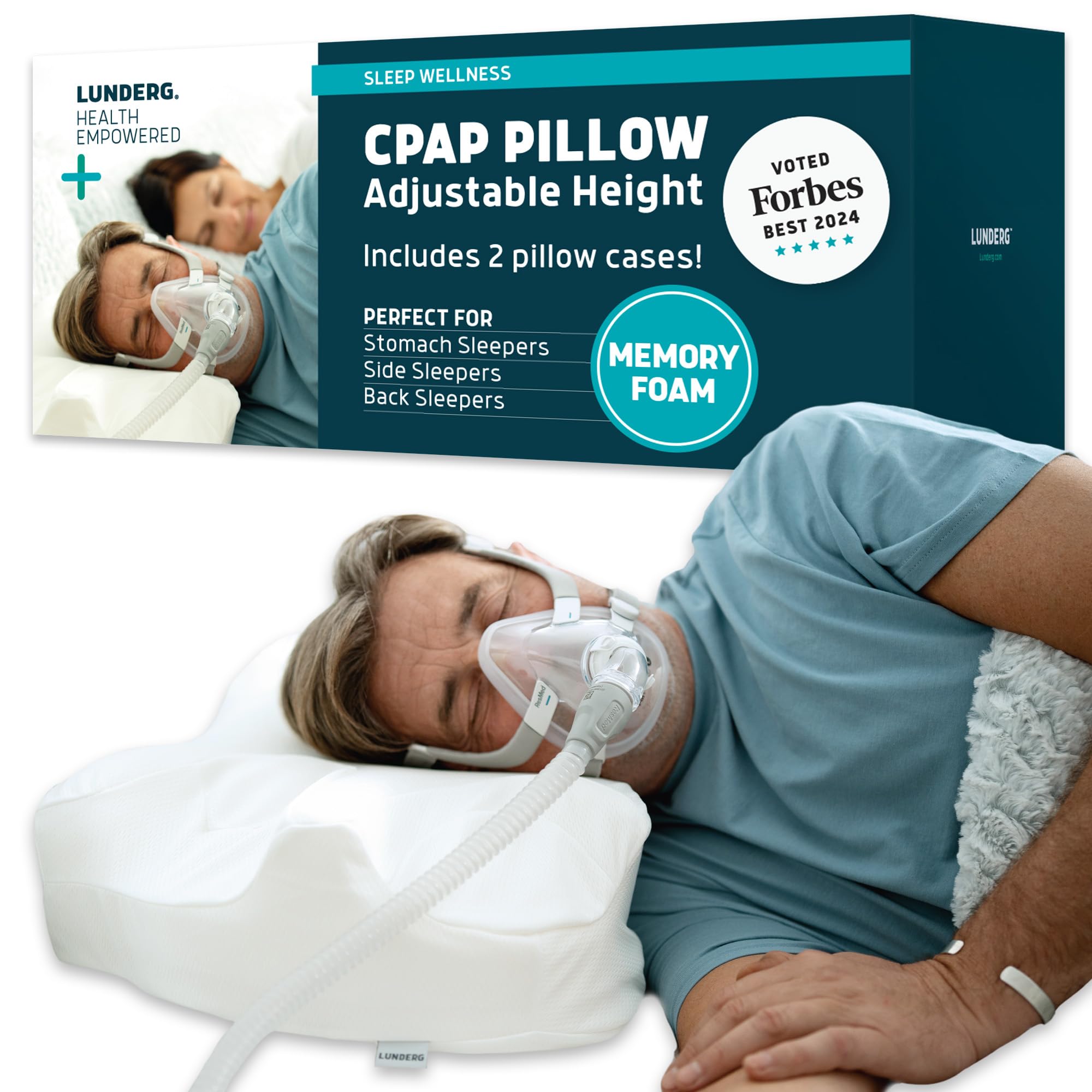
Lunderg CPAP Pillow
Key Features
- Elevation Height: Adjustable (removable layer)
- Dimensions (W x L): 21.65" x 13.78"
- Cover Material & Washability: 2 washable pillowcases
- Price: Premium
The adjustable foam insert and dual-sided mask cutouts directly tackle the two most persistent CPAP issues: holding a seal when turning onto your side, and preventing the pillow from pressing the mask into your face. Budget CPAP pillows often skip height adjustability, but here a removable 1.1-inch layer lets you fine-tune loft.
Side sleepers who’ve dealt with air leaks and mask marks will notice an immediate difference. The memory foam is firm — some may feel ear or neck pressure after a night — and the compact dimensions can feel short for taller users who move around. Back sleepers or anyone wanting a softer, longer surface should look at the top pick wedge instead.
Pros
- Keeps mask seal stable and reduces air leaks for side sleepers
- Adjustable height and cutouts fit many mask styles and sleep positions
- Two included pillowcases eliminate downtime during washing
Cons
- Firm memory foam may create ear or neck pressure after prolonged use
- Compact 21.65-inch length can feel restrictive for taller sleepers who shift at night
For CPAP users frustrated by mask leaks and pressure from standard pillows, this targeted design is worth the cost. Those who need a softer or longer pillow, however, will prefer the top pick’s universal wedge.
Best for Plush Pressure Relief
Sleepnitez 8" Wedge
Key Features
- Elevation Height: 8 inches
- Dimensions (W x L): 27.2" x 25.2"
- Cover Material & Washability: Tencel blend, breathable
- Price: Premium
The Sleepnitez 8" Wedge’s 3.25-inch memory foam top and silky Tencel cover provide the softest landing of any wedge in this set, particularly for side sleepers whose shoulders ache against firmer foam. Unlike the top pick’s sturdier core, this wedge feels like a seamless extension of the mattress, sinking just enough to cradle the neck without a clinical feel. The deep foam compresses more under heavier torsos, which can reduce the incline that sleep apnea relief depends on. For lighter individuals or those who value shoulder comfort above maximum elevation, that tradeoff is a fair price for the pressure relief.
Pros
- 3.25" memory foam top deeply cradles the neck and shoulders, preventing pressure point pain.
- Reduces acid reflux and snoring with a barely-there taper that transitions smoothly to the mattress.
- Tencel cover breathes well and stays gentle on skin, backed by a 3-year warranty.
Cons
- At the top of the mid-range, the cost may be hard to justify if you only need occasional elevation.
- The deep memory foam can compress under heavier bodies, reducing the effective incline for apnea relief.
Side sleepers who need soft shoulder relief for CPAP comfort will find this wedge a luxurious upgrade, but those whose sleep apnea demands consistent, firm elevation should lean toward the top pick.
Best for Adjustable Recovery
Bekweim 12" Adjustable Wedge
Key Features
- Elevation Height: 9" or 12" adjustable
- Dimensions (W x L): 24" x 24"
- Cover Material & Washability: Bamboo-derived fabric, washable
- Price: Mid-Range
The adjustable design lets you shift from a 12-inch upright reading wedge to a 9-inch sleeping incline, with dense foam that supports recovery and leg elevation. That adjustable height helps keep airways open for sleep apnea and acid reflux without collapsing under weight.
Even at the 9-inch lower setting, the angle remains steep, making all-night sleep a challenge for anyone who isn’t a dedicated back sleeper. The footprint is bulky on the bed, so this isn’t a low-profile solution. It’s best for post-surgery patients, CPAP users who sit up to read, or those who need leg elevation and can tolerate a firm, tall wedge.
Pros
- Adjustable 9–12 inch height customizes incline for breathing and doubles as leg elevation during recovery
- Bamboo-blend cover stays cool and removes easily for machine washing
- Sturdy foam core holds its shape for post-surgery support and acid reflux management
Cons
- The dense foam can feel overly firm for those accustomed to plush pillows
- Even at the 9-inch setting, the incline is steep for overnight sleep, and the overall footprint is bulky on the bed
Best for post-surgery patients and CPAP users who sit up to read or need leg elevation, but the steep angle means it’s not a gentle all-night wedge for side sleepers.
Best for Full-Body Support
Vekkia 34" Long Wedge 7.5"H
Key Features
- Elevation Height: 7.5 inches
- Dimensions (W x L): 34" x 22"
- Cover Material & Washability: Velvet, washable
- Price: Mid-Range
Unlike standard 7.5-inch wedges that stop mid-back, the 34-inch length provides a continuous slope from shoulders to knees, eliminating the drop-off sensation on queen and king beds. Back sleepers with larger mattresses who want full upper-body support will appreciate the stability and side pockets. On twin or full beds, the extra length overhangs and can feel cumbersome for petite sleepers.
Pros
- Unified slope from shoulders to knees eliminates the edge-drop common with shorter wedges.
- Stable, non-slip base keeps position on queen and king mattresses.
- Side pockets keep phone, remote or CPAP accessories within reach; soft velvet cover adds comfort.
Cons
- Foam give may feel too soft for those requiring rigid post-surgery elevation support.
For back sleepers on queen or king beds seeking a seamless, edge-free incline, this extra-long wedge is a practical pick. Those on twin beds or needing unyielding firmness should consider the top pick.
Best for Gentle Incline
Vekkia 5.5" Wedge
Key Features
- Elevation Height: 5.5 inches
- Dimensions (W x L): 24" x 24"
- Cover Material & Washability: Polyester, washable
- Price: Budget
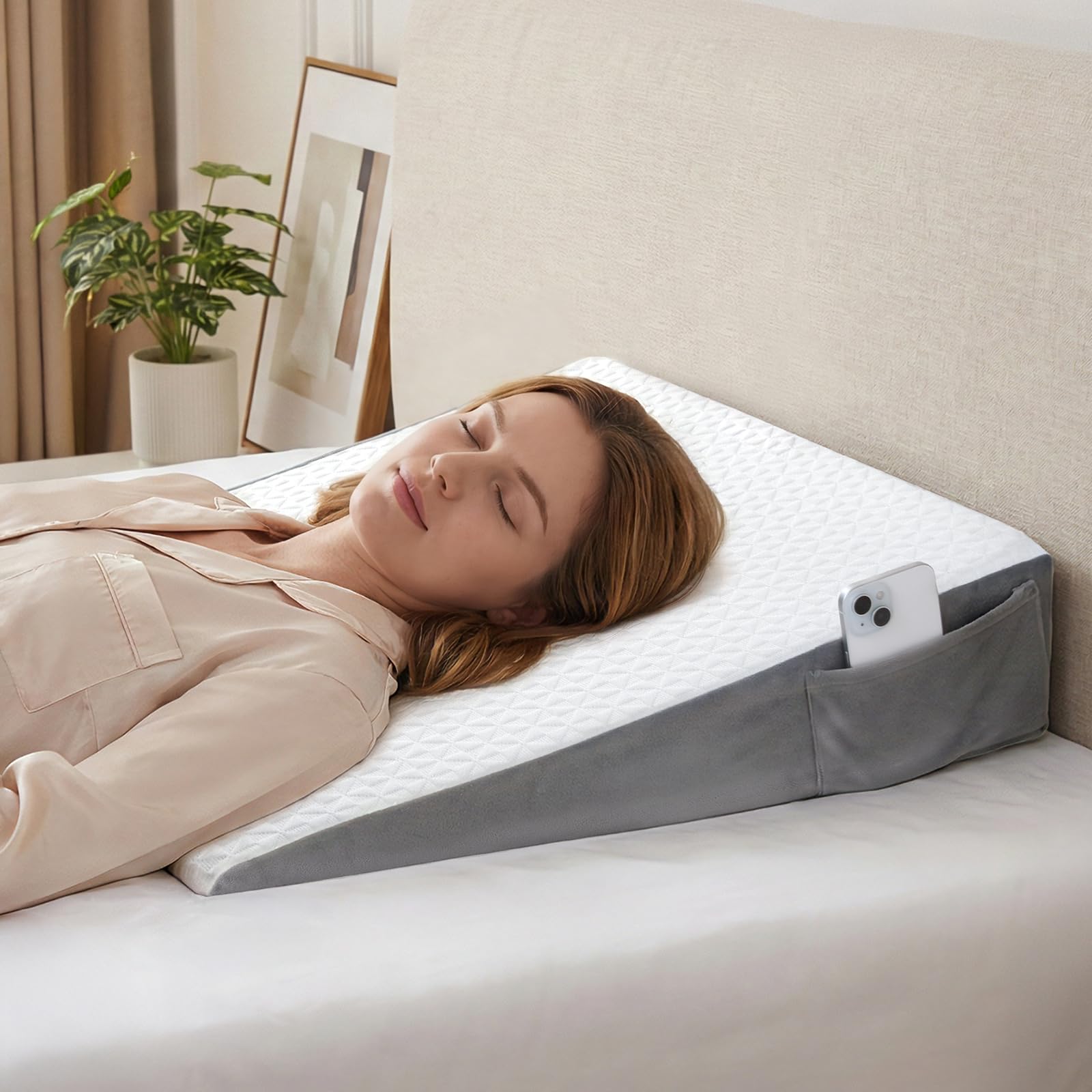
The Vekkia 5.5" Wedge fills the gap between mattress and headboard securely, keeping pillows in place and preventing items from falling behind the bed. Its shallow slope adds mild comfort for reading or watching TV. For sleep apnea, the low elevation does not open airways reliably — this is a bed gap accessory, not a therapeutic solution.
Pros
- Prevents pillows from sinking into the headboard gap and stops nighttime essentials from falling behind the bed
- Stays firmly in place all night, keeping pillows positioned without sliding or readjusting
Cons
- At 24 inches wide, the wedge can feel cramped for broader shoulders or those who shift during sleep
A practical choice if your main goal is filling a bed gap and gaining a gentle reading angle, but not suitable for sleep apnea relief that depends on consistent airway elevation.
Best for Budget Cooling
Cozymaker 7.5" Wedge

Key Features
- Elevation Height: 7.5 inches
- Dimensions (W x L): 24" x 24"
- Cover Material & Washability: Cooling mesh, washable
- Price: Budget
The 1.2-inch aviation-grade memory foam and mesh side panels keep the sleep surface cool while the 7.5-inch incline helps open airways for back sleepers. However, the wedge can shift on satin sheets despite the non-slip bottom, and it hasn’t achieved the same level of validation as the category’s top performer.
Pros
- Cooling memory foam and breathable mesh side panels reduce heat buildup for comfortable all-night elevation.
- 7.5-inch incline reliably eases snoring and mild sleep apnea for back sleepers.
Cons
- Gradual sliding can occur on slick satin or silky sheets.
A solid budget option for back sleepers who need consistent incline relief, as long as your sheets provide enough grip to keep it in place.
Best for Steep Elevation
Bedluxe 10" Wedge

Key Features
- Elevation Height: 10 inches
- Dimensions (W x L): 24" x 24"
- Cover Material & Washability: Breathable polyester, washable
- Price: Mid-Range
The Bedluxe 10-inch wedge provides a steep, effective lift for acid reflux relief and post-surgery sitting, aided by cooling gel memory foam that keeps hot sleepers comfortable. However, the incline can cause neck strain and sliding when used overnight, making it better for reading or TV than continuous sleep apnea therapy.
Pros
- Steep 10-inch elevation opens airways for severe reflux and post-nasal drip relief
- Cooling gel memory foam helps regulate temperature for hot sleepers
Cons
- The steep 10-inch angle can cause neck strain and sliding during overnight sleep, limiting it to upright lounging
A viable option for those needing strong daytime elevation for severe reflux, post-surgery recovery, or upright relaxation — not for all-night sleep apnea relief.
Best for Firm High Wedge
Ruqmuis 10" Wedge

Key Features
- Elevation Height: 10 inches
- Dimensions (W x L): 24" x 24"
- Cover Material & Washability: Jacquard, machine washable
- Price: Budget
The Ruqmuis 10" Wedge delivers sturdy, no-compress elevation that keeps airways open and relieves heartburn, all wrapped in a clean jacquard cover for a budget-friendly price. It sacrifices plushness for an unyielding incline — exactly what back sleepers managing apnea and heartburn need on a tight budget.
Pros
- Sturdy, no-compress lift that keeps airways open and relieves heartburn
- Clean jacquard cover and robust construction at a budget-friendly price
Cons
- Rigid surface creates pressure points for side sleepers
A viable option for back sleepers who need a hard, tall incline for apnea or recovery and can accept zero cushioning; side sleepers should look elsewhere.
Best for Contoured Support
Aeris Curved Wedge 8.8"
Key Features
- Elevation Height: 8.8 inches
- Dimensions (W x L): 25.6" x 25.6"
- Cover Material & Washability: Bamboo-viscose, washable
- Price: Premium
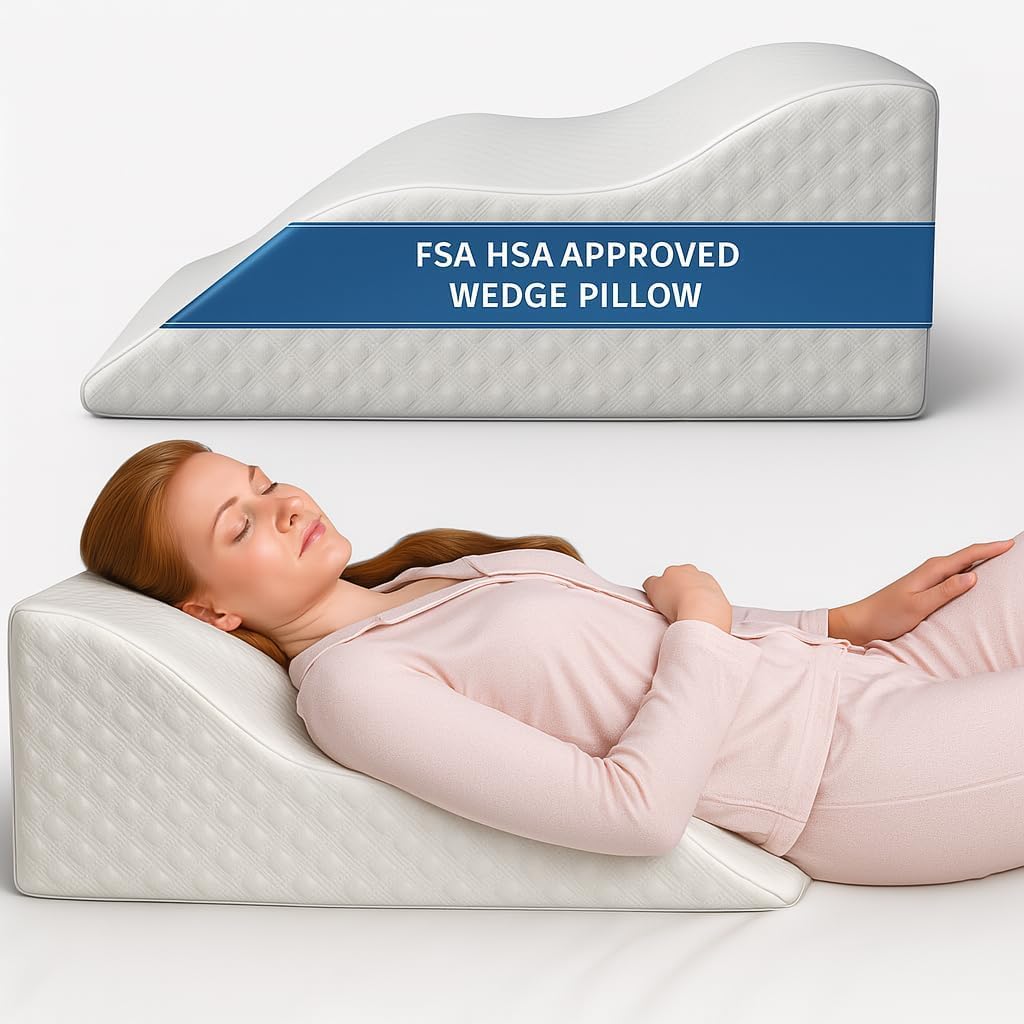
The Aeris wedge’s curved contour cradles shoulders and aligns the spine, reducing slide and low-back strain for acid reflux and mild snoring. The 19-degree incline and memory foam support breathing. However, the premium price and large footprint demand both space and budget. Flat wedges at half the cost provide comparable elevation for apnea, and the initial firmness requires a break-in.
Pros
- Curved contour cradles shoulders and lower back to reduce sliding, keeping you in position for apnea relief.
- 19-degree incline effectively reduces acid reflux and snoring, directly aiding sleep apnea management.
Cons
- Large footprint and firm initial feel demand a break-in period; size can overwhelm small beds.
Fits dedicated users with larger beds and the patience for a break-in who want a curved contour to reduce sliding for apnea and reflux relief.
Best for Modular Angles
WGAKCED 3-Piece Set

Key Features
- Elevation Height: Adjustable 5.5"–12"
- Cover Material & Washability: Polycotton, washable
- Price: Budget
The modular design provides five height combinations, from a gentle sleep incline to an upright sitting wedge, letting you dial in an apnea-relief angle. But the velcro connectors that join the layers can release overnight, causing the slope to shift and disrupt airway positioning. This set suits tinkerers who value adaptability over fixed stability.
Pros
- Five height configurations adapt to sleep, reading, or leg elevation without buying multiple wedges.
- Effective snoring relief and improved sleep quality for back sleepers seeking apnea support.
Cons
- Velcro straps may not hold layers together overnight, leading to shifting that disrupts breathing positioning.
If you’re experimenting with wedge angles and can accept occasional repositioning, this budget kit offers versatile elevation without locking you into a single slope.
Best for Entry Cpap
IKSTAR CPAP Pillow
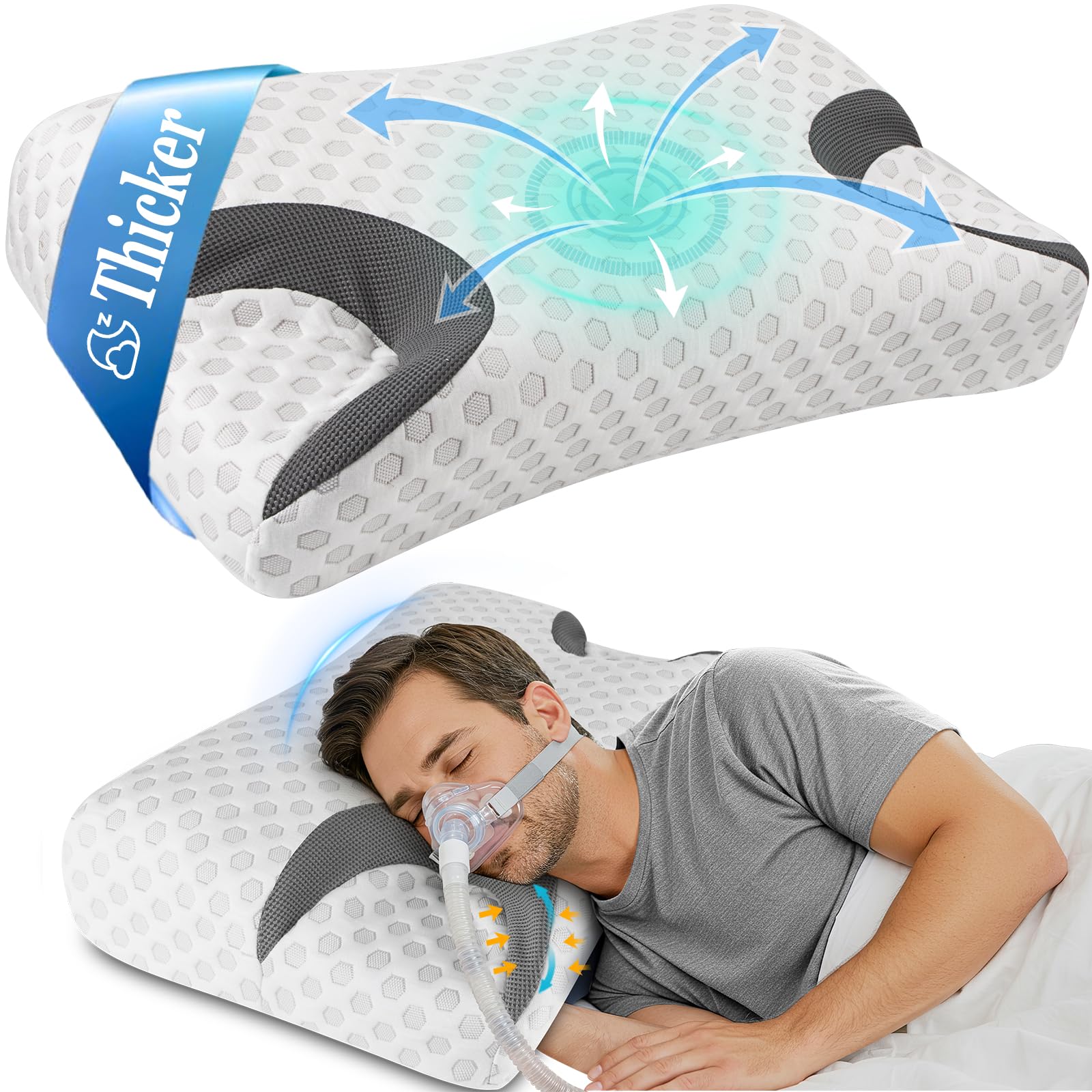
Key Features
- Elevation Height: 4.7" / 4.1"
- Dimensions (W x L): 25.2" x 14.96"
- Cover Material & Washability: Cotton, washable
- Price: Budget
The IKSTAR CPAP pillow delivers side-sleeper cutouts and cervical memory foam support at a budget-friendly price, making it a practical first step for CPAP users who want to keep their mask in place. Its fixed low loft and shorter width can limit effectiveness for broader-shouldered sleepers or those with full-face masks that require deeper recesses — this is a starter option for standard builds, not a high-performance replacement for adjustable pillows.
Pros
- Cutouts keep mask and hose stable for side sleepers, reducing air leaks and pressure points.
- Cervical neck support eases morning stiffness and improves alignment.
Cons
- Low loft and short width can cause mask displacement for users with broad shoulders or full-face masks.
For an affordable first CPAP pillow, the cutout design works — just confirm your shoulder width and mask type suit its compact profile.
How to Choose
The single most important spec in a sleep apnea pillow is the elevation height, because it directly determines how much your airway opens during sleep.
Elevation Height
For sleep apnea, the wedge should keep your head and upper body angled enough to prevent the tongue and soft tissues from collapsing inward. A 7–8 inch lift works for the majority of back sleepers; 5.5 inches is typically too low to create meaningful airway change, while 10 inches or more starts to feel like sitting upright and often causes sliding or neck kinks.
If you sleep on your side, you may need a slightly lower angle combined with a pillow that keeps the mask from shifting — otherwise the steep incline can torque the neck. Test heights with extra pillows at home before buying; most returns happen because the height didn’t match the sleeper’s tolerance.
Memory Foam Thickness & Compression
A memory foam top layer cushions pressure points, which matters most for side sleepers and anyone with shoulder tenderness. However, the thicker the memory foam, the more it can compress under weight. A 3.25-inch plush layer may feel cloud-like but could lose an inch or more of effective height for a heavier individual, reducing the airway benefit.
Check whether the foam is topped onto a firmer high-density core — that layering keeps the angle stable while still softening the surface. If you need rigid support for post-surgery recovery, a no-memory-foam wedge often maintains its slope better.
Width & Body Coverage
A standard 24-inch by 24-inch wedge fits average builds and mattresses, but if you move around or sleep on a queen or king bed, a narrow wedge can leave your shoulders hanging off the edge. The extra-long 34-inch options span the entire upper body, letting back sleepers shift without losing contact.
For CPAP users, the pillow width also determines whether the mask and hose remain within the cutout zone. Compact CPAP pillows work for stationary sleepers, but taller or broad-shouldered users might find the mask gets pushed out of position on a narrower surface.
Adjustability & Modular Design
Some wedges offer dual-height positions or modular pieces that can be stacked from a shallow reading angle to a tall leg elevation. The tradeoff is stability: stacked segments secured by Velcro can separate overnight, especially if you toss or use slick sheets.
A one-piece wedge with a fixed angle eliminates that uncertainty and is the safer bet for uninterrupted breathing therapy. Adjustable designs shine when you genuinely need multiple positions — for example, transitioning from sleeping to seated post-surgery — but are overkill for nightly apnea use.
CPAP Mask Compatibility
Standard wedge pillows raise the head but do nothing to accommodate a mask or hose. The mask can be pushed sideways by the pillow’s slope, causing air leaks and waking you up. Dedicated CPAP pillows carve out recesses for the mask and sometimes for the hose, allowing a stable seal.
If you use a full-face or nasal pillow mask, those cutouts are essential for side sleepers. Back-sleeping CPAP users can sometimes get by with a standard wedge if the elevation is moderate, but any rotational movement risks breaking the seal.
Cover Material & Breathability
A removable, machine-washable cover is non-negotiable for hygiene, especially if you drool or sweat at night. Fabrics like Tencel or bamboo-derived blends pull moisture away and stay cooler than plain polyester. For hot sleepers, covers with mesh side panels improve airflow and prevent heat buildup inside the foam.
FAQ
Why do I slide down my bed wedge pillow at night?
Sliding usually happens because the wedge is too steep for your sleep style or your sheets are slick. A steep angle (10+ inches) turns gravity against you, especially on satin or silky fabrics. Try a wedge with a non-slip bottom and pair it with cotton or brushed microfiber sheets; if sliding persists, a lower-height wedge or a curved contour design often keeps you in place.
Can I use a regular wedge pillow with a CPAP mask for sleep apnea?
You can, but it’s rarely ideal. Standard wedges don’t have cutouts for the mask or hose, so the slope can push the mask sideways and break the seal. CPAP-specific pillows recess the mask area and keep the hose free, which dramatically reduces nighttime awakenings for side sleepers. If you back-sleep and move very little, a moderate 7–8 inch wedge may work, but dedicated CPAP pillows are worth the step up for most users.
What height wedge pillow is best for sleep apnea if I’m a side sleeper?
Side sleepers generally do better with a 7–8 inch wedge combined with a soft, memory-foam top layer to cushion the shoulder. Heights above 8 inches often over-rotate the neck and cause morning discomfort. A curved or contoured wedge that cradles the shoulder can also keep the spine aligned while still providing the airway lift.
Why does my neck hurt after switching to a wedge pillow?
Neck pain usually means the wedge is too steep or too firm for your sleeping position. When the angle is high, your head can be pushed forward, straining the cervical spine. A memory foam surface that’s too hard doesn’t conform to the neck’s curve, creating pressure points. Reduce the incline or layer a soft pillow on top; if pain persists, a wedge with a more gradual taper or a dedicated cervical contour may be necessary.