
This post contains affiliate links. We may earn a small commission when you buy through our links — at no extra cost to you.
Memory foam pillows promise the elusive Goldilocks balance—contouring to every curve while offering just the right support. Too often, that promise unravels: the ‘cooling’ pillow runs warm, the adjustable fill clumps, or a chemical smell lingers for days. Finding one that actually works shouldn’t feel like a gamble.
The real differences live in the details: how well the inner liner keeps fill evenly distributed, whether the cover breathes or simply claims to, and how fast the foam regains its shape after months of use. A $100 pillow with gel infusion can perform no better than a $40 model if its structure fails, while some budget options surprise with lasting comfort and real cool-to-the-touch surfaces. The trick is matching the design—shredded adjustable, solid contour, cooling specialty—to your specific sleep needs.
The pillows that follow earn their keep by doing what they promise—adapting to your body, not forcing you to adapt to them.



Best for All Sleep Positions
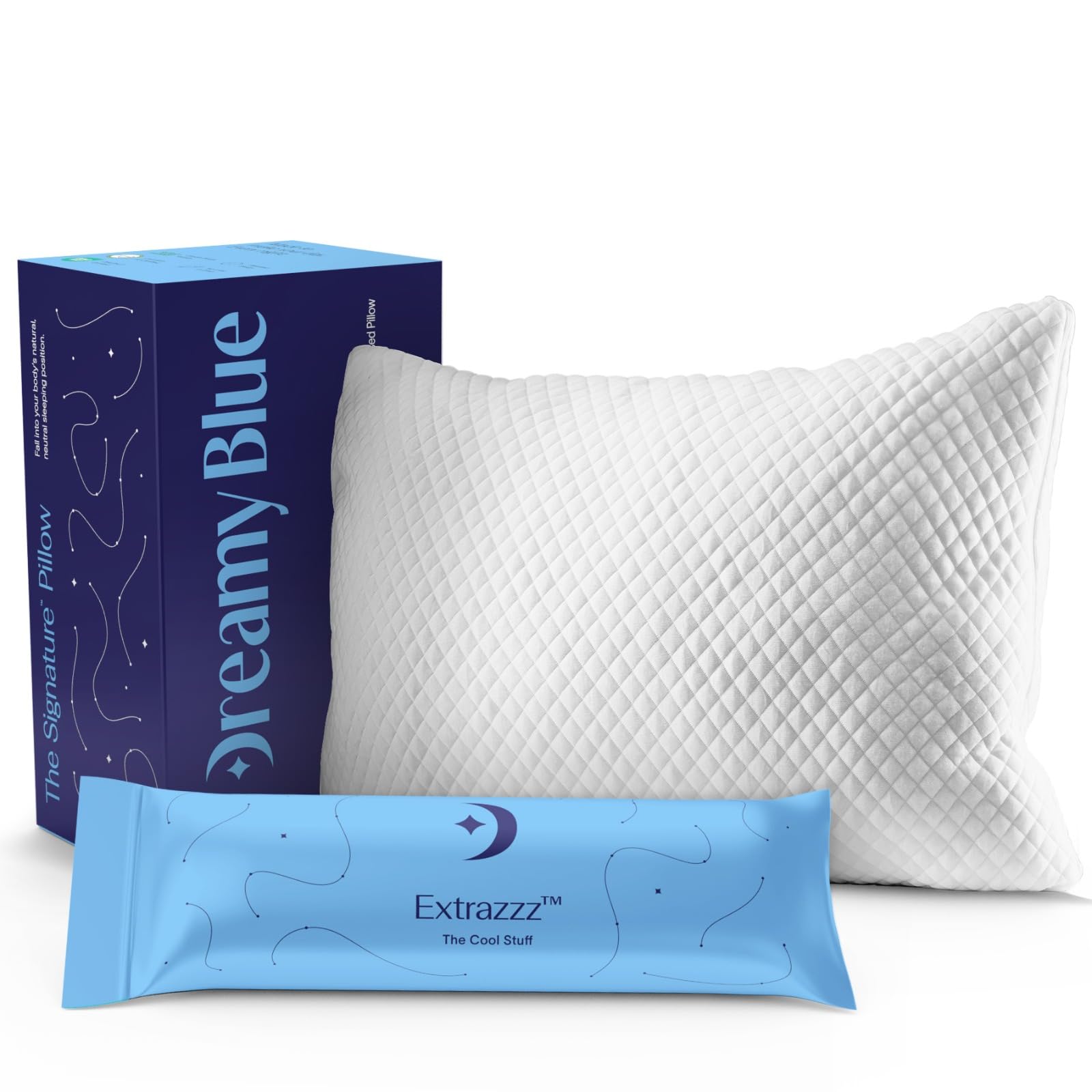
DreamyBlue Signature
Key Features
- Fill Type: Cross-cut shredded memory foam, poly tufts
- Adjustability: Add/remove fill, extra included
- Pillow Shape: Rectangular
- Firmness: Adjustable firmness
- Price: Mid-Range
The DreamyBlue Signature fills the gap between plush comfort and structural support with a blend of shredded memory foam and down-like poly tufts. A zippered side panel gives direct access to the fill, so you add or remove foam to dial in loft for side, back, or stomach sleeping. Side sleepers who stack extra fill get the high, soft cradle they need, while stomach sleepers can remove it to avoid neck strain. The bamboo-extracted rayon cover stays breathable and soft against the skin, though without gel infusion it does not actively dissipate heat.
This pillow suits anyone who wants a plush, supportive pad that arrives ready to sleep on — no days of off-gassing required. It’s particularly well-matched for side sleepers who can build up loft without losing down-like softness. Because it lacks proven temperature regulation, extremely hot sleepers who prioritize active cooling should look toward pillows with phase-change fabric.
Pros
- Outstanding adjustability lets you fine-tune loft for any sleep position without clumping.
- Plush, down-like comfort that sustains high sleep quality night after night.
- Consistent neck alignment helps ease morning stiffness and pressure points.
Cons
A zero-odor memory foam pillow that adjusts to all sleep positions without sacrificing softness — the clearest upgrade for people who want customization without chemical trade-offs.
Best for Neck Pain Relief
Coop Original Adjustable
Key Features
- Fill Type: Shredded memory foam, microfiber blend
- Adjustability: Add/remove fill, extra fill
- Pillow Shape: Rectangular
- Firmness: Adjustable firmness
- Price: Premium
The Coop Original sets the benchmark for adjustable neck pain relief, with a cross-cut memory foam and microfiber blend that lets you dial in the precise loft for side, back, or stomach sleeping. With an included extra fill bag, you can add or remove foam to fine-tune support. Its track record for reducing neck and shoulder discomfort is extensive. Unlike the top pick, which is odor-free from day one, this pillow requires a few days of airing out to clear the initial chemical odor. That makes it ideal for chronic pain sufferers who can plan ahead and want proven customization, rather than shoppers who need an odor-free pillow right out of the box.
Pros
- Add or remove fill to dial in your exact loft for any sleep position.
- Firm yet conforming support that reduces neck and shoulder pain.
- Durable cross-cut memory foam and soft Lulltra cover hold up over time.
Cons
- Strong chemical odor out of the box can linger for days, requiring advance planning to air it out.
If you’re dealing with chronic neck pain and value personalized loft above all else, the Coop Original’s adjustability and track record are hard to beat — just set aside a few days to let the odor fade.
Best for Neck Pain & Cooling
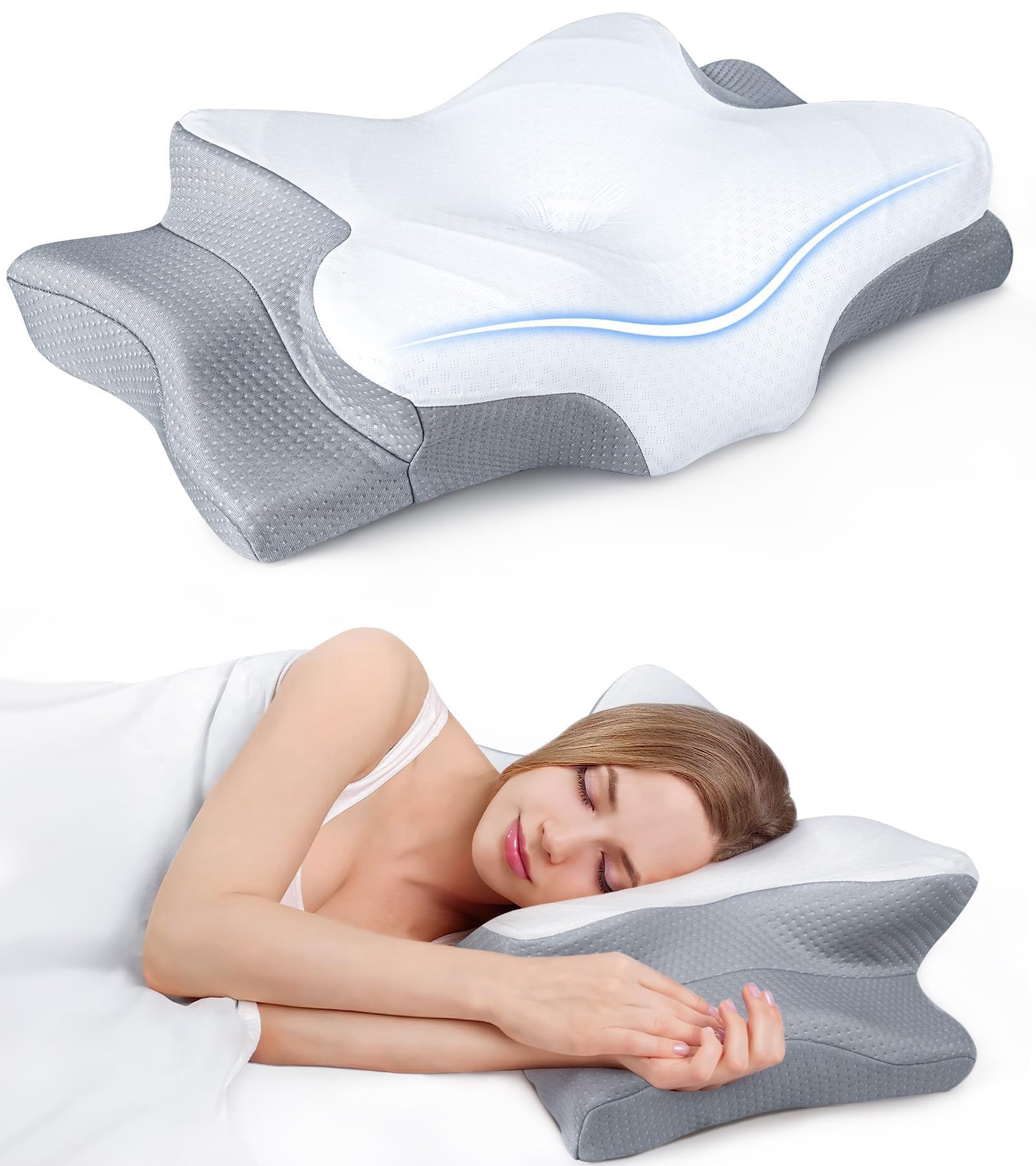
Cozyplayer Cooling Cervical
Key Features
- Fill Type: Breathable solid memory foam
- Adjustability: Rotatable, removable insert
- Pillow Shape: Ergonomic contour
- Firmness: Fixed firmness, height-adjustable
- Price: Budget
Unlike most budget cooling pillows that rely on surface-level cooling claims, the Cozyplayer uses Q-Max 0.4 Arc-Chill fabric that stays cool to the touch through the night. The memory foam contour cradles the neck for alignment and reduces pain, a clear step up from generic adjustable pillows. Stomach sleepers and those who prefer a traditional rectangular shape will find the ergonomic curve too specific; it’s built for side and back sleepers seeking genuine cooling and cervical support.
Pros
- Exceptional neck support and pain relief from the ergonomic contour.
- Effective cooling fabric that stays cool, unlike many budget alternatives.
- Noticeably improves overall sleep quality.
Cons
- The contoured shape may not suit stomach sleepers or anyone who prefers a traditional pillow profile.
If you’re a hot-sleeping side or back sleeper looking for genuine cooling and neck pain relief without spending a lot, this contour pillow punches well above its price.
Best for Budget Cooling
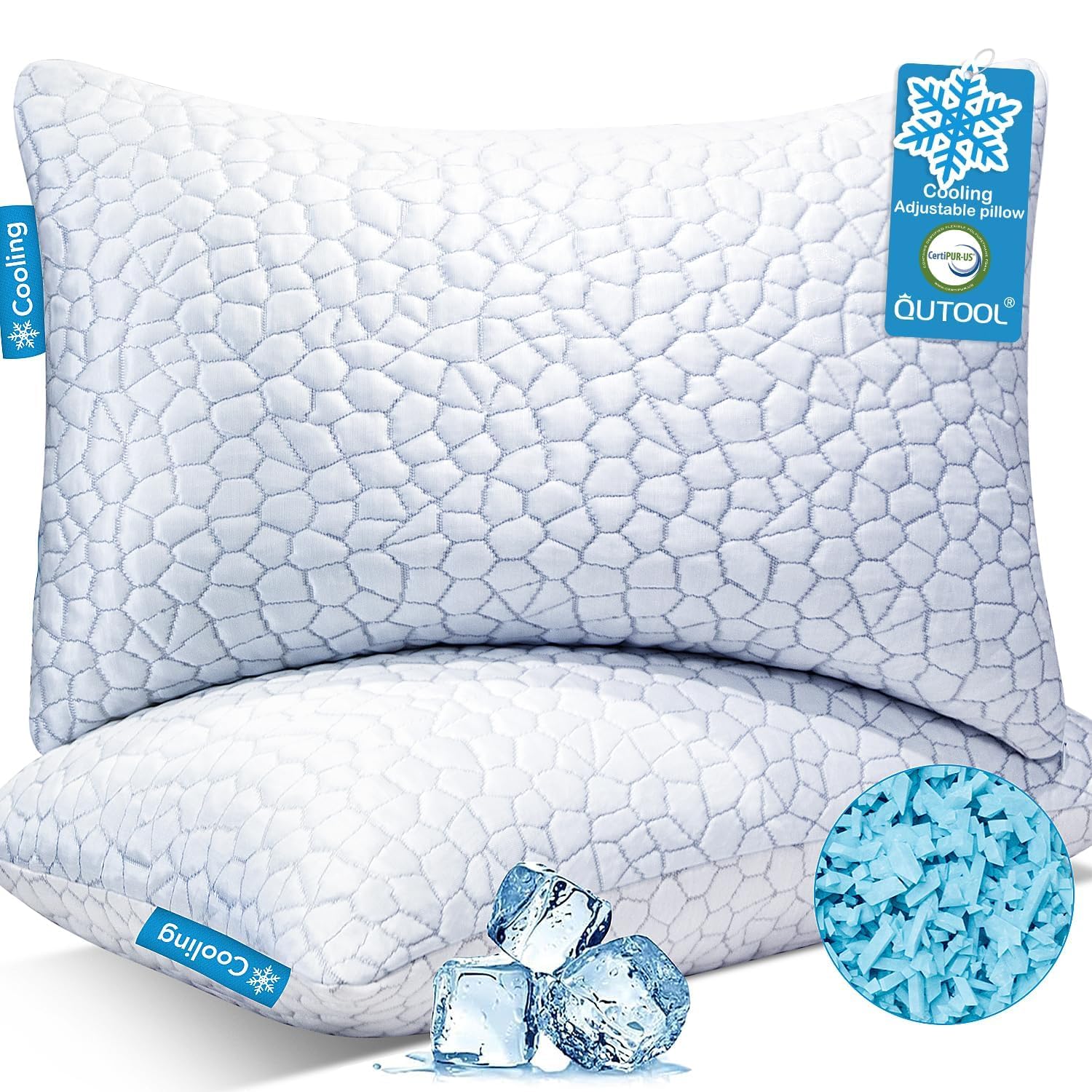
QUTOOL Cooling Set
Key Features
- Fill Type: Shredded memory foam, microfiber blend
- Adjustability: Add/remove fill, zippered
- Pillow Shape: Rectangular
- Firmness: Adjustable firmness
- Price: Budget
This two-pack undercuts the cost of a single memory foam pillow while adding a dual-sided cooling cover. Unlike dedicated cooling contour pillows, the QUTOOL set keeps a traditional rectangular shape with adjustable shredded fill, appealing to those who find contoured designs too restrictive. The ice-silky fabric can deliver a noticeably cool surface at bedtime, though the effect varies.
It’s best for budget-conscious side sleepers who want a higher, adjustable loft and aren’t chasing a guaranteed temperature drop. The cooling sensation can be mild or fade quickly, and the firmness may feel too hard for stomach sleepers or anyone preferring a softer, low-profile pillow. For guest rooms or secondary beds where perfect support isn’t critical, the value is hard to ignore.
Pros
- Ice-silky cover can provide a noticeable surface coolness at bedtime.
- Adjustable loft and shredded fill deliver comfortable, supportive sleep for side and back positions.
- Two queen pillows at a price that challenges many single-pillow competitors, with solid overall build.
Cons
- Cooling effect can be mild or unnoticeable; the fabric’s chill may fade after a few minutes.
- Firmness level may feel too hard for stomach sleepers or those who prefer a softer, lower pillow.
A sensible choice for a guest room or side-sleeper who wants to try cooling on a budget, provided medium-firm support and an unreliable chill aren’t dealbreakers.
Best for Side/back Neck Pain
UTTU Cervical
Key Features
- Fill Type: Dynamic solid memory foam
- Adjustability: Removable middle layer, 2 heights
- Pillow Shape: Ergonomic contour
- Firmness: Fixed firmness, height-adjustable
- Price: Mid-Range
Unlike softer contour pillows that use standard memory foam, the UTTU Cervical relies on a dynamic formulation that resists hardening in cold bedrooms. It offers two height options via a removable middle layer — a rarity in fixed-shape cervical designs — and the dense foam keeps its supportive cradle through the night.
The firm, orthopedic-like support is ideal for side and back sleepers who need aggressive cervical alignment and appreciate a pillow that never goes soft. Stomach sleepers and anyone who prefers a plush, down-like feel will find the foam too rigid, even after removing the middle layer to lower the height. This is not a gentle pillow — it’s built for chronic neck pain relief through firm contouring.
Pros
- Significant neck and shoulder pain relief from the contoured, elevated support
- Cradles the neck and keeps the spine aligned without flattening out
- Dynamic foam formulation resists cold-weather hardening and stays supportive year-round
Cons
- The foam can feel overly firm even on the lower height setting, making it hard to get comfortable for those used to softer pillows
If you want a cervical pillow that stays consistent in cold weather and don’t mind a firm feel, the UTTU delivers meaningful neck pain relief.
Best for Budget Support
NTCOCO Memory Foam Set
Key Features
- Fill Type: Broken memory foam, silk wadding
- Adjustability: Add/remove fill
- Pillow Shape: Rectangular
- Firmness: Adjustable firmness
- Price: Budget
The NTCOCO Memory Foam Set prioritizes firm, customizable support over gimmicks. Each pillow arrives with a dense shredded memory foam fill that many budget rivals skip, delivering consistent neck pain relief for side and back sleepers. The lack of cooling puts hot sleepers at a disadvantage, but the adjustable loft stays put through the night and can be softened by removing some fill. For the price, it’s a straightforward pair that puts posture ahead of marketing.
Pros
- Adjustable fill convincingly relieves neck pain for side and back sleepers
- Firm yet comfortable out of the box with easy loft customization
- Excellent value with a sturdy, well-constructed build
Cons
For budget-conscious side or back sleepers who want firm, adjustable support and don’t need cooling, these pillows are a sensible buy.
Best for Firm Back Sleepers
Anvo Cervical

Key Features
- Fill Type: High-density solid memory foam
- Adjustability: Two height options
- Pillow Shape: Ergonomic contour
- Firmness: Fixed firmness, height options
- Price: Mid-Range
The Anvo Cervical delivers rigid alignment many back sleepers with neck pain require, using dense memory foam that cradles without sinking. Side sleepers accustomed to plushness will find the firmness too harsh; the softer contour pick in this set provides a gentler transition.
Pros
- Relieves neck pain with firm, cradling support
- Maintains a supportive contour that keeps head and neck aligned
Cons
- Firmness can be punishing for side sleepers who prefer cushioning
For back sleepers who need rigid cervical support and find softer pillows unsupportive, this is a solid, no-nonsense choice — just avoid if you sleep on your side or crave plushness.
Best for Moderate Neck Support
Royal Therapy Contour

Key Features
- Fill Type: 3-layer solid memory foam
- Adjustability: Removable middle layer
- Pillow Shape: Ergonomic contour
- Firmness: Fixed firmness, height-adjustable
- Price: Mid-Range
The Royal Therapy contour pillow uses a three-layer CertiPUR-US memory foam design that’s adjustable and comes with a washable bamboo cover. It delivers comfortable neck support that eases morning stiffness, but its cushioning prioritizes a plusher feel over rigid firmness — chronic pain sufferers needing aggressive elevation are better served by a firmer option.
Pros
- Effective relief from morning neck stiffness for side and back sleepers.
- CertiPUR-US foam core paired with a machine-washable bamboo cover.
Cons
- Cushioning may feel too soft for those who need rigid cervical elevation.
A breathable, washable contour option for side sleepers who want gentle neck support without the rigidity of firmer cervical pillows.
Best for Budget Cooling Alternative
OSBED Cooling Set

Key Features
- Fill Type: Shredded memory foam blend
- Adjustability: Add/remove fill
- Pillow Shape: Rectangular
- Firmness: Adjustable firmness
- Price: Budget
OSBED’s two-pack delivers soft-yet-supportive shredded memory foam with a cool-touch IceSilk side and breathable rayon cover. Eco-certified fill and fabric add value for budget-minded shoppers. The cooling effect is subtle, and fill can lose loft over time, so it fits guest rooms or occasional sleepers who don’t demand aggressive temperature control.
Pros
- Soft, supportive feel with a balance that suits side and back sleepers.
- Two adjustable pillows with quality materials at a price that undercuts most single-pillow options.
Cons
- Cooling effect is subtle and may not satisfy those needing aggressive temperature relief.
A practical pick for guest bedrooms and infrequent use, but hot sleepers and daily use may reveal its cooling and durability boundaries.
Best for Firm Pillow Lovers
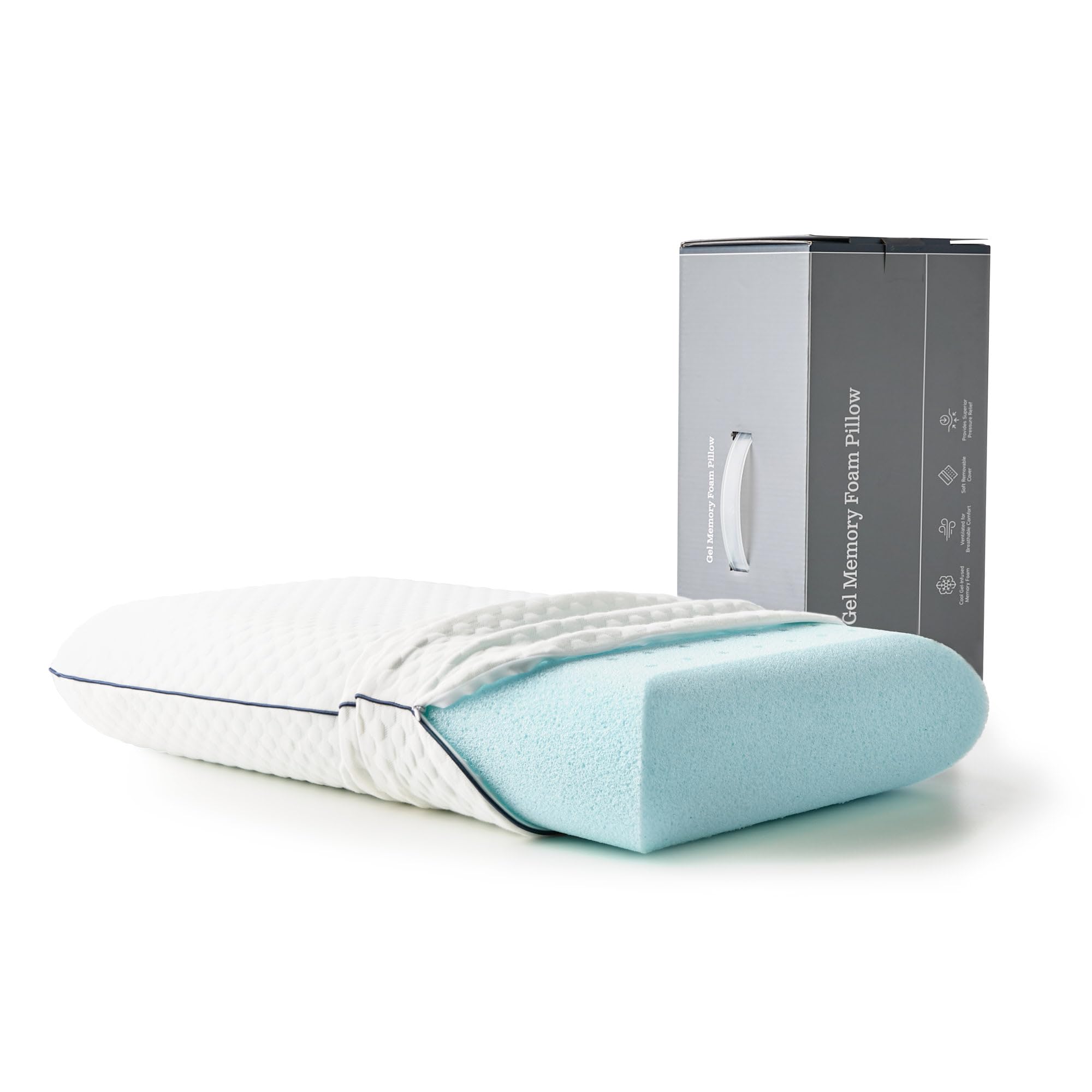
Weekender Gel Pillow
Key Features
- Fill Type: Gel-infused solid memory foam
- Pillow Shape: Rectangular
- Firmness: Fixed firmness
- Price: Budget
A solid-gel memory foam pillow with a well-built core that won’t pack down. The ventilated gel cooling is barely noticeable, and neck pain relief can be inconsistent. This makes it a narrow fit for back sleepers who want dense, unmoving support and don’t prioritize temperature regulation.
Pros
- Durable construction holds its shape through long-term use.
- Firm, stable support for back sleepers who like high-density foam.
Cons
- The solid foam may feel rock-hard, lacking pressure relief for side sleepers or those with neck sensitivity.
A firm pillow for back sleepers who want a simple, high-density foam that won’t flatten — as long as you don’t need the cooling to deliver.
Best for King Bed Owners
ComfySleep King Set

Key Features
- Fill Type: Shredded memory foam
- Adjustability: Add/remove fill
- Pillow Shape: Rectangular
- Firmness: Adjustable firmness
- Price: Mid-Range
The ComfySleep King Set provides two generously sized pillows with a zippered fill that side sleepers can adjust for ideal loft. The bamboo cover offers moderate airflow, but cooling is not strong enough for those who sleep hot. It’s a practical choice for king bed owners who value pillow coverage over advanced temperature regulation.
Pros
- Generous king size brings a spacious, luxurious feel to large beds.
- Adjustable fill lets side sleepers fine-tune loft and support.
Cons
- Firmness can feel overly hard and the shredded foam may become lumpy.
If you own a king bed and don’t need advanced cooling, the firm, adjustable fill gives side sleepers the loft they need at a reasonable price.
Best for Plush Hybrid Feel
ACCURATEX Hybrid Set

Key Features
- Fill Type: Hybrid shredded foam, down alt
- Adjustability: Add/remove fill
- Pillow Shape: Rectangular
- Firmness: Adjustable firmness
- Price: Mid-Range
The set delivers a plush, moldable feel at a reasonable price, with the breathable cotton cover that natural-fiber fans appreciate. However, the shredded foam can shift and feel lumpy, making it a poor fit if you need consistent support across the pillow’s entire surface.
Pros
- Soft, down-like surface molds to your head and neck for comfortable pressure relief.
- Affordable two-pack with natural cotton covers offers good value at a mid-range price.
Cons
- Shredded foam can clump and create uneven support, reducing edge-to-edge consistency.
If you like a soft, moldable pillow and won’t miss uniform firmness, this cotton-covered hybrid set is a sensible pick for a relatively low cost.
How to Choose
The most reliable predictor of a memory foam pillow’s long-term satisfaction is its ability to adapt to your body over time—not just its out-of-box plushness or cooling tagline.
Fill Type: Shredded vs. Solid vs. Gel-Infused
Shredded memory foam pillows give you the freedom to add or remove fill for custom loft and firmness, making them versatile across all sleep positions. However, the inner liner’s quality determines whether the foam stays evenly distributed or turns into a lumpy mess. Pillows with a well-constructed zippered liner and ample fill bag let you tweak comfort without sacrificing consistency.
Solid memory foam—often used in contour cervical pillows—holds its shape for consistent neck support but can sleep warm if not ventilated. Gel-infused options promise cooling, but many only provide a momentary chill. Look for models with breathable covers or ventilated channels; real cooling comes from airflow, not just a gel additive.
Adjustability: True Customization vs. Marketing Speak
Adjustability separates a one-size-fits-all disappointment from a pillow that truly matches your sleep style. The best designs include an easy-access zipper and a generous bag of extra fill, enabling you to increase or decrease loft and firmness on the fly. But removing too much material can cause the pillow to bottom out, losing essential neck support.
The inner liner is the unsung hero—a durable, fine-mesh bag keeps shredded foam from migrating into clumps. Pillows with flimsy liners lead to midnight adjustments as the fill shifts away from your head. Always prioritize pillows that mention anti-clump liners or have strong feedback about material consistency after months of use.
Cooling Technology: What Actually Stays Cool
‘Cooling’ is the most overpromised feature in memory foam pillows. A gel-infused foam may feel cool for the first five minutes, but once it absorbs your body heat, it often sleeps neutral or warm. The real difference comes from materials designed for airflow: open-cell memory foam paired with a moisture-wicking cover or a phase-change cooling pillowcase rated above 0.3 Q-Max.
If staying cool all night is non-negotiable, choose a pillow with genuine cooling fabric like Arc-Chill or IceSilk on one side and a breathable bamboo rayon on the other—and look for user reviews confirming that the coolness lasts beyond 30 minutes. Without that, you’re likely paying extra for marketing, not performance.
Pillow Shape: Rectangular vs. Ergonomic Contour
Standard rectangular pillows adapt to any sleep position as long as you can adjust the fill. They’re the safest choice if you switch between back, side, and stomach sleeping. However, without sufficient loft adjustment, side sleepers may wake with a cricked neck from inadequate support.
Ergonomic contour pillows use a scooped center and raised edges to keep your neck in neutral alignment, which is especially beneficial for back sleepers with chronic pain. The downside: fixed contours often force a single position and feel intolerable if the height doesn’t match your shoulder width. For a middle ground, look for contour pillows with removable layers so you can fine-tune the height without giving up the structured shape.
Firmness: Finding Your Sweet Spot
Firmness is both a material property and a personal preference. High-density memory foam provides robust support but can feel punishing to lighter individuals or side sleepers. Softer, low-density foams cradle pressure points but may collapse under heavier heads. Adjustable pillows let you balance firmness and loft, but they can’t fully decouple the two: adding fill for more firmness also raises the pillow height.
For those who need a soft, high-loft pillow, a fixed solid foam with a plush surface might be the better path. Conversely, back sleepers who want firm support with lower height can remove fill from an adjustable model. The key is to match the foam’s responsiveness—its ability to spring back quickly—to your typical sleep position and weight.
FAQ
Why does my memory foam pillow have a strong chemical smell and how do I get rid of it?
Fresh memory foam releases volatile organic compounds (VOCs) from manufacturing, causing the classic off-gassing odor. Most pillows need 2–3 days of airing out in a well-ventilated room, though some require up to a week. Speeding up the process involves removing the cover, placing the foam near an open window or fan, and occasionally flipping it. If the smell persists beyond a week or causes headaches, the pillow likely uses lower-quality foam and should be returned.
Do cooling memory foam pillows actually stay cool all night?
Most do not. Gel-infused foams typically provide a brief cool sensation that fades as the foam absorbs body heat. The most effective cooling pillows use phase-change covers (like Arc-Chill with a Q-Max rating above 0.3), ventilation channels in the foam, or dual-sided designs that combine a cool side and a breathable side. Unless a pillow has verified multi-hour cooling from user feedback, expect it to eventually warm up.
How can I adjust a shredded memory foam pillow without making it lumpy?
The key is a quality inner liner—a fine-mesh, zippered pouch that prevents shredded pieces from clumping. When adjusting, add or remove small handfuls at a time, fluff the pillow thoroughly after each change, and aim for even distribution. Avoid overstuffing, which forces foam into lumps, or removing so much that the liner bunches up. Pillows with a well-constructed liner and anti-clump design rarely develop uneven texture.
Is a contour cervical pillow better for neck pain than a regular memory foam pillow?
For back and side sleepers with specific cervical spine issues, a properly fitted contour pillow can be far more effective because its raised edge supports the natural curve of the neck and maintains alignment. However, if the contour height doesn’t match your shoulder width, it can aggravate pain. Adjustable shredded pillows can be similarly supportive when shaped to cradle the neck, but they lack the structured guidance of a contour. The best choice depends on whether you need fixed, precise alignment or versatile, moldable support.