
This post contains affiliate links. We may earn a small commission when you buy through our links — at no extra cost to you.
Most contour memory foam pillows promise universal comfort, but the reality is that shoulder width and sleep position determine whether a pillow delivers relief or a stiff neck. Even top-rated options split opinions, with the same pillow hailed as ‘life-changing’ by one user and ‘too firm’ by the next.
This guide sorts through the hype, identifying pillows that excel for specific sleep styles—whether you need a cooling surface, a firm neck cradle, or a fully adjustable fill.
We’ve highlighted which pillows require an adjustment period and which ones ship with an odor you’ll need to air out, so there are no surprises on night one.



Best for Side Sleepers
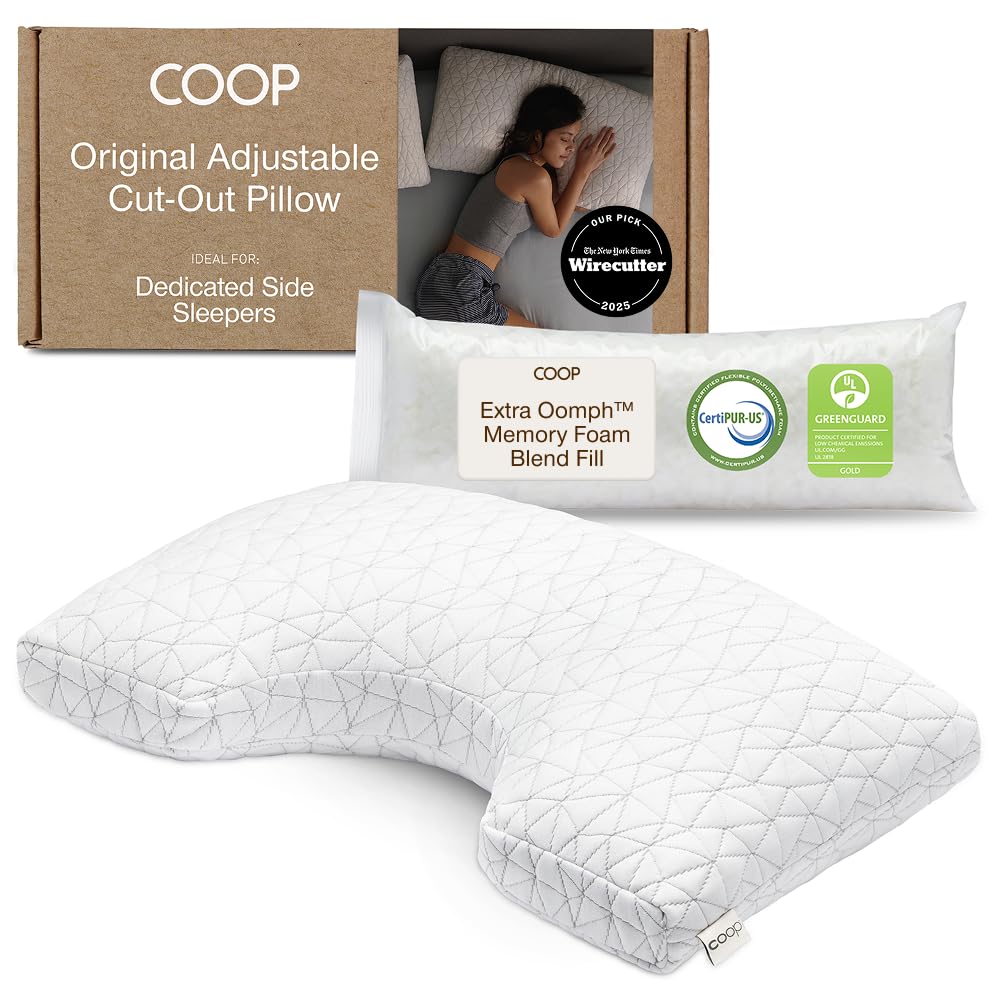
Coop Original Cut-Out Pillow
Key Features
- Contour Shape: Shoulder cut-out
- Adjustability: Extra fill, full customization
- Firmness Level: Medium-firm
- Certifications: CertiPUR-US, GREENGUARD Gold
- Price: Premium
The Coop Original Cut-Out Adjustable Pillow breaks from fixed-shape contour designs by letting you add or remove shredded memory foam to match your precise support needs. The shoulder cut-out reduces pressure on the arm and shoulder for side sleepers, while the 18×28-inch queen size leaves enough room to shift positions without losing alignment. Adjusting loft and firmness takes a few minutes — unzip the cover, pour out or add fill, and reseal.
This approach works best for side sleepers who have struggled to find a pillow that supports both their neck curve and shoulder width. The chemical off-gassing odor upon unboxing can be strong and may require several days of airing out — that’s a real obstacle if you need to use the pillow immediately. Once aired, the foam itself firms up to a medium-firm feel that cradles without collapsing, and the CertiPUR-US / GREENGUARD Gold certifications confirm the materials meet indoor air quality standards.
Pros
- Adjustable fill lets you customize loft and firmness to your exact preference
- Shoulder cut-out relieves pressure for side sleepers, reducing neck and shoulder pain
- Shredded memory foam cradles the head and neck without feeling overly firm
Cons
- Strong chemical smell upon opening may linger for several days in unventilated rooms
For side sleepers willing to wait out the initial odor, the Coop delivers a level of personalized support that fixed contour pillows cannot match — and the massive community validation backs that up.
Best for Combination Sleepers
UTTU Sandwich Pillow
Key Features
- Contour Shape: Sandwich contour
- Adjustability: Removable middle layer
- Firmness Level: Varies by configuration
- Price: Mid-Range
A removable middle layer transforms the UTTU from a high-loft side-sleeper height to a lower profile for back and stomach positions—no extra fill required. That adjustability makes it a cost-effective pick for budget-conscious combination sleepers, especially those in colder rooms where the DYNAMIC FOAM stays supple. Firmness perception varies: some find the memory foam too firm, others too soft. The pillow works best when you treat loft adjustment as the primary feature rather than expecting a universal plushness.
Pros
- Neck pain relief—waking up without stiffness is a common experience.
- Cradling neck support that holds the head in alignment across positions.
- Adjustable height suits side, back, and stomach sleeping.
Cons
- Firmness feel is subjective; some may find it too hard or too soft for their comfort threshold.
For combination sleepers who want adjustable support at a mid-range price, the UTTU delivers real neck relief—just know that firmness is a personal variable, not a one-size-fits-all guarantee.
Best for Hot Sleepers
Cozyplayer Cooling Pillow
Key Features
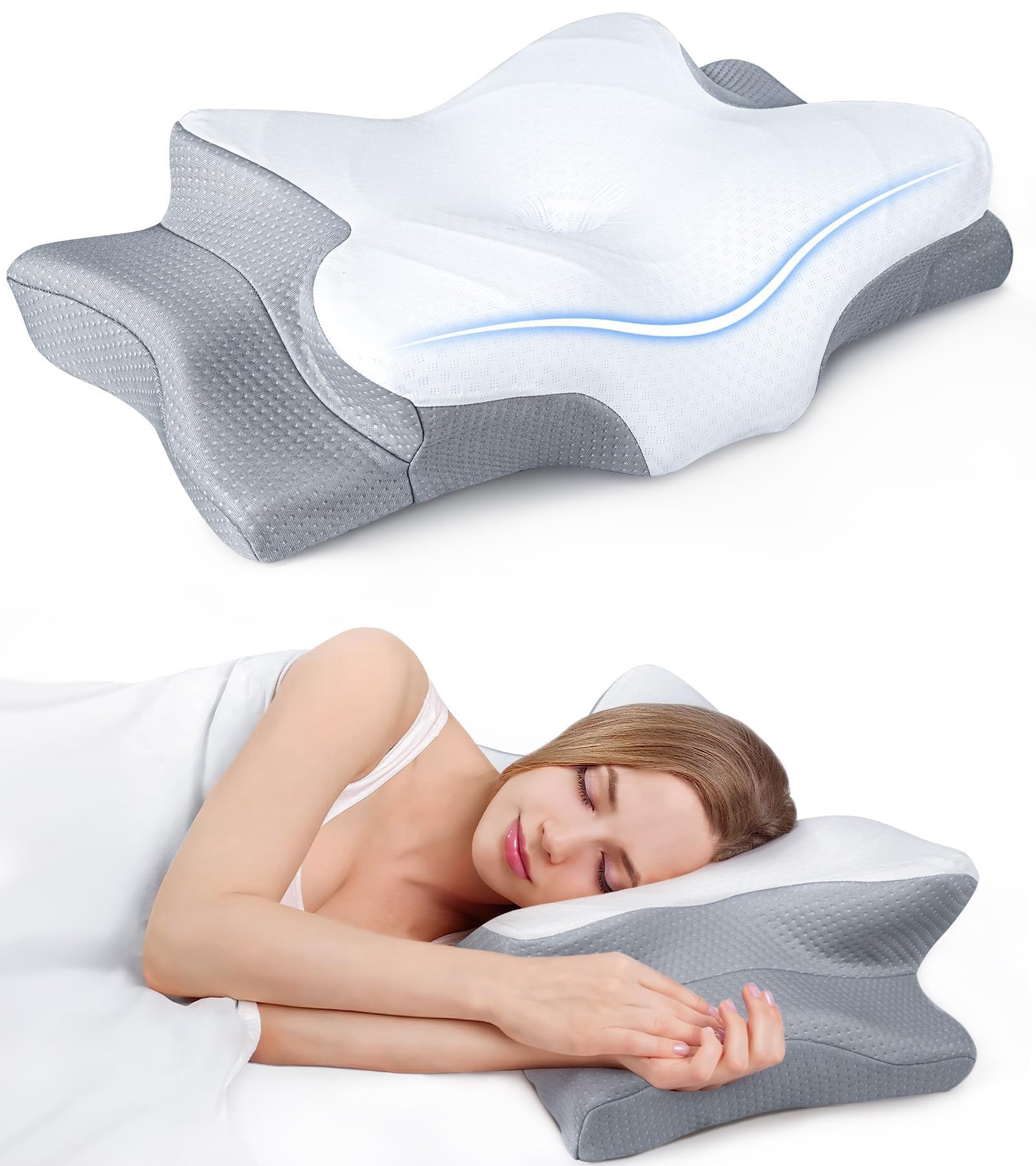
- Contour Shape: Hollow concave, 6 zones
- Adjustability: Rotate 180°, remove insert
- Firmness Level: Firm
- Cooling Features: Arc-Chill cover
- Certifications: CertiPUR-US
- Price: Budget
Where most contour pillows trap heat, the Cozyplayer uses a Q-Max 0.4 Arc-Chill cover that genuinely drops skin temperature up to 5°C. The six-zone hollow cavity cradles the head and aligns the cervical spine, providing targeted support for side and back sleepers. Unlike the customizable premium pick, it needs no fill adjustments or airing out — it’s odorless and ready to use. Hot sleepers with chronic neck pain will find it a cost-effective solution, provided they can tolerate its notably firm memory foam. The initial firmness requires a brief adaptation; those who dislike dense pillows or need a very flat stomach-sleeping surface should look elsewhere.
Pros
- Targeted neck contour relieves pain effectively
- Arc-Chill cover keeps pillow cool through the night
- Improves overall sleep quality and comfort for most buyers
Cons
- Initial firmness may be uncomfortable; requires a short break-in period
For budget-minded hot sleepers with neck pain, this pillow’s active cooling and targeted support are hard to match — just plan for a break-in if you’re sensitive to firm surfaces.
Best for Chronic Neck Pain
Osteo Hollow Pillow
Key Features
- Contour Shape: Hollow center
- Adjustability: Rotate 180°, remove insert
- Firmness Level: Adjustable via height
- Cooling Features: 3D mesh pillowcase
- Certifications: CertiPUR-US, Oeko-Tex
- Price: Budget
The hollow core sets this pillow apart from the fully adjustable top pick, providing a distinct cradle that keeps the head centered and the neck supported without any off-gassing odor. The CertiPUR-US memory foam stays cool via a 3D mesh case, and the fixed ergonomic shape works immediately for back and side sleepers who adapt to a cavity. For those with persistent neck pain, the relief is often rapid. The trade-off is that fine-tuning height and firmness may take a few nights of rotating the pillow or removing the bottom insert — a brief trial period that rewards patience.
Pros
- Exceptional pain relief, frequently eliminating chronic neck discomfort
- Very comfortable cradling feel that supports multiple sleep positions
- Significantly improves sleep quality; many report refreshing rest
Cons
- Firmness balance may feel flat or too firm, requiring height adjustment experimentation
A genuinely effective pain-relief pillow with a unique hollow design, ideal for hot sleepers who want an odor-free, budget-friendly upgrade — just expect a short adjustment period.
Best for Firm Pillow Lovers
Anvo Firm Contour Pillow
Key Features
- Contour Shape: Ergonomic contour
- Adjustability: Two height options
- Firmness Level: Firm
- Certifications: CertiPUR-US
- Price: Mid-Range
High-density slow-rebound foam maintains spinal alignment without caving, delivering the rigid support that back sleepers and neck-pain sufferers often need. The two height options accommodate different shoulder widths, and the CertiPUR-US foam rebounds slowly enough to hold position through the night. For side sleepers, this unwavering firmness can create pressure at the ear, so it’s best suited to those who already know they prefer a hard surface or have a doctor’s recommendation for a firm cervical pillow.
Pros
- Substantial neck pain relief can be noticeable after just a few nights.
- Firm support holds the neck in alignment without the foam collapsing under pressure.
- Sleep quality improves and snoring may lessen for some individuals.
Cons
- Firmness can cause ear discomfort or pressure points for side sleepers.
This is a firmly supportive pillow for back and side sleepers who find most memory foam too soft and want their neck locked in alignment. If you have ear sensitivity on your side, look elsewhere.
Best for Customization Tinkerers
Sidney Sleep Curved Pillow
Key Features
- Contour Shape: Semicircular curved
- Adjustability: Extra fill, fully customizable
- Firmness Level: Customizable via fill
- Certifications: CertiPUR-US
- Price: Mid-Range
Where the top pick leans on a shoulder cut-out for side sleepers, the Sidney Sleep takes a different path with a wide curved surface and a bag of extra shredded foam. That adjustability is the core appeal—you can remove fill to soften an initially rock-hard feel or fine-tune loft until your spine aligns. The trade-off is upfront: a strong chemical odor out of the box that takes days to dissipate, and a firmness that demands immediate tinkering. Side sleepers who invest the time usually report neck pain relief and deeper sleep. If you want a set-and-forget pillow, the odor-free alternative in this lineup is the smoother entry point.
Pros
- Curved design cradles the neck and shoulders for side-sleeping comfort.
- Customizable fill lets you hit the exact loft needed to reduce neck pain.
- Shredded foam and plush cover contribute to deeper, uninterrupted sleep.
Cons
The Sidney Sleep rewards patient side sleepers with a truly personalized fit, but the break-in period sets a clear boundary: this is not a first-night solution.
Best for Budget-Friendly Relief
Royal Therapy Contour Pillow

Key Features
- Contour Shape: Dual-height contour
- Adjustability: Removable middle layer
- Firmness Level: Medium-firm
- Cooling Features: Ventilated foam
- Certifications: CertiPUR-US
- Price: Mid-Range
The Royal Therapy pillow’s ventilated CertiPUR-US foam and machine-washable bamboo cover deliver a plush, breathable surface that cradles the head and neck gently. That soft contour appeals to those who dislike harsh firmness, but side sleepers needing rigid support may find it lacks sufficient lift. Its mid-range price also sits above competitors like the UTTU pillow, which offer stronger cooling, limiting its value for buyers who prioritize active temperature control.
Pros
- Eases neck and shoulder discomfort with gentle, cradling support.
- Durable build with a machine-washable, hypoallergenic OEKO-TEX bamboo cover.
Cons
- Side sleepers seeking firm cervical support may find the foam too soft to maintain alignment.
This pillow suits back and stomach sleepers who want a softer contour and breathability, but side sleepers needing rigid support should look to a firmer alternative.
Best for Back Sleepers
DONAMA Contour Pillow

Key Features
- Contour Shape: Dual-height contour
- Firmness Level: Medium-firm
- Cooling Features: Cooling cover
- Certifications: CertiPUR-US
- Price: Budget
The dual-height design with armrest grooves delivers firm, ergonomic support tailored for back sleepers. The medium-firm memory foam can keep the spine aligned, yet the fixed contour may worsen neck pain for some anatomies — a tradeoff that makes it riskier than customizable top picks.
Pros
- Strong neck support that cradles well, especially for back sleepers
- Comfortable sleep surface with improved sleep quality
Cons
- Fixed contour and firmness may cause pressure points or heightened neck discomfort for some sleepers
For budget-minded back sleepers who prefer a firm, supportive feel and can test the fit risk-free, this pillow offers solid value — as long as you’re prepared to return it if the shape doesn’t agree with your neck.
Best for Multi-Position Support
ZAMAT Contour Pillow

Key Features
- Contour Shape: Contour with quilted cover
- Adjustability: Removable foam pad
- Firmness Level: Medium-firm
- Cooling Features: Moisture-wicking cover
- Certifications: CertiPUR-US
- Price: Budget
The ZAMAT pillow provides odor-free memory foam with a quilted cover and a removable pad for loft adjustment, well-suited to back and side sleepers. It omits active cooling, and the foam’s firmness can diminish gradually, so those who prioritize unchanging support or chill surfaces will prefer the top pick.
Pros
- Neck support relieves headaches and waking pain
- Adjustable loft suits both back and side sleepers
Cons
- Foam firmness may soften over time, slightly reducing support
It’s a solid choice for back and side sleepers wanting a budget-friendly, odor-free pillow with adjustable loft, provided they value initial plush comfort over long-term rigid firmness or active cooling.
Best for Side Sleepers
KUCEY Crescent Side Pillow

Key Features
- Contour Shape: Crescent shape
- Adjustability: Adjustable shredded fill
- Firmness Level: Adjustable via fill
- Cooling Features: Cooling side
- Price: Mid-Range
The crescent cut-out cradles the neck and shoulder for exclusive side sleeping, while the cooling fiber side dissipates body heat. Shredded memory foam lets you dial in loft, but it may compress and need frequent re-fluffing to hold its shape. Back and stomach sleepers will find the curved form awkward, limiting this pillow to side sleepers willing to maintain the fill.
Pros
- Curved crescent contour aligns the head and neck for side sleepers, easing pressure points.
- Cooling fiber side pulls heat away from the skin, helping hot sleepers stay comfortable.
Cons
- Shredded foam may settle and need periodic fluffing to retain the crescent shape.
Purely a side-sleeper solution: if you appreciate a defined crescent shape and don’t mind regular foam tuning, it offers targeted cooling and alignment at a mid-range price.
Best for Budget Cooling
Ylekto Cooling Contour Pillow

Key Features
- Contour Shape: Dual-height contour
- Adjustability: Two heights, rotation
- Firmness Level: Firm
- Cooling Features: Cold silk cover
- Certifications: CertiPUR-US, Oeko-Tex
- Price: Budget
Ylekto’s cooling contour pillow offers cold-silk fabric and two height options at a bottom-dollar price, providing meaningful neck support and sleep improvement. The memory foam runs firm, which may be too hard for side sleepers, and long-term durability is less certain than pricier alternatives.
Pros
- Delivers solid neck support and pain relief at a budget price.
- Comfortable memory foam feel that improves sleep quality.
Cons
- Firmness can be too hard for side sleepers, causing discomfort.
Worth a look if you need cooling and neck support on a strict budget, but side sleepers overly sensitive to firmness should consider softer options.
Epabo Contour Pillow
EPABO Contour Pillow

The EPABO pillow delivers firm, cradling support that noticeably reduces chronic neck pain for back sleepers. That same rigid construction, though, can cause ear pain and headaches for side sleepers—making it a polarizing choice. It suits those who already know they need a hard, unyielding surface, and won’t work for everyone else.
Pros
- Reduces chronic neck pain via firm contouring.
- Cradles the neck and aligns the spine for stable support.
Cons
- Firmness can cause ear pain and headaches during side sleeping.
If you’re a back sleeper who has struggled with neck pain and prefers a hard, fixed support surface, this pillow may be the relief you need. Everyone else will likely find it too punishing.
How to Choose
The effectiveness of a contour memory foam pillow hinges on matching the pillow’s shape and firmness to your sleep position and shoulder anatomy—not on marketing claims.
Contour Shape
Side sleepers need a deeper cut-out or crescent shape that creates a recess for the shoulder, preventing the neck from tilting upward. Back sleepers benefit from a central cradle or dual-height design that supports the cervical curve without pushing the head forward. Stomach sleepers almost always require the lowest loft contour, often by rotating the pillow or removing an insert. A mismatched shape either leaves the neck unsupported or cranks it into a strained angle, setting the stage for morning pain.
Adjustability
Pillows with removable layers or extra shredded fill let you fine-tune loft and firmness, but the two approaches behave very differently. Layered designs—like a sandwich with a middle section—hold their shape consistently night after night. Shredded foam pillows offer infinite tweakability, yet the fill can clump, shift, and require frequent re-fluffing to maintain support. If you dislike tinkering, a layered adjustable pillow is the lower-maintenance route.
Firmness Level
Firmness is the most divisive factor. A pillow that feels perfectly supportive to one person can feel like a brick to another, because ear and jaw pressure points magnify discomfort on hard surfaces. Very firm pillows tend to work best for back sleepers and heavier side sleepers who compress the foam enough to cradle their neck. Softer contours reduce pressure points but may collapse too much for broad-shouldered side sleepers, sacrificing spinal alignment. If you’re unsure, choose a medium-firm adjustable pillow so you can dial it in.
Cooling Features
True active cooling—like an Arc-Chill cover or a cold silk fabric—pulls heat away from the skin on contact, but the sensation may fade as the material warms. Passive cooling relies on breathable meshes, ventilated foam, or moisture-wicking fabrics that delay heat buildup rather than eliminate it. Hot sleepers should prioritize pillows with a dedicated cooling surface, not just a ‘breathable’ cover, to get the most noticeable temperature drop.
Certifications
CertiPUR-US certifies that the foam meets indoor emission and durability standards, while GREENGUARD Gold imposes even stricter VOC limits. Even certified foam can off-gas initially, so plan to air out any new pillow for 48 hours. Oeko-Tex certification on the cover ensures the fabric was tested for harmful substances, an extra layer of safety if you have sensitive skin.
FAQ
How long does memory foam pillow off-gassing last and how can I get rid of the smell?
Air out the pillow in a well-ventilated room for at least 48 hours before first use; a circulating fan speeds the process. If a noticeable chemical smell persists beyond a week, it likely indicates higher-than-expected VOC levels and you should contact the manufacturer or consider a return.
Can a firm contour pillow make neck pain worse before it gets better?
A brief 3–7 night break-in period is normal as your muscles adapt, but the pain should gradually diminish. If the discomfort intensifies or continues past a week, the pillow’s contour likely does not match your neck’s natural curve—it’s time to try a different firmness or return it.
How do I adjust the height on my adjustable memory foam pillow?
Layered designs usually let you unzip the cover and remove a center section, while pillows that rotate 180° use an asymmetric profile to offer two heights. Shredded foam pillows require manual fill removal or addition—start with the tallest configuration and work down until your neck feels neutrally aligned.
What’s the best contour pillow shape for a side sleeper with shoulder pain?
Look for a cut-out or crescent shape that provides a recess for your shoulder, allowing your neck to stay in line with your spine. The pillow’s loft should fill the entire space between your ear and the mattress, preventing your head from tilting down or being propped too high.