
This post contains affiliate links. We may earn a small commission when you buy through our links — at no extra cost to you.
Plenty of people order a memory foam seat cushion expecting instant ergonomic relief, only to end up with a pad that feels rock-hard after an hour or goes flat in a month. That frustration isn’t a sign that cushioning itself can’t work — it usually means the firmness and materials weren’t matched to your actual body weight, sitting posture, and heat tolerance.
The category is stacked with nearly identical U-shaped foam blocks, but the differences that matter are hidden in density, cooling layers, and how a cushion responds to pressure over an eight-hour workday. This guide focuses on those real-world factors: which seat cushions offload tailbone pressure without overheating, and which lumbar pillows stay anchored so you’re not constantly re-adjusting.
The payoff is simple: when the cushion’s firmness aligns with your weight, the supporting foam works with your skeleton instead of fighting it. Add a lumbar pillow that stays where you placed it, and you’ve built a sitting setup that actively reduces fatigue rather than just promising comfort.



Best for Office & Driving
ComfiLife Gel Seat Cushion
Key Features
- Fill Material: Gel-enhanced memory foam
- Design: U-shaped coccyx cutout
- Firmness Level: Firm
- Cover: Velour, washable
- Stability: Non-slip rubber bottom
- Price: Mid-Range
The ComfiLife cushion layers cooling gel over dense memory foam to tackle two common sitting problems: heat buildup and tailbone pressure. Its U-shaped cutout offloads the coccyx, while the non-slip base keeps it stable on office chairs and car seats. The foam holds its shape through 8+ hours without flattening, and the built-in handle makes it easy to move between desk and vehicle.
It suits sciatica and tailbone pain sufferers who sit for long stretches, especially drivers and office workers in warm settings. The gel layer adds genuine temperature relief most pure foam cushions lack. However, the firmness is intended for support, not plushness — lighter users or anyone expecting a soft, sink-in feel may find it too hard, particularly during the first few days. A short break-in period can ease the transition.
Pros
- Reduces tailbone and sciatica pain noticeably during extended sitting
- Supports comfortable all-day use without sagging on office chairs or in cars
- Gel layer keeps the seat noticeably cooler in warm environments
Cons
- Firmness may feel too hard for those expecting a plush cushion, especially lighter individuals
For tailbone and sciatica relief with the added benefit of active cooling, this cushion is a well-priced choice backed by a lifetime warranty. If you need a soft, sinking feel, a softer pure-foam alternative may suit you better.
Best for Office & Car
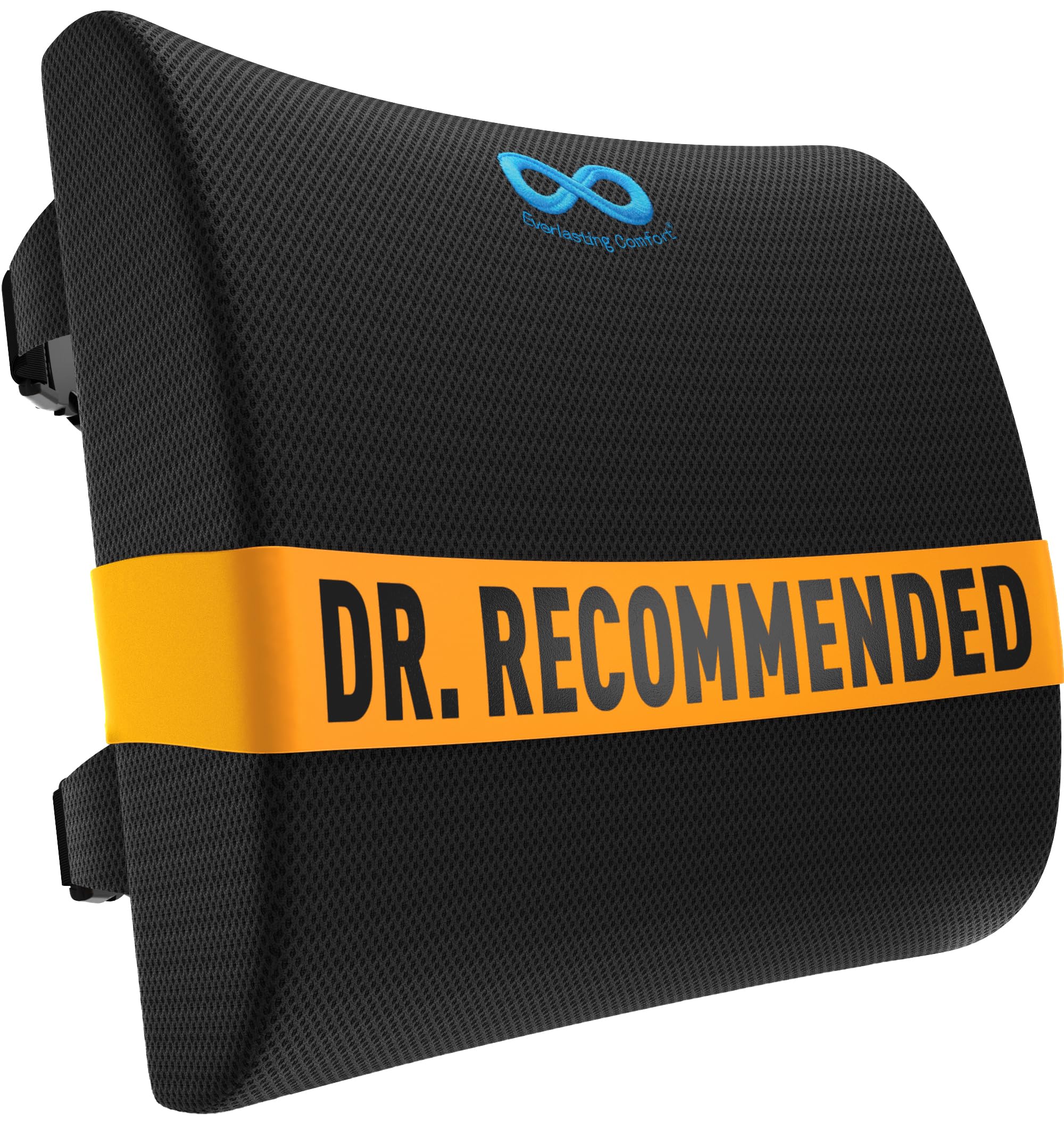
Everlasting Lumbar Support
Key Features
- Fill Material: High-density memory foam
- Design: Contoured lumbar pillow
- Firmness Level: Firm
- Cover: Breathable mesh, washable
- Stability: Dual adjustable straps
- Price: Mid-Range
Unlike seat cushions that address tailbone pressure, the Everlasting Lumbar Support focuses purely on the lower back. Its firm memory foam fills the gap between your spine and the chair, promoting a more upright posture. The dual straps cinch tight around office chair backs and car seats, keeping the pillow from sliding down — a common frustration with looser lumbar cushions.
The thick 3.5-inch profile provides substantial pressure relief for most, but in shallow-seated chairs or compact car interiors, it can push smaller sitters too far forward. That’s a fit limitation, not a support flaw — it works best in chairs with adequate seat depth and for users who prefer a pronounced lumbar presence. If your seat is deep enough, the breathable mesh cover and machine-washable case make it easy to keep clean over long-term use.
Pros
- Outstanding lumbar back support and posture improvement
- Consistent comfort and pressure reduction throughout the day
- Exceptional build quality with a washable, breathable cover
Cons
- Thick profile may push smaller users too far forward in compact or shallow seats.
A lumbar-first solution that stays put where others slide — best for deep-seated office chairs and drivers who can accommodate its pronounced depth.
Best for Wheelchair & Recovery
Cushion Lab Seat Cushion
Key Features
- Fill Material: Extra-dense charcoal memory foam
- Design: Ergonomic contoured
- Firmness Level: Extra-firm
- Cover: Recycled polyester
- Stability: Non-slip cover
- Price: Premium
The Cushion Lab seat cushion departs from standard U-shaped designs with a scientifically sculpted profile and extra-dense charcoal memory foam that actively redistributes body weight away from the hips and tailbone. It’s a targeted tool for wheelchair users, post-surgery recovery, and office workers with diagnosed chronic coccyx or hip disorders, where passive cutouts often fall short. For mild everyday discomfort or anyone expecting a soft, plush seat, the firm contour and premium cost are hard to justify.
Pros
- Relieves hip and tailbone pain even during all-day sitting
- Contoured shape promotes better posture and weight distribution
- High-density charcoal foam holds its form well through months of daily use
Cons
- Premium cost can feel hard to justify if you have mild discomfort or prefer a softer cushion
For diagnosed coccyx or hip disorders, the contoured shape and dense support deliver relief that basic cutouts can’t match – but for occasional soreness, it’s a costly extra.
Best for Budget Office
Sleepavo Seat Cushion
Key Features
- Fill Material: High-density memory foam
- Design: U-shaped coccyx cutout
- Firmness Level: Medium-firm
- Cover: Mesh, washable
- Stability: Non-slip rubber bottom
- Price: Budget
The Sleepavo cushion pairs near-perfect pain relief scores with a 275 lb capacity at a price that undercuts most competitors. Its high-density memory foam and U-shaped cutout provide genuine sciatica and tailbone relief for desk workers who sit all day. Foam near the weight limit can soften slightly over many months of daily use, making it a better long-term fit for users under 250 lbs. No gel layer means it stays comfortable in air-conditioned spaces, but those in hot rooms may prefer the top pick’s cooling design.
Pros
- Delivers consistent tailbone and sciatica pain relief for long office sits.
- Memory foam comfort rivals more expensive cushions without bottoming out.
- Build quality holds up to daily compression without tearing or flattening quickly.
Cons
- Foam may soften slightly for users near the weight limit over months of daily use.
At a budget-friendly price, the Sleepavo offers exceptional pain relief and a high weight threshold — just plan on a replacement sooner if you’re near the upper end of that limit.
Best for Multi-Use Sitting
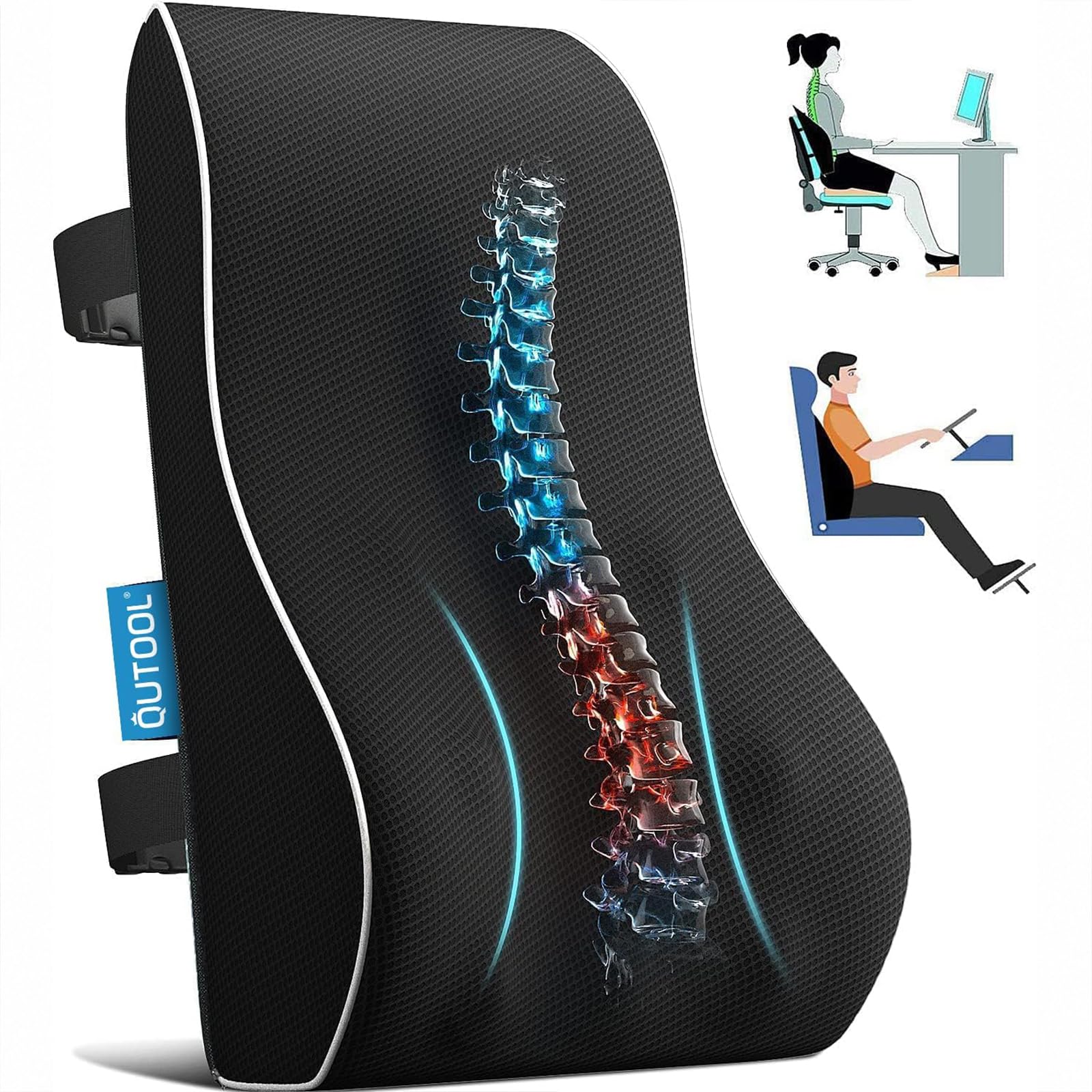
QUTOOL Lumbar Support
Key Features
- Fill Material: Memory foam
- Design: Invertible (lumbar/upper back)
- Firmness Level: Medium
- Cover: 3D mesh, washable
- Stability: Dual adjustable straps
- Price: Budget
The QUTOOL’s invertible design sets it apart: use it horizontally for lumbar relief or vertically to reach the upper back, a flexibility absent from most one-position pillows. The memory foam keeps its shape over repeated all-day use, reducing back strain and gently encouraging better posture. Students, remote workers, and anyone rotating through desk, couch, and car seating will appreciate this adaptability. It’s built for users under 220 pounds — beyond that the foam compresses too deeply — and the dual straps may need occasional retightening to hold position.
Pros
- Flippable orientation targets both lower back tension and mid/upper back fatigue.
- Memory foam maintains resilience and support through extended daily sessions.
- Helps align the spine and promotes an upright sitting position naturally.
Cons
For students and home-office workers under 220 lbs who want both lower and upper back relief in a single pillow, the QUTOOL delivers adaptable comfort at a budget-friendly price.
Best for Office & Driving
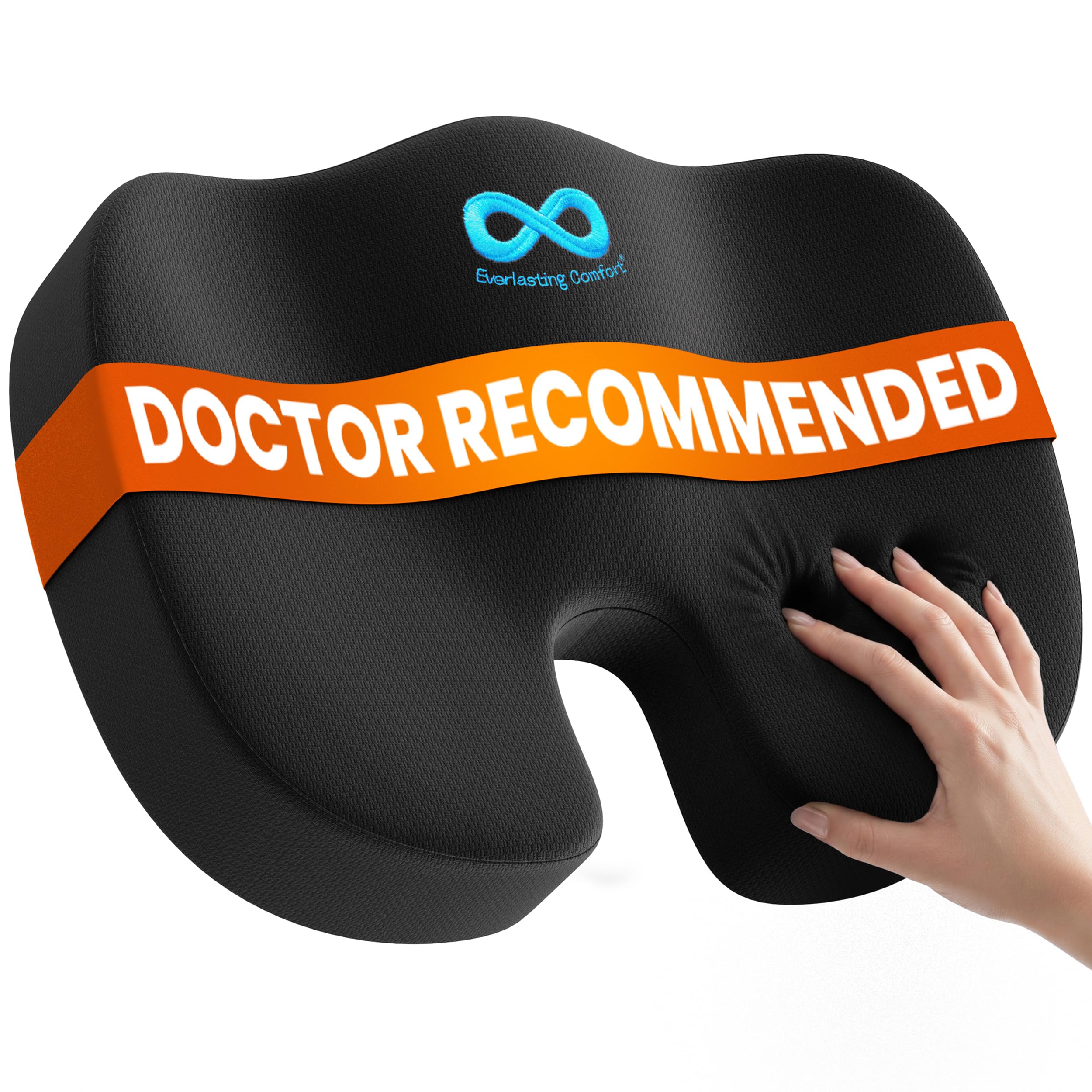
Everlasting Seat Cushion
Key Features
- Fill Material: 100% memory foam
- Design: U-shaped coccyx cutout
- Firmness Level: Firm
- Cover: Breathable mesh, washable
- Stability: Non-slip bottom
- Price: Mid-Range
The 17.3-inch wide cushion with a deep coccyx cutout offloads tailbone pressure effectively, reducing lower back strain over long hours. The memory foam holds its shape without flattening, which sustains that support. The firm density, however, will feel overly hard if you expect a plush, sink-in cushion, and without gel infusion it won’t combat heat buildup. This is a straightforward, durable seat pad for those who prefer a supportive sit over a cushy one.
Pros
- Targeted relief for tailbone and lower back discomfort during long sitting sessions.
- High-density memory foam holds its shape without flattening, even after years of daily use.
Cons
- The dense foam can feel overly firm for sitters who prefer a plusher, sink-in cushion, especially over extended periods.
A durable, no-frills seat cushion for desk workers and drivers who value consistent tailbone support over cooling features and don’t mind a firmer sit.
Best for Lighter Users Office
5 STARS UNITED Seat Cushion

Key Features
- Fill Material: 100% memory foam
- Design: U-shaped coccyx cutout
- Firmness Level: Firm
- Cover: Breathable mesh, washable
- Stability: Non-slip bottom
- Price: Budget
This 18-inch cushion uses OEKO-TEX certified foam with a non-slip base, staying put and resisting compression. The foam runs on the very firm side, which helps support the pelvis but may feel uncomfortably hard for lighter users or anyone expecting sink-in softness. It’s a dedicated firm platform for cost-conscious office workers who want a hard, unmoving seat.
Pros
- Noticeable back and sciatic pain relief during prolonged sitting.
- Solid build and materials at a budget-friendly price.
Cons
- For lighter users or anyone expecting a cushion with give, the foam can feel unyieldingly hard and lead to discomfort.
This cushion justifies its low price if you’re a lighter-to-mid-weight office worker (150–220 lbs) who deliberately wants a hard, supportive platform and will not miss any plushness.
Best for Occasional Travel
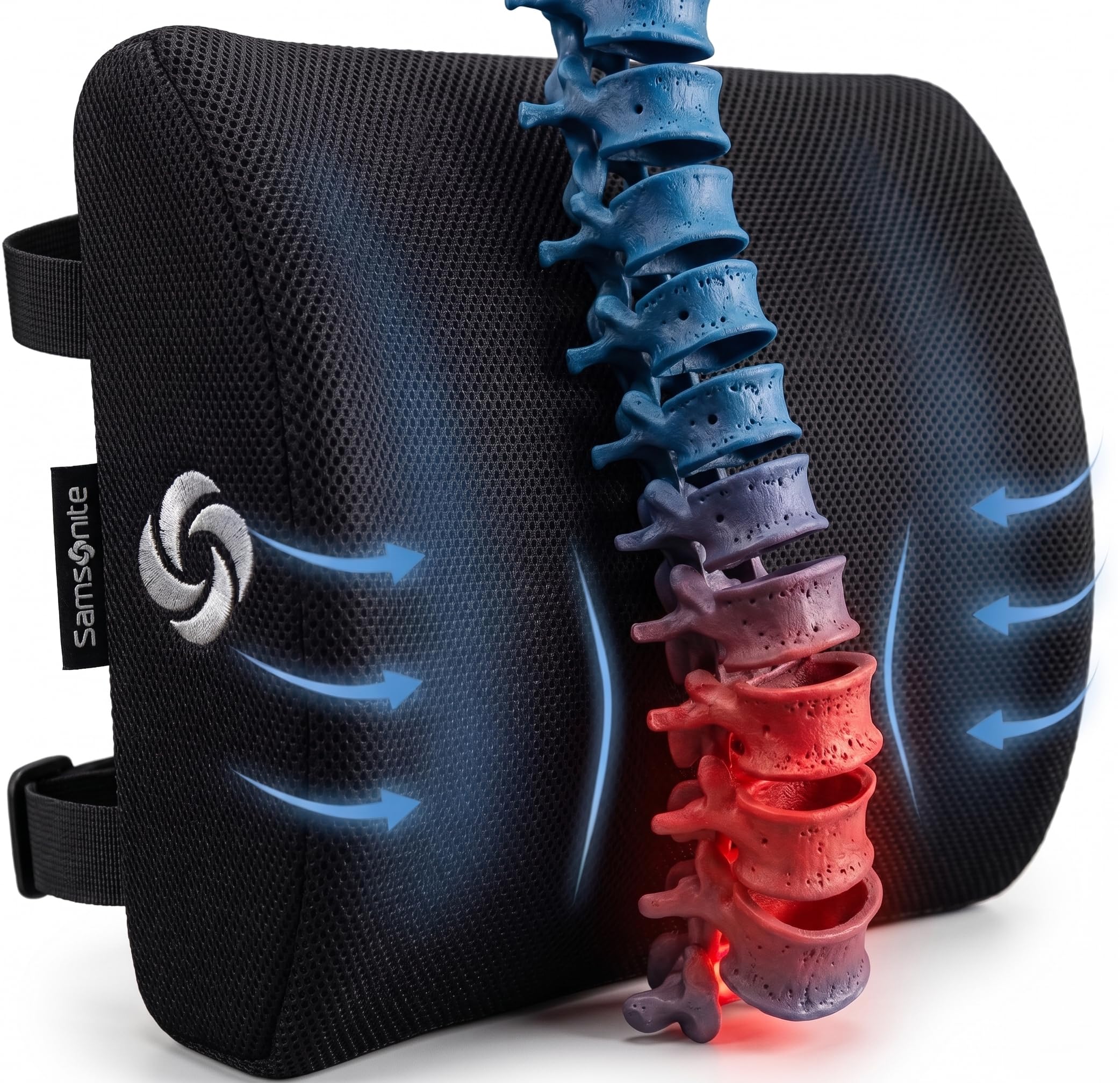
Samsonite Lumbar Support
Key Features
- Fill Material: Contour memory foam
- Design: Contoured lumbar
- Firmness Level: Medium
- Cover: Ventilated mesh, washable
- Stability: Adjustable straps
- Price: Budget
Contoured memory foam provides meaningful lower back alignment and pain relief during short desk stints or drives, and the ventilated mesh cover stays breathable. The tradeoff is foam resilience: repeated daily compression can cause softening and reduced support within months. This fits the traveler or occasional user, not the all-day desk worker.
Pros
- Targeted lower back support that improves spinal alignment during sitting.
- Effective pain relief for short-term driving or desk work.
Cons
- Memory foam may lose firmness and support after a few months of everyday compression.
Best for travel, temporary setups, or occasional drivers who want lightweight back support without expecting year-round daily durability.
Best for Deep Chair Stationary
Niceeday Lumbar Pillow

Key Features
- Fill Material: Memory foam
- Design: Full-back design
- Firmness Level: Medium-firm
- Cover: 3D breathable mesh, removable
- Stability: Wide adjustable straps
- Price: Mid-Range
The Niceeday lumbar pillow covers your entire lower back with dense memory foam that encourages upright posture during long desk sessions. The wide straps accommodate oversized chairs, but on curved or smooth surfaces, they can slip, making it a poor match for active sitters or drivers. It’s a sensible option for stationary home office use if your chair back is flat and deep.
Pros
- Firm memory foam encourages upright posture and relieves lower back pressure.
- Durable build quality with a breathable mesh cover that resists sagging.
Cons
- On chairs with contoured or slippery backrests, the straps can lose grip and slide.
This full-back pillow works well on deep, upright home office chairs, but strap instability sidelines it for car seats or dynamic seating.
Best for Light Occasional
TushGuard Seat Cushion

Key Features
- Fill Material: 100% memory foam
- Design: U-shaped coccyx cutout
- Firmness Level: Firm
- Cover: Breathable polyester, washable
- Stability: Non-slip bottom
- Price: Budget
At this ultra-budget price, the TushGuard cushion provides basic comfort for short, light desk sessions. The portable handle adds convenience. Firmness can vary between units — some feel excessively hard or lose support quickly — so it works only for very occasional sitting by users under 150 lbs.
Pros
- Satisfactory cushioning for light, short-term office use.
- Can offer mild tailbone or sciatica relief during brief sitting.
Cons
- Firmness can be inconsistent; some units feel overly hard or flatten out after limited use.
If you weigh under 150 lbs and need a temporary seat pad for occasional use, the ultra-low price may justify the firmness gamble.
Best for Cold Hard Chairs
BlissTrends Seat Cushion
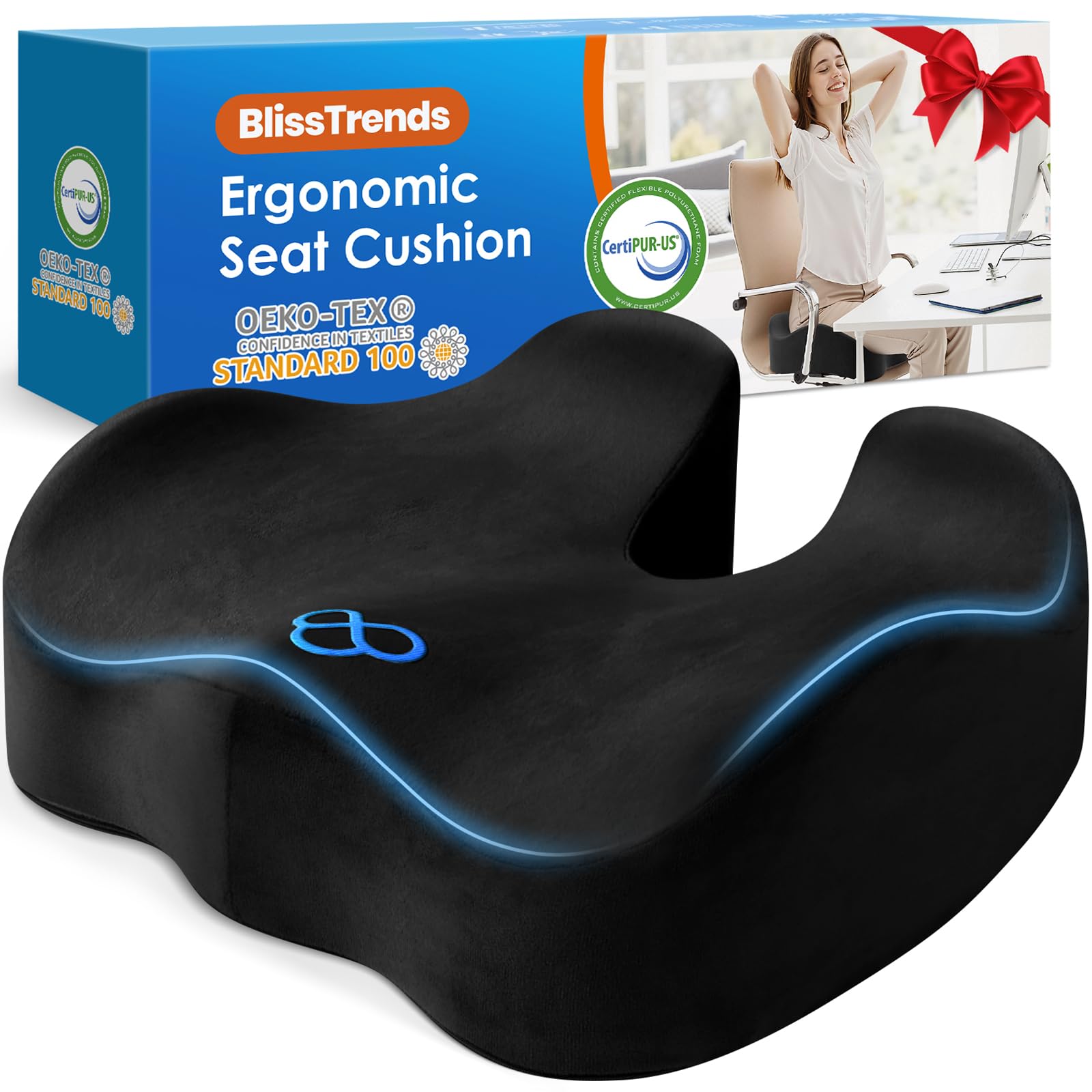
Key Features
- Fill Material: Polyurethane foam
- Design: Extra-thick pad
- Firmness Level: Firm
- Cover: Velvet, washable
- Stability: Non-slip bottom
- Price: Budget
The BlissTrends cushion’s thick polyurethane foam and soft velvet cover offer a noticeable height increase and surface softness, ideal for cold environments. However, the internal foam can be too rigid for those needing true coccyx relief, making it better suited for hard-chair comfort than pain management.
Pros
- Soft velvet cover resists sliding and feels pleasant against skin.
- Thick 4.7-inch foam adds substantial seat height and cushions hard surfaces.
Cons
- Dense foam may feel firmer than its plush cover suggests, reducing sink-in comfort for lighter users.
If you prioritize a dramatic seat height boost and a soft, non-slip cover in cold environments, the BlissTrends delivers; skip it if targeted coccyx pressure relief is your goal.
Best for Light Posture Aid
LOVEHOME Lumbar Pillow

Key Features
- Fill Material: Foam
- Design: Lumbar pillow
- Firmness Level: Soft
- Cover: 3D mesh, washable
- Stability: Two adjustable straps
- Price: Budget
The LOVEHOME Lumbar Pillow delivers gentle, adaptive back support that nudges posture without being intrusive. The memory foam feels soft, so those with serious back pain or heavier bodies will find it lacks meaningful pressure. For petite users or occasional travelers needing a lightweight posture nudge, it’s a budget-friendly pick with a lifetime replacement guarantee.
Pros
- Improves seated posture through subtle, adaptive lumbar cushioning.
- Comfortable in both desk chairs and vehicles, with a washable 3D mesh cover.
Cons
- Memory foam may feel too soft to deliver meaningful pressure for heavier users or those with chronic pain.
A good fit for petite users seeking an occasional posture reminder during light desk work or travel, not a solution for intensive back pain therapy.
Best for Hot-Natured Users
Purple Back Cushion

Key Features
- Fill Material: GelFlex Grid (silicone)
- Design: Grid cushion
- Firmness Level: Medium
- Cover: Polyester-spandex, washable
- Price: Premium
The open grid circulates air to keep your back cool — an edge over memory foam in warm environments. However, the slick surface doesn’t anchor firmly; it can drift on smooth chair fabrics and needs nudging back into place. That makes it best for stationary desk sessions where cooling matters more than locked-down lumbar support.
Pros
- Open-channel grid promotes airflow, staying cooler than typical memory foam.
- Can offer lower back pain relief for desk workers who respond to supportive grid pressure.
Cons
- Grid surface slides on smooth chair fabrics, requiring repositioning throughout the day.
If staying cool during stationary desk work matters more than locked-in lumbar positioning, this cushion delivers airflow that memory foam can’t match — just don’t expect it to stay put on a car seat.
Best for Short Hot Sits
OMCOZY Gel Seat Cushion
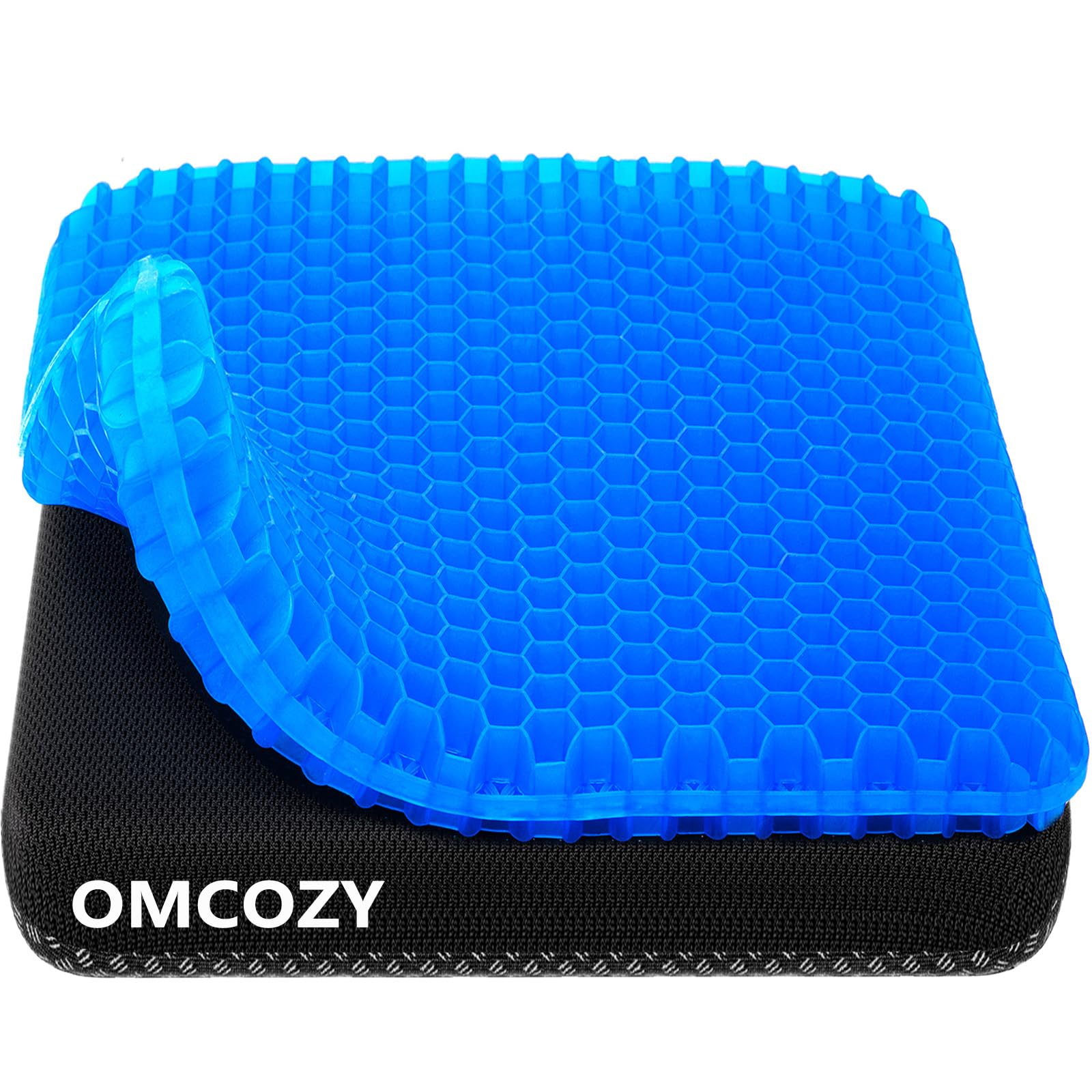
Key Features
- Fill Material: Double-layer gel
- Design: Honeycomb gel pad
- Firmness Level: Soft
- Cover: Removable, washable
- Price: Budget
The double-layer gel delivers a noticeably cool sitting surface that eases tailbone and hip pressure during brief sits. Without a non-slip backing, it can shift on chairs and may need readjustment — a tradeoff suited for stationary, short-duration use rather than all-day desk work.
Pros
- Cooling honeycomb gel keeps the seat surface noticeably cool even in warm rooms.
- Eases tailbone and hip discomfort, which can relieve lower back strain.
Cons
- Lacks a non-slip base, so it can shift on chairs and disrupt sitting posture.
For brief sitting stints in hot environments where cooling outweighs stability, this cushion provides genuine relief — just don’t expect it to stay put during an eight-hour workday.
Best for Occasional Sciatica
Max&Love Seat Cushion

Key Features
- Fill Material: Memory foam
- Design: Wedge/U-shaped
- Firmness Level: Firm
- Cover: Removable, washable
- Stability: Anti-slip
- Price: Budget
This cushion provides effective basic pain relief at a price that’s hard to beat. Memory foam comfort and build quality stand out for the cost, and the anti-slip base stays put. Its firm, unyielding foam is a match only for those who actively prefer a hard seat — anyone expecting plush give will find it a mismatch.
Pros
- Surprisingly comfortable for an entry-level cushion
- Effective basic sciatica and back pain relief
Cons
- May feel too hard for lighter sitters, turning intended relief into added pressure
This cushion is a sensible pick for budget-conscious shoppers who need occasional sciatica relief and already know they prefer a very firm seat. Anyone seeking a softer, plusher feel should look elsewhere.
How to Choose
An effective chair cushion isn’t just a piece of foam — it offloads pressure by matching its density to your body weight, so the material supports you without bottoming out.
Fill Material
Pure memory foam conforms closely but traps body heat. Gel-enhanced or gel-infused foams add a cooling layer that reduces sweaty discomfort during long office days, though the gel may add weight and slightly increase firmness.
A pure gel pad (like honeycomb silicone) provides excellent airflow but offers almost no structural support on its own — it’s best for short, hot sessions rather than all-day relief.
Design
A U-shaped cutout at the rear removes pressure directly under the tailbone, making it essential for coccyx pain. Contoured ergonomic cushions go a step further by sculpting the surface to guide hips into a more neutral tilt, which helps with sciatica and posture, but can feel overly prescriptive for users who shift position often.
Firmness Level
Counterintuitively, a firmer cushion often relieves tailbone pain better than a soft one because it prevents the pelvis from sinking and twisting. However, if your body weight is low (under 150 lbs), a high-density foam may feel like concrete and actually create new pressure points.
Heavier users (over 200 lbs) need extra density to avoid the foam flattening permanently after a few months. When in doubt, lean toward medium-firm as a safe middle ground, and check whether the product specifies a weight capacity.
Cover
A machine-washable cover is non-negotiable because sweat and skin oils degrade foam over time. Breathable mesh covers excel at keeping heat moving, while velvet adds tactile warmth but may retain more heat — a reasonable trade-off if your office runs cold.
Stability
Seat cushions need a textured non-slip bottom (rubber dots or a full rubber sheet) to prevent gradual forward slide on smooth office-chair fabric. Lumbar pillows rely entirely on adjustable straps: dual-strap systems that wrap around the chair back on both sides are far more stable than single-band versions, especially when you lean forward and back throughout the day.
FAQ
Why does my memory foam seat cushion feel too hard after a few weeks?
Memory foam responds to body heat and pressure by becoming denser under load. A cushion that initially felt supportive can start feeling rigid if the foam doesn’t have enough give for your weight. Lighter users often experience this more sharply because they can’t compress the foam enough. If the cushion lacks a break-in period or you’re under 150 lbs, you’ll likely get better results from a medium-firm cushion designed for lower weight ranges.
Can a lumbar support pillow really fix sciatica while driving?
A lumbar pillow alone won’t cure sciatica, but it can significantly reduce symptoms by preventing the pelvis from posteriorly tilting, which compresses the sciatic nerve. In a car seat, the key is correct vertical placement — the pillow’s thickest part should fill the hollow of your lower back without pushing your hips too far forward. Pillows with dual adjustable straps are the only ones that consistently hold that position through gear shifts and turns.
How do I stop my seat cushion from sliding forward on my office chair?
The most reliable fix is to ensure the cushion’s bottom surface uses a full rubberized or silicone-dotted backing, not just a slightly tacky fabric. If sliding persists, place a sheet of non-slip shelf liner between the cushion and the chair seat. Avoid solutions that tie onto the chair because they usually create uneven pressure that wrinkles the cushion and distorts its shape.
Is a gel seat cushion better than memory foam for tailbone pain?
For tailbone pain specifically, memory foam’s ability to conform and remove direct pressure is more effective than gel alone. Gel layers excel at keeping the seat cool, but pure gel pads compress flat and lose that pressure-relieving channel around the coccyx. A gel-enhanced memory foam cushion gives you the best of both worlds: the foam structures the pressure relief while the gel layer manages temperature for longer sits.