
This post contains affiliate links. We may earn a small commission when you buy through our links — at no extra cost to you.
A mattress encasement that says ‘100% waterproof’ on the box can still let urine or spilled water soak through the sides. The same goes for bed bug claims—zippers that skip or separate create entry points no label can override. That gap between marketing and real life leaves buyers frustrated and mattresses ruined.
The right encasement isn’t found by star rating alone. It depends on matching your mattress depth (so the zipper isn’t stressed), choosing a material you can sleep on quietly, and checking whether the waterproof barrier covers all six sides—not just the top.
This guide focuses on the covers that deliver where it counts: zipper integrity, verified waterproofing, and real bed bug sealing for everyday use. By the end, you’ll know exactly which feature matters most for your bedroom.



Best for Bed Bug Defense
Hospitology Sleep Defense System
Key Features
- Material: Polyester, polyurethane lining
- Depth Range: 12–18 in
- Waterproof: Lab-tested 6-sided
- Zipper & Seal: Zipper with zip ties
- Price: Mid-Range
The full zipper enclosure with zip ties creates a barrier that cuts off bed bugs from the mattress entirely, backed by strong feedback from homes in active infestation. The polyester face with polyurethane lining blocks liquids while staying soft and breathable, avoiding the crinkle of plastic covers. Deep mattresses up to 18 inches fit snugly, and the encasement slips on without a fight—installations goes smoothly with a second pair of hands.
This cover suits households dealing with bed bugs, allergy sufferers, or anyone who wants a waterproof barrier that feels like a normal sheet. The 5-year warranty adds backing. The main tradeoff is that the fabric can develop tears after repeated washing; it’s better for long-term protective use rather than frequent laundering. Those who prioritize absolute lifelong durability might look elsewhere, but for immediate and sustained pest protection, it’s a standout.
Pros
- Effective bed bug prevention that stops bites and contains existing infestations.
- Snug, secure fit on mattresses up to 18 inches deep, slipping on without struggle.
- Soft, breathable knit surface that stays quiet—no plastic crinkle.
Cons
- Fabric can tear after repeated machine washing, potentially weakening the barrier.
A secure, comfortable bed bug barrier that fits deeply and breathes quietly. Treat laundry cycles with care, and it will protect what’s inside.
Best for Deep Mattresses
SureGuard Deep Encasement
Key Features
- Material: Cotton terry top
- Depth Range: 13–16 in
- Waterproof: 6-sided waterproof
- Zipper & Seal: Invisi-Zip SureSeal
- Price: Premium
The SureGuard is one of the few encasements that combines a 16-inch deep fit with Greenguard Gold certification, making it suitable for pillow-tops and beds where chemical emissions matter. The zipper can be fragile and may separate if forced, so careful installation is essential—but the snug, quiet cotton terry surface and certified bed bug seal deliver lasting protection for those willing to take that precaution.
Pros
- Snug, secure fit that stays in place on deep mattresses and pillow-tops without shifting.
- Soft, durable cotton terry top resists tearing and feels quiet against sheets.
- Reliable spill and mattress protection that keeps liquids from reaching the core.
Cons
- Zipper can be fragile; pulling too hard may cause separation.
For deep mattresses and chemical sensitivities, this encasement delivers where it counts—just open the zipper slowly.
Best for Multi-Bed Homes
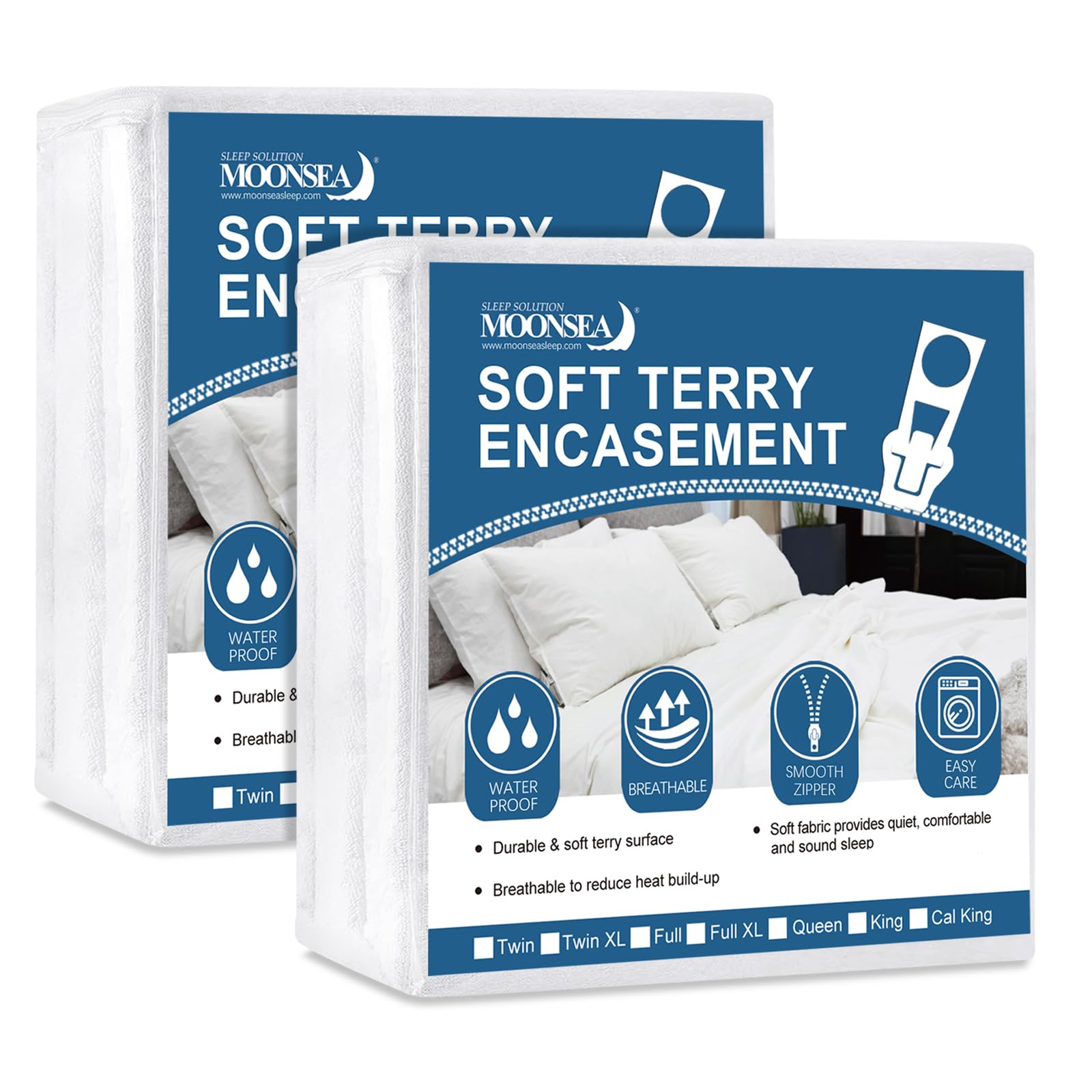
Moonsea 2-Pack Queen
Key Features
- Material: Terry polyester
- Depth Range: 10–14 in
- Waterproof: All sides waterproof
- Zipper & Seal: Zipper
- Price: Mid-Range
For families who need a bug-stopping barrier across multiple mattresses, this Moonsea two-pack offers a comfortable step up from basic plastic covers. The terry surface produces less crinkle and feels more like a towel than a tarp.
It’s a practical choice for rotating covers on kids’ beds or guest rooms, with the understanding that waterproofing may not survive a full overnight accident and side seams can see occasional wicking. Zip with care, too—some enclosures arrive with a finicky zipper that could compromise the seal if forced.
Pros
- Soft terry surface feels comfortable and quiet against sheets
- Two-pack offers strong per-unit value for homes with several beds
- Fits securely on standard and 8-inch queen mattresses
Cons
- Waterproofing is inconsistent; some covers may leak through side seams
- Zipper quality varies; occasional breakage out of the box can compromise the seal
For budget-conscious bed bug protection across several mattresses, the two-pack value is compelling—just don’t expect an absolute liquid seal, and give each zipper a gentle test run before relying on it.
Best for Quiet Sleep
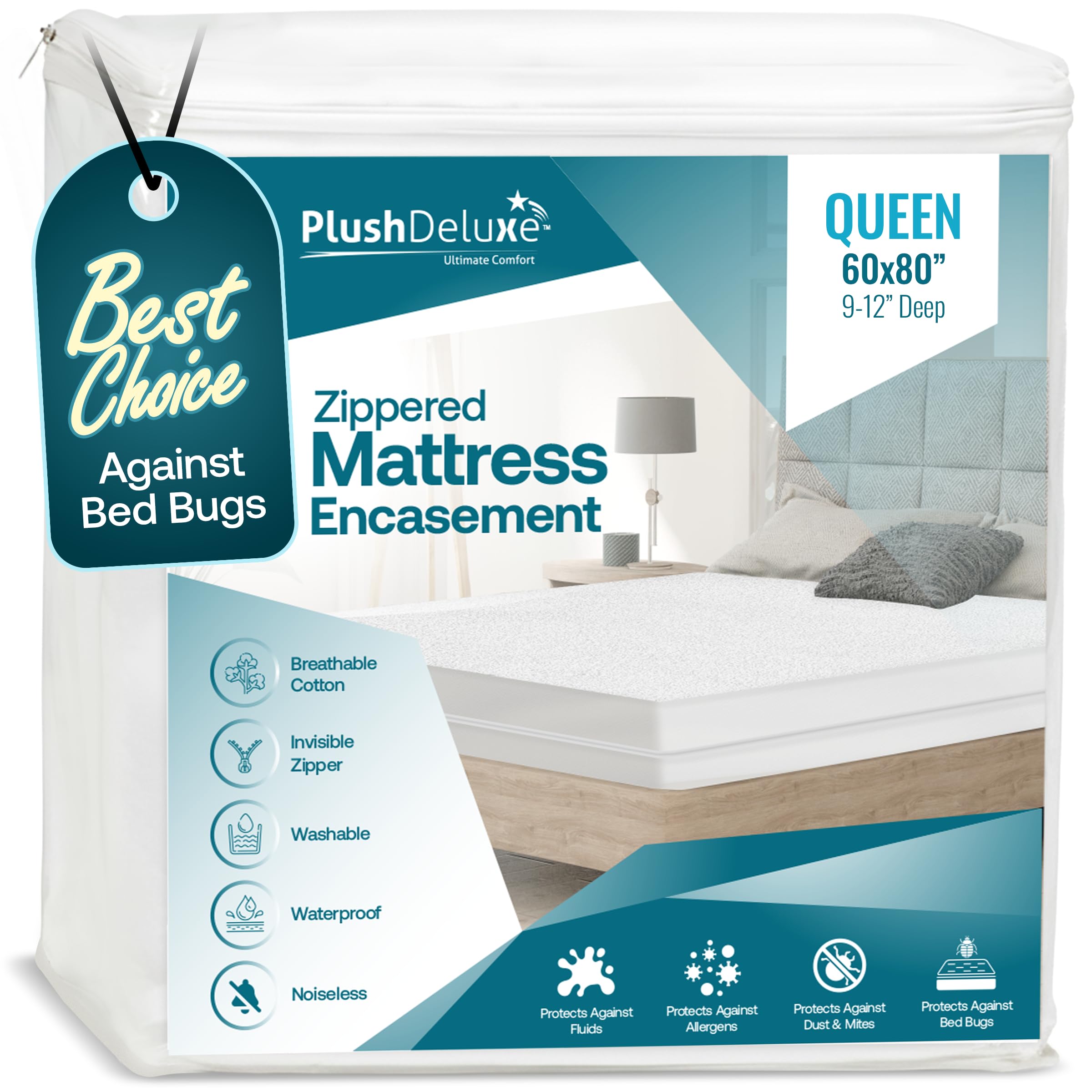
PlushDeluxe Terry Encasement
Key Features
- Material: Cotton terry top
- Depth Range: 9–12 in
- Waterproof: Claimed waterproof
- Zipper & Seal: Hidden flap zipper
- Price: Mid-Range
This encasement trades the crinkle of typical waterproof barriers for a plush, towel-like cotton terry surface that stays silent all night. Where the top pick prioritizes a robust zipper and consistent bed bug defense, the PlushDeluxe focuses on noise-free comfort, making it ideal for light sleepers in guest rooms or low-moisture homes. The zipper requires a gentle touch to avoid jamming, and waterproofing is best viewed as spill-resistant rather than a guaranteed seal—meaning occasional side seepage can occur.
Pros
- Soft, towel-like cotton terry surface without plastic crinkle
- Snug fit that stays in place without shifting
- Easy sock-style installation
Cons
- Zipper can jam if forced—requiring gentle, even pressure when closing
- Waterproofing may allow seepage on sides, making it spill-resistant rather than a full seal
For noise-sensitive sleepers in low-moisture settings, the quiet terry comfort is compelling; if waterproof reliability is non-negotiable, consider the top pick’s more secure barrier.
Best for Allergy Sufferers
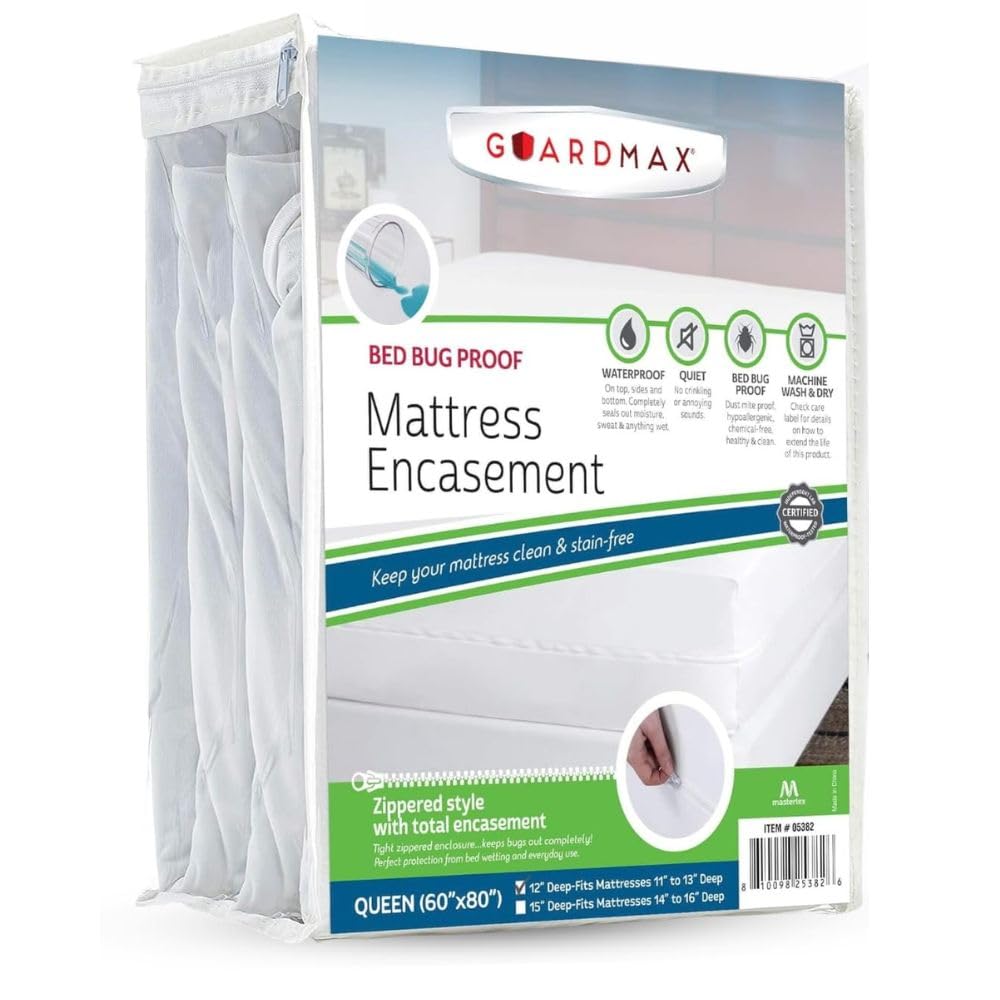
Guardmax Queen Encasement
Key Features
- Material: Jersey knit polyester, TPU
- Depth Range: Up to 13 in
- Waterproof: 6-sided (claimed)
- Zipper & Seal: Tab seal zipper
- Price: Mid-Range
This encasement combines allergy-focused certifications—Oeko-Tex Standard 100 and EPA registration—with a soft, noiseless jersey-knit surface that avoids the plastic crinkle of many waterproof covers. The tab-seal zipper design creates a bed bug barrier; once the mattress is sealed inside, dust mites and allergens are contained.
Zipper durability and waterproofing are less forgiving than lab claims suggest. Slow, careful zipper handling is essential, and larger spills may still reach the mattress. This suits allergy-conscious households who value fabric comfort and chemical safety more than absolute liquid-proofing, and who need bed bug containment without the premium price of the top pick.
Pros
- Snug, complete encasement that stays in place and doesn’t slide around the mattress.
- Premium jersey-knit fabric feels like hotel bedding — soft and free from plastic crinkle.
- Easy to install like a pillowcase, saving time when protecting the mattress.
Cons
- Waterproofing can be inconsistent; larger spills may soak through to the mattress surface.
- Zipper may fray or come off track, requiring gentle handling during installation and removal.
For allergy-conscious households needing certified bed bug containment and a soft sleeping surface, the Guardmax is a practical choice — as long as you handle the zipper with care and treat the waterproofing as secondary.
Best for Budget Protection
Linenspa Full Encasement
Key Features
- Material: Brushed polyester
- Depth Range: Up to 12 in
- Waterproof: Claimed waterproof
- Zipper & Seal: Zipper
- Price: Budget
The Linenspa encasement prioritizes a soft, quiet surface over battle-tested bed bug certification. Its brushed polyester fabric resists crinkling better than many budget covers, and the full zippered enclosure still provides a physical barrier against dust mites and minor pest intrusion. It’s a practical choice for dorm rooms, guest beds, or allergy management where you need a comfortable, affordable cover — not a failsafe against active infestations. Just know that the waterproof layer can leak near seams under larger spills, and the material may tear sooner than mid-range alternatives.
Pros
- Encases memory foam and standard mattresses up to 12 inches deep without shifting.
- Zippered closure slides on and off smoothly, simplifying laundry day.
- Budget-friendly price for a full encasement that stays quiet and soft against sheets.
Cons
- Waterproof layer can seep through at seams with larger spills, so it’s not a liquid-proof seal.
- Slight crinkle sound may be noticeable in silent bedrooms — less of an issue under a mattress pad.
For dust mite barriers and allergy protection on a budget, this soft encasement fits the bill. If you need a certified bed bug seal, the top pick is the safer bet.
Best for Luxurious Feel
SafeRest Full Encasement

Key Features
- Material: Cotton terry top
- Depth Range: 12–15 in
- Waterproof: 6-sided waterproof
- Zipper & Seal: Zipper with velcro cover
- Price: Premium
A thick cotton terry top gives this encasement a towel-like feel that stays quiet under sheets. The full-length zipper with velcro cover closes securely. However, it lacks independent bed bug certification, making the top pick a stronger choice for pest concerns; its higher price further positions it as a comfort-first option for allergen and spill defense.
Pros
- Soft cotton terry surface feels comfortable and quiet against sheets
- Full-length zipper with velcro cover remains secure and zips smoothly during installation
Cons
- Seams can tear or rip over extended use
If your priority is a soft, quiet cover with a sturdy full-zip barrier for spills and dust mites, this works well. For verified bed bug containment, the certified top pick remains the safer bet.
Best for Basic Dust Barrier
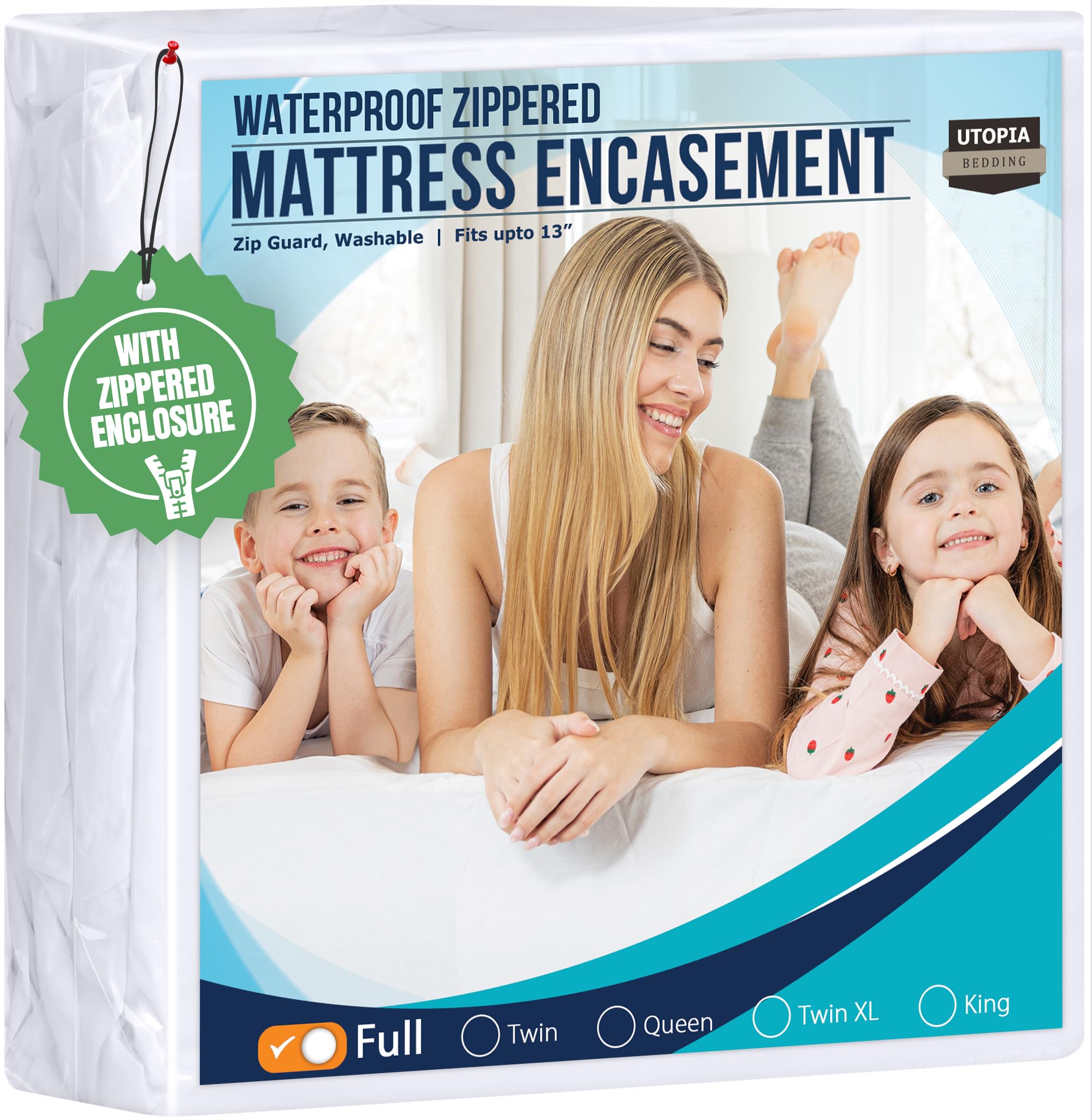
Utopia Bedding Full Encasement
Key Features
- Material: Polyester
- Depth Range: Up to 13 in
- Waterproof: Advertised waterproof
- Zipper & Seal: Zipper
- Price: Budget
The soft, quiet polyester fabric feels comfortable and costs very little, ideal for basic mattress coverage. The waterproof and bed bug claims, however, overstate its capabilities. Liquid can wick through side seams, and the zipper seal is not lab-tested for bed bugs, so it works as a dust mite barrier only.
Pros
- Soft, quiet polyester fabric with no crinkle noise
- Budget-friendly price for a full encasement
Cons
- Waterproof barrier can allow liquid seepage through side seams and zipper
For dust mite protection on a tight budget, this cover works — but those needing bed bug defense or consistent waterproofing will want a different encasement.
Best for Stain Resistance
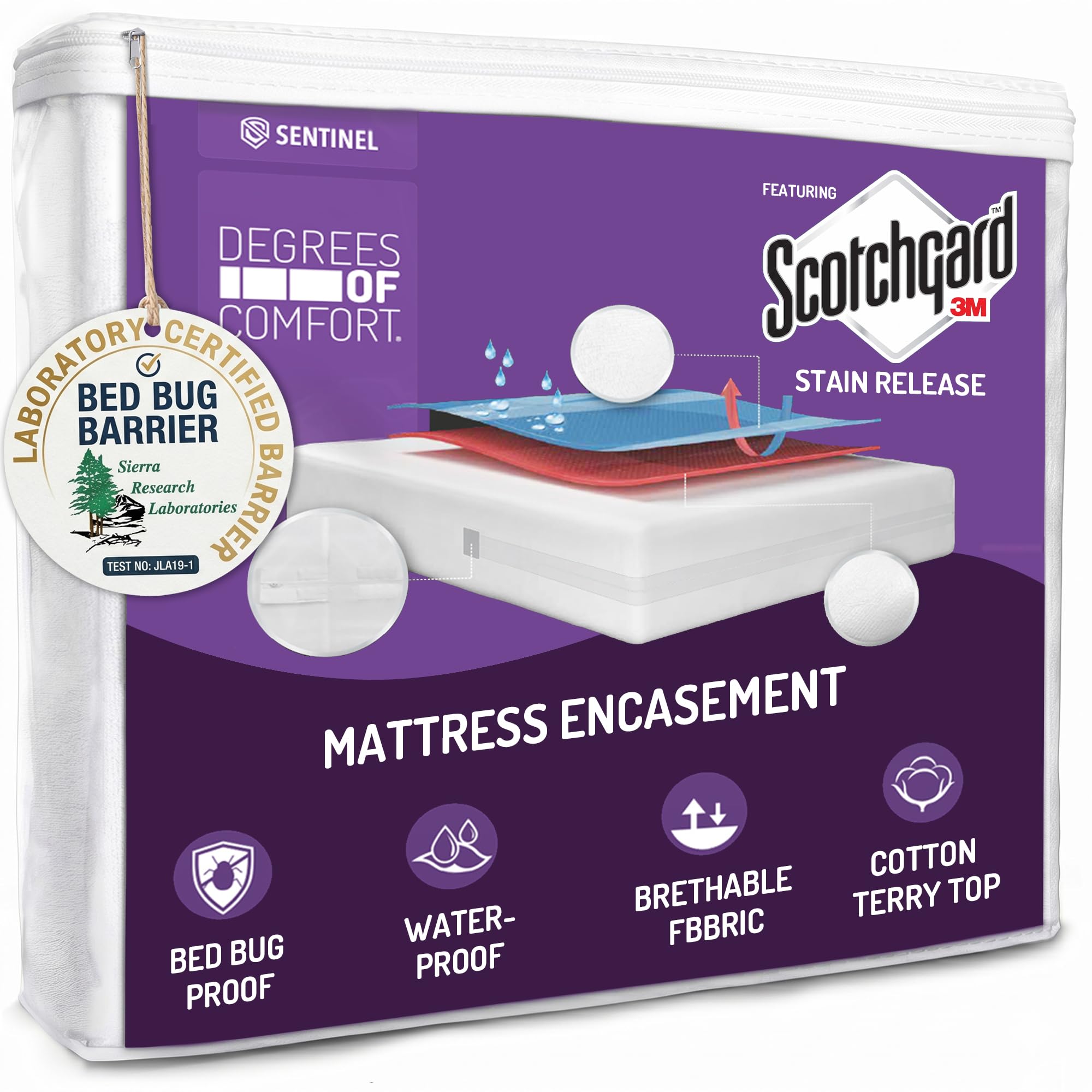
Degrees of Comfort Scotchgard
Key Features
- Material: Cotton terry top
- Depth Range: 9–12 in
- Waterproof: Scotchgard stain release
- Zipper & Seal: Zipper
- Price: Mid-Range
3M Scotchgard treatment repels liquid and releases stains with a quick wipe, while the terry top is Oeko-Tex certified for sensitive skin. The zipper can separate at corners under strain, undermining the bed bug barrier. Best for standard-depth mattresses up to 12 inches.
Pros
- Stains and spills release effortlessly from the Scotchgard-treated surface.
- Soft terry cloth top stays quiet and feels premium without plastic crinkle.
Cons
- Zipper can separate or pop off at corners if not aligned carefully when closing, weakening the bed bug seal.
If a fragile zipper isn’t a dealbreaker and stain resistance matters more than a heavy-duty bed bug seal, this cover works well for standard-depth mattresses.
Best for Natural Cotton Feel
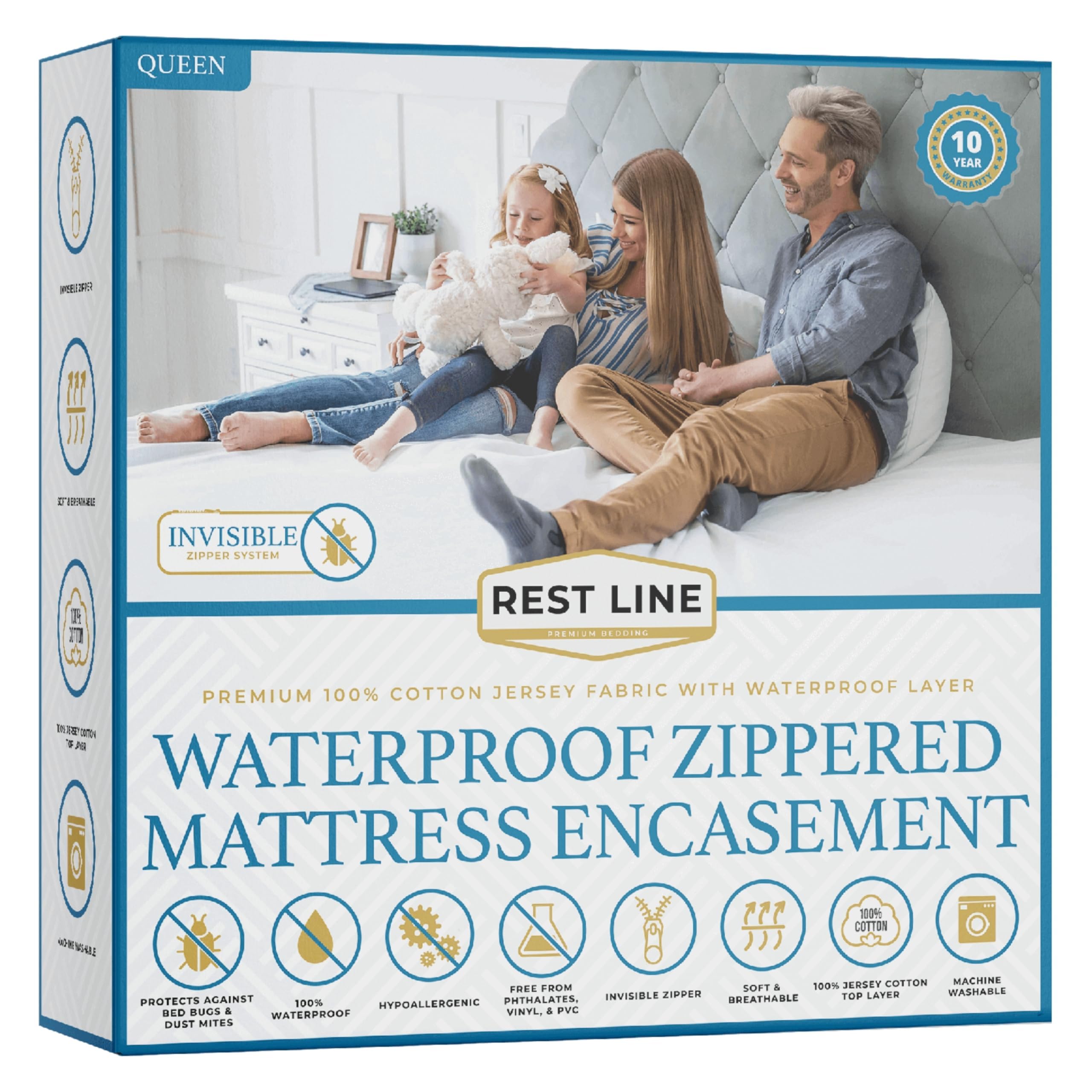
Rest Line Cotton Encasement
Key Features
- Material: 100% cotton jersey
- Depth Range: Up to 15 in
- Waterproof: Cell-Tight TPU
- Zipper & Seal: Invisible zipper with flap
- Price: Premium
The 100% cotton jersey surface is silent and smooth, avoiding the plastic crinkle common with waterproof covers. A TPU membrane blocks spills while staying breathable enough to prevent heat buildup. Bed bug resistance feedback is sparse, so this encasement fits better for allergy or liquid protection than pest prevention.
Pros
- Silent cotton jersey surface eliminates plastic crinkle — ideal for noise-sensitive sleepers.
- Breathable waterproof TPU barrier keeps mattress dry without trapping heat.
Cons
- Zipper can separate or come off track at the seam — gentle installation preserves closure.
For those who prioritize natural cotton and a silent surface over heavy-duty bed bug defense, this encasement delivers breathable waterproofing and a 10-year warranty — just handle the zipper gently.
Best for Kit with Pillows
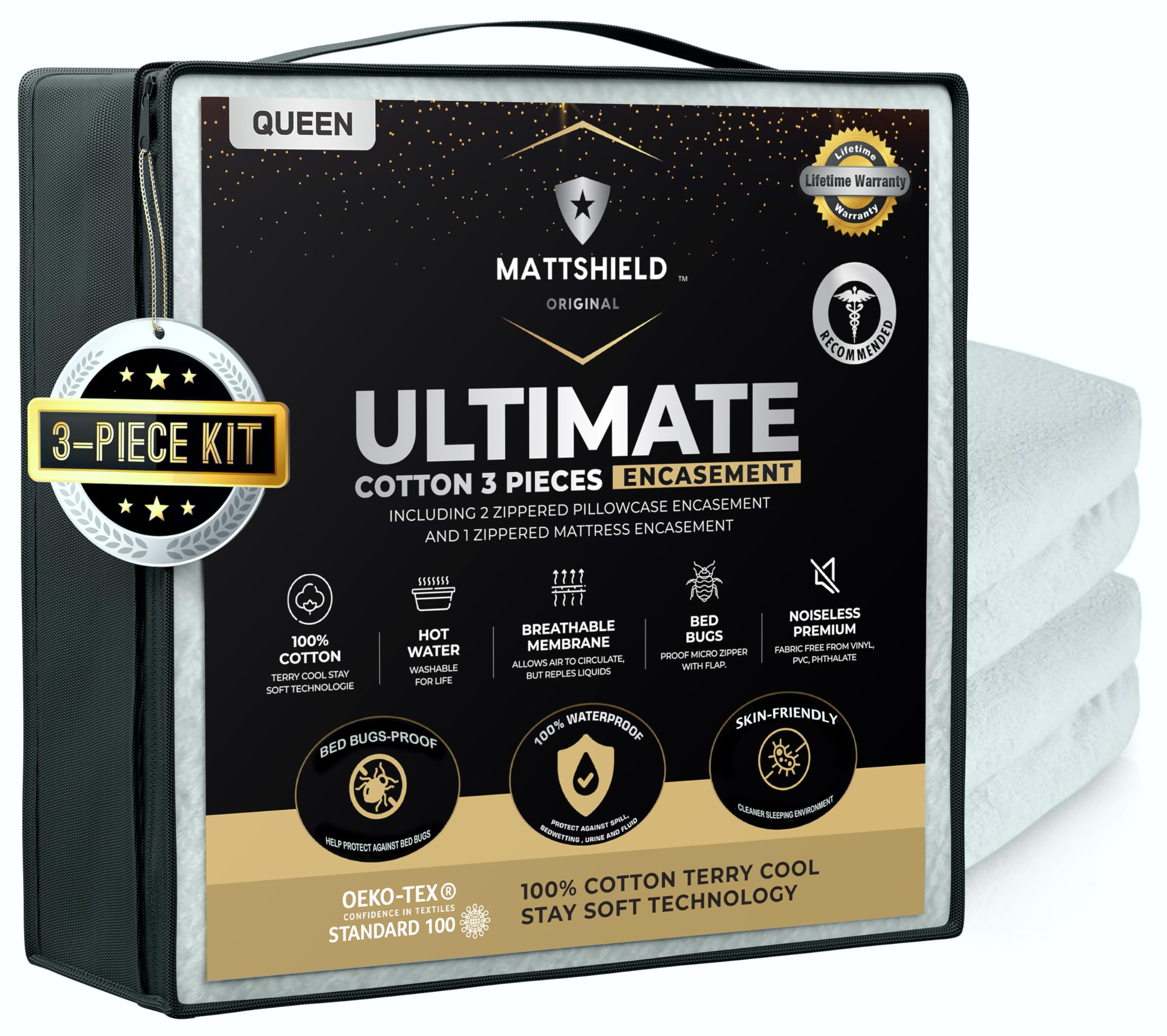
Mattshield Kit Queen
Key Features
- Material: Cotton terry top
- Depth Range: 12–17 in
- Waterproof: 6-sided (claimed)
- Zipper & Seal: Zipper
- Price: Mid-Range
This three-piece kit covers the mattress and two pillows, simplifying full bed protection. The fabric feels soft and quiet, and the deep pocket fits mattresses up to 17 inches easily. However, some units arrive with a plastic-like interior that belies the 100% cotton claim, and zipper inconsistencies mean it’s less dependable for critical bed bug isolation.
Pros
- Great quality and soft, quiet fabric
- Fits thick mattresses up to 17 inches with room to spare
Cons
- Zipper quality can vary, with occasional breakage or missing zipper upon arrival
If you’re outfitting a deep mattress and want the convenience of matching pillow protectors in one box, this kit works—just inspect the zipper upon arrival and don’t expect a soft cotton interior.
Best for Twin/kids Beds
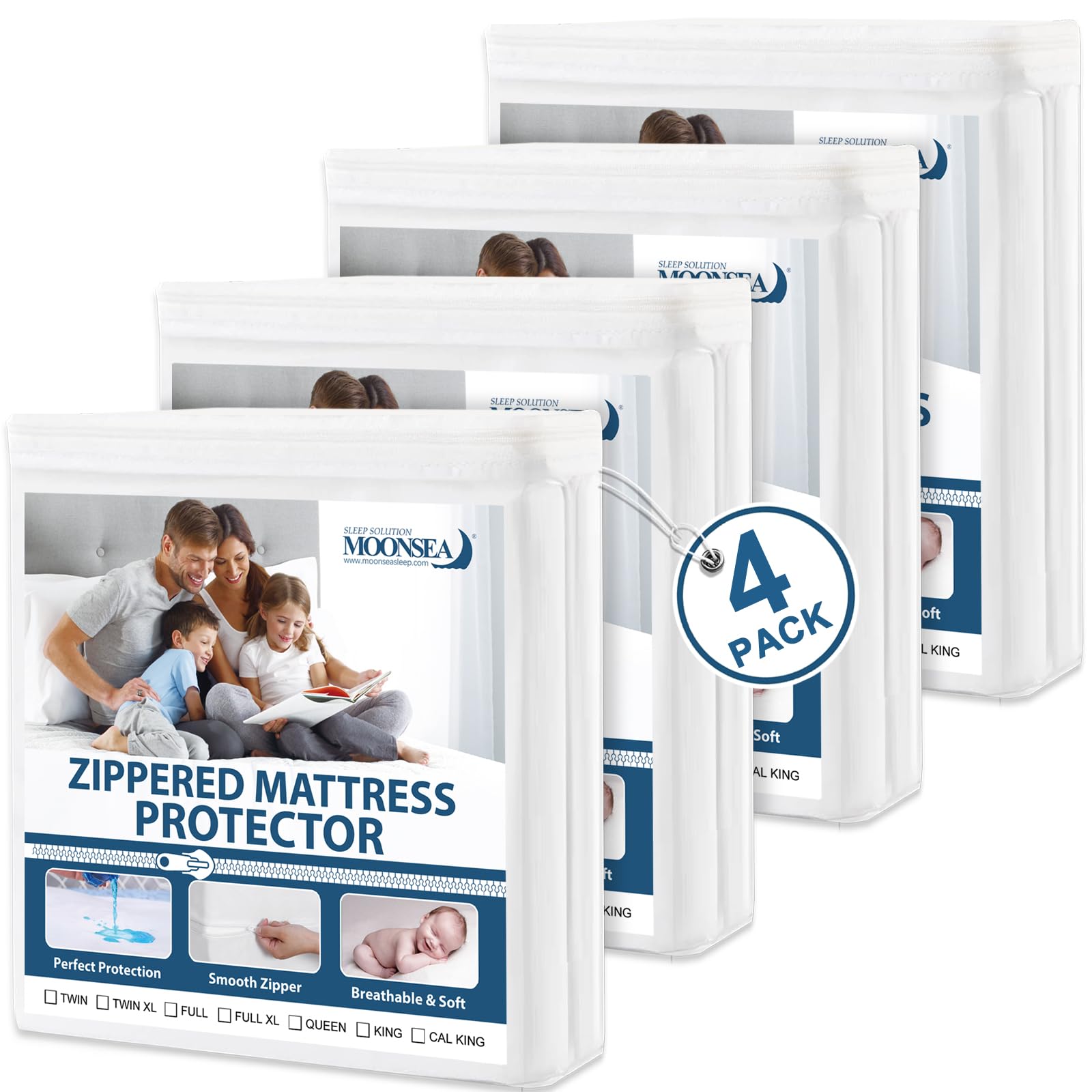
Moonsea 4-Pack Twin
Key Features
- Material: Polyester
- Depth Range: 8–10 in
- Waterproof: All sides (claimed)
- Zipper & Seal: Zipper
- Price: Budget
The four-pack covers multiple twin beds affordably, with zippers that fit bunk beds and dorm mattresses well. The polyester fabric launders easily. Waterproofing is inconsistent, though—seams may let moisture through, and the thin material can tear on tight fits. It’s best reserved for low-stakes settings where an occasional leak is acceptable, not for primary bed bug sealing.
Pros
- Fits twin mattresses, bunk beds, and outdoor swings with a secure zipper closure.
- Quick to install and machine-wash, keeping maintenance simple.
Cons
- Waterproof seams can leak under prolonged moisture, leaving the mattress susceptible to dampness.
This set works for covering kids’ bunk beds or dorm mattresses where occasional spills are manageable, but it isn’t the pick for bed bug prevention or flood-level wetness.
Best for Wide Depth Range
LUCID Queen Deep Encasement

Key Features
- Material: Polyester
- Depth Range: 6–18 in
- Waterproof: 6-sided (claimed)
- Zipper & Seal: Zipper
- Price: Budget
The LUCID encasement solves a rare fit problem: it stretches to cover mattresses from 6 to 18 inches deep, a range no competitor matches. The fabric is soft and quiet. For bed bug protection, the zipper and seams can develop gaps that undermine the barrier — this is a last-resort option for unusual sizes, not a pest-proof shield.
Pros
- Fits mattress depths from 6 to 18 inches, handling both ultra-thin and extra-deep beds.
- Soft, quiet fabric without a crinkly plastic feel.
Cons
- Zipper and seams can develop gaps that compromise the bed bug barrier.
This is a niche solution when no other encasement fits an unusually thin or thick mattress; for bed bug protection, the top pick provides a more dependable seal.
How to Choose
The real performance of a bed bug mattress cover hinges on zipper strength and a perfect fit, not just waterproof claims.
Material: Cotton Terry vs. Polyester
The top layer you sleep on determines noise and breathability. Cotton terry absorbs sound and feels like a soft towel—ideal for quiet, temperature-sensitive sleepers. Polyester is smooth and often cheaper but can crinkle, especially with plastic-like waterproof backings. If you’re a light sleeper, a cotton terry surface with a thin TPU membrane is the best balance of silence and protection.
Polyester covers with full waterproof backing may trap heat, making the sleep surface warmer than expected.
Depth Range: Match Your Mattress Thickness
An encasement that’s too shallow stresses the zipper and can tear; one that’s too deep leaves loose fabric that bed bugs can crawl under. Measure your mattress height, including any topper, and choose a cover rated for that exact range. For deep pillow-tops, look for options that stretch to 16 inches or more.
If you force a tight cover, the zipper becomes the first weak point—and a broken zipper means the encasement no longer seals.
Waterproof Reliability: Six-Sided vs. Top-Only
Many ‘waterproof’ encasements only protect the top surface; liquids that seep through the sides or zipper track can soak the mattress. Genuine six-sided protection uses a polyurethane layer that wraps the entire encasement, including the zipper seal. Look for terms like ‘lab-tested waterproof’ rather than just ‘waterproof backing’.
Real-world test: If liquid pools on the side of the cover for a few minutes, it shouldn’t penetrate. Covers that rely solely on a tight weave often leak under side pressure.
Zipper Quality & Bug-Proof Seal
Bed bugs can squeeze through openings smaller than a credit card’s thickness. A standard zipper without a micro-tooth design or a velcro flap over the zipper track leaves a gap. The best encasements use a fine zipper with a zip tie or a tab that seals the slider area, plus a secondary velcro cover to block any potential entry.
Handle zippers carefully—pull in a straight line, avoid forcing around corners, and inspect seams for any loose threads before installation. A zipper that jams or separates removes all bug protection.
Certifications: Trust But Verify
Oeko-Tex and Greenguard certifications mean the fabric has been tested for harmful substances or chemical emissions, which matters if you have allergies or chemical sensitivities. EPA-registered claims for bed bug protection require specific lab evidence, so these labels carry weight. However, a certification is only as good as the overall construction—a certified cover with a weak zipper still leaks.
FAQ
Why does my waterproof mattress encasement leak on the sides?
Many encasements only have a waterproof layer on the top fabric, leaving the sides and bottom made of a porous material. When liquid pools against the side, it wicks through the seam or fabric. To get true all-over protection, choose a cover that explicitly states six-sided waterproof and uses a sealed zipper with a polyurethane coating across the entire encasement.
Can bed bugs get through the zipper of a mattress cover?
Yes, if the zipper has gaps or no protective flap. Bed bugs can crawl through openings as small as a fingernail’s thickness. A zipper with a micro-tooth design and a velcro cover over the closed zipper track blocks their path. Always close the zipper completely and tuck any excess cover under the mattress to minimize edge gaps.
How do I put on a zippered mattress protector without breaking the zipper?
Install with two people to avoid twisting the zipper around corners. Unzip the encasement completely, slide it over one end of the mattress, then gradually work it down while keeping the fabric smooth. Never force the zipper if it resists—back up and realign the teeth. For deep mattresses, flex the mattress slightly to reduce tension on the zipper track.
Is it safe to machine wash a waterproof mattress encasement?
Yes, but use cold water and a gentle cycle to preserve the waterproof coating. Avoid bleach and fabric softeners, which can degrade the polyurethane backing. Tumble dry on low heat or air-dry because high temperatures can melt the waterproof membrane. Wash the cover alone or with other lightweight items to prevent zipper damage.