
This post contains affiliate links. We may earn a small commission when you buy through our links — at no extra cost to you.
If you’ve ever bought a queen-size bunkie board only to discover it leaves a half-inch gap on each side of your bed frame, you already know the category’s dirty secret: most slat systems are built slightly undersized on purpose. Manufacturers design them to drop into the frame rather than fill it edge to edge, assuming your bed has a lip to hold them. When that lip is missing, you get a slipping, unstable foundation that can damage your mattress.
This guide focuses on the handful of bed slats that actually fit common frame widths — and the ones that stay put once installed. We’ll steer you toward materials and designs that handle heavy daily use without sagging, and highlight the one measurement that determines whether you’ll love your new slats or return them within a week.


Best for Steel, Squeak-Free
Zinus Quick Lock Bunkie
Key Features
- Material: Alloy Steel
- Profile Height: 1.6 inches
- Ease of Assembly: Tool-light required
- Non-Slip Features: Non-slip tape included
- Price: Mid-Range
The all-steel quick-lock system assembles in minutes without tools, providing a stable, squeak-free foundation for memory foam mattresses. The slats sit 5.1 inches apart on a 700-lb capacity steel frame that resists warping better than wood alternatives.
Best suited for Zinus Compack or similar frames that accommodate its narrower queen dimensions — measure interior width before ordering. Memory foam owners will appreciate the low profile and quiet steel support, ideal for replacing a bulky box spring.
Pros
- Tool-free quick-lock assembly takes minutes
- Steel frame resists warping and squeaks over time
- Cost-effective compared to box springs
Cons
- Mattress can slide on the smooth steel frame lip despite anti-slip tape
- Queen size may be narrower than standard frames — measure interior width
A sturdy, quick-to-assemble steel foundation with a clear fit requirement — measure your frame’s interior width to ensure compatibility.
Best for No Height Change
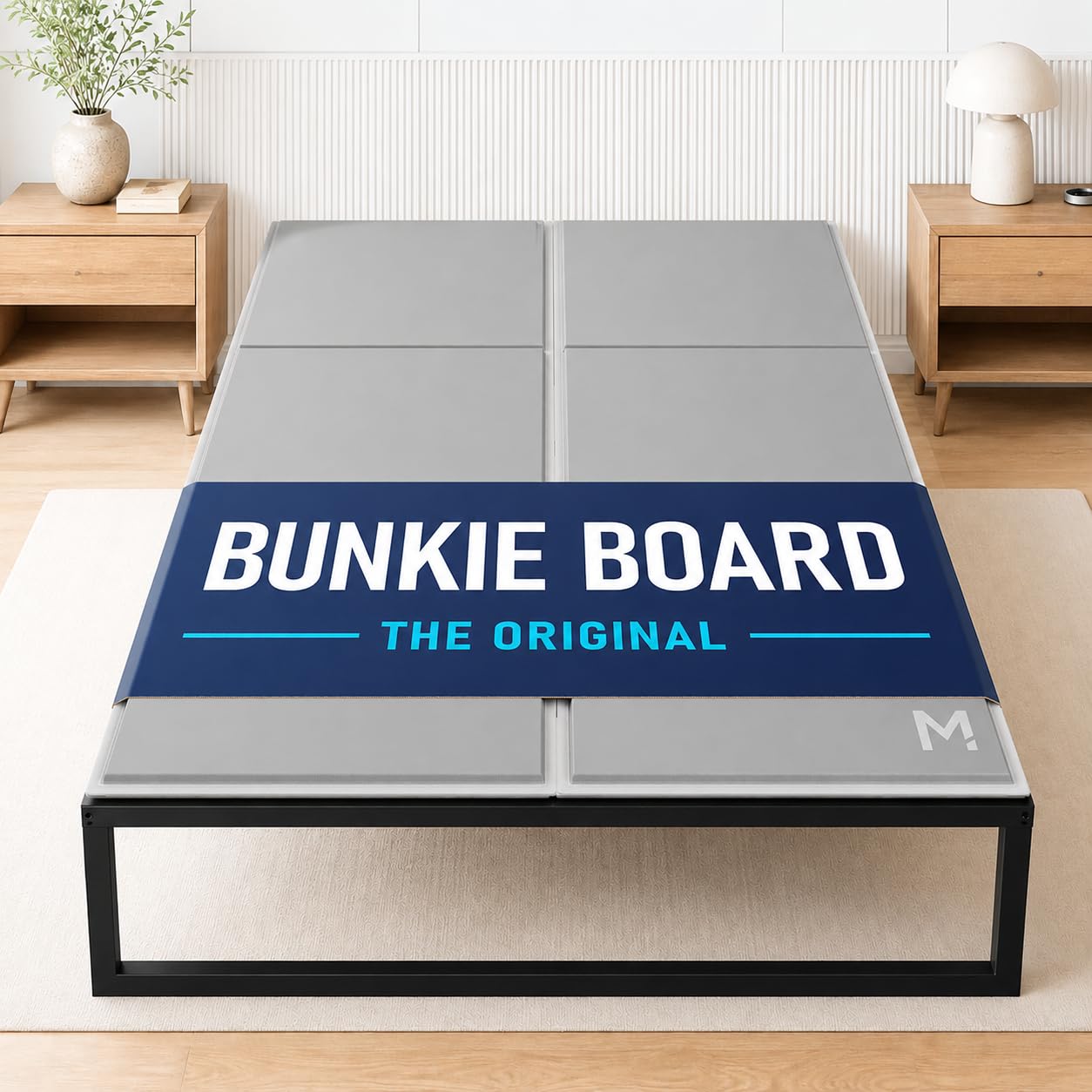
Meliusly Original Bunkie
Key Features
- Material: Polypropylene composite
- Profile Height: 0.4 inches
- Ease of Assembly: No tools, unfold
- Non-Slip Features: Silicone grip base
- Price: Mid-Range
Unlike wood slat boards, the Meliusly Bunkie Board adds virtually no height — a mere 0.4 inches of polypropylene and fabric that folds flat without tools. Breathable channels and Oxford cover prevent moisture buildup, while the board erases sag on slatted frames without altering mattress firmness.
It’s built for frames with slat gaps up to 8 inches, where soft spots disappear instantly. Silicone grip strips keep it steady on most surfaces, but on very slick metal without a lip, shifting can happen — a fix with grip tape. Light and moisture-resistant, it suits sleepers who need zero height change, though the plastic build may feel pricey.
Pros
- Tool-free setup — open and place in seconds
- Stops mattress sag on slatted frames with gaps up to 8 inches
- Offers firm, even support that benefits memory foam mattresses
Cons
- Plastic build may feel overpriced for a simple board
- Board can shift on slick metal surfaces — grip tape often required
Zero height change and immediate sag relief make it right for sleepers who need a thin, breathable board — but slick metal frames without a lip may need added grip tape.
Best for Memory Foam Support
Meliusly SlatSure Bunkie
Key Features
- Material: Engineered wood composite
- Profile Height: 0.6 inches
- Ease of Assembly: No assembly
- Non-Slip Features: Silicone base
- Price: Mid-Range
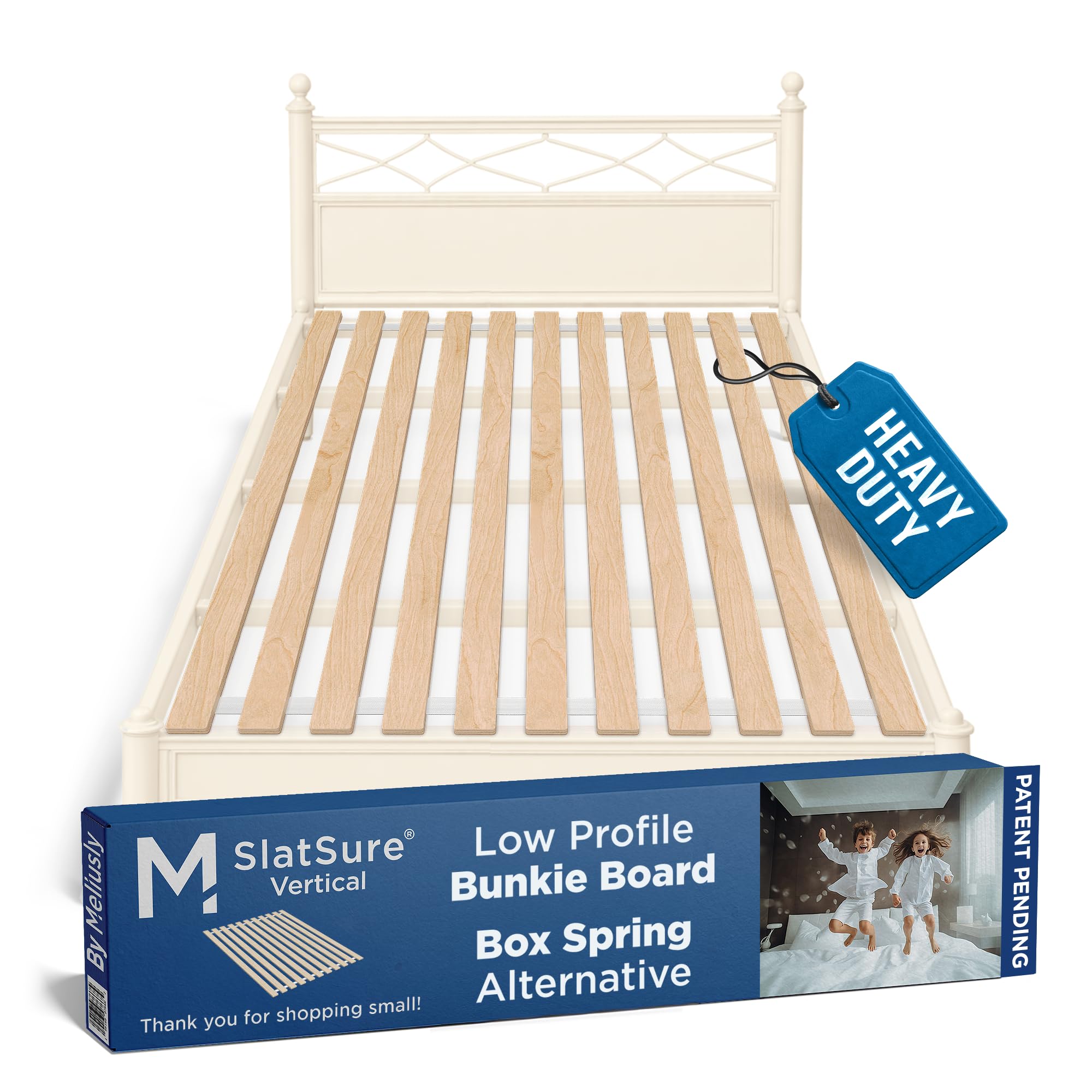
The Meliusly SlatSure stands apart from the Zinus Quick Lock’s steel slats by offering a wood surface with tight spacing that prevents memory foam from sinking through wide gaps. The fold-open design requires no tools, and the silicone base grips most frames securely during assembly. For those with a metal frame lacking an edge lip, the board can still slide slightly when positioning a heavy mattress—a minor setup inconvenience. At 0.6 inches thick, it’s not as low-profile as the polypropylene option in this roundup, but the wood construction breathes better and provides more even support for latex and foam mattresses.
Pros
- Tight slat spacing (under 2.5 inches) prevents sagging on memory foam and latex mattresses.
- Fold-open design installs in seconds with no tools required.
- Silicone non-slip base holds steady on most frame surfaces.
Cons
- Board may shift slightly when placing a heavy mattress; once centered it stays put.
A solid mid-range choice for memory foam owners who prioritize even support over ultra-low profile—just be prepared to center the mattress carefully.
Best for Wood-On-Steel Hybrid
Zinus Deepak Wood Slats
Key Features
- Material: Wood slats, steel frame
- Profile Height: 1.6 inches
- Ease of Assembly: Required, included tool
- Non-Slip Features: Velcro strips
- Price: Mid-Range
Unlike the all-steel top pick, this Zinus model layers real wood slats onto a steel center frame for a warmer feel. Assembly uses the included tool, and the 700-lb rating keeps heavy mattresses stable.
It’s a natural fit for hybrid and innerspring mattress owners who want wood breathability, provided the full-size frame’s interior width lines up exactly with the board. The full size can run narrower than some standard frames; measure before ordering to avoid gaps or uneven support.
Pros
- Assembly is fast using the included tool, no extra hardware needed.
- Wood slats feel solid and support heavy hybrid and innerspring mattresses without sag.
- Overall construction holds up under substantial weight, up to 700 lbs.
Cons
- The full size can be narrower than typical full frames, potentially creating a gap or overhang.
If your full-size frame’s interior width matches this board precisely, the warm wood feel and quick setup make it a practical choice under hybrid and innerspring mattresses.
Best for Heavy-Duty Capacity
ROIL Box Spring 2in
Key Features
- Material: Powder-coated steel
- Profile Height: 2 inches
- Ease of Assembly: Required, tool included
- Non-Slip Features: Noise-free design
- Price: Mid-Range
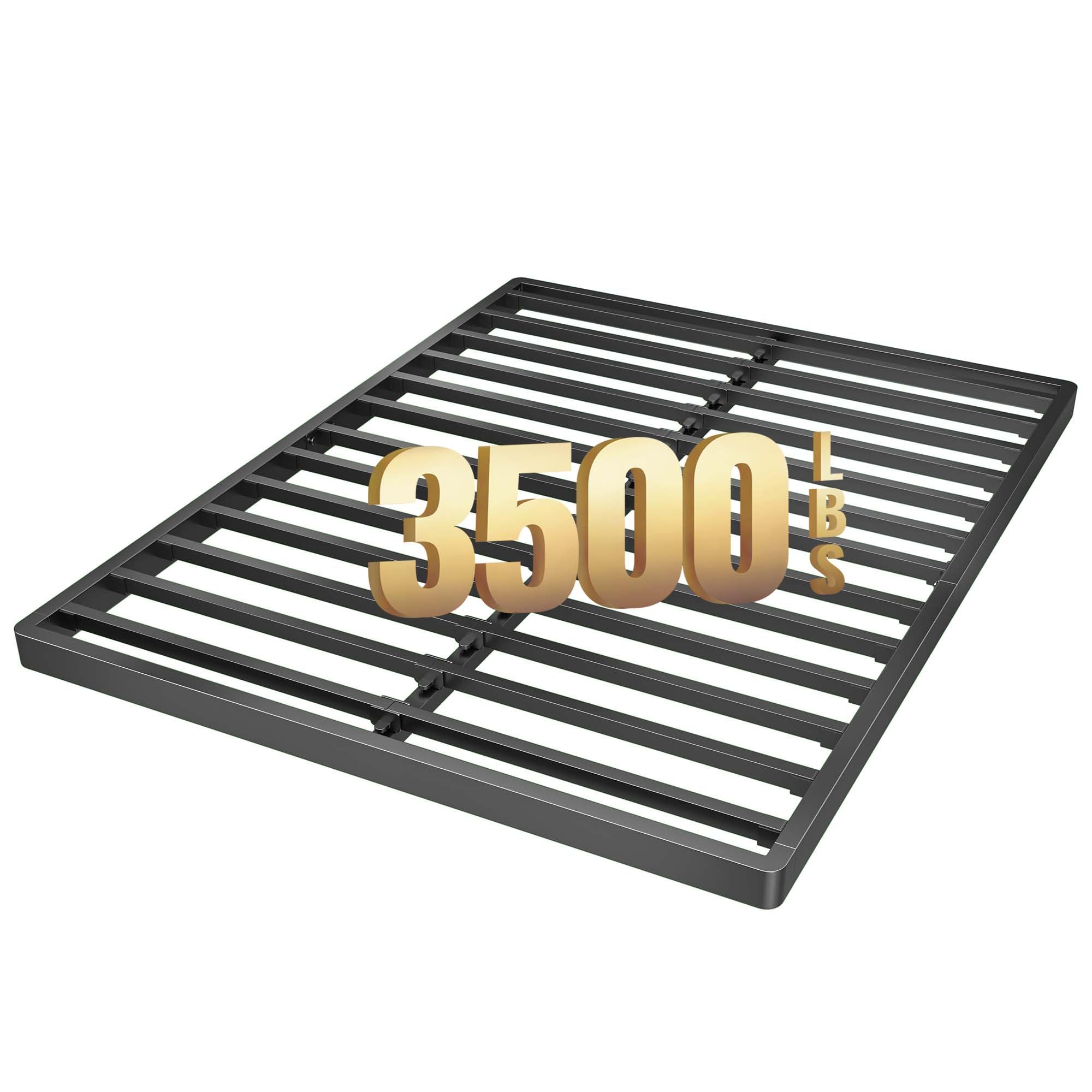
The ROIL box spring handles up to 3500 pounds with powder-coated steel and rounded corners, staying silent even under shifting weight — a noticeable difference from the quick-lock steel system that anchors the top pick. Where that option prioritizes tool-free speed, this one sacrifices a few minutes of assembly for a simpler, nearly indestructible build. It’s best for plus-size sleepers and couples who need rock-solid support without a creak, and who don’t mind spending extra time with the included allen wrench. Some parts may need realignment, so patience helps.
Pros
- Holds heavy mattresses without flex or noise, supporting even the most restless sleepers.
- 3500-lb capacity ensures it won’t bow under plus-size couples or dense foam layers.
- Metal-on-metal contact stays virtually silent, making midnight movements undetectable.
Cons
- Assembly takes longer than expected with the included allen wrench; occasional bolt-hole alignment can require adjustment.
For sleepers who prioritize silence and near-indestructibility over a five-minute setup, the ROIL box spring delivers exactly that — just budget time for assembly.
Best for Light Guest Use
Golden Home Bunkie Board

Key Features
- Material: Oxford 600D, silicone base
- Profile Height: 0.39 inches
- Ease of Assembly: No assembly
- Non-Slip Features: Silicone base
- Price: Mid-Range
The 0.39-inch profile tucks into deeply recessed frames without adding height, and placing it on platform slats requires no tools. As a box spring alternative for a lightweight guest mattress, it handles the job. For primary daily use, durability is unproven — the board can give way under constant heavier loads.
Pros
- Easy to place and feels sturdy on platform slats
- Works well as a box spring alternative
Cons
- Can slide on certain frame surfaces despite the silicone base
A sensible choice for a guest room bed on a deeply recessed frame, where occasional use won’t test its long-term endurance.
Best for Narrow Stair Access
Greaton Split Bunkie
Key Features
- Material: Wood frame, fabric cover
- Profile Height: 1.5 inches
- Ease of Assembly: No assembly
- Price: Mid-Range
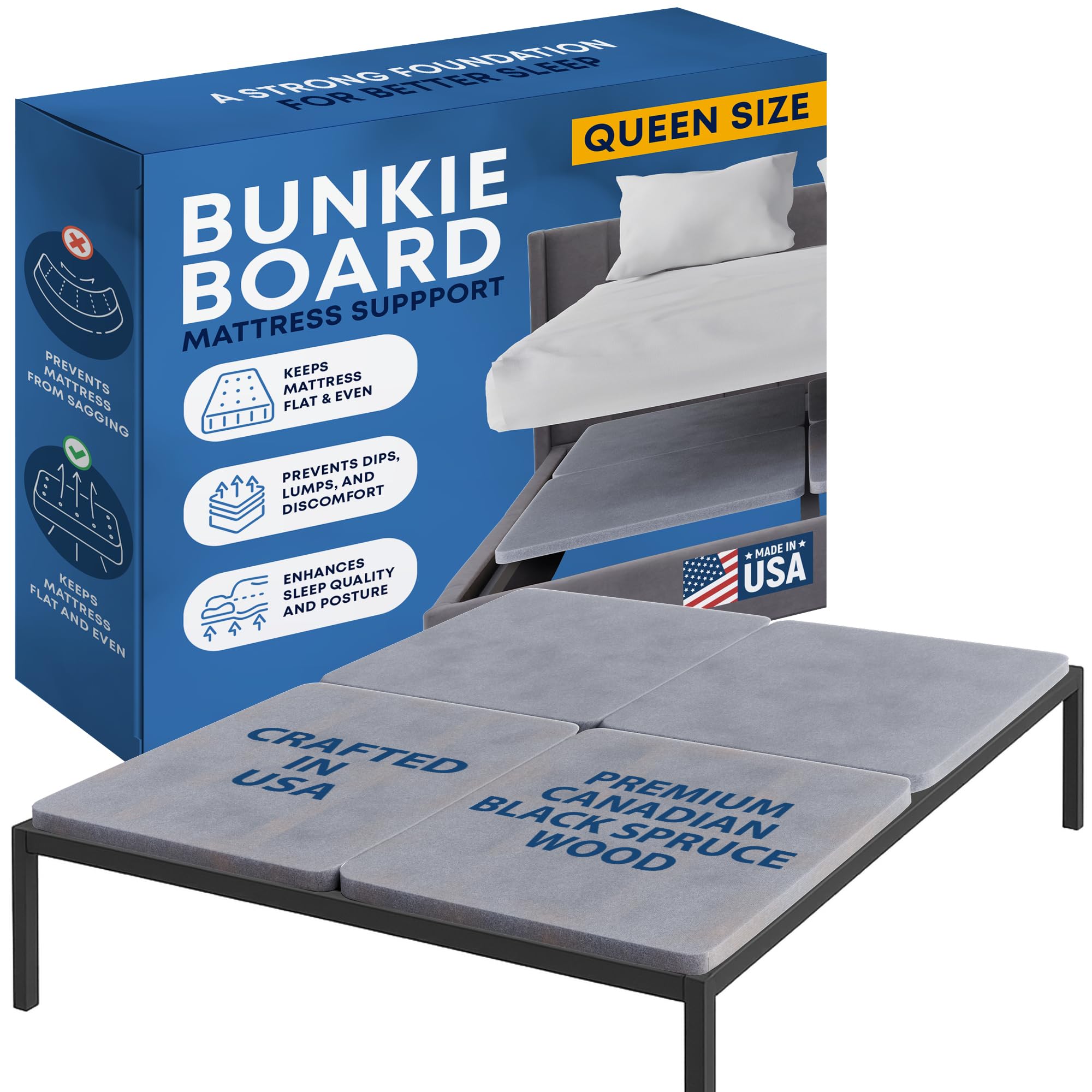
The split quarters slide through tight hallways effortlessly and deliver even mattress support once placed. The construction uses thin wood frames with fabric rather than plywood slabs, so it feels less substantial than boards built for heavier use. This design fits standard queen frames well, but those expecting solid lumber will be underwhelmed.
Pros
- Strong mattress support that eliminates sagging
- Extremely easy to install – four lightweight pieces
Cons
- Some boards may crack under heavier weight
If navigating tight corners matters more than having a solid slab, this split board delivers convenient support for a standard queen with good center support.
Best for Temporary Support
SAKSUN Bunkie Board
Key Features
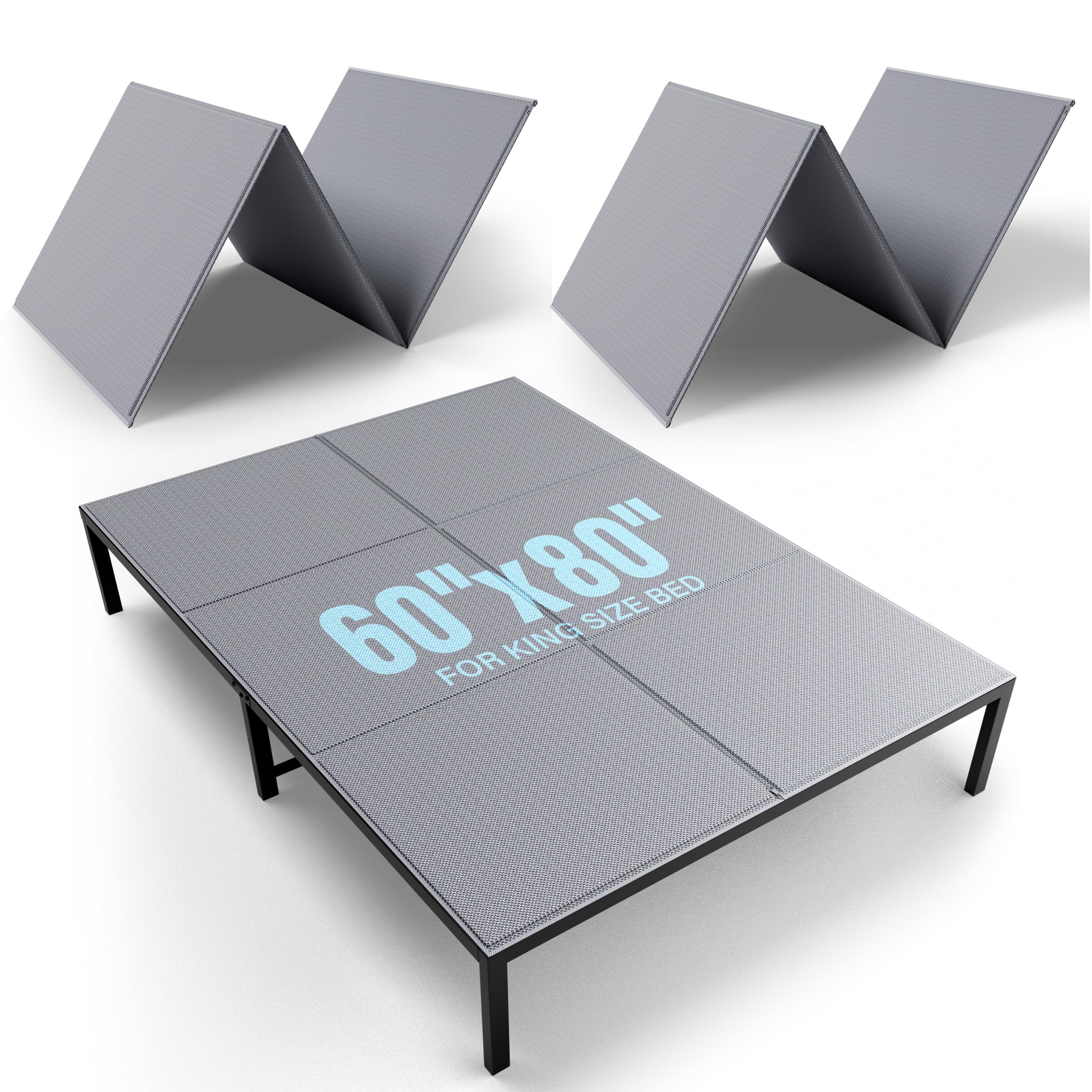
- Material: Polypropylene composite
- Profile Height: 0.4 inches
- Ease of Assembly: No tools, foldable
- Price: Mid-Range
This 0.4-inch board provides decent support for light-use guest beds. Structural integrity can give way after weeks of daily use, so it suits short-term setups rather than primary sleeping arrangements.
Pros
- Sturdy initial feel and construction.
- Back pain relief with solid mattress support.
Cons
- Can lose structural integrity within weeks of regular use.
Best for occasional guest rooms where long-term durability isn’t a priority.
Best for Custom Length
Wood To World Pine Slats

Key Features
- Material: Yellow pine
- Profile Height: 0.625 inches
- Ease of Assembly: No assembly
- Price: Premium
These pine slats offer a custom cutting service that delivers exact lengths for non-standard bed frames, using premium South American yellow pine that looks and feels high-quality. However, the pine can crack under heavy weight or active use, and the price is premium. This makes them ideal for lightweight mattress setups or antique daybeds where exact fit matters more than raw durability.
Pros
- Custom cutting service delivers exact lengths for non-standard frames
- High-grade solid pine with natural wood appearance
Cons
- Under heavy or active use, the pine slats may crack or break
Best for owners of non-standard bed frames who need exact-fit slats and can accept lighter weight limits.
Best for Standard Full Frames
Mellow Metal Bunkie

Key Features
- Material: Metal
- Profile Height: 1.6 inches
- Ease of Assembly: Required
- Price: Mid-Range
The Mellow Metal Bunkie assembles into a quiet, rigid support that prevents mattress flex. Some units arrive slightly undersized for standard full frames, leaving a gap that can allow shifting — a measurement concern, not a structural flaw. When the frame’s interior width matches, it’s a solid mid-range foundation.
Pros
- Solid assembly resists flex and keeps the mattress flat.
- Silent under movement — no squeaks or metal-on-metal noise.
Cons
- Can be narrower than expected in some standard full frames, leaving a gap that permits shifting.
If your full-size frame’s interior width matches the board, this bunkie provides stable, noise-free support at a fair price.
Best for Center Reinforcement
No Sag Center Support
Key Features
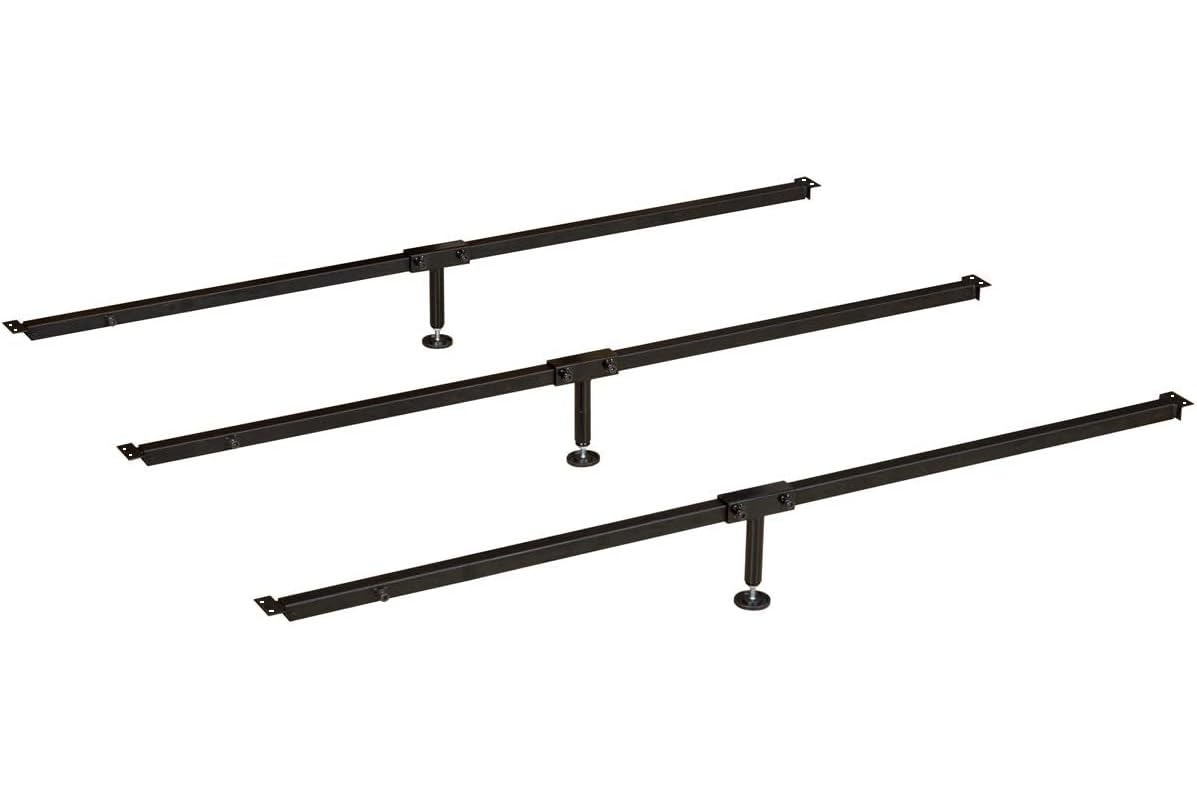
- Material: Alloy Steel
- Ease of Assembly: Adjustable height install
- Price: Luxury
The steel beam delivers serious reinforcement, preventing rail bowing and sag in king and Cal King beds. It adjusts to any frame width from full to Cal King, but it’s only a center support — pair it with existing slats or a bunkie board for full mattress coverage.
Pros
- Adjusts easily to any bed width from full to Cal King, no tools needed.
- Reinforces center of bed frame, preventing side rail bowing under heavy mattresses.
Cons
- Threads on the center leg can strip if overtightened — hand-tightening only is necessary.
If your king bed is sagging in the middle but the perimeter slats are still intact, this beam adds the central support you’re missing — just don’t expect it to replace a full foundation.
How to Choose
The single most important step is measuring the interior width of your bed frame between the support lips — a half-inch shortfall creates gaps that lead to sliding, sagging, and mattress damage.
Material (Metal vs. Wood vs. Composite)
Metal slats resist warping and typically support higher weight without squeaking, but they can feel cold and may slide if the frame lacks a lip. Wood provides a warmer, quieter surface that absorbs motion, but thin slats — especially pine under ¾ inch — can snap under concentrated loads. Composite boards like thick polypropylene stop sag across wide gaps without adding bulk, though they can feel overpriced for what is essentially plastic.
Slat Spacing or Board Coverage
Memory foam and latex mattresses need slat gaps under 3 inches to prevent sinking. Tight spacing (under 2.5 inches) distributes weight evenly and extends mattress life. Solid boards eliminate spacing concerns entirely but reduce airflow, which can trap heat in memory foam beds. If your frame’s existing slats are widely spaced, a bunkie board with full surface coverage is safer than individual slats.
Profile Height and Bed Height Impact
Every inch of profile raises your mattress height. Ultra-thin 0.4-inch boards keep your bed’s existing look but trade some rigidity — they work best on frames with center support. A 1.6–2-inch profile adds structural strength and weight capacity, but can make an already tall mattress feel too high. Measure your current mattress height and frame lip before choosing.
Ease of Assembly or No-Tool Setup
Roll-out or fold-open boards save time and eliminate tool frustration, but their lightweight design often sacrifices long-term stability. Metal systems with quick-lock assembly use simple hand tools and produce a rigid, squeak-free foundation — but they require patience and a flat workspace. Consider how often you’ll move the bed: a tool-free board is easier for guest rooms, while a bolted steel frame makes sense for a permanent primary bed.
Non-Slip Features and Noise Reduction
Silicone grip pads, Velcro strips, and non-slip tape all help — but none guarantee zero movement on slick metal frame rails. The most reliable anti-shift solution is a frame with a lip or securing the board with aftermarket gripper pads. For noise, metal-on-metal contact is the enemy; look for rubber grommets, powder coating, and slot-in designs that eliminate creaking. Cheaper metal frames without these sound-dampening details often develop squeaks within weeks.
FAQ
Why doesn’t my queen bunkie board fit my queen bed frame?
Most bunkie boards are manufactured slightly undersized to drop inside the frame rails, not rest on top. Queen bed frames vary in interior width by up to 1 inch. If your frame lacks a support lip, even a half-inch shortage leaves a dangerous gap. Always measure the inside distance between the rails before ordering, and compare it to the board’s listed width.
How do I stop my bunkie board from sliding on metal frame rails?
Silicone grip bases and Velcro pads reduce sliding but rarely eliminate it on smooth metal. Add aftermarket rubber grip tape along the frame rails where the board sits, or install homemade wood stops at the corners. For the most secure setup, choose a frame with a recessed lip that fully captures the board, or opt for a bolted metal slat system that attaches directly to the frame.
Are metal or wood bed slats better for memory foam mattresses?
Wood slats spaced tightly (under 2.5 inches) provide breathable, quiet support that memory foam responds well to, but thin wooden slats can break under concentrated weight. Metal slats have higher weight capacity and won’t warp, but wider 5-inch spacing can cause foam to sink. The best solution for memory foam is either a solid bunkie board or wood slats with very tight spacing, which eliminate sag without trapping heat.
Can I use a bunkie board instead of a box spring for a heavy mattress?
Yes, but only if the bunkie board’s weight capacity matches your mattress and sleepers. Hybrid and innerspring mattresses do fine on metal slats with 700-lb ratings. For heavy latex or thick memory foam, choose a board with a 3500-lb capacity and tight center support. Avoid thin plastic boards for primary use with heavy mattresses — they can buckle under concentrated pressure.