
This post contains affiliate links. We may earn a small commission when you buy through our links — at no extra cost to you.
Shopping for crib sheets can feel like a gamble. A set that arrives butter-soft and perfectly fitted may turn scratchy, see-through, or develop holes after a handful of wash cycles — a frustration nearly every parent has faced. The culprit is often the material and construction, not just bad luck.
The good news? A handful of crib sheets use the right blend of fiber, weave, and safety certification to stay soft and intact through countless midnight sheet changes. These aren’t necessarily the most expensive — they’re the ones where the label actually matches the lived experience. In this guide, we focus on the sheets that earn their place in the nursery by combining real durability with the comfort your baby deserves.



Best for Certified Softness
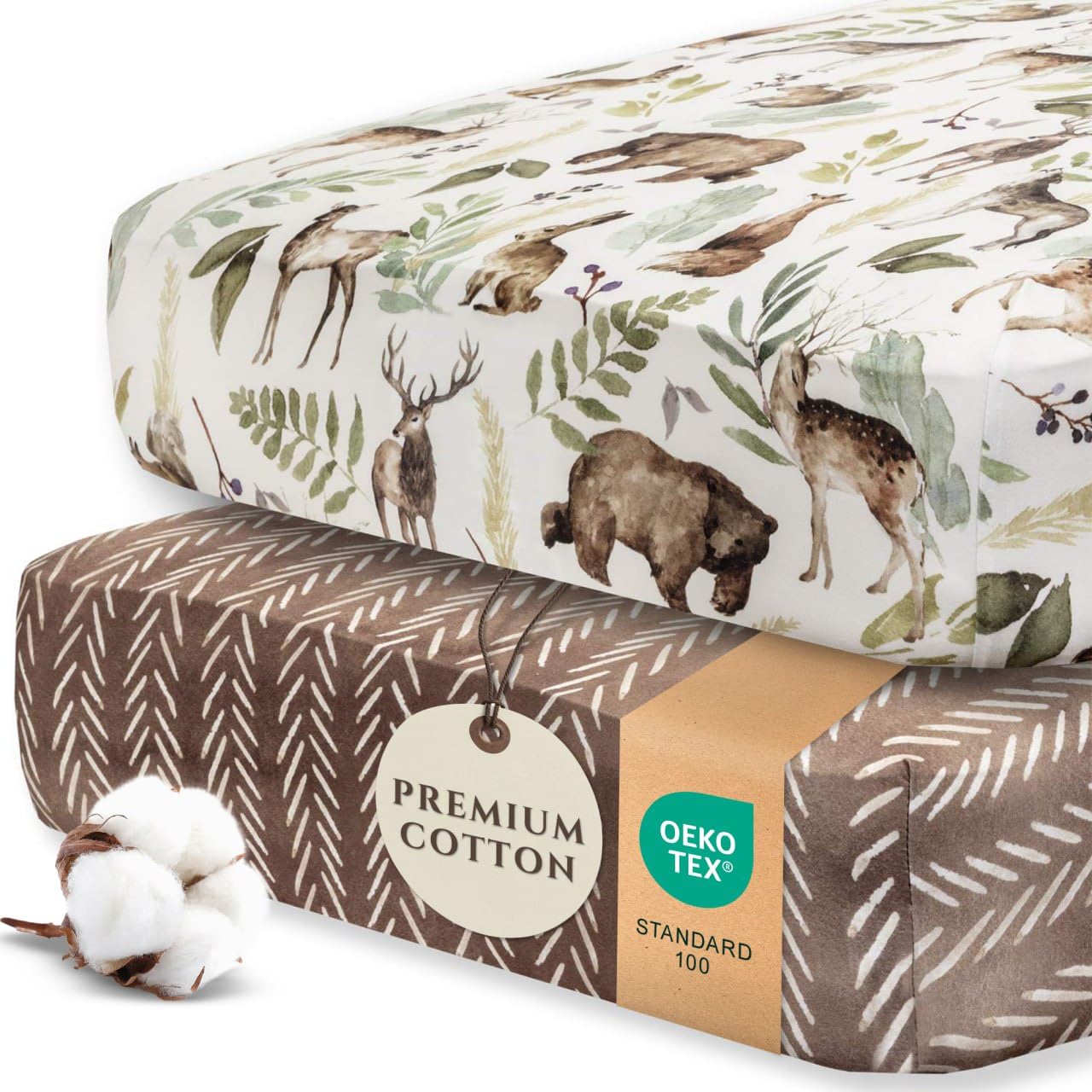
Pobibaby Wildlife Crib Sheets
Key Features
- Material: 96% Combed Ringspun Cotton 4% Spandex
- Pack Size: 2
- Pocket Depth: 5 in.
- Certifications: OEKO-TEX Standard 100
- Price: Premium
Pobibaby’s fitted sheets are built on a 400-thread-count combed cotton base with just enough spandex to give them a plush, velvety softness that feels substantial. The stretch hugs a standard 28-by-52-inch crib mattress securely, and the 5-inch pocket depth keeps corners in place even when little kickers get active. The wildlife pattern holds its clarity and color through multiple washes, making the crib look put-together day after day.
The real differentiator is the OEKO-TEX Standard 100 certification — a safety mark that no other sheet in this lineup carries. That makes it a top choice for parents who want verified non-toxic bedding. The premium price reflects the certification plus the material quality; it’s not the pick for bargain hunters or families on a tight budget. One tradeoff to note: the spandex blend can feel slightly less breathable in very warm rooms, though most babies remain comfortable. If your nursery runs hot, a breathable mattress pad can help.
Pros
- Ultra-soft, velvety hand from 400-thread-count combed cotton blend
- Vibrant wildlife prints that stay crisp and true after washing
- Snug, stretchy fit that grips standard crib mattresses without popping off
Cons
- Spandex blend may feel slightly less breathable in very warm rooms — most babies sleep fine
A premium choice for families who won’t compromise on safety certifications and want crib sheets that feel as good as they look. The slight warmth trade-off is easily managed with layering.
Best for Organic Value
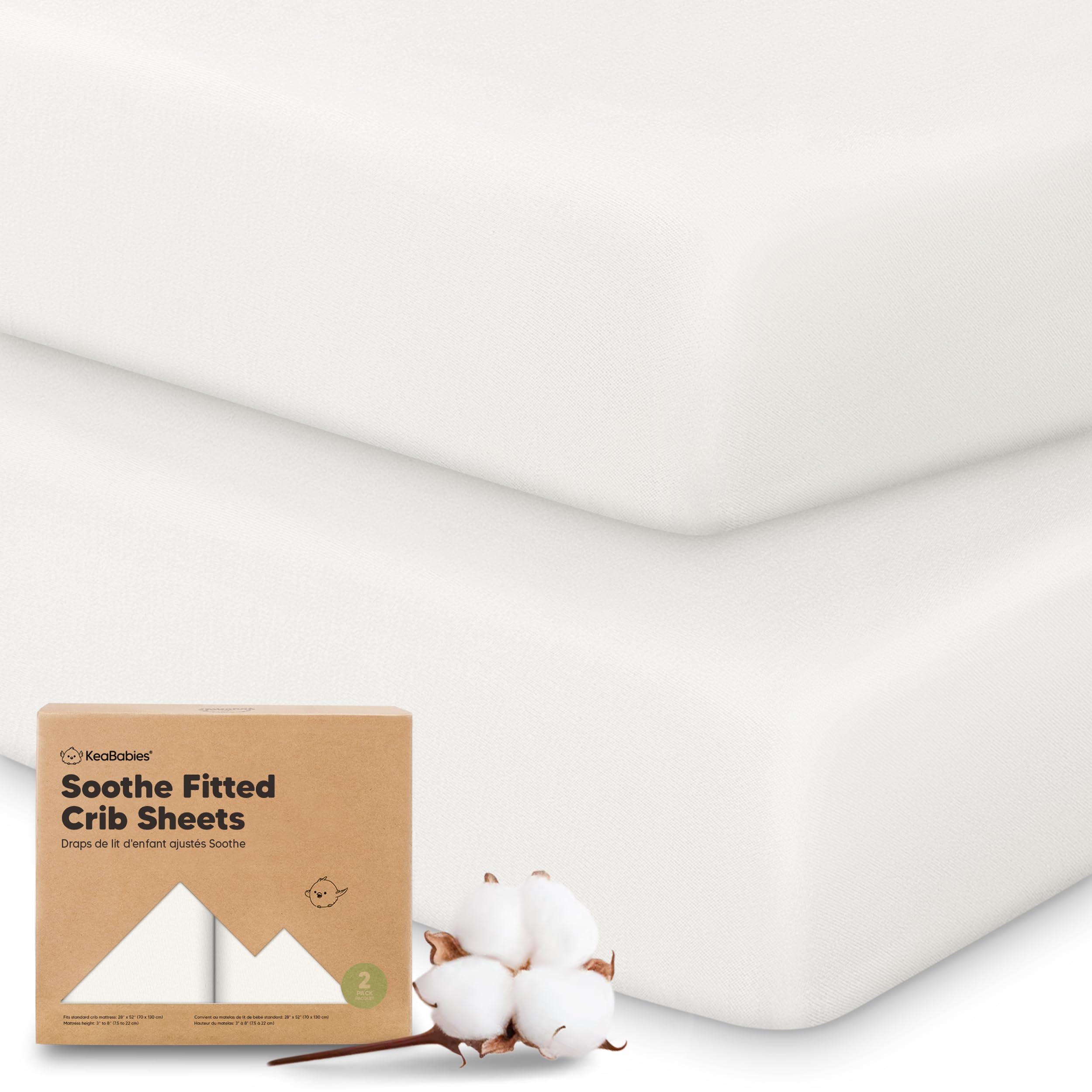
KeaBabies Organic 2-Pack
Key Features
- Material: 100% Organic Jersey Cotton
- Pack Size: 2
- Pocket Depth: 3 in.
- Certifications: Organic
- Price: Premium
KeaBabies’ organic jersey sheeting gains noticeable softness after a few trips through the laundry, costing less per sheet than the premium organic single-sheet option. The two-pack appeals to parents who want certified organic cotton without a luxury price, as long as the crib mattress is a standard 3–4 inch profile. On thicker pillow-top models, the 3-inch pocket depth can slip — the jersey stretch helps, but fit isn’t guaranteed.
Pros
- Jersey knit gets softer with each wash cycle.
- Organic cotton feels breathable and gentle on sensitive skin.
- Clean, simple look complements most nursery decors.
Cons
- Actual shade can vary from listing photos, disrupting color-matched nurseries.
An affordable entry into organic crib bedding for standard mattresses, provided you don’t mind a bit of color variance.
Best for Budget Softness
Yoofoss Microfiber 2-Pack
Key Features
- Material: Microfiber
- Pack Size: 2
- Pocket Depth: 8 in.
- Price: Budget
The Yoofoss sheets deliver out-of-the-box softness and a secure fit that holds on standard 8-inch mattresses, all at a price that makes it easy to keep multiple changes on hand. The brushed microfiber resists fading and feels plush, but it isn’t as breathable as cotton — some may notice it runs warmer or has a slight synthetic slickness. That makes this 2-pack ideal for daycare centers, grandparents’ homes, or budget-conscious parents who don’t mind the fabric feel and value quick-drying convenience over natural fibers.
Pros
- Brushed microfiber feels cloud-soft right out of the package
- Snug, secure fit on standard crib mattresses up to 8 inches deep
- Fade-resistant prints keep the nursery looking fresh wash after wash
Cons
- Microfiber traps more heat than cotton and may feel slightly synthetic to some
For a soft, well-fitting 2-pack that stretches a nursery budget, the Yoofoss sheets are a solid backup — just be comfortable with microfiber’s warmth and smooth, non-cotton hand.
Best for Stretchy Softness
BROLEX Jersey Knit (2-Pack)
Key Features
- Material: 95% Polyester 5% Spandex Jersey Knit
- Pack Size: 2
- Pocket Depth: 9 in.
- Price: Mid-Range
The 95% polyester and 5% spandex jersey stretches evenly across a standard crib mattress and snaps back into place, resisting the corner pop-offs that thinner sheets allow. Elephant and whale prints stay vivid wash after wash. The synthetic blend may develop light pilling on the underside over many cycles, though it remains invisible once the sheet is on. This set fits parents who want ultra-soft, budget-friendly crib sheets with playful patterns and don’t require organic or OEKO-TEX-certified materials.
Pros
- Jersey fabric feels as soft as a favorite t-shirt, with no stiffening after washing.
- Deep 9-inch pocket and strong elastic keep the sheet firmly on a standard crib mattress, even during restless nights.
- Spandex blend adds forgiving stretch that makes sheet changes quick and tucks smoothly over mattress pads.
Cons
- Light pilling can develop on the underside after many wash cycles — not visible when the sheet is on the mattress.
For parents who value softness and a stay-put fit above natural fibers, this two-pack delivers exceptional jersey comfort at a mid-range price — just expect a bit of underside fuzz over time.
Best for Breathable Muslin
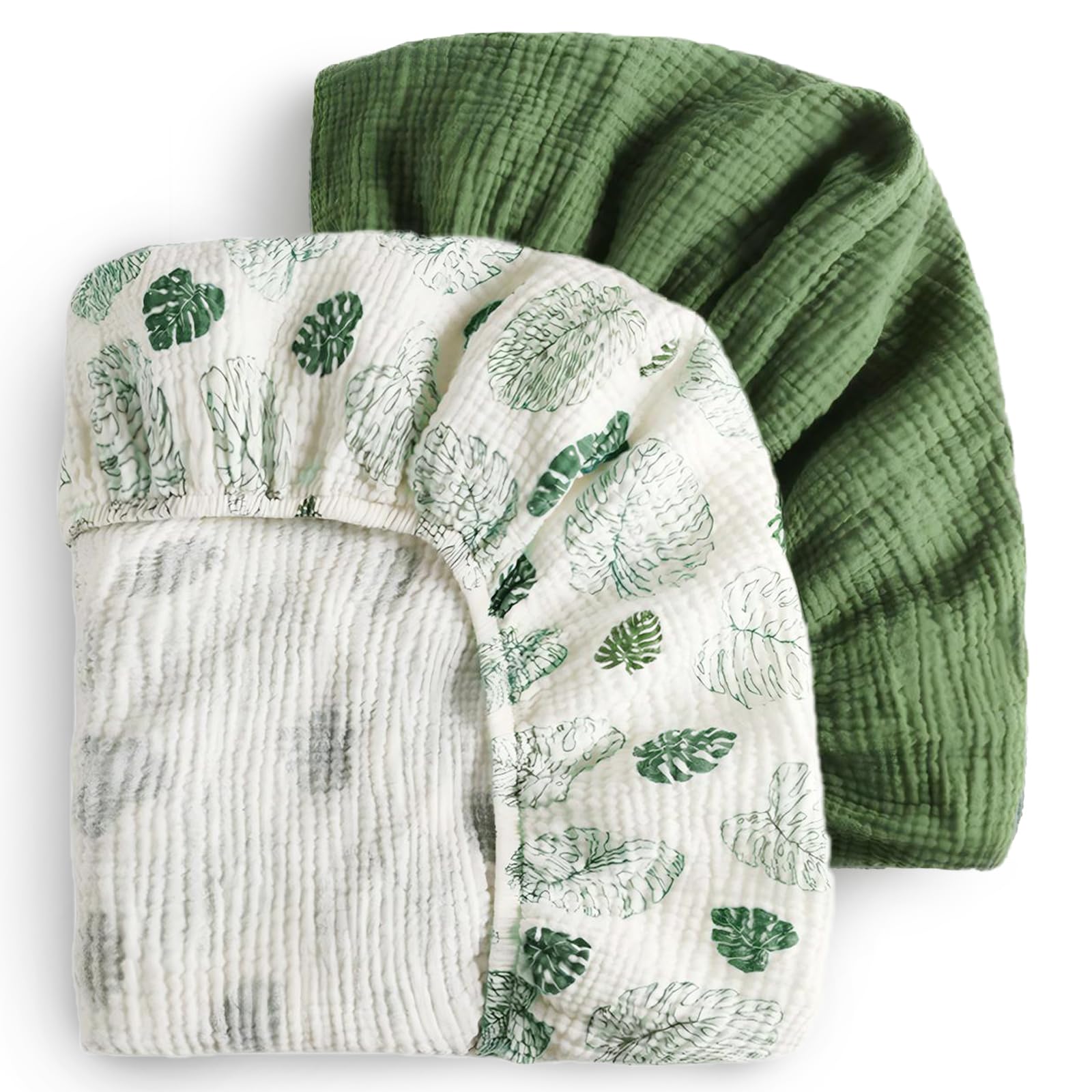
Blissful Diary Muslin 2-Pack
Double-layer muslin cotton breathes far better than the polyester jersey sheets that dominate the nursery aisle, keeping the crib cool during warm nights and releasing stains in the wash with surprising ease. The 2-pack Monstera & Dark Green prints bring a relaxed, boho-chic look that fits nature-themed nurseries. Muslin wrinkles by nature and may shrink slightly more than jersey after machine drying, so air-drying preserves the fit best. If a lived-in, breathable fabric matters more than a wrinkle-free crease, these sheets deliver where it counts.
Pros
- Muslin cotton softens with each wash and stays gentle against baby’s skin.
- Stains release easily in the laundry, so the botanical prints stay bright.
- Boho-inspired Monstera and dark green patterns blend into nature-themed nurseries.
Cons
- Shrinkage can occur after machine drying, slightly more than with cotton jersey.
If a naturally breezy crib and easy stain release matter more than a crease-free look, these muslin sheets are a smart pick for boho-minded parents.
Best for Multi-Pack Value
FIEMOL Microfiber 3-Pack
Key Features
- Material: Microfiber
- Pack Size: 3
- Pocket Depth: 8 in.
- Price: Mid-Range
Unlike the bulk 4-pack aimed at daycare turnover, this set uses a brushed microfiber that doesn’t sacrifice softness for quantity. The fabric feels plush and drapes smoothly on the mattress, while the 8-inch pockets hug standard crib sizes securely.
Parents who want a cute forest animal print and generous softness will find this set delivers far more than its per-sheet price suggests. It’s a synthetic microfiber, though, so families committed to natural fibers like cotton should consider the top pick or the organic jersey option.
Pros
- Brushed microfiber feels remarkably soft against baby’s skin.
- Elastic corners stretch easily over standard 8-inch mattresses without popping off.
- Three sheets for a mid-range price beats the per-sheet cost of most 2-packs.
Cons
A standout value for parents who prioritize softness and quantity — just be sure synthetic material isn’t a dealbreaker.
Best for Organic Purist
Burt’s Bees Organic Crib Sheet

Key Features
- Material: 100% Organic Cotton
- Pack Size: 1
- Certifications: Organic
- Price: Premium
The 100% organic cotton feels buttery-soft out of the package and holds its texture through washes, keeping nurseries free of synthetic chemicals. It’s a single sheet at a premium price, though, and some units can develop thinning or pinholes after repeated laundering — so it suits parents who prioritize organic bedding and don’t need a multi-pack.
Pros
- Buttery-soft organic cotton that maintains its plush feel through countless washes.
- Certified organic cotton construction ensures a chemical-free sleep surface.
Cons
- Fabric can thin or develop small holes after many wash cycles.
Best for parents committed to an organic crib sheet that complements a Burt’s Bees nursery set — just be prepared that a few units may not withstand heavy rotation and need replacement sooner than a multi-pack option.
Best for Floral Prints
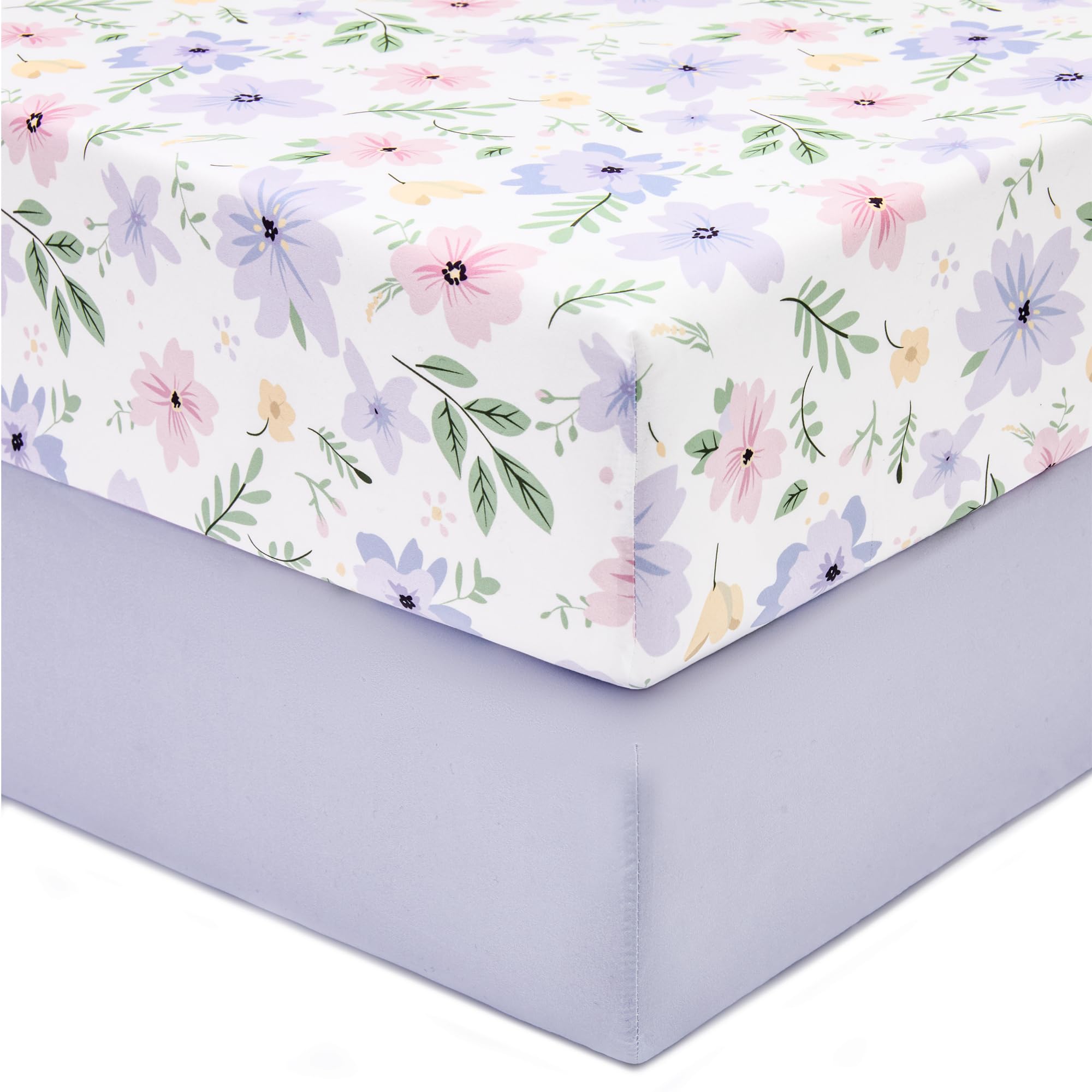
TILLYOU Floral Crib Sheets
Key Features
- Material: Microfiber
- Pack Size: 2
- Pocket Depth: 5 in.
- Price: Mid-Range
Two bright floral crib sheets deliver soft microfiber comfort and a snug fit at a budget-friendly price. The prints add a cheerful touch to the nursery without costing much. Durability can be a weak point: the fabric may show wear or tears after repeated washing, making these best for light or occasional use rather than daily wear.
Pros
- Soft microfiber feels gentle against baby’s skin.
- Two sheets at a mid-range price keep the crib ready without stretching the budget.
Cons
- Microfiber may show wear or small tears after several washes.
A fitting choice for light-use settings like a grandparent’s house where charming prints and a low price matter more than long-term endurance.
Best for Bright Colors
Everyday Kids Microfiber
Key Features
- Material: Microfiber
- Pack Size: 2
- Pocket Depth: 8 in.
- Price: Budget
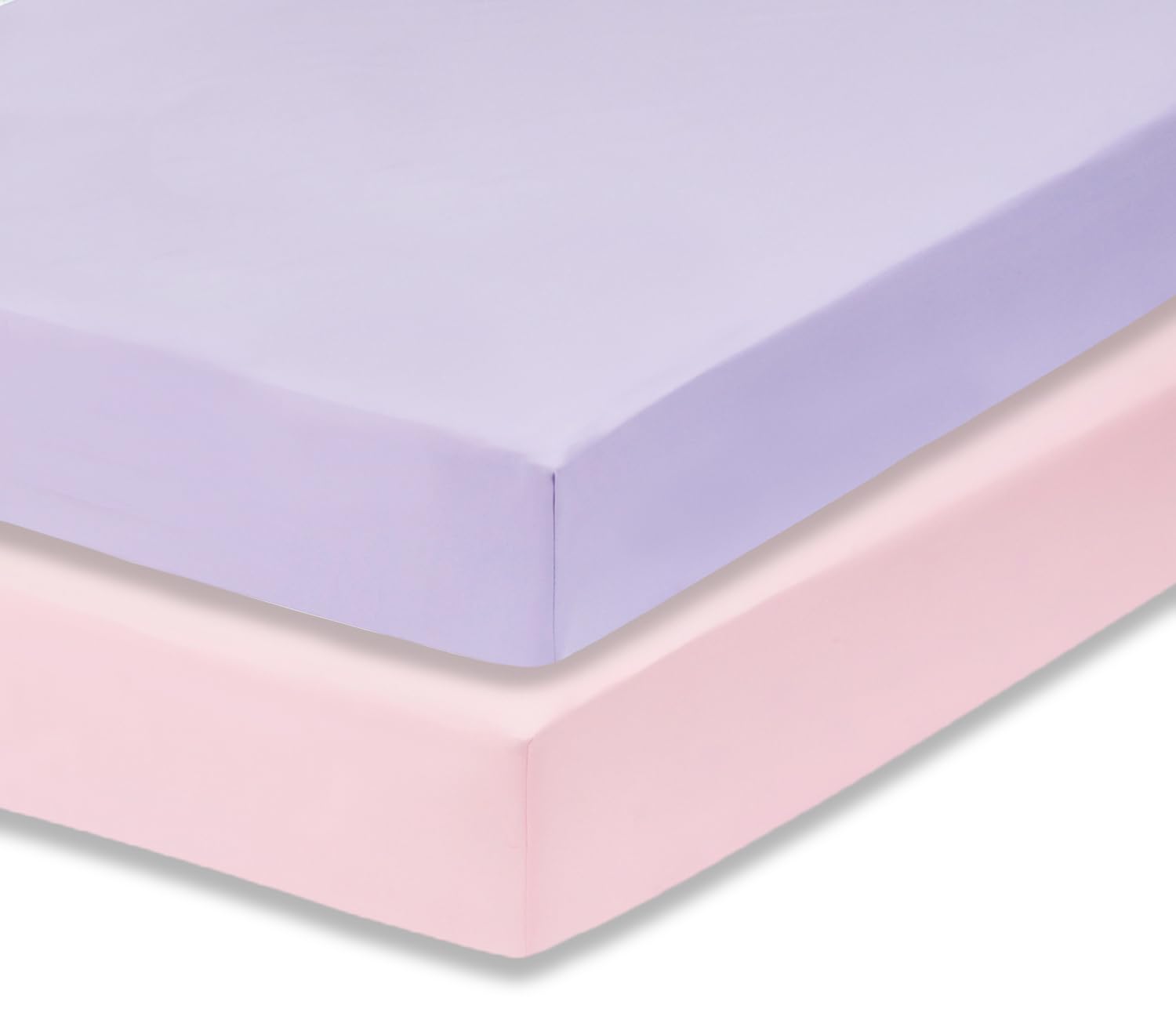
Two bright sheets that stretch snugly over standard crib mattresses and hold their color after repeated washes. The microfiber material, however, can feel thin and synthetic against the skin — closer to a budget feel than a soft cotton alternative. For daycares or parents who prioritize low cost and vivid appearance over fabric texture, this pack delivers solid value per unit.
Pros
- Snug fit that stays put on standard crib mattresses
- Two sheets for a low cost per unit
Cons
- Microfiber fabric can feel thin and synthetic, not as soft as cotton
Best suited for daycare rotations or households that value bright colors and a low price over fabric softness — the per-sheet cost is hard to beat.
Best for Solid Color
NTBAY Microfiber Sheet
Key Features
- Material: Microfiber
- Pack Size: 1
- Pocket Depth: 8 in.
- Price: Budget
The brushed microfiber feels soft and holds up through repeated washes without significant wear, keeping its rich black tone intact. Color accuracy can be hit-or-miss — the actual shade may depart from listing photos, so this sheet works better as a low-stakes backup than a precise color match for coordinated nursery decor.
Pros
- Brushed microfiber feels notably soft right out of the package.
- Stands up well to machine washing and drying without visible wear.
Cons
- Actual shade can differ from listing photos, which may frustrate buyers seeking an exact color match.
A decent option when you need an affordable single sheet in a solid color for occasional use and don’t require a precise match to other nursery items.
Best for Deep Pockets
American Baby Cotton 2-Pack

Key Features
- Material: 100% Cotton Jersey
- Pack Size: 2
- Pocket Depth: 9 in.
- Price: Mid-Range
This 2-pack offers soft 100% cotton jersey and deep 9-inch pockets that grip thick crib mattresses securely. Seams may unravel after repeated washing, so durability is a gamble — a tradeoff for natural fiber comfort at this price.
Pros
- Soft 100% cotton jersey feels gentle on baby’s skin.
- Deep 9-inch pockets keep the sheet in place on pillow-top cribs.
Cons
- Seams can unravel and develop holes after repeated washing.
If your crib mattress is thick or pillow-top, this 2-pack solves fit issues at a low cost. Plan to replace it sooner than you would a premium cotton sheet.
Best for Dino Softness
GRSSDER Jersey Dinosaur

The sheets deliver a silky, plush feel that stretches easily over standard crib mattresses without slipping. Vibrant dinosaur patterns stay bright through washes. The trade-off: the fabric is 100% polyester, not cotton jersey as the label implies. This means it can sleep warmer than expected — a non-issue unless natural fibers are a priority.
Pros
- Silky-soft texture that remains plush after repeated laundering.
- Cheerful dinosaur prints that hold color and detail wash after wash.
Cons
- 100% polyester construction, not cotton jersey as suggested; may trap more body heat than cotton.
Ideal for dinosaur-loving families who prioritize buttery stretch and don’t mind a synthetic that isn’t true cotton jersey.
Best for Cheapest Option
Biloban Crib Sheets 2-Pack

Key Features
- Material: 100% Polyester Microfiber
- Pack Size: 2
- Pocket Depth: 8 in.
- Price: Budget
This 2-pack keeps nursery costs to an absolute minimum, delivering two easy-wash sheets for the price of one elsewhere. The softness holds through washes, but expect a fit that can be loose or tight on standard crib mattresses, so it’s best reserved for short-term or backup use.
Pros
- Two sheets at a price lower than many single-sheet options.
- Stands up to repeated washing without pilling or fading.
Cons
- Material is very thin and see-through, limiting durability.
The lowest-cost 2-pack for non-critical spaces where a sheet that may not fit snugly is acceptable.
Best for Basic Backup
GUNTAIL Microfiber 2-Pack

Key Features
- Material: Microfiber
- Pack Size: 2
- Pocket Depth: 8 in.
- Price: Budget
The GUNTAIL 2-pack provides a soft, secure fit that makes it a budget-friendly choice at first touch. However, the construction is flimsy enough that sheets can rip after a single wash cycle. That’s a trade-off you can accept if you only need a spare set for light-duty spots like playpens, pet beds, or occasional grandparent visits.
Pros
- Feels gently soft against the skin, good for sensitive sleepers.
- Deep pockets and elastic keep the sheet snug on standard 28×52-inch crib mattresses.
Cons
- The microfiber fabric has a thin, synthetic hand that may not satisfy those expecting a cotton-like feel.
At this price, it fills a narrow role: a backup sheet for places where occasional tears aren’t a dealbreaker.
Best for Daycare Bulk
Moonsea Microfiber 4-Pack

Key Features
- Material: Microfiber
- Pack Size: 4
- Pocket Depth: 8 in.
- Price: Mid-Range
This 4-pack delivers plain and simple: quantity, easy cleaning, and a snug fit for standard crib mattresses. The microfiber fabric can feel plasticky and thin compared to cotton, but that tradeoff suits daycare stacks and high-change households where practicality outweighs tactile luxury.
Pros
- Four-sheet set costs less than many single sheets, cutting down constant laundry cycles.
- Withstands machine washing after blowouts and spills without shrinking or pilling.
Cons
- Microfiber fabric can feel plasticky and thin compared to cotton options.
High-turnover cribs that go through multiple sheet changes per day get the most value out of this 4-pack, where quantity and easy cleaning matter more than hand feel.
How to Choose
The single most important choice is material: it sets the baseline for softness, breathability, safety, and how a sheet ages through nightly use and frequent washes.
Material
Cotton — especially jersey knit or percale — breathes naturally and stays cooler against a baby’s skin, a key factor because infants can’t regulate body temperature as efficiently as adults. In contrast, microfiber (polyester) initially feels plush but traps body heat and can develop a plasticky, clingy surface after washing. Organic cotton adds the reassurance of zero pesticide residues and chemical softeners, but the raw fiber itself isn’t necessarily softer than conventional cotton; it’s the weave and finish that determine hand feel.
If you live in a warm climate or notice your baby sweating during sleep, prioritize cotton or muslin over polyester-based sheets. The difference in night comfort is often greater than any packaging softness claim suggests.
Pack Size
A single crib sheet quickly becomes a midnight headache when spit-up or a diaper leak strikes. Multi-packs provide an immediate backup, but the value isn’t just convenience — rotating two or three sheets distributes wear and can extend overall lifespan. For daycare or grandparent homes, a 3- or 4-pack eliminates the risk of running out midweek.
Consider your laundry rhythm. A household that runs a wash every day may be fine with two sheets; one that washes twice a week benefits from four. Also check whether the per-sheet price truly drops with bigger packs — some 3-packs offer a lower unit cost than bulkier 4-packs because of material quality.
Pocket Depth
A sheet with a pocket depth of 8 or 9 inches snugly wraps around standard and thicker pillow-top crib mattresses, using full-perimeter elastic to stay put even when your baby squirms. If the depth is only 3 or 5 inches, the corners are likely to pop off a plush mattress, creating loose fabric that can bunch up — a real concern for safety.
However, depth alone isn’t enough. The elasticity quality matters; a stretchy jersey knit with a shallow 5-inch pocket can sometimes outperform a stiff cotton sheet with an 8-inch pocket because it conforms more tightly to the mattress shape. If you have an unusually thick mattress, prioritize both depth and stretch.
Softness and Washability
True softness isn’t just about the initial touch — it’s how the sheet feels after a dozen washes. Brushed microfiber often feels cloud-like out of the box but can mat or thin. Jersey knit, especially polyester-spandex blends, retains that buttery sensation longer because the fibers snap back. Organic cotton jersey starts crisp but softens dramatically with each cycle, rewarding patience.
Pay attention to care instructions. High heat drying can degrade spandex and shrink cotton, so use low or medium heat to preserve fit and feel. Also, note that some muslin sheets may wrinkle more but remain extraordinarily soft and breathable, which some parents prefer over the sleekness of microfiber.
Safety Certifications
OEKO-TEX Standard 100 certification guarantees the fabric has been tested for over 100 harmful substances, from formaldehyde to heavy metals, and is one of the most reliable safety marks. Organic certifications, such as GOTS, verify that the cotton was grown without synthetic pesticides and processed under strict environmental and social criteria. Both offer peace of mind, but OEKO-TEX is more common in blended sheets while organic certs apply to 100% natural fibers.
If your baby has eczema or extra-sensitive skin, choosing certified sheets is a low-effort way to reduce potential irritants. For most families, an OEKO-TEX or organic label simply ensures the sheet isn’t introducing unnecessary chemicals into the sleep environment.
FAQ
Why are my crib sheets so thin and see-through?
Thinness is usually a cost-cutting measure in budget microfiber sheets — they use a low density of fine polyester threads that appear translucent under light. To avoid this, look for sheets with a thread count above 200 or, better yet, choose jersey knit or percale cotton, which fabric is naturally denser. If you prefer microfiber, brushed varieties with a higher GSM tend to be less sheer.
How do I keep crib sheets from slipping off the mattress?
Match the sheet’s pocket depth to your mattress thickness; an 8- or 9-inch pocket with full-perimeter elastic will grip firmly. If slipping persists, tuck excess fabric tightly under all four corners and consider jersey knit sheets, whose natural stretch creates a more secure hug. Sheets that combine deep pockets with strong elastic, like many polyester-spandex blends, are less likely to pop loose during active sleep.
Is microfiber or cotton better for baby crib sheets?
Cotton, particularly jersey or muslin, is more breathable and far less likely to trap heat than polyester-based microfiber. For a baby’s temperature regulation, cotton is the safer, more comfortable daily option. Microfiber is adequate as a budget backup, but its synthetic feel and lower airflow can make it less suitable for all-night use.
Do I need organic crib sheets for my newborn?
Organic crib sheets eliminate pesticide residues and chemical processing agents, which can be a relief for newborns with sensitive skin. However, a well-made conventional sheet with OEKO-TEX certification achieves a similar level of chemical safety. If your budget allows, organic is a solid upgrade; if not, an OEKO-TEX-certified sheet still provides a clean, tested sleep surface.