
This post contains affiliate links. We may earn a small commission when you buy through our links — at no extra cost to you.
Unpacking a vacuum-sealed duvet insert only to watch it stay thinner than expected is a common letdown. Many down alternative options under fifty dollars look plush in studio-lit images but feel flat on the bed, even when the warmth works. That disconnect between photo and reality can make duvet shopping feel like a guessing game.
The duvet inserts that genuinely earn their spot balance real loft, consistent warmth, and durable construction—not just in the first night but after months of washing. Understanding fill material, box-stitching, and cover fabric is the difference between a duvet that stays fluffy through wash cycles and one that goes limp after a single season.
That means you can stop judging a duvet by its vacuum-packed bag and start looking at the specs that matter.


Best for All-Season Comfort
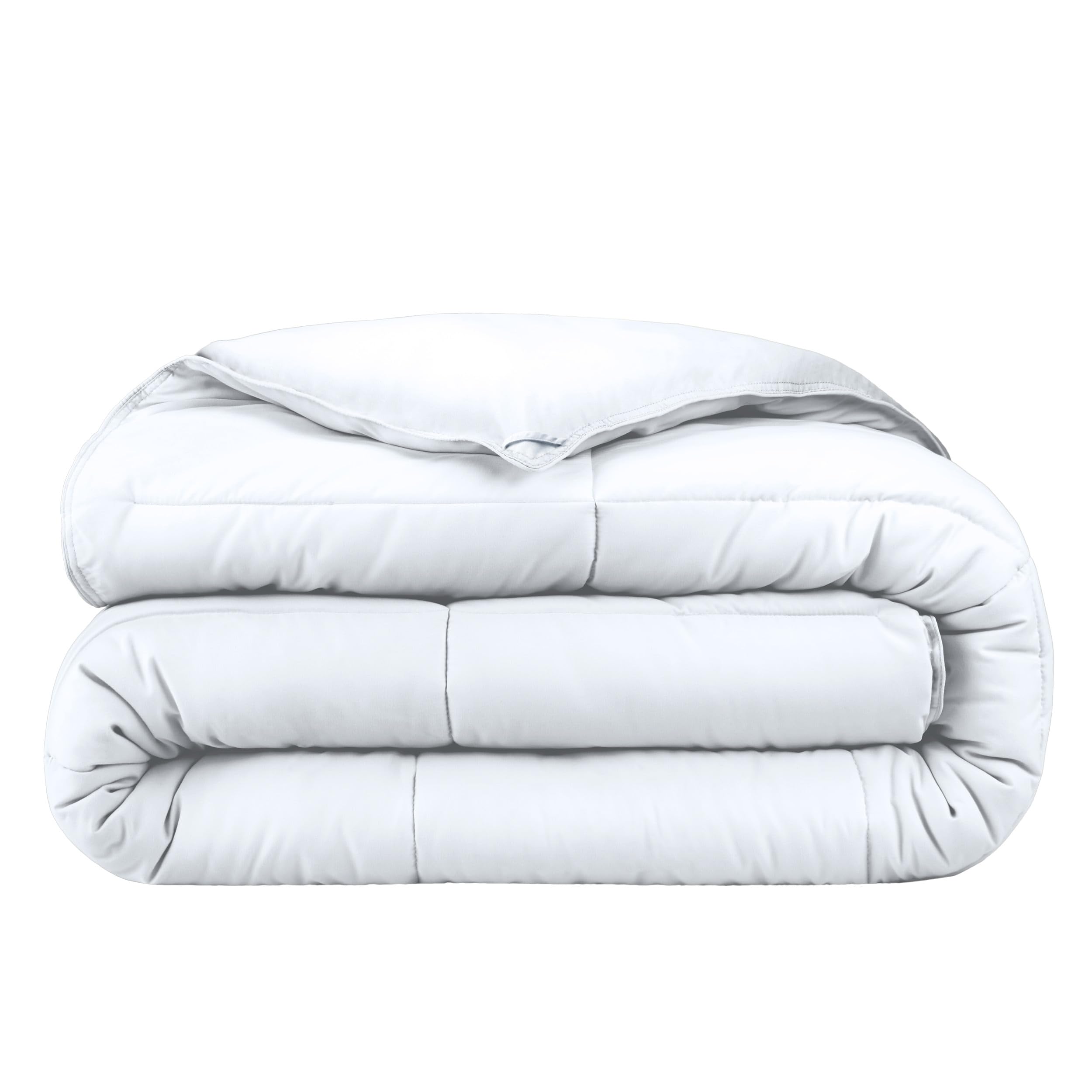
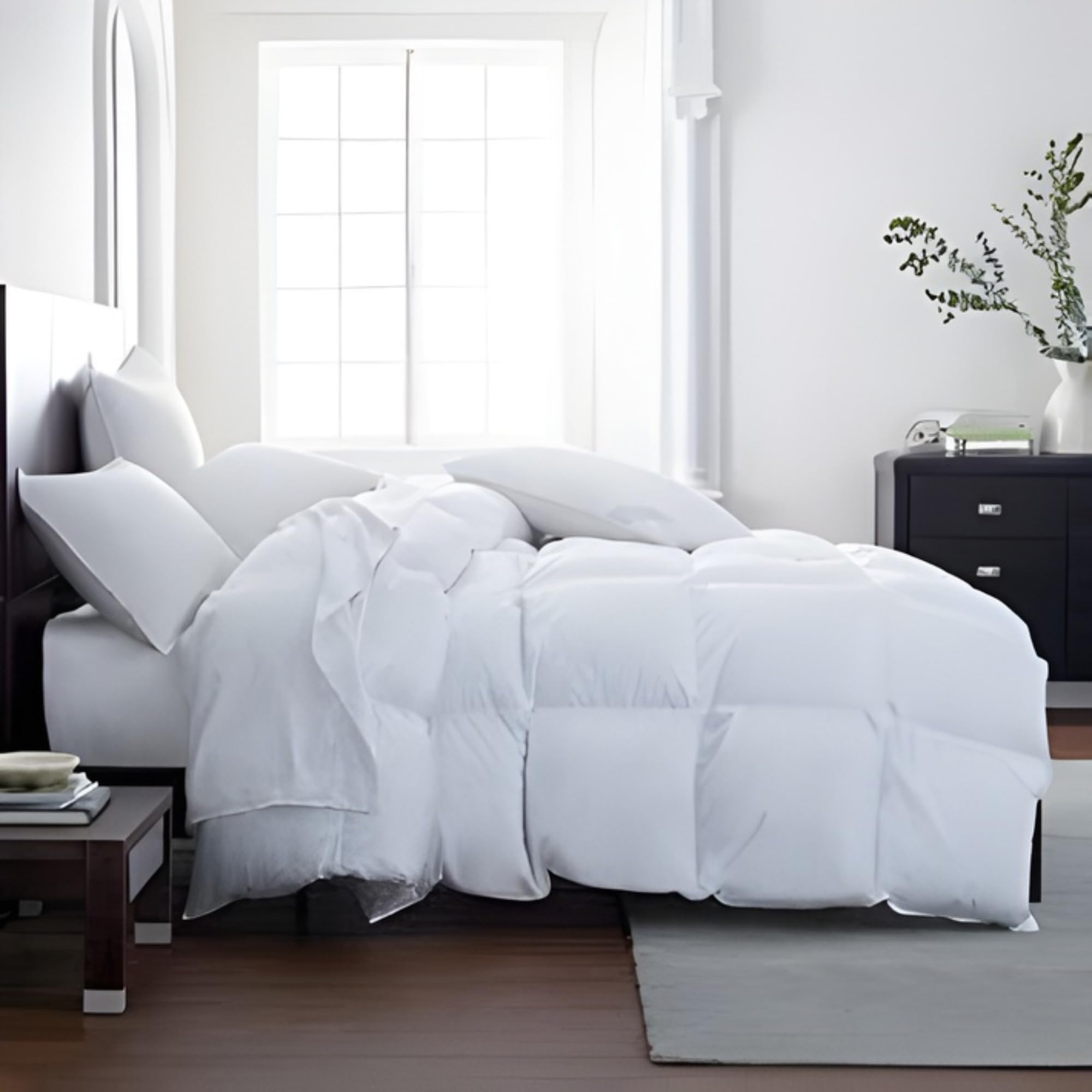
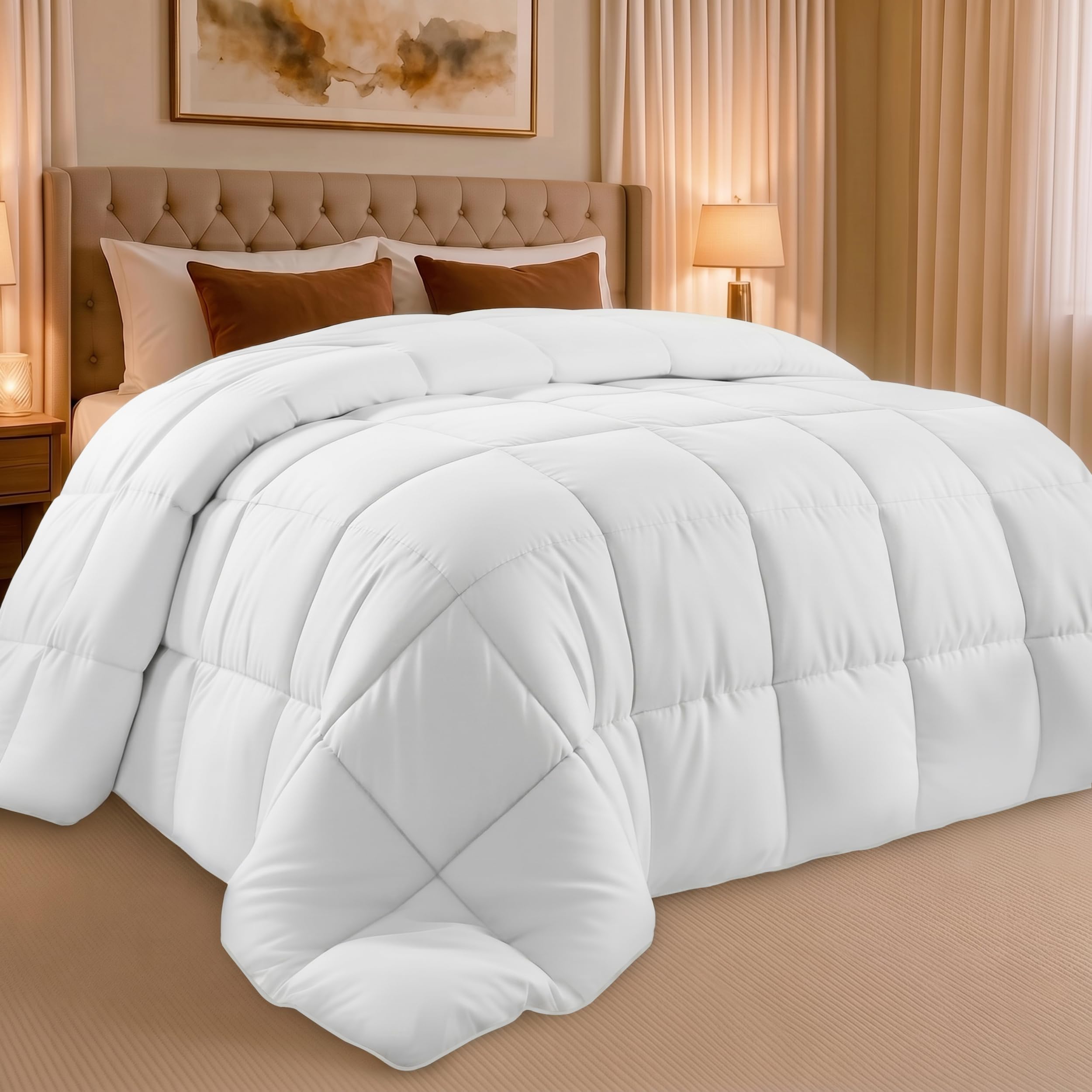
Bare Home Duvet Insert
Key Features
- Fill Material: Down alternative fiberfill
- Cover Fabric: Microfiber
- Construction: Box-stitch
- Attachment Tabs: 8 duvet loops
- Price: Mid-Range
The hydro-brushed microfiber shell feels soft and resists pilling, while the box-stitch construction keeps the fill evenly distributed. It provides even warmth without the weight of a heavy comforter, making it comfortable across a range of temperatures.
This insert works well for buyers who want a low-maintenance, machine-washable duvet that holds its shape. Those who prefer the dramatic cloud-like loft of feather or down fills may find it less puffy than expected—a tradeoff for the consistent feel and easy care.
Pros
- High-quality feel with lasting softness
- Cozy warmth without heavy weight
- Balanced comfort and value
Cons
- Less puffy than feather or down options, so not ideal for those wanting dramatic loft
A soft, durable insert that stays consistent wash after wash—best for sleepers who prioritize even warmth and easy care over maximum fluff.
Best for All-Season Value
Bedsure Down Alternative Duvet Insert
Key Features
- Fill Material: 100% polyester down alternative
- Cover Fabric: Polyester
- Construction: Box-stitch
- Attachment Tabs: 8 corner and side loops
- Price: Budget
Soft, brushed polyester fabric and eight sewn-in corner and side loops make this insert feel cozy and stay put inside a duvet cover—something cheaper options may lack. The lightweight fill gives balanced year-round warmth without overheating in moderate climates. Though the loft looks thinner than product photos would suggest, the warmth still holds up well. This makes it a sensible choice for budget-conscious shoppers who want machine-washable convenience and don’t need a plush hotel-style puff.
Pros
- Exceptionally soft brushed cover feels gentle and cozy right away.
- Balanced, lightweight warmth suitable for year-round use without overheating.
- Eight corner and side loops keep the insert securely in place inside a cover.
Cons
- Loft can look thinner than product photos imply, though warmth remains adequate.
If softness, practical warmth, and easy care matter more than towering loft, this insert delivers all-season comfort at a price that’s hard to beat.
Best for Feather Warmth
Serta Feather Down Comforter
Key Features
- Fill Material: 90% goose feather, 10% down fiber
- Cover Fabric: 100% cotton
- Construction: End-to-end sewn-through box
- Attachment Tabs: 4 corner loops
- Price: Mid-Range
The Serta sets itself apart from lofty down comforters with a feather-heavy fill that gives it noticeable heft and warmth without sky-high pricing. The 100% cotton cover feels soft against the skin, and the fill provides that heavy, enveloping feel cold sleepers often prefer. The tradeoff is a crinkly rustle from the feathers that can be intrusive in a silent bedroom — using a thick duvet cover dampens it considerably. This is best for those who prioritize genuine feather/down warmth and weight over silence, and pair it with a substantial cover.
Pros
- Luxurious hotel-like weight and warmth from genuine feather/down fill.
- Soft 100% cotton cover feels smooth and drapes heavily for a cozy feel.
Cons
- Crinkly rustling from the feather fill may disturb light sleepers.
The Serta is the right pick for anyone who wants genuine feather/down warmth and weight on a budget — just add a heavy duvet cover to handle the tradeoff.
Best for Luxury Down Heft
Egyptian Bedding Goose Down
Key Features
- Fill Material: 80% goose down, 20% waterfowl feather
- Cover Fabric: 100% cotton
- Construction: Baffle box
- Attachment Tabs: 8 corner loops
- Price: Premium
With a 58 oz fill weight and baffle-box design, this comforter creates a tall, pillowy loft that feels substantial on a king bed — matching the weight and warmth of luxury hotel bedding. The temperature regulation is balanced, keeping sleepers cozy without overheating. However, the feather and down blend can shed or poke through the outer fabric over time, so this comforter is best suited for buyers who plan to use a duvet cover as a barrier against stray feathers.
Pros
- Creates an impressive, hotel-like loft with a heavy, plush feel on king beds.
- Provides consistent warmth that regulates temperature well, avoiding stuffiness.
Cons
- Feathers may poke through the cover over time, requiring a duvet cover or occasional plucking.
If you want a true heavy down experience for a king bed and don’t mind using a duvet cover to contain stray feathers, this comforter delivers on luxury loft and warmth.
Best for Plush Cold Sleep
Lavish Comforts Duvet Insert
Key Features
- Fill Material: Microfiber polyester
- Cover Fabric: Microfiber
- Construction: Box-stitch
- Attachment Tabs: 4 corner loops
- Price: Premium
The Lavish Comforts duvet insert goes all-in on plushness, using a microfiber fill that rivals genuine down loft. Where the all-rounder pick emphasizes uniform sizing, this comforter prioritizes a deep, squishy feel that delivers serious warmth for cold sleepers. That softness and cozy heft come with a tradeoff: some units measure slightly smaller than the label states, which can leave standard duvet covers looking baggy. This is the right pick for buyers who value a truly fluffy, vegan-friendly insert and are willing to verify dimensions before dressing it.
Pros
- Soft, lofty microfiber fill that feels remarkably close to genuine down.
- Delivers substantial warmth with a comfortable, secure weight.
Cons
- May run slightly smaller than label dimensions, causing a loose fit in standard covers.
The fluffiest synthetic comforter in this review — a true down alternative experience for those willing to confirm size upon arrival.
Best for Basic Value
Utopia Bedding Duvet Insert
Key Features
- Fill Material: Siliconized polyester fiberfill
- Cover Fabric: Microfiber
- Construction: Box-stitch, piped edges
- Attachment Tabs: 4 corner tabs
- Price: Budget
Compared to the all-season workhorse in this set, this insert strips things back to basics — soft siliconized fiberfill and stitched piped edging that holds up through everyday use, all at an ultra-budget price.
It’s a practical pick for value seekers, guest rooms, and kids’ beds where a thinner profile isn’t a drawback. The fill is warm enough for mild climates but lands noticeably flatter than product photos after unpacking.
Pros
- Exceptionally soft cover and fill that feel like a more expensive product
- Lightweight design provides enough warmth for most nights without overheating
- One of the best values in duvet inserts, delivering comfort at a fraction of typical cost
Cons
- Thin fill that can appear significantly flatter than product photos after unpacking
A budget-friendly insert that nails softness and warmth for value setups — just accept a flatter appearance than the fluffy ads show.
Best for Summer Cooling
MEELUS Lightweight Comforter

Key Features
- Fill Material: 3D & 7D down alternative
- Cover Fabric: 100% polyester
- Construction: Box-stitch
- Attachment Tabs: 8 corner and side tabs
- Price: Budget
The MEELUS uses a breathable 3D/7D down alternative fill with 8 tabs for duvet attachment. Its soft polyester shell feels comfortable against the skin. This insert is purpose-built for warm nights and hot sleepers — its lightweight construction prioritizes airflow over insulation. For anyone seeking a year-round comforter, this is not the right choice; it’s a seasonal layer best paired with a blanket in cooler weather.
Pros
- Ultra-lightweight design keeps you cool during summer nights.
- Soft, breathable microfiber shell fits securely in duvet covers.
Cons
- Thin profile may not provide sufficient warmth in cooler weather.
Best for hot sleepers and summer use, this budget-friendly insert offers lightweight comfort — just pair it with a blanket when the temperature drops.
Best for Lightweight Warmth
EASELAND All-Season Comforter

Key Features
- Fill Material: 300 GSM whole-piece polyester
- Cover Fabric: Brushed polyester
- Construction: Reinforced box-stitch
- Attachment Tabs: Corner loops
- Price: Mid-Range
This EASELAND comforter delivers soft warmth without bulk at a mid-range price. The 300 GSM fill and box-stitching hold up well for year-round use. However, the thinner loft means it won’t plump up a duvet cover dramatically — better suited for layering or those who prefer a less puffy feel.
Pros
- Soft and cuddly with a comfortable weight
- Warm without being heavy
Cons
- Thinner than expected; does not fill duvet covers as plushly
Best for king-bed owners who want a lightweight, warm insert and don’t prioritize visual loft.
Best for Ultra-Light Layer
DOWNCOOL Lightweight Duvet Insert
Key Features
- Fill Material: 3D & 7D alternative down blend
- Cover Fabric: Microfiber polyester
- Construction: Box-stitch
- Attachment Tabs: 4 corner loops
- Price: Budget
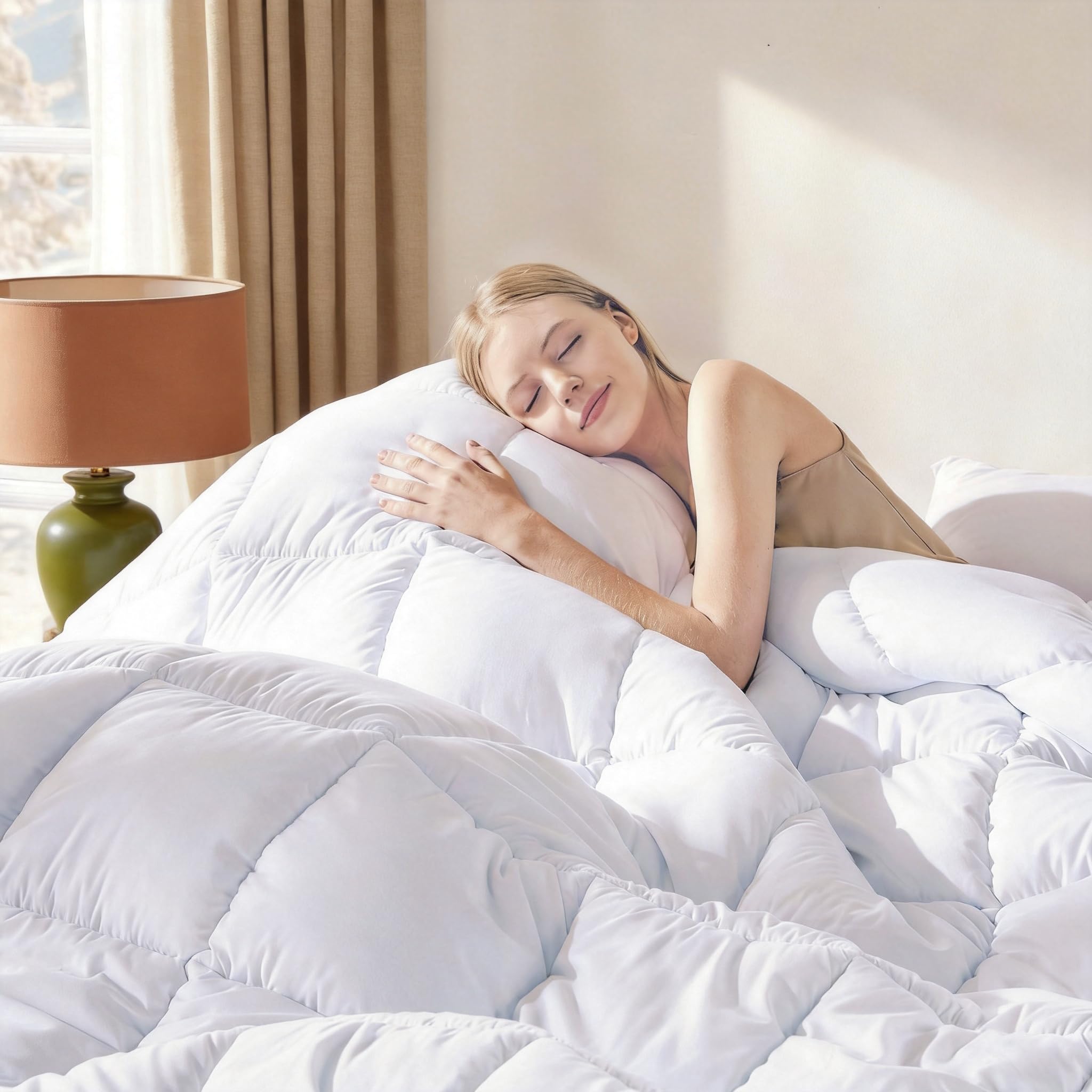
The DOWNCOOL duvet insert delivers exceptional breathability from its 3D/7D alternative down fill, making it ideal for summer nights or layering inside a cover. Its ultra-thin profile—closer to a blanket than a comforter—provides no substantial warmth. This suits hot sleepers, dorm rooms, and warm-climate use exclusively.
Pros
- Extremely lightweight fill keeps hot sleepers comfortably cool.
- Soft microfiber cover and fill feel gentle without extra weight.
Cons
- Ultra-thin build can feel more like a blanket than a comforter, offering no real warmth for cold nights.
For hot sleepers who want the absolute lowest-cost option for summer layering, the DOWNCOOL covers that need — just don’t expect it to double as a year-round comforter.
Best for Moderate Temp
COHOME Cooling Comforter

Key Features
- Fill Material: Whole-piece polyester
- Cover Fabric: Soft brushed fabric
- Construction: Box-stitch, anti-clump
- Attachment Tabs: 8 tabs
- Price: Mid-Range
The COHOME comforter delivers softness and a pleasant mid-weight feel at a fair price, but the ‘cooling’ label promises more than it delivers. The whole-piece polyester fill can trap heat, so it works best for spring and fall, not summer relief.
Pros
- Soft and well-made with a pleasant weight
- Good value for a cooling-labeled comforter
Cons
- Thinner than expected and may not reach full loft
For mild spring and fall weather, this mid-weight insert provides softness and decent construction at a fair price; hot sleeper summer use is off the table.
Best for Budget King
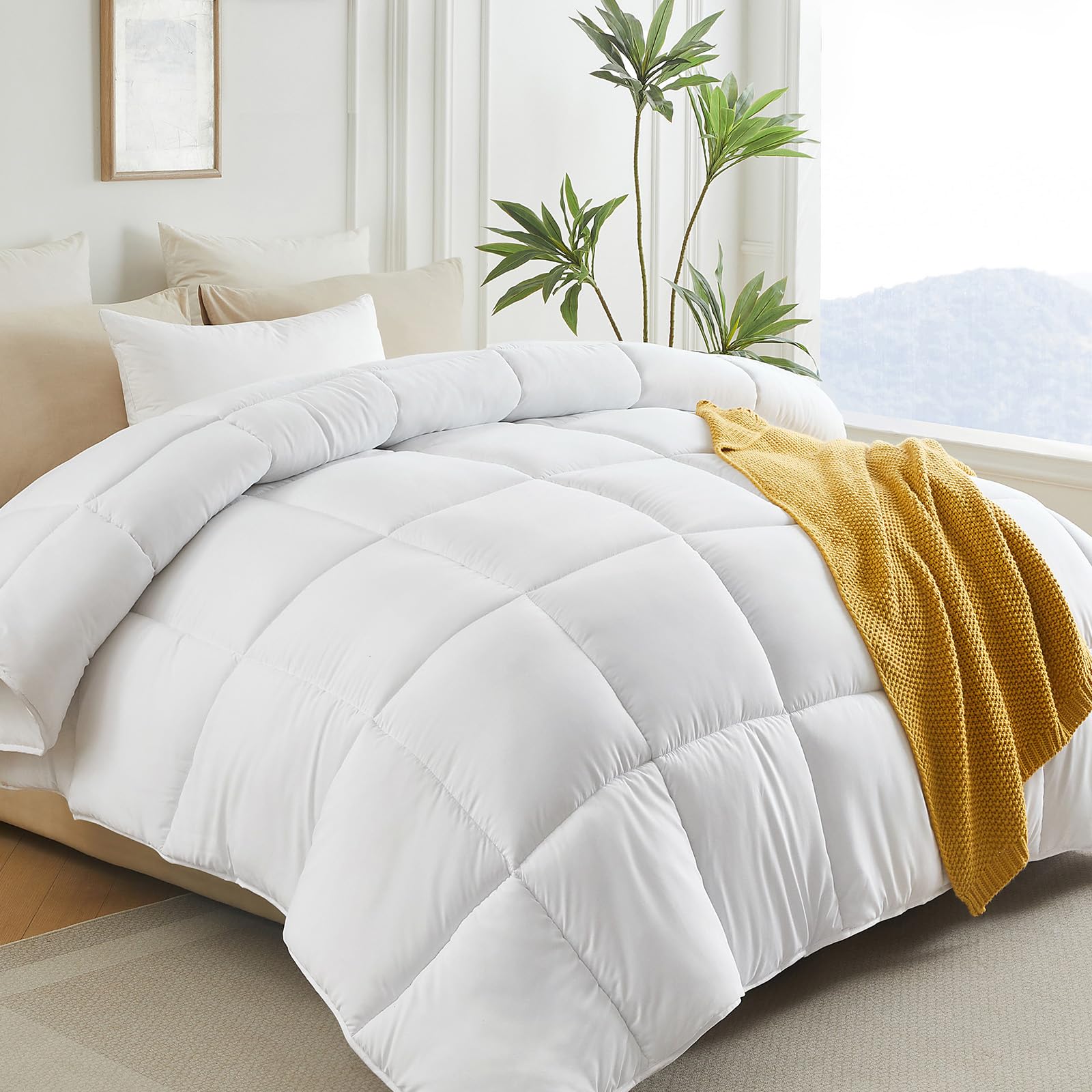
L LOVSOUL Down Alternative
Key Features
- Fill Material: 300 GSM whole-piece polyester
- Cover Fabric: Double brushed microfiber
- Construction: Box-stitch, piped edges
- Attachment Tabs: 8 tabs
- Price: Budget
The L LOVSOUL comforter delivers a soft microfiber feel and a moderate 300 GSM warmth that layers well under extra blankets in colder months. Photos overstate the loft — it can sit flatter inside a duvet cover than anticipated. For a budget-friendly king insert that holds up to frequent washing, the trade-off is acceptable.
Pros
- Soft microfiber shell feels gentle against skin.
- Lightweight enough for year-round layering without overheating.
Cons
- Thinner than images suggest, can look flat inside a duvet cover.
This duvet works for budget-minded king bed owners who value softness and plan to layer it with blankets, not for those expecting the lofty look of down.
Best for Super-Light Summer
HYLEORY All-Season Comforter

Key Features
- Fill Material: 3D & 7D cooling goose down alternative
- Cover Fabric: Brushed peach-skin microfiber
- Construction: Box-stitch
- Attachment Tabs: Corner and side loops
- Price: Budget
The brushed peach-skin microfiber delivers a soft, barely-there feel that suits hot sleepers and sticky summer nights. However, the fill is paper-thin — you’ll feel every draft once temperatures dip. This is strictly a warm-weather layer, not an all-season duvet.
Pros
- Exceptionally soft, brushed microfiber is gentle on skin.
- Ultra-lightweight construction ideal for warm sleepers and hot climates.
Cons
- Offers minimal warmth — closer to a sheet than a duvet, and can’t handle any chill.
For dorm rooms, children’s beds, or summer-only use where weightlessness matters more than insulation, this is a barely-there cover that won’t trap heat.
Best for Quiet Feather
Cosybay Feather Down Comforter

Key Features
- Fill Material: Feather down fiber blend
- Cover Fabric: 100% cotton
- Construction: Baffle-box
- Attachment Tabs: 4 corner loops
- Price: Mid-Range
The 100% cotton shell dampens the rustling often associated with feather fills, while the feather-down blend provides a balanced warmth suitable for all-season use. Though its loft is less impressive than premium down—thinner than some expect from photos—it remains a viable mid-priced option for those who value quiet over dramatic fluff.
Pros
- All-season weight provides warmth without overheating.
- Quiet cotton cover eliminates crinkling noise common in feather duvets.
Cons
- Loft appears thinner than premium down options, lacking the dramatic puffiness.
For buyers wanting the warmth of feather without the crinkle, this comforter is a practical choice—just expect a leaner profile than the fluffiest goose-down alternatives.
Best for Lightweight Feather
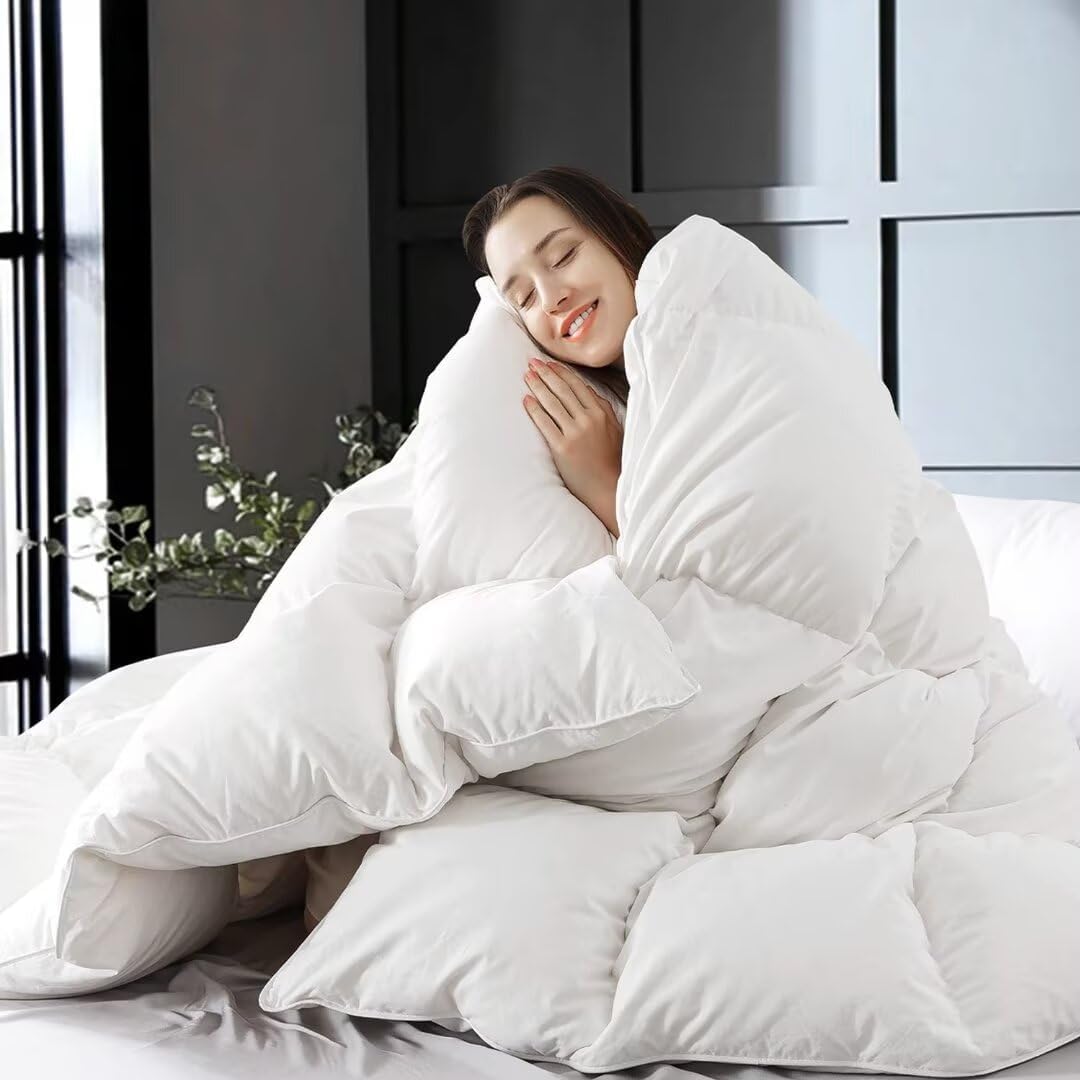
WhatsBedding Feather Down
Key Features
- Fill Material: Down fiber & feather blend
- Cover Fabric: 100% cotton
- Attachment Tabs: Corner loops
- Price: Mid-Range
Soft and cozy with a feather-fiber fill and 100% cotton shell, this insert feels gentle and drapes snugly. Lightweight warmth suits mild climates, layering under a duvet cover, or guest rooms. The cotton cover and corner loops add practical value for everyday use.
Pros
- Lightweight yet warm, making it easy to layer or use in mild seasons.
- Soft cotton cover and down-feather blend feel cozy with a snug drape.
Cons
- Fill can run thinner than expected, offering less loft than photos suggest.
A practical pick for warm sleepers or layered bedding in moderate temperatures, where a lightweight feather insert won’t overheat.
How to Choose
The right duvet insert balances fill material, cover fabric, and construction to deliver consistent loft and targeted warmth for your sleep style.
Fill Material: Down Alternative vs. Feather/Down
Down alternative polyester fills are hypoallergenic, machine-washable, and budget-friendly but may compress over time. Feather/down blends provide natural loft and heat retention, yet they can shed feathers and create a crinkly noise. Choose synthetic if you want easy care; choose natural if you prioritize plush heft and are okay with some maintenance.
Cover Fabric: Polyester vs. Cotton
Polyester microfiber covers feel soft and resist stains but can trap heat, making them less ideal for hot sleepers. 100% cotton covers breathe better and muffle feather rustle, but they may wrinkle and cost more. If you sleep warm, opt for cotton; for budget and softness, microfiber works.
Fill Weight and Loft: More Isn’t Always Better
Fill weight, often measured in GSM, determines warmth and fluff. A 300 GSM all-season insert works for most climates, but many brands don’t list GSM. When GSM is absent, look for word-of-mouth indicators about thickness after unpacking. A low-heat dryer cycle with dryer balls can restore loft in compressed inserts.
Construction: Box-Stitch vs. Baffle-Box
Box-stitch quilting evenly distributes fill, preventing cold spots and shifting. Baffle-box construction adds height and allows fill to expand more, ideal for down comforters. Most down alternative inserts use box-stitch; baffle-box is rare and reserved for premium feather/down models.
Attachment Tabs: Keeping the Duvet Cover in Place
Corner and side loops anchor the duvet cover, preventing the insert from bunching inside. More tabs (6–8) offer better security, especially on larger beds. If you use a duvet cover frequently, prioritize inserts with multiple reinforced loops.
FAQ
How long does a vacuum-packed duvet insert take to fluff up?
Allow 24–48 hours for a compressed duvet insert to fully expand at room temperature. To speed up the process, place it in the dryer on low heat for 10–15 minutes with dryer balls. This helps break apart clumped fill and restore loft.
Why is my down alternative comforter so thin and flat?
Many down alternative inserts look flat compared to studio images due to vacuum packaging and lower fill weight. Warmth is often still adequate, but visual loft is sacrificed. Choosing a model with higher GSM or a feather/down blend will deliver more puffiness.
Can you machine wash a feather and down duvet insert?
Most feather and down duvets are machine washable on a gentle cycle with cold water, but large capacity machines are essential to avoid clumping. Air dry or tumble dry on low heat with dryer balls to maintain fluff. Frequent washing can increase feather shedding, so using a duvet cover helps reduce the need for washing.
Why does my feather comforter make a crinkly noise?
The rustling noise comes from the stiff quills of feathers rubbing against the cover fabric. A 100% cotton cover with a dense weave reduces this sound, and pairing the duvet with a thick, padded duvet cover further dampens noise. Choosing blends with higher down content also minimizes crinkle.