
This post contains affiliate links. We may earn a small commission when you buy through our links — at no extra cost to you.
Many budget roll-up mattresses marketed for teens look identical online, but unboxing reveals real differences. Some never expand to full thickness, leaving a thin, uncomfortable pad. Others emit harsh chemical smells that linger for days. The right choice balances price with reliable construction and materials suited to a growing body.
This guide focuses on the features that matter after the box opens: consistent loft, odor control, and the kind of support that prevents slats from being felt. Whether you need a 6-inch foam mattress for a low-clearance bunk bed, a twin hybrid with pocket springs, or a full-size memory foam for a teen ready to upsize, you’ll find options that deliver real performance — not just high star counts.
By sticking to mattresses that expand reliably and use straightforward materials, you avoid the biggest source of buyer’s remorse — discovering the mattress is half as thick as promised.





Best for Motion-Isolating Hybrid
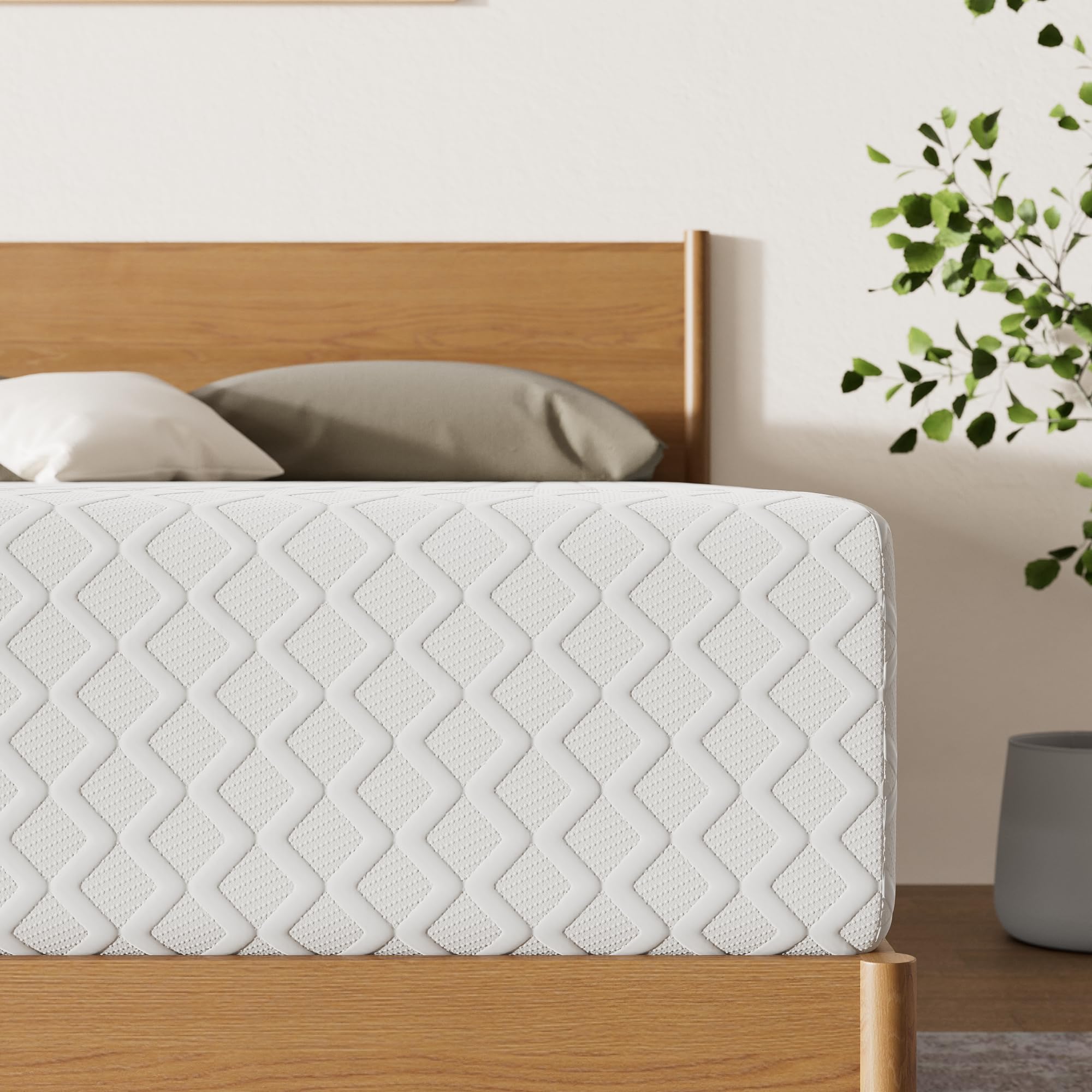
Coolvie 10" Hybrid
Key Features
- Thickness: 10 inches
- Construction: Hybrid (pocket springs, foam)
- Firmness: Medium
- Price: Mid-Range
The Coolvie 10-inch twin hybrid pairs 500 individually wrapped pocket springs with memory foam, creating a feel that’s supportive yet forgiving on shoulders and hips. Unlike traditional bonnell-coil mattresses, these springs move independently, so motion transfer is minimal—a restless teen won’t wake a sibling on the other side of the bed. The memory foam layer eases pressure points without the deep sink that can make changing positions difficult for growing bodies.
This mattress fits side and combination sleepers best, especially teens who want bounce without the noise of cheap coils. Its medium firmness supports spinal alignment without feeling board-like. The 100-night trial removes the guesswork. The one consideration: after several years of daily use by heavier individuals, the support can degrade and very occasional sagging has been reported. For a teen’s bedroom—where the sleeper will likely outgrow a twin before any real wear sets in—that’s a manageable tradeoff. Families who value uninterrupted sleep will appreciate the quiet motion isolation.
Pros
- Hybrid design cushions pressure points while keeping the spine aligned for side and combination sleepers.
- Pocket springs dramatically cut motion transfer, so a restless sleeper won’t disturb a sibling.
- Mid-range price with a 100-night trial makes this a standout value for a teen’s first hybrid.
Cons
- Durability under heavy use beyond a few years remains an open question; minor sagging can develop over time.
This is a pragmatic pick for a teen’s first hybrid: quiet enough for shared rooms, supportive for growing bodies, and backed by a trial that removes the risk of a mismatch.
Best for Budget Back Sleepers
Zinus 8" Cooling
Key Features
- Thickness: 8 inches
- Construction: Gel Memory Foam
- Firmness: Medium
- Odor Control: Green tea
- Price: Budget
Compared to the ultra-thin 6-inch version, this 8-inch model adds a more substantial foam base and a gel layer intended to wick heat. The all-foam construction eliminates spring noise entirely, and a strong base of customer feedback points to solid comfort and value for the price.
For a teenager who sleeps mostly on their back and isn’t prone to overheating, this is a practical pick for kids’ rooms and guest beds. Cooling performance can be inconsistent, and the firmness may feel too stiff for side sleepers, so if your child runs warm or needs a softer cradle, the top pick’s hybrid with pocket springs is a safer alternative.
Pros
- Comfortable memory foam feel that balances softness and support.
- Solid build quality for a budget foam mattress.
- Exceptional value given CertiPUR-US and OEKO-TEX certifications.
Cons
- Cooling performance varies: some sleepers still run warm despite gel infusion.
- Firmness splits opinion — side sleepers may find it overly stiff.
If your teen is a back sleeper who doesn’t need advanced cooling, this crowd-vetted foam mattress delivers support and durability without breaking the bank.
Best for Full-Size Teens
Ashley Chime 12" Full
Key Features
- Thickness: 12 inches
- Construction: Memory Foam
- Firmness: Extra Plush (medium-firm feel)
- Odor Control: CertiPUR-US
- Price: Mid-Range
This full-size mattress uses 12 inches of CertiPUR-US certified memory foam, making it the thickest full-size foam option available. The foam provides decent pressure relief for back and stomach sleepers, but the actual firmness lands closer to medium-firm than the ‘Extra Plush’ label suggests. For teens upgrading to a full-size bed who sleep on their back or stomach, this mattress offers good support and value. Side sleepers may find it too firm, and the inconsistent firmness labeling can lead to confusion.
Pros
- Thick memory foam cushions without excessive sink, suitable for back and stomach sleepers.
- Good value for a full-size memory foam mattress with thick foam layers.
Cons
- Firmness feels medium-firm rather than the listed ‘Extra Plush’, which may surprise buyers expecting a softer feel.
- Some sleepers may experience back discomfort, particularly if the firmness doesn’t match their body type.
Best for back and stomach sleeping teens needing a supportive full-size mattress, but side sleepers should consider a topper or a softer model.
Best for Bunk Bed Kids
EGOHOME 6" Kids
Key Features
- Thickness: 6 inches
- Construction: Memory Foam
- Firmness: Medium Firm
- Odor Control: Green tea
- Price: Budget
The EGOHOME 6-inch mattress stands apart from thicker hybrids by offering a virtually odorless unpacking experience — the green tea gel infusion keeps the foam fresh out of the box. At 6 inches, it’s designed for lightweight sleepers on bunk or trundle frames where height clearance is tight. The medium-firm feel provides decent support for younger teens, though the foam is noticeably firmer than a plush mattress — side sleepers under 100 pounds may find it too hard for comfort.
Best suited for kids and young teens who sleep on their back or stomach and prefer a firmer surface. Parents who are sensitive to off-gassing will appreciate the minimal smell. The 6-inch profile means it’s not a long-term option for heavier teenagers or adults — the thin comfort layer lacks pressure relief for those over 130 pounds.
Pros
- Nearly no chemical odor out of the box
- Quick, even expansion within minutes
- Fits low-clearance bunk and trundle beds with no sagging
Cons
- Firmness can be too hard for side sleepers or lightweight children
- 6-inch thickness limits support to lighter users only
A solid budget pick for parents who prioritize zero smell and a firm, compact mattress for a child’s first big-kid bed or a tight bunk setup.
Best for Kids’ Budget Hybrid
Linenspa 8" Hybrid
Key Features
- Thickness: 8 inches
- Construction: Hybrid (foam, coils)
- Firmness: Medium Firm
- Price: Budget
The Linenspa 8-inch Hybrid combines 312 continuous coils with a thin memory foam top, offering a spring-supported feel that stands out from all-foam options at this price. Its medium-firm surface and 300-lb capacity work well for growing teens and lighter users, though the coils can be felt and heard in quiet rooms. The 8-inch profile means heavier sleepers on slatted frames may also feel the slats — a solid foundation or bunkie board helps. This mattress suits kids’ rooms, guest beds, and bunk beds where budget matters more than silent, motionless sleep.
Pros
- Balanced hybrid feel suits kids and lightweight adults
- Lowest-cost way to get innerspring support with a foam top
- Parent-rated highly for suitability in children’s rooms
Cons
- Heavier users on slatted frames may feel the slats through the thin foam
- Coil spring sound and feel can be disruptive in quiet bedrooms
A cost-effective hybrid for kids and guests when spring noise and a thin profile don’t matter.
Best for Pressure Relief Sides
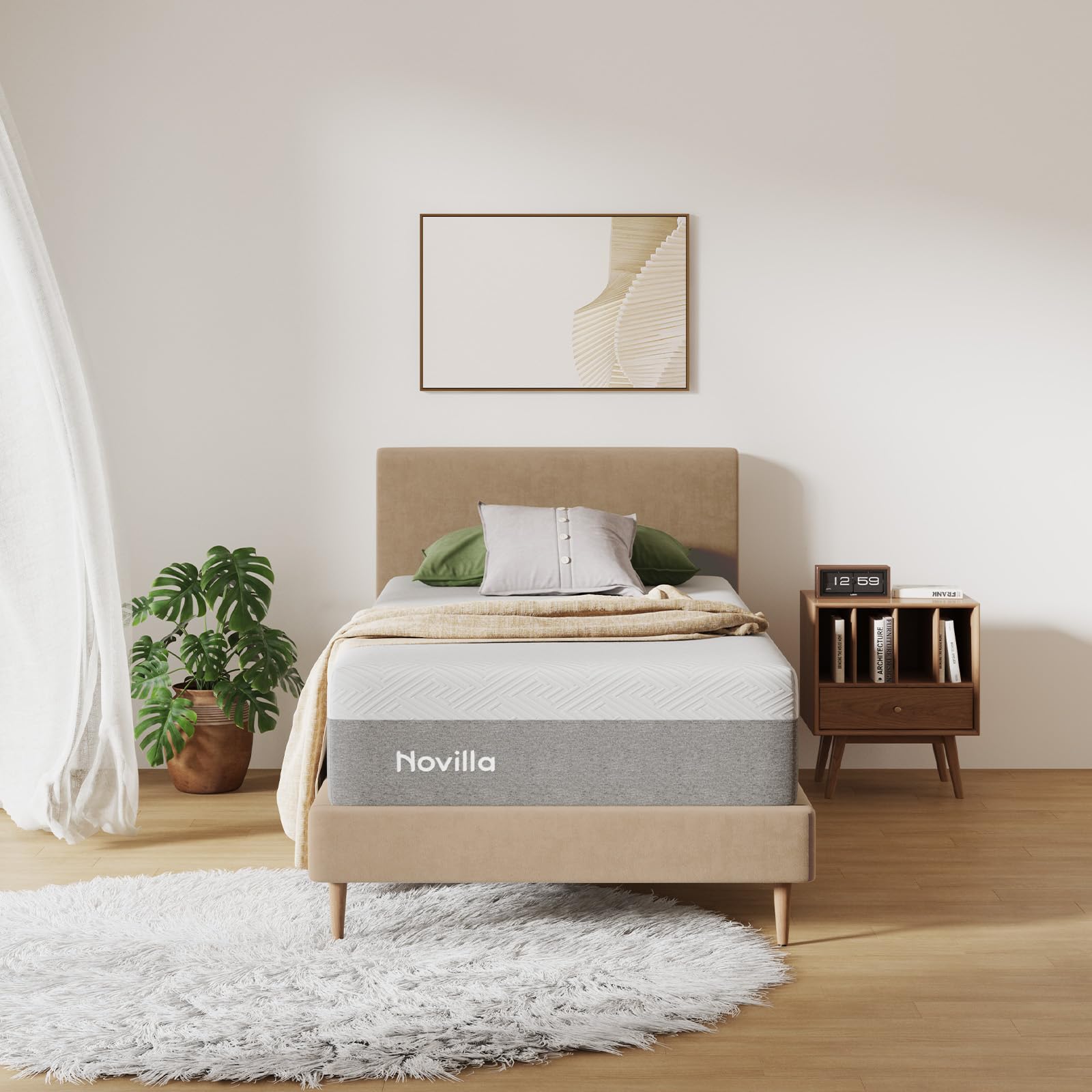
Novilla Bliss 10"
Key Features
- Thickness: 10 inches
- Construction: Gel Memory Foam
- Firmness: Medium Firm
- Odor Control: CertiPUR-US, OEKO-TEX
- Price: Mid-Range
Unlike compact 6-inch options, this 10-inch memory foam mattress brings deeper contouring and reinforced edges to a twin bed frame. Zoned support targets heavier areas like hips and shoulders, which helps maintain alignment for side and back sleepers, while the gel infusion pulls heat away from the surface.
Teens who run warm and need pressure relief will get the most from this design. Expansion out of the box can be unpredictable, though — some units plateau shy of the full 10 inches, which changes the medium-plush character. If the ceiling height matters, measure before adding bedding.
Pros
- Gel memory foam cradles pressure points for side sleepers.
- Zoned support aligns the spine for teenagers in growth spurts.
- Cooling gel helps prevent overheating that disrupts sleep.
Cons
- Firmness can vary — some may find it too firm for a ‘medium plush’ label.
- Foam may expand short of the full 10 inches, reducing comfort and support.
For growing teens who need certified cooling memory foam and edge support, this mattress is a strong value, but check the height after setup — the expansion gamble is the deciding factor.
Best for Odor-Free Bunk Beds
MLILY 8" Memory Foam
Key Features
- Thickness: 8 inches
- Construction: Memory Foam
- Firmness: Medium Firm
- Price: Budget
Fast, even expansion in hours and a fiberglass-free construction distinguish the MLILY from spring-based hybrids. A graphene cover and gel-infused memory foam arrive with minimal off-gassing, which matters in tight bunk rooms where air circulation is limited.
The medium-firm feel supports growing kids who need support without sinking. Sized for low-clearance frames, it slips easily into daybeds and individual bunks. On some units, the height may fall slightly shy of 8 inches — a non-issue for lightweight children, but worth noting for teens approaching adult weight who might prefer the deeper coils of the top pick.
Pros
- Minimal off-gassing and rapid expansion mean bedrooms stay fresh from day one.
- Gel-infused memory foam delivers medium-firm comfort that doesn’t bottom out for lighter sleepers.
- Low-profile design glides into bunk beds and daybeds without catching on guardrails.
Cons
- Thickness can clock in just under 8 inches, which may reduce edge support for heavier children.
For bunk beds and daybeds housing lightweight children, the MLILY’s quick expansion and near-odorless unboxing justify the trade-off in thickness consistency.
Best for Ultra-Budget Kids
Rolanstar 6" Gel

Key Features
- Thickness: 6 inches
- Construction: Gel Memory Foam
- Firmness: Medium
- Odor Control: CertiPUR-US
- Price: Budget
The Rolanstar 6-inch gel memory foam mattress delivers surprising comfort at a budget price, with CertiPUR-US certification and fiberglass-free materials. Actual thickness can be as little as 4 inches, so it’s not suitable for teenagers needing full support. Ideal for lightweight use in toddler beds or low-clearance bunks.
Pros
- Comfortable gel memory foam that outperforms its price point.
- Excellent value, offering CertiPUR-US certified foam at an entry-level price.
Cons
- Thickness may measure closer to 4 inches, undermining support for heavier individuals.
Worth buying for a toddler bed or bunk bed with low weight requirements, but measure the thickness on arrival to ensure it fits your needs.
Best for Budget Guest Rooms
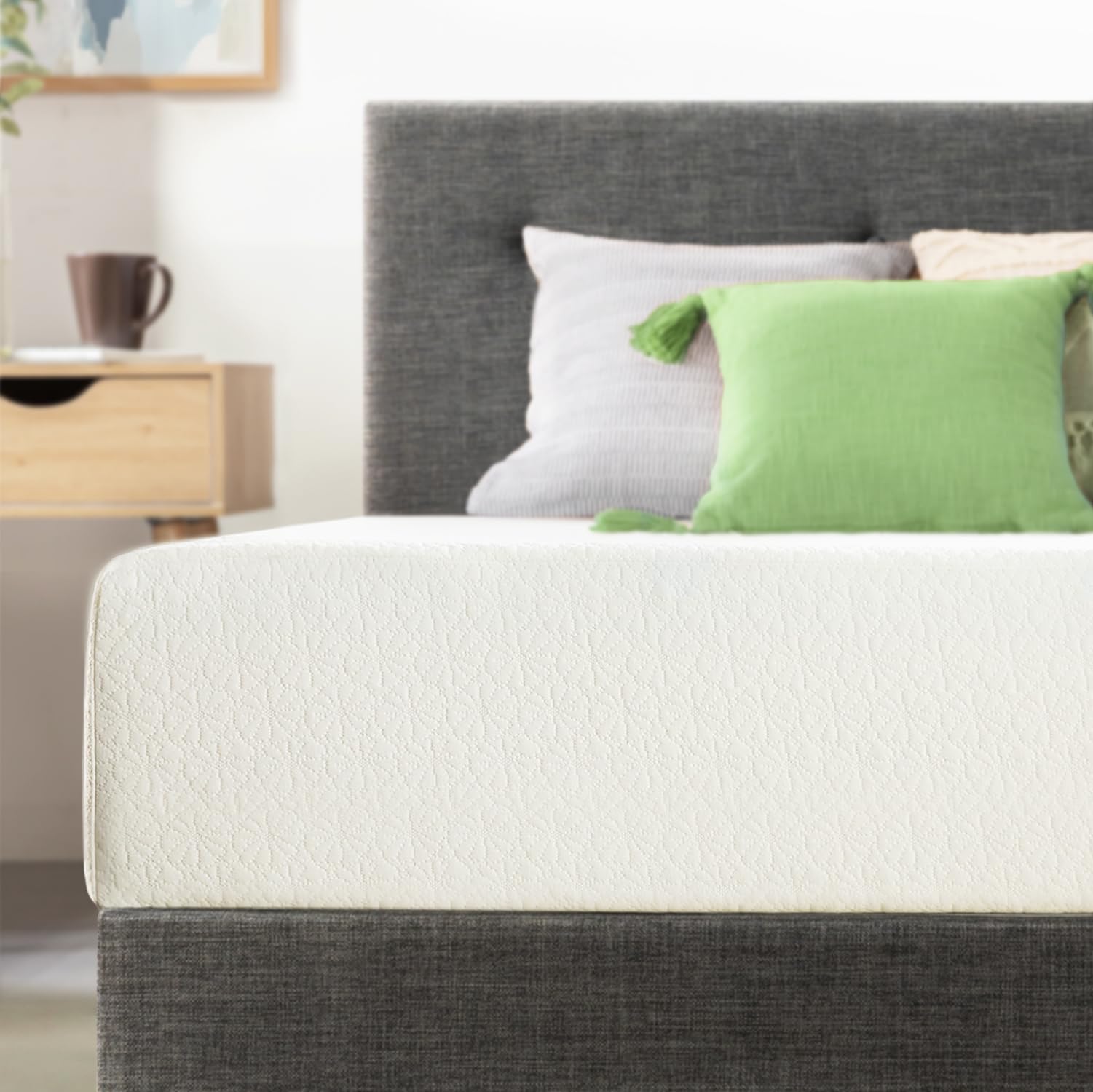
Best Price 8" Green Tea
Key Features
- Thickness: 8 inches
- Construction: Memory Foam
- Firmness: Medium
- Price: Budget
The 8-inch Green Tea memory foam mattress delivers balanced comfort and standout value in a twin size. The medium-firm surface works for lightweight sleepers, but the foam skews toward basic polyurethane rather than true memory foam contouring, and back support can feel uneven. It suits occasional use where budget matters more than plush pressure relief.
Pros
- Comfortable enough for lightweight kids and teens in guest or spare rooms.
- Excellent value among budget twin mattress options.
Cons
- Back support may not be adequate for all sleepers, risking morning stiffness.
If you need a low-cost twin for a guest room or child’s occasional use, this mattress does the basics—just don’t expect the deep contour of genuine memory foam or robust support for growing spines.
Best for Temporary Light Use
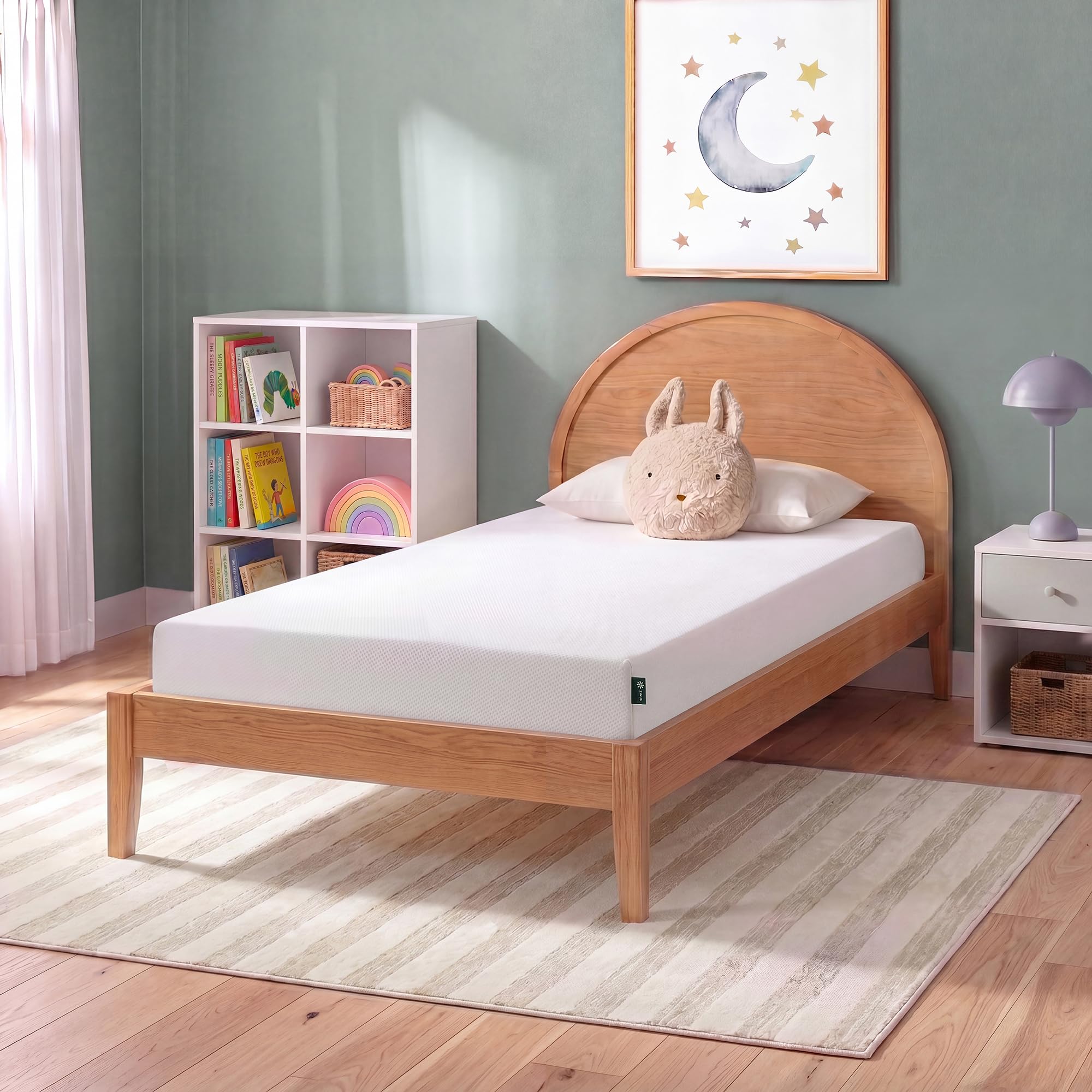
Zinus 6" Green Tea
Key Features
- Thickness: 6 inches
- Construction: Memory Foam
- Firmness: Medium
- Odor Control: Green tea, charcoal
- Price: Budget
The green tea and charcoal infusion gives this 6-inch foam mattress a fresh start at an ultra-low price. Expansion often falls short of the full 6 inches, leaving thinner spots that reduce support, and back support is only adequate for lightweight children or short-term guest use. For a child’s first bed or a dorm bunk where weight is light and a break-in period is acceptable, the extreme affordability fits the bill.
Pros
- Decent pressure relief for lightweight sleepers.
- One of the most affordable memory foam options on the market.
Cons
- Off-gassing odor can be strong and linger for days.
This mattress works for a child’s first bed or a short-term guest bunk where the user is lightweight and odor can be aired out — not for a growing teenager who needs consistent full-depth support.
Best for Compact Kids Bunk
Novilla 6" Kids
Key Features
- Thickness: 6 inches
- Construction: Gel Memory Foam
- Firmness: Medium
- Price: Budget
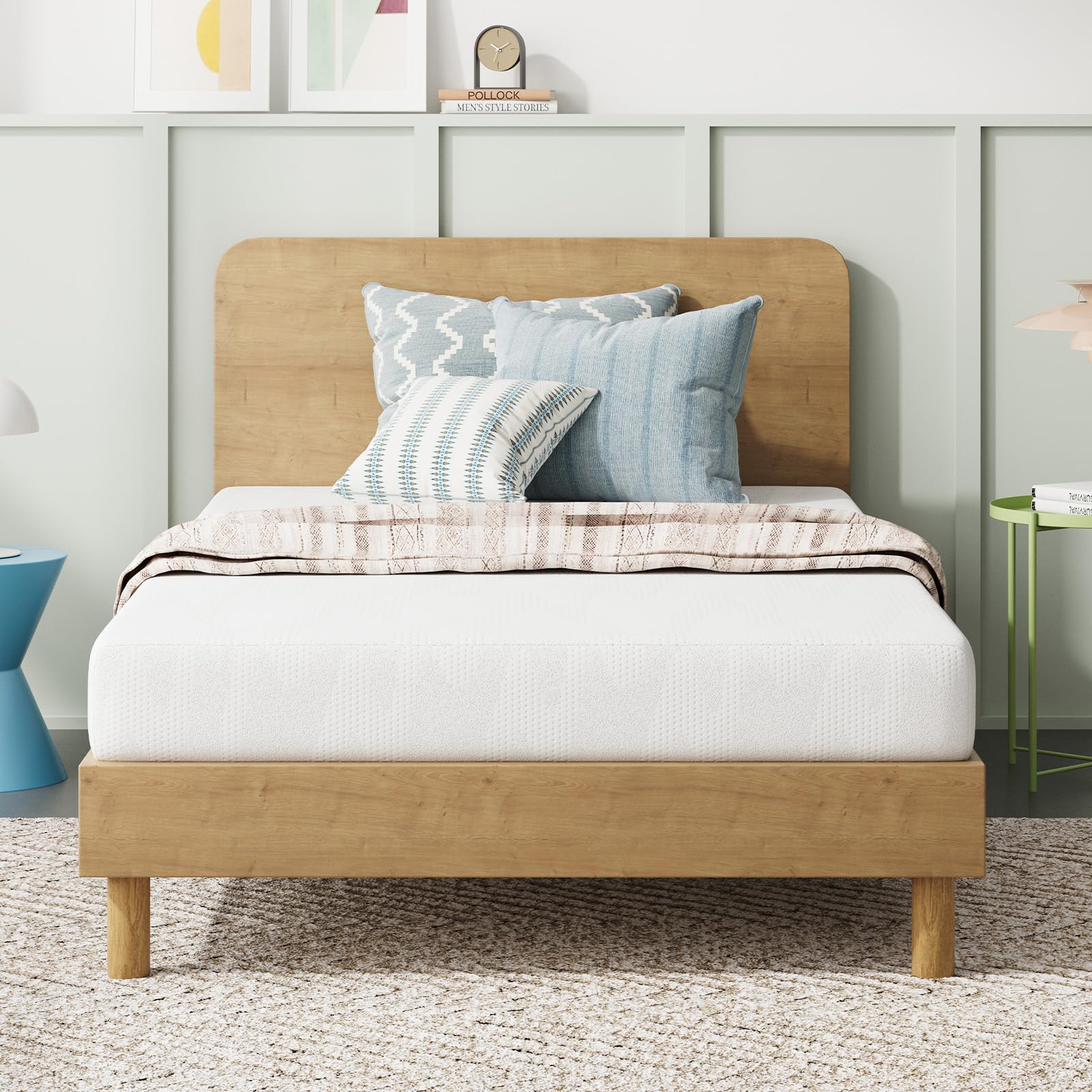
The Novilla 6-inch gel memory foam mattress provides cooling and four-layer support in a slim profile that fits low-clearance bunk beds. For teenagers, the firm feel and occasional size shortfall make it a better match for younger kids or occasional guest use rather than daily teen sleeping.
Pros
- Cooling gel top layer helps prevent heat buildup during light overnight use.
- CertiPUR-US certified, fiberglass-free construction for low-VOC peace of mind.
Cons
- Firmness may feel too hard for growing teens who need pressure relief.
For light-duty kid beds, guest trundles, or bunk beds with tight clearances, this budget-friendly 6-inch foam mattress works — as long as a firm feel and double-checked dimensions are acceptable.
Best for Stomach Sleepers
Lucid 8" Firm

Key Features
- Thickness: 8 inches
- Construction: Gel Memory Foam
- Firmness: Firm (very firm feel)
- Odor Control: Charcoal
- Price: Mid-Range
The charcoal and gel infusion gives this 8-inch mattress a cooling edge, while the genuinely firm feel works well for stomach sleepers. However, it’s marketed as medium firm but lands much harder; side sleepers and those expecting a softer feel will find it unforgiving.
Pros
- Supportive firmness keeps the spine aligned for stomach sleepers.
- Gel and charcoal infusion aids temperature regulation for cooler rest.
Cons
- Firmness runs considerably harder than the advertised medium firm, making it uncomfortable for side sleepers.
If your teenager exclusively sleeps on their stomach and needs a firmly supportive, cooling mattress, this is a capable choice — just don’t expect a medium-firm feel.
Best for Washable Cover Budget
FDW 8" Gel

Key Features
- Thickness: 8 inches
- Construction: Gel Memory Foam
- Firmness: Medium
- Price: Budget
FDW pairs a gel-infused memory foam feel with a zip-off washable cover, a practical bonus for kids’ rooms and guest beds. Expansion may leave it short of the full 8-inch profile, and an initial odor needs time to dissipate. The price makes it a feasible pick for those who can accommodate these quirks.
Pros
- Removable, washable cover simplifies cleanup for kids’ spills and allergens.
- Budget-friendly gel memory foam offers a medium-firm feel that suits growing teens.
Cons
- Incomplete expansion can result in a thinner, uneven sleeping surface.
A practical budget mattress for a teen’s room or guest bed when a washable cover is a priority — just plan for a few days of airing out and measure the height upon arrival.
How to Choose
The most reliable predictor of satisfaction with a teen’s mattress isn’t the star rating — it’s whether the mattress expands to its full height and stays that way.
Thickness
A 6-inch mattress works for lightweight children and low-clearance bunks, but offers minimal depth to spread pressure. For teens weighing over 100 pounds, an 8-inch or 10-inch profile adds enough foam to prevent feeling slats through the mattress.
Thicker mattresses also tend to last longer under daily use, while ultra-thin 6-inch models can compress permanently after a year, turning an already modest profile into a 4-inch pad.
Construction Type
Memory foam mattresses contour closely and absorb motion, making them a quiet choice for restless sleepers. All-foam models vary from basic polyurethane to multi-layer gel foams, and the quality of the top comfort layer determines pressure relief.
Hybrids pair foam with steel coils. Budget hybrids often use continuous or Bonnell coils that can be felt and heard through thin foam. Upgrading to a pocket-spring hybrid isolates movement and eliminates spring noise — the single biggest comfort leap under $200.
Firmness Consistency
Firmness labels on budget mattresses often don’t match reality. An ‘extra plush’ mattress may feel medium-firm, and a ‘medium firm’ may feel rock-hard after a few weeks. This mislabeling is the top reason for returns.
Back and stomach sleepers tolerate firmer surfaces, while side sleepers need enough give to keep the spine aligned. When in doubt, a true medium-firm feel offers the safest starting point for a growing teen.
Odor and Off-Gassing
Chemical smells come from volatile organic compounds trapped during compression. Green tea, charcoal, or graphene infusions can reduce the intensity, but a 48-hour airing period is still recommended. CertiPUR-US certification guarantees no harmful heavy metals or formaldehyde, but doesn’t eliminate odors entirely.
For sensitive teens or small rooms with limited ventilation, choosing a mattress with low-odor reports — or one specifically marketed as fiberglass-free and low-VOC — will cut down on the initial outgassing headache.
Expansion Reliability
Almost every mattress-in-a-box needs 24–72 hours to decompress, but not all reach their advertised height. Many budget models plateau 1–2 inches thin, particularly at the corners. This isn’t a cosmetic issue; an under-expanded mattress loses support and can make a slatted frame painful.
Measure the mattress height after 48 hours. If it’s more than an inch short, initiate a return immediately — most brands will replace it, but returns become harder once it’s been slept on.
FAQ
Why doesn’t my mattress in a box expand to the full size advertised?
Compressed foam and coils rely on air to rebound, but dense budget foams or tightly wrapped layers can limit expansion. Temperature, humidity, and manufacturing variances also play a role. If after 72 hours it’s more than an inch short, the unit likely has a material defect — request a replacement or refund.
Are budget hybrid mattresses too springy for a teenager?
Traditional continuous or Bonnell coils found in hybrids under $150 often transfer movement and create a bouncy, sometimes noisy surface. A teenager who moves a lot may find this annoying, while a still sleeper might not mind. For motion isolation without spring noise, a pocket-spring hybrid at a slightly higher price is the way to go.
How long does the chemical smell last in a new memory foam mattress?
Most off-gassing dissipates within 2–3 days in a well-ventilated room, but stronger odors can linger for a week. Mattresses with green tea or charcoal infusions often smell less intense initially. If the smell persists beyond two weeks, it may indicate lower-grade foam — consider a return.
Is 6 inches thick enough for a teenage mattress?
For a lightweight child in a bunk bed or trundle, a 6-inch foam mattress can suffice temporarily. But for a growing teen over 120 pounds, 6 inches rarely provides enough support — they’ll likely feel the bed frame or slats. An 8-inch or thicker model is the safer long-term choice.