
This post contains affiliate links. We may earn a small commission when you buy through our links — at no extra cost to you.
Many people buy a mattress wedge expecting relief from acid reflux or snoring, only to find themselves waking up with a stiff neck or sliding down a hard slope. The gap between marketing claims—like ‘cooling gel memory foam’—and how a wedge actually feels can turn a promising solution into a painful disappointment.
The best wedge for you depends on finding the right balance between the elevation you need and the comfort your body tolerates. Some wedges use thick memory foam tops and tapered edges to eliminate the harsh transition that jabs your spine; others prioritize a firmer, higher-angle structure that stays put but might feel like a board. Meanwhile, multi-piece adjustable sets offer endless customization but often shift apart during the night.
This guide identifies which wedges solve the hardness and sliding problems for different sleepers—whether you’re recovering from surgery, managing chronic reflux, or just want to read in bed without neck strain.


Best for Plush Reflux Relief
Sleepnitez 8" Wedge
Key Features
- Height/Incline: 8"
- Foam Top Thickness: 3.25" memory foam top
- Configuration: Single wedge
- Cover: Tencel-blend, washable
- Width & Length: 27.2" x 25.2" (extra wide)
- Price: Mid-Range
The 3.25-inch memory foam top and near-invisible edge taper let this wedge feel more like an extension of your mattress than an add-on. There’s no hard bump where it meets the bed, and the Tencel cover stays put without sliding. That plushness comes with a tradeoff: at 8 inches of elevation, it won’t match the incline of firmer wedges designed for severe reflux or post-surgery recovery.
This wedge is a strong fit for people with mild to moderate acid reflux, GERD, or sinus drainage who want a soft, spine-friendly incline that won’t cause morning stiffness. Side sleepers benefit from the extra width (27 inches) to shift positions without slipping off. However, the 8-inch height may be insufficient for those needing 10+ inches of elevation for severe GERD, and a small number of users have noted back or neck discomfort — usually when the height doesn’t match their body type or sleeping position.
Pros
- Ultra-soft transition where the wedge meets the mattress, no hard edge
- Targeted relief for acid reflux and snoring, often reducing the need for medication
- Waking up without neck or shoulder pain thanks to spine-friendly support
Cons
- 8-inch elevation may be too low for severe GERD that requires a steeper incline
- Back or neck discomfort can occur for some users if the height doesn’t match their body type
Choose this if you want a comfortable, mattress-like wedge for moderate reflux or snoring — not if you need a firm, high incline for severe GERD.
Best for Back-Sleeping Relief
Kölbs 7.5" Bed Wedge
Key Features
- Height/Incline: 7.5"
- Foam Top Thickness: 1.5" memory foam top
- Configuration: Single wedge
- Cover: Jacquard, washable
- Width & Length: 24" x 24"
- Price: Mid-Range
While the top pick emphasizes plush comfort, the Kölbs wedge prioritizes firm, dependable elevation with a medical-grade foam core that resists sagging. Its 7.5-inch height and wide platform provide stable upper-body support for nighttime acid reflux and sleep apnea relief.
Back sleepers recovering from surgery or managing GERD will appreciate the consistent angle, but the firm surface can surprise those expecting soft memory foam. Pairing it with a soft topper resolves that discomfort, though side sleepers will find the fixed incline less accommodating.
Pros
- Relieves acid reflux and sleep apnea symptoms when sleeping on your back.
- Medical-grade foam core holds shape and resists compression over time.
- 24-inch width and wide base prevent rolling off, keeping you stable all night.
Cons
- Firmness may cause neck or back discomfort for those used to plush pillows; a soft topper is often needed.
If you need a firm wedge that holds its shape for consistent acid reflux relief and can pair it with a soft topper, this established option delivers.
Best for Post-Surgery Recovery
Lunix LX5 4-Pc Set
Key Features
- Height/Incline: Adjustable (multiple)
- Foam Top Thickness: 45D memory foam (all pieces)
- Configuration: 4-piece set
- Cover: OEKO-TEX, washable
- Price: Premium
The Lunix LX5 4-piece set offers a multi-configuration elevation system anchored by lock-tight Velcro straps that prevent shifting. Unlike a single wedge, it can be arranged for sleeping, sitting, and leg elevation, mirroring the kind of adjustability found in orthopedic recovery protocols.
This set serves post-operative patients who need precise upper-body positioning after shoulder, cervical, or rotator cuff procedures. The 45D high-density foam provides firm, non-slip support, but that firmness may feel rigid to anyone expecting plush memory foam. A temporary chemical odor can be present on arrival. The premium price reflects its medical-grade design, making it excessive for simple acid reflux where a basic wedge would suffice.
Pros
- Precise, configurable elevation keeps the spine aligned during post-surgery recovery.
- Lock-tight Velcro prevents pieces from sliding, enabling secure multi-position setups.
- Washable OEKO-TEX covers and an included hot/cold gel pack add therapeutic convenience.
Cons
- High-density 45D foam can feel overly firm to users expecting plush memory foam, and a temporary chemical odor may be present initially.
- Premium price puts it in a tier above simpler wedge pillows, despite its specialized utility.
Designed for serious post-surgery recovery where modular adjustability and locked-in positioning matter more than a plush feel or budget price—overkill for occasional reflux.
Best for Budget 10-Inch Elevation
Bedluxe 10" Wedge
Key Features
- Height/Incline: 10"
- Foam Top Thickness: Gel-infused memory foam
- Configuration: Single wedge
- Cover: Breathable, washable
- Width & Length: 24" x 24"
- Price: Budget
The Bedluxe 10" Wedge carves out a niche among budget elevation pillows by pairing a cooling gel memory foam layer with uncommon extras: a side pocket for remotes or phone, and a built-in handle for easy repositioning. The foam is decidedly firm, providing stable, non-sinking support that holds up well for larger users and those who need a 10-inch incline for reflux or snoring relief.
That same firmness and steep height, however, make it intrusive for shorter individuals or anyone hoping to side-sleep — the angle can strain the back, and the surface lacks the plush cradle of a memory foam topper. This is a sit-up-and-stay-put wedge, best suited to back sleepers and those who watch TV or read in bed.
Pros
- Cooling gel memory foam top with a pocket and handle — rare extras at this price.
- Firm, non-sinking support suits larger body types and post-surgery lounging without bottoming out.
- 10-inch incline effectively reduces snoring and nighttime reflux for back sleepers.
Cons
- Height and firmness can cause back strain for shorter users or side sleepers; the surface lacks plushness.
For firm support at a 10-inch height that handles reflux and lounging without sinking, this is the most feature-rich wedge under $35. Those wanting plush comfort should look to the top pick.
Best for Versatile Recovery Set
Yojoker 4-Pc Set
Key Features
- Height/Incline: Adjustable
- Foam Top Thickness: Memory foam (all pieces)
- Configuration: 4-piece set
- Cover: Plush, washable
- Price: Mid-Range
The four-piece set delivers hospital-style adjustability at a mid-range price, unlike pricier medical systems. It supports upright sleeping after abdominal or chest surgery, and the modular pieces configure for reading, leg elevation, or acid reflux. This suits patients needing customizable elevation and anyone willing to trade a single wedge for personalized angles. The dense memory foam can feel too stiff for those who expect a plush sink, and the large pieces may overwhelm shorter users or smaller beds.
Pros
- Multi-piece design allows personalized angles for sleeping, reading, or leg elevation.
- Firm support promotes spinal alignment and stability during post-surgery recovery.
- Durable memory foam maintains shape; plush zippered covers remove easily for washing.
Cons
- Firmness can feel too stiff for those who expect a plush memory foam feel.
- The large pieces may take up too much space for shorter users or smaller beds.
An affordable modular system for patients who need customizable elevation and are comfortable with firm support; a poor match for anyone seeking a plush feel or with a petite frame.
Best for Gentle Budget Elevation
Cozymaker 7.5" Wedge
Key Features
- Height/Incline: 7.5"
- Foam Top Thickness: 1.2" + 6.3" core
- Configuration: Single wedge
- Cover: Cooling mesh, washable
- Width & Length: 24" x 24"
- Price: Budget
Cozymaker’s 7.5-inch wedge stands out with a 1.2-inch aviation-grade memory foam layer that makes it noticeably softer than the firm medical-grade alternatives for acid reflux and snoring. The removable, washable cover stays cool and includes side pockets for essentials, a thoughtful touch at this price.
It’s a fit for budget shoppers wanting gentle elevation — back pain relief, CPAP comfort, or leg support — without the harshness of 10-inch wedges. The tradeoff: the soft foam sacrifices absolute firmness for plushness, so it won’t provide the steep incline needed for severe GERD or heavier bodies.
Pros
- Soft yet supportive, easing back pain and working comfortably with CPAP masks.
- Significant snoring reduction and improved sleep quality without neck strain.
- Cool-touch, washable cover with side pockets and durable construction.
Cons
- Sleepers can gradually slide down the incline, especially on smooth sheets.
- Foam may compress over time for users over 200 lbs, reducing support.
A gentle-elevation wedge for budget-minded shoppers who want soft memory foam comfort — skip it if you need steep reflux relief or weigh over 200 lbs.
Best for Firm Basic Support
Ruqmuis 10" Wedge

Key Features
- Height/Incline: 10"
- Foam Top Thickness: None (firm foam)
- Configuration: Single wedge
- Cover: Jacquard, washable
- Width & Length: 24" x 24"
- Price: Budget
Simple high-density foam provides sturdy 10-inch elevation for acid reflux relief and post-surgery recovery, with a washable jacquard cover and handy side pockets. The foam is notably firm, lacking memory foam plushness, and may feel too hard for those who want a softer sleep surface — a tradeoff that keeps it out of the top tier.
Pros
- Firm support for back, shoulders, and swollen legs/feet
- Quality build with useful side pockets and handle
Cons
- Jacquard cover can be slippery, causing sliding even with the non-slip base
Best for budget-conscious users who need a firm, no-frills 10" wedge for temporary post-surgery elevation or reflux relief, and who don’t mind adding a soft topper if needed.
Best for Leg Elevation, Cpap
Nordjager 10" Wedge

Key Features
- Height/Incline: 10"
- Foam Top Thickness: 1.2" memory foam + base
- Configuration: Single wedge
- Cover: Breathable, washable
- Width & Length: 24" x 24"
- Price: Budget
The 1.2-inch slow-rebound memory foam top and anti-slip bottom provide stable leg elevation and CPAP support. Side pockets and a machine-washable cover add practicality. However, firmness may be too hard for those wanting softness, and the 10-inch height won’t satisfy users needing a steeper incline for severe reflux.
Pros
- Firm memory foam relieves leg swelling and aids circulation.
- Durable build and anti-slip base stay put for CPAP and back reading.
Cons
- Firmness may be too hard for comfort seekers; 10-inch height isn’t enough for steep-head elevation.
A practical choice for leg elevation and CPAP if you don’t mind firm support and a moderate incline.
Best for Steep Incline Needs
Sasttie 12" Wedge

Key Features
- Height/Incline: 12"
- Foam Top Thickness: 40D memory foam top
- Configuration: Single wedge
- Cover: Knitted, washable
- Width & Length: 24" x 24"
- Price: Budget
The 30° incline and firm 40D memory foam top deliver strong elevation, making this wedge effective for back-supported sitting or severe reflux relief. However, the surface hardness can lead to neck and shoulder discomfort during sleep, and a chemical off-gassing smell may linger initially. This wedge suits users who prioritize incline height and firm support over cushioned comfort.
Pros
- High elevation helps with severe acid reflux and breathing issues
- Works well as a firm backrest for reading or feeding babies
Cons
- Firmness may cause neck and shoulder pain during overnight sleep
If you need a 12-inch incline for sitting up or severe reflux and don’t require plush sleep comfort, this wedge offers a sturdy, budget-friendly option.
Best for Versatile Recovery
Kingfun 4-Pc Set
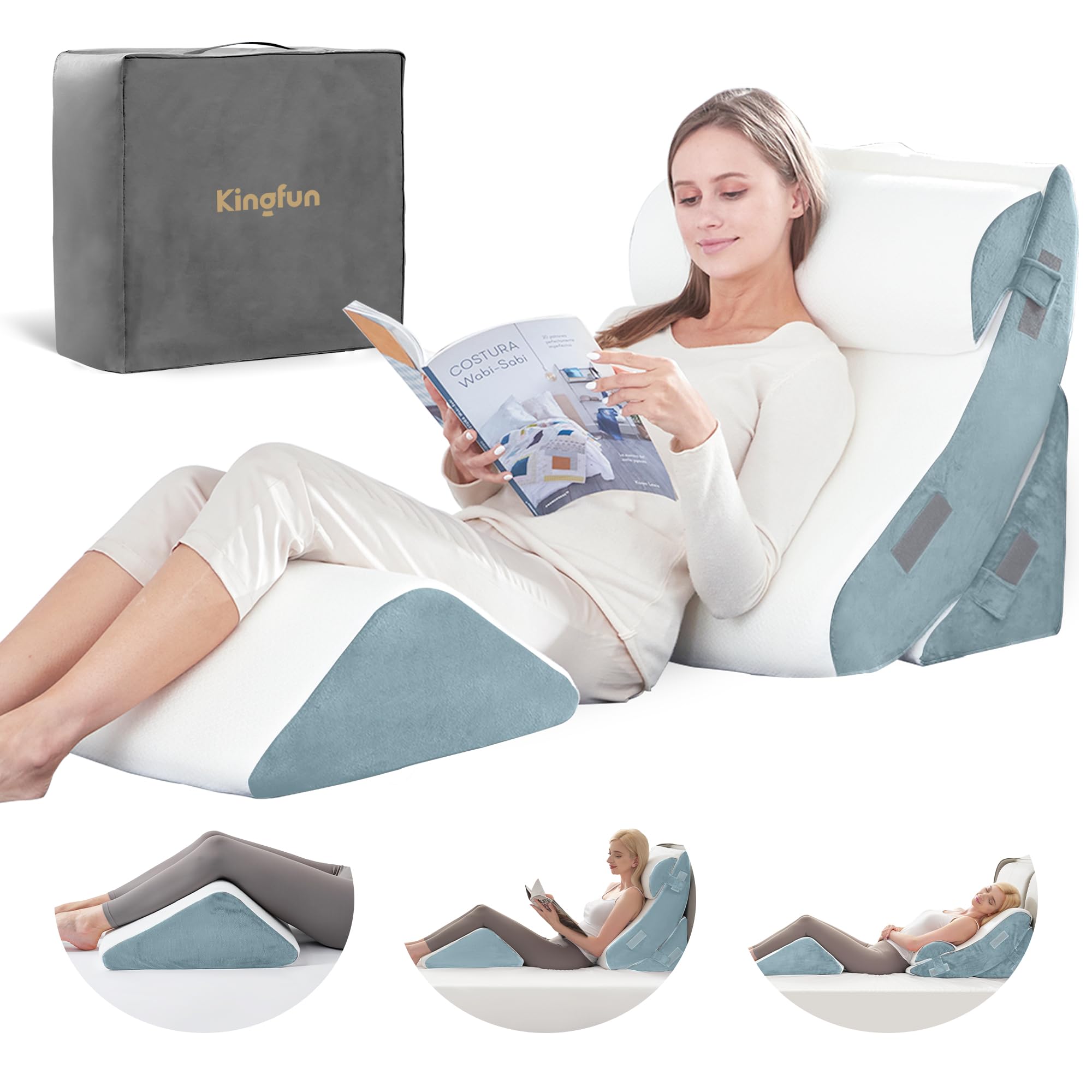
Key Features
- Height/Incline: Adjustable
- Foam Top Thickness: Memory foam
- Configuration: 4-piece set
- Cover: Washable, zippered
- Price: Mid-Range
The four-piece configuration provides hospital-style adjustability for post-surgery recovery and acid reflux, with washable covers adding practicality. Velcro connections can loosen if not perfectly aligned, allowing pieces to drift — this matters less for stationary lounging than overnight sleep.
Pros
- Replicates a recliner setup for post-surgery healing and nighttime acid reflux
- Firm, supportive memory foam holds shape under prolonged use
Cons
- Pieces can shift during the night if Velcro alignment isn’t precise
A practical choice for stationary post-surgery support where occasional Velcro realignment is feasible, but restless sleepers may find the shifting frustrating.
Best for Budget Adjustability
WGAKCED 3-Pc Wedge

Key Features
- Height/Incline: 5.5"–12" adjustable
- Foam Top Thickness: Memory foam + HD base
- Configuration: 3-piece set
- Cover: Polycotton, washable
- Price: Budget
The WGAKCED set delivers a broad 5.5- to 12-inch height range at a budget-friendly price, with a memory foam headrest that eases mild reflux and aids post-surgery lounging. Firmness can vary—some may find the foam too squishy for all-night support—but this won’t bother users who prioritize adjustability and occasional comfort.
Pros
- Great value for a highly adjustable set that improves sleep and reduces snoring
- Comfortable for reading, TV watching, and post-surgery recovery
Cons
- Foam firmness can feel too squishy for consistent all-night elevation
It’s a practical pick for budget-conscious users who want adjustable height for lounging or mild support and can accept a softer foam feel.
Best for Dual-Height Recovery
BIEEZZK Adj. Wedge

Key Features
- Height/Incline: 9" / 12" adjustable
- Foam Top Thickness: 40D memory foam top
- Configuration: 3-piece set
- Cover: Air-layer fabric, washable
- Price: Mid-Range
The BIEEZZK set delivers two distinct elevation options—9 inches for lounging and 12 inches for upright post-surgery rest—through a modular 3-piece design with CertiPUR-US foam. Firmness is unpredictable; the memory foam feel varies from piece to piece, with some finding it stiffer and others softer than expected. This suits post-surgery users who prioritize height flexibility over a perfectly consistent cushion.
Pros
- Two height settings (9" and 12") adapt to sitting upright or reclined sleeping positions.
- Dependable elevation for post-surgery shoulder recovery, with a supportive memory foam top layer.
Cons
- Foam firmness varies between units, and the memory foam feel may be stiffer or softer than some expect.
Worth considering for post-surgery recovery when two distinct heights matter more than a consistently plush memory foam feel.
Best for Wide-Angle Lounging
MEGCXIT 3-Pc Wedge

Key Features
- Height/Incline: Adjustable (30°/60°)
- Foam Top Thickness: 45D cooling memory foam
- Configuration: 3-piece set
- Cover: Air-layer, washable
- Width & Length: 23.6" extra wide
- Price: Budget
The 23.6-inch width and stackable three-piece design create over 10 sitting and sleeping configurations, shifting from a gentle 30° incline for reading to a 60° angle for reflux relief. The memory foam headrest feels plush without bottoming out, and the washable cover handles spills. However, the foam tends softer than some wedge users expect, which can reduce support for those needing pronounced elevation or a firmer feel. Long-term durability is still an open question. This set suits buyers wanting a budget-friendly, adaptable lounging system where adjustability and initial comfort outweigh the need for a rigid, unyielding incline.
Pros
- Over 10 angle combinations deliver targeted relief for back pain and snoring.
- 23.6-inch extra-wide memory foam surface prevents slipping and stays plush for long sitting sessions.
Cons
- Foam firmness can feel too soft, potentially reducing support for those expecting a more rigid incline.
If you value width and 10+ reclining angles for lounging or mild reflux over rock-solid firmness, this is a cost-effective adjustable set — just be ready for a break-in period.
How to Choose
Most wedge pillows promise ‘cooling gel memory foam,’ but the real-world feel—and whether you wake up refreshed or stiff—depends on matching incline height and foam plushness to your sleep style.
Height / Incline
Wedge heights typically range from 7.5 to 12 inches, with every extra inch increasing the angle of your torso. A taller wedge (10 or 12 inches) provides more gravity-assisted drainage for severe acid reflux or respiratory issues, but it also forces your neck into a sharper bend. If the memory foam top is too thin, that bend becomes a pressure point, leading to morning stiffness.
For most back sleepers, a 7.5- to 8-inch incline reduces reflux without straining the cervical spine. Start with a lower height if you’re unsure; steep 12-inch wedges are harder to adapt to and often work better as backrests for reading than as sleep surfaces.
Memory Foam Top Thickness
The cushioning layer atop the firm base is what determines whether a wedge feels like a pillow or a plank. A thick memory foam top (2 to 3.25 inches) absorbs pressure and, critically, can taper to a whisper-thin edge that blends into your mattress. This eliminates the harsh ‘step’ that jabs the back of your neck.
Thinner tops (1.2–1.5 inches) keep the wedge lighter and firmer, but they transfer more of the base hardness to your body. If you have a history of pressure sensitivity, err toward a thicker foam cap, even if it means a slightly more gradual incline.
Single Wedge vs. Multi-Piece Set
A single-piece wedge is a set-it-and-forget-it solution: no assembly, no shifting parts. Its consistency works well for acid reflux and simple head elevation. The trade-off is zero adjustability; you get one angle.
Multi-piece systems (3 or 4 pieces) let you stack components to create sitting upright, lounging, or leg-elevation configurations. They’re invaluable for post-surgery recovery where body position must change throughout the day. However, the Velcro connectors that hold them together frequently misalign during sleep, causing segments to slide apart. If you need the customization, plan to fine-tune the connection points before each night.
Cover Material
The cover isn’t just about looks—it affects breathability, friction, and hygiene. Machine-washable, removable covers made from Tencel, bamboo, or air-layer fabrics stay cooler and wick moisture better than basic polyester. Rough-textured or 3D mesh covers also increase grip, reducing the tendency to slide down.
Smooth jacquard or knitted covers can look plush but may let you slip, especially if the wedge itself has a steep angle. If sliding is a concern, prioritize a cover with grippy side panels or add a cotton mattress protector between the wedge and your sheet.
Width & Length
Standard 24-inch squares work for back sleepers who stay in one position, but side sleepers or restless movers need extra width (26–27 inches) to turn without rolling off. An extra-wide wedge with a tapered leading edge also makes the incline feel like a natural mattress extension, reducing the sensation of being propped on a separate block.
FAQ
Why does my wedge pillow feel too hard and hurt my neck?
The hardness comes from the high-density foam base, which is necessary to support your weight without collapsing. To soften the surface, place a thin pillow or a memory foam mattress topper over the wedge. If the sharp bottom edge digs into your neck, look for a wedge with a tapered edge that transitions smoothly to the mattress—some models taper to less than one-quarter inch to eliminate that pressure point.
How do I stop sliding down my wedge pillow at night?
Sliding usually stems from a slick cover combined with a steep incline. Place a non-slip mat or a shelf liner between the wedge and the fitted sheet, and consider wearing cotton pajamas to create more friction. If the cover itself is the problem, swap it for a rougher cotton or 3D mesh cover, or look for wedges with integrated anti-slip side panels.
What height wedge pillow is best for acid reflux without causing back pain?
For most adults, a 7.5- to 8-inch incline is high enough to prevent nighttime acid backflow while keeping the spine in a gentle, pain-free arc. If you have severe GERD or are taller, a 10-inch wedge may be necessary, but pair it with at least a 2-inch memory foam top to cushion the back of the neck. Start with a lower height if you’ve never used a wedge before, because steep inclines take time to tolerate.
Why does my adjustable wedge pillow set keep coming apart?
Adjustable sets rely on Velcro strips that can misalign when you shift in your sleep. Before lying down, press the connection points firmly together and ensure the strips are perfectly parallel. A thin rubberized shelf liner placed between the pieces often adds enough static grip to hold them together through the night. If the problem persists, a single-piece wedge offers a more stable, no-maintenance solution.