
This post contains affiliate links. We may earn a small commission when you buy through our links — at no extra cost to you.
Nothing erodes the joy of a new bed like the first midnight creak. Wooden platform beds often feel solid out of the box but reveal their weaknesses over time: center legs that snap, slats that bow, joints that loosen. When the packaging touts ‘solid wood,’ it’s easy to assume everything from the slats to the support rail meets the same standard—but that’s rarely the case.
The difference between a decade-long frame and a disposable one lives in the details that spec sheets rarely emphasize: slat thickness, center rail material, and the hardware that holds it all together. Beds that invest in kiln-dried hardwood, steel interior rails, and non-slip slat coatings stay quiet and level. The ones that skimp with plywood slats or plastic center brackets may look just as good for the first month—then begin to wobble.



Best for Master or Guest
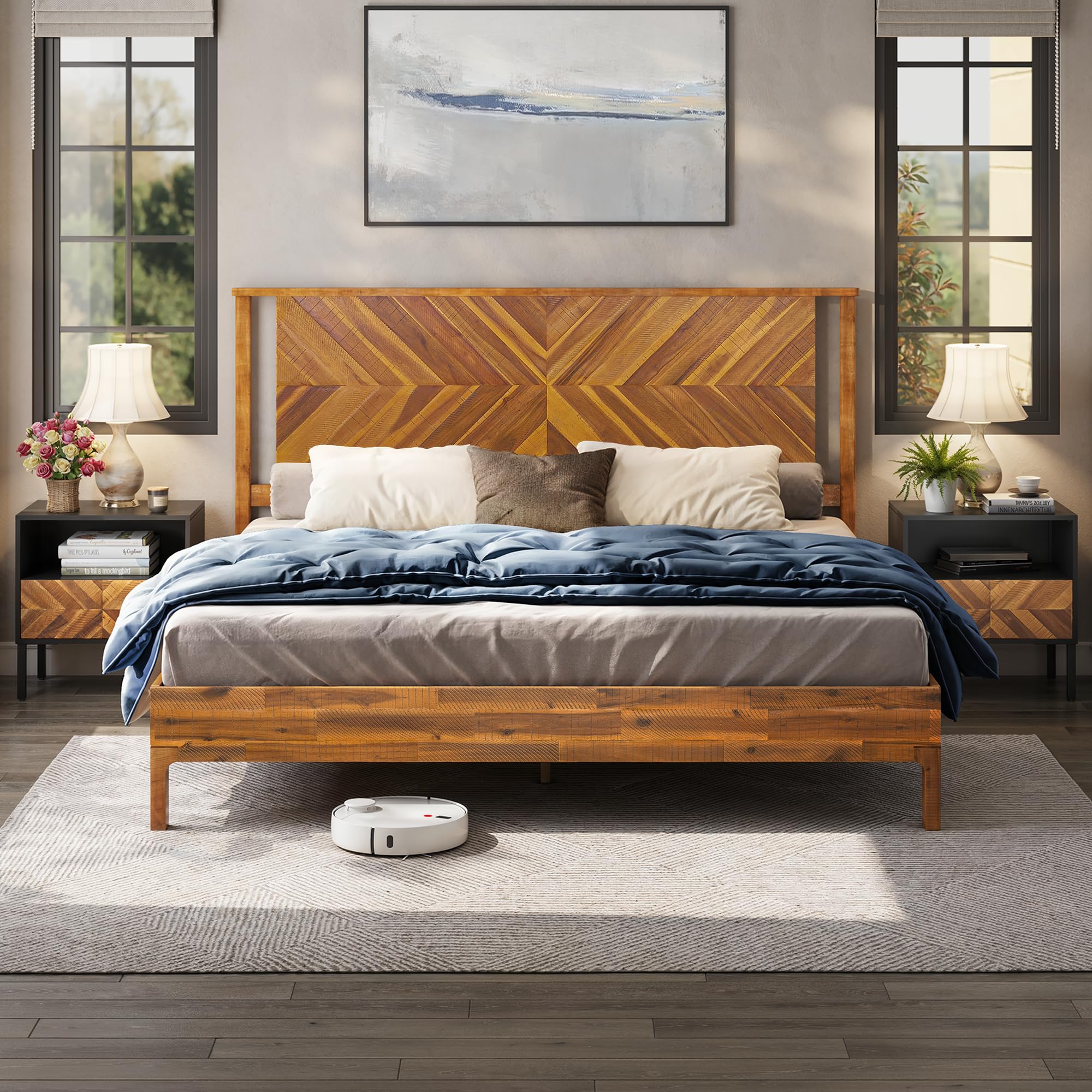
Zinus Vivek Deluxe Queen
Key Features
- Wood Material: Solid wood, steel interior
- Weight Capacity: 700 lbs
- Under-Bed Clearance: 6.3 in
- Headboard: Fixed headboard
- Price: Mid-Range
The Zinus Vivek Deluxe combines a solid wood outer frame with steel interior rails, creating a platform bed that stays quiet and stable without a box spring. Its espresso finish gives it a furniture-store appearance at a mid-range cost, and the color-coded parts with included tools make assembly nearly effortless.
For master or guest bedrooms where a finished wood headboard is wanted without overspending, this frame fits well. The fixed headboard sits at 37 inches — fine for standard mattresses, but very thick pillow-tops may leave a gap. Under-bed clearance is 6.3 inches, so storage is limited to low bins.
Pros
- Color-coded parts and included tools make assembly straightforward.
- Steel-reinforced construction provides a solid, wobble-free feel.
- Espresso finish looks richer than the price suggests.
Cons
- The 6.3-inch under-bed clearance limits storage to shallow bins only.
- Fixed headboard height may sit below the top of very thick mattresses.
If you want a wood platform bed with a headboard that won’t creak or wobble over time, the Zinus Vivek Deluxe is one of the safest buys at this price.
Best for Budget, Guest Rooms
Mellow Naturalista Classic Queen
Key Features
- Wood Material: Solid pine
- Weight Capacity: 1,000 lbs
- Under-Bed Clearance: 8.5 in
- Headboard: No
- Slat Features: Non-slip slats
- Price: Budget
Made from solid pine, not particle board, the Mellow Naturalista Classic supports up to 1,000 pounds on a slatted platform that needs no box spring. Assembly is quick and tool-free, and the natural wood grain looks more expensive than its price suggests.
This bed fits guest rooms, first apartments, or anyone who wants a simple pine frame and doesn’t need a headboard. The center support legs can loosen or break after months of heavy daily use, so it’s not the bed for a master bedroom with two adults and a restless sleeper. Occasional-use and lighter-weight households will find it a solid value.
Pros
- All-pine build feels sturdy and avoids particle board entirely.
- Straightforward, tool-free assembly with clear directions.
- Clean natural wood finish reads as furniture-quality, not budget basics.
Cons
- Center support legs can loosen or break over time, especially under heavier loads.
A solid pine bed at this price is rare; it’s best suited to guest rooms or occasional use where an occasional screw check is an acceptable trade-off for the low upfront cost.
Best for Diy, Eco-Conscious
KD Frames Nomad Queen
Key Features
- Wood Material: Kiln-dried poplar
- Weight Capacity: 600 lbs
- Under-Bed Clearance: 2.8 in
- Headboard: No
- Slat Features: 2.8-in slat spacing
- Price: Mid-Range
Where the top pick adds a slatted headboard, the Nomad stays minimalist. This USA-made poplar platform assembles cleanly into a rigid foundation that supports 600 lbs without squeaks. The wood is unfinished—no toxic off-gassing—so you can apply your own stain or sealant. Expect a few hours of sanding and finishing to avoid splinters. Clearance under the frame is 2.8 inches, too low for storage bins. The reward is a chemical-free, solid hardwood bed that stays dead quiet. It’s a perfect match for DIY-minded buyers who value sturdiness over a headboard or under-bed space.
Pros
- Precisely machined parts make assembly quick and frustration-free.
- Rigid hardwood frame handles up to 600 lbs without creaks or side-to-side sway.
- Solid kiln-dried poplar with natural grain offers a chemical-free base ready for your finish.
Cons
- Under-bed clearance of 2.8 inches means storage bins won’t fit—a trade-off for the low, modern profile.
- Unfinished wood needs sanding and sealing to prevent splinters and absorb stains evenly; not ready for use out of the box.
For eco-conscious minimalists who don’t need a headboard or storage and are happy to apply a finish, this frame provides a quiet, durable foundation at a mid-range price.
Best for Design King Bed
Bme Vivian King
Key Features
- Wood Material: Solid acacia
- Weight Capacity: 800 lbs
- Under-Bed Clearance: 6.7 in
- Headboard: Herringbone headboard
- Slat Features: 12 wood slats
- Price: Mid-Range
The Bme Vivian King blends a handcrafted herringbone headboard with solid acacia to create a rustic, design-forward presence that outshines simpler platform beds. Assembly is surprisingly straightforward for a large king frame, and the sturdy acacia wood provides a stable foundation. The headboard can develop cracks at the rail connection under repeated leaning or movement, so it’s best reserved for calm master suites where it won’t face roughhousing. This frame rewards design-conscious households that prioritize style and are willing to tighten fasteners periodically and treat the headboard gently.
Pros
- Herringbone headboard adds a striking bohemian focal point to any bedroom.
- Straightforward assembly with clear instructions, even for a king-size frame.
- Solid acacia wood feels substantial and provides a stable, quiet base.
Cons
- Headboard can develop cracks at the side rail connection over time, especially with rough use.
The Bme Vivian King brings a show-stopping headboard and solid build at a mid-range price, but its longevity hinges on treating the headboard as furniture rather than a climbing frame.
Best for Minimalists, Kids
Zinus Lucinda Queen
Key Features
- Wood Material: Wood, steel interior
- Weight Capacity: 700 lbs
- Under-Bed Clearance: 8.5 in
- Headboard: No
- Price: Budget
A 10-inch-tall wood platform with a 700-pound capacity and a ratcheting Allen wrench that makes assembly a 30-minute job. Where the top pick adds a headboard and near-silent long-term performance, the Lucinda sacrifices height and a headboard to hit an entry-level price without giving up a solid wood frame. That low profile (8.5 inches of clearance) will feel awkward for anyone tall or with stiff knees, but for a kid’s room, teen space, or guest bed, the crouch is easy to accept. The look is clean and classic, and the occasional squeak on hard floors can be tamed with a piece of felt.
Pros
- Assembly is fast and frustration-free with the included ratcheting wrench.
- Stable, solid feel for a budget frame, rated for 700 pounds.
- Crisp wood-grain finish that looks more expensive than it costs.
Cons
- Low 10-inch height can be challenging to get in and out of for taller people or anyone with mobility concerns.
For a guest room, kid’s room, or clean-lined minimalist space where a headboard isn’t needed, this frame brings solid wood construction at an entry-level cost—low height is part of the deal.
Best for Light Sleepers
Giantex Queen Walnut

Key Features
- Wood Material: Rubberwood, poplar slats
- Weight Capacity: 600 lbs
- Under-Bed Clearance: 10.5 in
- Headboard: No
- Slat Features: Velcro-held slats
- Price: Budget
Solid rubberwood and a walnut finish give this platform a pricier look than its cost suggests, and Velcro slats assemble quickly. However, the frame can wobble and the mattress may slide under movement—better suited to a child’s room or occasional guest bed than a couple’s daily driver.
Pros
- Quick and easy assembly with Velcro-held slats
- Attractive walnut finish that looks more expensive than it is
Cons
- Mattress may slide and frame can sway under movement, even with the included grip tape
A handsome, easy-assembly platform best reserved for a guest bedroom or child’s room where lighter use keeps it stable.
Best for Heavy Couples
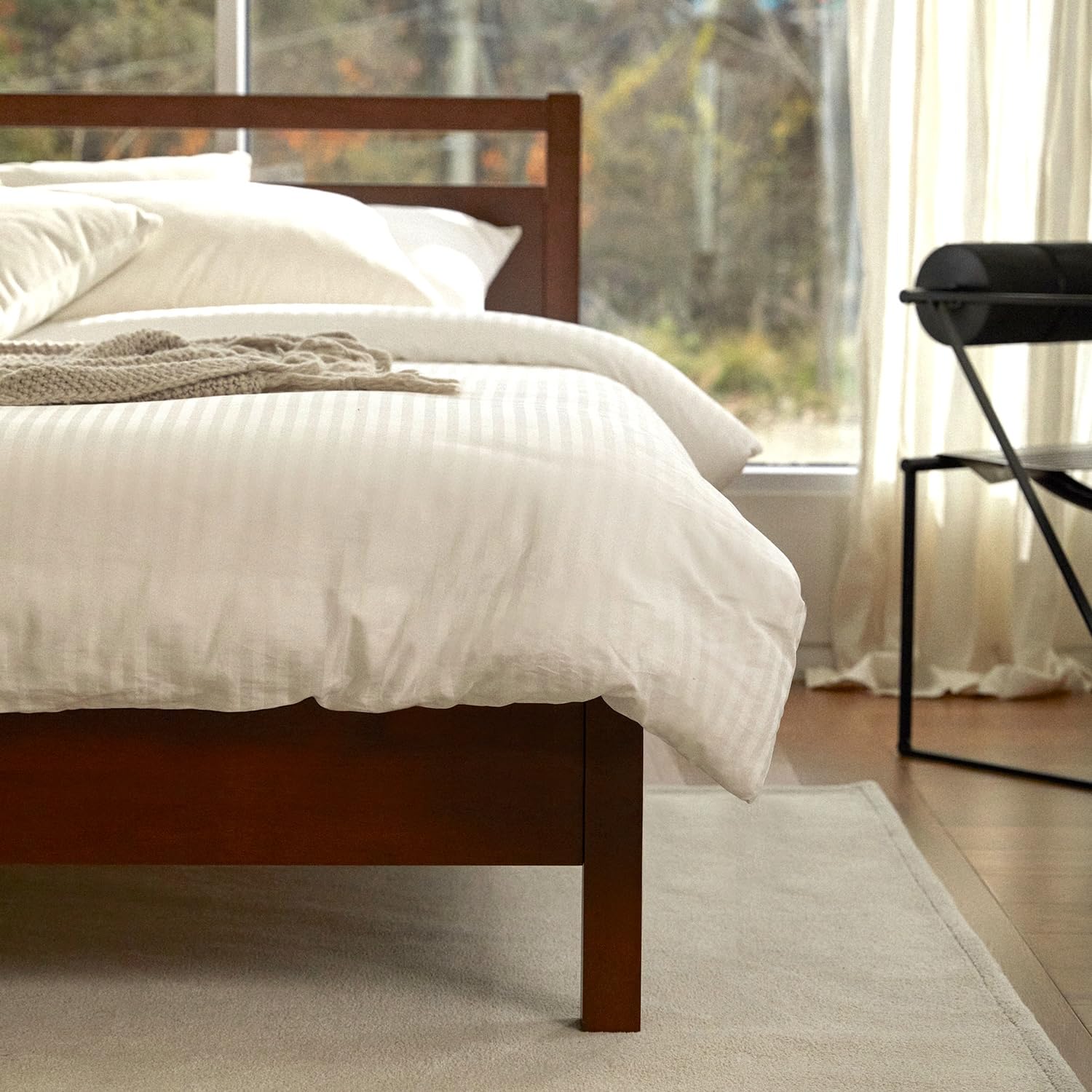
LIFEMENT Signature Queen
Key Features
- Wood Material: Rubberwood
- Weight Capacity: 1,000 lbs
- Headboard: Yes, prominent
- Price: Mid-Range
This rubberwood bed combines a 1,000-lb capacity with a polished finish and headboard, staying quiet under heavy use. The center legs may need sanding or shimming during assembly to sit flush, a small, correctable quirk.
Pros
- Supports up to 1,000 lbs with a quiet, sturdy frame ideal for couples
- Polished rubberwood finish that looks refined and resists wear
Cons
- Center legs can be fractionally too long, requiring sanding or shimming during setup
If you’re a heavier sleeper or couple who wants a headboard and doesn’t mind a minor adjustment, this is a cost-effective, quiet platform.
Best for Diy Headboard
KD Frames Charleston Queen

Key Features
- Wood Material: Kiln-dried poplar
- Weight Capacity: 600 lbs
- Under-Bed Clearance: Low (<3 in)
- Headboard: Slatted headboard
- Slat Features: 2.8-in slat spacing
- Price: Mid-Range
This Charleston adds a slatted headboard to KD Frames’ solid-poplar platform—same tank-like joinery and tool-free assembly. Raw tulip poplar must be sanded and sealed before use; the payoff is a non-toxic, custom look. Clearance underneath is minimal, and occasional creaking can surface if fasteners loosen.
Pros
- Rock-solid all-wood frame with 600-lb capacity and tight joinery that stays quiet
- Kiln-dried tulip poplar hardwood, built in the USA with no chemical off-gassing
Cons
- Unfinished poplar requires sanding and a protective finish before regular use
A smart pick for hands-on buyers who want a headboard, enjoy a finishing project, and can live with minimal under-bed storage.
Best for Design Guest Room
Acacia Kaylin Queen

Key Features
- Wood Material: FSC-certified solid acacia
- Weight Capacity: 800 lbs
- Headboard: Sculptural headboard
- Price: Premium
The sculptural acacia headboard and caramel finish create a striking focal point. Easy assembly with included tools adds appeal. The solid wood frame feels substantial, but center legs can snap under prolonged heavy use, and slats may be slightly oversized, making installation tight. This frame thrives in a guest room or style-first setting where daily pounding isn’t the norm.
Pros
- Sculptural headboard with rich caramel stain that anchors the room visually
- Solid acacia frame and sturdy construction feel substantial
Cons
- Slats may be slightly oversized, making fitment tight and requiring extra effort during assembly
- Center support legs can snap under prolonged heavy use, even within the weight limit
For a guest room or a design-forward bedroom that sees light use, the Kaylin brings sculptural warmth that few frames match — just plan to baby the center support.
How to Choose
A wooden bed frame’s longevity depends far more on its center support rail and slat design than on the species of wood used for the outer rails.
Wood Type: Solid vs. Engineered
Solid hardwoods like poplar, rubberwood, and acacia resist warping and cracking far better than plywood or MDF. However, even a frame made entirely of solid wood can fail if the hidden slats or center rail use flimsy composite materials. Always verify that the weight-bearing components—not just the decorative rails—are solid hardwood or reinforced with steel.
Unfinished hardwood, common in USA-made beds, contains no toxic off-gassing and allows you to stain or paint the piece yourself. The trade-off is time: raw poplar can develop splinters and needs a protective coat of polyurethane or oil before regular use.
Weight Capacity and Center Support
A rating of 600 to 1,000 lbs on paper doesn’t guarantee real-world durability. Dynamic loads—the repeated motion of getting in and out of bed—place demands that static weight tests ignore. The best frames use a steel interior rail or a robust center leg system that actually contacts the floor to prevent sagging.
Check whether the center support legs are adjustable. A leg that floats even a quarter-inch above the floor cannot bear weight and will eventually allow the frame to bow. Beds with properly installed, flush-to-floor center supports stay stable through years of daily use.
Under-Bed Clearance
Low-profile beds with under 3 inches of clearance have a sleek, modern look but block most storage bins and can trap dust in robot-vacuum-unfriendly crevices. If under-bed storage matters, look for at least 6 inches of clearance—8 to 10 inches is common on budget-focused platforms and still maintains stability with a well-designed support rail.
Headboard Design and Durability
A headboard finishes a bedroom, but it’s also a common failure point. Wooden headboards that attach solely via screws into the side rails can crack at the joint when leaned against. Steel-reinforced joints or integrated bracket systems handle the pressure much better over time.
Headboards with intricate joinery—like herringbone patterns—are more susceptible to splits if the wood dries out. Regular tightening and maintaining indoor humidity around 40-50% reduces stress on decorative joints.
Slat Spacing and Anti-Slip Features
Slats spaced wider than 3 inches apart reduce mattress support and may void foam mattress warranties that require consistent underlying support. Non-slip grip strips or Velcro-held slats keep the mattress from sliding across a smooth wood surface. Without them, even a heavy mattress can work its way toward the foot of the bed.
Adding aftermarket anti-slip tape or a rubbery rug pad between the slats and mattress is a quick fix, but factory-installed grip coatings save an extra step and signal a design that takes mattress stability seriously.
FAQ
Why does my wooden bed frame squeak after a few months?
The most common culprit is slats rubbing against the rails or loose bolts at the joints. Tighten all hardware every six months and add felt pads or furniture wax between slats and the frame. Beds with metal-on-metal or steel interior rails are far less likely to develop noise.
How do I keep my mattress from sliding on a wood slat platform bed?
Apply non-slip grip tape or a thin rubber rug pad between the slats and the mattress. Many budget frames lack anti-slip strips, but adding them costs under $10. A mattress with a grippy bottom or a fitted sheet that wraps the mattress and pad together also reduces migration.
Do I need a box spring with a solid wood platform bed?
No. Platform beds with slatted support are engineered to hold a mattress directly. Adding a box spring can make the sleep surface too high and may void some mattress warranties. Confirm your mattress maker’s guidelines: foam beds typically require slats no more than 3 inches apart.
How much weight can a wooden platform bed actually hold?
Most list a static limit of 600 to 1,000 lbs, but real-world failure often comes from dynamic loading—repeated motion—not pure weight. Prioritize models with a center support rail that touches the floor, not just floating middle legs that can’t share the load.
What’s the best way to stop a wood bed from wobbling?
Retighten all frame bolts and screws every few months, especially at the headboard and center leg connections. If the wobble persists, place shims under any center legs that aren’t firmly contacting the floor. Switching to a steel-interior frame eliminates most wobble issues long-term.