
This post contains affiliate links. We may earn a small commission when you buy through our links — at no extra cost to you.
The bottle says lavender, the label says pure, and by midnight the room smells like a candle that gave up. Most sleep oils fail in one of two ways: they’re fragrance oil wearing aromatherapy packaging, or a sharp, perfumey lavandin that fades before you do. What you want is the opposite — something that smells like an actual plant, settles into the room instead of shouting at it, and still leaves a trace on the pillowcase by morning.
I’ve kept a bottle on my nightstand for years, and price has almost nothing to do with it — the label does. Over four months, my team and I worked through 18 oils, drugstore bottles alongside small-batch ones, in diffusers, on pillowcases, and in Sunday-night baths, noting how each arrived, how far a bottle went, and whether it eased us toward sleep or just made the room smell nice. Here’s a thing nobody tells a first-time buyer: "lavender" can mean a few different plants, and the grassy, herbal true lavender most people are after isn’t the sweet, powdery stuff in cheap bottles.

Best for Nightly Diffuser Routine
Maple Holistics Dream Blend
Key Features
- Form: Undiluted diffuser blend
- Size: 1 fl oz
- Aroma: Warm floral and herbal
- Blend: Lavender, clary sage, ylang-ylang, Roman chamomile
- Price: Midrange
Lavender is the obvious thing to buy for sleep, and it’s what most of us buy first. What makes this blend the one we keep in the bedroom diffuser is what sits underneath it: Roman chamomile, clary sage and ylang-ylang, layered so the lavender reads rounder and less medicinal. If straight lavender has ever smelled thin or hospital-clean to you, start here.
It doesn’t need a heavy hand. Two or three drops scents a bedroom without the florals turning syrupy, and the balance holds as the evening goes on — the sweet ylang-ylang leads, then the tea-like chamomile comes up behind it. That’s the difference between something built for wind-down and a single oil you happen to diffuse at night.
Ylang-ylang is also the note that decides it for you. It’s a soft, almost perfumed edge, and if you want a dry herbal lavender this is the wrong bottle; Zen, with its orange and rosemary, is the closer match. What we appreciate is that the sweetness never tips into air-freshener territory, which is where blends at this end of the market usually go wrong.
Keep it for the ritual rather than for utility. One bottle is a full ounce, so two or three drops a night lasts through a long run of bedtimes, and nothing about it feels precious. For laundry, linen sprays and blending experiments, buy a single lavender instead and leave this one in the bedroom.
Pros
- Four-oil blend softens lavender’s medicinal edge
- Two or three drops scent a bedroom
- Balanced warm floral that doesn’t turn perfumed
- Full-ounce bottle keeps a nightly habit going
Cons
- Requires a diffuser; not a roll-on or pillow oil
If you want one oil that handles the whole bedtime job, start here: four oils blended so the lavender reads rounder and softer than it does alone.
Best for Bulk Diffuser Oil
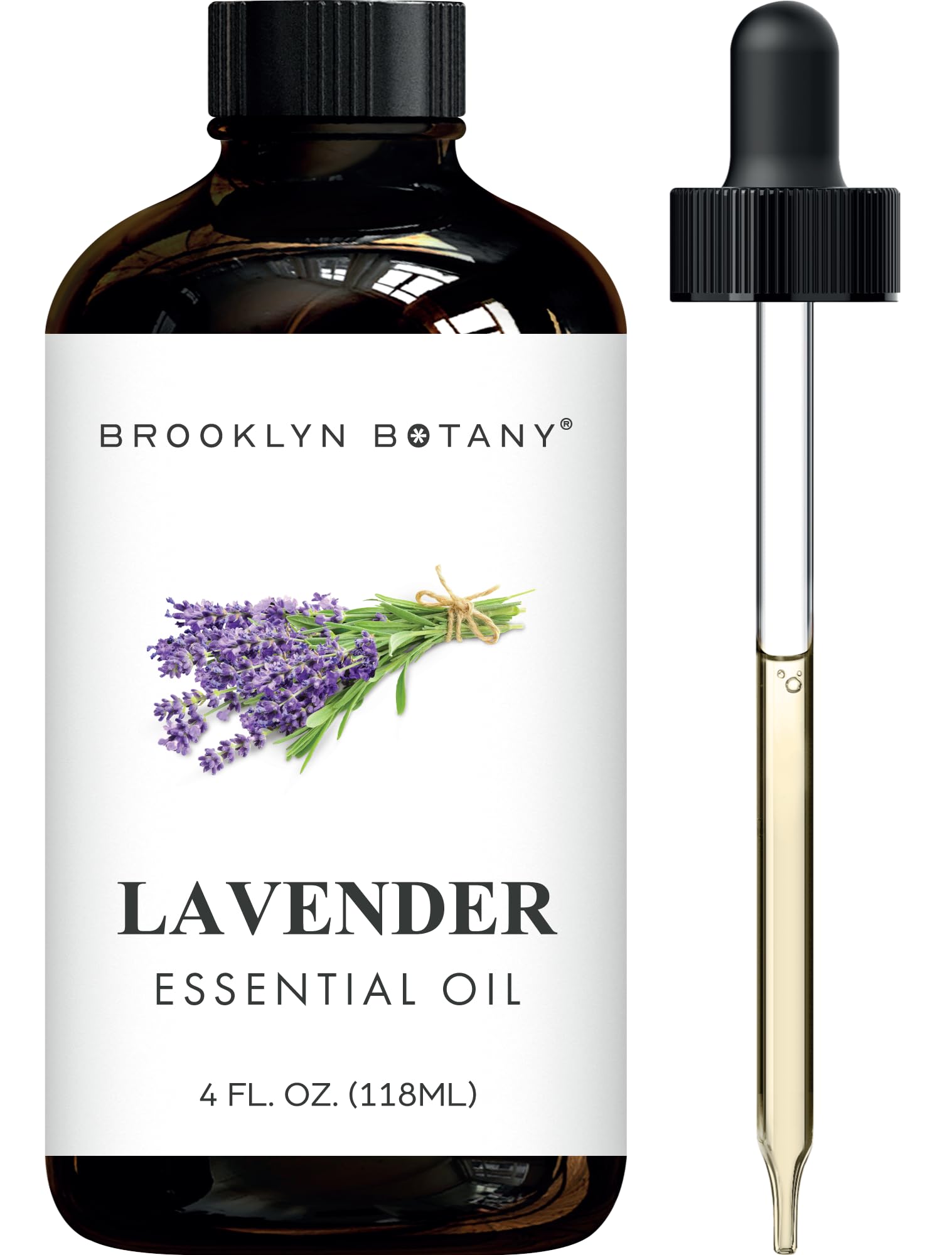
Brooklyn Botany Lavender Oil
Key Features
- Oil: Lavender
- Use: Diffuser, skin care, DIY
- Size: 4 fl oz
- Bottle: Amber glass with glass dropper
- Price: Budget
Cheap enough to use without rationing is the whole argument for this bottle, and it’s why there’s one in the laundry room and another by the bed. Four ounces of straightforward floral lavender in amber glass, with a dropper that measures by the drop — no perfumery, nothing to think about before you tip some into a diffuser.
Judged on value, it’s the best of the full-size bottles here. The scent is a clean, recognizable lavender rather than anything perfumed or synthetic, it holds up in a diffuser, and four ounces covers linen sprays, wool dryer balls and a nightly bedroom run without you feeling the bottle emptying. The glass dropper is a real convenience — you get a drop rather than a glug.
The catch is volume. Four ounces is more than a bedside habit needs, and a big bottle opened nightly loses its edge long before it’s finished. Decant a week’s worth into a small amber bottle, keep the big one capped in a cupboard, and the last quarter will smell closer to the first.
Pros
- Clean floral lavender, not perfumed or synthetic
- Four ounces covers diffuser, sprays and laundry
- Best value of the full-size bottles here
Cons
- Plain lavender only; no layered blend
The bottle to buy in bulk: a clean, recognizable lavender that’s cheap enough to use in the diffuser, the laundry and everywhere in between.
Best for Organic Single Oil
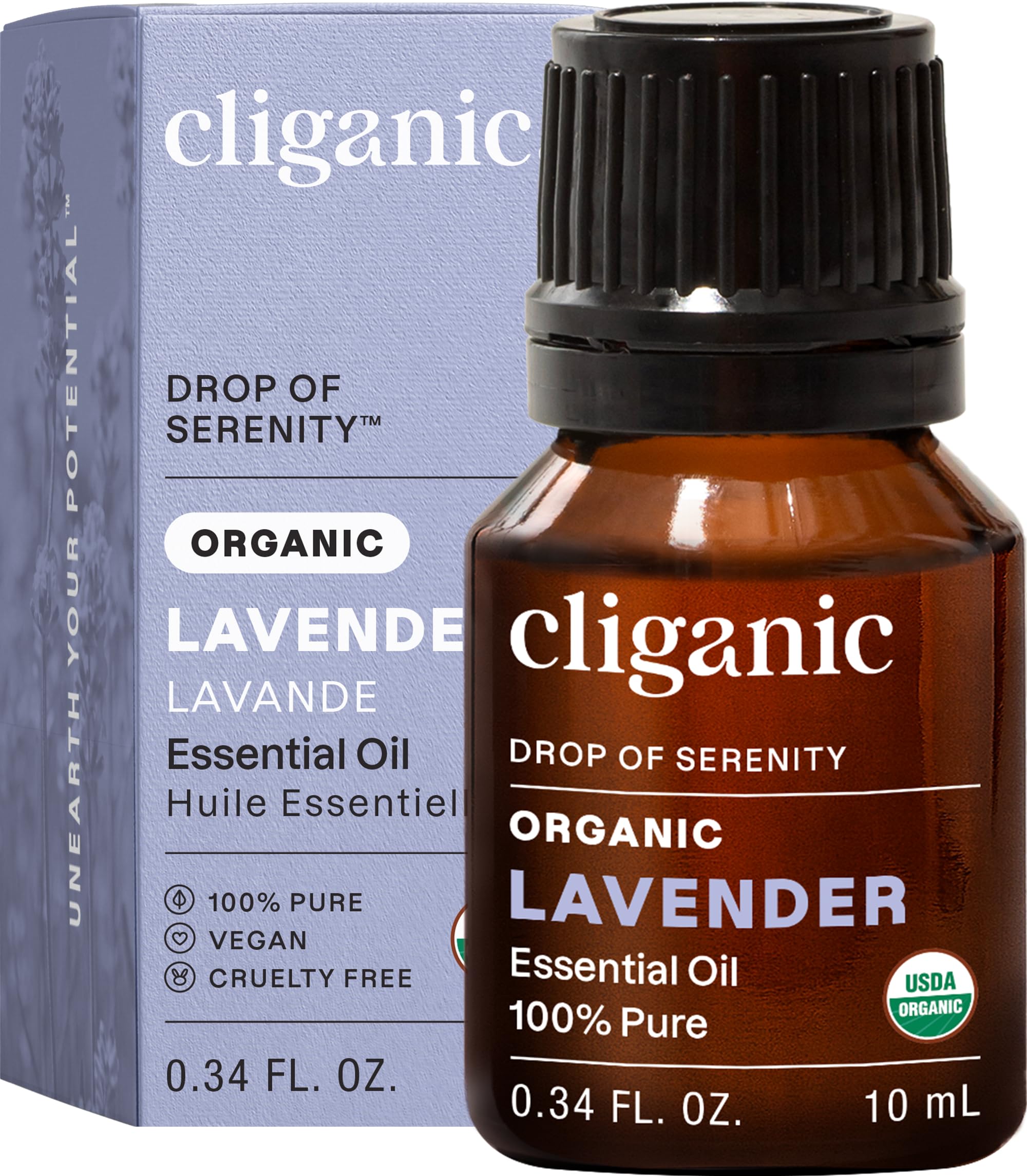
Cliganic Organic Lavender Oil
Key Features
- Oil: Lavender, single ingredient
- Size: 0.34 fl oz
- Testing: Third-party purity tested
- Certification: USDA organic
- Price: Midrange
A third of an ounce is barely a bottle, and we nearly passed on this one for exactly that reason. What earned it a place is the paperwork: USDA organic certification, a single ingredient with no additives, and third-party purity testing on every batch — the sort of thing you pay for instead of volume.
What’s inside behaves like real lavender. It reads floral and slightly herbal rather than sweet, and it’s the bottle we reach for when the diffuser is in a small room. In a big open space the aroma thins out within an hour or two; a drop on a pillowcase corner keeps it close enough that you notice it as you turn over, which for sleep is the more useful test anyway.
The trade is certification and a bottle that stays fresh to the last drop, rather than a bargain by the ounce. That’s worth it for something you breathe in beside your bed, and the small size stops being a compromise if you buy two — one for the nightstand, one for the diffuser — instead of letting a big bottle go flat in a cupboard.
Pros
- USDA organic, single-ingredient lavender
- Third-party purity testing on every batch
- Reads like real lavender, not perfume
Cons
- Aroma thins out fast in a large open room
Buy this one for the certification, not the volume: organic, single-ingredient lavender for a bedside diffuser or a drop on the pillowcase.
Best for Bedside Touch-Ups
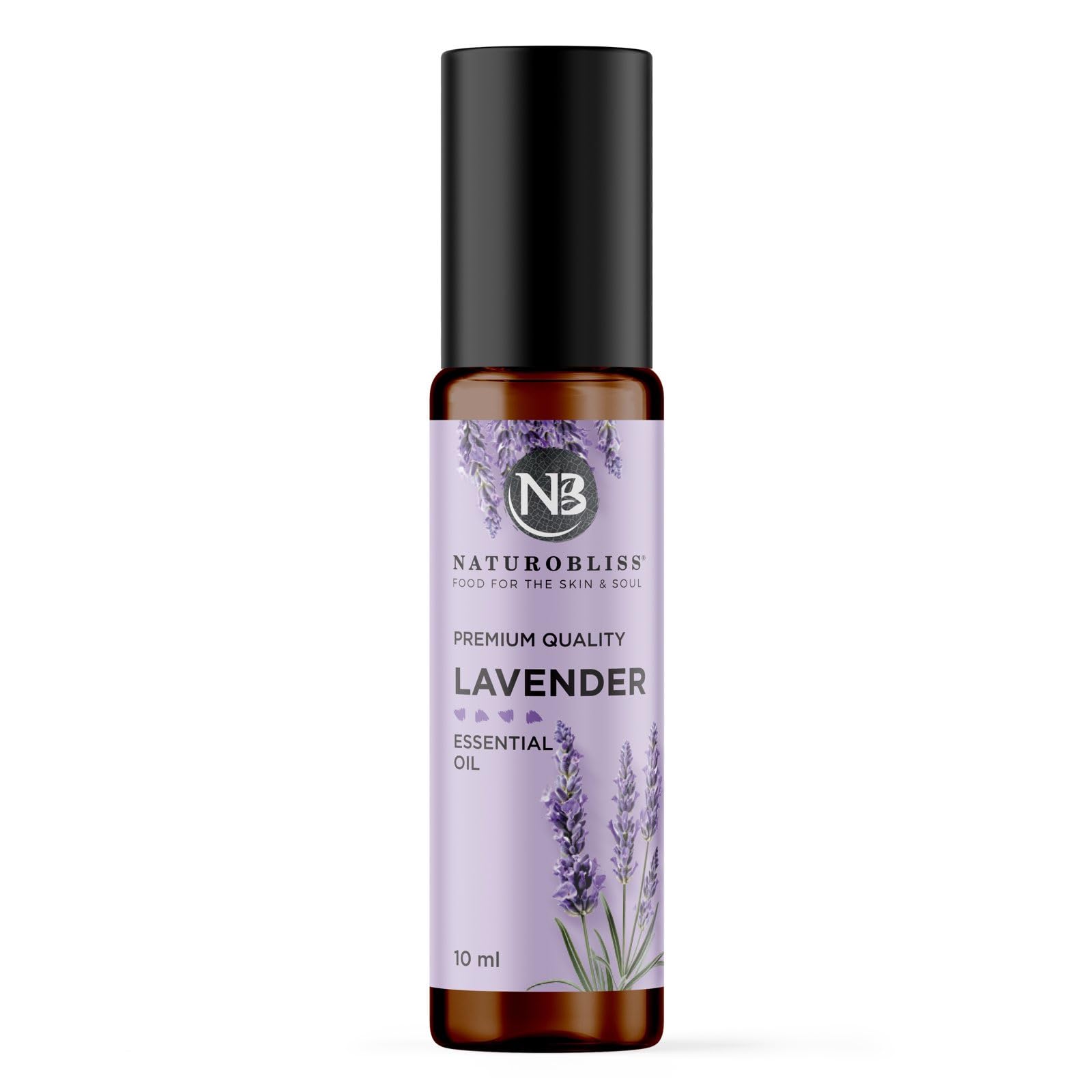
NaturoBliss Lavender Roll-On
Key Features
- Oil: Lavender
- Size: 10 ml
- Format: Roll-on
- Weight: 1.44 oz
- Price: Budget
The case for a rollerball is the moment the light’s already off and the diffuser is across the room. Ten milliliters of lavender in a glass roller lives on the nightstand, and one swipe along the pillow’s edge or across a wrist is a two-second ritual instead of a project — nothing to fill, nothing to rinse out in the morning. The glass is heavier than the price suggests and the cap seats firmly, which matters once it’s living in a toiletry bag.
It’s the cheapest bottle here and the easiest to travel with, and what it does better than the full-size oils is keep the scent exactly where you put it instead of scenting a whole room. The oil itself is a soft, standard lavender — not the most complex note in this group, but pleasant — and the roller dispenses it slowly, so you get a dab rather than a puddle. We kept it by the bed for the nights when setting the diffuser going felt like too much, which is the honest use case: a top-up, not a replacement for a room-scenting routine.
Pros
- Bedside format with nothing to set up
- Roller dispenses slowly, so no puddles
- Small enough for a travel bag
- Lowest-priced bottle in this set
Cons
- Pure lavender in the roller, not a pre-diluted rub
The one to keep on the nightstand: a slow-dispensing lavender roller for a dab on the wrist or the pillowcase when a diffuser is too much effort.
Best for Travel and Pillow Drops
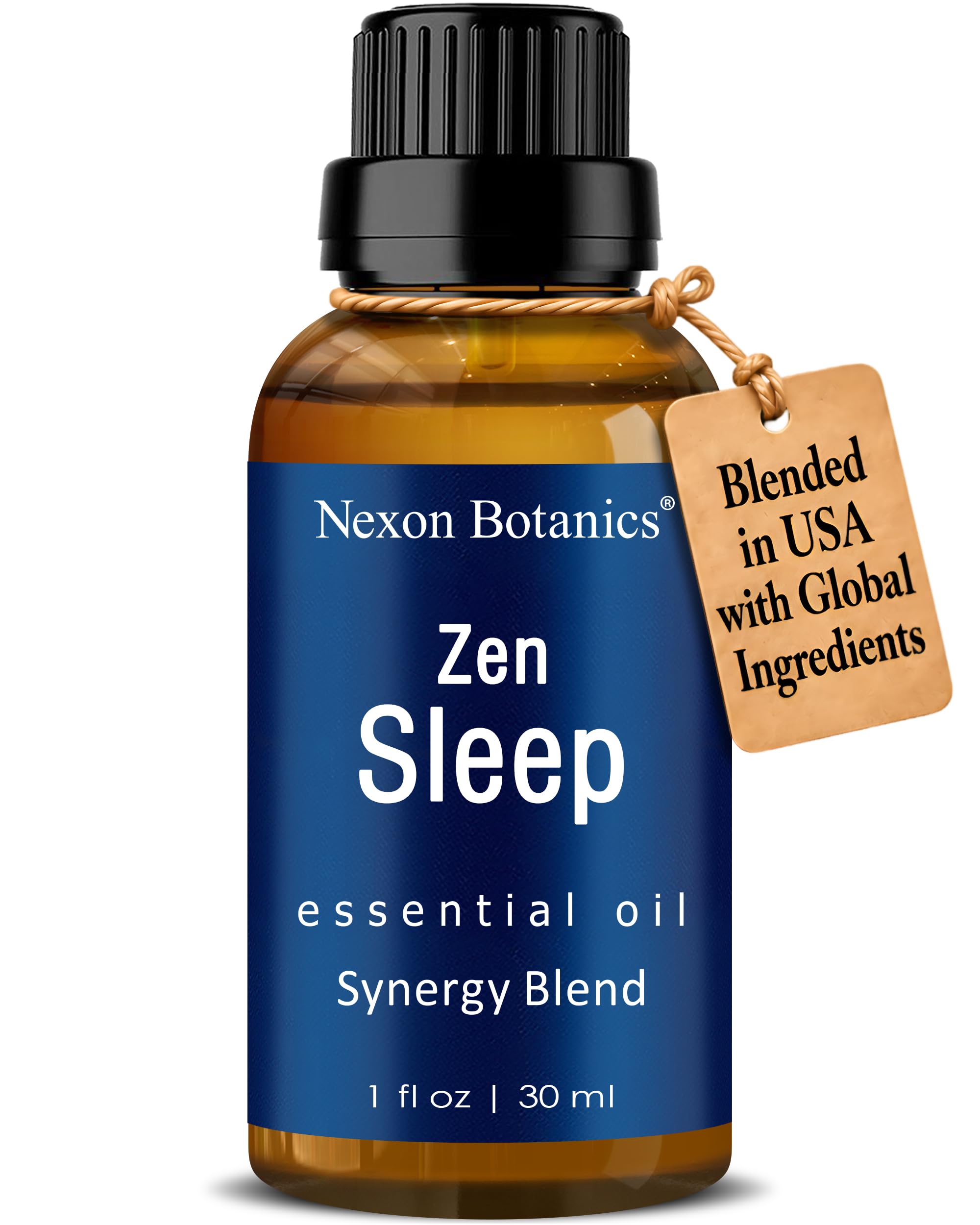
Nexon Botanics Zen Sleep Blend
Key Features
- Form: Undiluted blend
- Size: 30 ml
- Blend: Orange, lavender, rosemary
- Extras: Hexane-free, cruelty-free
- Price: Midrange
Where the Dream blend goes warm and floral, Zen goes bright. Orange and rosemary sit alongside the lavender, so the first thing you smell is citrus and the lavender arrives underneath — which makes this the better bottle if lavender on its own reads heavy, sweet or old-fashioned to you.
Thirty milliliters is the travel-friendly part: small enough for a toiletry bag, big enough that you’re not rationing it, and the maker lists the blend as hexane-free and never tested on animals. Use it the way the label suggests — a few drops in a diffuser, a couple on a pillowcase or a bandana, or diluted with MCT oil for a shoulder rub before bed.
The orange is also the catch. This is a brighter, more awake smell than the blends built on chamomile, and on a night when you’re already wired, bright is not what you want. We treat it as the early-evening option, diffused while you’re getting ready for bed rather than at three in the morning, and for that job its aroma is the most distinctive in this group.
Pros
- Bright orange-and-rosemary opening
- Travel-size 30 ml bottle
- Works in a diffuser, on a pillow or diluted for massage
Cons
- Fades faster in a diffuser than the Dream blend
For a bedroom scent that doesn’t smell like a spa: orange and rosemary lighten the lavender, and the small bottle travels well.
Best for Laundry and Diy
Handcraft Blends Lavender Oil
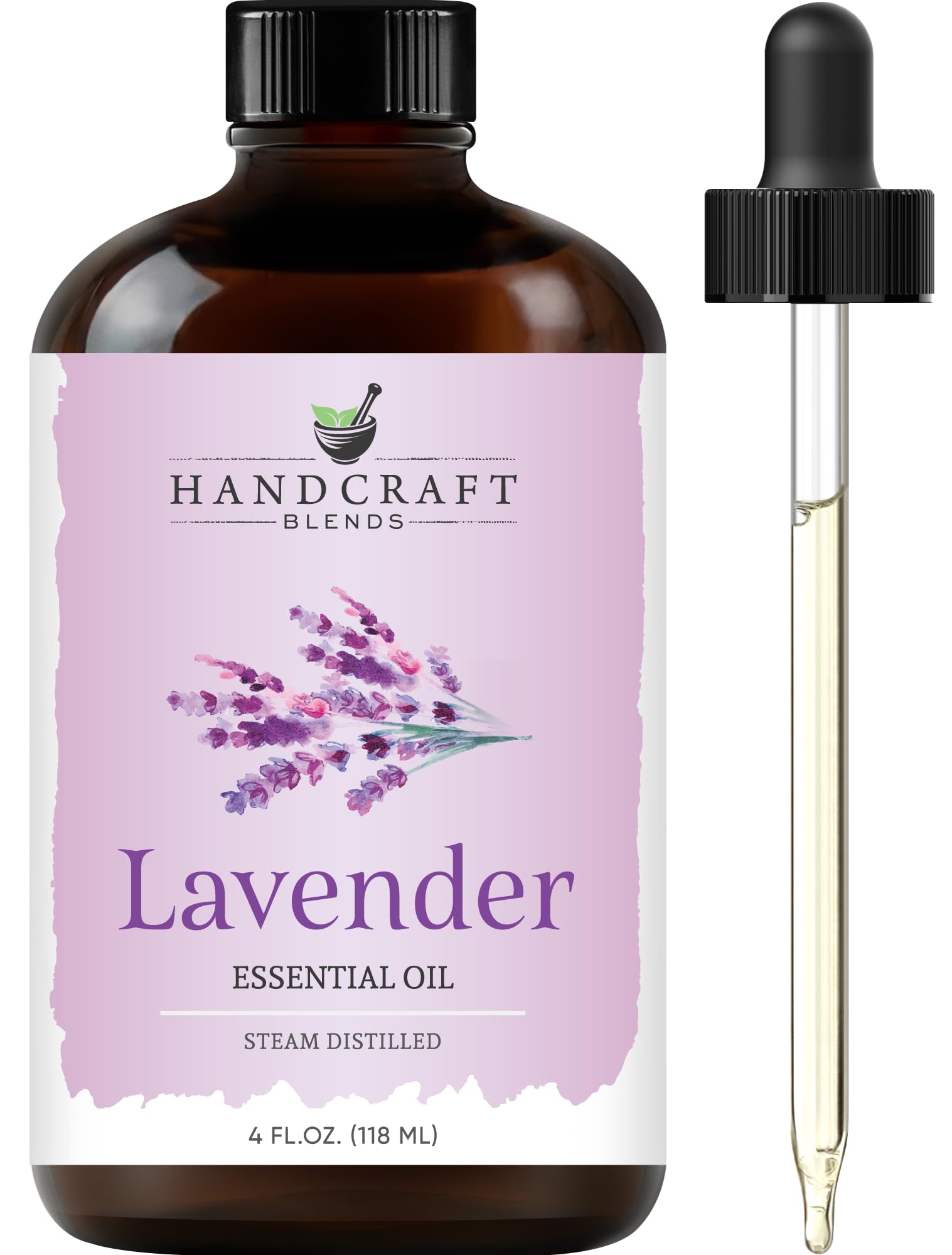
Key Features
- Oil: Lavender
- Size: 4 fl oz
- Bottle: Amber glass with glass dropper
- Origin: Bottled in the USA
- Price: Budget
This is the bottle that ends up in the laundry room rather than on the nightstand. Four ounces of lavender in amber glass is a working quantity: a few drops on wool dryer balls, a capful in a spray bottle with distilled water for the sheets, a top-up in a diffuser that’s already half full.
As a lavender it’s decent rather than delicate. It holds up when it’s diluted into a spray or a wash cycle, the dropper makes it easy to measure, and the amber glass does its job — this is a bottle that will sit in a cupboard between uses and still smell like lavender when you come back to it.
Where it lands depends on what you’re judging. As a bottle you’ll actually use up — for laundry, sprays and diffuser refills — it’s one of the more useful things here, because you can be generous with it without wincing. As a bedside oil it’s fine rather than memorable, and that’s the distinction worth holding on to before you buy.
The dropper is the least impressive part of the package. The plunger takes a firm press, and it’s worth keeping the bottle upright between uses so oil doesn’t sit in the pipette. A small thing, but you’ll be dispensing from this bottle a lot, so it’s the detail you’ll notice most.
Pros
- Four ounces you can be generous with
- Holds up diluted in sprays and wash cycles
- Amber glass and glass dropper included
Cons
- Scent doesn’t read as true lavender to every nose
Buy it as a workhorse rather than a centerpiece: four ounces of lavender for dryer balls, linen spray and diffuser refills, used without rationing.
Best for Custom Blends
Majestic Pure Lavender Oil
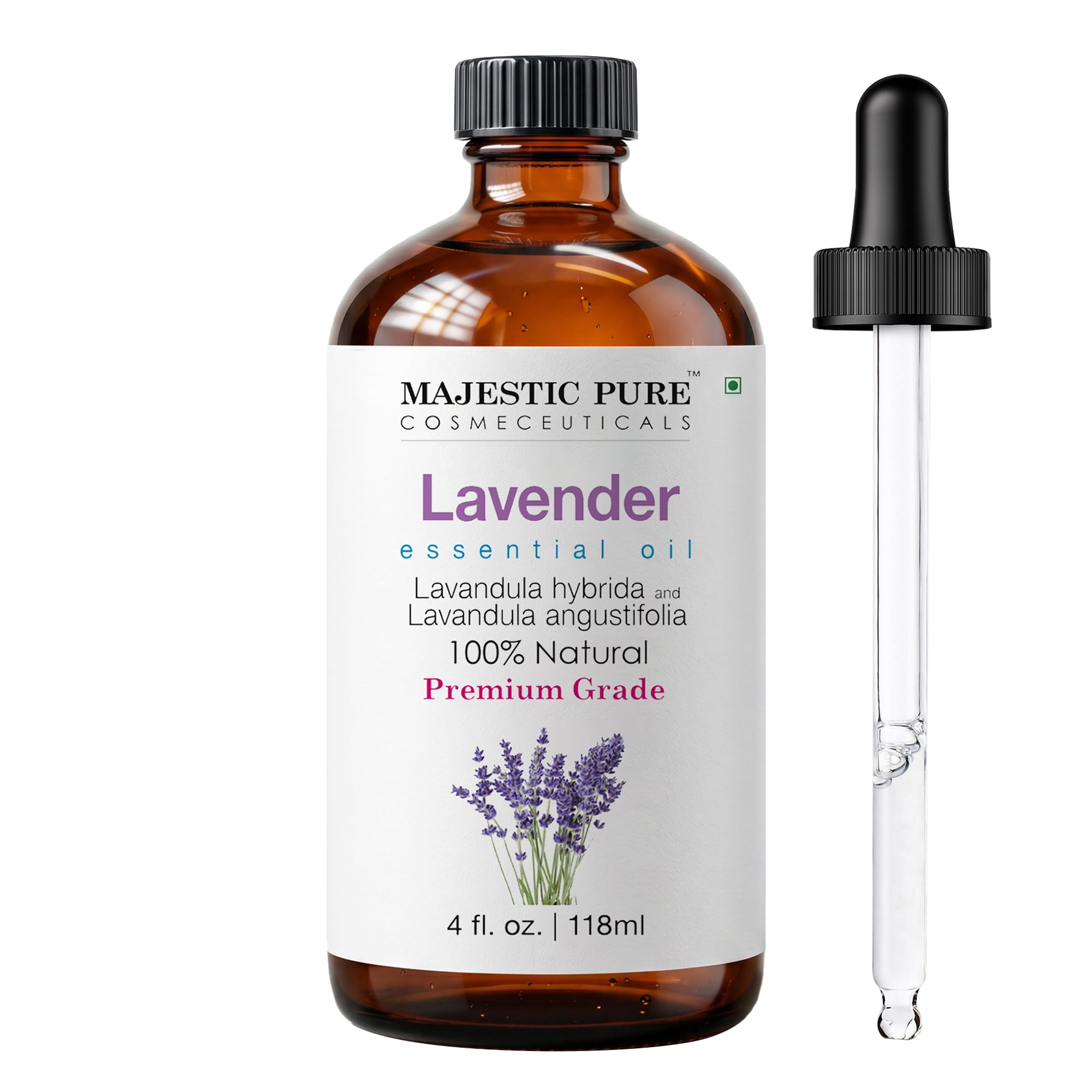
Key Features
- Oil: Lavender
- Size: 4 fl oz
- Aroma: Soft floral lavender
- Bottle: Amber glass with dropper
- Price: Budget
A four-ounce bottle sounds endless until you work out that a diffuser takes two or three drops at a time — at which point the question stops being how much oil you get and starts being what you can do with it. This is the bottle here built for mixing: the listing names what it pairs with, from clary sage and cedarwood to bergamot and sandalwood, which is a workable map for pushing lavender toward sleep.
That clary sage pairing is the useful one. It’s the same note that anchors our top pick, and a drop of each in the diffuser gets you close to a purpose-built sleep blend with two bottles you can also use separately. The lavender itself is soft and slightly sweet — closer to a linen spray than to the sharp, resinous lavender of a French field.
Softness is where this one divides people, and it’s worth knowing which camp you’re in before you buy. In a small bedroom or mixed into a blend, soft is exactly right. In a big open room, or if you want lavender that announces itself, it reads thin and you’ll be adding drops to compensate.
Set against the other full-size lavenders here, this is the softest and the most flexible, and it’s the one we keep for mixing rather than for the nights we want a single strong note. Buy it if you plan to build a blend around it; buy Brooklyn Botany if you want the note to carry on its own.
Pros
- Pairing list on the label makes blending easy
- Soft floral profile for small rooms and blends
- Four ounces goes far as a blending base
Cons
The blender’s bottle: a soft floral lavender with a pairing list on the label, made for building your own bedtime mix.
How We Tested Sleep Oils, Night After Night
I read labels before I read reviews. Anything sold as a sleep oil but labeled "fragrance oil" or "perfume oil" was out, and so was anything that wouldn’t name the botanical it came from. I kept pre-diluted roll-ons in a separate pile from undiluted bottles so I was comparing like with like, grouped the lavenders by type — true lavender, lavandin, and blends — and noted price per ounce, bottle size, and whether the dropper actually worked. That left 18 oils, which I ordered myself so I could see how each one shipped; a few arrived with damp caps, which told me something about the bottle before I ever opened it.
Every oil got the same setup: three drops in the same diffuser, filled to the same line, switched on half an hour before bed. I smelled the air near the pillow at 20 minutes, at two hours, and again in the morning, and wrote down whether the scent held, thinned into something soapy, or turned sharp at the edges. One drop also went on the corner of a pillowcase so I could check for staining and see how long the smell survived a wash. Potency got its own pass — I reran the strongest performers at a single drop to see whether they still carried the room.
Because the point is sleep, I kept a log for each oil: roughly how long I took to drift off, how many times I woke, and whether I reached for that bottle again the next night. That’s not a sleep study and I’m not treating it like one — it’s a pattern, and the oils that repeated it are the ones that made the list. Value came down to plain math: how many nights a bottle covered before it ran dry.
How to Choose an Aromatherapy Oil for Sleep
The oil you’ll actually use is the one that fits the routine you already have: a diffuser blend for a nightly ritual, a single lavender for everything, or a rollerball for the nights you can’t be bothered.
A Sleep Blend or a Single Lavender?
A single lavender oil is the most flexible thing you can buy. It goes in the diffuser, on a pillowcase, into a linen spray, and into blends you mix yourself, and it’s the format to choose if you want one bottle to do everything. A pre-built blend does the balancing for you: ours layers Roman chamomile, clary sage and ylang-ylang under the lavender so it reads rounder and less medicinal.
Neither is more effective, but they suit different buyers. Buy a blend if the bedside ritual is the point and you’d rather not experiment with ratios. Buy a single oil if you already know you like lavender, or if you want to build a scent around it with cedarwood or clary sage.
Check What’s in the Roll-On
A rollerball is not automatically a skin product. Some hold pure essential oil and expect a dab on a pulse point; others are pre-diluted in a carrier such as fractionated MCT oil and are ready for face and body. The label settles it: if it says 100 percent pure, treat the roller as precise application and dilute for anything larger than a wrist.
Buy the Size You’ll Finish
Bottles in this category run from a third of an ounce to four ounces. A small bottle isn’t a bad deal: essential oil is best fresh, and a 10 ml roller you finish beats a big bottle that sits half-full and goes flat. Buy large only when the oil has other jobs — laundry, sprays, DIY — and if you do, decant a week’s worth into a small amber bottle and keep the rest capped and out of sunlight.
Read the Label, Not the Adjective
‘Therapeutic grade’ and ‘premium grade’ aren’t regulated terms; any seller can print them. What you can verify is narrower and more useful: whether the bottle is a single oil or a blend, whether it’s USDA organic, and whether the maker states third-party purity testing. Pay for those when they matter to you — that’s what the Cliganic bottle is charging for, and it’s a fair reason to spend more on something you’re breathing in beside your bed.
Frequently Asked Questions
How many drops of oil should I put in a diffuser?
Two or three in a bedroom-size diffuser is the right starting point, and starting low matters more than it sounds: a room that smells strong at bedtime is harder to sleep in than one with a faint trace. Run it for half an hour before you get in, then switch it off or set the timer.
Adding more drops doesn’t deepen the effect, it just makes the room stuffier. If the space is large, move the diffuser closer to where you are rather than doubling the dose.
Can I put essential oil straight on my pillow?
Yes, with a light hand. A drop or two on the corner of the pillowcase, or on a tissue tucked inside it, keeps the scent near your face without soaking the fabric. Test a hidden corner first, since oils can mark some fabrics, and wash the pillowcase as usual.
A pre-diluted roll-on is less likely to leave a spot than a pure oil, and it’s easier to control where the scent lands.
Do aromatherapy oils really help you sleep?
They won’t fix a sleep problem on their own, and none of these is a treatment for insomnia. What a scent does well is mark the transition: the same oil at the same time each night becomes a cue that the day is over.
Give it a week of consistent use before you decide, and pick a scent you genuinely like. An oil you find unpleasant won’t relax you whatever the label promises.
Final Verdict
For most people the Dream blend is the right first bottle. The Roman chamomile and clary sage take the sharp edge off lavender, two or three drops is all a bedroom needs, and it behaves like a finished product rather than a raw material.
If you want one bottle that also handles the laundry and the linen spray, buy Brooklyn Botany’s lavender and add a drop of clary sage yourself when you want the blend. Keep the rollerball for the nights the diffuser stays in the cupboard.