
This post contains affiliate links. We may earn a small commission when you buy through our links — at no extra cost to you.
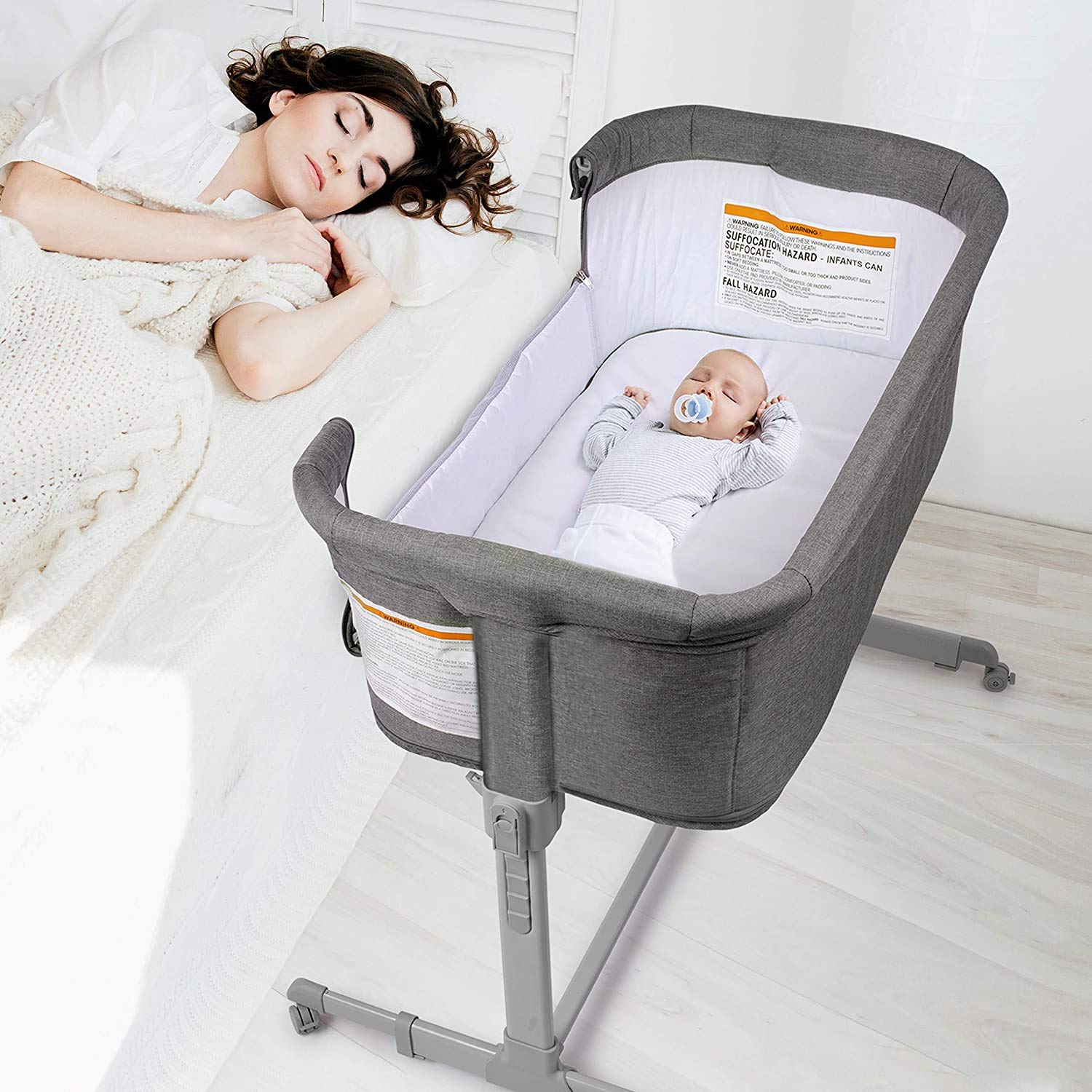
A bassinet that sits next to your bed is convenient—but only if the side actually lowers. Many models marketed as ‘bedside sleepers’ are just bassinets placed nearby, lacking a drop-down panel to let you scoop up baby without sitting up. For true co-sleeping convenience, look for a zippered or sliding side and secure attachment.
But that’s only half the equation: you also need the bassinet’s height to align with your mattress. A 4-inch gap can make night feeds awkward and create an entrapment hazard. If you plan to roll the bassinet from room to room or fold it for trips, stability and portability become competing priorities. This guide focuses on models that actually deliver bedside access, with height-adjustable frames that fit most beds, full mesh for breathability, and sturdy bases that don’t wobble with movement. Whether you need an all-in-one nursery station or a featherweight travel bassinet, we’ve matched the picks to real-world use.


Best for All-In-One Nursery
BEKA 4-in-1 Bassinet
Key Features
- Drop-Down Side: Retractable buckle panel
- Portability: Folds compact, 29 lbs
- Price: $$
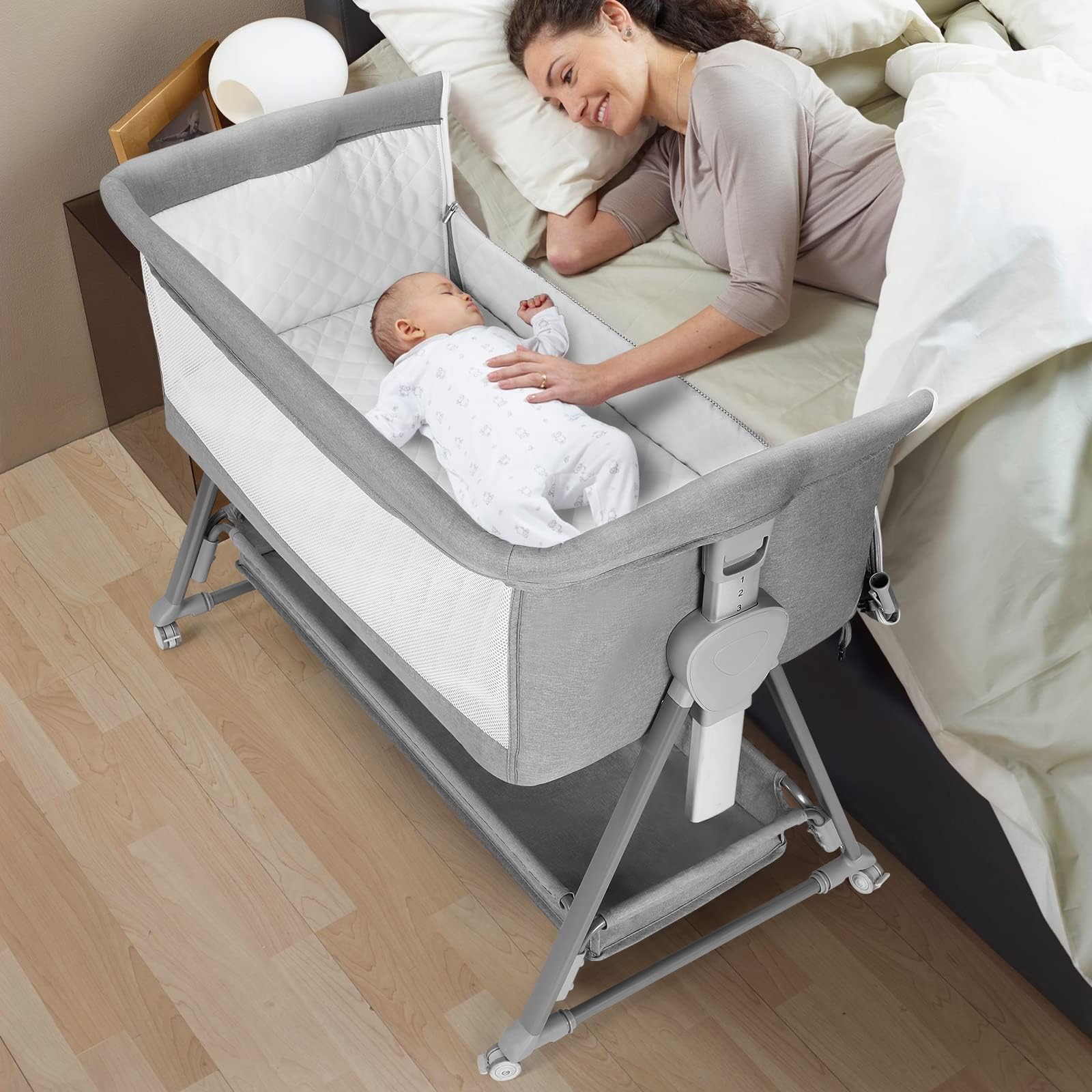
The retractable side panel anchors to the bed frame with adjustable straps and buckles, creating a seamless, gap-free connection other “bedside” designations only gesture at. Once docked, the reinforced frame stays put without the side-to-side sway that frustrates parents during midnight feedings. Assembly takes minutes without tools, and the all-mesh sides provide clear sightlines and ventilation. A side organizer and under-bassinet basket keep diapers, wipes, and a change of clothes within easy reach, which matters when every movement counts at 3 a.m.
This system speaks directly to first-time parents who need one piece of gear to serve as bassinet, changing table, and playard while saving floor space. C-section recovery and small nurseries make the bedside reach especially valuable. The bassinet supports babies up to 30 pounds, and converting it to a playard extends usefulness well into toddlerhood. The attached changing table is compact—best for newborns under 25 inches. Once your baby can roll or kicks a leg over the edge, you’ll likely move to a dresser-top pad or dedicated changer.
Pros
- Gap-free bedside docking with secure buckle system eliminates dangerous spaces between sleeper and adult bed.
- Tool-free assembly and a sturdy, reinforced frame that resists wobble.
- Built-in side organizer and basket put essentials within arm’s reach during nighttime care.
Cons
- The attached changing table fits newborns under 25 inches—older infants will outgrow it before transitioning out of the bassinet.
For parents who want a single, sturdy nursery center that locks onto the bed securely and cuts nighttime reaching, the BEKA delivers where it counts—just plan on switching the changing spot once your baby stretches past the 25-inch mark.
Best for Budget Bedside Access
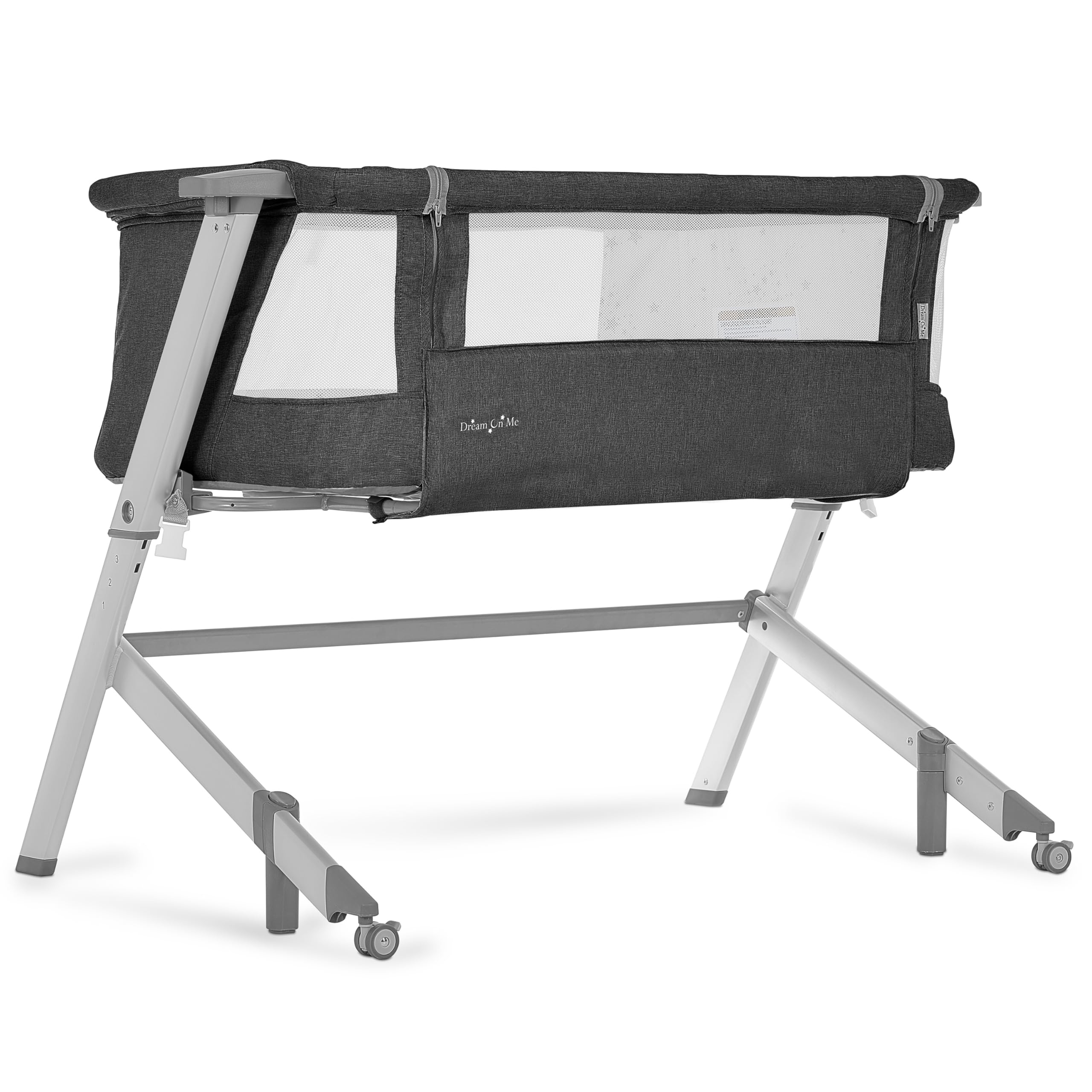
Dream On Me Skylar
Key Features
- Drop-Down Side: Zipper panel
- Portability: 20.5 lbs, travel bag
- All-Mesh Sides: Mesh sides
- Price: $
The Dream On Me Skylar gives you a true bedside co-sleeper with a zipper-operated drop-down side and five height adjustments to match most bed frames. It’s lightweight and comes with a travel bag, but the wheels don’t roll smoothly on carpet, and the frame can feel wobbly on softer floors. This makes it best suited for parents who plan to keep the bassinet in one spot on a hard floor, and who want a budget-friendly option without sacrificing the bedside access that matters for safe co-sleeping.
Pros
- Easy assembly with good material value for the price.
- Drop-down zipper side allows quick access to baby from bed.
- Breathable mesh sides provide clear visibility and airflow.
Cons
Practical entry-level bedside sleeper for budget-conscious families who don’t need to move it around.
Best for Portable Co-Sleeping
KoolerThings 3-in-1 Bassinet
Key Features
- Drop-Down Side: Zipper panel
- Portability: 24 lbs, travel bag
- Price: $$
The KoolerThings 3-in-1 bassinet combines a true drop-side panel with five height settings and folds flat into a travel bag, offering bedside access that some stationary co-sleepers can’t match. Its lightweight frame and built-in wheels let you move it from bedroom to living area easily. This fits new parents who prioritize portability and bedside closeness — it aligns well with standard bed heights, but extra-tall platform beds and a need for fully silent wheels may point to other models.
Pros
- Drop-down side provides true bedside access for nighttime feeding and comforting.
- Five height positions match a wide range of bed heights for secure co-sleeping.
- Sturdy frame with a roomy interior supports active sleepers up to the 24-lb limit.
Cons
- Wheels can stick or lock unintentionally, making repositioning less smooth than expected.
- The maximum height may fall short for platform beds taller than 25 inches, requiring a different option.
If you need a true drop-side bedside sleeper that packs flat for trips, this bassinet delivers—just confirm your mattress height sits within its range to avoid frustration.
Best for Midnight Diaper Ease
BabyBond 3-in-1 Bassinet
Key Features
- Portability: 23.6 lbs, wheels
- All-Mesh Sides: 360° mesh
- Price: $$
Unlike bulkier nursery stations, the BabyBond wraps the bedside in 360° mesh, with a built-in changing table that stands inches away — no separate furniture needed. Where the top pick uses buckle attachments to dock securely, the BabyBond relies on six height settings to align with the mattress, and the mesh framing keeps your baby fully visible from any angle. It’s ideal for style-conscious parents who value a constant sightline and want a changing surface at arm’s reach. The adjustable incline helps newborns with reflux. However, on thick carpet the wheels can drag — a trade-off that vanishes on hard floors.
Pros
- 360° mesh construction provides continuous sightlines and excellent airflow.
- Integrated bedside changing station saves space and keeps essentials within reach.
- Six height settings and an incline mode accommodate reflux and various bed heights.
Cons
- Wheels can catch on thick carpet, making repositioning less fluid.
On hard surfaces, this bassinet delivers a sleek, visibility-first bedside station with a real changing table and reflux incline — all without a cluttered footprint.
Best for Stability & Storage
Cowiewie Bedside Bassinet
The Cowiewie’s pyramid base delivers solid stability for side-lying nursing, while the oversized storage basket underneath holds diapers, wipes, and a burp cloth within arm’s reach. The seven height settings and foldable frame make it practical for occasional travel, but the maximum height of 21.5 inches blocks use on tall platform beds. A slight lean can occur on uneven floors — easy to correct with level placement. This is a strong fit for families with standard bed heights who value storage room over maximum height range.
Pros
- Pyramid base minimizes wobble during use.
- Large under-bassinet basket keeps night-time essentials accessible.
- Spacious sleeping area accommodates newborns up to 30 pounds.
Cons
- Can lean slightly if placed on an uneven floor — requires level surface.
- Height adjustment stops at 21.5 inches, not compatible with tall platform beds.
A storage-focused bedside sleeper with reliable stability for standard bed heights – choose it when a tall platform bed isn’t in the picture.
Best for Travel Nursery System
Graco Day2Dream Playard
Key Features
- Drop-Down Side: No
- Portability: 39 lbs, carry bags, detachable bassinet
- All-Mesh Sides: Mesh sides
- Price: $$$
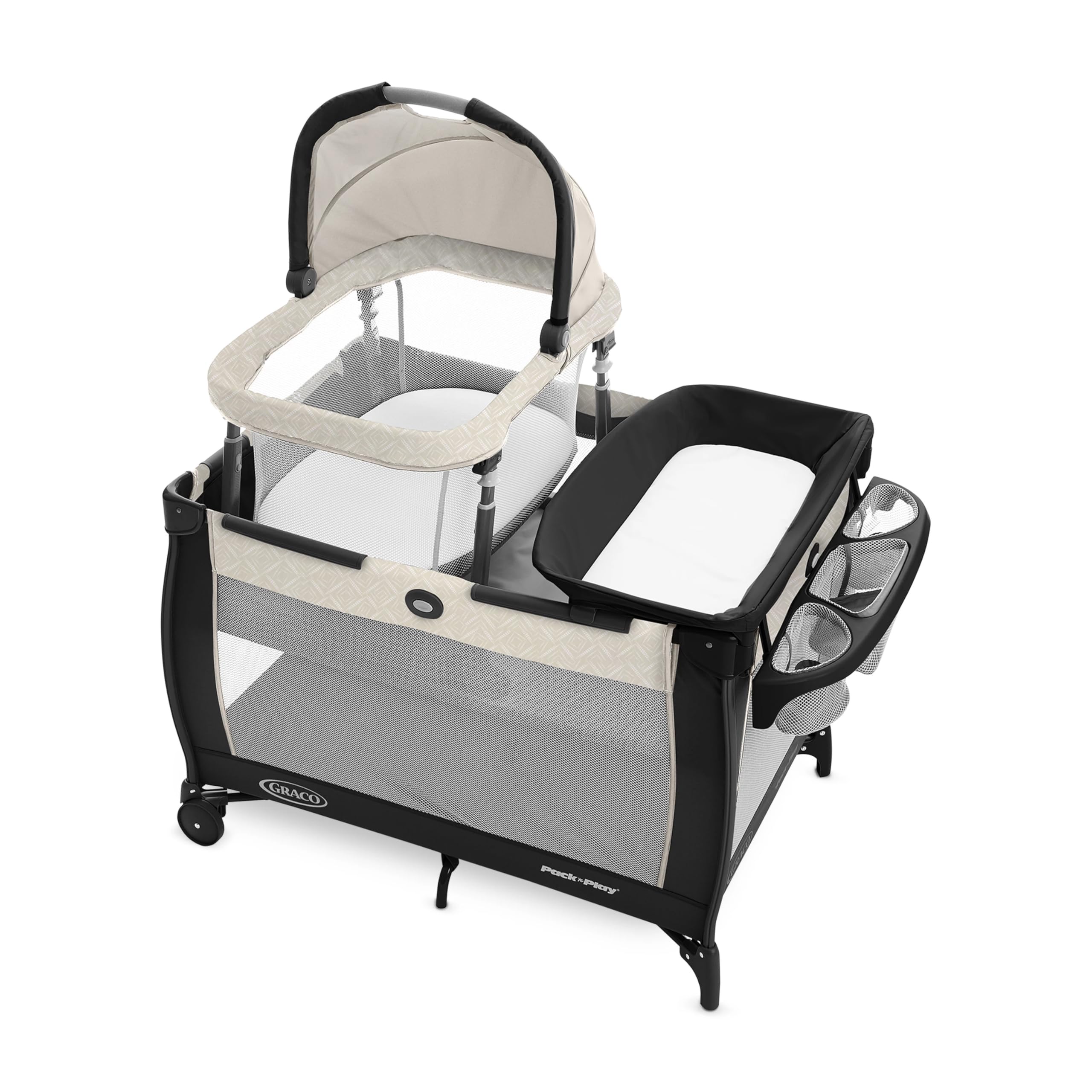
The detachable bassinet is the standout: it lifts off the playard frame for bedside sleep or on-the-go use, and each component gets its own carry bag. Unlike slimmer playards, this one bundles a diaper changer, though the pad is shallow and can tilt during use—parents wanting a truly stable changing surface will notice the difference. First-time assembly takes longer than expected and requires some patience to level the changer. For families setting up a semi-permanent baby station at a grandparent’s, or those who want one system for occasional travel, these tradeoffs are manageable.
Pros
- Combines a bassinet, changer, and playard into a single system—no separate purchases needed.
- The bassinet lifts off for bedside use or travel, and each piece fits into its own carry bag.
- Sturdy frame feels stable and premium, not flimsy.
Cons
- First-time assembly can take a while, and getting the changer perfectly level may require extra effort.
- The changing table pad is shallow and can tilt during use, feeling less stable than a standalone changer.
If you need a portable bassinet for bedside sleep during travel and value the playard’s longevity, this bundle delivers—just plan to use the changing pad for quick changes only.
Best for Outdoor Bug-Free Naps
Dream On Me Karley
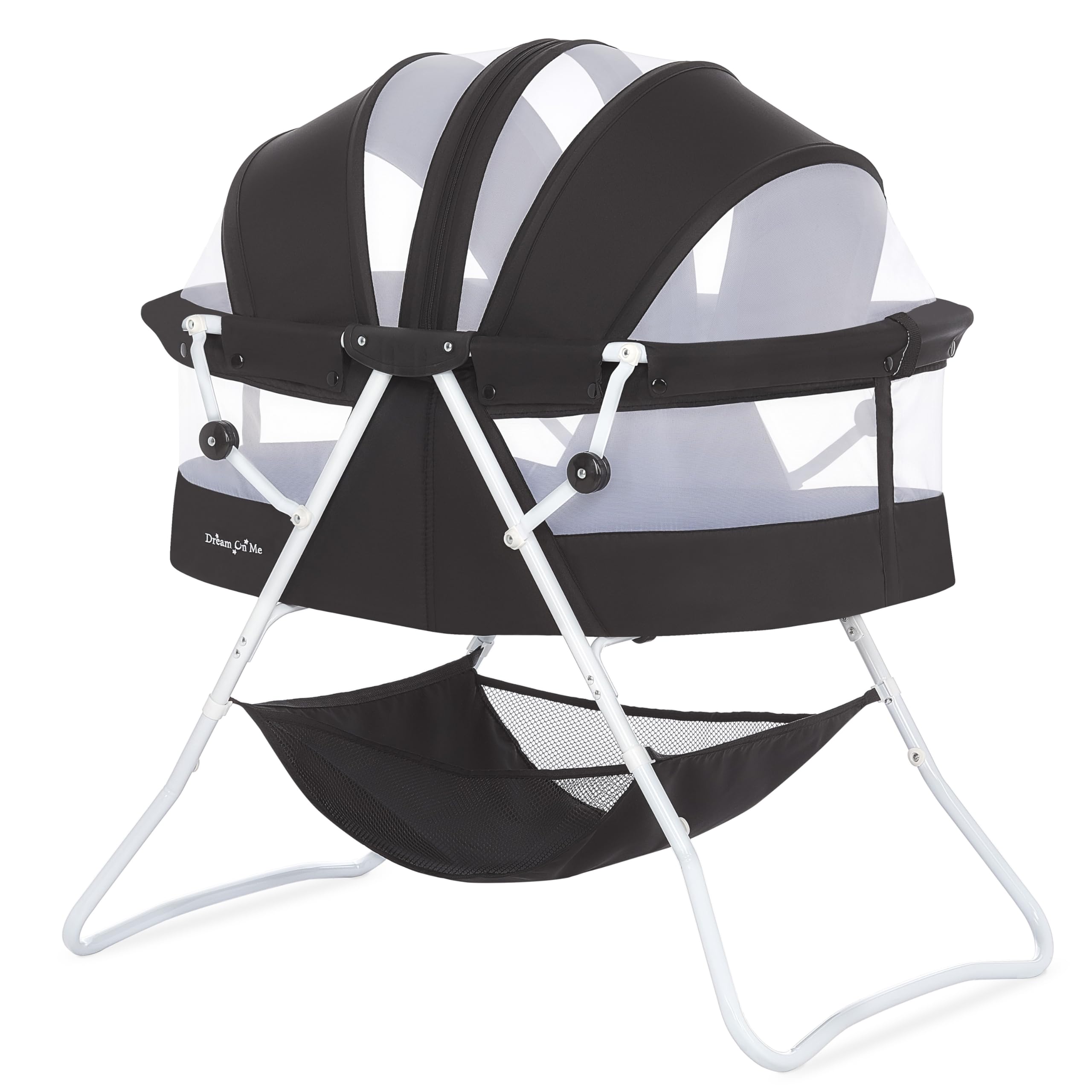
At 12.4 pounds, the Karley is a travel-friendly nap station with a zippered double canopy that keeps bugs out and a frame that assembles without tools. The fixed side limits its function as a bedside sleeper, making it less ideal for parents who need drop-side access during the night.
Pros
- Zippered double canopy effectively keeps bugs out during outdoor use
- Weighs just 12.4 lbs and folds flat into a carry bag, making it easy to transport
Cons
- The canopy zipper is stiff and noisy; opening or closing it may wake a light sleeper
The Karley is a smart pick for families who need a grab-and-go bassinet for travel, grandparents’ houses, or shaded outdoor naps. For overnight bedside co-sleeping, a model with a drop-down side panel is the better fit.
Best for Classic Nursery Charm
Delta Rocking Bassinet

Key Features
- Drop-Down Side: No
- Portability: 16.5 lbs, lightweight
- Price: $$
This bassinet delivers a classic look, soothing music, a nightlight, and canopy for a cozy nursery feel. Assembly is straightforward, and the price is mid-range. However, the rocking motion may not glide consistently, and the 15-lb weight limit means it will be outgrown in a few months, making it a short-term solution.
Pros
- Canopy, nightlight, music, and vibration create a classic nursery ambiance.
- Quick assembly and solid mid-range value.
Cons
- Rocking may not glide smoothly, reducing ability to soothe a fussy baby.
A good fit for parents who prioritize classic nursery charm and don’t need a bedside sleeper, while accepting a limited lifespan and possible rocking quirks.
Best for Occasional Grandparent Use
Pamo Babe Playard
Key Features
- Drop-Down Side: No
- Portability: 19.6 lbs, carry bag
- All-Mesh Sides: Mesh sides
- Price: $
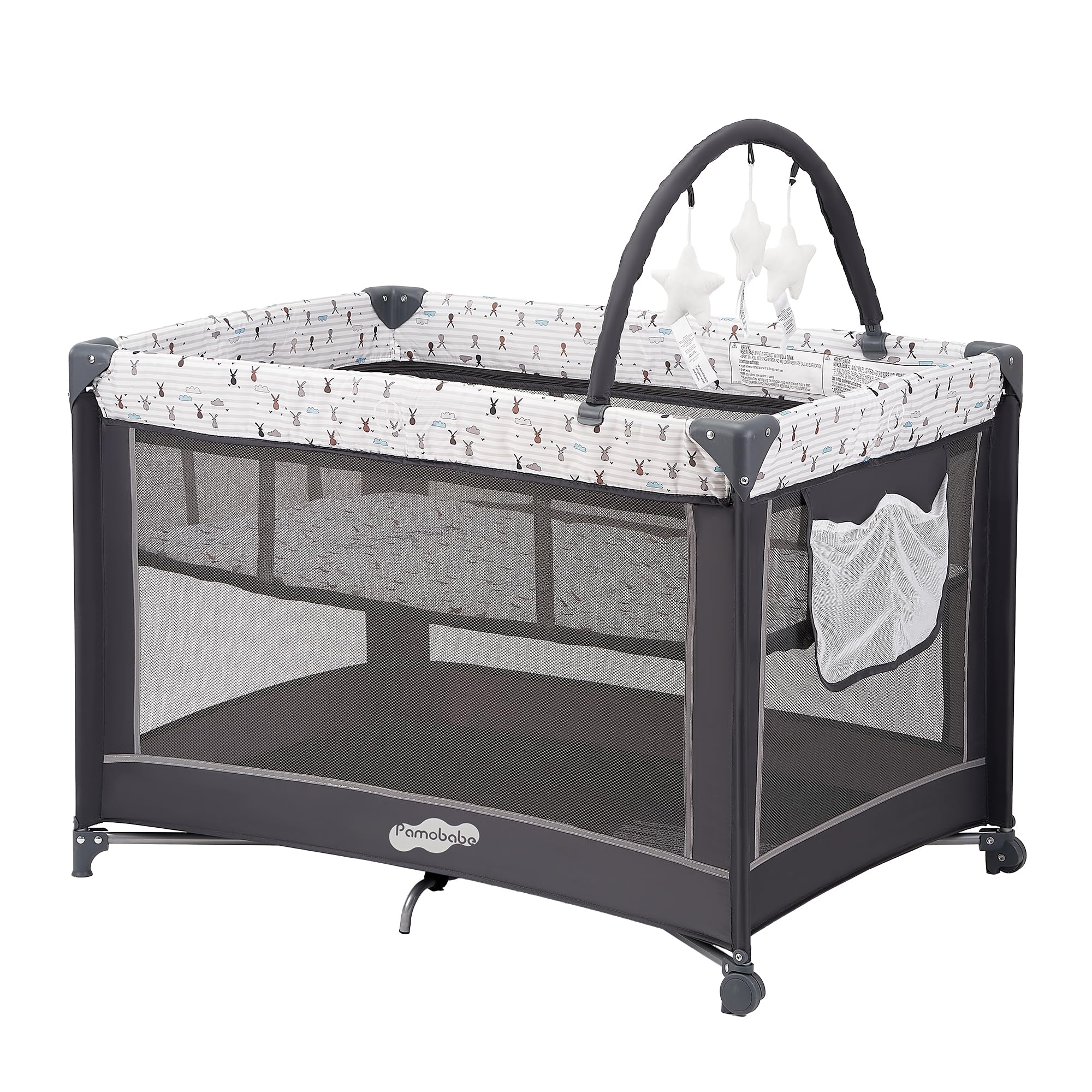
Effortless assembly and a carry bag make this playard convenient for grandparents’ homes or weekend trips. The included bassinet mattress is thin, and wheel durability can become a concern with frequent relocation — it’s a practical backup, not a primary bedside sleeper for newborns.
Pros
- Tool-free setup and compact fold for travel-friendly storage.
- Budget-conscious price for a portable playard with bassinet.
Cons
- Wheels can snap or bottom support may weaken when moved frequently, undercutting long-term stability.
Families wanting an affordable second sleep spot for occasional travel or grandparent stays will appreciate the value, but the design isn’t intended for nightly bedside co-sleeping.
Best for Mobile All-Day Naps
Fodoss Bassinet with Storage
Key Features
- Drop-Down Side: Zipper panel
- Portability: Wheels, no fold
- All-Mesh Sides: 360° mesh
- Price: $$
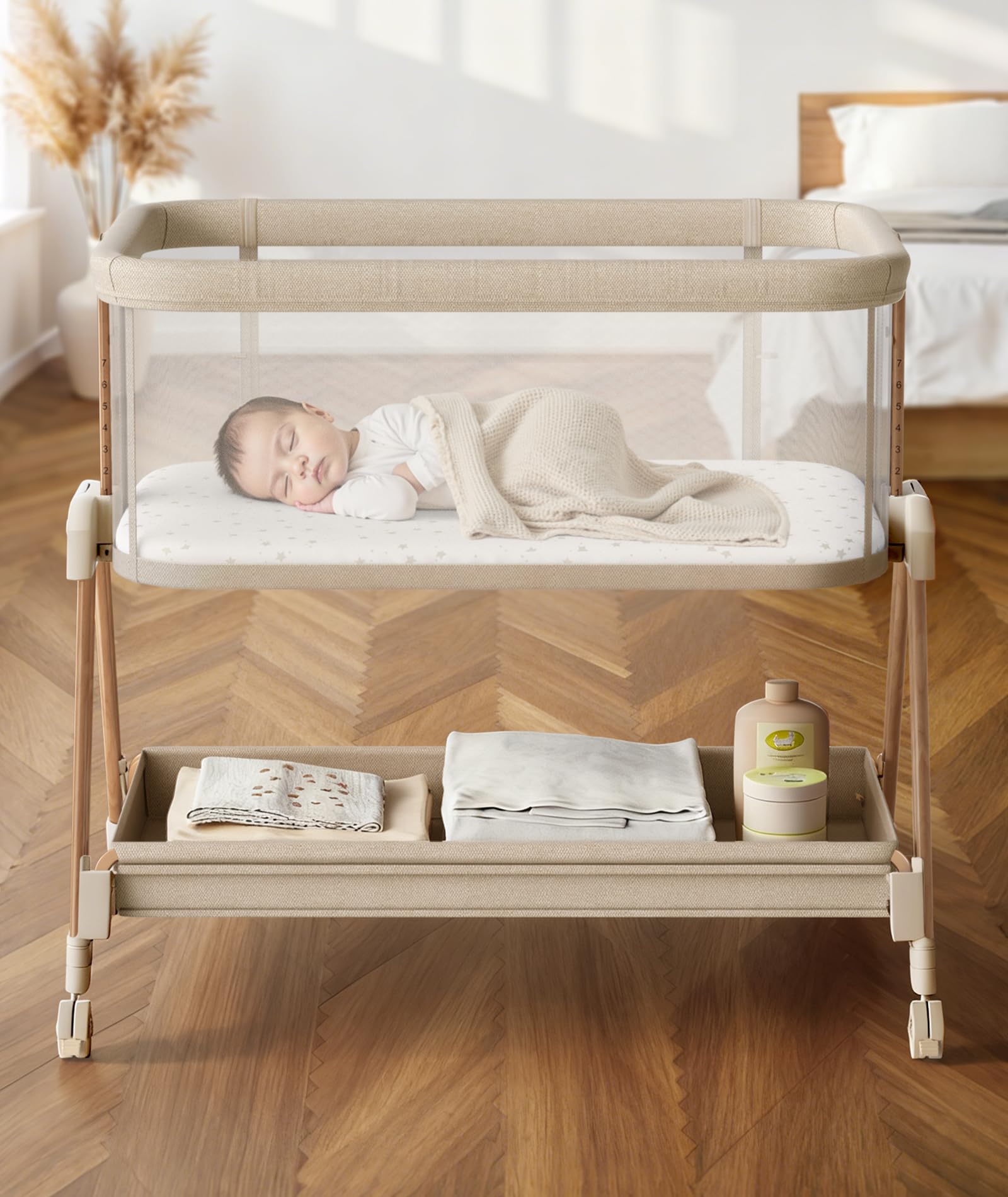
The Fodoss bassinet rolls smoothly on wheels, snaps together fast, and offers full mesh visibility. Seven height adjustments fit most beds, and the storage tray holds diapers and wipes. The low 19.8-lb weight limit shortens usability for fast-growing babies, making it a better match for average-sized newborns who will switch to a crib by 4-5 months.
Pros
- Smooth-rolling wheels with locks make moving room-to-room effortless
- Assembly snaps together in minutes with no tools required
Cons
- 19.8-lb weight limit caps use earlier than higher-capacity bassinets
If you prioritize easy mobility, full mesh visibility, and plan to move your baby to a crib around 4-5 months, this bassinet delivers solid value — just know it won’t last beyond that point.
Best for Ultra-Portable Travel
Chicco LullaGo Anywhere LE

Key Features
- Drop-Down Side: No
- Portability: 12.6 lbs, carry bag
- All-Mesh Sides: Mesh sides
- Price: $$
The Chicco LullaGo Anywhere LE delivers travel-ready portability at 12.6 lbs and snap-together assembly in seconds. Mesh sides and a canopy add comfort, but the frame can tip on uneven floors and lacks bedside co-sleeping features. It’s a smart secondary bassinet for travel, not a primary bedside sleeper.
Pros
- Lightweight at 12.6 lbs and packs into a carry bag for easy travel.
- Snap-together frame assembles in seconds with no tools.
Cons
- The lightweight frame can tip if bumped or placed on uneven flooring.
For a lightweight travel bassinet that sets up in seconds, this fits the bill — just use it on stable, level ground and don’t rely on it for bedside co-sleeping.
Best for Small-Space Nursery
Graco Close2Baby Playard

Key Features
- Drop-Down Side: No
- Portability: 30 lbs, wheels, push-button fold
- All-Mesh Sides: Mesh sides
- Price: $$
The Close2Baby bundles a playard, bassinet, and changing table in a wheeled, fold-flat frame that tucks neatly into small rooms. The bassinet insert runs small, so rapid growth will shorten its usable window, and the changing table snaps can be finicky to secure. For true bedside co-sleeping, the top pick’s drop-side design is the safer fit.
Pros
- Compact footprint and integrated wheels keep it unobtrusive in tight spaces.
- Push-button fold and straightforward assembly make daily setup and storage quick.
Cons
- Bassinet insert runs small; newborns may outgrow it within the first few months.
If a stationary all-in-one for apartment living matters more than a dedicated bedside sleeper, this compact Graco fits the bill — just expect to transition out of the bassinet early.
How to Choose
A bassinet that seems perfect can fail in the middle of the night if the side doesn’t lower or the height doesn’t match your bed.
Be Sure the Side Actually Lowers
Many products labeled ‘bedside sleeper’ simply sit next to the bed without a drop-down panel. For hands-free midnight access, you need a zippered or retractable side—preferably one with a silent zipper. The physical difference is immediate: you can reach over and scoop up baby without sitting up, reducing disruption for both of you.
Some models attach to the bed with safety straps, which prevents the bassinet from inching away and creates a gapless transition. If the side doesn’t lower, you’re essentially using a standalone bassinet—convenient but not the same as true co-sleeping access.
Match Your Mattress Height Precisely
The bassinet’s mattress should sit within an inch of your adult bed’s mattress height. A larger gap creates an entrapment risk and forces you to bend awkwardly during feeds. Height-adjustable legs with multiple settings let you fine-tune the alignment.
The hidden trade-off: bassinets with the widest height ranges often use telescoping legs that can slip if not locked firmly. Before you buy, measure from your floor to the top of the mattress and check that the bassinet’s stated maximum and minimum heights cover that number. Platform beds or very tall mattresses may require a model that reaches above 30 inches.
Don’t Overlook Wobble
A bassinet that rocks gently when you nudge it might seem harmless, but side-to-side sway can disturb a sleeping baby or, in extreme cases, cause the bassinet to tilt. Wobble often stems from mismatched leg lengths, flimsy connection points, or uneven floors.
Models with a pyramid-shaped base or a reinforced frame resist rocking better, especially on carpet. If you’re placing the bassinet on a soft surface, look for wide-set, locking wheels or rubberized bottom grips. Remember that a bassinet that feels solid on a showroom floor may behave differently on thick bedroom carpet.
Portability: Weight, Fold, and Wheels
If you plan to move the bassinet between rooms or take it on trips, weight and the ability to fold flat matter enormously. A 12-lb bassinet with a carry bag lets you set up a safe sleep space at the grandparents’ house in minutes. A 30-lb pack-and-play system might stay in one spot most of the time.
The mechanism matters: snap-together frames that collapse without tools are travel-friendly; wheeled bassinets that don’t fold are easy to push around the house but hard to pack. Consider the surface you’ll be rolling over—small, hard wheels may jam on carpet, while larger swivel casters handle transitions better.
Storage: Keep Nighttime Essentials Close
A deep under-bassinet basket or side organizer puts diapers, wipes, and a change of clothes within arm’s reach. This seems minor until you’re fumbling for supplies at 3 a.m. without turning on a light. Look for open, sturdy storage that doesn’t sag when loaded.
Multi-function bassinets with a changing table often sacrifice storage space for the extra platform. If a dedicated changing station matters to you, check that the bassinet still has at least a hanging pocket or basket—otherwise you’ll end up with clutter on the floor.
All-Mesh Sides for Breathability and Visibility
360-degree mesh panels let you see the baby from any angle and promote airflow around the mattress. The safety benefit is real: a baby pressed against breathable mesh can still breathe, whereas solid fabric sides could pose a suffocation risk.
The trade-off is that all-mesh bassinets can have a more clinical look and may not block drafts in chilly rooms. If you love the visibility but need a warmer microclimate, choose a model that also accepts a fitted bassinet cover or has a canopy to trap some heat.
FAQ
Why is my bedside bassinet wobbly and what can I do to fix it?
Many lightweight bassinets develop wobble on carpet or uneven floors. First, check that all frame joints are fully snapped and the mattress is properly seated. If the bassinet has height adjusters, ensure each leg is locked at the same setting. Adding a non-slip mat under the base can help, but if the frame itself flexes, consider a model with a pyramid base or a wider footprint.
How do I make sure my bassinet height matches my bed for safe co-sleeping?
Measure your adult mattress height from the floor to the top of the mattress. Then compare to the bassinet’s minimum and maximum height settings—many are labeled on the leg posts. The bassinet mattress should sit within 1 inch of your mattress height to avoid a gap. If your bed is extra-tall, look for a bassinet with a range that extends above 30 inches; if very low, choose one that goes down to 16 inches or less.
Do all bedside bassinets require an extra mattress to be comfortable for a newborn?
Most come with a firm, thin pad that meets safety standards—adding an aftermarket mattress can increase suffocation risk. A newborn doesn’t need plush comfort; a flat, waterproof pad is safest. If you’re noticing discomfort, check that the pad isn’t worn out and that the bassinet sheet is tightly fitted.
Can a pack and play with bassinet be used as a safe bedside sleeper?
A pack and play’s bassinet insert can be used for overnight sleep, but it doesn’t have a drop-down side or secure bed attachment. For true bedside co-sleeping, you’d need a model that attaches to the bed frame with straps or has a lowering panel. Using a standard pack and play placed next to the bed risks gaps and can’t provide the same easy access for nighttime feeds.