
This post contains affiliate links. We may earn a small commission when you buy through our links — at no extra cost to you.
Bedroom fan specs often promise near-silent operation, but in a quiet room at night, even a gentle hum can stand out. The lowest noise settings sometimes move so little air they fail to cool a 12-by-12-foot space. That mismatch leaves many buyers scrambling for a fan that whispers and works.
Beyond sound, long-term annoyances pile up: dust-burdened grilles reduce airflow, remotes suddenly lose range, and oscillation noise creeps in after months. The best bedroom fans strike a balance between quiet enough for sleep, powerful enough for comfort, and durable enough through seasons of use.
From compact nightstand circulators to tall oscillating towers, the right pick depends on room size and how directly you want airflow. This article narrows the field to options that deliver on silence and cooling without gimmicks.




Best for Most Bedrooms
DREO DR-HTF007
Key Features
- Noise Level: 20-48 dB, quiet low
- Airflow Power: 1408 CFM, 28 ft/s
- Speed Settings & Modes: 8 speeds, 4 modes
- Oscillation & Tilt: 90° oscillation
- Remote Control: Remote
- Build Quality & Reliability: Generally reliable, minor QC issues
- Price: Mid-Range
The DR-HTF007 produces a genuinely quiet 20dB on its lowest speed while pushing 1408 CFM — enough airflow to cool a medium-to-large bedroom without the drone that disrupts sleep. Its brushless DC motor enables that silence, and the 8 speeds let you fine-tune the breeze; even at speed 4 or 5, the noise stays low enough for light sleepers. The included remote and timer add practical control, and the dimming display prevents light disturbance at night.
This fan fits most bedroom users who want powerful, near-silent cooling with the flexibility of multiple speeds and a remote. It isn’t for those wanting the simplest possible fan without a remote or a shorter pedestal. Occasional units may produce a motor squeal or display malfunction, though these are isolated occurrences.
Pros
- Exceptionally quiet on lower speeds, barely audible even in a silent bedroom
- Strong airflow reaches across the room, moving a lot of cool air effectively
- High-quality build with a handy remote and timer for convenient control
Cons
- Motor squeal or display malfunction can occur in some units
The DR-HTF007 is the quietest tower fan with this much airflow at a mid-range price. If a rare unit-level defect is a dealbreaker, consider the runner-up, but for most bedrooms it’s the best balance of silence and cooling.
Best for Compact Bedside
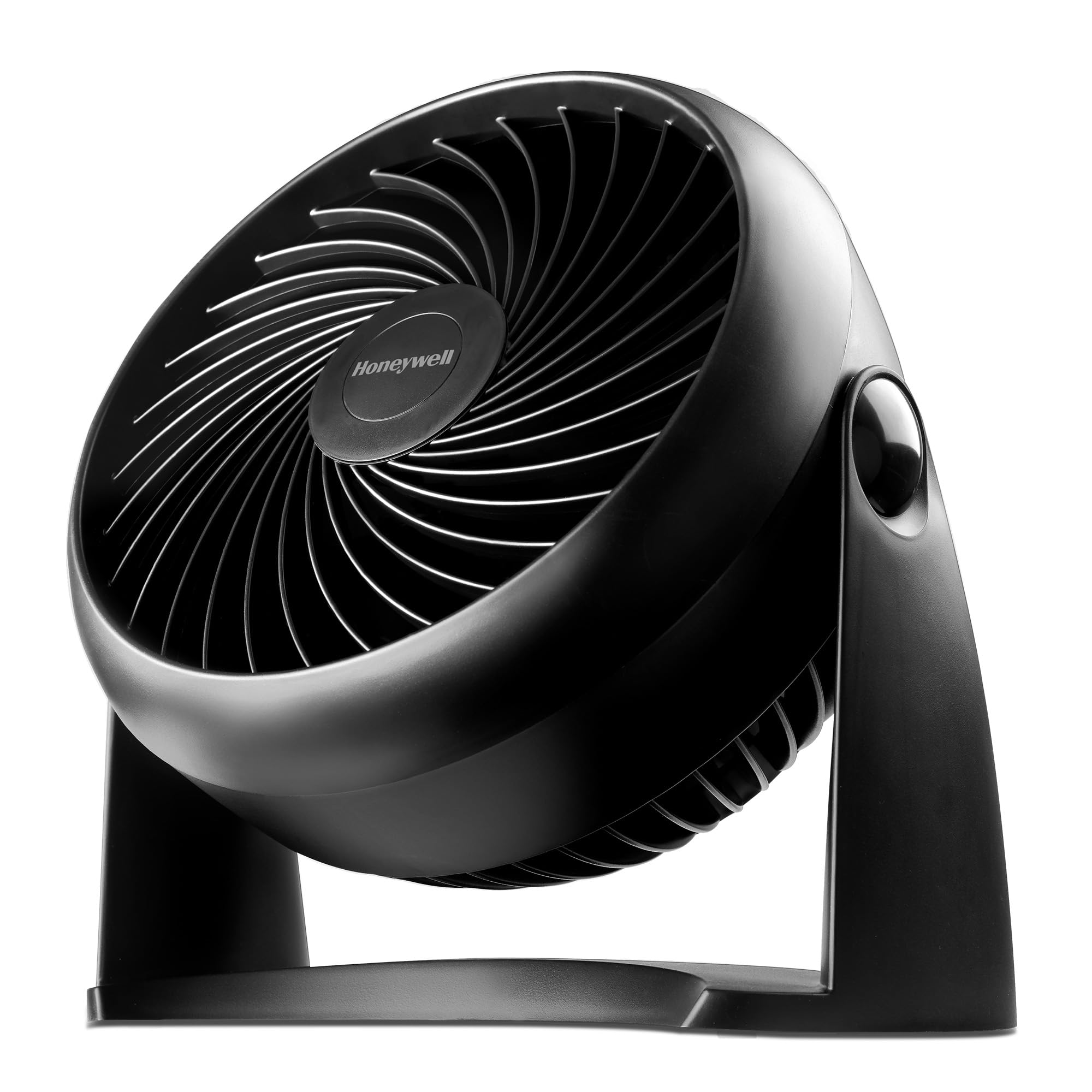
Honeywell HT900
Key Features
- Noise Level: Quiet, no dB claim
- Airflow Power: 185 CFM
- Speed Settings & Modes: 3 speeds
- Oscillation & Tilt: 90° tilt
- Build Quality & Reliability: Mixed longevity
- Price: Budget
The Honeywell HT900 pushes a surprising 185 CFM of airflow from a compact 10-inch frame, with a 90° tilt that directs breeze right where it’s needed. It’s quiet enough for bedside use and costs a budget-friendly amount — well-suited for anyone wanting a personal desk or nightstand fan for small bedrooms or dorms. That said, long-term durability can be inconsistent: some units may lose performance within a year, so it’s best treated as a short-term or occasional-use fan rather than a nightly workhorse.
Pros
- Quiet operation suitable for bedside use
- Impressive airflow for its small size
- Strong value for the price
Cons
- Long-term performance can be inconsistent — some units may show diminished airflow or develop noise after extended use
For a budget-friendly price, the HT900 delivers a surprisingly strong, quiet personal breeze — just keep expectations realistic about how long it will last with daily use.
Best for Quiet & Stylish
LEVOIT Classic 36"
Key Features
- Noise Level: 28 dB, very quiet
- Airflow Power: 1044 CFM, 25 ft/s
- Speed Settings & Modes: 5 speeds, 4 modes
- Oscillation & Tilt: 90° oscillation
- Remote Control: Remote
- Build Quality & Reliability: Solid build, remote quirks
- Price: Mid-Range
The LEVOIT Classic 36″ delivers an impressive level of quietness for its price bracket, producing a gentle white noise that masks bedroom distractions without drowning them out. Its 28dB hum is a touch higher than the top pick’s 20dB, but still low enough for most light sleepers. The clean white tower blends into modern decor, and the 1044 CFM airflow provides a noticeable, natural breeze across medium rooms. The main tradeoff is the remote control: occasional malfunctions have been reported, so relying on the panel controls is a pragmatic fallback. This fan fits budget-conscious buyers who want near-premium quietness and understated styling — just don’t expect the speed granularity or absolute silence of the category leader.
Pros
- Quiet operation produces a soothing background hum for sleep.
- Strong, cool airflow that feels natural and refreshing.
- Premium look and solid build quality for the price.
Cons
- Remote control can experience occasional malfunctions over time.
For those who value quiet style at a reasonable cost and can treat the remote as a secondary control, the LEVOIT delivers where it counts — cooling and silence.
Best for Master Bedrooms
DREO TurboPoly 512
Key Features
- Noise Level: 20 dB, extremely quiet
- Airflow Power: 1150 CFM, 100 ft throw
- Speed Settings & Modes: 9 speeds, 4 modes
- Oscillation & Tilt: 120° oscillation, manual tilt
- Remote Control: Remote
- Build Quality & Reliability: Solid build, premium feel
- Price: Premium
The DREO TurboPoly 512 pedestal fan achieves 20 dB near-silence and 1150 CFM airflow with a wide 120° horizontal oscillation, making it a whole-room circulator rather than just a personal breeze. Its DC motor and 9 speeds offer fine control, and the adjustable 37–42 inch height adds flexibility that stationary towers lack. The premium price reflects these capabilities; buyers who only need a simple bedside fan will find more value in the top pick tower. For larger master bedrooms where silence and full-room air movement matter, the investment is well-placed.
Pros
- Exceptionally quiet, even at medium speeds
- Powerful 1150 CFM throws air across 100 feet
- Sleek, modern pedestal design with sturdy build
Cons
- For a simple bedside breeze, the premium price can be hard to justify
If near-silent whole-room circulation and pedestal flexibility justify the premium, the TurboPoly 512 is a strong choice for style-conscious bedrooms.
Best for Whole-Room Circulation
Vornado 660
Key Features
- Noise Level: Quiet low, 54 dB max
- Airflow Power: 584 CFM, 100 ft throw
- Speed Settings & Modes: 4 speeds
- Oscillation & Tilt: 90° tilt, no oscillation
- Build Quality & Reliability: Durable, 5-year warranty
- Price: Premium
The Vornado 660 moves air across a large bedroom using a 584 CFM vortex that reaches up to 100 feet without oscillation. Its build is backed by a 5-year warranty — uncommon for fans in this category. Where the compact Vornado 133 suits nightstands, this model treats an entire room with consistent circulation.
For buyers who prioritize even temperatures over silence on the highest setting, the four speeds cover quiet overnight cooling and powerful daytime air movement. The top speed is genuinely loud, best used for quick room cooling before bed rather than during sleep.
Pros
- Moves air across a large room without oscillation — consistent temperatures from corner to corner.
- Low speeds are quiet enough for sleep; high speed provides powerful cooling for daytime.
- 5-year warranty backs its long-term durability, with many units running for years.
Cons
- Highest speed is loud; may disrupt sleep if left on overnight.
This circulating fan suits large bedrooms where even cooling trumps absolute silence at full tilt — and the 5-year warranty makes it a long-term fixture.
Best for Tall Medium Rooms
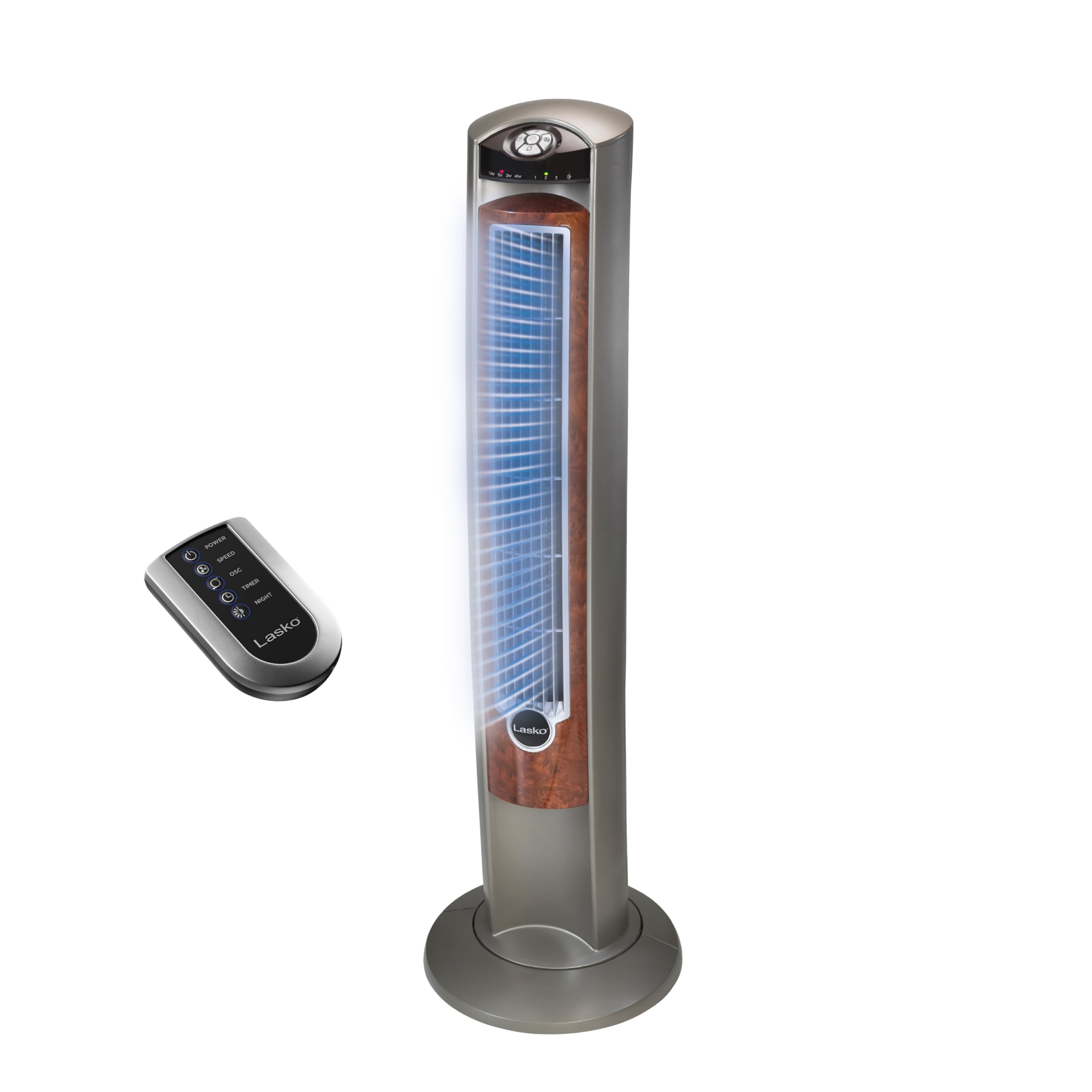
Lasko T42954
Key Features
- Noise Level: 55.4 dB max, loud high
- Airflow Power: 262 CFM
- Speed Settings & Modes: 3 speeds
- Oscillation & Tilt: Wide oscillation
- Remote Control: Remote
- Build Quality & Reliability: Mixed reliability
- Price: Mid-Range
At 42.5 inches with a woodgrain finish, the Lasko T42954 brings a taller, more decorative presence than the simpler budget tower fan in this set, and it prioritizes wide oscillation coverage for medium bedrooms over the top pick’s finer speed control.
It suits those who want a fan that blends into bedroom decor and covers the bed area with 262 CFM airflow on three speeds. Expect noise at full speed to be more present than some may prefer, and long-term durability is not a guarantee — units can stop working within a year.
Pros
- Stylish woodgrain design that blends into bedroom decor
- Wide oscillation and 262 CFM airflow handle medium bedrooms well
- Good value for a tall tower fan with remote control
Cons
- Noise at top speed can be more intrusive than expected in a quiet bedroom
- Long-term reliability is inconsistent; failure can occur within months
If a 42-inch woodgrain tower fan matches your bedroom’s decor and you want wide oscillation for medium rooms, the T42954 delivers that style and cooling; just expect some noise at high speed and a shorter potential lifespan than premium options.
Best for Compact Portable
Vornado 133
Key Features
- Noise Level: 44 dB max, quiet low
- Airflow Power: 350 CFM
- Speed Settings & Modes: 2 speeds
- Oscillation & Tilt: Tilt only
- Build Quality & Reliability: Mixed durability
- Price: Budget
Where larger Vornado circulators move air across entire rooms, the 133 shrinks that vortex effect into a compact desk fan. 350 CFM of airflow from a footprint barely wider than a paperback makes it an easy fit for nightstands, dorm desks, or travel bags. Quiet on low speed, it’s suitable for light sleepers who want air movement without a direct breeze. Long-term durability with nightly use can vary; some units may need replacement after a year or two. That tradeoff is easier to accept at this price point, and the adjustable tilt and straightforward two-speed control keep things simple.
Pros
- Compact design delivers 350 CFM airflow without crowding a nightstand.
- Quiet on low, blending into background noise during sleep.
- Adjustable head lets you aim airflow precisely where needed.
Cons
- Longevity under continuous nightly use can disappoint; repairs may be needed within a couple of years.
A pocket-sized circulator that brings directional airflow to small bedrooms at a budget price — just don’t bank on decade-long durability.
Best for Budget Temporary
Amazon Basics 16"

Key Features
- Noise Level: Quiet on low/med
- Speed Settings & Modes: 3 speeds, 3 modes
- Remote Control: Remote
- Build Quality & Reliability: Low reliability reported
- Price: Budget
For a budget pedestal fan, this Amazon Basics model delivers acceptable cooling with a remote, adjustable height, and fairly quiet operation at low and medium speeds—enough for a bedroom at night. Assembly is simple, and the price is hard to beat for a temporary solution. However, the motor can develop issues or stop working after a few months, so this fan is best reserved for occasional use or as a short-term rental stopgap rather than a permanent fixture.
Pros
- Quiet operation on low and medium speeds
- Good airflow for a budget pedestal fan
Cons
- Motor reliability is a known limitation, and some units may stop working within months.
A decent stopgap for renters or occasional bedroom use where short-term cooling is the priority and longevity isn’t critical.
Best for Quiet Energy Saver
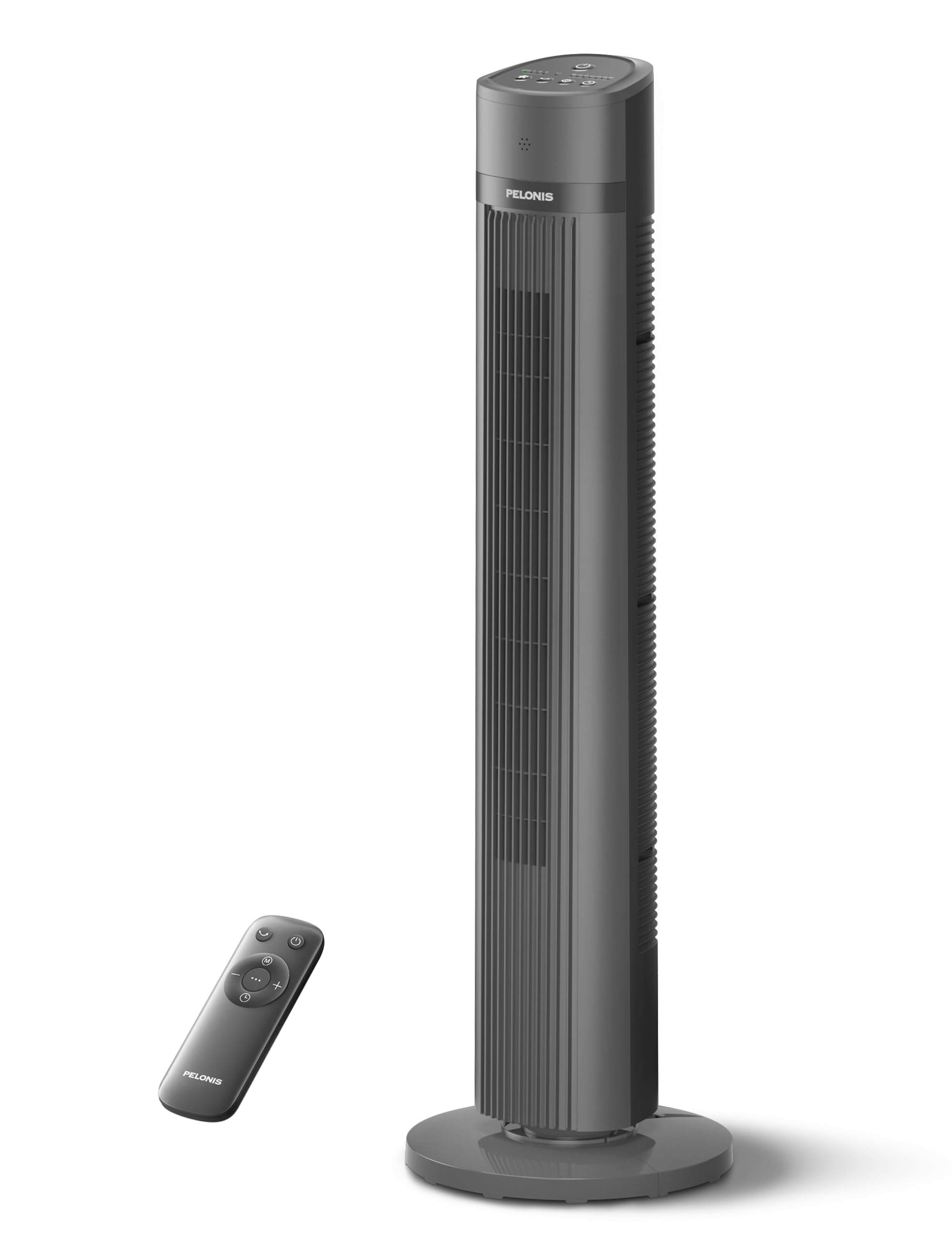
PELONIS PFT40A4AGB
Key Features
- Noise Level: 27 dB, extremely quiet
- Airflow Power: 26 ft/s
- Speed Settings & Modes: 3 speeds, 3 modes
- Oscillation & Tilt: 90° oscillation
- Remote Control: Remote
- Build Quality & Reliability: Decent build, remote issues
- Price: Mid-Range
Ultra-quiet operation at a claimed 27 dB and an automatic smart mode that adjusts speed to room temperature deliver a near-silent breeze for the bedroom. The remote can become unresponsive over time, and the base may feel less steady if jostled. Using the onboard controls in a low-traffic spot sidesteps both issues, preserving the fan’s strong cooling value.
Pros
- Whisper-quiet output blends into bedroom silence, often feeling more like an air conditioner.
- Solid cooling performance and build quality for a mid-range tower fan.
Cons
- Remote may stop responding, leaving onboard controls as the only fallback.
If you can rely on the built-in buttons and place the fan where it won’t get bumped, the quiet cooling and temperature-sensitive smart mode deliver strong bedroom comfort at this price.
How to Choose
The single biggest factor is balancing the noise you can tolerate at night with the airflow your bedroom size demands.
Noise Level
Decibel ratings alone won’t tell you how a fan sounds. Claimed 20dB often refers to the lowest speed, which might barely stir the air. In a silent bedroom, even a soft hum can be noticeable, and higher speeds that actually cool can measure 35–50dB or more.
Focus on whether the quiet speed you’ll sleep at still produces enough airflow. Look for descriptions like “barely audible on low” or “quiet enough for light sleepers” and check reviews for noise at the medium setting you’re likely to use.
Airflow Power
CFM (cubic feet per minute) or throw distance measures how much air a fan moves. A low-CFM tower fan may struggle to circulate air across a 12×12-foot room, leaving you wrapped in a thin stream of breeze rather than whole-room cooling.
Match airflow to room size: around 500–700 CFM can handle a small bedroom, but master suites often need 1000+ CFM or an air circulator that throws air 100 feet. Underpowered fans on high speed end up being loud without rewarding you with comfort.
Speed Settings & Modes
Multiple speeds let you fine-tune the balance between sound and cooling. A fan with only 2–3 speeds often forces a choice between “too weak” and “too loud.” Dedicated sleep modes can automatically lower speed over time, helping you fall asleep to a fresher breeze and then maintain background white noise.
The number of modes also matters: a natural wind simulation or variable breeze setting reduces the constant mechanical whir that some find distracting. At least 4 speeds and a sleep mode make a bedroom fan much more versatile.
Oscillation & Tilt
Wide oscillation spreads cooling over a larger area, preventing a single cold spot. A fan locked straight ahead may chill only one side of the bed. Large bedrooms benefit from 90–120° oscillation; air circulators that use vortex technology can cover the whole room without oscillating, but you lose the ability to target a specific spot.
Manual tilt adds vertical flexibility: angling the fan upward can create a soft air curtain that bounces off the ceiling, subtly cooling without drilling a breeze directly on your face.
Remote Control & Smart Features
A remote lets you change speeds or oscillation without leaving bed, but the connection often weakens over time. Physical onboard controls serve as a necessary backup, especially if the remote fails after a few months.
Voice and app control add convenience for smart-home users, but don’t pay extra for WiFi unless you genuinely want to set timers from your phone or integrate with a morning routine. Basic remotes with a clear display are easier to replace.
Build Quality & Long-Term Reliability
Fans that accumulate dust on non-removable grilles lose airflow quickly and become noisier. Look for models with washable filters or detachable back covers that make cleaning simple. Plastic bases can weaken over time, causing wobbling and buzz.
Check reviews for patterns of motor failure or electronic glitches after the warranty period. A fan that lasts only a single season often costs more in the long run than a durable model with a multi-year warranty.
FAQ
Why is my bedroom tower fan not cooling the room even on high speed?
Tower fans often have lower CFM ratings, so they may simply lack the power to circulate air across a larger bedroom. Dust-clogged grilles or a poorly placed fan that blows straight into a wall also kill cooling. Check the room size against the fan’s airflow specs, clean the intake thoroughly, and position it where it can sweep across the bed. If the room feels stuffy even after that, an air circulator that throws air much farther is a better fit.
Is a 20 decibel fan actually silent enough for a light sleeper?
A 20dB fan on its lowest speed is roughly as loud as a soft whisper—noticeable in a silent room but rarely intrusive. Light sleepers may still detect a faint tonal whir, especially if the fan’s motor emits a high-pitched hum. Most people adjust within a few nights, and fans with a gradual sleep mode that slowly lowers speed make the transition even gentler. If you are extremely sensitive, look for a fan that consistently runs at 28dB or below with a description of a smooth, white-noise-like sound.
How do I clean a tower fan that doesn’t have a removable back grille?
Use a can of compressed air or a vacuum with a brush attachment to dislodge dust through the front outlet and side vents. A damp microfiber cloth can be worked through the grille openings to lift stuck-on debris, but deep cleaning often requires partial disassembly—check if the manufacturer provides a guide. To prevent buildup, dust the fan weekly and cover it when not in use during off seasons. Regular light cleaning is far easier than trying to de-clog a heavily dust-caked fan.
Why does my fan remote stop working after a few months?
Remote failures often trace to battery corrosion, a dropped unit cracking internal contacts, or signal interference from other remotes and LED lighting. First swap the battery and clean the terminals with a dry cloth. If the problem persists, try relocating the fan away from other electronics. Choosing a model with clearly labeled onboard buttons ensures you can still adjust speeds if the remote completely dies.