
This post contains affiliate links. We may earn a small commission when you buy through our links — at no extra cost to you.
A bunk bed can turn a cramped kids’ room into a castle, but too often the excitement fades when wobbles start, slats crack, or a metal frame creaks every time a child rolls over. Parents expect a sturdy, long-lasting piece of furniture, yet many popular bunk beds struggle under the everyday energy of siblings climbing, jumping, and just being kids.
The good news: a bunk bed that handles real-life chaos isn’t out of reach. Choosing the right configuration, material, and weight rating makes the difference between a rattling annoyance and a bed that stays tight and whisper-quiet for years. This guide cuts past marketing claims to highlight the constructions and features that actually deliver safe sleep for your family.



Best for Family Flexibility
Storkcraft Caribou Bunk Bed
Key Features
- Size Configuration: Twin over Twin
- Material & Construction: Engineered wood, solid wood accents
- Weight Capacity: 225 lbs
- Guardrail: Full-length guardrails, ladder
- Convertible: Yes
- Special Features: GREENGUARD Gold, convertible
- Price: Mid-Range
The Caribou bunk bed delivers a low-emission sleeping setup with GREENGUARD Gold certification and the ability to split into two separate twin beds when kids outgrow sharing a room. Its engineered wood frame with solid accents offers a clean, furniture-grade finish that fits well in a shared bedroom or guest room.
Under daily use, the frame handles active children well, but durability can vary — some units may develop cracked slats or rail damage after months of particularly rough play. This makes the Caribou best suited for families who want a convertible wooden bunk with a trusted safety certification and don’t need a frame that withstands constant roughhousing.
Pros
- Solid build quality for the price, with a furniture-grade finish
- GREENGUARD Gold certification ensures low chemical emissions
- Separates into two individual twin beds for future flexibility
Cons
- Picture-only assembly instructions can be confusing, extending build time
- Some units may develop cracked slats or rail damage after months of use, particularly with rough play
A practical choice for families who want a safe, convertible bunk bed without overspending — just be aware of the occasional durability concerns.
Best for Heirloom Quality
Max & Lily Twin Bunk
Key Features
- Size Configuration: Twin over Twin
- Material & Construction: Solid New Zealand pine
- Weight Capacity: 400 lbs
- Guardrail: 14-inch tall guardrails
- Convertible: Yes
- Special Features: Non-toxic low-VOC finish, reversible ladder
- Price: Premium
If the top pick’s engineered wood leaves you wanting genuine solid lumber, this Max & Lily bunk delivers exactly that: knot-free New Zealand pine, a 400-pound capacity per sleeping surface, and the ability to separate into two standalone twin beds. It’s built to stay with a child for years without feeling disposable.
It’s a natural fit for families who value heirloom-quality furniture and a non-toxic low-VOC finish. Just know that occasional dents or scratches from shipping are a known trade-off — minor blemishes on an otherwise beautifully finished frame.
Pros
- Solid knot-free New Zealand pine — no pressed wood or filler, and a low-VOC finish for healthier air.
- 400-lb weight capacity per bunk means it works for adults and teens, not just younger children.
- Rock-solid stability with a metal support bar that prevents sag once properly tightened.
Cons
- Over time, minor wobble can develop if bolts aren’t retightened periodically.
For families who want real solid wood and can overlook minor out-of-the-box blemishes, this bunk delivers lasting build quality that engineered frames can’t match — just keep the included Allen key handy for occasional bolt checks.
Best for Toddler Safety
Max & Lily Low Bunk
Key Features
- Size Configuration: Twin over Twin (low)
- Material & Construction: Solid pine wood
- Weight Capacity: 400 lbs
- Guardrail: 14-inch tall, full-length
- Convertible: No
- Special Features: Floor bunk, non-toxic low-VOC finish
- Price: Mid-Range
Where the full-height solid wood bunk towers at standard ceiling height and converts to two twins, the Max & Lily Low Bunk shrinks the profile to 49 inches and keeps the emphasis on toddler safety. It’s a floor-hugging design for families with low ceilings and young children who’ve outgrown a crib but aren’t ready for a tall ladder. The solid pine, non-toxic finish, and steel reinforcing bar deliver peace of mind on materials. Durability relies on gentle use; structural boards may crack under rambunctious climbing and the top side rail can weaken, so this bed suits a calm sleep zone rather than a playroom.
Pros
- Sturdy, well-constructed frame with a steel reinforcing bar for extra support
- Safe, low 49-inch height and full-length 14-inch guardrails ideal for young children
- Attractive, high-quality non-toxic finish on solid pine
Cons
- Assembly demands a multi-hour commitment with two people and picture-only instructions
- Structural boards can crack and the top side rail may loosen under energetic play
Families with low ceilings and young climbers get a safer, smaller-footprint bunk, as long as play stays gentle.
Best for Teen Tech Space
Rolanstar Full Over Full Bunk
Key Features
- Size Configuration: Full over Full
- Material & Construction: Metal
- Weight Capacity: 270 lbs
- Guardrail: 11.8" reinforced full-length
- Convertible: No
- Special Features: USB charging, LED lights, 2 drawers
- Price: Mid-Range
The Rolanstar delivers a full-over-full layout with two large sleeping surfaces, plus two under-bed storage drawers, RGB LED strips, and USB ports built into the headboard. This configuration suits older children and teenagers who need plenty of space and want to keep devices charged and organized. The metal frame assembles quickly and feels steady once set up, though the painted finish can arrive with minor dings or wear in some cases.
Pros
- Quick assembly often completed in under three hours
- Rock-solid stability with minimal wobble once assembled
- Built-in LED ambiance and USB ports that appeal to tech-savvy kids
Cons
- Painted metal finish may show minor scratches or dents from shipping
Best for households where older kids will appreciate the full-size sleeping area, integrated storage, and tech-friendly extras. If a flawless finish out of the box is a priority, inspect upon delivery.
Best for Maximum Storage
ADORNEVE Low Bunk Stairs
Key Features
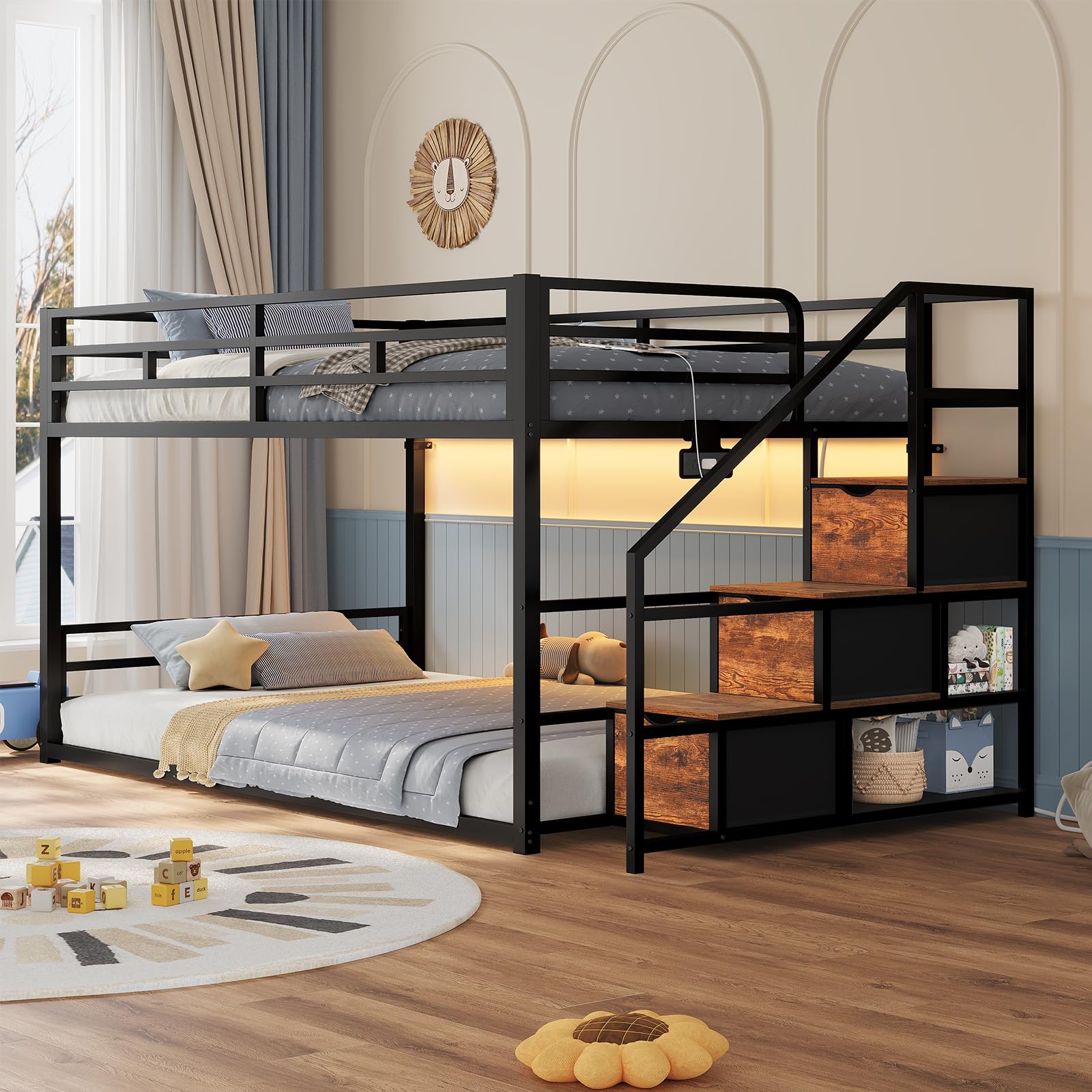
- Size Configuration: Twin over Twin (low staircase)
- Material & Construction: Steel, MDF
- Weight Capacity: 600 lbs
- Guardrail: Wrap-around guardrails
- Convertible: No
- Special Features: 3 drawers, shelves, RGB LED, outlet
- Price: Budget
Where the top pick emphasizes GREENGUARD certification and convertibility, the ADORNEVE Low Bunk Stairs packs a 3-drawer staircase, LED mood lighting, a power outlet, and a 600-lb per bunk capacity into an entry-level frame that reduces the need for extra furniture. The staircase integrates drawers and open shelves for clothing and toys, freeing floor space.
It suits families with younger kids who want a staircase bunk that includes storage, especially in tight bedrooms. Assembly is the trade-off: the manual can be confusing, particularly aligning the staircase sections, so plan for a multi-hour build. Patient, tool-comfortable parents will get the most out of this budget-friendly design.
Pros
- 600-lb per bunk capacity provides heavy-duty stability for active children
- Staircase drawers and shelves replace a dresser, freeing precious floor space
- RGB LED lights and a built-in power outlet create a fun, practical hangout area
Cons
- Stair treads may feel narrow for older or larger children
- Assembly instructions can be confusing, particularly staircase alignment; expect extra time
If you’re willing to trade assembly ease for a feature-loaded low bunk that eliminates a chest of drawers, the ADORNEVE delivers extraordinary value for the price.
Best for Growing Siblings
SHA CERLIN Twin Over Full
Key Features
- Size Configuration: Twin over Full
- Material & Construction: Metal
- Weight Capacity: 400 lbs (static)
- Guardrail: Full-length upper guardrail
- Convertible: No
- Special Features: Removable ladder
- Price: Budget
The SHA CERLIN twin-over-full bunk delivers a 400-lb static weight rating and a removable ladder at a price that fits tight budgets. It works well for siblings where the older child needs the full-size lower bunk, but the rounded ladder rungs are uncomfortable on bare feet and the metal frame tends to develop squeaks after assembly—so light sleepers may want to look elsewhere.
Pros
- Metal frame supports up to 400 lbs per bunk, handling adults or heavier children
- Assembly instructions are clear enough for one or two builders to complete
- Modern black finish blends with most room decor
Cons
- Rounded ladder rungs can be painful on bare feet, making climbing less comfortable
- Metal-on-metal squeaking is common even after tightening, contradicting the noise-free claim
This bunk works for families on a budget who can tolerate some noise and don’t mind uncomfortable ladder rungs—but those prioritizing quiet bedrooms should consider a solid-wood option.
Best for White Furniture Style
Storkcraft Long Horn Bunk

Key Features
- Size Configuration: Twin over Twin
- Material & Construction: Rubberwood solids, engineered wood
- Weight Capacity: 225 lbs
- Guardrail: Full-length guardrails, 5-step ladder
- Convertible: Yes
- Special Features: Tufted detailing, white finish
- Price: Mid-Range
The white tufted headboard and furniture-grade finish distinguish this bunk, backed by Greenguard Gold certification and the option to separate into two standalone twins. It costs more than the top pick mostly for that styling, and like it, the engineered wood can experience occasional cracking or slat splitting. A faint off-gassing smell may be present when new.
Pros
- Elegant white finish with tufted detailing that looks like upscale children’s furniture
- GREENGUARD Gold certified and convertible into two twins at a mid-range price
Cons
- Wood components may develop cracks or split slats over time with heavy use
If a white, decorative bunk with a gentle furniture feel is the priority and you accept a slight price premium over the top pick, the Long Horn delivers the same convertibility and safety certifications in a more polished finish.
Best for Playful Design
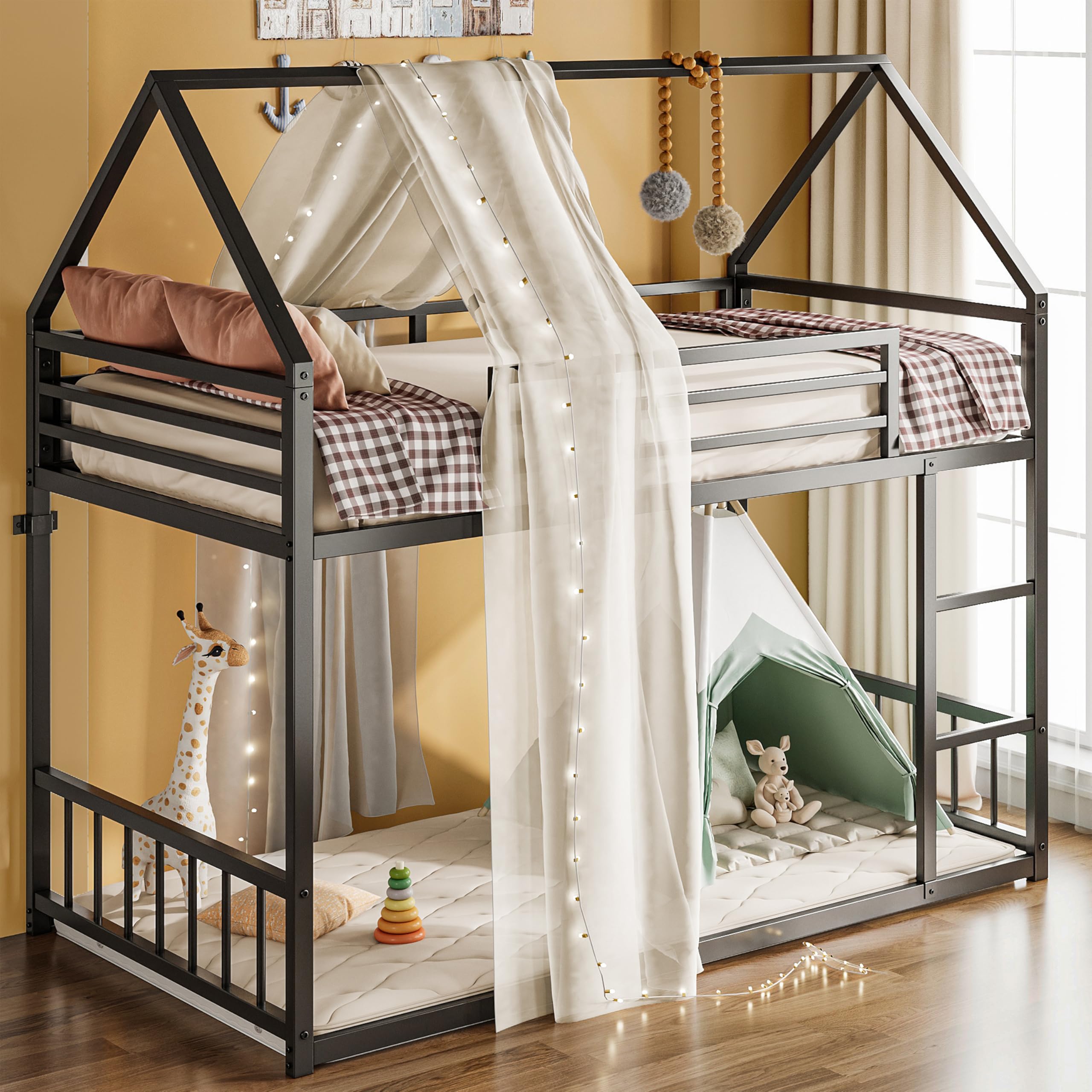
LIKIMIO House Bunk Bed
Key Features
- Size Configuration: Twin over Twin
- Material & Construction: Metal
- Guardrail: High guardrails
- Convertible: No
- Special Features: House-shaped frame
- Price: Budget
The LIKIMIO House Bunk Bed transforms a shared kids’ room with its playful house silhouette and assembles quickly thanks to clearly labeled parts. Missing screws in some boxes may stall assembly, and the unspecified weight limit keeps it appropriate only for lightweight children (ages 3–8).
Pros
- Quick assembly with clearly labeled parts, minimizing setup time.
- Playhouse design turns the bed into a focal point for imaginative play.
Cons
- Possible missing hardware in the box can delay assembly.
For families with young children who prioritize play value over heavy-duty longevity, this bunk is a charming, low-cost centerpiece—just budget a buffer for possible missing screws.
Best for Low Ceilings
DHP Phoenix Bunk Bed

Key Features
- Size Configuration: Twin over Twin (floor)
- Material & Construction: Solid wood
- Weight Capacity: 165 lbs
- Guardrail: Upper safety rail
- Convertible: No
- Special Features: Very low profile
- Price: Mid-Range
Solid wood construction and a low 47.5-inch profile suit compact rooms with low ceilings. The 165-lb per bunk weight limit keeps it strictly for young, lightweight kids—no teens or sitting adults. The simple black finish looks clean and fits most decors.
Pros
- Compact floor design keeps the upper bunk close to the ground, ideal for low ceilings and small rooms.
- Solid wood build feels sturdy once fully assembled.
Cons
- Shipping damage including dents, scratches, and missing hardware can force returns or part exchanges.
If you need a floor-level bunk for very young children in a low-ceiling room and are prepared to handle possible shipping-related returns, this solid wood option can work.
Best for Budget Toddler Bed
TOLEAD Low Bunk Bed
Key Features
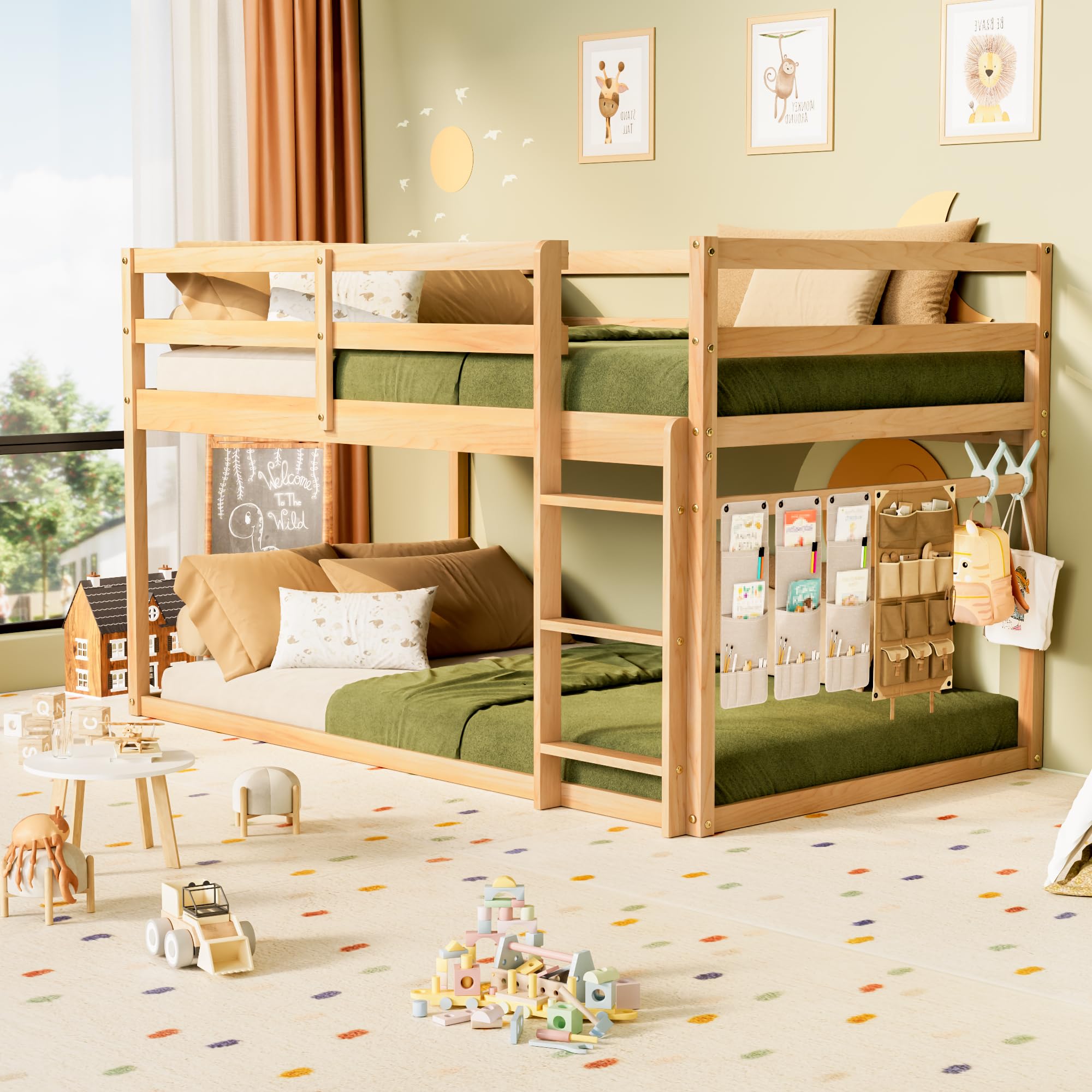
- Size Configuration: Twin over Twin (low)
- Material & Construction: Wood
- Guardrail: Full-length guardrails
- Convertible: No
- Special Features: Low profile, modular bottom
- Price: Budget
Its low profile, easy assembly, and clean modern look make it a natural fit for toddler rooms and tiny spaces. The bottom bunk can be used as a floor bed or play loft. Screws may need occasional retightening with the included Allen key. An unspecified weight limit keeps this bed suited to the lightest, youngest children.
Pros
- Assembly is straightforward with clear instructions and pre-drilled holes.
- The low profile feels safe and sturdy for toddlers and young children.
Cons
- Screws may loosen over time, requiring periodic retightening with the included Allen key.
If you need a super-affordable, low bunk for a toddler’s room and don’t mind occasional screw tightening, this bed delivers solid value for the youngest sleepers in small spaces.
Best for Stylish Metal Design
Novogratz Maxwell Bunk
Key Features
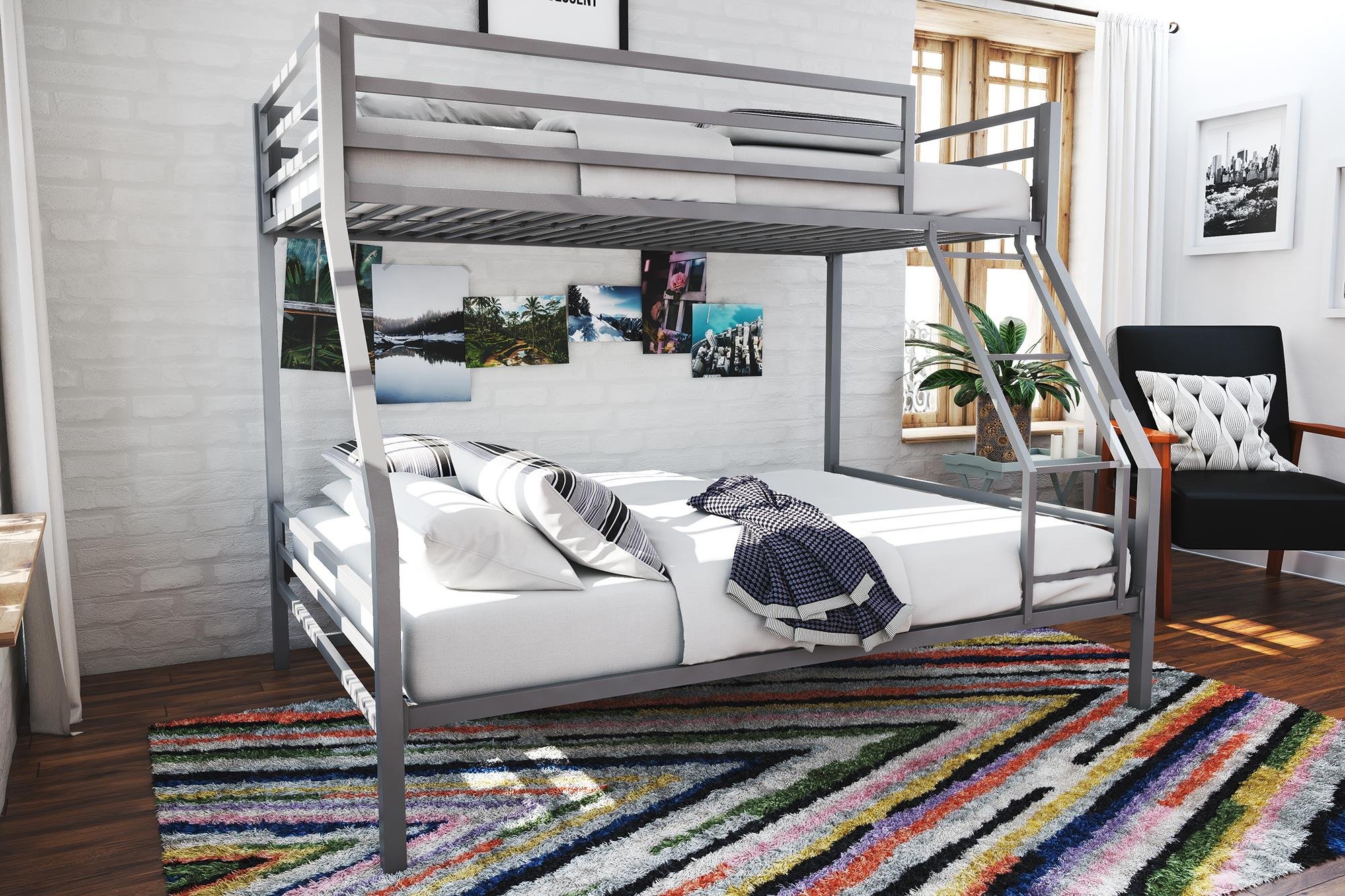
- Size Configuration: Twin over Full
- Material & Construction: Metal
- Weight Capacity: 450 lbs
- Guardrail: High guardrail
- Convertible: No
- Special Features: Underbed storage, angled ladder
- Price: Mid-Range
The Maxwell’s clean lines and high weight limits punch above its price, making it a stylish space-saver. Persistent wobble and squeaking, however, mean it’s a project — threadlocker and wall anchoring aren’t optional for a quiet, stable bed.
Pros
- Attractive industrial design that looks far more expensive than its mid-range price suggests
- Excellent value with a very high 450-lb weight capacity per bunk
Cons
- Can develop noticeable wobble and squeaking over time; requires periodic bolt retightening and wall anchoring to stay stable and quiet
If you’re comfortable with a drill and threadlocker and want a sleek twin-over-full metal bunk with exceptional weight limits, this bed fits the bill at a mid-range cost.
How to Choose
A bunk bed’s real-world survival hinges on weight capacity that accounts for dynamic loads, not just static weight—choose a bed rated 300–400 lbs to handle climbing and jumping kids.
Size Configuration
Twin-over-twin fits standard rooms and younger kids; twin-over-full lets an older sibling stretch out on the bottom. Full-over-full is best for teens or two adults but requires a larger floorplan.
A hidden trade-off: wider configurations may need bulkier mattresses, which eat into headroom on the top bunk. Measure ceiling height and mattress thickness before committing.
Material & Construction
Solid wood feels substantial and resists noise better than metal, but it can split under rough play if not reinforced. Engineered wood keeps costs down but may crack over time.
Metal frames are light and often cost less, yet metal-on-metal contact points amplify squeaks and hardware can loosen rapidly. A quality metal bed uses reinforced brackets and thick gauge steel.
Weight Capacity
Static weight limits (e.g., 225 lbs) assume a stationary body. Active children bouncing and climbing create sudden forces that can double the effective load, so a 400-lb rating offers a much wider safety margin.
Also check that slats and support bars match the claimed capacity—some beds advertise high limits while using thinner slats that sag prematurely.
Guardrail Height & Coverage
Guardrails need to extend the full length of the mattress and sit at least 5 inches above the mattress surface to prevent roll-outs. Low-profile bunks with 14-inch rails reduce injury risk for young climbers.
The gap between guardrail and mattress must be narrow enough that a child’s torso cannot slip through. A gap larger than 3.5 inches is a safety red flag.
Convertibility
Beds that split into two individual twins let you salvage the furniture when children outgrow sharing. This flexibility usually requires reconfiguring side rails and ladders—check if the hardware is designed for repeated disassembly.
Special Features
Built-in storage stairs, USB ports, and LED lights eliminate clutter and add fun, but features like drawers and charging modules introduce more points of failure. Confirm the added components don’t weaken the frame.
Staircase bunks are easier and safer for little legs, though they add length to the footprint and may not fit through narrow doorways assembled.
FAQ
Why does my metal bunk bed squeak so much even though it’s brand new?
Metal frames amplify noise because joints rub against each other without damping. Loctite or nylon washers on bolts silence most squeaks, and a dab of paraffin wax on ladder hooks eliminates creaks. Retailers often omit these from the box.
How do I stop a bunk bed from wobbling or shaking?
First, retighten every bolt and add thread-locking compound to prevent loosening. Next, anchor the top rail to a wall stud with the manufacturer’s bracket. If wobble persists, check that slats are fully seated and consider replacing any that are cracked.
Are wooden bunk beds safer than metal ones?
Neither material is inherently safer. Solid wood resists sudden cracking if reinforced with a steel support bar, but it can split under dynamic abuse. Metal beds develop dangerous looseness when hardware backs out. Safety boils down to regular bolt checks and a guardrail that stays above mattress level.
What thickness mattress is safe for the top bunk?
Top bunk mattresses should be no thicker than 6 inches to keep the guardrail at least 5 inches above the sleeping surface. A thicker mattress reduces the barrier height and increases the risk of a child rolling over the rail. Always measure mattress + rail clearance before leaving a child unattended.