
This post contains affiliate links. We may earn a small commission when you buy through our links — at no extra cost to you.
A bunkie board promises to rescue a sagging mattress without adding a bulky box spring. Yet many buyers find their board sliding across smooth metal frames or coming up just short of the bed’s edges, creating a subtle but constant frustration.
The difference between a board that disappears under the mattress and one that shifts every time you change the sheets comes down to material, slat-gap limits, and how well the non-slip surface actually performs on your specific frame.
We’ll walk you through the real-world criteria—like measuring interior frame dimensions and matching board type to your mattress—so you can pick a bunkie board that stays put and supports you, not one that becomes a regret.


Best for Wide-Slat Support
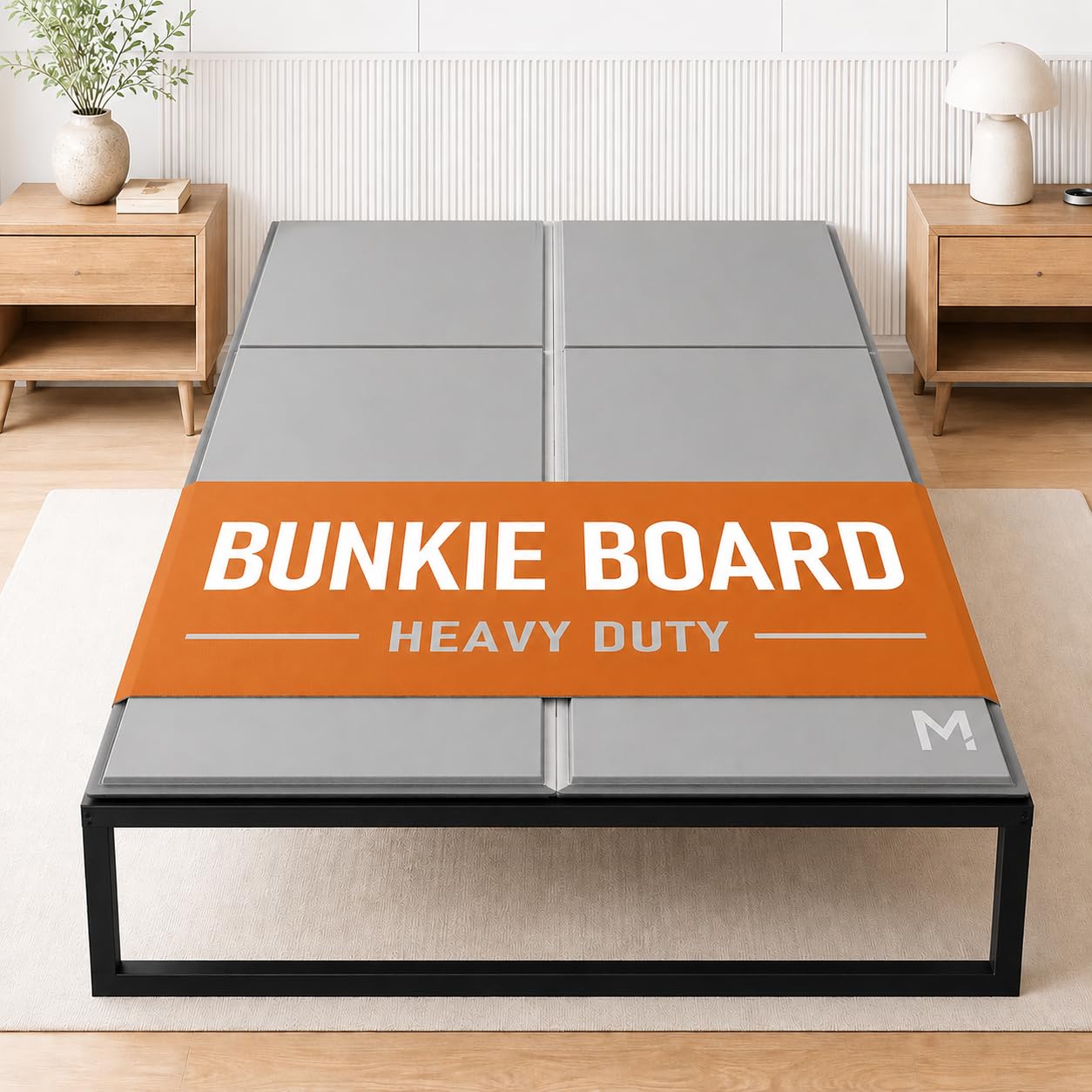
Meliusly Heavy Duty Board
Key Features
- Material: 10mm twin-wall polypropylene
- Thickness & Profile: 0.4 in
- Non-Slip: silicone grip bottom
- Weight & Handling: 15.2 lbs, unfolds in 60 sec, no tools
- Price: Mid-Range
This polypropylene board spans slatted frames with gaps up to 10 inches, delivering continuous mattress support without raising bed height. The 0.4-inch profile disappears under any mattress, and the 60-second unfold-and-place setup requires no tools. Twin-wall construction allows airflow to keep foam mattresses dry, while a silicone-lattice bottom keeps the board stationary on most frame surfaces, reducing noise and shifting that thinner boards often allow.
It’s the right pick for memory foam and hybrid mattress users on slatted frames with wide gaps, where a solid foundation prevents foam from dipping between slats. The board sits completely hidden and adds no height, suiting low-profile frames and bunk beds. On extremely glossy or polished metal frames, the silicone grip can allow slight movement; a non-slip pad underneath resolves this if needed.
Pros
- High overall quality and fit that exceed expectations for a bed support board.
- Sturdy, durable construction prevents mattress sag and extends mattress longevity.
- Strong, even support for memory foam, hybrid, and innerspring mattresses on slatted frames.
Cons
- On extremely smooth or glossy metal frames, silicone grip may not fully prevent shifting; occasional movement reported.
For slatted frames with gaps up to 10 inches, this board delivers slab-like support without adding height — the only asterisk being highly polished metal surfaces where a secondary grip pad may be needed.
Best for No-Assembly Wood
Zinus Compack Vertical Slats
Key Features
- Material: plywood slats, polypropylene fabric cover
- Thickness & Profile: 0.5 in
- Weight & Handling: 26.2 lbs, no assembly, unroll to place
- Price: Budget
The Zinus Compack Vertical Wood Slats deliver instant no-tool setup with real plywood slats, a sharp contrast to metal foundations that need assembly. Its vertical orientation works only when there are horizontal support bars beneath, so it’s not a drop-in solution for frames with wide gaps alone.
Platform bed owners with horizontal crossbars get genuine wood support that resists sagging and allows airflow—all without tooling. The slats can shift when you drop a mattress on top, but a quick straighten before adding the mattress resolves it. Budget-friendly and rollable, it’s a practical pick for guest rooms or frequent movers.
Pros
- Real plywood slats provide firm, sag-resistant support that’s noticeably sturdier than flimsy alternatives.
- No assembly needed—just unroll and place, the fastest setup in the category.
- Vertical slat spacing promotes airflow and prevents mattress sag on platform beds and bunk beds.
Cons
- Slats can shift during mattress placement, needing a quick realignment before the mattress sits flat.
For beds with horizontal supports, this no-assembly wood slat board provides breathable, anti-sag support at a budget price—just straighten the slats before adding the mattress.
Best for Delicate Foam Mattresses
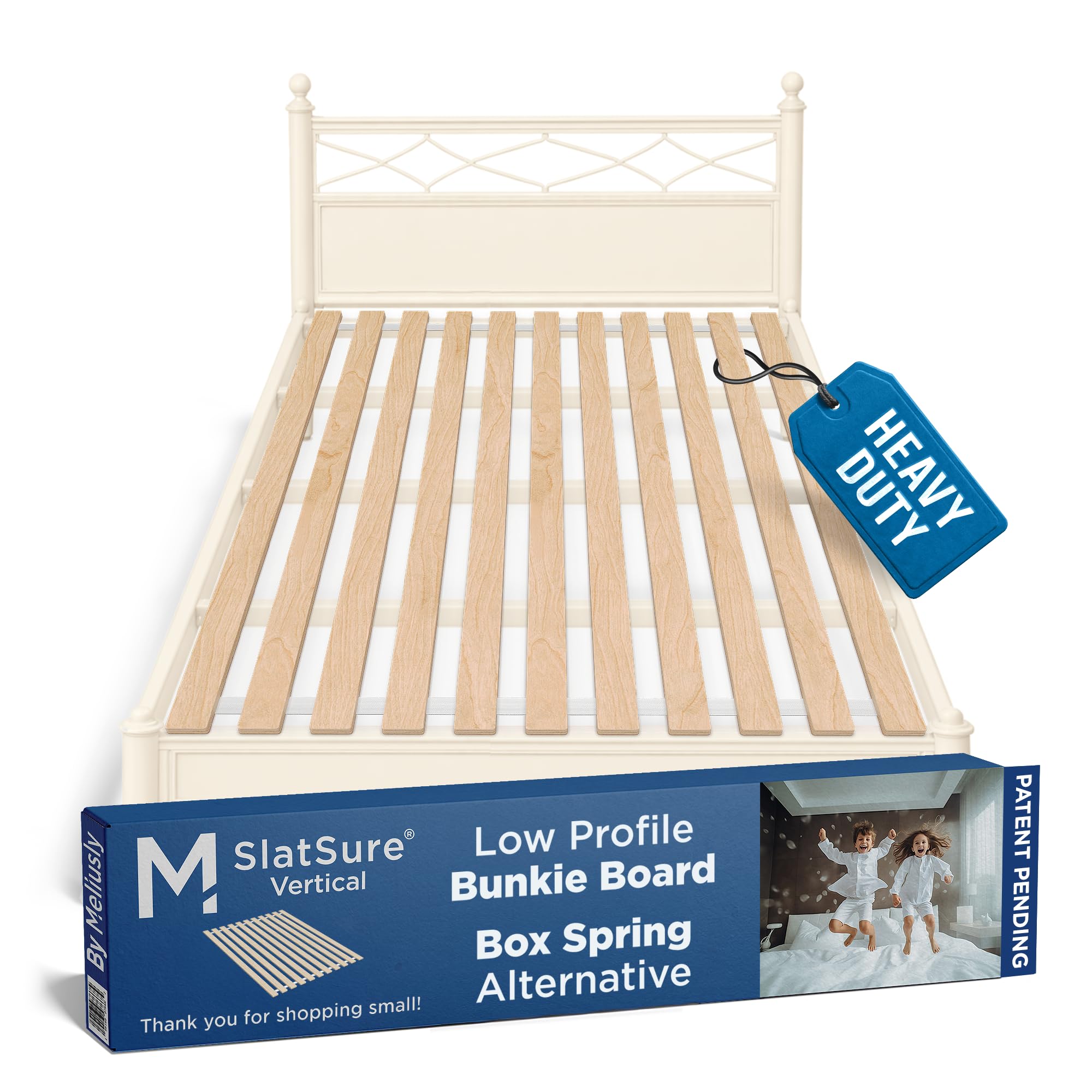
Meliusly SlatSure Vertical
Key Features
- Material: engineered wood slats, Oxford fabric cover
- Thickness & Profile: 0.6 in
- Non-Slip: silicone coating on fabric bottom
- Weight & Handling: approx. 40 lbs, unfolds in seconds, no assembly
- Price: Premium
Where solid plastic boards block airflow, the SlatSure’s vertical wood slats with sub-2.5-inch spacing provide continuous, breathable support that prevents memory foam from micro-sagging. It requires no tools—just unfold and set in place. The silicone-backed fabric bottom keeps the board steady on most bed frames, though the slats can drift slightly as you lower the mattress.
This board targets latex and memory foam purists who demand the narrowest possible slat spacing and want wood’s natural humidity management. At roughly 40 pounds, the weight makes solo installation on a top bunk a workout, so it fits best on stationary platform beds or lower-profile frames.
Pros
- High quality wood slats add firmness and far outperform cheap plastic alternatives.
- Unfolds in seconds with no tools and fits queen beds precisely.
- Slats spaced under 2.5 inches give even, gap-free support for foam and latex.
Cons
- Slats can shift slightly when positioning the mattress, requiring realignment before use.
If you’re after a wood slat board with the tightest spacing and real breathability, the premium build justifies its weight and cost—just plan on a helper for bunk beds.
Best for Heavy-Duty Metal
ROIL 2″ Metal Foundation
Key Features
- Material: steel slats, powder coated
- Thickness & Profile: 2 in
- Weight & Handling: assembly required, 15 min
- Price: Mid-Range
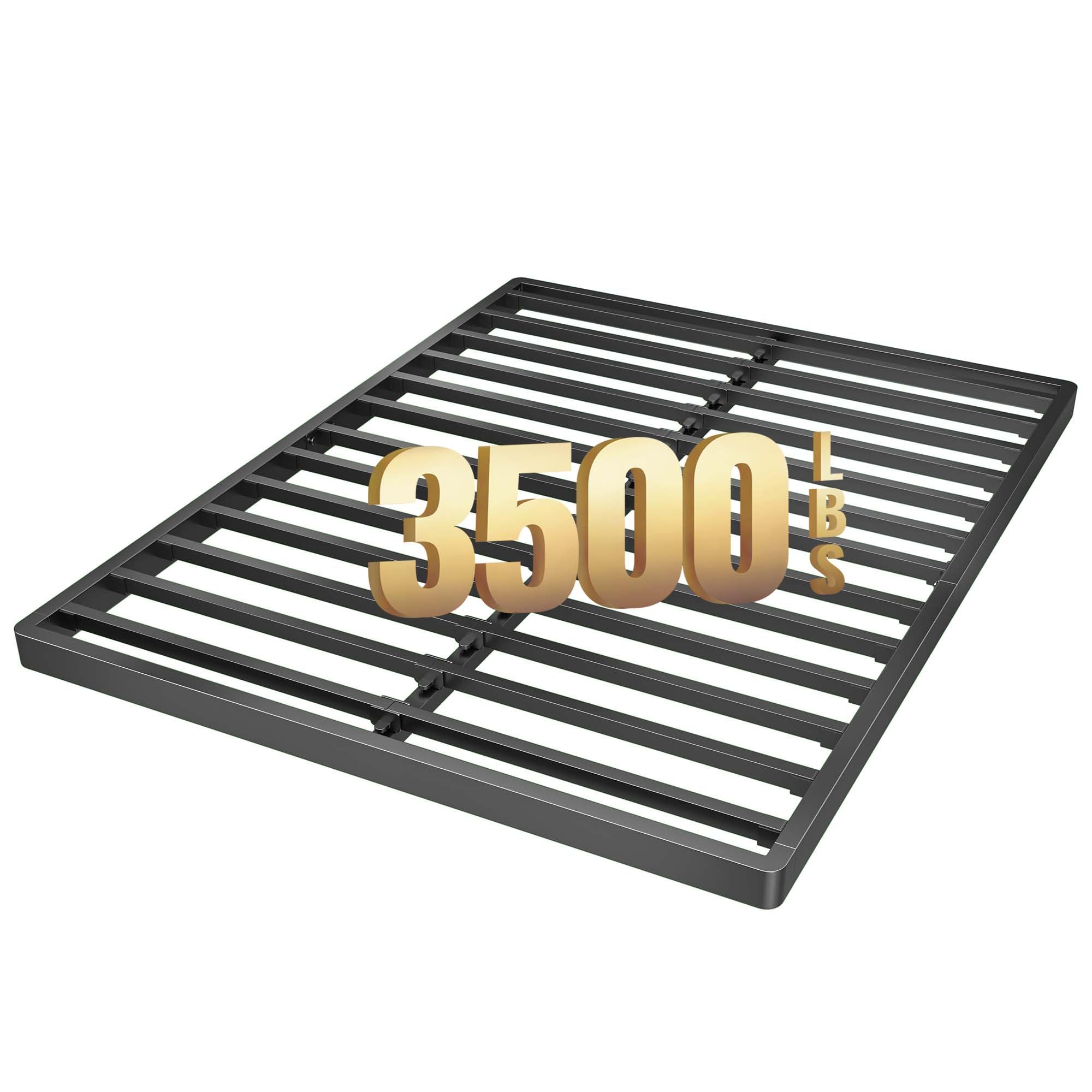
The ROIL 2″ metal foundation earns its place by holding up to 3,500 pounds silently — a pairing absent from many thin bunkie boards. Steel slats sit in U-shaped grooves that eliminate creaking, making it a favorite for heavy hybrids and restless sleepers. The catch is assembly: you’ll need the included Allen key and a steady hand, as bolt holes can be stubborn to align. This suits buyers who prefer metal over wood and can set aside time for a deliberate build, not those expecting a tool-free five-minute throw-on.
Pros
- Steel slats hold up to 3,500 lbs, supporting the heaviest mattress sets without flex.
- U-shaped groove design keeps the foundation silent even under motion.
- Mid-range price offers strong value for a heavy-duty metal alternative to wood.
Cons
- Assembly with the supplied Allen wrench can be slow; bolt holes may require extra alignment patience.
- Width may be slightly narrow on some non-standard frames, causing occasional wobble.
For heavier mattress owners who prioritize silence and strength over a tool-free setup, this metal foundation delivers.
Best for Budget Continuous
Golden Home Essentials 10mm
Key Features
- Material: Oxford 600D fabric over board
- Thickness & Profile: 0.39 in
- Non-Slip: silicone honeycomb pattern bottom
- Weight & Handling: no tools, lightweight
- Price: Budget
The Golden Home Essentials 10mm board delivers a firm, continuous surface that noticeably improves mattress support—at a price that leaves the top pick’s wider-gap capability on the table. It’s a straightforward upgrade for guest bedrooms or kids’ rooms where a 60×80 board sits on standard slatted frames with gaps up to 8 inches and doesn’t get moved often. The honeycomb silicone bottom grips well on textured wood, but on high-gloss metal it can slide over time—a tradeoff that matters if your frame lacks a retaining lip.
Pros
- Firms up mattress support across slats, improving sleep quality.
- No-tool setup; just position on the slats and it stays in place on textured frames.
- Provides a more supportive feel than a box spring for foam and hybrid mattresses.
Cons
- Supports slat gaps only up to 8 inches, excluding frames with wider spacing.
- Silicone honeycomb base may slide on high-gloss metal frames.
If your slats are under 8 inches apart and your frame has a wood or textured surface, this board is a cost-effective way to improve mattress feel.
Best for 8″ Slat Gaps
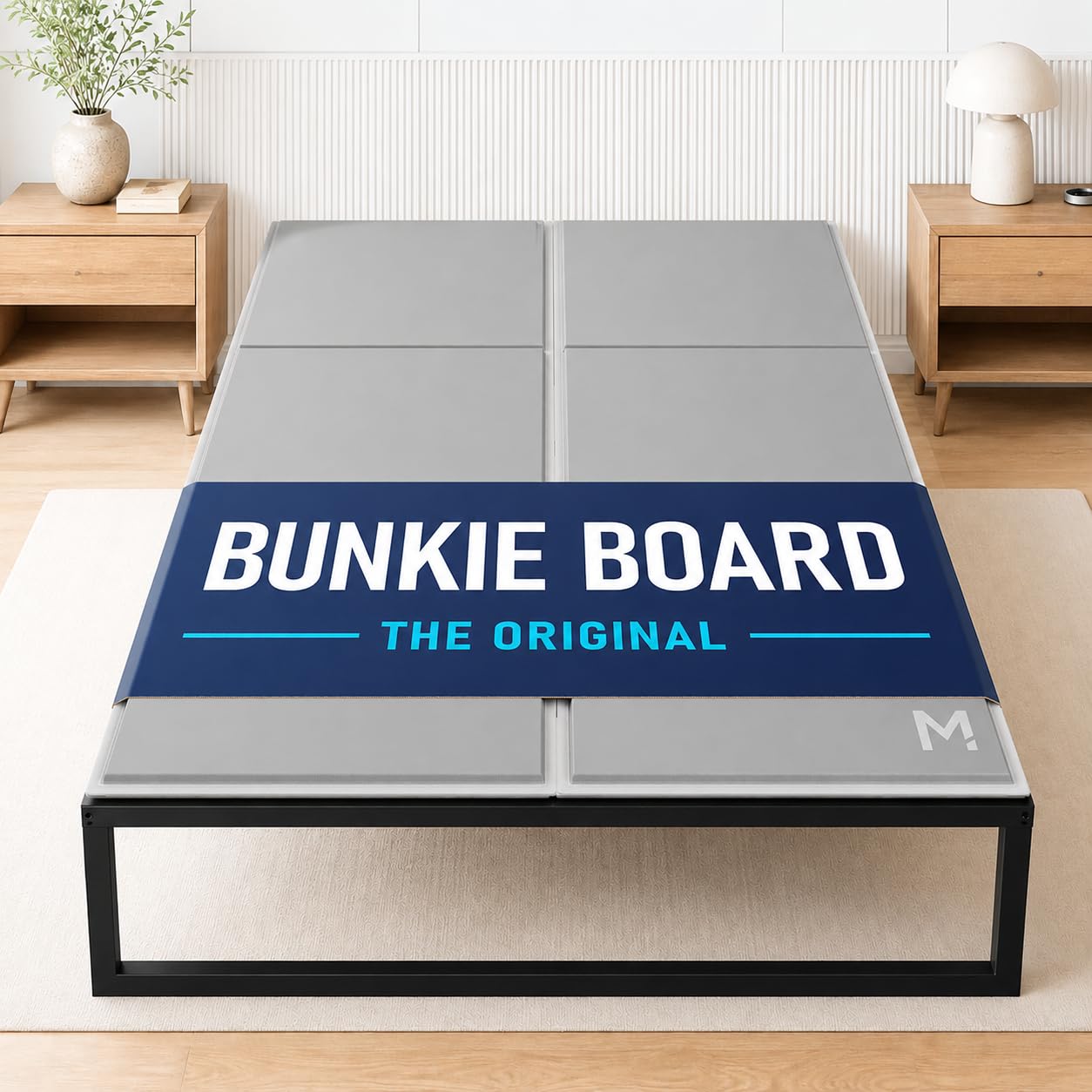
Meliusly Original Board
Key Features
- Material: 10mm twin-wall polypropylene
- Thickness & Profile: 0.4 in
- Non-Slip: silicone grip bottom
- Weight & Handling: 14.1 lbs, unfolds in 60 sec, no tools
- Price: Mid-Range
Identical 10mm twin-wall polypropylene and a full silicone-grip bottom give this board the same instant bed-firming feel as the Heavy Duty, eliminating sag and mattress shift on slatted frames with gaps up to 8 inches. Tool-free setup unfolds in about a minute, and at 14 lbs it’s easy to carry upstairs. The core experience matches the top pick—stable, moisture-resistant support that quiets squeaks—at a slightly lower price and a couple pounds lighter. This board is built for standard slatted frames inside that 8-inch limit; if your slats are spaced wider, you’ll need the Heavy Duty version to bridge them safely.
Pros
- Stabilizes memory foam mattresses and reduces back pain from slat sag.
- Non-slip silicone bottom holds position securely, even with restless sleepers.
- No-tool setup unfolds in under a minute; 14-pound board handles easily solo.
Cons
- Silicone grip may slide on highly polished metal frames, requiring supplemental grip pads.
For slat gaps of 8 inches or less, the Meliusly Original delivers virtually the same premium support as the top pick at a lower cost—just confirm your frame’s spacing before ordering.
Best for Waterproof & Rugged
JASMINELOVER Fortress

Key Features
- Material: reinforced wood, 1680D Oxford waterproof fabric
- Non-Slip: non-slip corner pads
- Weight & Handling: unfolds in 30 sec, no assembly
- Price: Premium
Heavy-duty waterproof board with reinforced wood supports up to 500 lbs without sag, fitting RVs and humid rooms. Non-slip pads may not prevent sliding on slick metal, and the thicker build adds height. At a premium price, it’s a better match where moisture resistance trumps a slim, slide-free profile.
Pros
- Outstanding rigidity eliminates mattress sag, even under heavy memory foam.
- Waterproof fabric protects against moisture and spills, ideal for kids’ rooms and RVs.
Cons
- Corner pads may not stop the board from sliding on polished metal frames, risking mattress shift.
Choose this when waterproofing and heavy-duty support are non-negotiable—RVs, bunk rooms, or humid basements—and accept that it may need added grip on slick surfaces.
Best for Sofa Bed Upgrade
JASMINELOVER Sleeper Pro
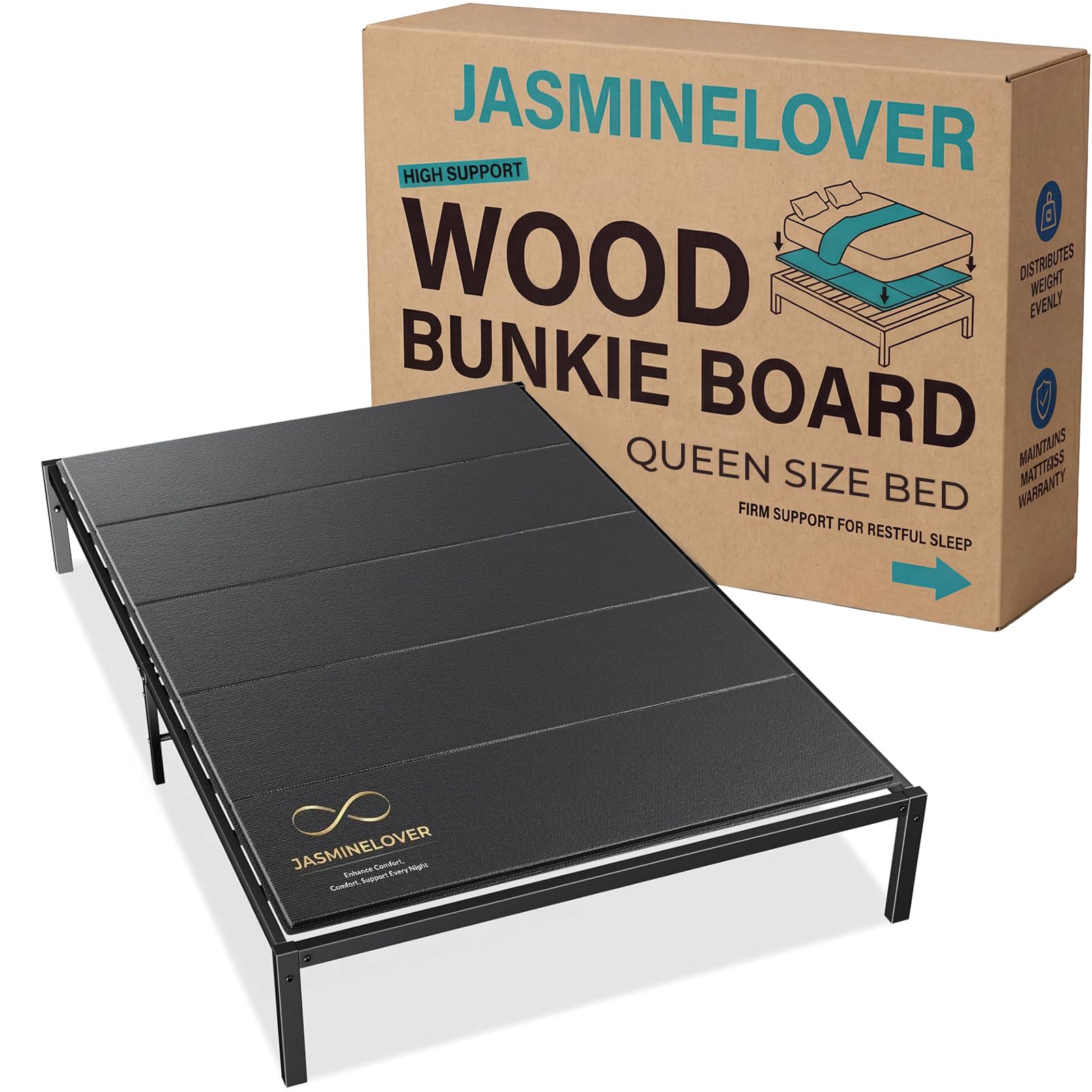
Key Features
- Material: 1680D Oxford fabric, reinforced wood
- Non-Slip: corner pads included
- Weight & Handling: foldable, no assembly, 31.1 lbs
- Price: Premium
Built specifically for pull-out couches with wide metal bars, this board’s anti-sag design flattens the surface and masks pressure points. It’s not a universal solution—standard bed frames are better served by lighter, dedicated boards—but for upgrading guest sofa beds, the improvement is immediate.
Pros
- Eliminates the metal-bar discomfort on pull-out couches, delivering a uniformly firm sleep surface.
- Folds easily to size and requires no assembly, sliding into position within minutes.
Cons
- The 31-pound weight makes solo installation on a sofa bed a demanding lift.
If you regularly host guests on a sofa bed and don’t mind the heft during occasional setup, this board transforms a mediocre sleep surface into one that feels like a real mattress.
Best for Light Guest Use
Yarfyk 10mm Folding

Key Features
- Material: 10mm vacuum plate, 600D Oxford cover, silicone particles
- Thickness & Profile: 0.39 in
- Non-Slip: silicone bumps on fabric
- Weight & Handling: foldable, no assembly, 13.8 lbs
- Price: Budget
The Yarfyk foldable board delivers solid support and a washable cover that unzips for easy cleaning, folding flat when not in use. On smooth metal frames, however, the board can slide, and prolonged heavy use may cause structural wear. This makes it a better fit for occasional sofa beds and guest rooms rather than nightly, heavy-duty applications.
Pros
- Solid support that reduces squeaks on sofa beds and bunk frames.
- Removable cover unzips for washing; the whole board folds flat for storage.
Cons
- Board may slide on smooth metal frames—the silicone bumps don’t reliably prevent movement.
This board fits guest sofa beds or daybeds used occasionally, where the washable cover and foldaway convenience outweigh the need to add grip tape for smooth frames.
Best for Portable 4-Piece
Greaton 4-Piece Queen
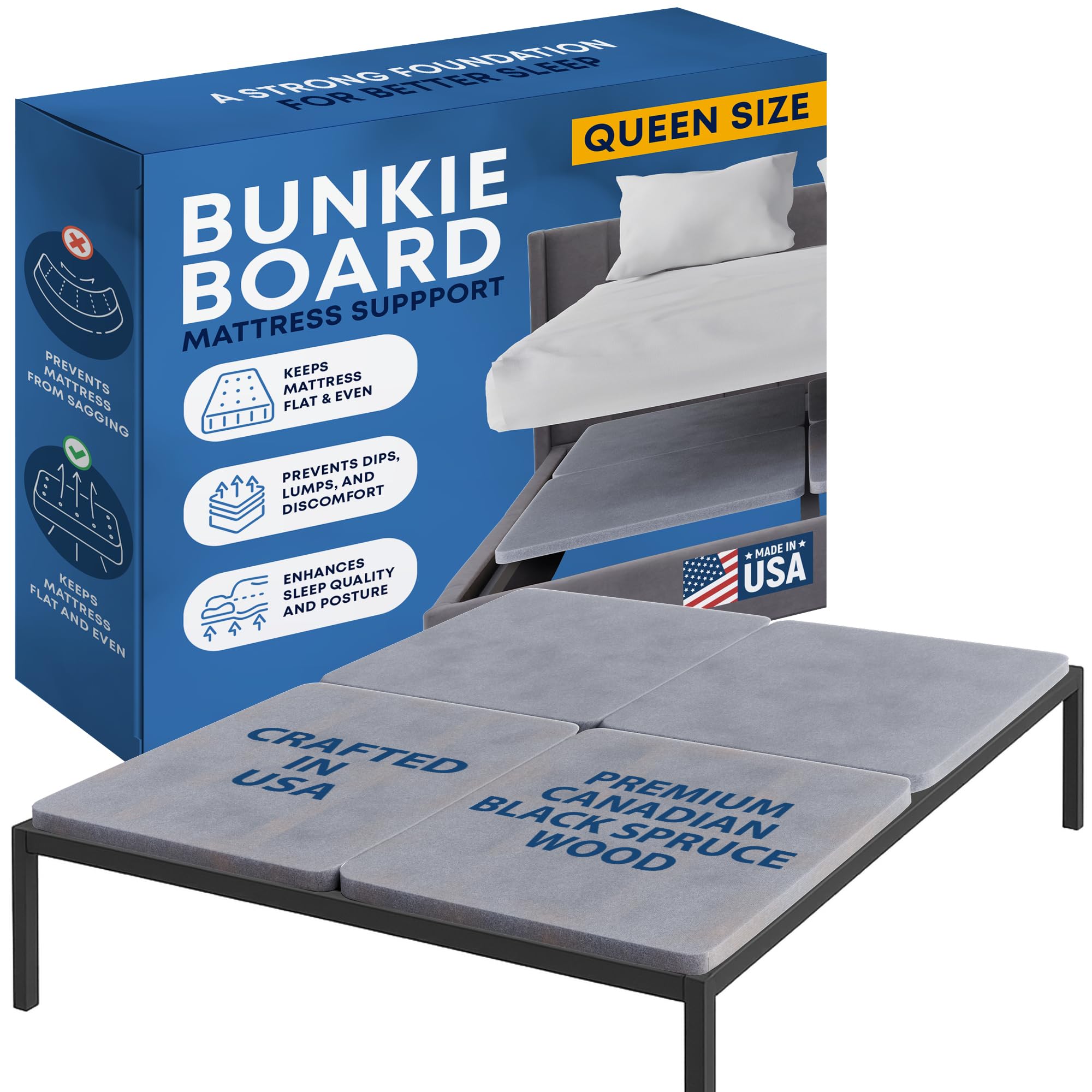
Key Features
- Material: wood slats in frame, fabric cover
- Thickness & Profile: 1.5 in
- Weight & Handling: no assembly, 32.1 lbs
- Price: Mid-Range
The split quarters assemble by simply placing them on the frame, making transport up staircases or into tight spaces far simpler than a single board. Once placed, they provide solid mattress support that reduces bed frame creaking. The wood frame can feel less robust than a continuous board, and occasional creaks may develop over time — best suited for guest rooms where heavy daily use isn’t expected.
Pros
- Makes mattresses feel more solid and reduces bed frame creaking.
- No-tool setup: just place the four quarters onto the frame.
Cons
- Wood frame can feel less robust than a continuous board; occasional creaking may develop over time.
For guest rooms and occasional-use setups where its easy handling outweighs longevity concerns, this board offers a practical solution.
Best for Split for Carrying
Zayton Split Queen

Key Features
- Material: wood frame, fabric cover
- Thickness & Profile: 1.5 in
- Weight & Handling: no assembly, 13 lbs
- Price: Mid-Range
The two halves drop in place with no assembly, and the 1.5-inch wood frame firms up older mattresses well. But the board occasionally sits a hair short or narrow, leaving a thin edge gap — a tradeoff for the split convenience. A continuous poly board delivers tighter dimensions if a perfectly flush fit matters more than portability.
Pros
- Provides solid support that can ease back strain on a tired mattress.
- No tools or assembly; simply place the two halves side by side.
Cons
- Fit may not be completely flush, leaving small edge gaps on some standard queen frames.
Worth a look when carrying a single-piece board upstairs feels impractical, and a minor edge gap won’t bother you.
Best for Bolt-Together Wood
Zinus Deepak Wood Slats

Key Features
- Material: wood slats on steel frame
- Thickness & Profile: 1.6 in
- Non-Slip: foam and anti-slip tape
- Weight & Handling: assembly required, 33 lbs
- Price: Mid-Range
Assembly is straightforward with the included ratcheting Allen key, and the wood-on-steel construction supports heavy mattresses without sagging — a solid choice for children’s beds and memory foam. But the frame can measure 1-3 inches short of a true full, so confirming interior dimensions is essential; a narrow fit may cause shifting on imperfect floors. It’s a sturdy build for those willing to measure carefully and add shims if needed.
Pros
- Assembles quickly with clear instructions and a ratcheting Allen key.
- Sturdy wood-and-steel build supports heavy mattresses without creaking.
Cons
- Frame can be up to 3 inches narrower than a standard full, risking a loose fit.
A worthwhile buy if you’ve measured your frame’s inner width and don’t mind using shims; otherwise, size surprises make it a gamble.
How to Choose
The most important step happens before you buy: measure the inside width and length of your bed frame to the nearest half-inch, because even boards labeled “queen” can vary by an inch and ruin the fit.
Board Material
Polypropylene boards are the modern standard: they’re moisture-resistant, ultra-thin, and deliver a continuous surface that prevents memory foam from sinking into slat gaps. Wood slats (vertical or in frames) feel more traditional and breathe better, but even closely spaced slats still create tiny voids that delicate foams eventually notice. Metal platforms offer extreme strength and zero flex, yet can be noisy if not properly padded.
The trade-off you only discover after use: polypropylene can develop a subtle bow if asked to span gaps wider than its rating, while wood can warp in high humidity and metal may creak over time. Pick material based on your mattress type and the room’s climate.
Thickness and Profile
Ultra-thin boards (0.4 inch) add virtually no height, a critical advantage for bunk beds or platform beds that already sit at the perfect level. Thicker wood or metal foundations (1.5–2 inches) raise the mattress slightly, which can change the feel of the bed and may interfere with side rails or guardrails.
The hidden consequence: a thin continuous board depends entirely on the underlying frame’s strength. If your slats are flimsy or uneven, a thicker board adds structural rigidity that the frame itself lacks. Match profile to your frame’s sturdiness, not just your preference for a slim look.
Slat Gap Support
Continuous boards rated for 8–10 inch gaps work by distributing weight over their entire surface. If your bed frame has slats spaced wider than a board’s maximum rating, the board will eventually flex and the mattress will start to sag. Even boards rated right at your frame’s gap can develop a subtle dip after years of nightly use, especially under heavier sleepers.
Slat-style boards don’t bridge gaps alone—they rely on the bed frame’s horizontal support bars being closely spaced. A board that barely covers slat gaps won’t fail immediately, but it will age faster. In this category, over-building is safety.
Non-Slip Grip
Silicone grip bottoms work reliably on wood and textured metal, but can skate on high-gloss, polished metal frames where the coefficient of friction drops. Anti-slip tapes on individual slats offer grip, yet they wear with repeated friction and can peel. Fabric bases provide moderate friction but rarely lock the board in place.
What matters in daily life: the weight of the mattress usually anchors the board once it’s settled, but during sheet changes or if you move a lot at night, sliding turns into a persistent annoyance. If your frame is very slick, plan to add aftermarket grip pads or industrial-strength Velcro strips.
Weight and Ease of Setup
Lightweight, foldable boards are far easier to carry upstairs or maneuver into tight dormers. Split-design boards (two or four pieces) solve the problem of navigating narrow hallways and staircases, but they introduce seams that can shift over time. Heavy metal assemblies like the ROIL stay planted but require patience during initial bolt-together setup.
The practical trade-off: a board that’s easy to lift and install tends to feel less substantial, yet often matches the performance of heavier designs for standard uses. Reserve the heaviest options for heavy mattresses or high-traffic beds where absolute stability matters more than convenience.
FAQ
Do bunkie boards slide on metal bed frames?
Yes, many slide on polished metal surfaces despite non-slip claims. Silicone grip bottoms perform best on textured metal or wood; on glossy frames, the coefficient of friction drops and even well-designed boards can drift during sheet changes. If sliding is a persistent issue, add industrial-strength Velcro strips or a thin rubber mat underneath.
What thickness bunkie board is best for a memory foam mattress?
An ultra-thin continuous polypropylene board around 0.4 inches works well because it provides a solid surface without raising the mattress height, while preventing foam from pressing into slat gaps. If your bed frame has wide slats (over 8 inches), choose a board rated for 10-inch gaps to avoid subtle sagging over time.
Can I use a bunkie board instead of a box spring on a platform bed?
Absolutely. Most platform beds do not require a box spring; a bunkie board simply replaces the box spring to create a flat, supportive surface. Just ensure the board’s dimensions match the interior of the bed frame—some boards labeled “queen” are a half-inch too narrow, so measuring first avoids an insecure fit.
Why does my bunkie board creak or make noise?
Creaking often comes from metal-on-metal contact between the board’s frame and the bed frame, or from the board’s own joints flexing under weight. Placing felt pads or rubber bumpers between the board and the frame eliminates most squeaks. Wood slat boards are naturally quieter, but loose connections in assembled metal designs can also cause noise.
How do I stop a bunkie board from sliding on a smooth metal frame?
First, verify that the board’s non-slip surface is clean and in full contact with the frame; a layer of dust or oil kills grip. If sliding persists, secure the board with adhesive Velcro strips at the corners or place a non-slip rug pad underneath. Choosing a board with a robust silicone bottom minimizes but may not fully eliminate movement on exceptionally slick metal.