
This post contains affiliate links. We may earn a small commission when you buy through our links — at no extra cost to you.
Many car campers end up with backpacking pads that are too thin and narrow for true comfort, then blame themselves when they wake up sore. At the same time, the promise of a leak-free foam mattress often collides with the reality of hauling a bulky roll through a crowded trunk. This tension between cushy sleep and practical packability defines the category.
The best car camping sleeping pad for you depends on a few specific choices: how much thickness your hips need, whether you prefer a pump or a solid slab, and how much space you’re willing to trade. Instead of a one-size-fits-all answer, this guide matches the pad to your actual camping style, so you stop wrestling with deflated air cells or foam that never fully rebounds.
A key trade-off emerges between proven day-in, day-out inflation reliability and the lure of extra plushness. Getting 5 inches of lift for the price of a pizza sounds great—until a slow leak puts your back on the ground at 2 a.m. The picks here prioritize the confidence that comes from thousands of nights of consistent performance, while still giving side sleepers the deep cushion they need.


Best for Solo Car Campers
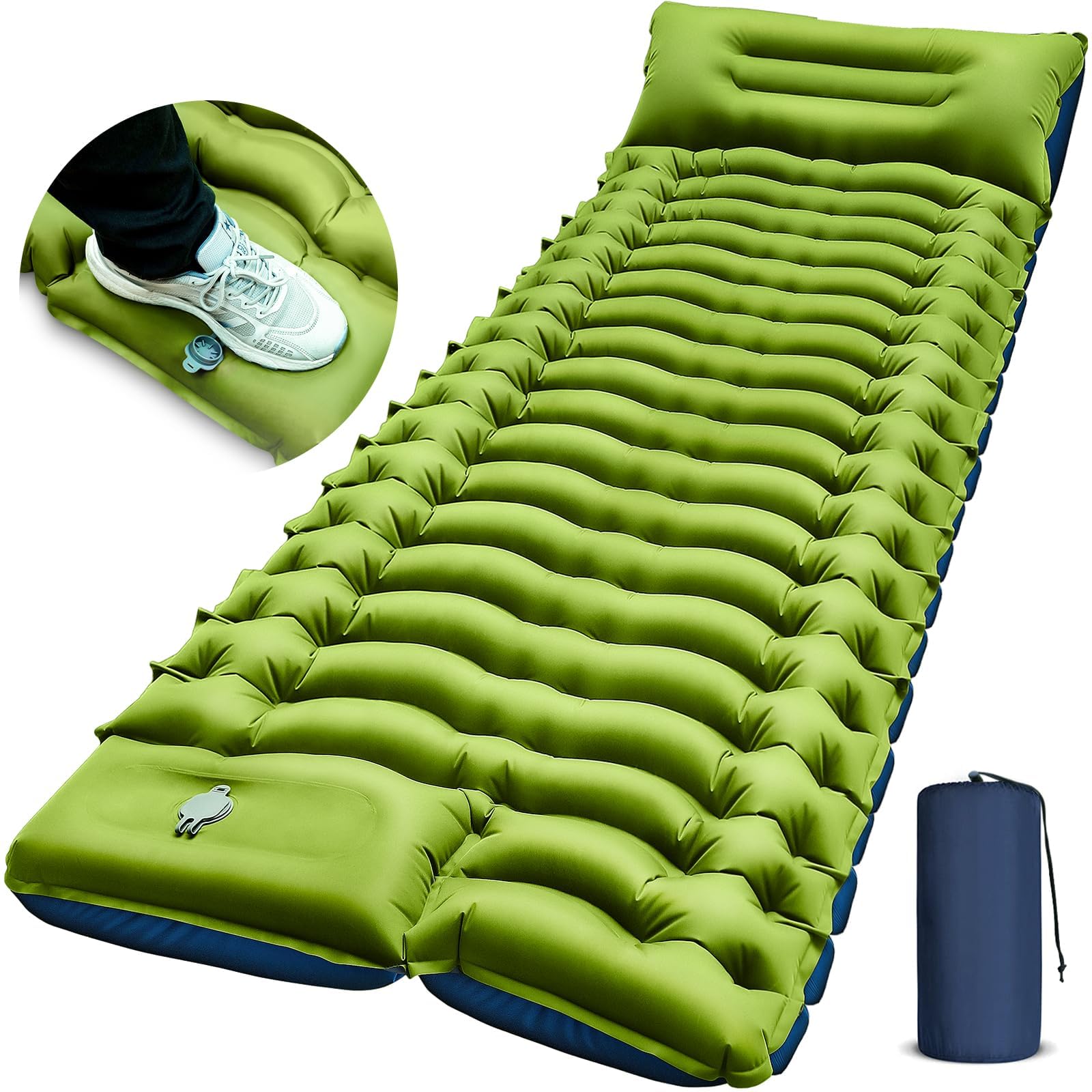
FUN PAC Camping Pad
Key Features
- Thickness: 3 in
- Type: Air Inflatable
- Dimensions: 78×27 in
- Inflation: Built-in pump
- Price: Budget
The FUN PAC sleeping pad delivers a comfortable 3-inch air cushion that keeps side sleepers suspended without bottoming out. The built-in foot pump inflates the 78-inch-long pad in about 30 seconds, and at 1.5 pounds it packs down small enough to disappear in a car trunk. The foot pump’s seal requires a firm press; occasional slow leaks have been noted when the valve isn’t fully sealed, so it’s worth testing at home before your first night.
This pad is best for solo car campers and budget-conscious buyers who want quick setup and generous dimensions. The 27-inch width offers more space than many budget pads, but winter campers should look elsewhere—there’s no insulation rating. For those who cannot tolerate any chance of an air leak, foam pads provide worry-free durability at the cost of bulk. A two-minute valve check and a patch kit in your gear tidy up the only real risk.
Pros
- Thick 3-inch cushion supports side sleepers without hitting the ground.
- Foot pump inflates the pad in ~30 seconds—no lung effort required.
- Roomier 78×27-inch surface fits larger adults comfortably.
Cons
- Foot pump valve demands a precise seal; some users find it finicky to close completely.
- Occasional units may lose air gradually overnight; checking the seal before a trip is wise.
For solo car campers who value speed and cushioning over absolute leak-proof certainty, the FUN PAC pad hits the sweet spot—just give the valve a once-over before you head out.
Best for Leak-Free Sleeping
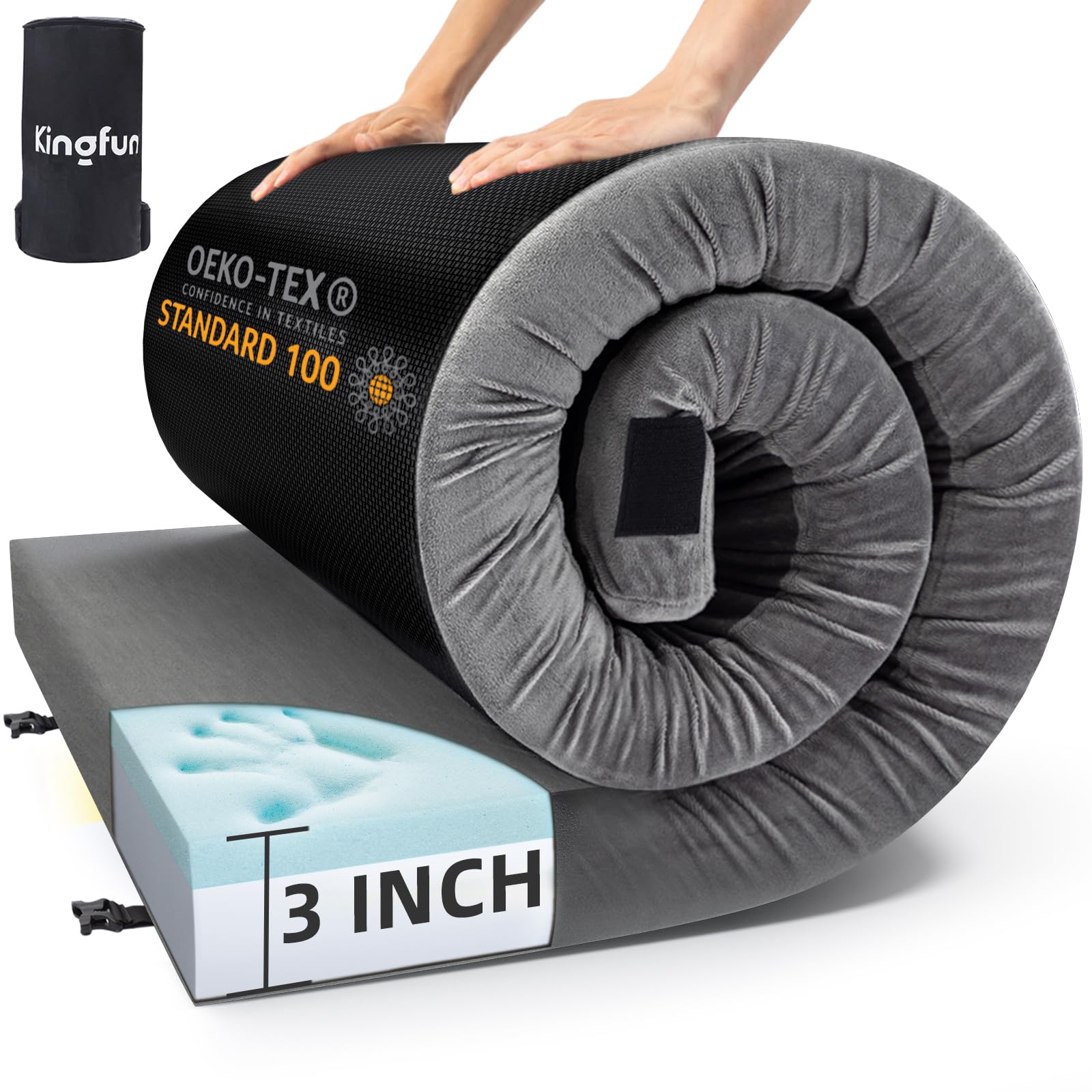
Kingfun Memory Foam
Key Features
- Thickness: 3 in
- Type: Memory Foam
- Dimensions: 75×30 in
- Price: Premium
The 3-inch memory foam pad eliminates air leaks and pump hassles with a simple foam core, delivering a plush feel that rivals a home mattress. The 30-inch width supports side sleepers, and the washable, waterproof cover keeps things clean. Its biggest trade-off is packed size — it’s a large roll that consumes significant trunk space, so it’s best for car campers with dedicated cargo areas. The included carry bag and buckles are prone to tearing; plan on providing your own straps. This pad suits campers who value leak-proof comfort and don’t mind the extra bulk.
Pros
- Plush 3-inch foam rivals a home mattress, making ground sleeping feel luxurious.
- Soft, waterproof cover is removable and machine-washable for easy upkeep.
- Rolls up easily and secures with built-in Velcro for straightforward car camping transport.
Cons
- Included carry bag and buckles can tear on first use; plan to supply your own straps.
- The rolled pad is bulky, filling a fair amount of trunk space and limiting storage options.
If you’re willing to swap the carrying bag for a more durable option and have the vehicle space, this pad delivers unmatched foam comfort for car camping.
Best for Couples Camping
Yuzonc Double
Key Features
- Thickness: 4 in
- Type: Air Inflatable
- Dimensions: 79.8×53.5 in
- Inflation: Built-in pump
- Price: Mid-Range
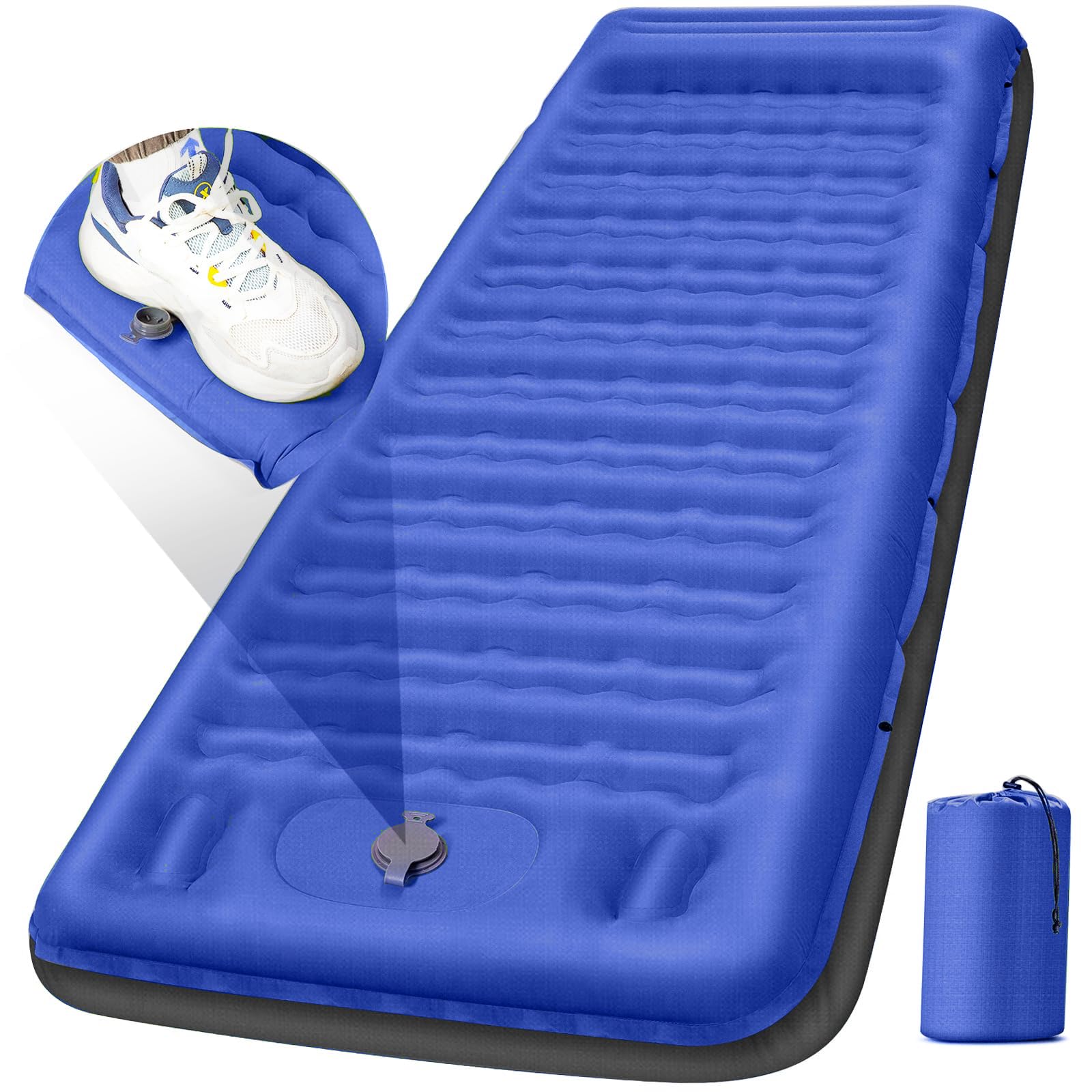
The Yuzonc Double Sleeping Pad offers a true double-wide bed — 80×53 inches — with a built-in foot pump that inflates the 4-inch thick pad in under three minutes. It rolls down to a manageable size for a two-person pad, suiting car campers who prioritize shared space over solo compactness.
Air retention can vary — some units may lose air gradually overnight, requiring a top-off before bed. This pad suits couples and families who car camp together and don’t mind a quick re-inflation. Those who want leak-free reliability without monitoring the valve may prefer the top pick, a solo pad with a more consistent air seal.
Pros
- Spacious and thick — a true double bed for two campers.
- Easy to inflate and deflate; built-in pump works quickly.
- Packs down relatively small for a double pad.
Cons
- Material can be prone to punctures on rough surfaces — use a groundsheet.
- Air retention varies; in some cases, the pad deflates partially by morning and needs a top-off.
A comfortable shared pad for car-camping couples, provided you pack a patch kit and don’t mind a quick pre-bed air check.
Best for Cold-Weather Backpacking
Gear Doctors ApolloAir
Key Features
- Thickness: 3.25 in
- Type: Insulated Air
- Dimensions: 72.8×22 in
- Inflation: Manual
- Price: Premium
The ApolloAir straddles backpacking and car camping, delivering cold-weather insulation without the bulk of thick foam pads. Its 5.2 R-value traps heat against frozen ground more effectively than most car camping pads at this weight, making it a smart pick for shoulder-season trips where a standard uninsulated pad would leave you chilled.
The mummy taper narrows to 17 inches at the feet, which can feel cramped for side sleepers and broad-shouldered campers. This design suits back sleepers under 6’2" who prioritize warmth and space savings over sprawling comfort. If you want a roomy bed for casual car camping, the rectangular top pick is a better match.
Pros
- High 5.2 R-value blocks frozen ground chill during shoulder-season and winter trips.
- Thick 3.25-inch air cushion provides supportive comfort for back sleepers.
- Stuffs to the size of a water bottle, saving trunk space for bulkier gear.
Cons
- Tapered shape cuts to 17 inches at the feet — side sleepers and broad-shouldered campers may feel confined.
- Occasional slow leaks around the valve or seams can develop over time — a pre-trip check is advisable.
Pick the ApolloAir when overnight temps dip and saving trunk space matters more than having a wide sleeping platform. Cold-weather car campers and four-season backpackers get the most out of its design.
Best for Side Sleepers
FNARMW 5" Pad
Key Features
- Thickness: 5 in
- Type: Air Inflatable
- Dimensions: 79×28 in
- Inflation: Built-in pump
- Price: Budget
Compared to the top pick’s 3 inches, this pad adds 2 inches of plush cushioning that side sleepers will appreciate on hard ground. The built-in foot pump inflates it in about a minute and it packs down small for car camping. You’ll want to inflate it at home before a trip to check for pinhole leaks—some units don’t hold air consistently. This makes it best for budget-minded campers who prioritize deep comfort and are willing to do a quick pre-trip inspection.
Pros
- Exceptionally thick for superb side-sleeping comfort.
- Foot pump inflates quickly and the pad packs small.
- Great value for a 5-inch pad.
Cons
- Thin fabric may be more vulnerable to punctures than heavier pads.
- Some units can develop slow leaks; inspect seams and valve before relying on it.
If you value thickness above all and don’t mind a quick pre-trip leak check, this pad delivers a cushioned night’s sleep for far less than thicker rivals.
Best for Extreme Winter Camping
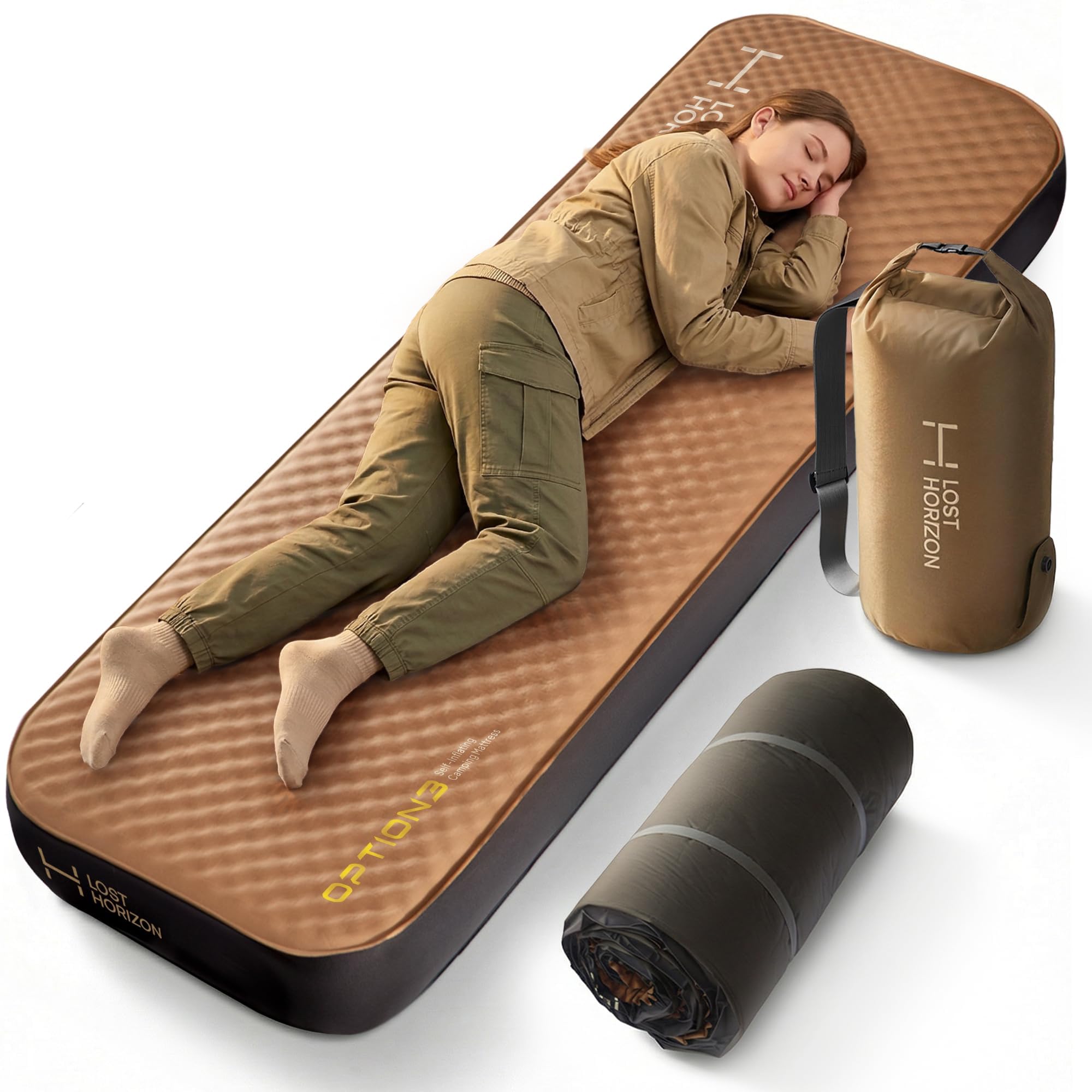
Lost Horizon Air+Foam
Key Features
- Thickness: 4.5 in
- Type: Hybrid Foam-Air
- Dimensions: 75×25 in
- Inflation: Pump sack
- Price: Premium
The Lost Horizon Air+Foam delivers exceptional mattress-like comfort with a 4.5-inch foam-air build and an R-value of 13—insulation that truly matters when temperatures plummet. Getting it fully inflated is a workout; the included pump sack can be unintuitive, and deflating completely takes patience. In some units, seam durability has proven inconsistent, with occasional slow leaks developing over time. This pad is best for car campers and winter-overland van lifers who prioritize deep-cold warmth and side-sleeping plushness over quick setup, and have ample vehicle storage for its bulky rolled size—backpackers need not apply.
Pros
- Extraordinary mattress-like comfort, even for side sleepers.
- Unmatched insulation with an R-value of 13 for extreme winter camping.
- Firm, supportive feel from quality construction.
Cons
- Bulky and heavy when rolled; demands dedicated vehicle storage space.
- Inflation and deflation are a workout; pump sack setup can frustrate.
Right for winter-overland campers who put a premium on deep-cold insulation and side-sleeping plushness, and are willing to trade storage space and a learning curve for that comfort.
Best for Glamping Comfort
GAIALOOP Memory Foam
The 38-inch width and safety certifications make this a spacious, odor-free option for SUV campers. The dual-layer foam leans firm — not plush — and side sleepers may feel the hardness. Price is unlisted, making value comparison tricky.
Pros
- Wide 38-inch design fits truck beds and SUVs comfortably for solo camping.
- CertiPUR-US and OEKO-TEX certified foam with no chemical off-gassing, gentle for kids.
Cons
- Rolled-up size is quite bulky, and stuffing it back into the storage bag can be a hassle.
For car campers who need a wide, firm, and certified foam pad and don’t mind a bulky roll, this mattress fits the bill — but the lack of listed price leaves value an open question.
Best for Lightweight Camping
Sleepingo Ultralight

Key Features
- Thickness: 2 in
- Type: Air Inflatable
- Dimensions: 73.5×21.5 in
- Inflation: Manual
- Price: Budget
An ultralight backpacking pad that packs to water-bottle size and inflates without a pump. The 2-inch thickness offers back sleepers under 180 lbs adequate cushion, but side sleepers and heavier campers will feel harder ground. Budget-friendly price, yet air retention varies between units—occasional slow leaks may require a middle-of-the-night top-up. For car camping comfort, the top pick’s extra inch and built-in pump are a better fit.
Pros
- Comfortable for a lightweight pad, with good pressure relief for its 2-inch thickness.
- Budget-friendly price for a capable ultralight pad.
Cons
- Air retention can vary between units; occasional slow leaks may require topping up overnight.
If you split your time between backpacking and car camping and need a single pad under $30, this is a competent dual-purpose choice. Just plan to test for leaks before your first night.
Best for Cot Topper
CYMULA 3" Foam
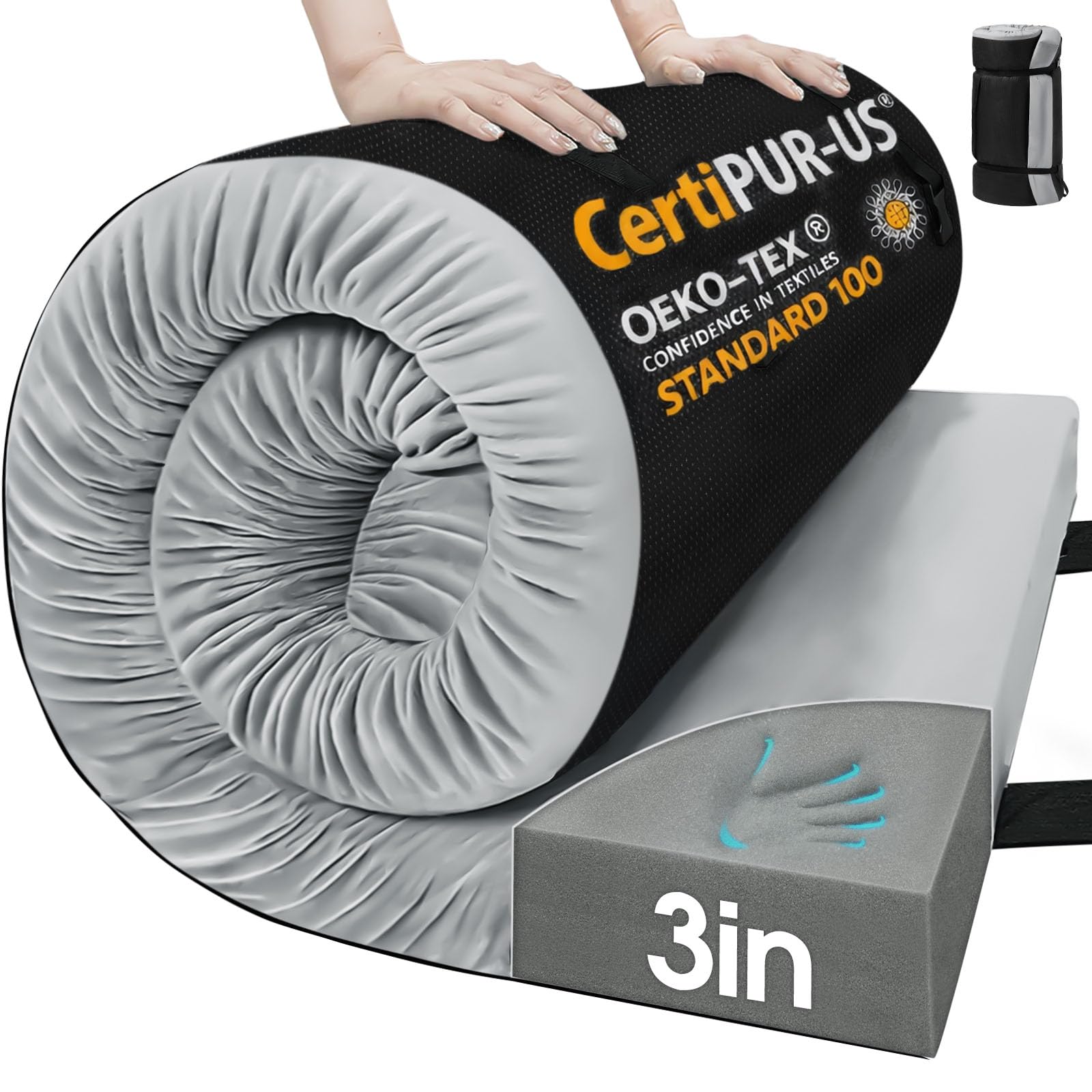
Key Features
- Thickness: 3 in
- Type: Memory Foam
- Dimensions: 72×24 in
- Price: Mid-Range
This CYMULA pad brings memory-foam comfort to car camping at a price lower than many wider alternatives. It rolls up with secure straps and the waterproof bottom keeps the foam dry on damp ground. The 24-inch width, however, restricts its audience — it’s best suited for narrow cots, kids, or as a supportive layer atop an air mattress rather than as a standalone adult sleep surface. Heavier users may also feel the foam compress enough for hips to contact the ground.
Pros
- Memory foam cushioning feels plush for the price, especially when used as a cot topper.
- Rolls up neatly with secure straps and the waterproof bottom guards against ground moisture.
Cons
- 24-inch width restricts comfortable sleep for adults of average build; suited only for petite campers or cot topping.
A workable cot topper or pad for small campers, but too narrow for most adults to sleep on alone.
Best for Back Sleepers
Gear Doctors Ether
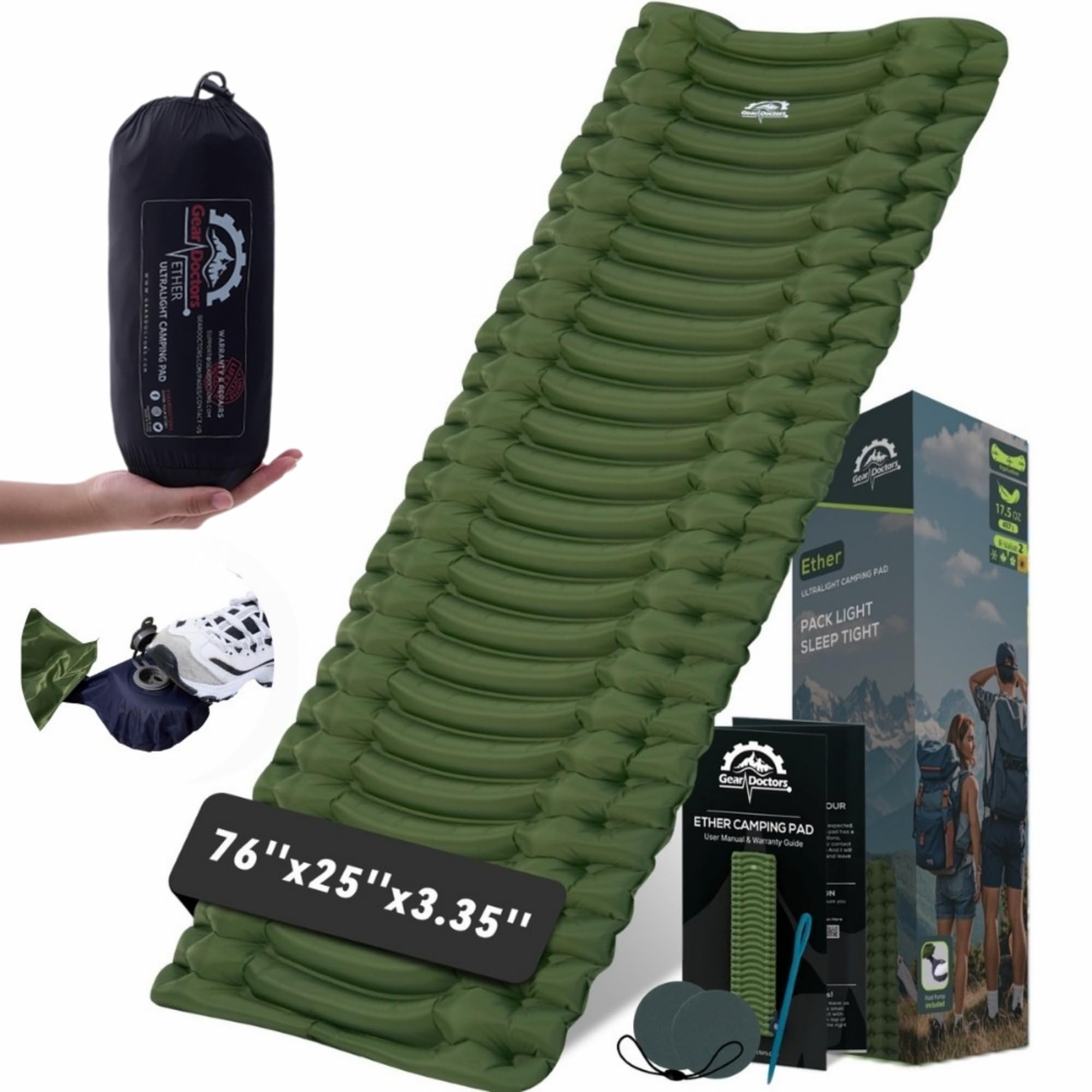
Key Features
- Thickness: 3.35 in
- Type: Air Inflatable
- Dimensions: 72×22 in
- Inflation: Manual
- Price: Budget
The Ether packs impressive comfort into an ultralight package, with 3.35-inch edge cushioning that suits back sleepers well. The U-shaped contour, however, sacrifices stability for weight — it narrows at the center and can feel insecure if you roll onto your side. For car campers who value compact storage and sleep still on their backs, it’s a lot of pad for the money.
Pros
- Comfortable for back sleepers, with 3.35-inch edge thickness that cushions pressure points.
- Packs down to bottle-size and weighs just 17.5 oz, making it effortless to stow in a car trunk.
Cons
- Occasional slow leaks may occur if the valve isn’t sealed tightly.
If you camp from a car but want a pad that disappears into a daypack and sleep soundly on your back, the Ether offers great value — just know side snoozing isn’t its strength.
Best for Kids & Petites
Hazli Matrix AirCell
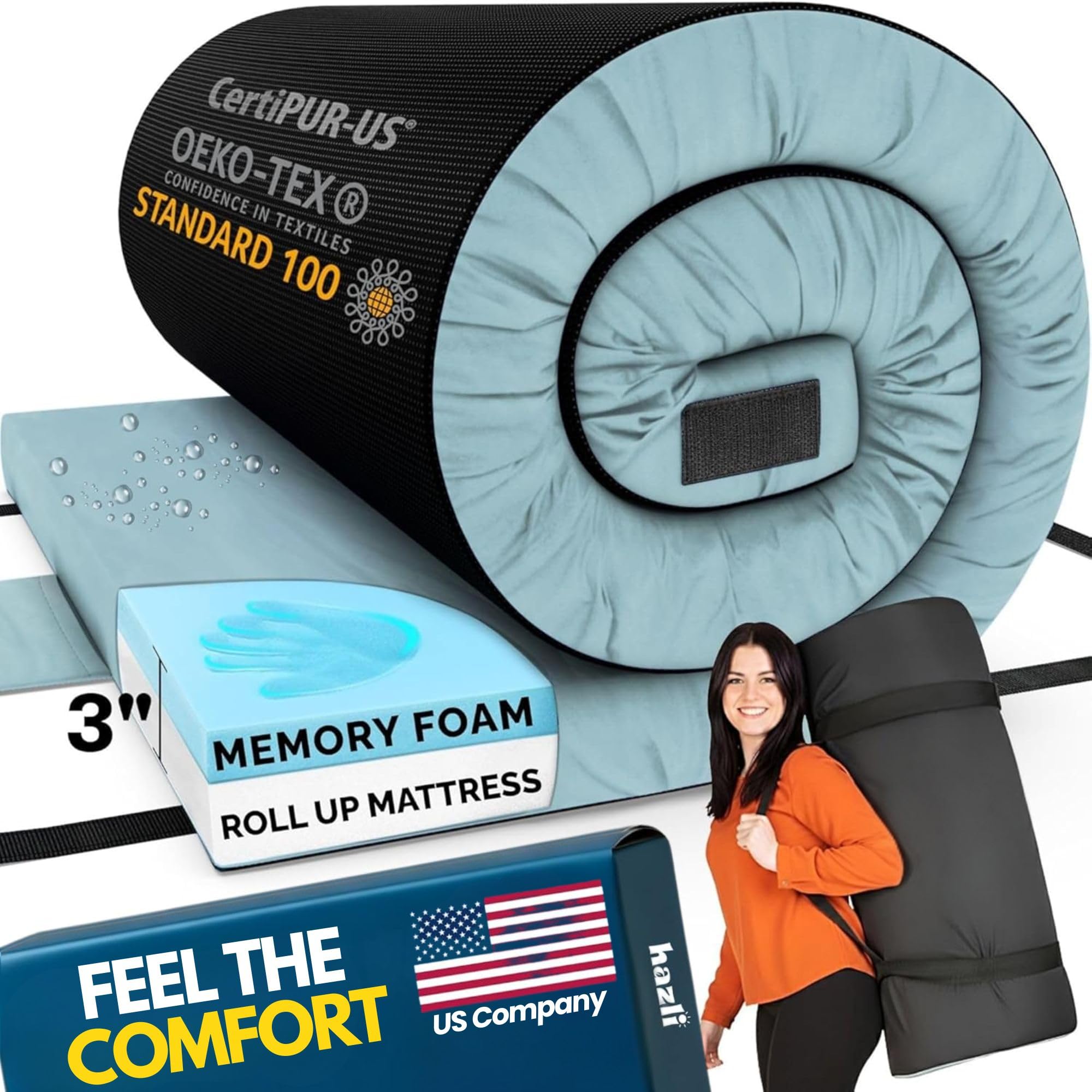
Key Features
- Thickness: 3 in
- Type: Memory Foam
- Dimensions: 64×26 in
- Price: Mid-Range
Three inches of memory foam with a soft, waterproof cover make the Hazli Matrix AirCell a plush upgrade for cot sleeping or floor-based car camping. That comfort only extends 64 inches, which cuts off around the ankles for anyone over 5’5". For kids or petite adults, it’s a cozy pad; for taller campers, it’s unusably short.
Pros
- Very comfortable for side sleepers and those with back pain.
- Works well on cots and floors; improves sleep quality significantly.
Cons
- At 64 inches, the pad is too short for anyone over 5’5" — feet will hang off the end.
A thick, comfortable add-on for children’s cots or floor camping for petite campers; taller users should look to the top pick for proper length.
Best for Guest Bed
HomeMate Memory Foam
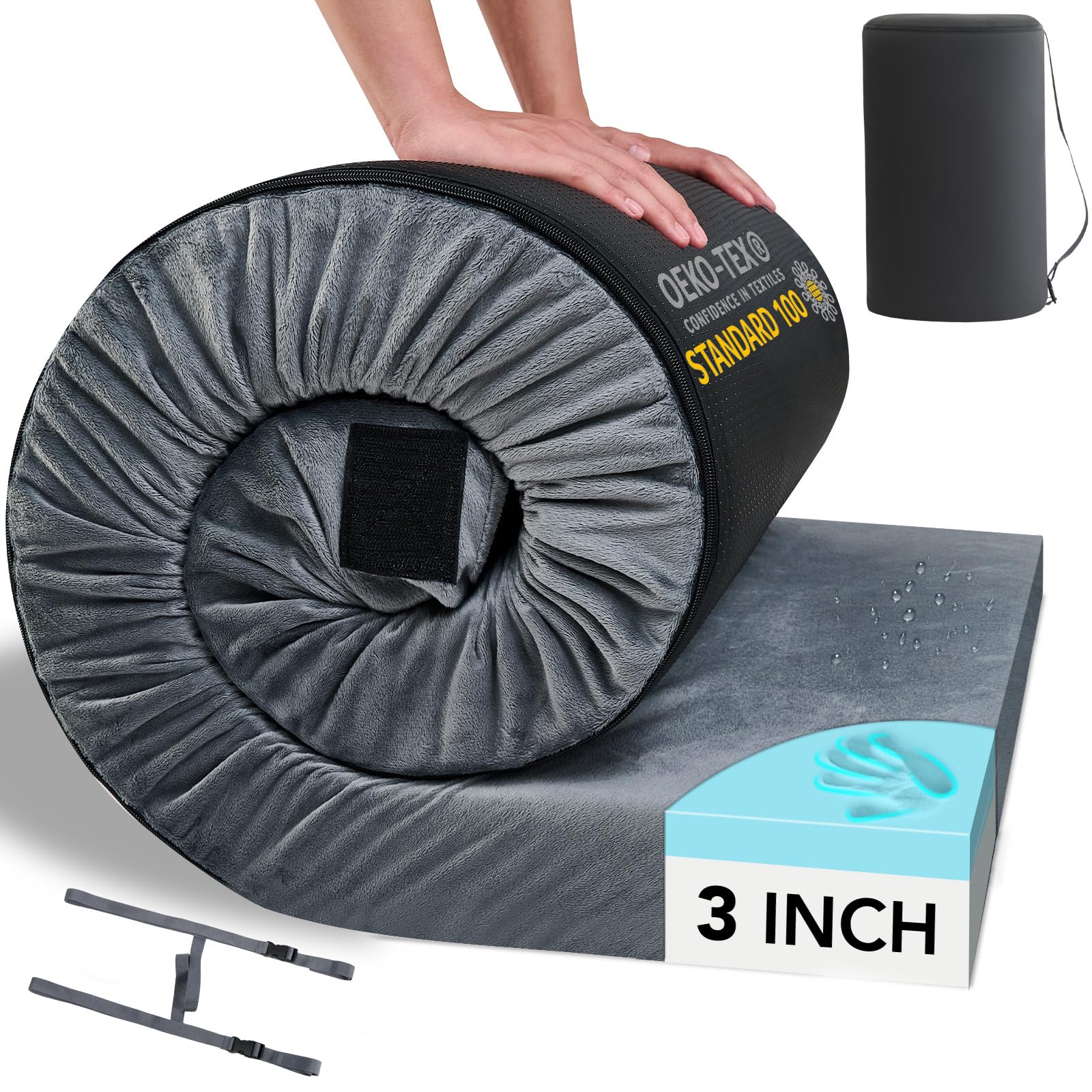
Key Features
- Thickness: 3 in
- Type: Memory Foam
- Dimensions: 72×24 in
- Price: Mid-Range
The 3-inch memory foam feels soft and the removable cover simplifies cleanup. It suits kids’ sleepovers or occasional cot use on a budget. The 24-inch width feels narrow for average adults, and heavier users may bottom out through the foam.
Pros
- Soft memory foam cushioning at a budget-friendly price.
- Removable, washable cover resists water and dirt.
Cons
- The 24-inch width can feel cramped for average adults, especially side sleepers.
A practical foam pad for kids’ sleepovers and floor guest beds, but too narrow to serve as a primary camping mattress for most adults.
How to Choose
For car camping, the thickness of your pad determines whether you wake up pain-free; more than 2 inches is essential for side sleepers and rocky ground.
Thickness
Two inches works for back sleepers on soft forest floors, but car camping often means harder surfaces or a cot grid. Three inches and up keeps hips and shoulders suspended off the ground, especially for side sleepers. The cushion also compensates for uneven terrain that a backpacker might never encounter, like a lumpy truck bed.
Moving to 4 or 5 inches adds plushness at the cost of bulk, and some ultralight pads achieve surprising lift without giant packed size. Choose thickness based on your sleeping position and the surface: if you’ll be on a platform or cot, 3 inches is plenty; for rocky ground and side sleeping, 4 inches or more makes a real difference.
Pad Type
Air inflatables pack small and can offer plenty of height, but even the best have a non-zero chance of developing a slow leak. Memory foam pads cannot deflate by nature, so they eliminate that worry entirely—but they are heavy and take up significant trunk space. A foam pad that rolls to the size of a sleeping bag is the price of leak-proof peace of mind.
Hybrid foam-air pads, which use open-cell foam inside an airtight envelope, deliver insulation and cushioning while self-inflating. However, they still require a few breaths of top-off air to reach full firmness, and some users find the inflation process tedious. For most car campers who don’t count ounces, the choice is between pure foam’s dead reliability and an inflatable’s superior portability.
Width and Length
A pad narrower than 24 inches forces arms to slip off the edges, and anyone over 5’8" risks dangling feet on a 72-inch pad. Car campers have the luxury of space, so a 27- to 30-inch width and length exceeding your height by 2-3 inches transform the experience from a tightrope act to a proper bed. Taller campers should look for pads 75 inches and up, while couples can opt for a 53-inch-wide double model.
Inflation Mechanism
A built-in foot pump inflates a full-size car camping pad in under a minute without requiring lung power or extra accessories. Manual mouth inflation quickly becomes annoying when you have to top off a pad nightly, and dedicated pump sacks add a step that some sleep-deprived campers skip. Self-inflating pads expand on their own but rarely reach usable firmness without extra air, so treat the valve as a starting point, not a finished product.
Insulation (R-Value)
R-value measures how well a pad resists heat loss to the cold ground. An uninsulated air mattress with an R-value under 1 can feel like a sheet of ice on a 50°F night, while a pad rated above 4 stays warm even in freezing conditions. For three-season car camping in most regions, an R-value between 2 and 4 is sufficient. Dedicated winter pads like the Lost Horizon with R-value 13 turn an unheated cargo van into a cozy bunker, but they sacrifice portability and demand careful setup.
FAQ
Why does my self-inflating sleeping pad deflate by morning?
Self-inflating pads rely on open-cell foam that expands when the valve opens, but this process rarely achieves full firmness on its own. You typically need to add several breaths of air to reach a supportive feel, and a loosely sealed valve or tiny seam leak can cause gradual overnight deflation. If the pad still loses air after a firm top-off and a tight valve seal, try a bathtub leak test at home and patch any pinholes. Most slow leaks are fixable with a little patience.
How thick should a car camping sleeping pad be for side sleepers?
Side sleepers put concentrated pressure on hips and shoulders, so a pad thinner than 3 inches often lets those points bottom out against the ground. Aim for a true 3-inch minimum, with 4 to 5 inches of loft providing the deepest relief. Anything beyond 5 inches adds weight and bulk without a proportional comfort boost for most people. If you frequently sleep on your side on hard surfaces like a truck bed, a 4-inch memory foam pad or a 5-inch inflatable will feel far more restful than a standard backpacking thickness.
Do memory foam camping pads really not leak like air mattresses?
Yes—memory foam pads are solid slabs, so there is no air chamber that can rupture or lose pressure overnight. However, they can arrive thinner than advertised and may need days to fully expand. They are also much bulkier when rolled, so you’ll need dedicated cargo space. For campers who have been burned by deflating inflatables, the trade of extra bulk for guaranteed sleep is often worth it.
Why is my new camping mattress not as thick as advertised?
Foam matresses are compressed for shipping and rely on air returning to their cell structure to reach full thickness. This process often takes one to three days in a warm room, and some pads never fully achieve the stated measurement. If your pad still feels thin after 72 hours, contact the manufacturer—a pad that stays noticeably below spec is a legitimate quality issue. For the best chance of full expansion, unroll it at home a few days before your trip and let it breathe.