
This post contains affiliate links. We may earn a small commission when you buy through our links — at no extra cost to you.
Finding a cervical pillow that feels just right often feels like Goldilocks’ quest — one is too hard, another too soft, and a third too tall. Nearly every highly-rated pillow still leaves 20–30% of sleepers wishing for a different firmness level, because the category is built around an unresolvable tension between support and comfort.
Instead of chasing a universal ‘best,’ this guide picks pillows that succeed for specific profiles: side sleepers who need deep cradling, hot sleepers who demand true cooling, and those who want adjustable loft to dial in comfort. You’ll find pillows that minimize the firmness gamble while still delivering genuine neck pain relief.
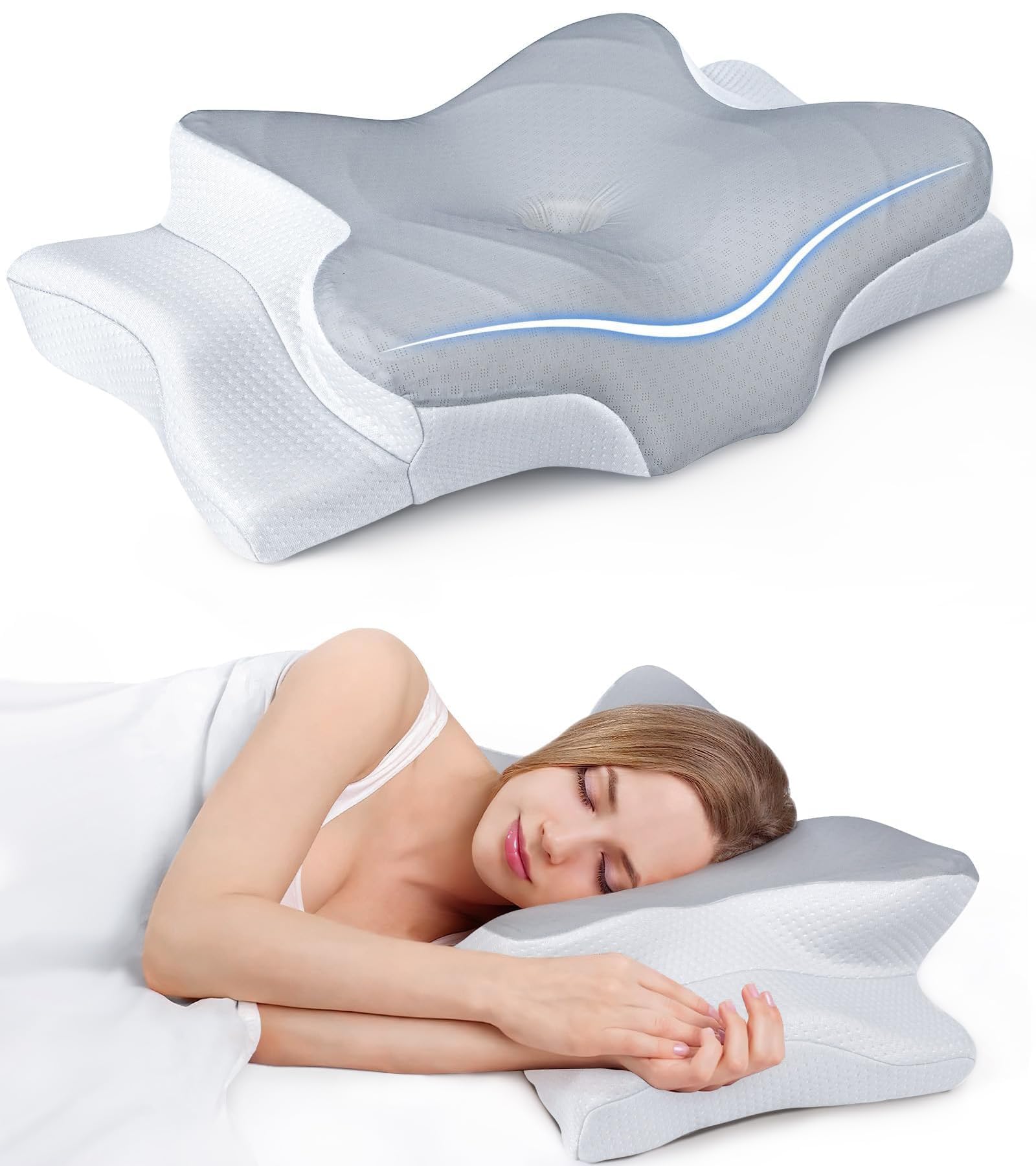


Best for Cooling Pain Relief
Cozyplayer Ultra Relief
Key Features
- Adjustable Height: Rotate 180°, remove insert
- Firmness Level: Medium
- Cooling Features: Arc-Chill case, 3D mesh
- Certifications: CertiPUR-US, OEKO-TEX
- Design Contour: Hollow concave, 15° angle
- Price: $$
The contoured memory foam holds the head and neck in alignment, reducing the morning stiffness that plagues side and back sleepers. The Q-Max 0.4 Arc-Chill pillowcase and 3D mesh construction actively pull heat away, so you stay cool through the night instead of flipping a warm pillow. Rotating the pillow 180° or removing the bottom insert changes the loft, letting you fine-tune the height to match your shoulder width without losing the cervical support.
This pillow targets hot sleepers and anyone with persistent neck discomfort who wants a supportive, cool surface. The firmness is deliberate — the foam holds its shape rather than cradling deeply, which suits those who find soft pillows unsupportive. If you prefer a plush, sink-in feel, the rigid contour may feel too commanding.
Pros
- Pronounced cervical support reduces neck pain and stiffness for side and back sleepers.
- Cooling cover and breathable foam prevent heat buildup, keeping the pillow surface cool all night.
- Adjustable loft and hollow concave design improve sleep quality and morning readiness.
Cons
- Firmness can feel too rigid for those who prefer a soft, sinking pillow.
Right for side and back sleepers who run hot and need firm, cooling cervical support. Plush-pillow fans should steer clear.
Best for Severe Neck Pain
Osteo Hollow Pillow
Key Features
- Adjustable Height: Rotate 180°, remove insert
- Firmness Level: Medium-firm
- Cooling Features: 3D mesh fiber case
- Certifications: CertiPUR-US, OEKO-TEX
- Design Contour: Hollow center, ergonomic curves
- Price: $$
The patented hollow-center contour provides deep neck cradling that directly addresses chronic pain, with a high volume of users reporting marked sleep improvement. The firm, 5.2-inch height achieves that support but can feel overpowering for smaller sleepers — an intentional trade-off for those who prioritize pain relief over plush comfort.
Side and back sleepers with persistent neck discomfort who need substantial, rigid support will see the most benefit. The taller profile suits average-to-larger frames; anyone under 5’4” or who prefers a plush feel will likely find it overbearing.
Pros
- Deep pain relief for neck and upper back discomfort
- Markedly better sleep quality
- Targeted cradling that holds head and neck in alignment
Cons
- Firm, tall profile feels overly rigid for petite sleepers and those who prefer a plush surface
For chronic pain that milder pillows can’t touch, the Osteo’s aggressive cradling is a logical choice — provided your shoulders and frame can fill its generous dimensions.
Best for Adjustable Loft
UTTU Sandwich Pillow
Key Features
- Adjustable Height: Removable middle layer, 2 heights
- Firmness Level: Medium-firm
- Cooling Features: Breathable washable cover
- Design Contour: Contour sandwich
- Price: $$
UTTU’s removable middle layer transforms this pillow into a personal loft system. You get two contour heights out of the box, and removing the center slice drops the surface even lower — practical for stomach sleepers or anyone needing a flatter base. The memory foam cradles the neck without mushiness, and pain relief results are consistent for back and side sleepers.
This is a medium-firm pillow for those who want sturdy cervical support and switch between back and side sleeping. The denser feel can be too commanding if you prefer a soft, pillowy surface, and very petite frames may find even the lowest setting too tall.
Pros
- Targeted neck pain relief that helps you wake without morning stiffness.
- Contoured shape cradles the neck to keep your spine aligned throughout the night.
- Removable middle layer gives you three effective heights to fine-tune loft for your frame.
Cons
- Firmness may feel too hard for side sleepers who like a plush, sinking surface.
If adjustable loft matters more than plush softness, this UTTU gives you the experimentation room to dial in your alignment — but lightweight and soft-pillow sleepers should look elsewhere.
Best for Soft Support
Royal Therapy Contour Pillow
Key Features
- Adjustable Height: Removable middle layer
- Firmness Level: Medium-soft
- Cooling Features: Bamboo rayon cover
- Certifications: CertiPUR-US
- Design Contour: Contour, machine-washable
- Price: $$
Unlike the taller four-layer adjustable model, this Royal Therapy pillow emphasizes soft, cradling comfort. The bamboo-derived cover wicks moisture, and the medium-firm foam contours without creating pressure points. Side sleepers with neck discomfort will appreciate the gentle support that promotes alignment without feeling intrusive. This suits side and back sleepers who favor a plush feel. Those needing a firmer, more resistant surface for severe neck tension may find the softness too forgiving—at which point the firmer contour options in this set become a better match.
Pros
- Very comfortable for side and back sleeping
- Excellent neck and head support that cradles perfectly
- Significant pain relief for neck and shoulder
Cons
- Softness may feel too yielding for those who need firm pushback
Side and back sleepers who want a plush, pressure-relieving pillow will find genuine neck pain relief, but those who prefer a firm, supportive contour should explore the firmer alternatives in this lineup.
Best for Advanced Cooling
Cozyplayer True Cooling
Key Features
- Adjustable Height: 15° angle, rotatable
- Firmness Level: Medium
- Cooling Features: 2nd-gen Arc-Chill, -5°C
- Certifications: CertiPUR-US, OEKO-TEX, ISPA
- Design Contour: Hollow contour, armrests
- Price: $$
Second-gen Q-Max 0.4 Arc-Chill technology drops skin temperature 5°C within minutes, paired with a redesigned hollow contour that maintains neck cradling and spinal alignment for side and back sleeping. Unlike the popular Cozyplayer model known for neck support across thousands of users, this version prioritizes advanced cooling and a firmness that avoids the polarizing rigidity of some rivals. Hot sleepers with neck pain will appreciate the instant chill and odorless, certified foam construction. Long-term durability data trails older options, making it best for those who value modern cooling over a multi-year track record.
Pros
- Instantly lowers skin temperature for hot sleepers
- Notable neck pain relief in side and back positions
- Hollow contour cradles the neck without pressure points
Cons
A cooling-first cervical pillow that genuinely chills the skin while still delivering pain relief — ideal for hot sleepers who can accept its shorter track record in exchange for next-gen temperature control.
Best for Side & Back
ZAMAT Adjustable Pillow
Key Features
- Adjustable Height: Removable inserts, rotate
- Firmness Level: Medium-soft
- Cooling Features: Cotton/poly blend cover
- Certifications: CertiPUR-US
- Design Contour: Quilted double pillowcase
- Price: $$
Where the top pick’s contour relies on firm, unyielding support, the ZAMAT takes a softer path. The medium-soft memory foam and quilted double pillowcase create a plush, cushioned surface that eases pressure without pushing back. Removable 0.8-inch inserts let you tweak loft for back or side sleeping, and removing them entirely yields a flatter profile for stomach sleepers.
This approach suits average-weight combo sleepers who find firm pillows too aggressive. The softer foam, however, can compress too readily for individuals over roughly 200 pounds, allowing the neck to dip out of alignment. If you prefer gentle cradling and adjustable softness, the ZAMAT delivers — but those wanting firm resistance should look elsewhere.
Pros
- Reduces morning headaches and neck stiffness through targeted support.
- Comfortable cradle for side and back sleepers, staying plush without pressure points.
- Noticeably improves overall sleep quality.
Cons
- Foam may compress too much for heavier users, reducing neck support.
Best suited to average-weight side and back sleepers who want a cushioned, adjustable pillow — and understand that the tradeoff for plushness is less rigid support.
Best for Budget Neck Support
DONAMA Cervical Pillow

Key Features
- Adjustable Height: Dual-height contour
- Firmness Level: Medium-soft
- Cooling Features: Breathable cotton/poly cover
- Certifications: CertiPUR-US
- Design Contour: Dual-height, armrests
- Price: $
The DONAMA Cervical Pillow cradles the neck effectively for back and side sleepers, with a dual-height contour and a generous 100-night trial to test comfort risk-free. For those with severe chronic pain, outcomes vary — this pillow is a smarter pick for budget-conscious shoppers without persistent discomfort who want to try ergonomic support.
Pros
- Cradles the neck effectively to maintain alignment
- Comfortable for both side and back sleeping
Cons
- Pain relief is inconsistent and may increase neck pain for some users
A sensible trial option for budget shoppers without severe pain who want to test ergonomic contour support with a risk-free return window.
Best for Firm Back Support
HOMCA 2-in-1 Pillow

Key Features
- Adjustable Height: Two heights, booster pad
- Firmness Level: Firm
- Cooling Features: Double-layer breathable case
- Certifications: CertiPUR-US
- Design Contour: Roll & contour, armrests, ear cutout
- Price: $$
The 2-in-1 design offers a neck roll and contour side, plus armrests and ear cutouts that help back sleepers maintain alignment and reduce neck tension. The foam is very firm, and side sleepers or those sensitive to hard pillows may find it painful.
Pros
- Effective pain relief for neck and shoulders
- Promotes better sleep, especially for back sleepers
Cons
- Foam is too hard for side sleepers and anyone sensitive to firm pillows
A niche pick for back sleepers who want the structure of armrests and ear cutouts with rigid support — side sleepers and those preferring soft pillows should pass.
Best for Budget Contour
Ylekto Blue Pillow

Key Features
- Adjustable Height: Two curve heights
- Firmness Level: Firm
- Cooling Features: Cold silk cover, breathable
- Certifications: CertiPUR-US, OEKO-TEX
- Design Contour: Contour
- Price: $
Two curve heights and a cold silk cooling cover deliver firm, budget-friendly support that reduces morning neck pain for back sleepers who prefer a resistant surface. However, the firmness can feel too rigid for side sleepers or anyone who likes a plush, sinking feel.
Pros
- Firm contouring helps back sleepers maintain alignment and reduce morning neck pain.
- Cold silk cooling cover stays cooler than standard memory foam, reducing night sweats.
Cons
- Firmness can be too rigid for side sleepers or those who prefer a softer surface.
A solid budget choice for firm-pillow back sleepers who don’t need a soft, sinking feel — side sleepers should look to a plusher option.
Best for Firm Enthusiasts
EPABO Contour Pillow

Key Features
- Adjustable Height: Removable sponge insert
- Firmness Level: Firm
- Cooling Features: Rayon/polyester cover
- Design Contour: Wedge/contour
- Price: $$
The EPABO Contour Pillow uses a removable sponge insert to dial in height and delivers a wedge-like firm surface that keeps the neck aligned for back sleepers. The extreme firmness, however, creates pressure points for side sleepers and anyone who doesn’t explicitly prefer a rock-hard surface.
Pros
- Neck pain relief for back sleepers who tolerate rigid support.
- Promotes spinal alignment for back sleepers.
Cons
- Extremely firm surface can cause pressure-point discomfort for side sleepers or those who prefer any plushness.
Only back sleepers who need a genuinely hard surface will find relief here; side sleepers and those seeking any give should look elsewhere.
Best for Eco-Friendly Newcomer
Emircey Cervical Pillow

Key Features
- Adjustable Height: Flip-able two heights
- Firmness Level: Medium
- Cooling Features: Plant-based Move+Cool finish
- Certifications: BioPreferred renewable
- Design Contour: Butterfly contour, hollow center
- Price: $$
Sustainability meets comfort in this cervical pillow, with plant-derived cooling and BioPreferred materials. Early feedback points to strong neck pain relief and a consistently cool sleep surface across positions. The missing piece is long-term durability data — a potential drawback for those who expect a pillow to last several years without flattening.
Pros
- Notable neck pain relief across back, side, and stomach sleeping positions
- Plant-based cooling cover and permeable foam keep sleep surface comfortably cool
Cons
- Long-term durability has not been demonstrated, making it less ideal for those wanting a years-long investment
Eco-conscious shoppers willing to trade a proven track record for renewable materials and strong early comfort will find a fitting match.
Best for Massage Bumps
zibroges Cervical Pillow

Key Features
- Adjustable Height: 3-layer, removable middle
- Firmness Level: Medium
- Cooling Features: Ice silk case, cold silk
- Certifications: CertiPUR-US, OEKO-TEX
- Design Contour: Massage bumps, contour
Textured massage nodes on the neck contour deliver a pleasant relaxation effect while maintaining alignment. Ice silk cooling and memory foam help prevent overheating. Neck pain relief holds up well. Price isn’t listed, and a shorter track record leaves long-term value unclear — unlike the top pick’s proven cooling and comfort at scale.
Pros
- Massage bumps provide relaxing pressure without reducing neck support.
- Cooling cover and memory foam dissipate heat for a cooler sleep.
Cons
- Price isn’t listed, and limited long-term history makes value hard to gauge.
A fit for hot sleepers who want a massage-like neck contour and don’t require upfront pricing. If value transparency matters, look to more established options.
Best for Premium Adjustable
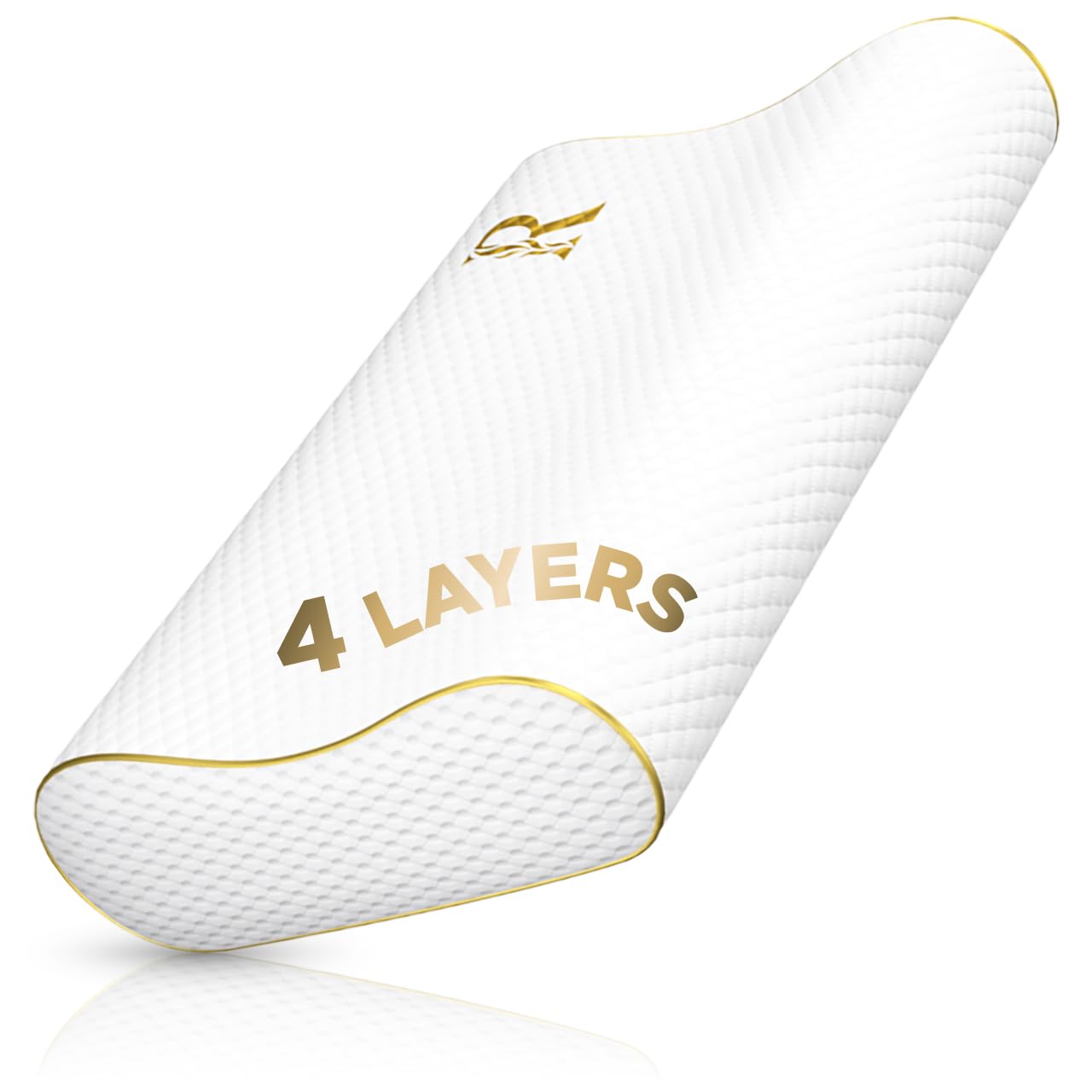
Royal Therapy 4-Layer
Key Features
- Adjustable Height: 4-layer removable, custom height
- Firmness Level: Medium-firm
- Cooling Features: Bamboo rayon cover
- Certifications: CertiPUR-US
- Design Contour: Contour, extra tall
- Price: $$$
The Royal Therapy 4-Layer gives you four removable foam layers to dial in your ideal loft, plus a 6.5-inch profile that fills the gap for broader shoulders. Bamboo-derived rayon cover helps with heat dissipation. The premium price and extra height make it overkill for average sleepers, but if you need that height and precise adjustability, it’s a well-constructed, long-lasting cervical pillow.
Pros
- Solid soft-firm balance that cradles without bottoming out
- Effective neck pain relief for side sleepers with proper alignment
Cons
- The 6.5-inch height may be too tall for average or petite builds, causing neck strain
This pillow makes sense if you’re a broad-shouldered side sleeper who has struggled with pillows that are too low — and you’re willing to pay for layer-by-layer customization.
How to Choose
The most important factor in choosing a cervical pillow is matching its firmness and height to your dominant sleep position — a mismatch here is the top reason pillows are returned.
Adjustable Height or Removable Layers
A fixed-height pillow forces your neck into an angle that may be too acute or too shallow. Removable layers or rotatable contours let you fine-tune loft by as little as half an inch, which is critical because even a quarter-inch difference can cause shoulder scrunching or neck bridging.
Pillows with multiple layers can feel uneven if the insert shifts, so look for designs with non-slip inner casings and test all configurations before settling. If you sleep on your side, aim for a loft that fills the gap between ear and shoulder without tilting your head upward.
Firmness Level
Firmness labels are unreliable — one brand’s ‘medium’ can feel like a brick to some. The real test is rebound pressure: memory foam that springs back too quickly applies constant resistance, while very slow-recovery foam may sink too deep for side sleepers. The 20–30% negative firmness comments on most highly rated pillows prove this is the category’s biggest blind spot.
A medium-soft pillow suits side sleepers who want cradling, but if you weigh over 200 lbs, choose medium-firm to prevent bottoming out. Back sleepers need enough support to keep the chin off the chest, so a firmer surface that holds its shape is usually better.
Cooling Features
Cooling pillowcases using Q-Max technology or phase-change materials absorb skin heat on contact, but they rely on body contact to work — the moment you lift your head, the effect stops. Meanwhile, breathable foams with open-cell structures allow airflow but won’t actively cool you.
True all-night cooling requires both a heat-absorbing cover and a foam core that doesn’t trap heat. Pillows marketed as ‘cooling’ with only a mesh cover often underdeliver; prioritise those with a documented Q-Max value (0.4 or higher) or cold silk finishes.
Certifications
CertiPUR-US certification ensures the foam is made without heavy metals, formaldehyde, or ozone-depleting chemicals, and that VOC emissions are low. OEKO-TEX goes further to certify the entire pillow (cover and foam) against hundreds of harmful substances. These certifications matter most for hot sleepers, because heat increases off-gassing rates from uncertified foam.
Design Contour
A hollow-center contour relieves direct pressure on the back of the head while funneling neck support to the edges, which works best for back sleepers who rotate their head. Armrests and ear cutouts add comfort but can force you into a single position; if you change sides frequently, a simpler contoured shape with a gentle central dip is more versatile.
Butterfly contours with massage bumps provide a novel sensation but often amplify firmness complaints because the raised points concentrate pressure. Choose such designs only if you already prefer a firm, spot-targeted massage feel.
FAQ
Why does my neck hurt worse after using a cervical pillow?
New neck pain usually results from your muscles adjusting to a corrected alignment they aren’t used to. This transition soreness should fade within 1–2 weeks of consistent use. If pain persists beyond that, the pillow is too high or too firm for your build, and you likely need a lower loft or a softer model.
How long does memory foam off-gassing last in a new pillow?
CertiPUR-US foam typically releases its manufacturing odor within 24–48 hours. Airing the pillow in a well-ventilated room speeds up the process, and any faint smell beyond three days is rare but not harmful. If off-gassing is a major concern, prioritize OEKO-TEX certified covers.
What is the right cervical pillow height for a side sleeper with broad shoulders?
A side sleeper with broad shoulders needs a loft equal to the distance from the ear to the outer edge of the shoulder — often 5 to 6 inches. Pillows with multiple removable layers let you incrementally reduce height until your head stays level with the spine, preventing the neck from bending upward.
Can a cervical pillow help with snoring or sleep apnea?
A cervical pillow that keeps the head slightly elevated and the chin off the chest can reduce mild snoring by opening the airway, but it is not a treatment for obstructive sleep apnea. Any positional improvement is secondary, and you should consult a medical professional if breathing pauses occur.