
This post contains affiliate links. We may earn a small commission when you buy through our links — at no extra cost to you.
The search for a down alternative comforter often starts with an image of cloud-like loft and year-round coziness, then ends with a boxy, flat blanket that barely fills a duvet cover. This disconnect between marketing and what actually arrives is the category’s open secret — and it’s driven by the core trade-off of synthetic fill: it mimics softness, not the springy volume of real down.
What separates a thin, forgettable insert from a comforter you’ll reach for every night isn’t the inflated product photo — it’s fill density, stitch pattern, and how well it recovers after a trip through the dryer. The best options pair breathable brushed shells with box-stitching that keeps fibers from shifting, delivering an all-season weight that breathes without balling up.
The picks that hold up over time don’t pretend to be down; they just sleep like it.



Best for All-Season Softness
Bedsure GentleSoft Comforter
Key Features
- Shell Material: 100% polyester
- Construction: Box-stitch
- Corner Tabs: 8 tabs
- Price: Budget
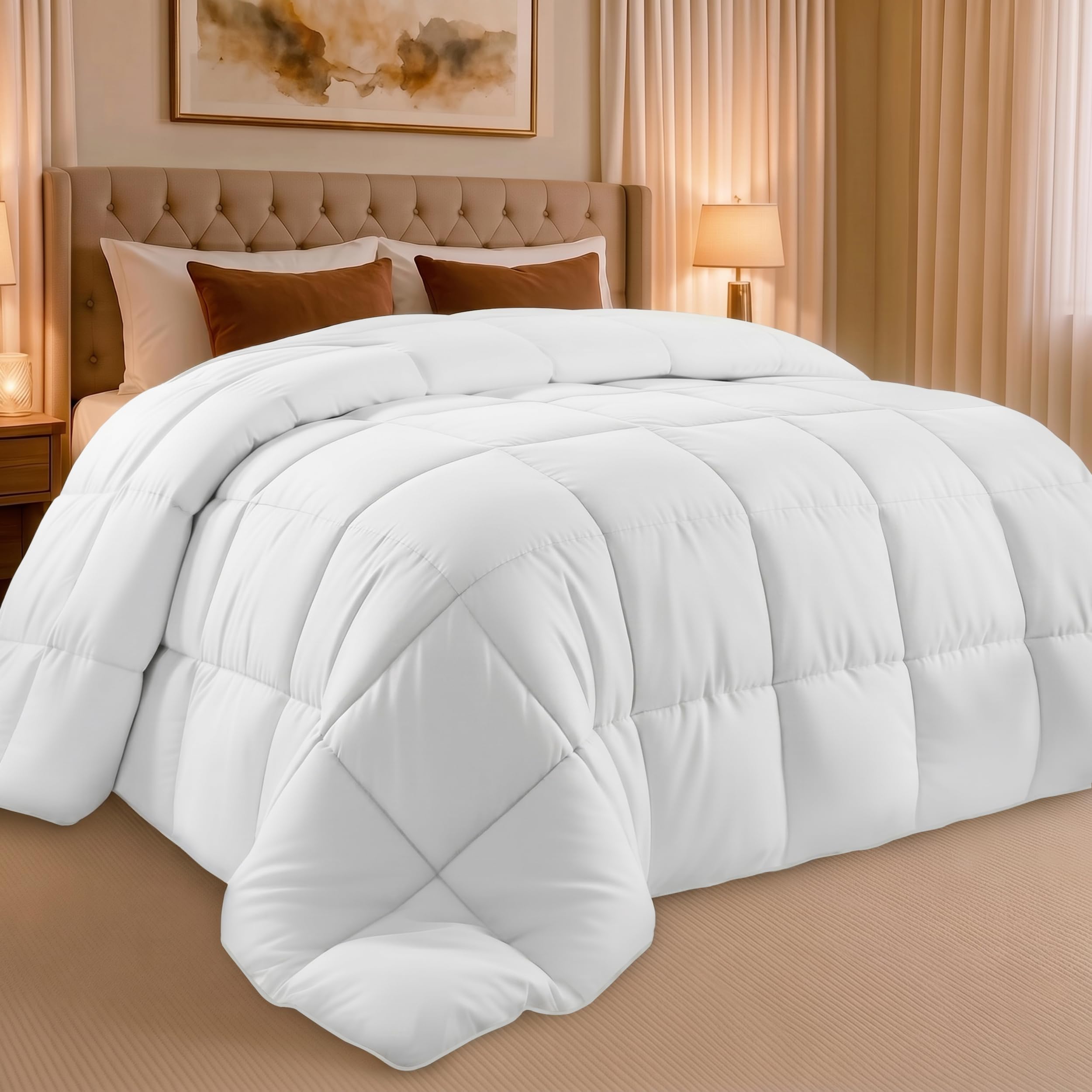
Bedsure’s 300 GSM down alternative fill and box-stitch construction create a soft, breathable warmth that stays lightweight. The polyester shell resists crinkling and maintains a smooth feel after machine washing, while the even fill distribution provides consistent, cozy comfort across the entire surface. The weight strikes a balance — substantial enough to feel present, yet airy enough to avoid stifling heat in most rooms.
The comforter drapes more like a heavy blanket than a puffy down duvet — loft is intentionally moderate, so the silhouette appears flatter than product photos suggest. The fill resists clumping after multiple washes, keeping warmth consistent. Eight corner and side tabs keep the insert anchored inside a duvet cover without shifting, preserving a clean drape on the bed.
Budget-conscious shoppers who want a soft, all-season layer without bulky weight will find it hits the mark. Extremely cold sleepers and those expecting a cloud-like appearance should look elsewhere; this is a medium-weight comforter best suited to moderate climates or layered setups.
Pros
- Exceptionally soft with a lightweight, high-loft feel
- High perceived quality in stitching and shell for the price
- Ideal weight — warm without feeling heavy or suffocating
Cons
- Thinner than expected; loft is moderate, not cloud-like
- May need an extra blanket for very cold sleepers in winter
For sleepers who prioritize softness and year-round versatility over a ballooning look, this comforter delivers standout value in a budget tier.
Best for Budget Soft Comfort
Utopia Down Alt Comforter
Key Features
- Shell Material: Microfiber (100% polyester)
- Construction: Box-stitch
- Corner Tabs: 4 tabs
- Price: Budget
Utopia Bedding’s down alternative comforter puts silky softness front and center. The siliconized polyester fill drapes lightly and glides against skin, a noticeable step up from many budget inserts. Compared to the top pick’s balanced all-season weight, this model stays cooler — a benefit if you sleep warm or live in a mild climate.
The thin profile is a tradeoff: it won’t replicate the fluffy loft of down, and winter use may need layering. That tradeoff suits anyone who values plush softness and breathable warmth over heavy insulation.
Pros
- Silky soft microfiber shell that feels luxurious against skin
- Lightweight warmth ideal for year-round use in moderate climates
- Budget-friendly price point given the softness and durability
Cons
- Feels thinner than product photos suggest; doesn’t fluff up like a full down comforter
If buttery softness and breathable weight are your top priorities — and you’re willing to sacrifice lofty looks — this comforter is an exceptional value for hot sleepers and mild climates.
Best for Coordinated Set
Bare Home Comforter Set
Key Features
- Shell Material: Brushed microfiber
- Construction: Box stitching
- Corner Tabs: Corner tabs
- Price: Mid-Range
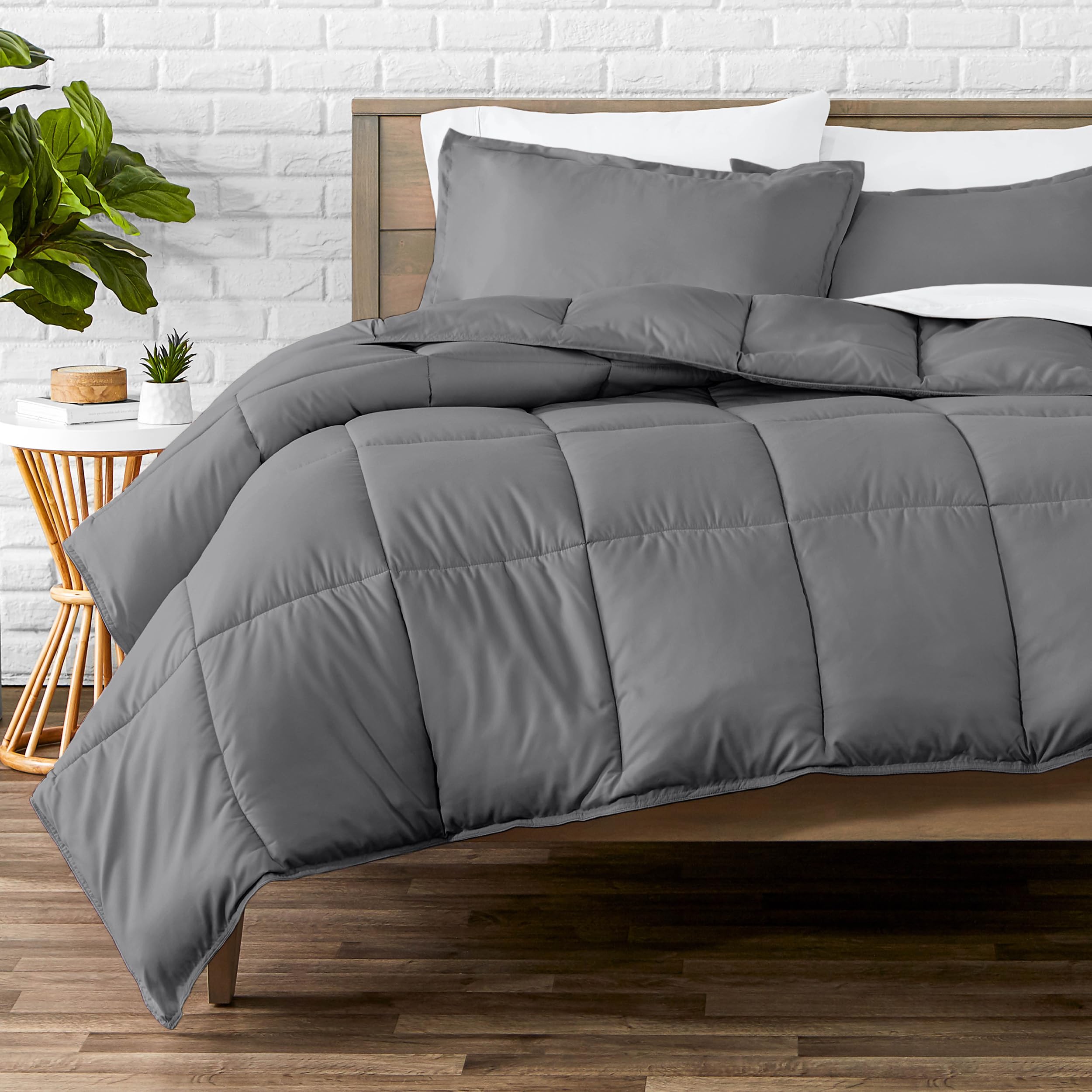
The Bare Home comforter set stands apart by including two matching pillow shams, offering a coordinated look right out of the bag. Its 1800-series brushed microfiber shell has a notably soft, smooth hand feel that owners describe as hotel-like. The goose down alternative fill is lightweight yet provides enough warmth for all-season use, with corner tabs for duvet cover attachment. This is ideal for shoppers upgrading an entire bed who want the convenience of a matched set and prioritize touchable softness over maximum loft. However, at a mid-range price, it’s overkill if you already own shams or just need a basic insert.
Pros
- Brushed microfiber shell feels remarkably soft and smooth against the skin.
- Lightweight fill provides warmth without feeling heavy, suitable for year-round use.
- Includes two matching pillow shams for a cohesive bedroom look at a reasonable set price.
Cons
- If you only need a comforter insert, paying for matching shams may feel like overspending.
If you want an effortless bedroom refresh with matching shams and don’t mind paying a bit more than a basic insert, this set delivers consistent softness and warmth.
Best for Lightweight All-Season
EASELAND Down Alt Comforter
Key Features
- Shell Material: Brushed polyester
- Construction: Box stitching
- Corner Tabs: Corner tabs
- Price: Budget
Unlike the top pick’s box-stitched design, EASELAND’s comforter uses a single whole-piece polyester fill that stays uniformly distributed — no bunching up or cold zones, even after machine washing. The 88×88-inch queen size drapes cleanly and the soft brushed shell remains gentle against skin.
This comforter is better suited to those who want an even, lightweight layer rather than a showpiece. It won’t deliver the plush, oversized look some expect, but it pairs well with a duvet cover and works year-round in mild climates or as a supplementary layer in colder months.
Pros
- Whole-piece fill stays evenly distributed without clumping or cold spots.
- Soft brushed shell remains gentle on skin after multiple washes.
- Breathable weight works for summer and winter with proper layering.
Cons
- Profile is notably thinner and flatter than a traditional down comforter; expect a drape, not a lofty puff.
The EASELAND comforter is a smart pick for sleepers who want a lightweight, clump-free insert and don’t mind swapping loft for a drapey, even-warmth experience.
Best for No-Frills Value
Amazon Basics Down Alt Comforter
Key Features
- Shell Material: 100% polyester
- Construction: Plain weave
- Corner Tabs: Corner tabs
- Price: Budget
The Amazon Basics comforter uses a plain-weave polyester shell that trades stitched-down compartments for open breathability — a feature that keeps the fill from clumping and adds airiness compared to denser box-stitched styles. Minimalists and guest room setups will appreciate the no-frills design and easy returns; the soft, light fill is cozy enough for three-season use but won’t deliver the lofty look of down or deep winter insulation. For those who prioritize a no-hassle return policy and a straightforward insert over decorative extras, it’s a sensible, budget-friendly choice.
Pros
- Consistent seam integrity and fill distribution after machine washing.
- Microfiber shell feels smooth and gentle, without crinkly noise.
- Delivers light, breathable warmth at a price that undercuts most competitors.
Cons
Amazon Basics delivers a bedding workhorse for undemanding sleepers — the plain-weave breathability and no-questions-asked returns make it a practical choice for guest rooms, dorms, or low-stakes primary use where decorative flourishes aren’t missed.
Best for Hot Sleepers
Cosybay Down Alt Comforter
Key Features
- Shell Material: Microfiber
- Construction: Box stitching
- Corner Tabs: Corner tabs
- Price: Budget
With a 160 GSM microfiber fill, this Cosybay comforter is built to stay airy on warm nights, making it a purpose-built choice for hot sleepers and summer bedding. Unlike the all-season heft of the top pick, this option prioritizes lightweight breathability — it drapes softly without trapping heat. A smooth microfiber shell and box stitching keep the fill evenly distributed. It’s ideal for those in warm climates or who sleep hot, but the thin profile means it won’t provide standalone warmth in winter; layering with blankets or a heavier duvet cover is necessary when temperatures drop.
Pros
- Lightweight yet cozy warmth
- Very soft and smooth surface
- Great value for the price
Cons
- Thin profile provides little insulation on its own; winter use requires layering
If you sleep hot and want a breathable queen comforter that feels soft and stays cool, this Cosybay delivers—just plan on adding layers when the temperature drops.
Best for Hotel-Like Softness
TEXARTIST Down Alt Comforter

Key Features
- Shell Material: Polyester
- Construction: Baffle box
- Corner Tabs: 8 corner loops
- Price: Budget
TEXARTIST’s 4D spiral fiber and baffle box construction create a soft, lightweight feel that earns near-universal praise for comfort. The balanced weight works well across moderate climates without feeling heavy. It lags behind the top-sellers mainly due to a shorter real-world track record — long-term durability under frequent washing is less documented, though immediate satisfaction is outstanding.
Pros
- Baffle box stitching and 4D spiral fill produce a plush, cloud-like softness that resists clumping.
- All-season balanced weight — warm enough for cool nights yet breathable in summer.
Cons
- Fill weight is not listed, making it harder to compare warmth against competitors that disclose GSM specs.
If you want a lightweight, cloud-soft comforter at a budget-friendly price and can accept a thinner long-term durability history, this hidden gem delivers exceptional immediate comfort.
Best for Brand-Name Budget
Beckham Hotel Down Alt Comforter

Key Features
- Shell Material: Microfiber
- Construction: Box-stitch
- Price: Budget
The Beckham Hotel Collection comforter brings the brand’s signature soft microfiber at a budget-friendly cost. The shell maintains its smooth hand through multiple washes, and the lightweight fill gives just enough warmth for layering or warm-season use. The Full/Queen dimensions may leave minimal overhang on wider beds, making it a better match for coverlet-style styling or smaller mattresses.
Pros
- Soft microfiber stays smooth even after multiple washes
- Great value for a hotel-inspired look
Cons
- Thin construction may feel more like a thick sheet than a plush comforter
A smart pick for Beckham enthusiasts wanting an affordable, breathable layer for warm-weather use or duvet cover pairing.
Best for Ultra-Budget Summer
DOWNCOOL Down Alt Comforter
Key Features
- Shell Material: Microfiber polyester
- Construction: Box-stitch
- Corner Tabs: 4 corner loops
- Price: Budget
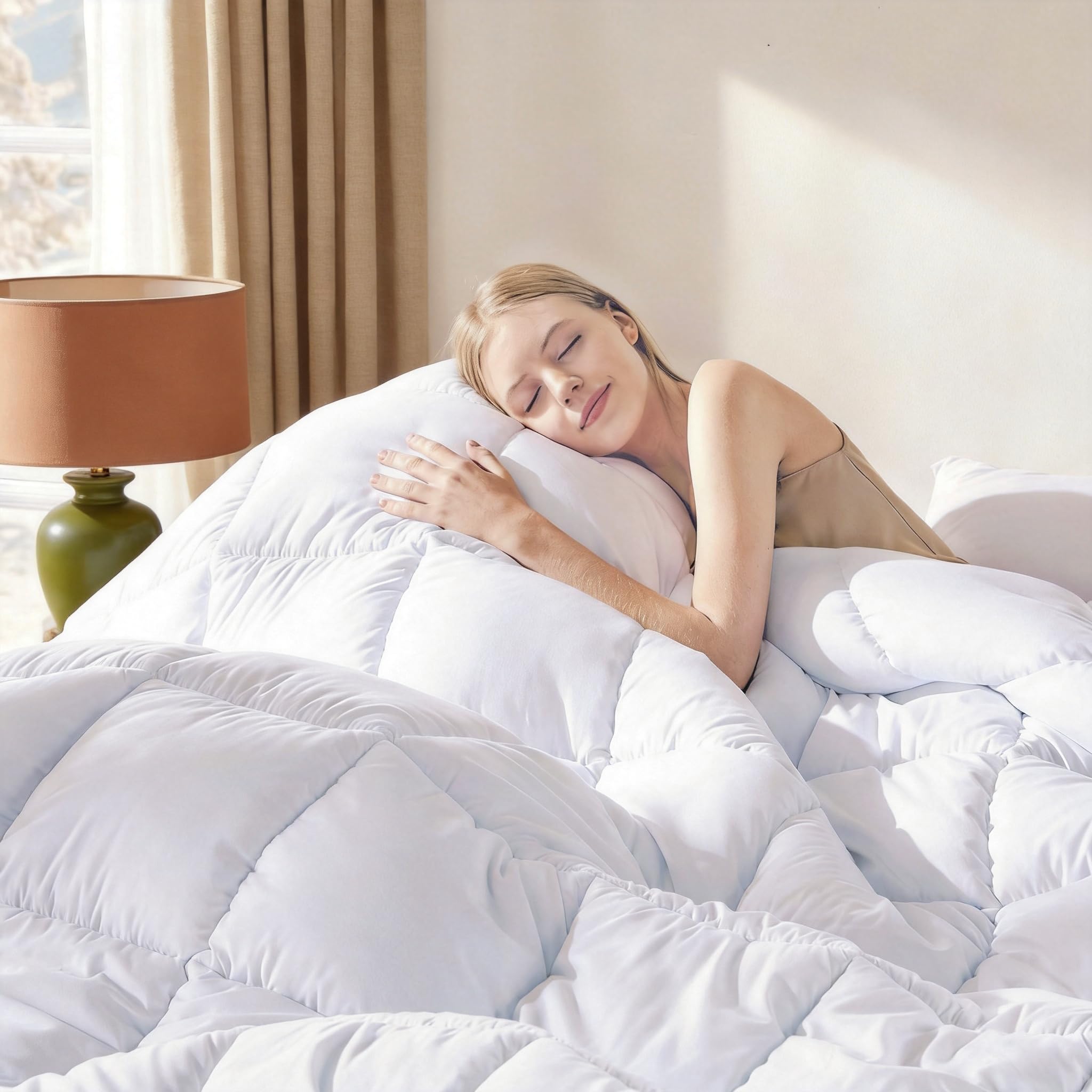
The DOWNCOOL comforter brings marshmallow-like softness and featherlight 2.82-pound weight, making it a standout for hot sleepers. The box-stitched microfiber shell stays breathable and cozy. The thin profile means it won’t provide much warmth in air-conditioned rooms — layering is necessary for cooler nights. This is a seasonal insert, not a fluffy year-round duvet.
Pros
- Extremely lightweight, well-suited for summer heat
- Soft, marshmallow-like texture that feels cozy against skin
Cons
- Extremely thin profile — closer to a blanket than a comforter — lacks the insulation needed for cool weather or air-conditioned rooms.
This comforter works as a budget-friendly, featherlight summer layer for hot sleepers. Anyone seeking warmth or plushness will need to layer heavily or consider a thicker alternative.
Best for Eco-Certified Reversible
ViscoSoft Down Alt Comforter
Key Features
- Shell Material: Microfiber
- Corner Tabs: Corner loops
- Price: Mid-Range
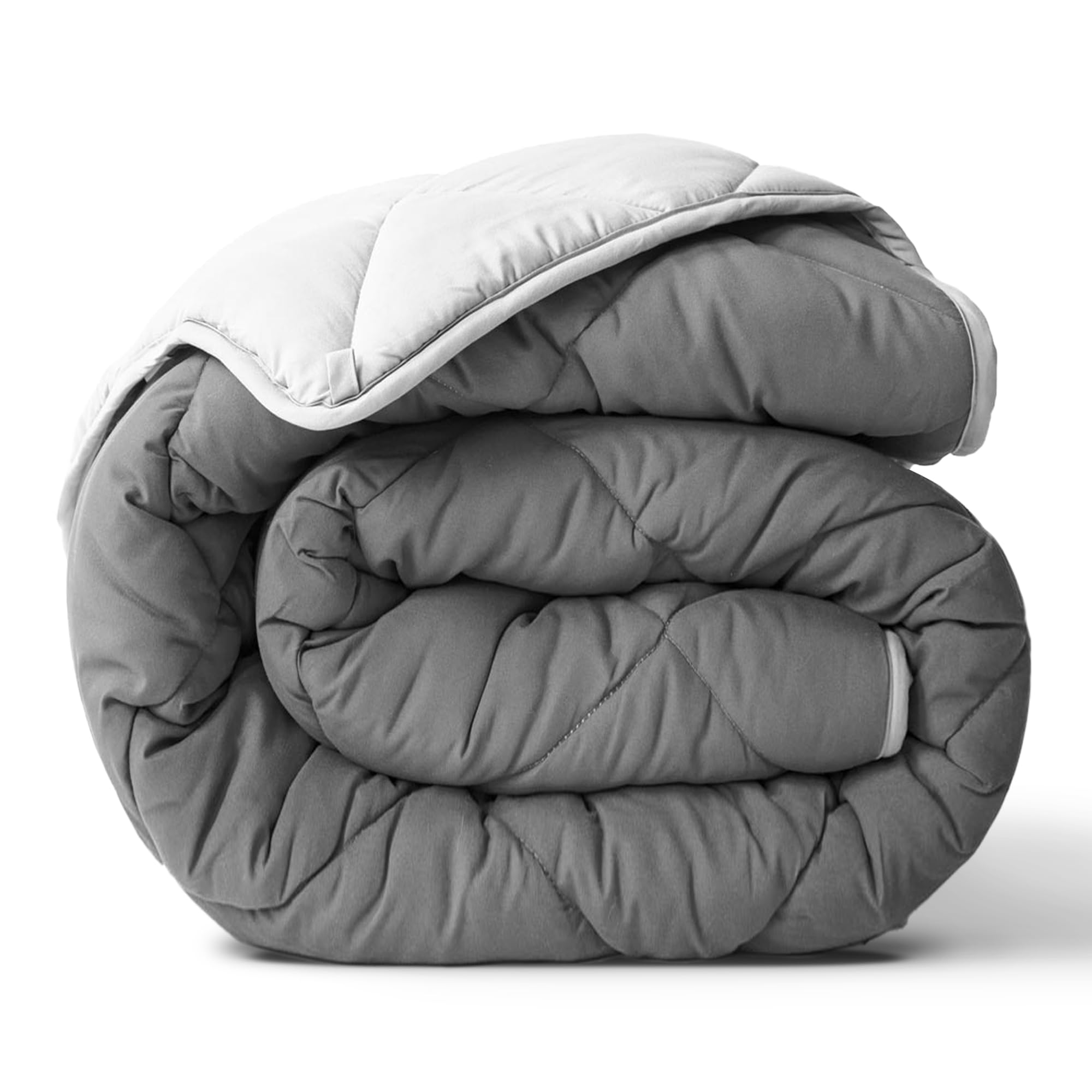
The soft microfiber shell and reversible two-tone design make it a modern pick for dorms, with Oeko-TEX certification adding eco-conscious appeal. Sizing is limited to Full, so larger beds are out, and without box-stitching the fill may shift. Lightweight warmth suits mild seasons, not deep cold.
Pros
- Durable stitching with neat edges
- Soft, non-itchy microfiber texture
Cons
- Limited to Full size, excluding Queen and King beds
A go-to for full-size dorm or guest beds seeking a reversible, certified comforter at a mid-range price, provided you don’t need heavy insulation.
Best for Oversized King Value
L LOVSOUL Down Alt Comforter
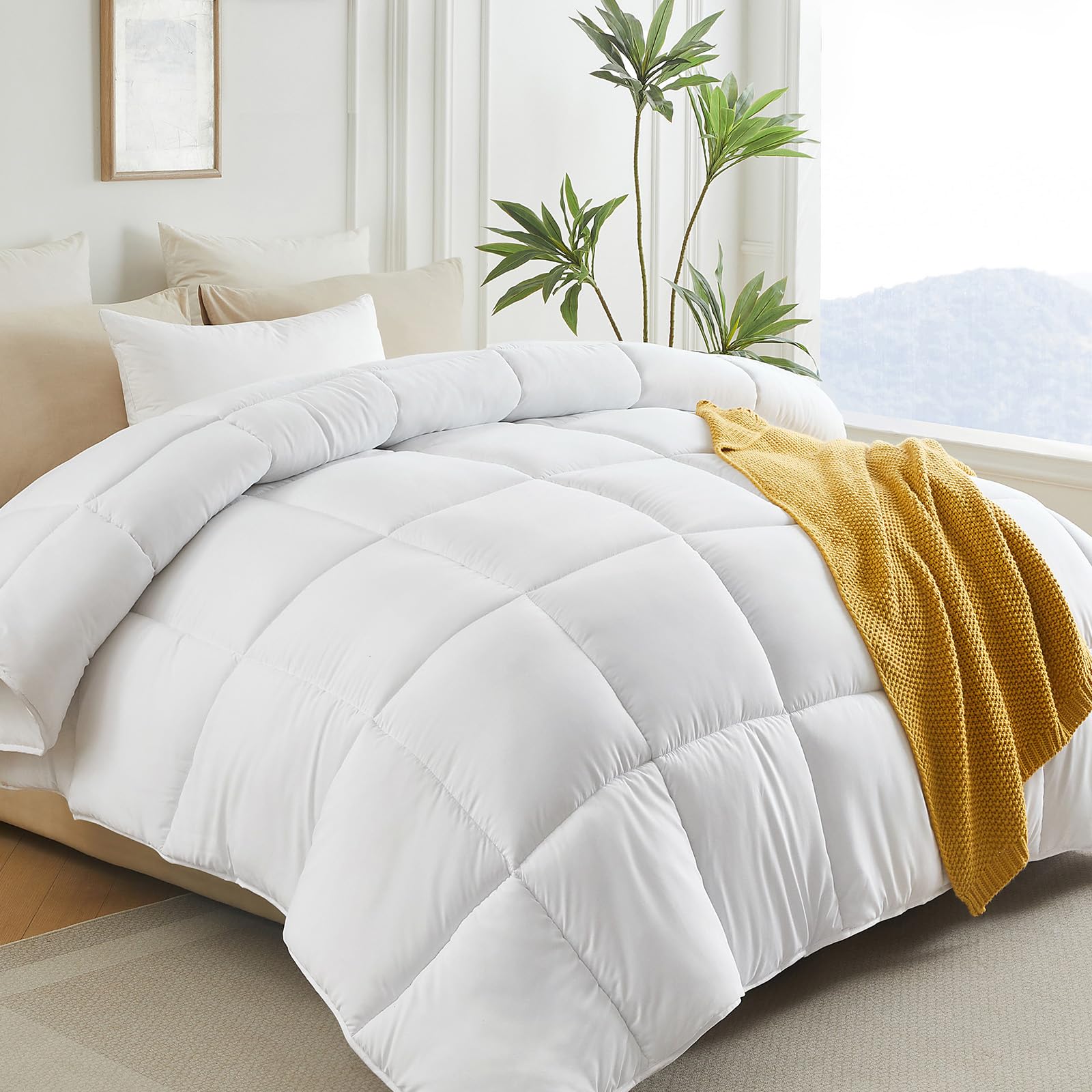
Key Features
- Shell Material: Double brushed cover
- Construction: Box-stitch
- Corner Tabs: 8 tabs
- Price: Budget
With a 106-inch width and 300 GSM fill, this comforter covers oversized beds at a budget-friendly price, and eight tabs keep it secured inside a duvet. Softness is decent, though slightly below the best budget alternatives, and the flatter profile won’t match the lofty look of down — a practical pick for coverage, not plushness.
Pros
- Great value for an oversized King — 106-inch width covers extra-wide beds without premium pricing.
- Soft, lightly plush surface feels comfortable against the skin.
Cons
- Loft falls short of the puffy, down-like look; drapes flatter, closer to a blanket than a hotel comforter.
The L LOVSOUL comforter is right for oversized King beds where extra width matters more than plush loft. Shoppers wanting a fluffy, down-like appearance should look elsewhere.
Best for Moderate Climates
COHOME Cooling Comforter

Key Features
- Shell Material: Soft brushed fabric
- Construction: Box-stitch
- Corner Tabs: 8 tabs
- Price: Mid-Range
A 7.9-pound king comforter with soft brushed fabric and anti-clump stitching that feels plush and well-made. The synthetic fill is comfortable and value-oriented, but the ‘cooling’ label falls short — it can trap body heat, making it better for mild nights than true hot sleepers.
Pros
- Plush brushed fabric feels soft and inviting for nightly comfort.
- Well-constructed with anti-clump stitching to keep fill in place.
Cons
- Cooling claim inconsistent — can feel overly warm in stuffy rooms.
If you prioritize plush softness over real temperature regulation and sleep in a mild room, this well-constructed comforter delivers comfort at a fair price.
How to Choose
The spec sheet rarely tells the whole story: two comforters with identical fill grams can sleep entirely differently once you factor in shell weave and baffle construction.
Fill Weight and Loft
Down alternative fill is measured in grams per square meter (GSM). A 300 GSM fill is the common all-season sweet spot, offering enough insulation for fall and spring without baking you in summer. Lower GSMs around 160 create a true summer-weight layer, but they leave cold-natured sleepers reaching for an extra blanket.
The hidden trade-off: a high GSM number doesn’t guarantee the pillowy loft you see online. Vacuum-sealed shipping can deflate even dense fills, and some synthetic fibers never fully rebound. After the first wash, real-world fluff depends more on baffle construction and dryer restoration than on the GSM alone.
Shell Material
Most shells are 100% polyester or microfiber, often brushed on one side for a peach-skin or suede-like hand. Brushed microfiber boosts initial softness, but the tight weave can trap heat if it lacks breathability. ‘Cooling’ claims on shells usually stem from thinner fabric rather than an actual temperature-regulating technology.
When a shell is labeled ‘bamboo-infused’ or ‘cooling,’ test it in a warm room before committing. A dense brushed shell can make a lightweight comforter sleep hotter than a plain-weave one with the same fill, because the fabric itself blocks airflow.
Stitching and Baffle Design
Box-stitching (or baffle-box construction) sews the top and bottom layers together in squares, preventing the fill from migrating into lumpy clumps. A higher stitch count with smaller boxes holds the fill more evenly, but it can reduce overall loft by compressing the fibers.
Comforters with plain-weave shells and no box-stitching tend to be budget-focused. They rely on the fill itself to stay put, which works initially but leads to thin spots within a few wash cycles. Baffle boxes take it a step further by adding internal fabric walls that let the fill expand fully — worth the extra cost if you want true loft retention.
Corner and Side Tabs
Tabs (or loops) on the corners and sometimes mid-sides are critical if you use a duvet cover. They tie the insert to the cover so the whole assembly doesn’t shift at night. Most comforters include four corner tabs, but eight tabs add mid-point anchors that reduce bunching on larger beds.
Without tabs, a smooth shell slides inside the cover, leading to that frustrating 3 am rearranging of bunched fabric. If you plan to use the comforter alone, tabs are harmless but unneeded.
Care and Washing
Machine washable on a gentle cycle and tumble dry on low is the standard, but home front-loaders often lack the drum space for a queen-size comforter to tumble freely. Overcrowding can twist and tear seams, especially on budget models with delicate stitching.
A front-load washer is strongly preferred; top-loaders with agitators are notorious for snagging. After washing, toss a couple of dryer balls in on low heat to restore loft without scorching the synthetic fibers. Line drying works, too, but expect a longer fluff-up period.
FAQ
Why is my down alternative comforter so thin after washing?
Vacuum-sealed packaging compresses synthetic fill for shipping. A low-heat dryer cycle with two or three dryer balls restores a surprising amount of loft by re-separating the fibers. If it still feels flat after two cycles, the fill itself may not have the resilience to fully rebound — common with ultra-budget 160 GSM options.
Can I use a down alternative comforter without a duvet cover?
Yes, but skipping a cover means you’ll need to wash the comforter itself more often, which stresses seams and accelerates fiber breakdown. A duvet cover acts as a washable shield, extending the life of the insert significantly. If you choose to go without, spot-clean and wash only when truly necessary.
What is the warmest down alternative comforter for winter?
Look for a 300 GSM or denser fill paired with baffle-box construction and a brushed shell, as the baffle walls let fill loft fully and trap more body heat. Additional weight (around 7 pounds for a queen) also helps. Even the warmest all-season models may need a wool blanket on the coldest nights, because synthetic fill cannot match the insulative density of real down.