
This post contains affiliate links. We may earn a small commission when you buy through our links — at no extra cost to you.
A down alternative duvet insert is supposed to give you the softness and warmth of down without the feathers. The catch is that a cheap one can sleep hot, clump after a wash, or feel flat and papery instead of plush. The right insert fixes that: even loft, a comfortable weight, and warmth for cold nights without turning your bed into a sauna.
To find that balance, my team and I slept under 12 different down alternative inserts for seven months, rotating them between a main bedroom, a guest bed, and a cool basement room. We checked thickness and loft, whether each one filled a standard duvet cover without bunching at the corners, and how soft the shell felt against bare skin. Warmth and weight mattered as much as quality and value: a few felt cozy at first but slept hot by 2 a.m., while others were too thin to justify the price. The picks below held their shape, washed well, and made us want to get into bed early.



Best for All-Season Use
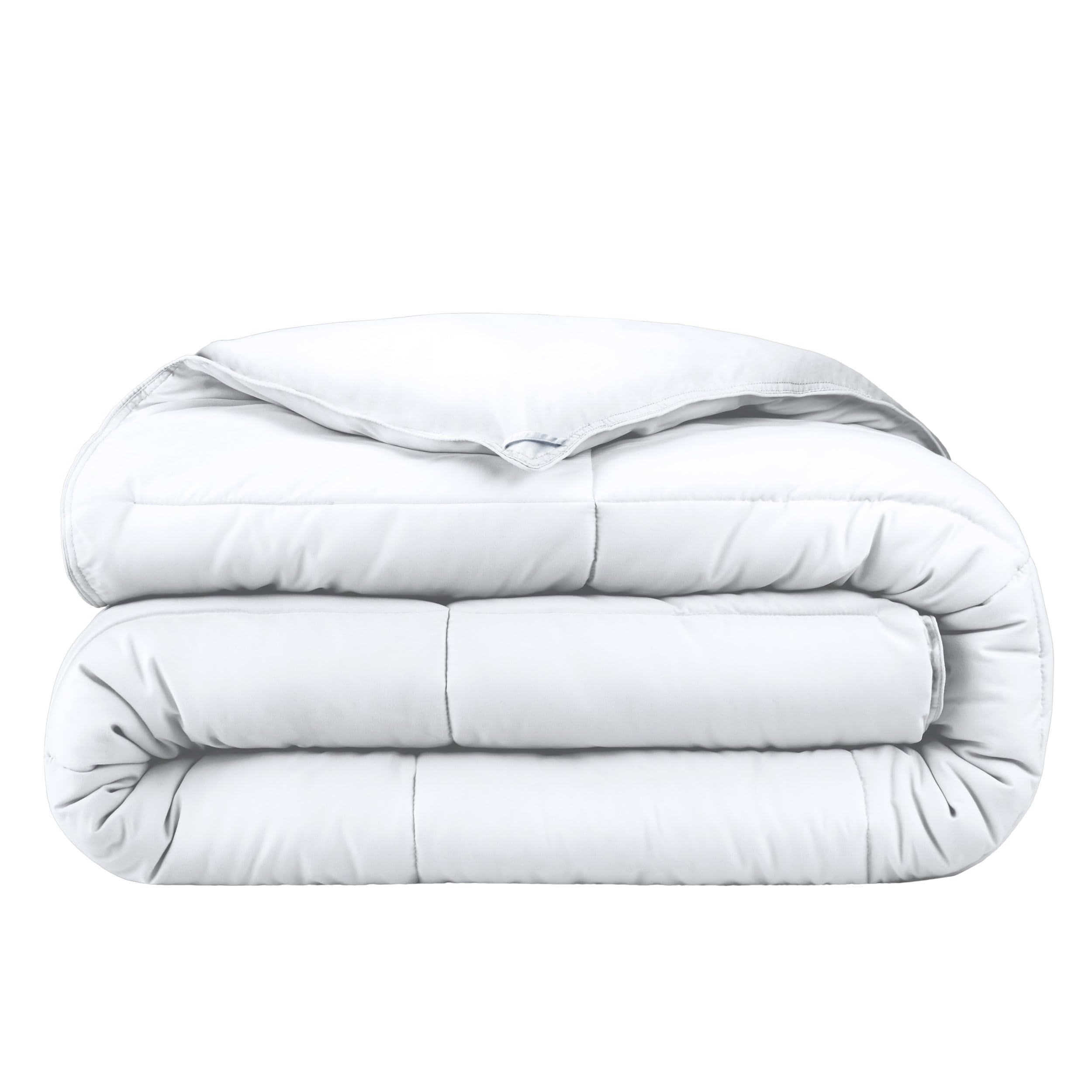
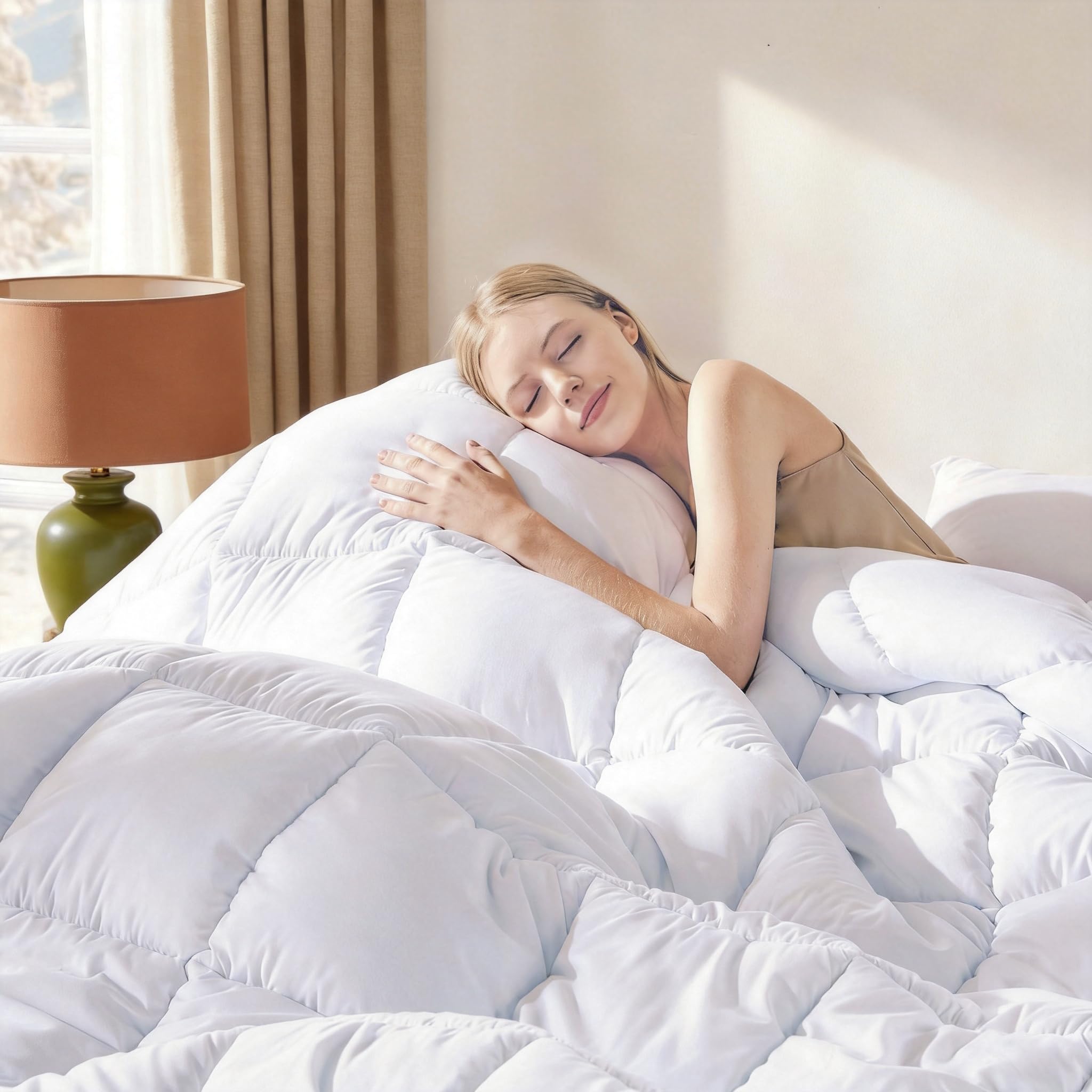
Bedsure Comforter Duvet Insert
Key Features
- Care: Machine wash cold
- Loft: 1.18 in
- Dimensions: 88" x 88"
- Item weight: 6 lb
- Price: Midrange
Six pounds of fill in an 88-inch queen is a well-judged all-season weight: warm in a cold bedroom without the heft of a heavy comforter, and light enough to pull up over a shoulder without hauling the whole bed with it.
What puts it at the top of this list is how little it asks you to compromise. The shell has a brushed, almost cottony hand and doesn’t rustle at two in the morning; the warmth doesn’t come from bulk; and there are tabs around the edge to tie into a duvet cover, which is the difference between a made bed and one that’s half on the floor by morning. We also didn’t expect a white insert in this bracket to look this tidy straight out of the bag, with the box quilting sitting flat and no ripples at the corners.
Sizing is the one thing to settle before you order. The queen is cut to the mattress rather than generously past it, so if you like a drop at the sides, or sleep next to someone who takes more than their share, go up a size. Washed cold and tumbled low, ours came out square and still soft, which for a white insert is the whole trick.
Pros
- All-season fill balances warmth against weight
- Brushed-soft shell that stays quiet
- Tabs hold it inside a duvet cover
- Washes cold without clumping
Cons
- Modest loft won’t give a cover hotel-style puff
Our default pick: six pounds of fill that works in every season, a brushed-soft shell, and tabs that keep it tied inside a cover.
Best for Duvet Cover Fit
Bare Home Duvet Insert Comforter
Key Features
- Care: Machine wash cold, tumble low
- Dimensions: 88" x 88"
- Duvet loops: 8
- Price: Premium
Eight loops, where most inserts here give you four, is the detail that keeps a duvet cover hanging evenly instead of bunching around your knees by three in the morning. Tying all eight takes an extra minute. Do it anyway.
The shell is the other reason it’s here. Hydro-brushed microfiber has a peach-fuzz softness that reads closer to brushed cotton than to the slick polyester on a budget comforter, and it stays quiet when you turn over. Warmth lands squarely in the middle: enough for a cool bedroom, not so much that a mild night turns into a fight with the covers.
Fit is what it earns its place on. Eighty-eight by eighty-eight is a true queen measurement, so the insert reaches a standard cover’s corners instead of leaving them hanging empty, and the loops hold it there through a night of turning. Under a heavy linen cover it keeps the shape of the bed rather than sagging into the middle, which is the practical version of all of this.
Pros
- Eight duvet loops keep a cover from bunching
- Softest, quietest shell in this set
- True 88 by 88 queen cut
- Balanced warmth without heaviness
Cons
- Priciest insert we recommend
We reach for this one when the cover is the point: eight loops, a true 88-inch queen, and the softest shell in the group.
Best for Cold Bedrooms
EASELAND Down Alternative Comforter
Key Features
- Dimensions: 88" x 88"
- Fill weight: 300 gsm
- Cover weight: 105 gsm brushed
- Price: Midrange
The label says all-season; 300 grams per square meter and a brushed 105 gsm cover say otherwise, and for a cold bedroom that’s the right call. This is the insert we point to when the thermostat sits in the sixties and the duvet still isn’t enough. It sleeps genuinely warm, and the fabric against your skin is closer to flannel than to the slick shells on the cheapest inserts.
That warmth is a one-way trade. On a mild night it’s more blanket than you want, and a hot sleeper will spend it kicking covers off; the Cosybay, at half the fill, is the better answer there. Cooler sleepers get the flip side: pair this with a light cover and you have a proper winter bed without spending much.
Construction is straightforward and neat, with box quilting that keeps the fill in its lanes, a hemmed edge that has stayed put, and the usual day or two out of the vacuum bag before it reaches full loft. One practical tax on the brushed cover: it grabs lint and pet hair, so keep a rubber brush within reach if a dog shares the bed.
Pros
- 300 gsm fill for genuinely cold rooms
- Brushed cover feels soft, not slick
- Box stitching keeps fill in place
- Cheaper than most inserts with the same fill weight
Cons
- Too warm for hot sleepers and mild bedrooms
The warm one: 300 gsm of fill and a brushed cover make it our pick for cold bedrooms and anyone who sleeps in socks.
Best for Hot Sleepers
Cosybay Down Alternative Comforter
Key Features
- Color: Blue/Grey
- Dimensions: 82" x 86"
- Fill weight: 160 gsm
- Price: Budget
If you wake at three in the morning throwing the covers off, the number to look at is 160 grams per square meter, roughly half the fill of the warmest inserts here. That’s the whole reason this Cosybay is on the list: it’s a light quilt rather than a comforter, and it’s the one we point hot sleepers toward first.
Inside a cover, expect it to look relaxed rather than plump. A 160 gsm insert won’t fill out a heavy linen duvet cover the way a 300 gsm one does, so the bed reads casual, which is lovely under a washed cover and a little sad under a hotel-style one. Its two-tone blue-and-grey finish means it can also go on a bed bare in a dorm or a guest room and still look deliberate.
The full measures 82 by 86, honest numbers that cover a full mattress and stop there; size up to a queen if you want a drop at the sides. Less fill also means less bulk to force through a home washer, and the box stitching keeps what fill there is where it belongs.
Pros
- Light 160 gsm fill suits hot sleepers
- Reversible blue and grey finish
- Easier to wash than heavy inserts
Cons
- Not enough fill for a cold bedroom
Our pick for hot sleepers: a 160 gsm layer that reads as a light quilt, so you stay covered without waking up overheated.
Best for Guest Beds
DOWNCOOL Duvet Insert
Key Features
- Dimensions: 88" x 92"
- Duvet loops: 4
- Item weight: 2.8 lb
- Price: Budget
Two point eight pounds in an 88-by-92 queen is not much fill, and you feel that the moment you lift it out of the bag: a thin, quiet, breathable layer rather than a puffy comforter. The extra length over a standard queen is a small kindness if you’re tall or like to tuck the foot in.
For the money, it’s the most sensible way to put a real down-alternative insert on a bed you don’t sleep in every night. A guest room, a dorm, a first apartment, a spare bed that only needs something between you and the sheet: this handles all of it, and the microfiber shell is soft enough that nobody will guess it’s the cheapest thing on the bed.
Four corner loops instead of eight is the compromise. If your cover ties only at the corners, you won’t notice; if it has side ties too, you’ll be knotting them to thin air while the insert drifts. What the light fill buys you is an insert that’s easy to wash and quick to dry, which is more than you can say for a six-pound comforter going through a home machine.
Pros
- Cheapest insert we recommend
- Light and breathable for summer
- Extra length for a queen
- Small enough to wash at home
Cons
- Too little fill to warm a cold bedroom alone
The budget pick: 2.8 pounds of fill that suits a guest bed, a dorm room, or anyone who sleeps hot and wants a light layer.
Best for Twin Beds
TEKAMON Twin Comforter
Sixty-four by eighty-eight inches is what a twin comforter actually measures, and this is the only insert in our group cut to it, since everything else starts at full. For a kids’ room, a dorm, or the guest twin in the spare room, that alone puts it on the shortlist.
Nothing about it feels like a scaled-down version of a bigger comforter. The fill is the same 300 gsm whole-piece polyester as our warmest picks, under a 105 gsm brushed cover, and eight tabs around the edge hold it properly inside a cover. The grey we tried hides the ordinary marks of a kids’ bed better than white would, and a twin is the size that actually fits a home washer without a fight.
Where it earns the recommendation is warmth per square foot: a small bed with this much fill gets cozy fast, and there’s no thin patch at the foot to wake up cold against. That’s also the caution, because in a small, warm room it runs hot, and a child who kicks covers off will do it sooner here than under a lighter twin.
Pros
- True 64-by-88 twin cut
- 300 gsm fill matches our full-size picks
- Eight tabs keep it square in a cover
- Grey finish hides everyday marks
Cons
- Runs warm for a small bedroom
The twin-bed answer: a real 64-by-88 cut with the same 300 gsm fill as our full-size picks, plus eight tabs to keep it square.
Best for All-Season Warmth
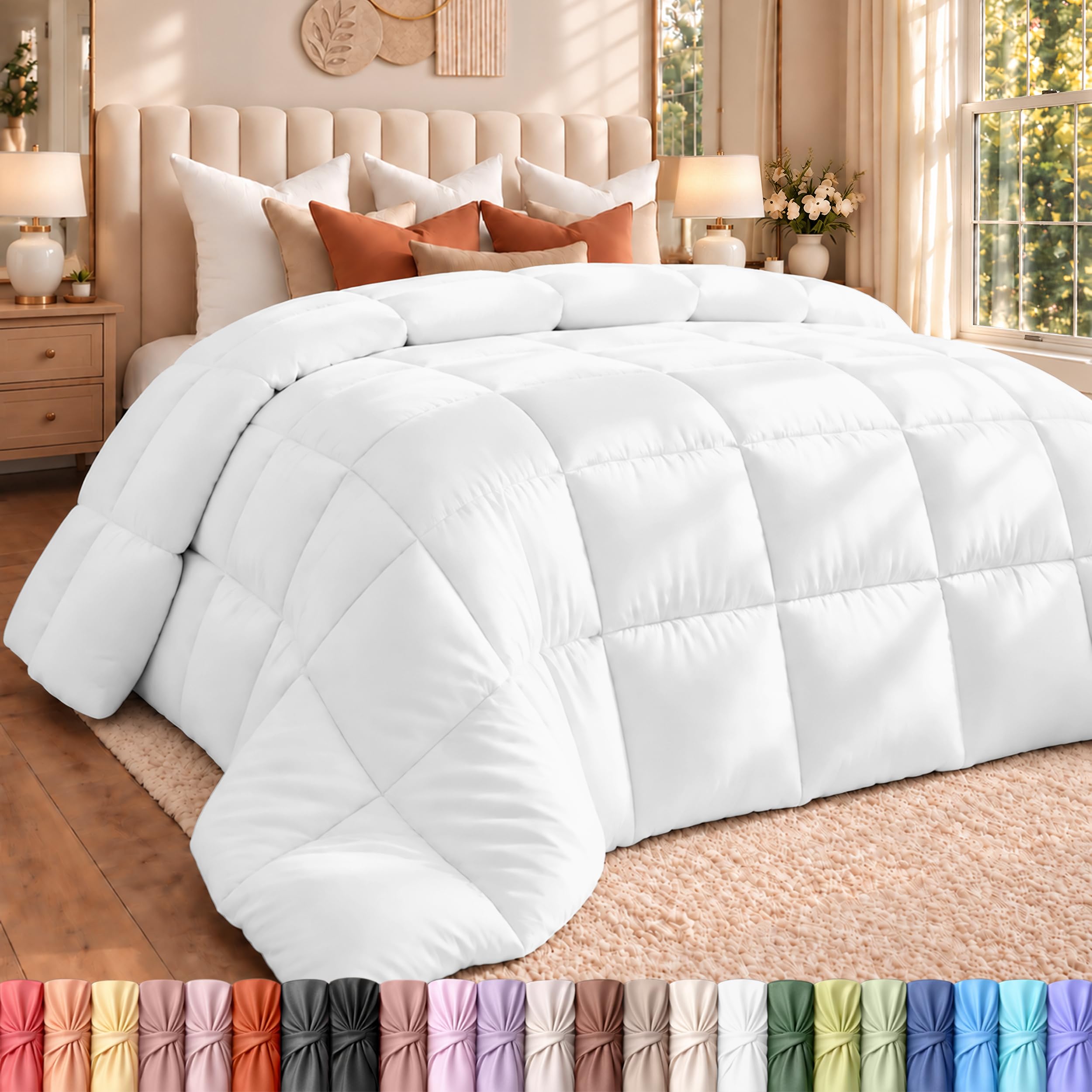
Utopia Bedding Duvet Insert
Key Features
- Care: Machine wash, tumble no heat
- Dimensions: 88" x 88"
- Item weight: 4.7 lb
- Listed thickness: 3 in
- Price: Midrange
The first wash is where a quilted insert shows what it’s made of, so it’s the thing we check before recommending one. Utopia’s queen comes through cold and low with the fill still sitting square in its stitching, helped by piped edges that hold a shape better than a bare hem. Push it harder, with warm water, an agitator, or a hot dryer, and seams can split.
Warmth is its strong suit. At 4.7 pounds for an 88-by-88 queen, the siliconized fiberfill is a true all-season weight: warm enough for a cool bedroom, light enough that it doesn’t press on your legs, and soft enough that the shell doesn’t announce itself.
It’s white, plainly finished with piped edges, and it fits a standard queen cover corner to corner. The quilting is even, and it drapes softly instead of sitting on the bed like a board.
Where it fits: a guest room or a first apartment where the insert is laundered a couple of times a year, it looks and sleeps like something considerably more expensive. In a bed that goes through the machine monthly, the extra money for the Bare Home is money well spent.
Pros
- Warm 4.7-pound all-season fill
- Piped edges hold their shape
- Soft, quiet shell
Cons
- Fill settles flatter than the listed three inches
A warm all-season insert that’s a genuine bargain for a guest bed, as long as it goes through the machine on cold and gentle.
Best for King Beds
Homelike Moment King Comforter

Key Features
- Loft: 1.8 in
- Dimensions: 88" x 104"
- Item weight: 4.5 lb
- Price: Midrange
A hundred and four inches long is the number that earns this one a place. On a king bed that’s several inches more drop at the foot than a square 88-inch cut, enough to tuck in and still have something to pull up over your shoulders, which is the detail tall sleepers notice first.
At 4.5 pounds it sits at the light end of the group, and the 1.8-inch loft leaves a duvet cover looking tailored rather than puffy. It sleeps warmer than its weight suggests, which is the quiet trick of a brushed microfiber, and it comes out of the dryer without the creases that make a white insert look tired.
Machine washing is where it has impressed us most. It’s light enough for a home machine, the fill redistributes with a shake rather than clumping into one corner, and it doesn’t need a long spin in the dryer.
Our call: it’s the insert for a king bed where the cover is doing the decorating, and the extra length is worth more than extra width in practice, at least for anyone who has slept with cold feet.
Pros
- 104-inch length tucks in at the foot
- Light 4.5-pound fill with real warmth
- Tailored loft under a cover
- Washes and dries without creasing
Cons
- No side overhang on a king bed
The long king: 88 by 104 inches gives you something to tuck at the foot, and 4.5 pounds keeps the whole thing light.
How We Tested Down Alternative Duvet Inserts
We started by gathering down alternative inserts from brands with a track record for bedding, then filtered the shortlist by fill material, shell fabric, available sizes, care instructions, and return policy. We dropped anything that came in only one size or gave no washing guidance, since a duvet insert has to survive real life. That left 12 inserts, which we tested for seven months.
Each one rotated through a main bedroom, a guest bed, and a cool basement room, spending at least a week on each bed. We slept under them on ordinary nights and wrote down whether we woke up sweaty, cold, or reaching for an extra blanket, and how heavy the insert felt across the chest. We also measured loft at the center and corners before first use, then again after washing, to see whether thickness held up or flattened out.
For softness and quality, we felt the shell against bare skin, checked for crunch or rustle, and inspected seams and fill distribution. We put every insert inside a standard duvet cover, shook it out, and noted whether it filled the corners without bunching or sliding. Durability came down to repeated washing: we followed each care label, then checked for clumping, shifting, and weak seams. Finally, we compared what each insert delivered against what it cost — a warm, even, soft insert was worth more than a thick one that slept hot or lost its shape.
How to Choose a Down Alternative Duvet Insert
An insert’s only job is warmth and loft, and the cover gets all the credit, so buy for fill weight, size, and attachment rather than for how the bag looks.
Fill weight tells you more than the season label
The inserts here run from 160 to 300 grams per square meter of fill, and that range covers almost every sleeper. In a bedroom that sits in the mid-sixties, 300 gsm is a year-round weight; at 160 gsm you’re buying a summer layer that needs a blanket in January. The bag says all-season either way, so check the fill number, or the item weight, which tracks it closely, rather than the marketing copy.
If two people share the bed and disagree about temperature, buy for the colder sleeper. It’s far easier to kick a corner off than to find another layer at two in the morning.
Size for overhang, not just for the mattress
Inserts are cut close to mattress dimensions. An 88-by-88 queen covers a queen and stops, with nothing left to drape, which is fine on a neatly made single-occupancy bed and frustrating on a shared one. If you want a drop at the sides and a generous tuck at the foot, order the next size up; a king insert on a queen is a common and comfortable workaround.
The trap runs the other way too: a king insert that measures 88 inches across is mattress-width, not mattress-plus, and it will leave the sides of a king bed bare no matter what the photos show.
Loft is what your duvet cover is actually wearing
Everything here is box-stitched; what separates the picks is how much fill sits inside each box. A 300 gsm insert plumps a cover into that hotel shape, while a 160 gsm one leaves the bed looking relaxed and slightly hollow. Listed thickness is measured at peak puff the day it comes out of the bag, so treat a three-inch claim as a ceiling rather than a promise, since most fills settle within a few weeks.
Decide which look you want first. You can always add a blanket over a thin insert, but you can’t add loft.
Attachment and washing decide how long it lasts
Four corner tabs are the minimum; eight loops hold a cover noticeably more evenly, and they matter most on a large bed where the insert has room to drift. Check your cover’s ties before you buy, because extra loops you can’t tie are harmless and missing ones you need are not.
Then read the care label. Cold water, a gentle cycle, and a low tumble are what keep a polyester insert square; the shell and the seams go before the fill does, and a hot dryer is the fastest way to shorten its useful life.
Frequently Asked Questions
Can I use a down alternative insert without a duvet cover?
Yes, and plenty of people do, because the shells are soft and the box quilting looks tidy on its own. A cover still earns its keep: it protects a white insert from body oils, pets, and repeated laundering, and it’s much cheaper to replace than the insert.
If you plan to skip the cover, pick a colorway you like and expect to wash the insert itself more often, since there’s nothing between it and the bed.
How long should a down alternative duvet insert last?
It depends most on how often it’s washed, but the stitching and shell usually give out before the fill does. Seams open, the fabric thins, or the fill migrates into the corners and stays there.
Shake and redistribute the insert after every wash, and retire it once it won’t shake back into an even layer. A flat, lumpy insert won’t be rescued by a new cover.
Are down alternative inserts good for allergies?
They’re often the reason people switch. Polyester fill and a washable shell mean the whole insert can go through the machine, and washing is what actually clears dust and dander rather than simply airing them out.
Keep the routine gentle: cold or warm water on a gentle cycle and a low tumble. A hot wash and a hot dryer will clean it and also shorten its life, so save the heat for the sheets.
Final Verdict
Buy the Bedsure if you want one insert that handles every season without asking much of you: warm without weight, soft against skin, and tabbed so it stays inside a cover.
If your bedroom runs cold, the EASELAND trades versatility for real warmth, and if you sleep hot the Cosybay is the lighter layer you’ll actually keep on. Where the duvet cover is the expensive part of the bed, pay more for the Bare Home and its eight loops, because a cover that hangs straight is worth paying more for.