
This post contains affiliate links. We may earn a small commission when you buy through our links — at no extra cost to you.
Feather pillows promise the hotel-bed feeling — that soft, sink-in give foam can’t copy — but most of them make you trade support for it. The good ones don’t. A properly filled feather pillow stays tall through the night, keeps its quills where they belong, and still feels cool against your cheek at 2 a.m. What you’re actually shopping for is a pillow that holds its loft for the way you sleep without turning into a brick, and the gap between a good one and a cheap one usually shows up around week three.
Softness and support pull against each other here, and the fill settles the argument: feather-heavy pillows are firmer and hold up longer, while down-heavy ones feel plusher but flatten faster. Size matters more than people expect, too — a skimpy standard pillow in a king case looks sloppy no matter how good the fill is. My team and I have spent the past eight months sleeping on 12 feather pillows, and the ones worth the money got both the fill and the size right. Everything else lives in the guest room now.
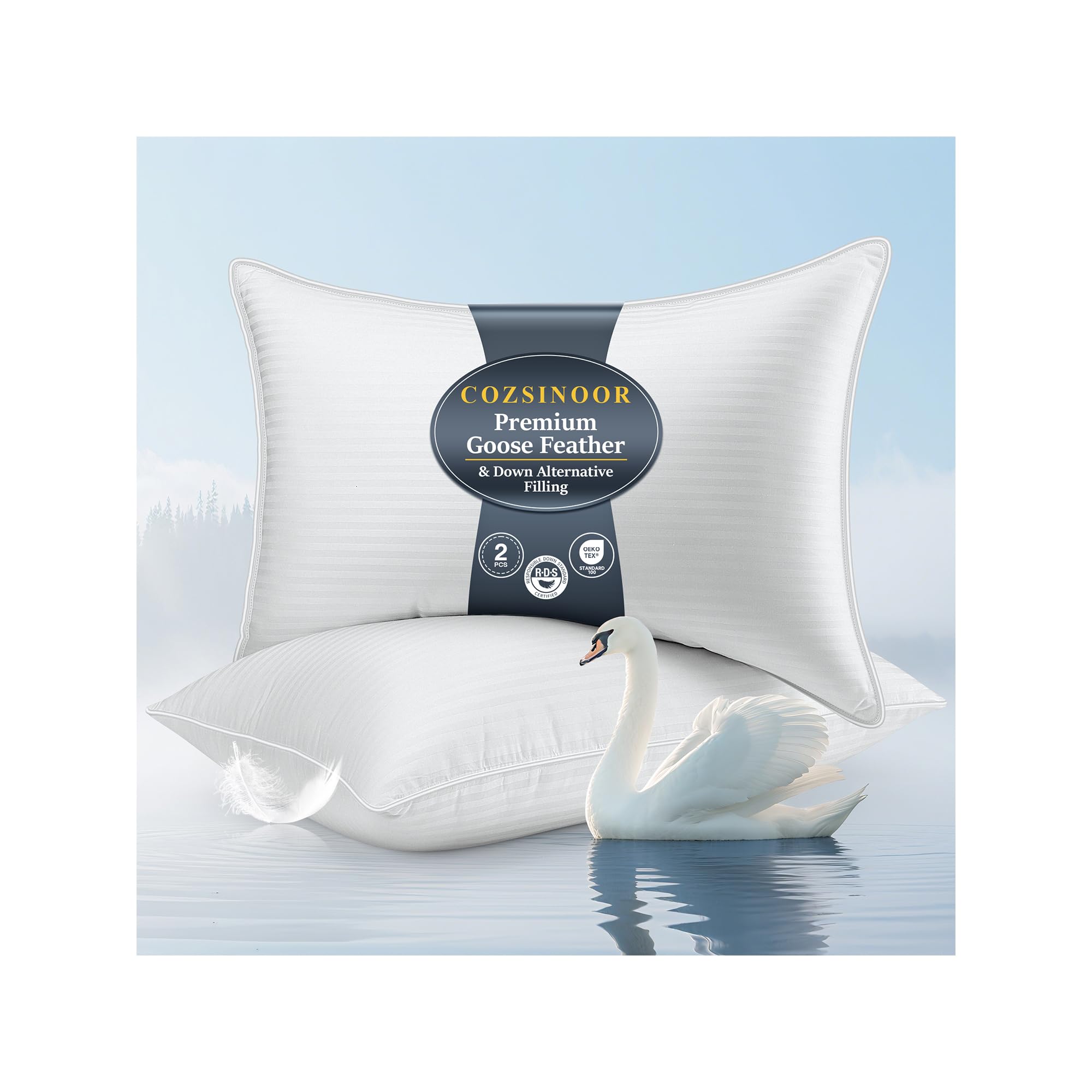


Best for All-Round Queen Bed
COZSINOOR Goose Down Feather Pillows
Key Features
- Care: Machine wash
- Fill: 60% feather, 40% down-alternative fiber
- Size: Queen, set of 2
- Cover: 600-thread-count cotton
- Price: Midrange
A 60/40 split is what makes this the easiest feather pillow here to live with: 60 percent feather for shape, 40 percent down-alternative fiber for softness at the cheek. It lands at a true medium, which is why it goes to back and side sleepers first. It also holds its loft better than the all-feather sets in this group, though a heavier head still pushes it down by morning. The 600-thread-count cotton cover, with its satin stripe, is the smoothest we handled — closer to a hotel case than the polycotton shells on cheap sets.
On paper it’s a 1.8-inch pillow, which sounds thin next to a 5-inch gusseted king. In practice it arrives vacuum-packed and flat, and it needs a day out of the bag with a few good shakes before the fill is where it should be. Give it that day before you decide anything.
Machine washing is the practical argument. Feather fill collects dust in a way foam doesn’t, and a pillow you can launder cold and dry thoroughly stays fresher than one you can only spot clean. The pair covers a queen bed, the one-year warranty covers you if a seam gives out, and the cover feels better than it needs to at this tier — a lot of the decision settled at once.
Pros
- Medium loft suits back and side sleepers
- Smooth 600-thread-count cotton cover
- Machine washable, with a one-year warranty
Cons
- Blend uses down-alternative fiber, not true down
This is the set we point most people to: a medium feather blend that suits back and side sleepers, a smooth 600-thread-count cover, and machine washing when it needs a refresh.
Best for Traditional Feather Feel
puredown Goose Feather and Down Pillows
Key Features
- Fill: 95% goose feathers, 5% goose down
- Size: Standard/queen, set of 2
- Cover: 100% cotton, double-lined
- Firmness: Medium
- Price: Midrange
Ninety-five percent goose feather with 5 percent goose down is the most traditional fill in this group, and the set looks the part: gusseted edges, brown piping, a diamond-quilted finish, and a boxy shape that sits tall on the bed. If your idea of a feather pillow is the heavy, shapeable kind you can punch into place, start here.
What we appreciate most is the shell. With this much feather inside, the cover does as much work as the fill, and puredown puts a double fabric lining behind the cotton to stop quills migrating to your cheek. That one detail is why this set goes in front of anyone who has been poked awake by a cheaper feather pillow — the difference between feather as a luxury and feather as a nuisance is usually a lining.
The trade-off is character. This is a dense, firm, faintly crunchy pillow, the kind that pushes back instead of swallowing your head, and the fill is audible when you turn over. Back sleepers who want height and stomach sleepers who want a flat, firm surface do well with it; if you want to sink into softness, the COZSINOOR blend is the better fit. The pair comes in standard/queen, so a king bed takes two sets, and it washes cold and tumble-dries low.
Pros
- Highest feather share here for a true feather feel
- Double fabric lining keeps quills contained
- Gusseted edges hold a boxy shape
Cons
- Flattens under the head overnight
For traditional feather heft, this is our pick: 95 percent goose feather, a double lining that keeps quills off your face, and a firm, shapeable pillow.
Best for Firm, Stable Support
Three Geese Goose Feather Down Pillows
Key Features
- Fill: 95% feather, 5% down inner chamber
- Size: Standard, set of 2
- Cover: 600-thread-count cotton
- Fill weight: 28 oz per pillow
- Price: Midrange
Twenty-eight ounces of fill in a standard pillow is a lot of pillow, and that number explains most of what this set does. The three-chamber build splits the work: an inner chamber of 95 percent goose feather and 5 percent goose down supplies the volume, and cotton batting in the two outer chambers smooths it into a level, flat-topped surface instead of a lump with a peak in the middle.
That construction is why it suits sleepers who want a stable platform. Where a loose feather fill slides away from your head and needs re-shaping in the middle of the night, the batting layers keep the surface where you left it, and the 600-thread-count cotton cover feels as good as anything here. It’s the most structured pillow of the group, and the one we name for back and stomach sleepers who hate a pillow that migrates.
Where it earns its place is consistency: the same level surface night after night, a cover that stands up to washing, and a fill weight that doesn’t need coaxing back to full loft. Unpacking takes some patience — squeeze, fold, fluff, then wait half an hour — but it recovers faster than the compressed blends we tried.
Pros
- Three-chamber build keeps a level surface
- 28 ounces of fill per pillow
- 600-thread-count cotton cover
Cons
- Standard size only
- Feathers work through the shell over time
We reach for it when someone wants a dense, level pillow that stays put rather than a soft one that shifts under the head.
Best for King-Size Beds
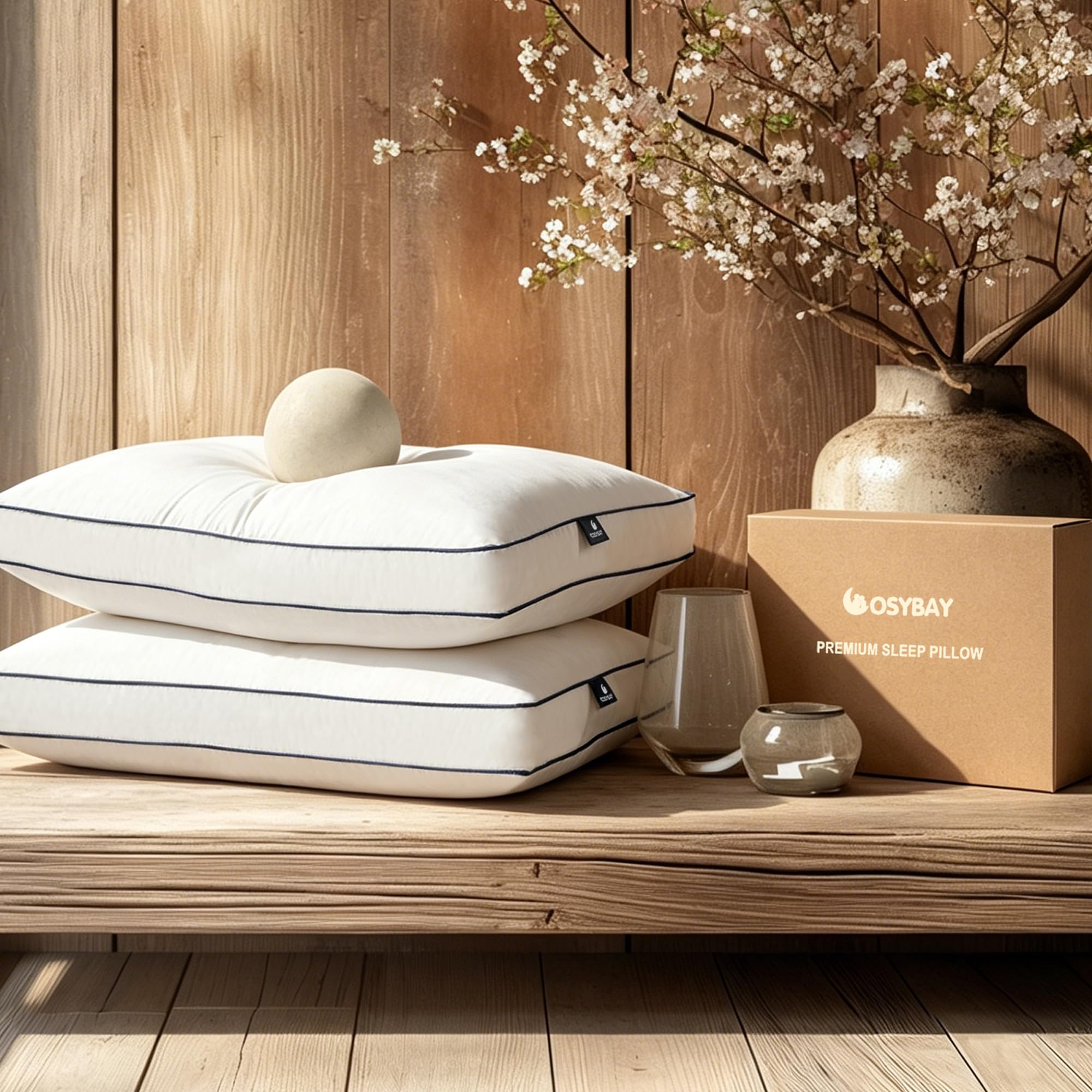
Cosybay Goose Feather and Down Pillows
Key Features
- Care: Machine washable
- Fill: Down and feather fiber over foam core
- Size: King, set of 2
- Cover: 600-thread-count cotton blend
- Price: Premium
This set costs the most here, and the build is where the money goes: it’s the only king-size pair in this group, and each 20-by-36-inch pillow wraps outer chambers of goose down fiber and feather fiber around a memory foam core. We think that structure is worth paying for on a king bed, where a wide all-feather pillow tends to puddle under your head.
The surface is the good part. Seventy percent down fiber in the outer chamber gives the soft, sink-in feel people want from a feather pillow, and the foam underneath keeps the whole thing from collapsing when you roll over. The cotton-blend shell has the smooth, faintly crisp hand of hotel bedding, and the gusseted edge holds its square shape inside a sham.
For a king bed, 20 by 36 inches is the point: enough width to sleep on your side without your head sliding off the edge, and two of them fill a pair of king shams properly. It’s machine washable on a gentle cycle and dries on low, which matters at this size. Give it the full fluffing day after unpacking — compressed foam takes longer to come back than feather does.
Pros
- Only king-size set among our picks
- Foam core holds shape under the head
- Soft down-fiber surface with a 600-thread-count cover
Cons
- Feather content is fiber over foam, not loose feathers
The king-bed pick: a foam core wrapped in goose down and feather fiber gives down softness with structure a wide all-feather pillow loses by morning.
Best for Slim, Low-Loft Sleepers
basic home Hotel-Style Feather and Down Pillow

Key Features
- Care: Machine wash cold
- Fill: Goose feather and down
- Size: Queen, 20 x 28 in
- Cover: 233-thread-count cotton with liner
- Price: Midrange
A second Airlock liner sitting under the 233-thread-count cotton cover is the detail that sets this pillow apart, and the reason to consider it over a cheaper feather pillow: there is one more barrier between the fill and your face. The fill is goose feather and down, put through a seven-step purification aimed at animal odor, and the whole pillow is machine washable.
The loft is modest — a 4-inch profile that arrives vacuum-pressed and stays on the flat side even after a day of airing. That makes it a specific pillow rather than an all-purpose one. It suits sleepers who want barely any height under the head, and it chops into shape for a sham better than any of the fuller pillows here; anyone who needs shoulder height for side sleeping should look at the Cosybay or Three Geese instead.
Queen here is a full 20 by 28 inches, so it fills a standard pillowcase without a gap at the end, and the cover looks tidy enough that you don’t need to hide it. Wash cold and dry it completely. For a guest room, or a bed that gets made more often than it gets slept in, that combination is hard to beat.
Pros
- Second liner guards against quills
- Full 20-by-28-inch queen footprint
- Machine washable cotton cover
Cons
- Vacuum-bag odor needs a day of airing
A slim, well-made feather pillow with a quill-blocking liner — the one we suggest for low-loft sleepers and guest-room shams.
How We Chose and Tested 12 Feather Pillows
We started with spec sheets rather than star ratings: fill composition, fill weight, shell weave, sizes offered, and care instructions. Anything that didn’t state its feather-to-down ratio or couldn’t be washed on a gentle cycle came off the list, and we deliberately kept a spread of prices so the value question had a real answer. The 12 pillows that made the cut arrived vacuum-packed; we noted how long each took to expand fully and whether it smelled like anything other than clean fabric out of the bag.
Each pillow then went onto a real bed for at least two weeks — no lab bench, just our own bedrooms, with three of us rotating through back, side, and stomach sleeping so we could match loft to sleeper. We measured height with a ruler right before bed and again on waking to see how much each one lost overnight, and swept a bare palm across the shell every morning to catch quills poking through. Softness got judged by hand-press and by whether anyone actually fell asleep on it; support got judged by whose neck hurt the next day.
Twice over the eight months we washed every pillow according to its own care label and checked the seams, the shape, and whether the shell had yellowed — appearance counted, since these sit on a made bed. At the end we set price against how each pillow looked and felt at month eight, which is where the value picks separated themselves from the expensive disappointments. We also tracked the unglamorous stuff: shipping times, return windows, and whether a king-size actually measured up to a king pillowcase.
How to Choose a Feather Pillow
The number that predicts how a feather pillow will sleep is the fill ratio, not the thread count or the word hotel on the label.
Start With the Fill Ratio
Feather-heavy fills do one job well: they hold their height. The puredown set, at 95 percent feather and 5 percent down, is the firmest and most shapeable pillow here, and the closest to the pillow people remember from childhood. Soften the ratio and you trade some of that structure for comfort at the cheek — our top pick sits at 60 percent feather blended with down-alternative fiber and reads as a true medium. A third option wraps a foam core in feather and down fiber, which holds its shape but feels less like feather and more like a hybrid. Decide which of those three you want before you compare anything else.
Loft, Gussets, and Chambered Builds
Listed thickness is a weak signal, because every pillow here arrives vacuum-packed and flat. The ones that recover best are chambered or layered, with a lighter batting or fiber layer holding the feather core where you put it. Watch the trap on gussets, too: a 5-inch gusset is the height of the side wall, not how high your head ends up sitting — the fill inside decides that. Side sleepers should look for a gusseted edge and a structured build; back and stomach sleepers usually do better with less height and a flatter surface.
The Cover Is What Keeps Quills Out
A feather pillow is only as good as its shell. A downproof or double lining under the cotton is the difference between a pillow you can put your face on and one that pricks you through the case, which is why puredown’s double fabric lining and the basic home pillow’s second liner are worth more than a thread-count badge. Weave and lining matter more than the number alone. Whatever you choose, add a pillow protector — the cheapest way to keep quills in and dust out.
Sizes, Sets, and What a Pair Really Buys
Queen is not one footprint. The queen pillows here range from 18 by 29 inches to 20 by 28, and king is 20 by 36, so measure your pillowcase before you order or you end up with a gap at the end of the sham. We check the case size before anything else, because a pillow an inch short looks worse than a pillow that is slightly too full.
Almost everything here comes as a pair. That suits a couple, and it leaves a single sleeper with a spare that earns its keep on laundry day — but if you sleep on one pillow, spending the same money on a single better pillow is a legitimate trade.
Frequently Asked Questions
Why does my new feather pillow smell?
Feather and down are washed and then vacuum-sealed, so a faint smell of the bag, or a mild animal note, is normal for the first day or two. Unpack it, shake it out, and let it air in a dry room for 24 to 48 hours before you sleep on it. If a sharp or musty smell is still there after that, treat it as a defect and return it rather than washing it.
Can you put feather pillows in the washing machine?
Only if the care label allows it, and the labels here differ, so read yours before the pillow goes in. Use a cold, gentle cycle with a small amount of mild detergent, wash two pillows at once so the drum stays balanced, and run an extra rinse to get the soap out. Drying matters more than washing: tumble on low with a couple of dryer balls until the fill is completely dry, which can take several hours, because damp feather clumps and mildews.
How do I know when a feather pillow needs replacing?
Fold it in half and let go. A pillow with life left springs back toward flat on its own; one that stays folded has lost its fill and won’t come back with fluffing. The same test applies when a pillow that used to hold its height starts every morning flat and you wake with a stiff neck. Replace it rather than adding a second pillow under it.
Final Verdict
For most beds, we recommend the COZSINOOR goose down feather pillows. The 60/40 blend lands in a medium that suits back and side sleepers, the 600-thread-count cover is the nicest here against your face, and it can go in the washing machine — that combination settles the decision for a queen bed.
Take the puredown set instead if you want real feather heft and a lining that stops quills, and the Cosybay pair if the bed is a king. Add the basic home pillow only if you like almost no height under your head.