
This post contains affiliate links. We may earn a small commission when you buy through our links — at no extra cost to you.
Most ‘firm’ mattress toppers are soft. It’s a recurring frustration: you buy a topper to harden a sagging mattress, and instead you sink into another layer of foam. This isn’t a failure of your research—it’s a category where marketing routinely overpromises on support.
True firmness comes from either high-density memory foam (with a density over 3 lbs per cubic foot) or natural latex, which resists body impressions for years. Memory foam offers a more forgiving surface that can still align your spine, but it may soften over time. Latex provides a buoyant, nearly unyielding push-back that back sleepers often prefer—if you can handle an initial rubber odor.
The picks that follow made the cut because their real-world firmness matches their labels, with specific specs and owner reports to back it up. Choose based on whether you prioritize long-term durability and cool sleep (latex) or a lower-price supportive foam that you’re willing to rotate periodically.


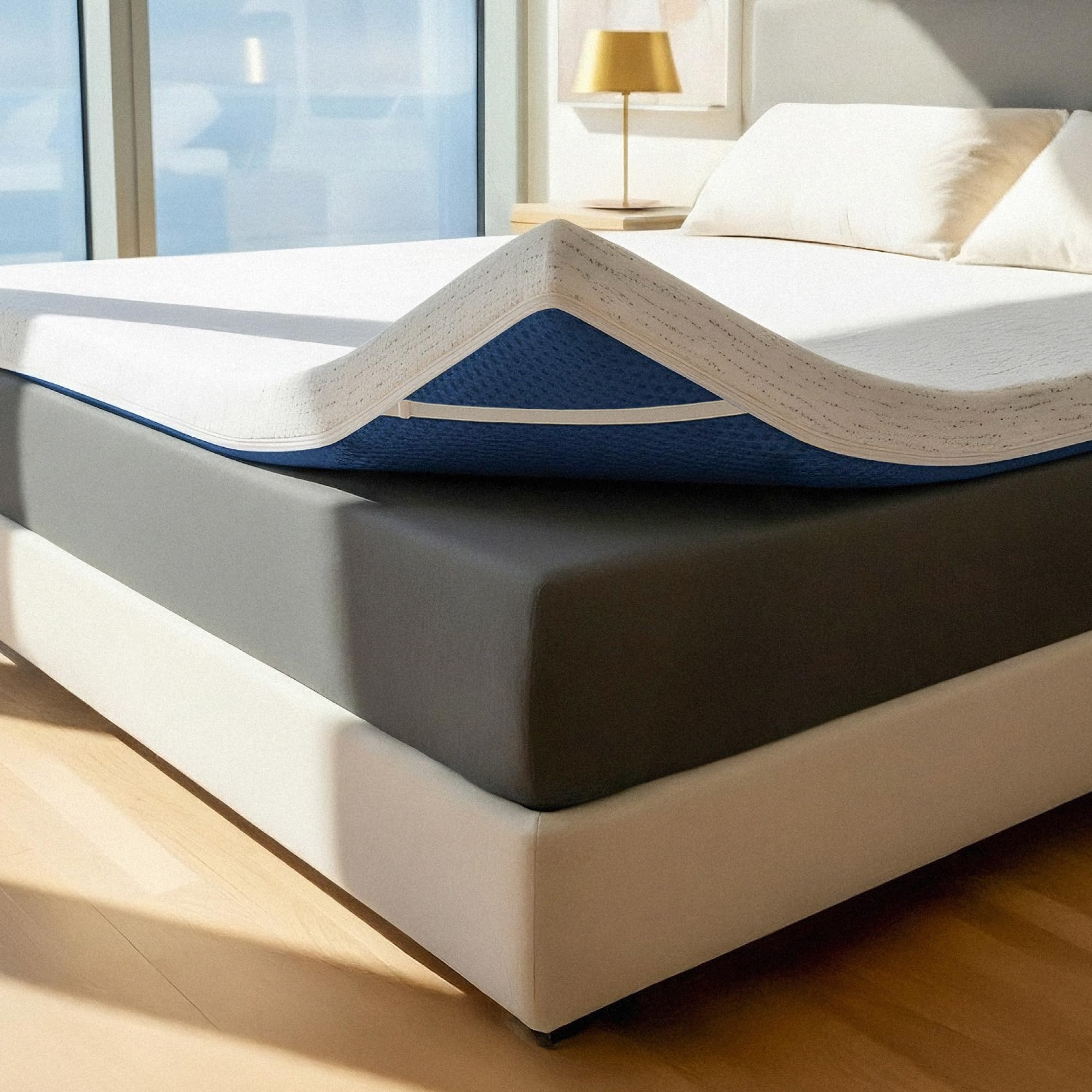
Best for Back/stomach Sleepers
Pure Green Latex Firm
Key Features
- Material Type: Natural latex (GOLS organic)
- Declared vs. Real Firmness: Firm label; very firm, no sinkage
- Thickness: 3 in
- Cover & Anti-Slip: No cover included
- Odor & Off-Gassing: Strong latex odor possible
- Price: Luxury
This 3-inch natural latex topper transforms a sagging mattress into a rigid support platform — exactly what locked-in back and stomach sleepers need to keep the spine aligned. There is no cradling, no sink, just a flat, unyielding surface that stays that way all night. Unlike memory foam, the open-cell latex breathes, so heat never gets trapped, and the material carries GOLS organic and Fair Trade certifications for those who want a cleaner sleep environment.
Night after night, the latex rebounds instantly without the molasses feel of foam. Body impressions are minimal, and the slab-like density resists the softening and sagging that eventually plague polyurethane toppers. Because it does not wear into valleys, it remains a lasting solution for chronic lower-back tightness rather than a temporary patch. The surface stays cool to the touch, and movement from a partner does not ripple across the bed.
This topper targets back and stomach sleepers who want a truly hard surface — almost a plank of correction — and are willing to trade any cushion for structural support. Out of the box, a rubbery latex scent is noticeable, so airing it in a well-ventilated room for a few days is wise. Side sleepers and lighter individuals will find the surface too unyielding; pressure can build at the hips and shoulders. For those drivers, the medium-firm alternatives in this comparison deliver relief without the rock-hard feel.
Pros
- Delivers uncompromising firmness that relieves back pain — no sink or soft spots.
- Natural latex resists degradation and body impressions far longer than foam.
- Inherently cool sleep surface that won’t trap body heat or restrict movement.
Cons
- Strong rubber smell that may require days to a couple of weeks of airing out.
- Surface can be too rigid for side sleepers and lighter-weight users, causing hip and shoulder pressure.
For stomach and back sleepers committed to a rigid, non-toxic support platform, this topper delivers genuine, long-haul firmness that foam cannot replicate.
Best for Budget Firm Support
BedStory Firm Topper
Key Features
- Material Type: High-density memory foam
- Declared vs. Real Firmness: Firm label; some softening
- Thickness: 3 in
- Cover & Anti-Slip: Zippered cover, corner straps
- Odor & Off-Gassing: Mild off-gassing
- Price: Mid-Range
The BedStory Firm topper takes the opposite approach from plush memory foam. Its high-density construction adds noticeable rigidity to a too-soft mattress, providing the firm support that back and stomach sleepers need for spinal alignment. Rather than sinking in, you stay on top of the surface — a difference that many owners credit with reducing lower back pain and improving overnight comfort.
It’s the budget-conscious alternative to a latex firmness upgrade. Side sleepers will find it too hard for pressure points, and anyone sensitive to new-foam smells should air it out for a few days. The bigger tradeoff: some units lose their initial firmness and develop body impressions after several months. Rotating the topper head-to-foot every quarter helps, but if you want permanent, unchanging rigidity, latex is the surer bet.
Pros
- Genuinely firms up soft mattresses, easing back and hip pain
- Consistent comfort and durable build quality for the price
- Noticeably improves sleep quality on overly plush beds
Cons
- Topper can shift on the mattress despite corner straps, requiring occasional repositioning
- Firm support may soften and develop body impressions over time, especially without rotation
For back and stomach sleepers who demand a firm, pain-relieving surface without paying for latex, this topper delivers genuine support at a mid-range price. Just plan to rotate it every few months to keep the firmness even.
Best for Mixed Firmness Couples
ViscoSoft HD Topper
Key Features
- Material Type: High-density memory foam (>3 lbs)
- Declared vs. Real Firmness: Medium-firm; some find too soft
- Thickness: 3 in
- Cover & Anti-Slip: Removable cover, slip-resistant, straps
- Odor & Off-Gassing: Mild off-gassing
- Price: Mid-Range
Where the firmest latex toppers remove all sink, this 3-inch memory foam topper introduces a supportive medium-firm feel with a removable rayon cover that washes easily. High-density foam resists deep impressions and works to firm up a softened mattress without turning it into a plank.
Couples split between comfort and support find common ground here — the topper adds structure that back and combination sleepers appreciate, but avoids the rock-hard sensation of pure latex. If your back requires an absolutely rigid surface, you may still perceive some give. The topper can shift on slick mattress covers despite corner straps; a set of sheet clips usually stops the drift.
Pros
- Relieves hip and back pressure, letting many wake pain-free.
- Dense foam maintains support over time without premature softening.
- Gel infusion and ventilated design keep the surface noticeably cooler than basic foam.
Cons
- The medium-firm cushion may feel too soft if a genuinely hard sleep surface is required.
- The topper can slip out of position even with the included anti-slip base and straps.
For couples seeking firmer support without the plank-like feel of latex, this washable topper is a well-balanced midpoint. Just plan on a little extra anchoring.
Best for Springy Feel Lovers
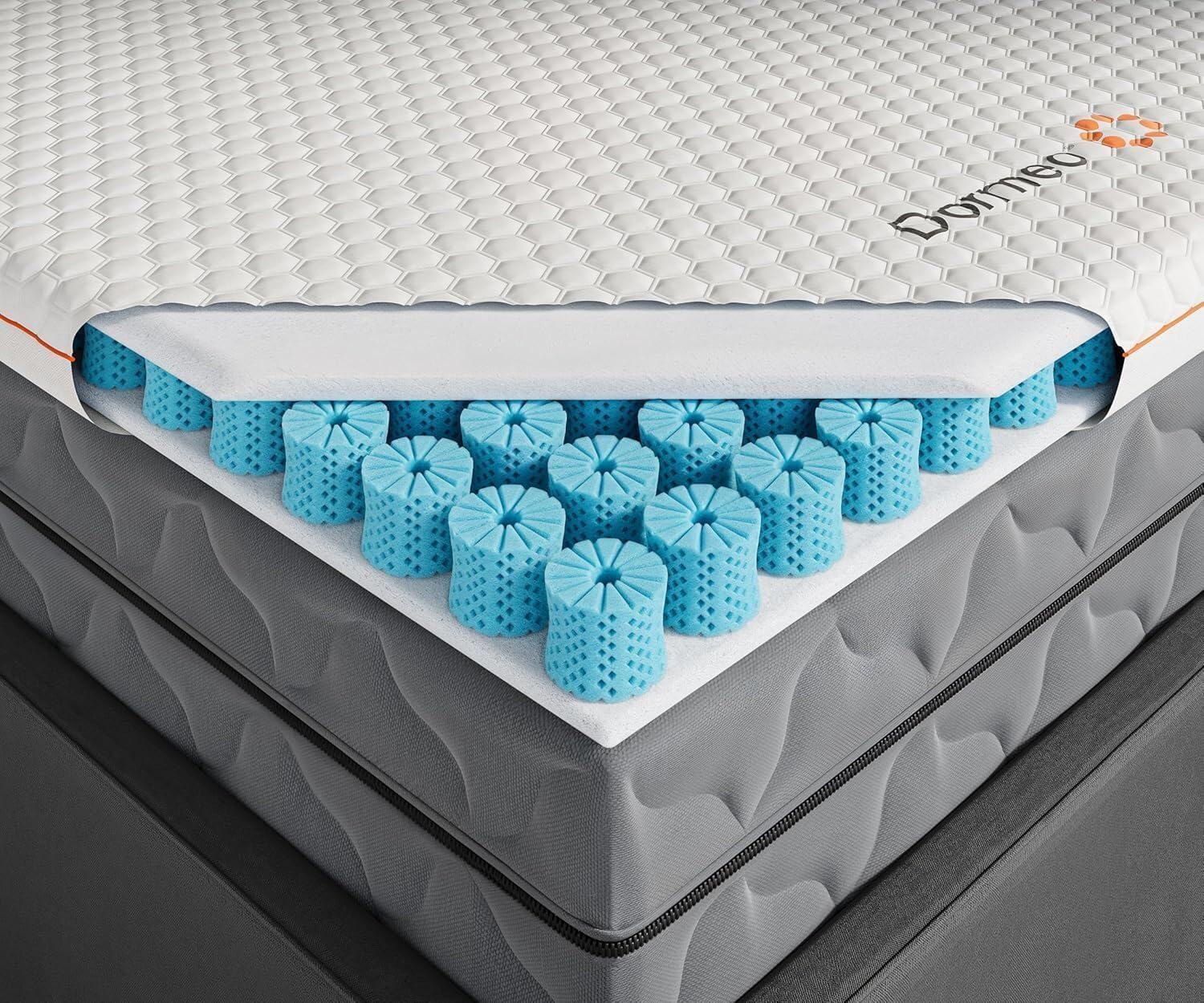
Dormeo Octaspring
Key Features
- Material Type: Octaspring polyurethane foam
- Declared vs. Real Firmness: Medium-firm; polarizing feel
- Thickness: 2.95 in
- Cover & Anti-Slip: Washable cover, anti-slip, straps
- Odor & Off-Gassing: Possible mild odor
- Price: Premium
Octaspring foam delivers a springy, responsive feel that recovers its shape instantly, avoiding the quicksand sensation of memory foam. The medium-firm layer can ease pressure on hips and shoulders, and the washable polyester cover with anti-slip straps keeps the topper from shifting during the night.
This topper suits back and combination sleepers who want a lively surface with moderate support, not a hard, locked-in feel. The boundary to watch: firmness depends on your body weight. Heavier bodies can compress the foam fully, losing structure, while lighter sleepers may perceive it as too stiff. Cooling claims also have limits — while the design aims to promote airflow, some units trap heat similarly to standard foam. For unyielding, consistent firmness, the solid latex option in this set is the more predictable route.
Pros
- Noticeable back and hip pain reduction for many sleepers.
- Initial feel and build quality convey a premium touch.
- Washable cover with anti-slip bottom and corner straps keeps the topper securely in place.
Cons
- Firmness shifts with user weight — may feel too soft or too hard, reducing support predictability.
- Breathability can fall short of cooling claims; heat retention is possible during sleep.
A well-made topper for sleepers who prioritize a bouncy, responsive surface over locked-in firmness, as long as you can verify the feel within the return window.
Best for Tempur Loyalists
Tempur Adapt Topper

Key Features
- Material Type: TEMPUR memory foam
- Declared vs. Real Firmness: Medium-firm; often too soft
- Thickness: 3 in
- Cover & Anti-Slip: Machine-washable cover, corner straps
- Odor & Off-Gassing: Typical memory foam odor
- Price: Premium
TEMPUR foam delivers genuine pressure relief and can soften a too-stiff mattress, making it a comfort upgrade for Tempur-Pedic loyalists. The medium-firm label, however, leans soft for those needing firm support — sink-in is noticeable, and heat retention may be a drawback for hot sleepers. At a premium price, it’s a plush layer, not a solution for increasing mattress firmness.
Pros
- Provides substantial pressure relief and comfort for average-weight sleepers.
- Can offer back support and pain relief for some users.
Cons
- Can retain body heat, leading to discomfort for hot sleepers.
- The medium-firm feel may be too soft for those needing firm support, with noticeable sink-in.
If you’re a Tempur-Pedic fan looking to soften a too-firm mattress and can accept a plush, heat-retaining surface, this topper provides pressure relief — but it won’t increase firmness.
How to Choose
The key to finding a topper that truly firms up your mattress is understanding the difference between material types and realistic long-term performance.
Material: The Foundation of Firmness
Memory foam labeled ‘firm’ relies on density. A density rating above 3 lbs per cubic foot resists body impressions better, but heat and time can still cause softening. For a truly unyielding surface, natural latex is the benchmark: it pushes back against your body rather than cradling it, and its cellular structure lasts for years without sagging.
Specialty foams like Dormeo’s Octaspring create a springy, bouncy feel that some find more supportive than dense foam. However, their firmness is less consistent across body weights, making them a riskier pick if your main goal is a permanently harder bed.
Don’t Trust the Label Alone
Manufacturers often use ‘medium-firm’ to describe a topper that, in practice, sinks noticeably under a 180-pound back sleeper. True firm toppers are rare and are almost always explicitly labeled ‘firm’ or ‘extra firm’ by the brand. When in doubt, look for buyer photos showing how deep an elbow or hand sinks into the surface—words like ‘plush’ or ‘cushioning’ in reviews signal softness.
Memory foam’s firmness can also change with room temperature; it softens in warm bedrooms and stiffens in cold ones. A latex topper, by contrast, maintains a consistent firm feel regardless of season.
Thickness: More Isn’t Always Firmer
A 3-inch topper is common, but thickness alone doesn’t dictate firmness. A 2-inch slab of high-density latex can feel harder than a 3-inch thick memory foam topper with deep contouring. The underlying mattress also plays a role: a topper placed on a very soft base will lose some perceived firmness no matter how dense it is.
If you’re using a topper on a moderately soft mattress, a 3-inch firm layer may be needed to override the sinking sensation. On a firmer mattress that just needs a touch more hardness, a thinner 2-inch option avoids making the bed overly tall.
Covers and Anchoring Systems
A sturdy, non-slip cover does more than hold the topper in place. It prevents the foam or latex from shifting under your sheets, which can create uneven support and pressure points. Many toppers include corner straps or a silicone grip bottom; these are non-negotiable if you toss and turn at night.
Zippered covers are easier to remove and clean, but some models still slide despite straps. If you find movement, sheet suspenders or a gripper pad placed between the topper and mattress can eliminate the problem.
Odor: What to Expect and How Long It Lasts
Memory foam toppers off-gas volatile organic compounds (VOCs) for the first few days, producing a chemical smell that dissipates with ventilation. Natural latex toppers, on the other hand, have a distinct rubbery odor that can linger for up to two weeks. Neither is harmful for most people, but sensitivity varies.
If odors are a deal-breaker, look for certifications like CertiPUR-US or OEKO-TEX, which limit VOC levels. Airing out the topper in a well-ventilated room for 48 hours before use can significantly reduce the smell.
FAQ
Why does my firm mattress topper feel soft after a few months?
Memory foam toppers, especially those with low density (under 3 lbs per cubic foot), soften as their cell structures break down from body heat and pressure. Body impressions can form within weeks, creating a hammock effect. A high-density memory foam or natural latex topper resists this far longer, but even high-density foam can lose support after 1–2 years of nightly use.
Does a 3-inch firm topper make my bed too high for my sheets?
A 3-inch topper adds roughly 2.5–3 inches of height, which can strain standard deep-pocket sheets if your mattress is already thick. If your mattress is 10 inches or more, you’ll likely need extra-deep pocket sheets (18-inch depth or greater) to accommodate both. Thin mattress pad toppers or 2-inch options may be a better fit for very tall beds.
How long does the chemical smell last on a firm memory foam topper?
Off-gassing typically lasts 3 to 7 days, with the strongest odor in the first 48 hours. Unzipping the cover and airing it in a ventilated room speeds up the process. CertiPUR-US certified foams release fewer VOCs, but a faint smell may linger for sensitive noses.
Is a latex mattress topper better than high-density foam for firm support?
For long-term, unchanging firmness, latex is superior—it doesn’t soften or develop permanent body impressions like memory foam can. However, latex feels different: it’s buoyant and pushes back rather than contouring. Memory foam, if dense enough, offers a more familiar sinking-in sensation with surface firmness, but you’ll likely need to replace it sooner.