
This post contains affiliate links. We may earn a small commission when you buy through our links — at no extra cost to you.
Five minutes on a showroom floor tells you almost nothing about a mattress. The one that feels perfect while you’re lying there in your coat can turn into a backache by week three, once the comfort layer softens and you’ve stopped being polite about it. What a good full-size mattress actually buys you is unglamorous and worth every dollar: you stop thinking about your bed. You wake up without doing a mental scan of your shoulders and lower back, and the room doesn’t smell like a carpet factory for a week.
I’ve slept on seven full-size mattresses this past year — foam, hybrid, innerspring — shuffling them in and out of my own bedroom and two colleagues’ guest rooms. Along the way we tracked how firmness held up, which builds genuinely supported back sleepers versus side sleepers, and whether delivery and setup matched what the checkout page promised. Some of them look better on a bare frame than others, and one or two arrived smelling like a new car. What follows is sorted by who each mattress actually suits, because the right pick for a 130-pound side sleeper is rarely the right pick for a 220-pound back sleeper.

Best for Main Bedroom
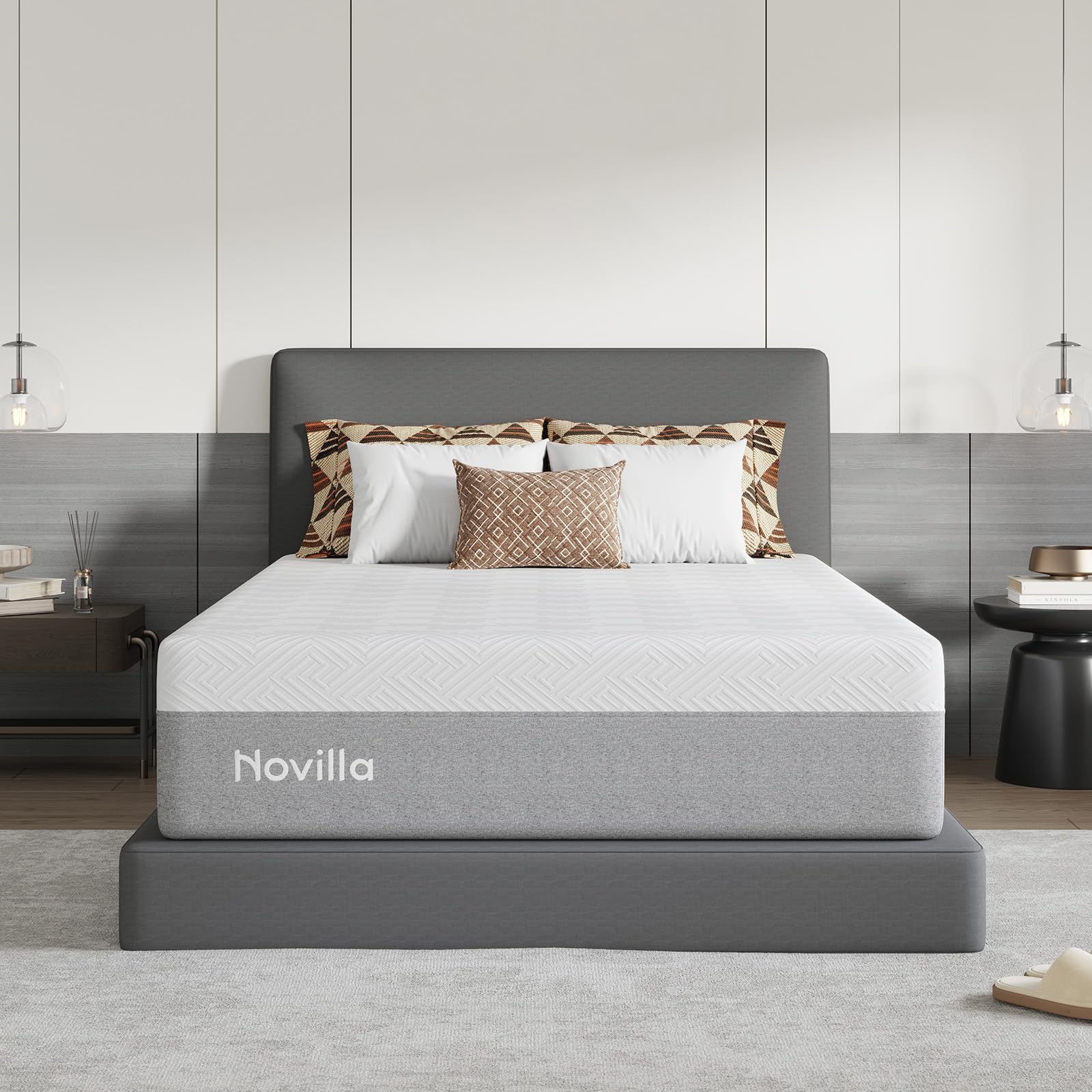
Novilla Bliss 14-Inch
Key Features
- Profile: 14 in
- Firmness: Medium plush
- Construction: 3-layer gel memory foam
- Weight capacity: 500 lb
- Price: Premium
Fourteen inches is a lot of mattress. The Bliss sits high on a frame, arrives in a box that is far easier to open in the room where the bed lives, and stacks three layers of foam under a knit cover. What that depth actually buys is margin: there’s enough gel memory foam over the support core that a hip or shoulder has somewhere to go before it reaches anything firm. On a full-size frame, where you have less room to spread out than on a queen, that margin does real work.
This is the mattress we recommend for a room that gets real use: a first apartment, a teenager’s room, a guest room that isn’t a museum. The feel is the reason. It’s listed as medium plush, but the depth keeps it from turning into a sinkhole, and the reinforced edges mean sitting on the side to put on socks doesn’t send you sliding onto the floor. Across this group it has the steadiest comfort and value showing of any bed on the page.
Plan for the expansion. Bed-in-a-box foam needs the full window the instructions give it, the corners are the last part to square up, and a cold room slows everything down, so unbox it in the morning and sleep elsewhere that night. Treat medium plush as a starting point too: the surface reads closer to a medium with a soft top, which suits back and combination sleepers better than anyone hunting for a deep hug.
Pros
- 14 inches of gel foam with real support
- Reinforced edges you can sit on
- Steadiest comfort and value showing here
Cons
- Tall profile needs deep-pocket sheets
The full-size mattress we recommend to most people: 14 inches of gel foam that supports without swallowing you, for less than the other premium pick here.
Best for Back & Stomach
Modway Jenna 10-Inch
Key Features
- Profile: 10 in
- Support: 85 encased coils
- Firmness: Firm
- Weight capacity: 662 lb
- Price: Midrange
Every other mattress on this page is foam. The Jenna is 85 individually encased coils under a quilted pillow top with a memory foam layer over them, and that construction changes the feel more than any number on the sheet. Where the all-foam beds let you settle in, this one meets you, and what we noticed first is that you lie on it rather than into it. Back sleepers, stomach sleepers, and anyone who has ever woken up feeling stuck in a foam bed should start here.
The coils are individually wrapped, which is the detail that keeps one person’s turning from travelling across the surface. That is worth more than usual in a 54-inch bed, where two people share less width than a queen gives them. Modway labels the feel firm; in the bed, the quilted top softens the first inch and the memory foam layer takes the edge off the coils, so it reads as a firm medium, with hips held high and shoulders not punished. At 10 inches it’s a mid-profile mattress rather than a deep one, and its 662-pound rating is higher than the 12- and 14-inch foam beds here carry.
It arrives at 68 pounds, so open it where it’s going to live, and give it a day before you judge it while the foam settles over the coils. If you need a deep shoulder pocket, this isn’t your mattress and the Novilla gives more. If you’re replacing an old innerspring and want that same push-back without the noise, this is the closest thing here.
Pros
- Encased coils give a firm, springy surface
- Motion stays put when a partner turns
- 662 lb rating beats the thicker foam beds
Cons
- One-year warranty, the shortest here
The only spring mattress on this page, and the one we point back and stomach sleepers to — it pushes back where foam gives.
Best for Firm-Bed Fans
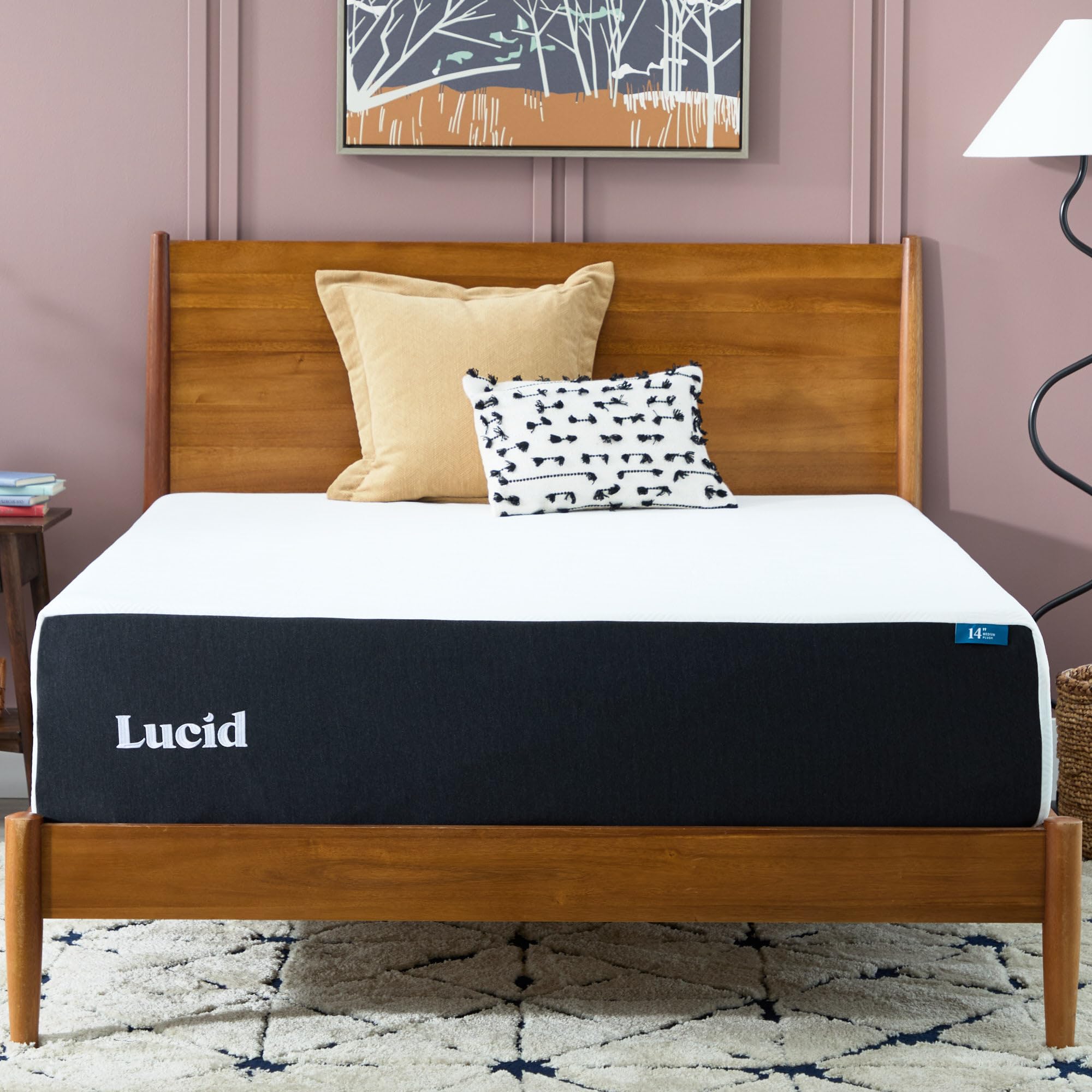
Lucid 14-Inch Gel Foam
Key Features
- Layers: 4
- Profile: 14 in
- Firmness: Medium firm
- Warranty: 10 years
- Price: Premium
Back and stomach sleepers are the reason this mattress exists. Lucid labels the 14-inch medium firm, and among the foam beds here it’s the one that keeps your hips highest: three inches of gel and bamboo charcoal foam, a two-inch transition layer, and a nine-inch high-density base underneath both. The result is a surface you lie on rather than settle into, which is what you want if a soft bed leaves your lower back complaining by morning.
The build explains the price. Four layers, gel infusion to move heat, bamboo charcoal to pull moisture, CertiPUR-US certified foam, a fiberglass-free fire barrier, and assembly in the U.S. from domestic and imported parts. The gel and charcoal won’t turn this into a cool mattress, but it isn’t the heat trap a plain block of memory foam can be, and the ten-year warranty matches the best coverage on the page.
Where it earns its place: this is the firmest of the deep foam beds here that still has some give, and the one we reach for when someone is moving off an old innerspring and doesn’t want to feel like they’re sleeping in sand. If you want to sink in, look at the Novilla. If you want your hips held high, this is the one.
Pros
- Four layers over a 9-inch dense base
- Ten-year warranty and fiberglass-free barrier
- Firm surface that keeps hips high
Cons
- Listed width of 52.5 inches, under the 54-inch standard
- Firm enough to feel hard to some side sleepers
Our firmest deep foam pick: four layers, ten years of coverage, and a surface that holds your hips instead of swallowing them.
Best for Value Seekers
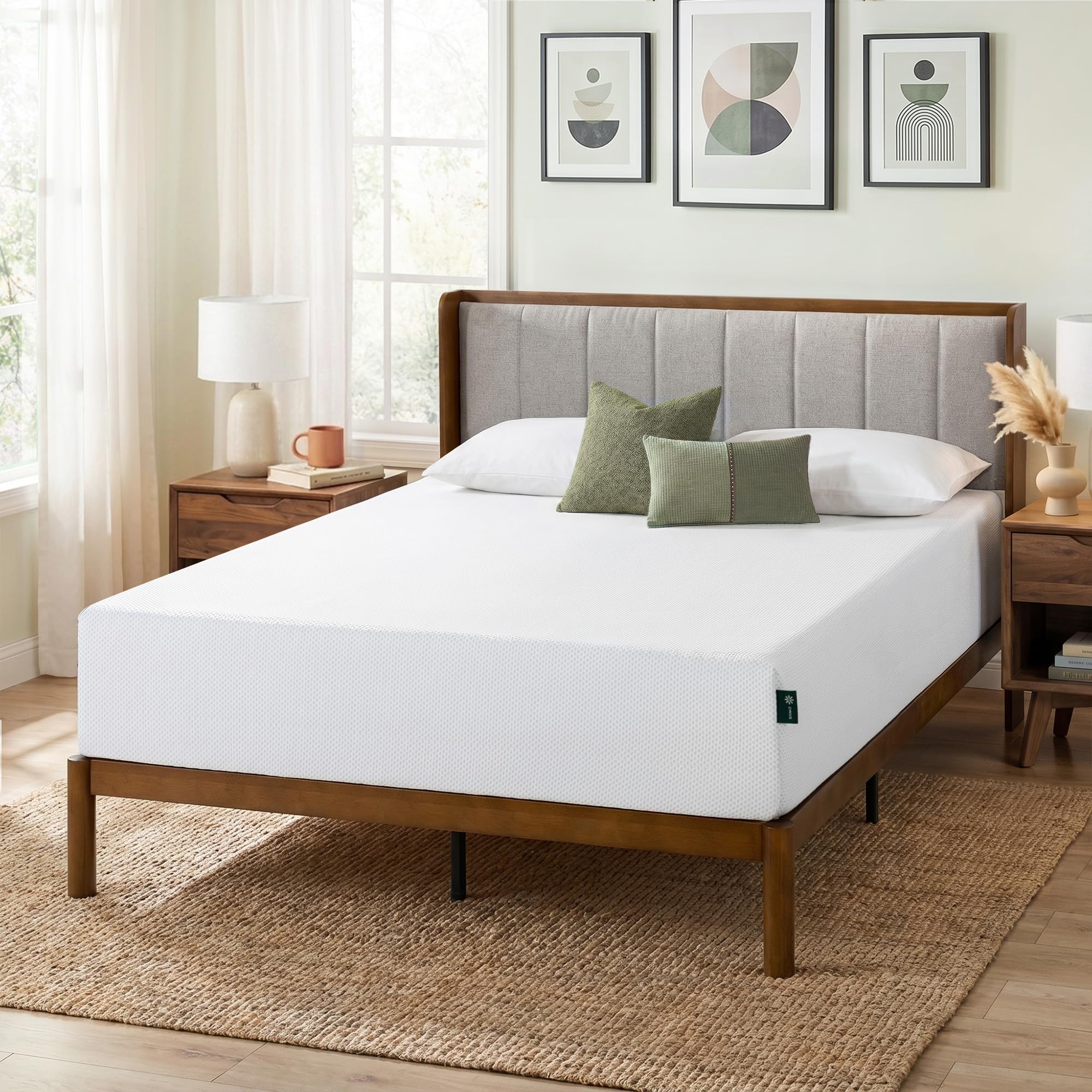
Zinus 12-Inch Cooling Gel
Key Features
- Profile: 12 in
- Firmness: Medium
- Warranty: 10 years
- Weight capacity: 500 lb
- Price: Midrange
Zinus sells two 12-inch full mattresses that look almost identical on a listing, and choosing between them is the kind of decision that makes mattress shopping miserable. This is the one to take. A cooling gel layer replaces the plain green tea foam on top, it costs less than its sibling, and everything else — the 12-inch profile, the medium foam, the 500-pound rating, the ten-year warranty — is the same.
Twelve inches is the sensible middle of this lineup: deep enough that a hip doesn’t find the frame, not so deep that getting into bed feels like climbing. In this group it’s the pick when you want a full 12 inches without paying a premium for it. The foam supports without reading as a plank, and the gel layer does something on warm nights, though it’s temperature-neutral at best rather than cool to the touch. The catch is firmness. The label says medium, and after a week or two the surface sets up firmer than that — good news for back sleepers, less good if you sleep on your side and want to be cradled.
It ships at 52 pounds, which is manageable for two people and miserable alone, and it needs a couple of days on a platform, slatted frame, or box spring before it’s ready to make up. Rotate it every few months, because a full gets slept in the same spot night after night and that’s where a surface starts to lose its evenness.
Pros
- Cooling gel layer at a value price
- Ten-year warranty and 500 lb rating
- Medium foam that supports without a plank feel
Cons
- New-foam smell for the first few nights
We take this over its near-identical Zinus sibling: cooling gel, a medium foam feel, and a ten-year warranty at a value price.
Best for Bunks and Lofts
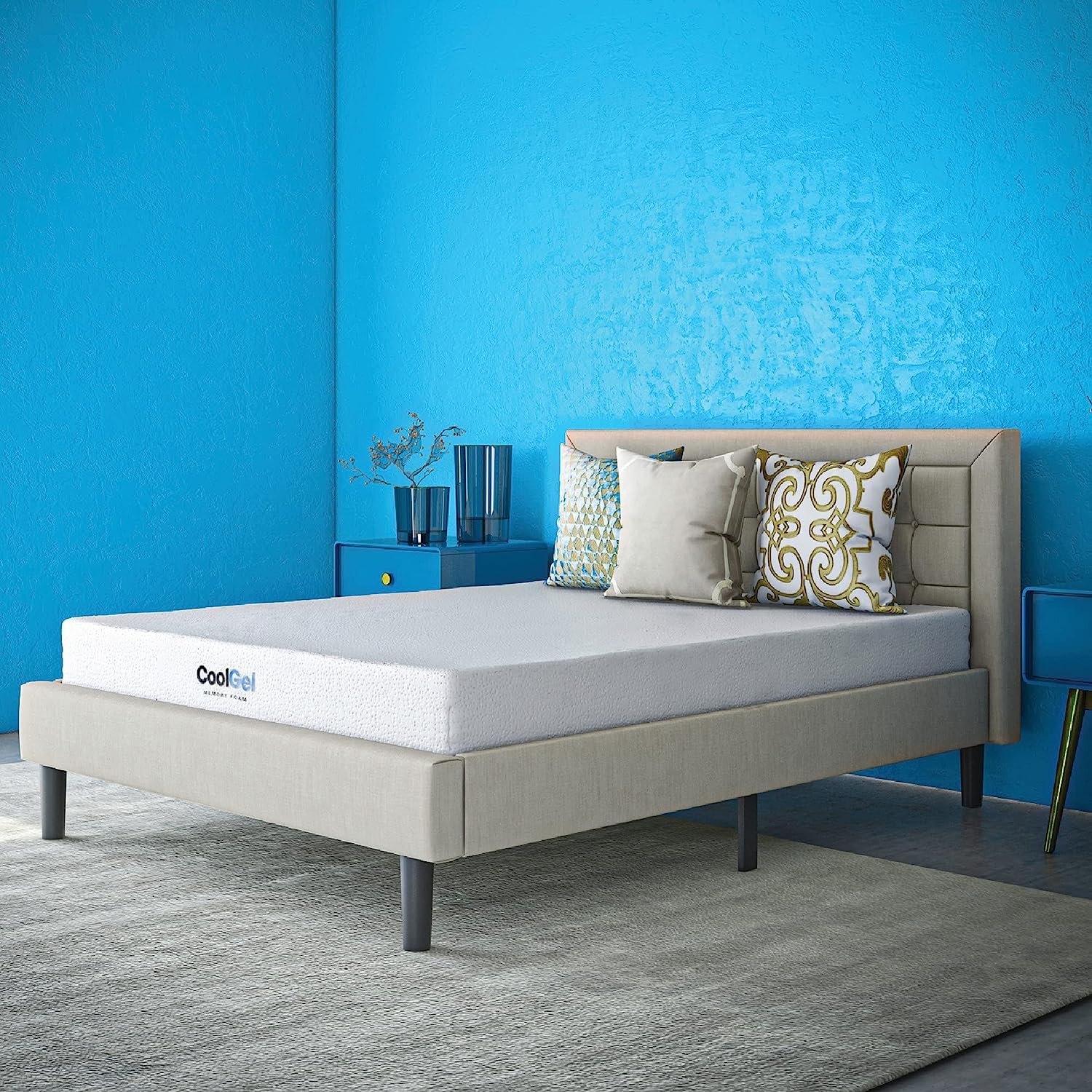
Cool Gel 8-Inch
Key Features
- Profile: 8 in
- Firmness: Medium plush
- Construction: Gel foam over dense core
- Weight capacity: 1000 lb
- Price: Midrange
Eight inches is the thinnest mattress we would put an adult on for the long haul, and this is the bed that changes our mind about thin mattresses. On a bunk, a loft, a high antique frame, or in a guest room where the bed sits low, the profile is exactly right, and under the cover there’s gel memory foam over a dense core rather than a pad. It’s rated to 1,000 pounds, the highest capacity on this page by a wide margin, which is reassuring on a bed that gets climbed on.
The feel is medium plush, with more give than the other 8-inch option here, and the gel foam is built to pull heat off the surface rather than hold it — in a small warm room with a bunk in it, that’s the difference between a mattress and a hot spot. Back support is where it stands out among the low-profile picks, and at 4.5 stars it’s tied for the highest rating here.
Where it lands: this is the mattress for a bunk, a loft, a guest room, or a nook where a 14-inch bed won’t fit or won’t look right. If the bed is the main event in a primary bedroom, spend the extra on depth and buy the Novilla. If height is the constraint, nothing else here solves it as neatly.
Pros
- 1,000 lb rating, the highest here
- 8-inch profile fits bunks and high frames
- Strong back support for a thin mattress
Cons
- Cover is spot clean only
For bunks, lofts, and high frames, this is the one we hand people: eight inches of gel foam, the highest weight rating here, and a 4.5-star record.
Best for Kids’ Rooms
EGOHOME 8-Inch
Key Features
- Profile: 8 in
- Firmness: Medium firm
- Warranty: 10 years
- Weight capacity: 750 lb
- Price: Budget
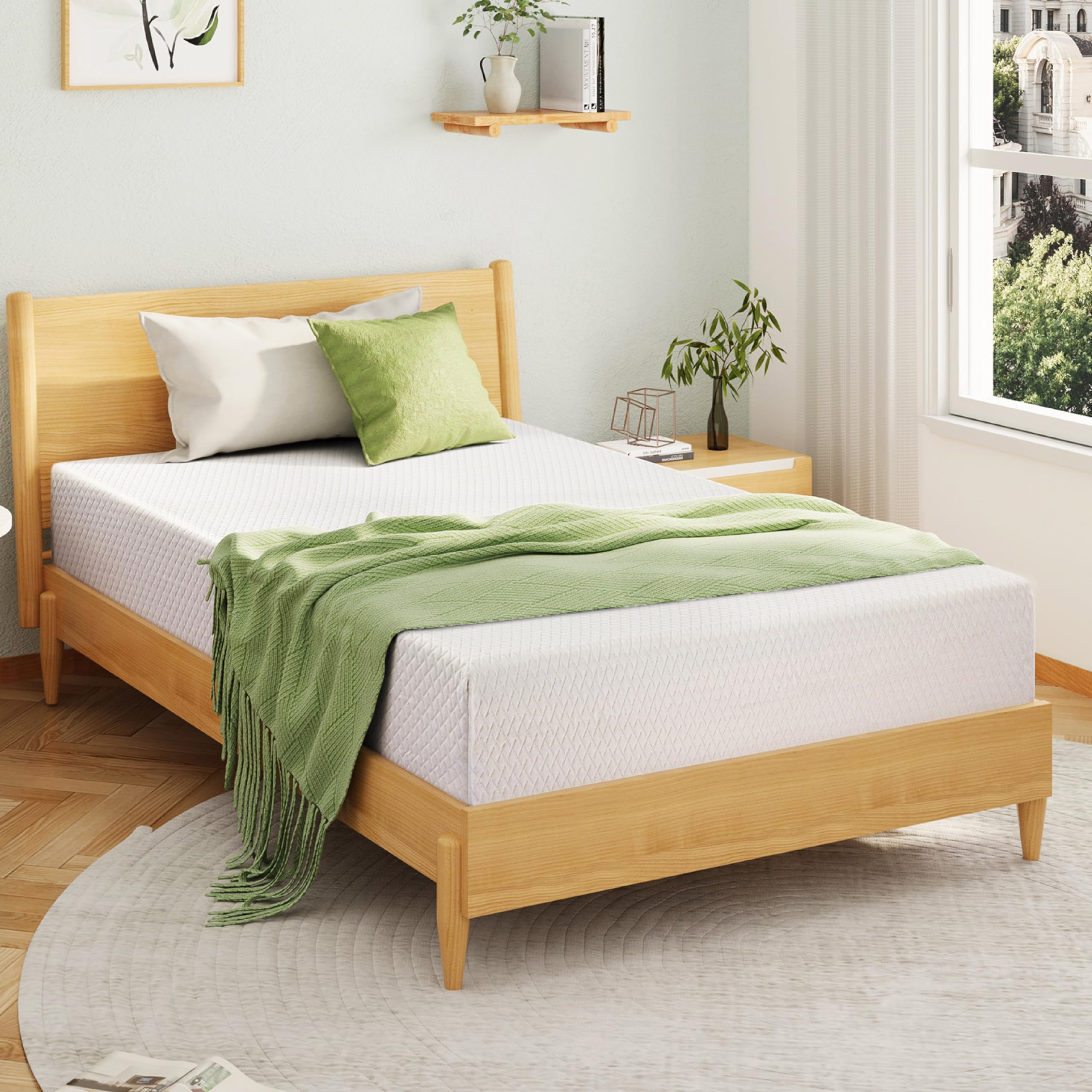
This is the least expensive mattress in the group, and the specification sheet doesn’t read like it: four layers, gel memory foam with green tea in the comfort layer, a 750-pound weight rating that beats every 12- and 14-inch bed here, and a ten-year warranty. For a full-size bed that has to be affordable, that combination is hard to argue with.
It’s also the least fragrant box we opened in this batch. Open it, give it a day, and it’s ready to make up, and the foam is CertiPUR-US certified behind a fiberglass-free barrier. The listing puts its age range at kid, which is a fair hint about who the manufacturer had in mind.
We put this one in kids’ rooms, guest rooms, and bunks, and it earns its keep there. It is not the mattress for a couple’s main bed: the surface never really softens toward medium, and the 14-inch Novilla is the more forgiving choice at a higher price. Judged as a low-cost bed for a room that doesn’t ask much, it’s the best of the budget options here.
Pros
- 750 lb rating beats the thicker beds here
- Ten-year warranty at the lowest price here
- Low-odor foam with a fiberglass-free barrier
Cons
- Very firm surface that doesn’t soften much
- Only 8 inches of foam under you
Nothing here costs less, and nothing here matches its weight rating for the money — we recommend it for kids’ rooms and spare beds.
How We Tested the Best Full-Size Mattresses
We started with a list of roughly 40 full-size mattresses and narrowed it using the things you can check before you ever lie down: layer construction and specs, the firmness options each brand actually offers in a full, trial length, warranty terms, and the return fine print. Price factored in, but only as value — a mid-priced mattress with a long trial and free returns is a very different proposition from one that costs the same and charges you to ship it back. Seven made the cut.
Over twelve months, each of the seven spent at least four weeks in a real bedroom — three in mine, the rest split between two colleagues’ homes — slept on nightly rather than inspected in a warehouse. We logged how we felt at 6 a.m.: whether we woke in the night to shift a numb shoulder, whether the lower back was stiff getting out of bed, whether a warm sleeper ended up kicking the covers off. Odor got its own check, with the bedroom door shut for the first three nights and a note each morning on whether we could still smell foam.
Every two months we laid a straight edge across each mattress and looked for dips where hips and shoulders land, pressed a palm into the edge to see how much it gave, and stripped the bed to check stitching, cover pilling, and how it read on a bare frame. Firmness was re-rated at each visit against our first-week notes; two beds softened enough to fall out of contention. The buying part got tested too — order-to-doorstep time, whether boxes arrived scuffed or split, how long each took to reach full height, and how quickly the company responded when one delivery ran two days late.
How to Choose a Full-Size Mattress
Because a full is narrower and shorter than a queen, the feel under your hips matters more than any feature list you can scroll through.
Match the Feel to How You Sleep
Firmness labels are the least reliable number on a mattress listing. The same medium on an 8-inch bed and a 14-inch bed feels different, because there’s more foam to compress in the deeper one, and a quilted top over coils softens the first inch in a way flat foam doesn’t. Use the label as a starting point only.
Then match it to your position. Side sleepers need give at the shoulder and hip; back and stomach sleepers need the hips held high. If you want cushioning, start with the Novilla or the Cool Gel. If you want a firm deck under you, the Lucid is the one.
Pick the Profile for the Room
Thickness is really about where the bed sits and how much material is under you. An 8-inch mattress is the right call for a bunk, a loft, a high antique frame, or a guest room where a tall bed would look wrong. Twelve to 14 inches suits a main bedroom, where the mattress is the whole comfort system.
Deeper isn’t automatically better. A light sleeper may never feel the difference, while a heavier one will. And check the sheets before you commit: a 14-inch mattress needs deep pockets, and a standard set will pop off at the corners.
Foam or Springs
Foam isolates motion and spreads support evenly, which is why most beds here are foam. Springs push back, feel firmer under the hips, and let air move through the bed. In a 54-inch-wide full, that choice matters more than usual, because two people share less width than a queen gives them and every roll travels further.
Choose coils if you dislike the sinking feeling of foam or you’re replacing an innerspring you liked. Choose foam if you want the surface to stay quiet when someone turns over at two in the morning.
Warranty, Certifications, and What You’re Paying For
Coverage varies more than it should in this category: one pick here is backed for a single year, the others for ten. Read the warranty before the marketing copy, because a bed that sags in year two is an expensive mistake.
Two certifications are worth looking for. CertiPUR-US covers foam content and emissions, and a fiberglass-free fire barrier is named on several of these listings. Neither changes how the bed feels, but they separate a cheap mattress from a cheap mattress you regret.
The First Week With a Bed in a Box
Every mattress here arrives compressed and rolled, and every one looks alarmingly thin when you first cut the wrap. Give it the window the instructions specify, keep the room warm, and let the corners catch up last, since a cold room stretches the process out. Expect some new-foam smell for the first few nights.
Don’t judge firmness on day one either. Foam keeps settling for about a week, so the surface you sleep on in month three isn’t quite the one you unrolled.
Frequently Asked Questions
Is a full-size mattress big enough for two people?
A full is 54 inches wide and 75 inches long, so two people get 27 inches each, three fewer than a queen allows. It works for couples who sleep close and for one person who wants room to spread out.
Length is the tighter constraint: at 75 inches, anyone around six feet tall runs out of bed. If either of you is tall or sprawls, size up.
Can I get a full-size mattress home and up the stairs myself?
In the box, usually yes. These ship compressed, and the cartons run from about 30 pounds for the 8-inch beds to 68 for the hybrid, so they’re awkward more than unmanageable. The box is tall and narrow rather than wide, which helps it clear stairwells and doorways.
Once it’s unrolled it doesn’t fold again, so open it in the room where it will live.
What should I put a full-size foam mattress on?
These mattresses work on platform beds, slatted frames, box springs, and adjustable bases. What matters is even support across the whole surface, because a foundation that sags telegraphs straight through the foam above it.
Press down on an old box spring before you reuse it. If it gives, replace it or add a bunkie board, which costs far less than finding out through your back.
Final Verdict
The Novilla Bliss is the full-size mattress we recommend first: 14 inches of gel foam that supports without swallowing you, in a group where the other deep foam bed costs more and the budget beds give up depth.
If you know you want springs under you, buy the Modway Jenna. It’s firmer and springier and costs less, though Modway backs it for only a year. If your back wants a firm deck and nothing else, choose the Lucid.