
This post contains affiliate links. We may earn a small commission when you buy through our links — at no extra cost to you.
A knee pillow promises pain-free mornings, but too many buyers wake up with the pillow on the floor—or realize it’s too hard, too small, or simply wrong for how they actually sleep. The real problem isn’t the pillow’s quality; it’s that most designs are built for an idealized sleeper who never moves or has a specific body type.
This guide separates knee pillows not by star rating, but by the sleep scenario they’re designed for. Whether you toss through the night or lie still, sleep on your side or your back, you’ll find a pick that matches your frame and your nighttime habits—so the relief lasts until morning.
The biggest hidden factor is whether you need a strap to keep the pillow in place. If you change positions, a strapless design will shift; if you sleep like a statue, a strap adds unnecessary bulk. That single choice shapes everything else.



Best for Secure Side Sleeping
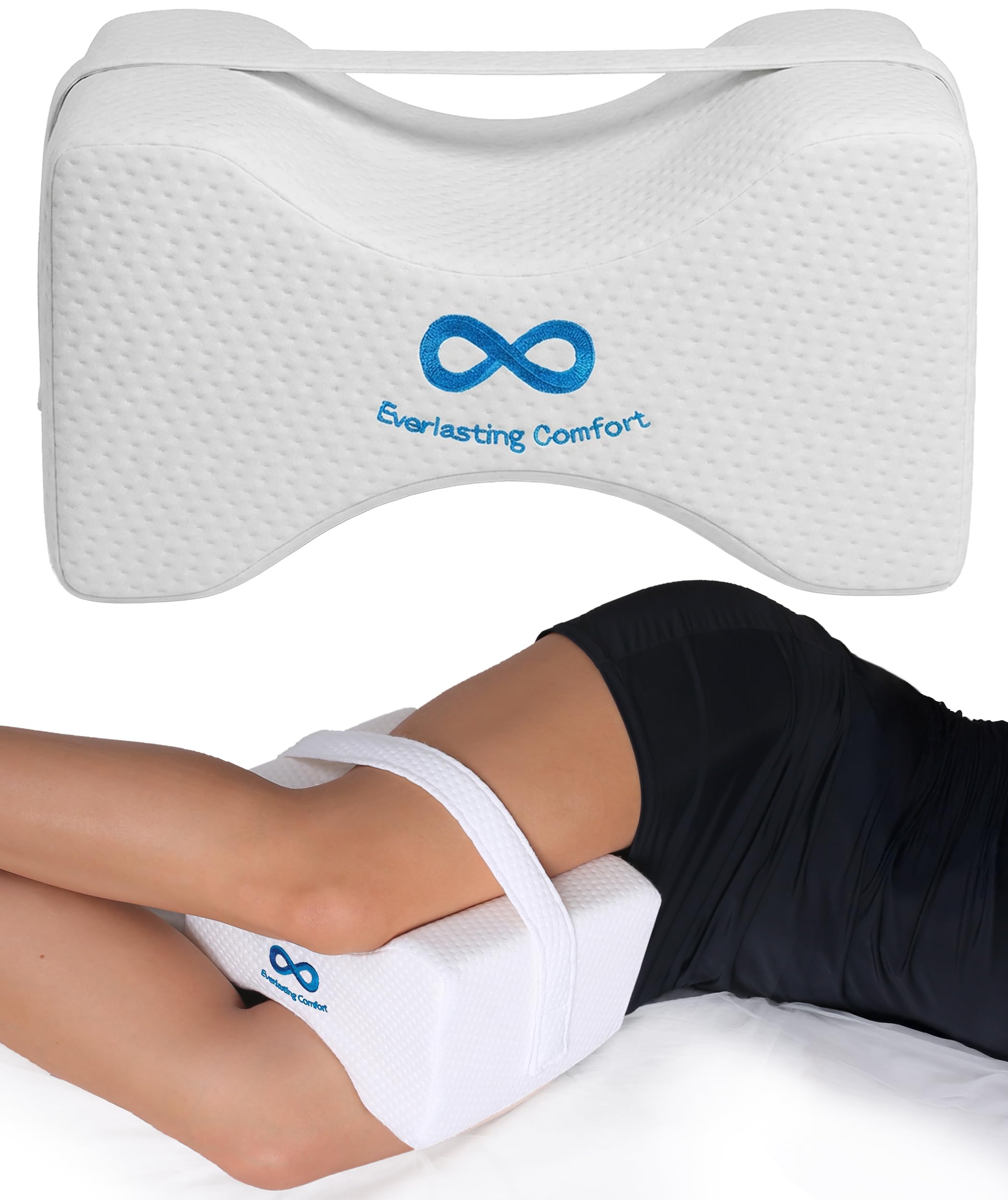
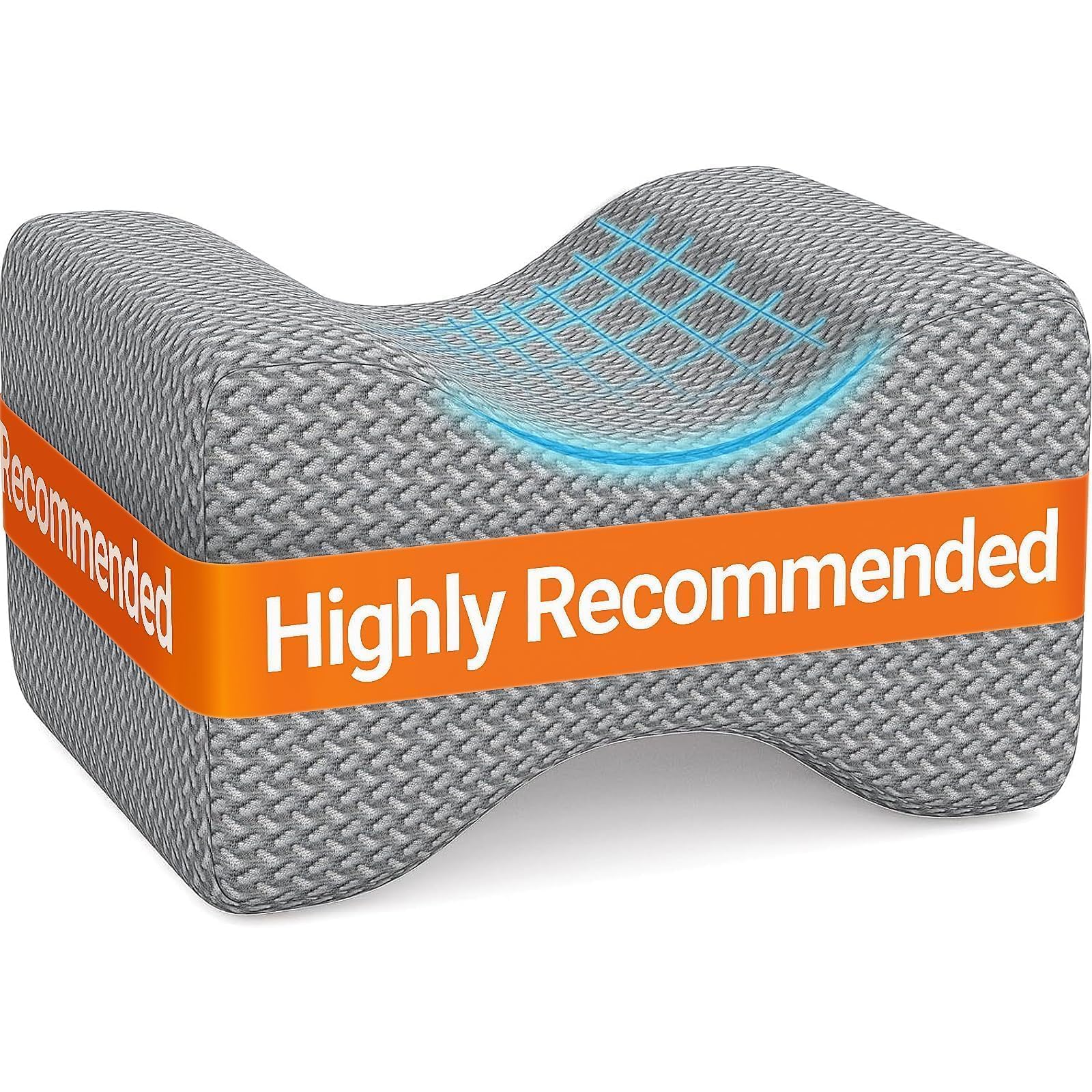
Everlasting Comfort Knee Pillow
The removable strap keeps the pillow from sliding out of place during the night — a persistent frustration for side sleepers who move. Combined with memory foam that relieves hip, back, and knee pressure, this design offers consistent alignment without constant readjustment.
The memory foam delivers a soft, cool cradle that relieves pressure points. Under heavier body weight, the foam can compress and slightly reduce the gap between knees, which makes this pillow best for average-weight users who value plush comfort over rigid separation. Cover fabric may pill or hold onto warmth with extended use, though this is a cosmetic concern.
This is the right pick for side sleepers who want a pillow that stays put, with the reassurance of a lifetime warranty. If you need an unyielding, firmer wedge that refuses to flatten, a denser alternative will serve you better.
Pros
- Removable strap anchors the pillow to your leg, preventing it from shifting as you turn.
- Eases hip, back, and knee discomfort for side sleepers by keeping the spine aligned.
- Soft memory foam adapts to your body while staying cool throughout the night.
Cons
- Cover fabric may develop pilling or trap heat after extended use.
- Under heavier weight, the soft foam can squish down, reducing the knee gap and limiting alignment benefits.
The secure strap and lifetime warranty make it a strong choice for side sleepers who toss and turn, but those needing a more rigid separation should opt for a firmer pillow.
Best for Back Sleepers
Everlasting Comfort Bolster
Unlike between-knee pillows for side sleeping, this bolster elevates both legs to align the spine for those who sleep on their back. The 21-inch length fits both knees without shifting, and the memory foam holds its shape night after night.
Back sleepers with lower back discomfort will feel the difference, but the firmness may be too hard for some — especially for all-night use. Petite individuals may find the 21-inch size oversized for their bed or body.
Pros
- Cradles both knees to ease lower back and hip strain.
- Long half-moon shape stays in place without shifting.
- Lifetime replacement warranty adds long-term confidence.
Cons
- 21-inch length may be too large for petite users or smaller beds.
- Firmness can be too hard for some, leading to discomfort.
For back sleepers seeking dedicated under-knee support, this bolster provides effective relief and a lifetime warranty, as long as the firmness suits you.
Best for Budget Side Sleeping
BlissTrends Knee Pillow
The BlissTrends knee pillow strips away extras to deliver genuine hip and back relief at a price under $10. Its memory foam and H-shape contour offer a softer, more forgiving cradle than dense alternatives, suiting those who dislike hard pillows. Unlike the top pick, there’s no strap—most sleepers find it stays in place, but active movers may need occasional adjustment.
It’s a smart trial for budget-conscious side sleepers or anyone new to knee pillows. Firmness can be inconsistent, and some units may flatten prematurely under weight, reducing support. The compact size also can feel small for wider hips or larger legs, limiting alignment benefits.
Pros
- Excellent value with genuine hip and back pain relief
- Comfortable for side sleepers, stays in place reasonably well
- Good quality at a budget price
Cons
- Size may be too small for larger legs, restricting effectiveness
- Firmness can be inconsistent, with some units flattening too quickly
A low-risk introduction to knee pillows that eases discomfort on a budget, but inconsistent firmness and limited size make it a starter—not a long-term fix for all sleepers.
Best for Full Thigh Support
anzhixiu Long Knee Pillow
Longer than most knee pillows, the 14-inch design spans from knee to mid-thigh, keeping the upper leg from rotating forward and pulling the spine. Durable memory foam holds its shape through the night, offering consistent separation without flattening.
Taller side sleepers gain the full-thigh support that shorter pillows miss, reducing hip torque. The extended shape can feel oversized on smaller frames, and the absence of a strap means it’s best suited to those who rarely shift position.
Pros
- Provides full thigh and knee support, improving spinal alignment
- Works well for taller side sleepers or those needing longer separation
- Good quality memory foam, durable
Cons
- Medium-firm memory foam may feel too hard for those who prefer softer cushioning
An intentional pick for taller side sleepers who need full leg alignment, trading portability and strap convenience for extended support.
Best for Post-Surgery Recovery
KingPavonini Single Leg Wedge
Two height options and a cradling groove prevent the leg from rolling, making this the most comfortable single-leg elevation wedge for post-surgery recovery. Unlike wider dual-leg platforms, it focuses on keeping one leg straight and elevated — essential for knee or ankle surgery protocols. The wavy foam channel and adjustable Velcro layers accommodate different leg lengths, while the memory foam top cushion provides soft support without flattening. It’s strictly for back-lying use, not side sleeping or between-knee relief. The Velcro connection can loosen over repeated adjustments, and the cover may pill after washing, but these are minor tradeoffs for a recovery tool that reduces swelling with targeted support.
Pros
- Cradling groove and soft memory foam top prevent leg rolling after surgery.
- Height adjusts to two levels to fit different leg lengths.
- Provides strong pain relief and swelling reduction after knee/ankle surgery.
Cons
- Cover may pill or wear after washing.
- Velcro layers can loosen over repeated height adjustments.
If you’re recovering from knee or ankle surgery and need a leg that stays straight and elevated, this wedge delivers targeted comfort with adjustable height that dual-leg pillows can’t match.
Best for Firm Support
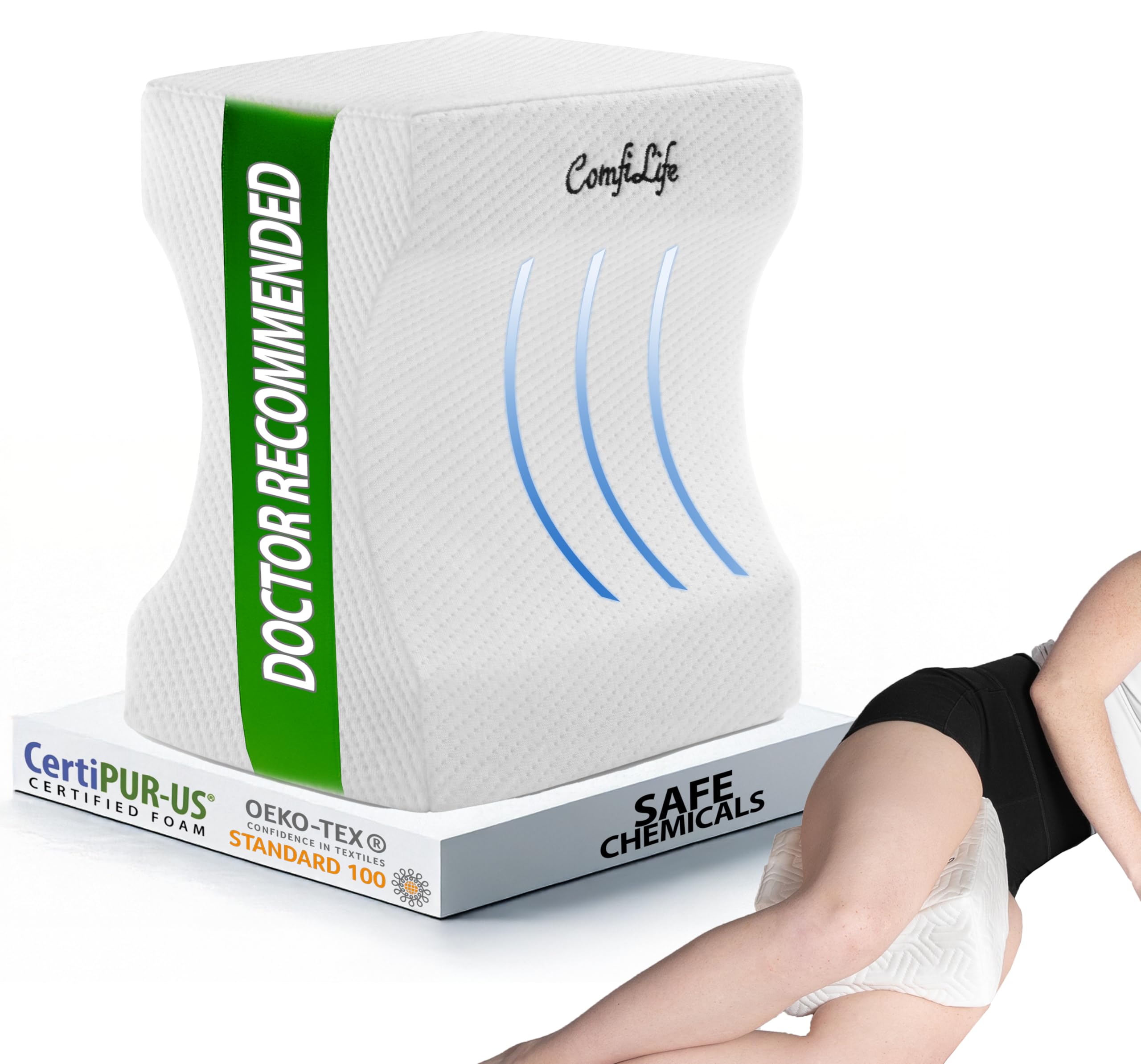
ComfiLife Side Sleeper Pillow
ComfiLife’s dense polyurethane foam refuses to flatten, delivering strong sciatica and lower-back pain relief by keeping knees firmly apart all night. Unlike the strap-secured top pick, it relies purely on its contoured shape to stay in place.
Side sleepers who need unyielding separation for spinal alignment and can tolerate a firm, log-like feel will find it effective. If you have sensitive knees, a softer pillow is a better match.
Pros
- Significant sciatica and lower-back pain relief.
- Dense foam maintains its shape all night without flattening.
- Effective knee spacing helps align the spine for many side sleepers.
Cons
- Dimensions may be too small for broader hips, limiting knee separation.
- The dense foam can feel uncomfortably hard, like a log, for sensitive knees.
This suits side sleepers whose pain relief depends on a pillow that never flattens, provided the hard surface is acceptable. Look elsewhere if plush comfort matters more.
Best for Standard Side Sleeping
Contour Legacy Knee Pillow
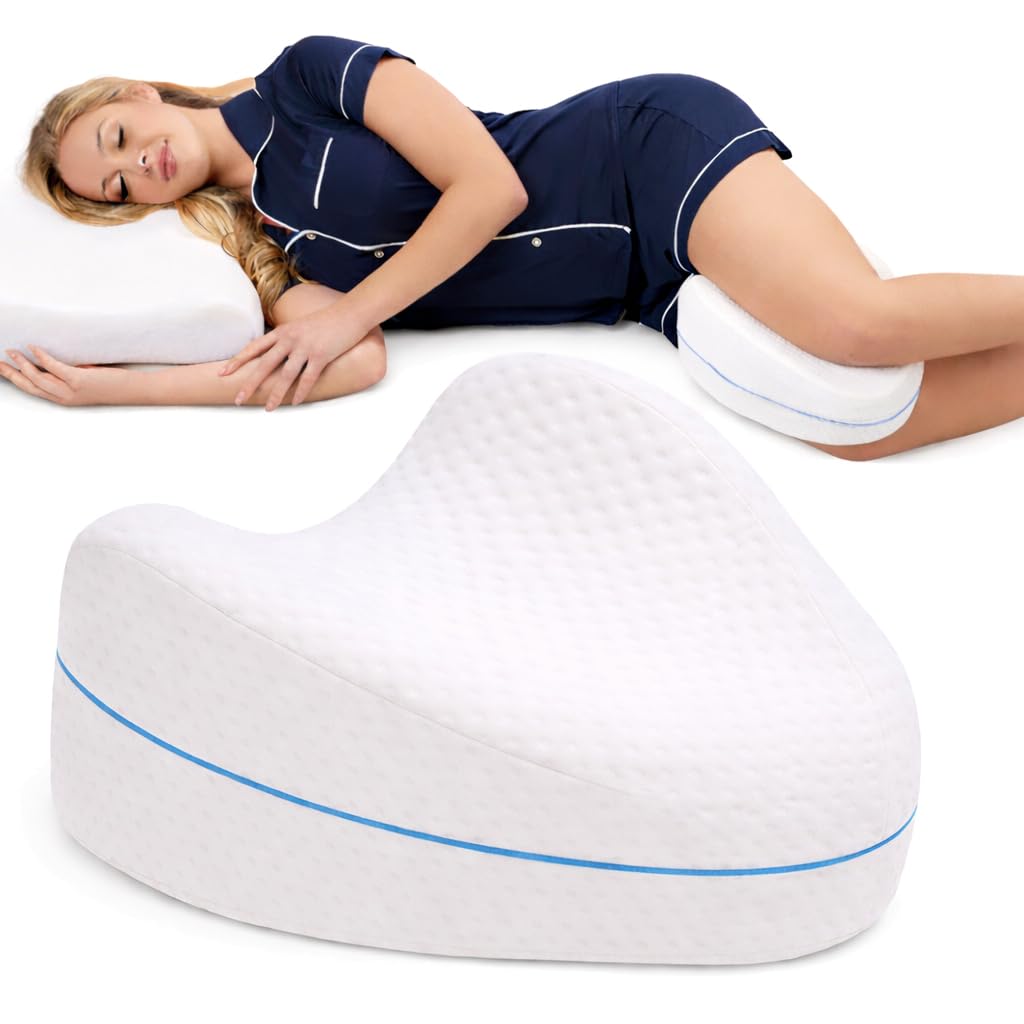
The hourglass contour relieves back, hip, and knee pain while keeping the spine aligned during side sleeping, leading to fewer sleep disruptions. However, its firm feel and compact size can be a mismatch for larger builds or those needing a softer cushion, and the lack of a strap lets it wander for active sleepers.
Pros
- Eases back, hip, and knee pain for side sleepers.
- Improves sleep quality by reducing nighttime tossing.
Cons
- The foam’s firmness can feel too hard, causing pressure-point discomfort for some sleepers.
If you’re a side sleeper of average build who stays reasonably still, the Contour Legacy offers genuine pain relief without extra hardware.
Best for No-Strap Side Sleeping
5 STARS UNITED Knee Pillow
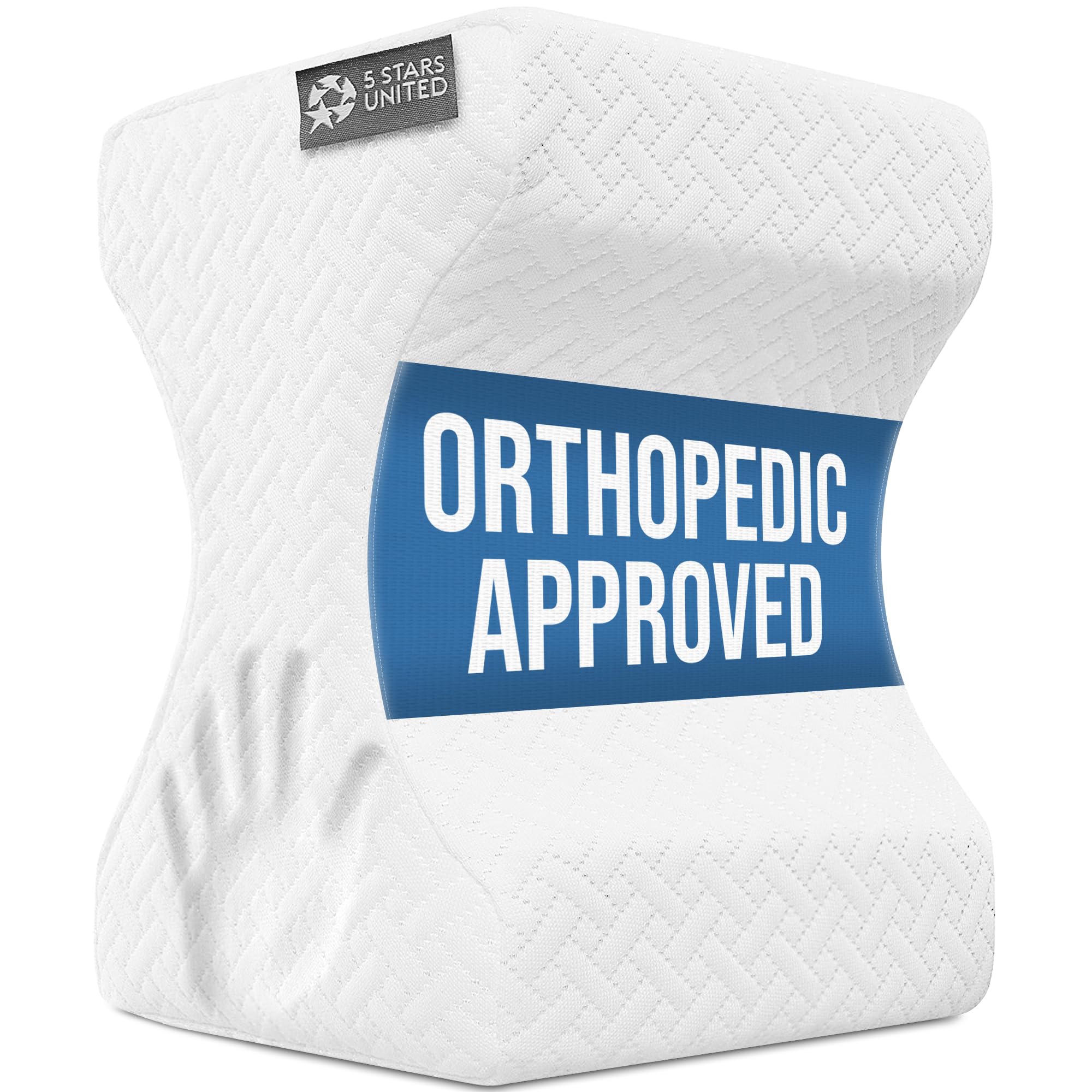
CertiPUR-US and OEKO-TEX certified memory foam provides peace of mind for chemical-sensitive sleepers. The wedge maintains basic hip and knee alignment, easing pressure. Without a strap, it may shift during sleep, and the 9.8-inch length can be too compact for wider hips, reducing separation. Budget-conscious side sleepers who stay still through the night and have average proportions will find it a simple, functional option.
Pros
- Reduces back, neck, and knee pain by aligning hips and legs
- Comfortable memory foam holds its shape through the night
Cons
- 9.8-inch length can feel short for wider hips, limiting leg separation
For chemical-sensitive side sleepers on a budget who don’t toss and have average proportions, this straightforward pillow makes sense. Wider builds should explore a longer model or one with a strap.
Best for Dual-Leg Elevation
KingPavonini Dual Leg Wedge

The gel memory foam top and two height layers create a cooling, adjustable platform for elevating both legs. The top layer’s Velcro connection can allow shifting during the night, but this is a minor tradeoff for stationary back sleepers. The premium price may also give pause. Side sleepers or anyone needing only knee separation should look elsewhere.
Pros
- Two Velcro layers let you set the ideal height for comfortable leg elevation.
- Breathable gel memory foam top and non-slip bottom improve comfort and bed stability.
Cons
- The top layer can slide if the Velcro connection loosens, causing the pillow to shift during use.
Fits back sleepers recovering from surgery or managing swelling who need a wide, adjustable elevation for both legs, provided nighttime movement is minimal and the higher cost isn’t a barrier.
Best for Restless Sleepers
NATUMAX Knee Pillow

A secure adjustable strap and included sleep accessories solve a restless sleeper’s core need: a pillow that stays put. The soft memory foam feels gentle, but may compress and limit knee separation for those requiring firm spinal alignment. The strap’s fit can be loose on thinner legs, though a simple knot tightens it.
Pros
- Adjustable strap prevents shifting, keeping the pillow in position even when rolling over.
- Relieves lower back and hip pressure by maintaining gentle leg alignment.
Cons
- Soft foam may compress under weight, reducing knee separation compared to firmer options.
If staying in place all night matters more than firm orthopedic separation, this budget-friendly bundle with sleep mask and ear plugs is a practical pick for restless side sleepers.
Best for Elevated Back Sleeping
Ruqmuis Wedge Pillow

The 7.9-inch rise and contoured wedge shape effectively reduce lower back strain for dedicated back sleepers. An Oeko-Tex certified cover and CertiPUR-US foam deliver mid-range durability. The wide footprint occupies noticeable bed space, so a queen-size or larger mattress is ideal.
Pros
- Effectively relieves lower back pain when placed under knees
- Comfortable wedge contour encourages better spinal alignment
Cons
- Fixed 8-inch height can feel excessive for shorter users or those preferring a lower knee lift
For back sleepers with a roomy bed who want a steep knee elevation, this wedge is a solid pick — shorter sleepers may find the lift too pronounced.
Best for Budget Strap Design
Vertdens Knee Pillow

The non-removable strap holds the pillow securely through tossing and turning, and the memory foam provides genuine pain relief for sciatica and back discomfort. Build quality is basic, and the foam may feel overly firm for sensitive knees. The compact dimensions also limit support for larger body types, making this a better fit for petite or average-sized users.
Pros
- Provides effective pain relief for sciatica and back pain.
- Non-removable strap stays in place for restless side sleepers.
Cons
- Firmness may feel too hard, causing knee discomfort for those with sensitive joints.
A sensible choice for budget-conscious side sleepers who toss and turn and want a strap without overspending, but those needing softer support or a larger pillow will find better matches elsewhere.
How to Choose
Your sleeping position and how much you move during the night determine which knee pillow shape will actually work, not just feel good in a showroom.
Sleep Position
Side sleepers need a pillow between the knees that aligns hips and spine, while back sleepers need a wedge or bolster under the knees to flatten the lower back. Using the wrong type—like a side-sleeper pillow placed under the knees—can create unnatural angles and worsen pain.
If you split time between side and back, a strap-equipped side-sleeper pillow is more versatile than an under-knee wedge, which only works in one position.
Dimensions and Thickness
The pillow’s length and thickness dictate how much of your leg it supports. A standard 9–10-inch side pillow fits average frames, but if your thighs are larger or you’re tall, a short pillow won’t keep your knee from touching the mattress.
For back sleepers, a bolster under 18 inches long may not span both legs; a wedge that’s too high can hyperextend the knees. Measure the gap between your knees when lying on your side, and the distance from the back of your thigh to the mattress when on your back, to predict fit.
Firmness
Firmness is not a preference; it’s a function of how much separation your joints need. Too soft and the pillow compresses flat under your leg weight, offering zero alignment. Too firm and it can feel like a brick against sensitive knees, especially if you have arthritis.
Memory foam labeled “soft” often works for lighter users, but heavier sleepers need a denser foam to maintain loft. If you need strong sciatica relief, a firmer pillow is more likely to keep your hip from rotating, but you may trade comfort for support.
Strap
A strap is the single biggest differentiator for side sleepers who change positions. Without it, the pillow slides out the moment you roll over, breaking alignment and interrupting sleep. A strap anchors the pillow to one leg, so it follows you through the night.
Permanent or removable straps add convenience but may irritate if they’re too loose or too tight. If you sleep motionless, a strapless contoured pillow can be enough, but you’ll still need a shape that cradles your leg without shifting.
Adjustability
Adjustable height matters more for under-knee wedges than between-knee pillows. A fixed-height wedge that’s too tall tilts your pelvis forward, straining your lower back; too short and it barely relieves pressure. An adjustable wedge lets you fine-tune the elevation to match your leg length, especially useful after surgery or injury.
For side pillows, adjustability is rare and usually unnecessary, but post-surgery leg wedges benefit greatly from two or three height options.
FAQ
How do I keep a knee pillow from sliding out between my legs at night?
The most reliable fix is a pillow with an adjustable leg strap—it anchors the pillow to one thigh so it moves with you. If you prefer strapless, look for a deeply contoured hourglass or H-shape that cradles both knees; even then, tossing and turning will likely dislodge it. Adding a non-slip pad between the pillow and sheets can help, but a strap solves the problem outright.
What firmness is best for a knee pillow for sciatica?
For sciatica relief, you need enough density to prevent your top leg from dropping forward, which twists the pelvis and irritates the nerve. A medium-firm to firm memory foam or polyurethane pillow typically provides that unyielding separation. Softer pillows can compress too much for heavier users, while extremely hard ones may cause knee discomfort—test with a folded towel behind your knee to gauge your tolerance before committing to a firm model.
Can a knee pillow help with lower back pain when sleeping on your back?
Yes, when you place a wedge or bolster under your knees, it tilts your pelvis backward and flattens the lower spine against the mattress, reducing tension. A semi-circular bolster about 20 inches long and 4–5 inches high works for most people, but if the height is too much, it can hyperextend your knees. Start with a lower profile or an adjustable model to find the angle that eases your back without stressing your joints.
Is a memory foam knee pillow with a strap better than one without?
If you move during sleep, the strap version is a practical necessity—it stops the pillow from ending up on the floor by 3 a.m. For motionless side sleepers, a well-contoured strapless pillow can work identically. The strap itself adds a slight feeling of confinement that bothers some people, so if you sleep like a log, you can skip it.