
This post contains affiliate links. We may earn a small commission when you buy through our links — at no extra cost to you.
If you’ve ever bought a ‘lightweight’ comforter that felt like a sweat trap or fell apart after just a few washes, you’re not alone. Many budget polyester options can overheat and shed, turning a cool-weather cover into a sauna even in mild rooms.
The best lightweight comforters succeed by pairing a breathable fill with a tightly woven, crinkle-free shell and reinforced box stitching. This guide highlights the ones that actually keep you cool, drape smoothly, and hold up over months of machine cycles—without relying on gimmicky cooling labels.
Before you click buy, keep one universal truth in mind: comforter sizing is inconsistent across brands. A ‘queen’ comforter can be anywhere from 88 to 92 inches wide, and many run short on deep mattresses. Measuring your mattress depth and considering a size up is the simplest way to avoid a too-small blanket that leaves your edges bare.


Best for Hot Sleepers, Layering
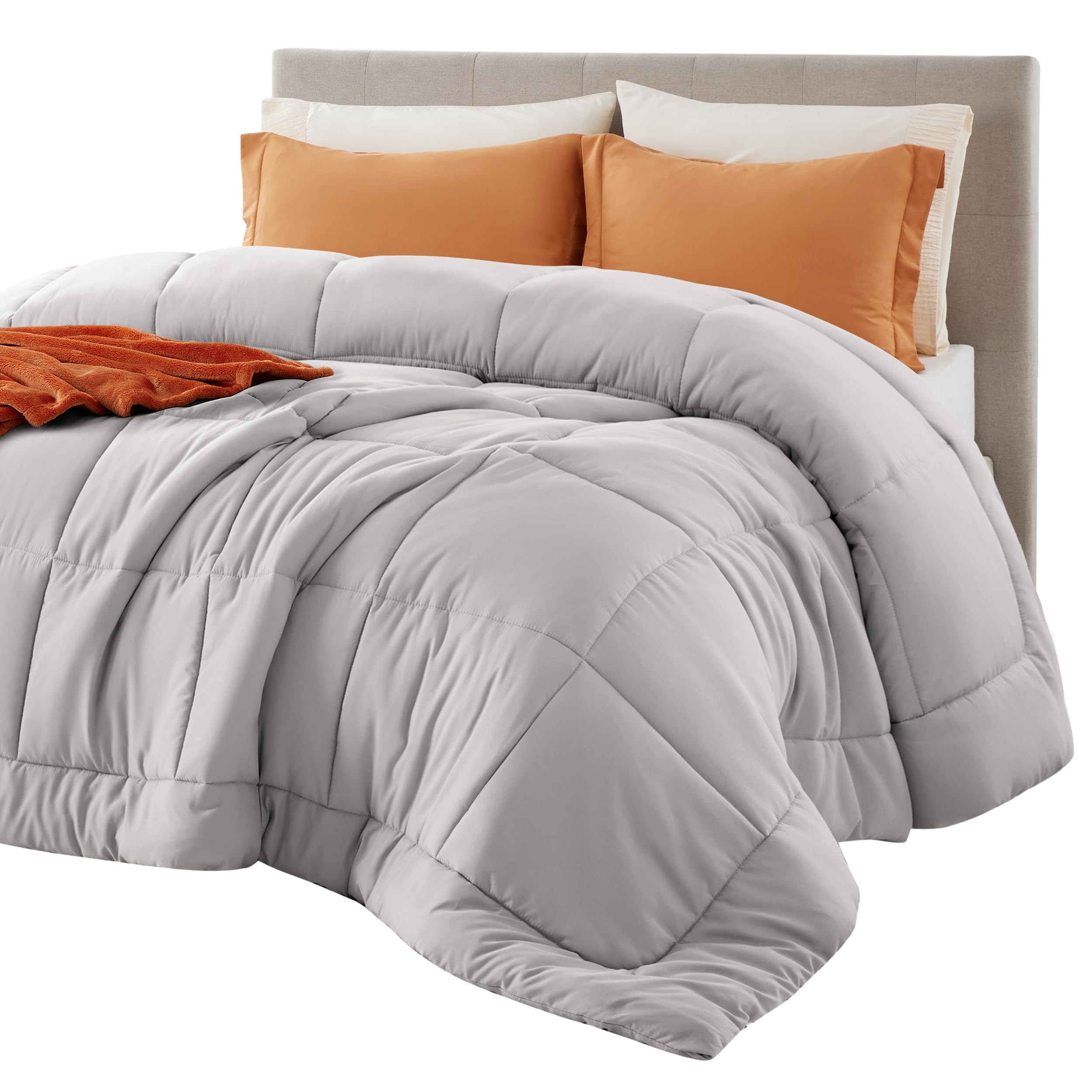
Bedsure Duvet Insert
Key Features
- Fill: 300gsm down alternative
- Shell Fabric: Brushed polyester
- Price: Mid-Range
The Bedsure duvet insert wraps you in a brushed polyester surface that feels smooth and cloud-like against skin. The 300gsm down alternative fill provides light insulation without bulk, and the fabric stays whisper-quiet when you shift — no crinkle. Box-stitching holds the fill evenly distributed, and eight corner tabs anchor the insert inside a duvet cover, stopping twisting or clumping.
Hot sleepers and mild-climate dwellers get the lightweight breathability they need. Because it’s designed as an insert, the thin profile disappears inside a cover, keeping the bed looking neat while adding just a touch of warmth. The tradeoff: this is not a plush, overstuffed comforter for bare-bed use. If you expect a lofty, hotel-style drape, this slim layer will feel underwhelming — but if you plan to use a duvet cover anyway, that thinness becomes invisible and the softness takes center stage.
Pros
- Exceptionally soft, brushed surface that stays quiet and comfortable against skin.
- Lightweight warmth ideal for hot sleepers or layering without overheating.
- Box-stitch construction prevents fill from shifting or clumping inside the cover.
Cons
- Thinner profile than some expect — not a plush, overstuffed comforter.
If you want a soft, no-bulk insert that stays put under a duvet cover, this one delivers. Skip it only if you want a fluffy comforter to use on its own.
Best for Colder Sleepers
Bare Home Comforter
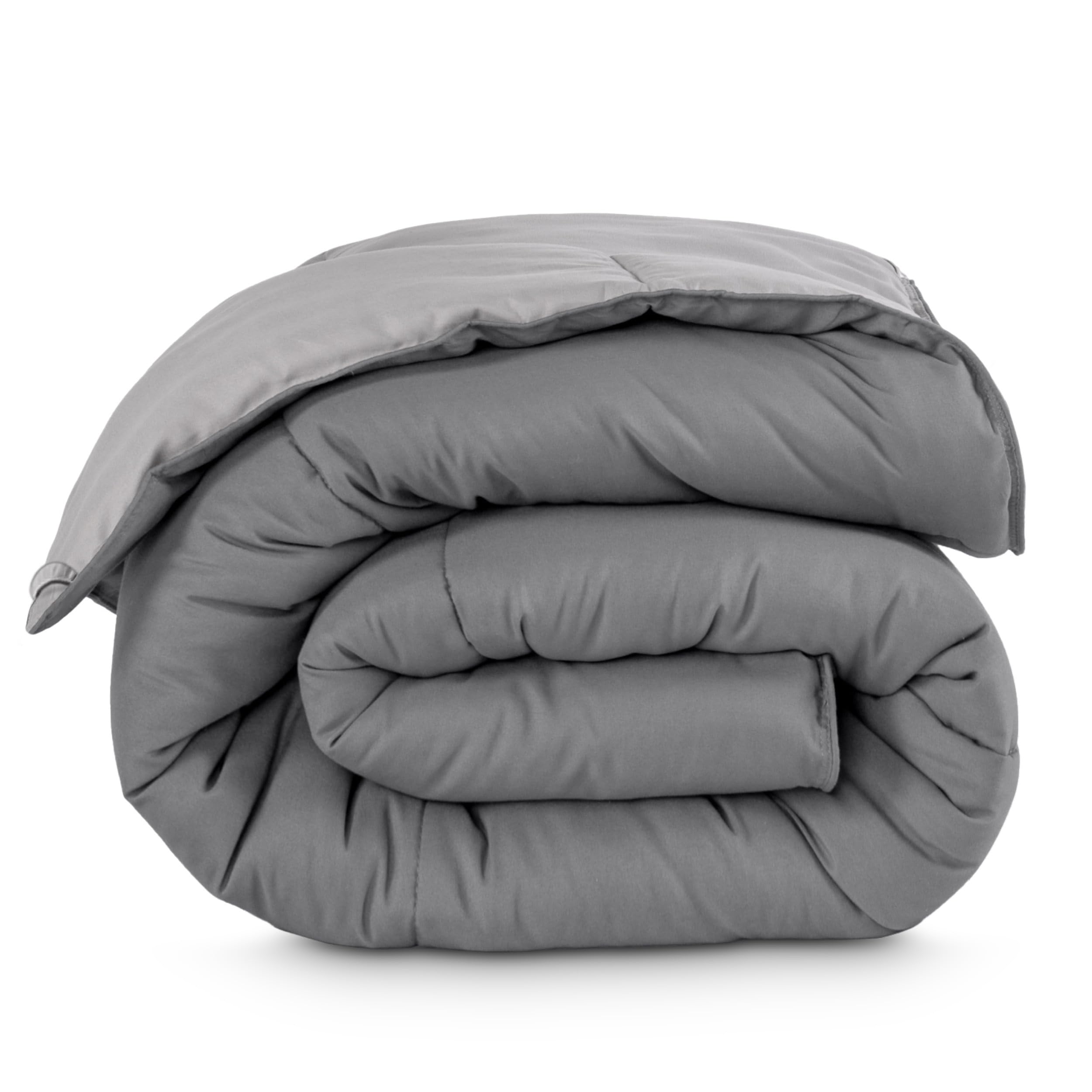
Unlike the airy duvet inserts that dominate the lightweight category, the Bare Home comforter delivers a hotel-grade drape with a soft, brushed microfiber shell and dense box stitching. The reversible grey design eliminates the need for a duvet cover while offering two looks. The fill provides cozy warmth that’s ideal for colder sleepers or climate-controlled rooms, but this added heft means it’s not the thinnest option available. Shoppers seeking a barely-there summer layer should look to the top pick; this one suits those who run cold and appreciate a comforter with presence.
Pros
- Ultra-soft microfiber exterior and polyfiber fill feel indulgent against the skin.
- Reversible design offers two color options without the hassle of a duvet cover.
- Delivers a plush, hotel-like feel at a mid-range price, undercutting many luxury brands.
Cons
- Heavier than typical lightweight comforters; hot sleepers may find it overly warm during summer.
A solid pick for those who want a substantial, well-made comforter with a plush feel and reversible styling — just not the lightest choice for warm nights.
Best for Softness Seekers
Bedsure Comforter Set
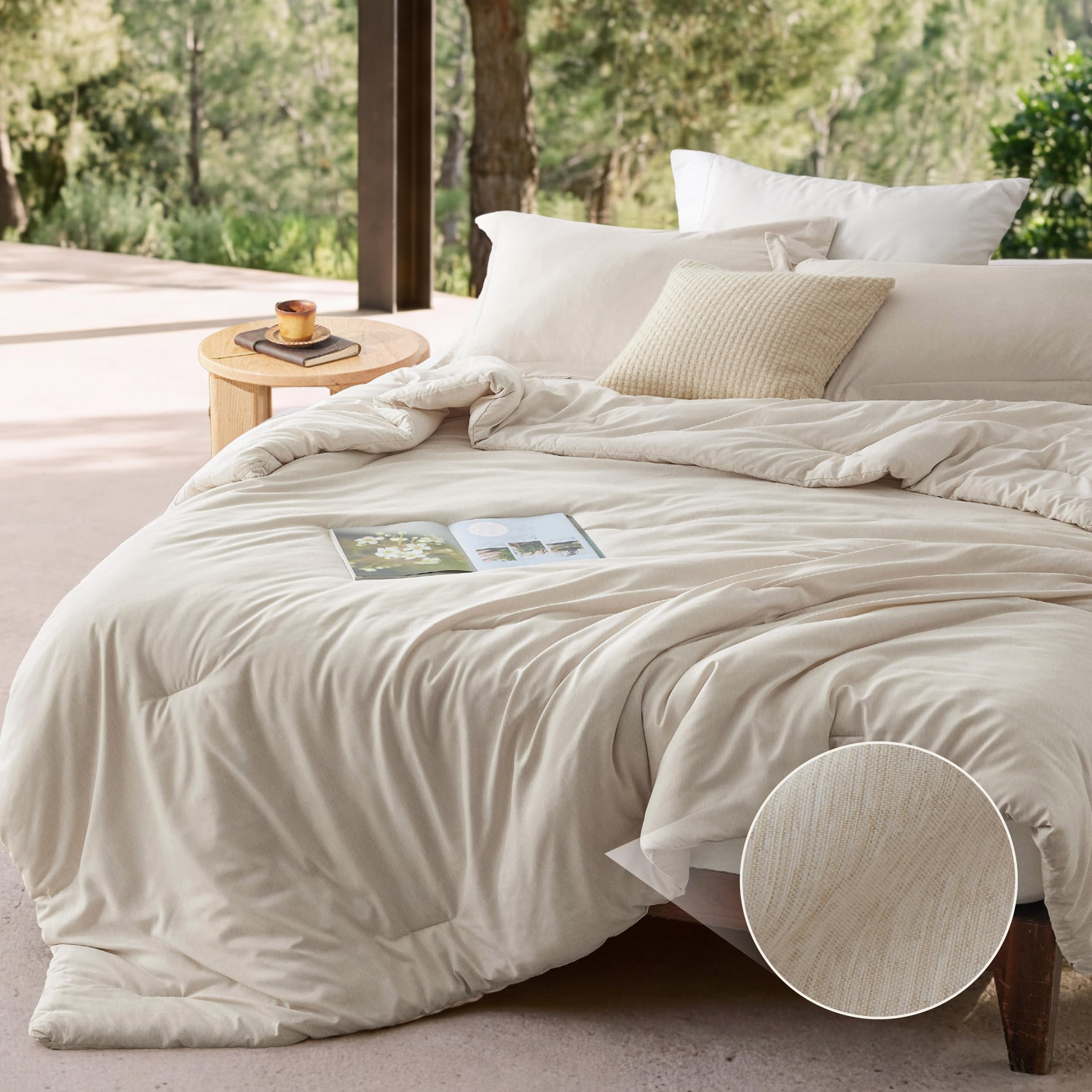
Unlike a standalone duvet insert that requires a separate cover, this Bedsure set arrives ultra-soft, with a subtle heathered sheen and matching shams for an instantly finished look. The plush feel and moderate, even warmth recall a high-end hotel comforter without the heavy weight.
It suits anyone who prioritizes softness and a cohesive bed set over extreme breathability. On cool to mild nights, the all-season warmth hits a sweet spot, but it can retain more body heat than some hot sleepers expect from a lightweight label—making it less ideal for muggy summers without AC.
Pros
- Ultra-soft plush feel that mimics a luxury hotel comforter.
- Warmth without heaviness—cozy but not weighted down.
- Ready-to-use ensemble with matching pillow shams for an instant cohesive look.
Cons
- May trap body heat and feel too warm on genuinely hot summer nights.
This set lands best with sleepers who crave softness and a pulled-together bed on cool to mild nights, accepting that it may sleep warmer than featherlight options.
Best for Sheet-Like Cover
EASELAND Comforter
Key Features
- Fill: 300gsm polyester
- Shell Fabric: 105g/m² brushed polyester
- Price: Mid-Range
The EASELAND comforter strips insulation down to nearly nothing, feeling more like a heavy top sheet than a traditional comforter. Where the top pick offers a touch more body with its box-stitch fill, this version goes fully transparent in weight. The upside is a barely-there presence that never traps heat — warm sleepers and summer nights are its ideal habitat. The trade-off is a profile so thin it disappoints anyone shopping for visible loft. Product photos oversell the fluff, but in use it’s a whisper of a blanket, not a cloud. If you want the absolute minimum layer for cooling or layering, this disappearing act works.
Pros
- Soft and warm for its featherweight feel.
- Cozy without overheating — stays breathable.
- Budget-friendly option that covers the basics.
Cons
- Nearly sheet-thin; may disappoint if you want any comforter-like loft.
For sleepers who run hot and want a comforter that disappears, this is a cost-effective option that gets the job done; just don’t expect it to look full.
Best for Budget Complete Set
Homelike Moment Set
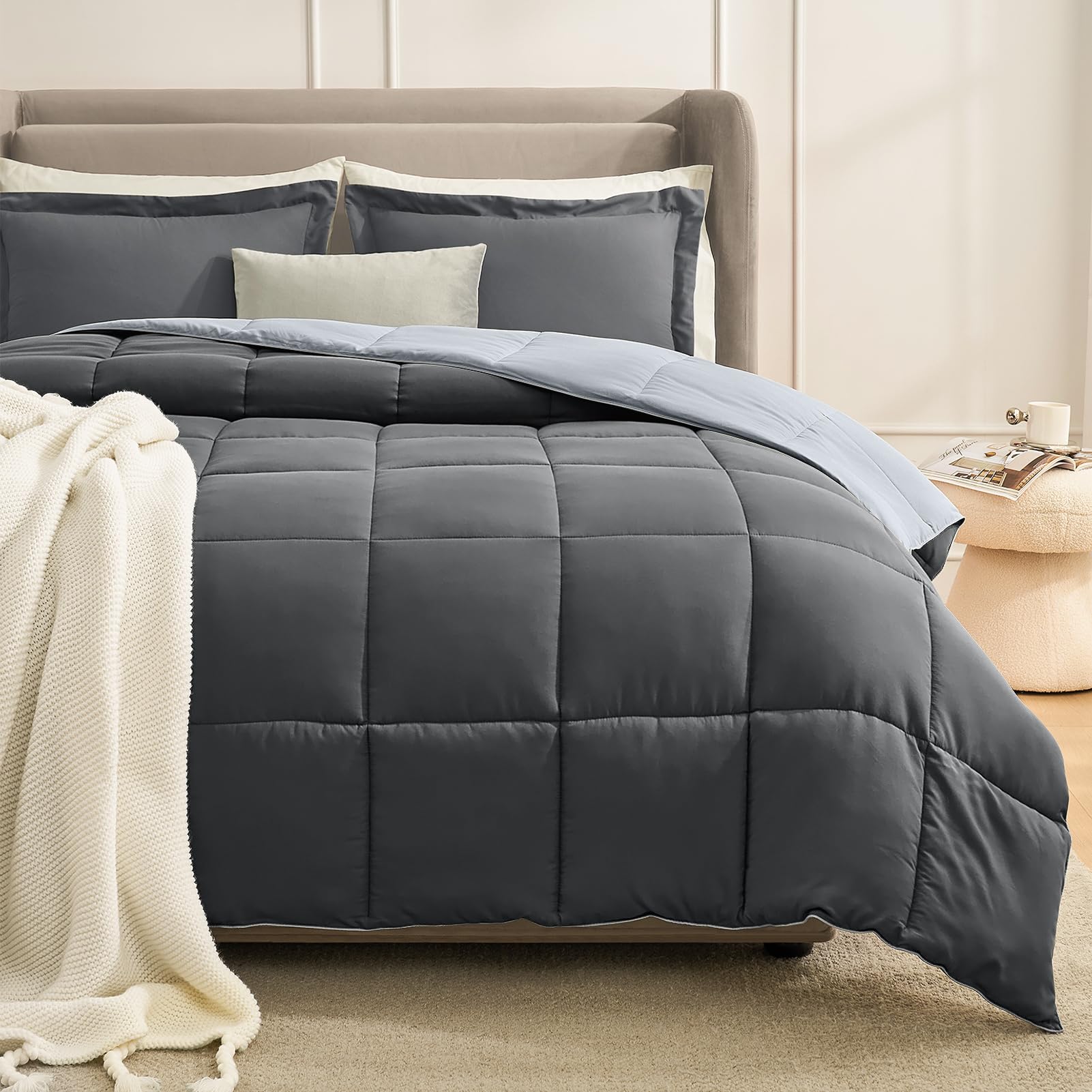
Unlike some reversible comforters sold alone, this set arrives complete with two matching pillow shams, offering a coordinated look straight out of the package. The microfiber fabric is soft and breathable, while the lightweight fill provides just enough warmth without bulk — ideal for warm sleepers and summer months. The reversible grey/light grey color gives two tones in one. For cold winters, the thin profile works best with a blanket layered on top.
Pros
- Lightweight fill provides just enough warmth without stifling heat
- Soft microfiber fabric and reversible grey tones offer comfort and style
- Complete set with shams delivers great value for the price
Cons
- Too thin for very cold nights without layering
This set is a smart choice for warm sleepers or mild climates where a light touch is preferred — just add a blanket when temperatures drop.
Best for Boho Style
ROSGONIA Set
The olive green hue and silky-soft cover give this set an inviting, earthy aesthetic that anchors a boho bedroom without heavy bulk. It’s best for standard-profile queen or king beds and warm sleepers who want lightweight warmth for fall and spring. The king comforter works best on mattresses with a standard depth — before ordering, measure your bed’s thickness if it’s tall or oversized. For very cold winter nights, plan to layer an extra blanket underneath.
Pros
- Silky-soft cover feels comfortable against skin and comes in a rich olive green.
- Lightweight fill provides just enough warmth for spring and fall without overheating.
- Smooth, non-scratchy texture makes it cozy for lounging.
Cons
- The king size may not drape adequately over the sides of deep or oversized mattresses.
The olive green comforter brings soft, boho warmth to standard-profile beds — a stylish lightweight layer for spring and fall.
Best for Hotel-Style Insert
TEXARTIST Comforter

Key Features
- Fill: 4D spiral fiber
- Shell Fabric: Brushed polyester
- Price: Mid-Range
The 4D spiral fiber fill and baffle box stitching create a lofty, hotel-feel insert that stays evenly distributed and breathes well. Lightweight enough for warm sleepers yet cozy in cooler months, it excels as a duvet insert. Without a cover, its plain grey exterior lacks visual punch — plan to pair it with a cover you already love.
Pros
- Soft, lofty hotel-like feel with breathable all-season comfort
- Lightweight warmth that layers easily without bulk
Cons
- Uncovered, the plain grey shell looks unfinished — a duvet cover is essential
For anyone who wants a hotel-like insert for an existing duvet cover collection without overpaying, this mid-range pick delivers plush comfort — just don’t expect it to double as a standalone comforter.
Best for Warm Sleepers
Litanika Comforter Set
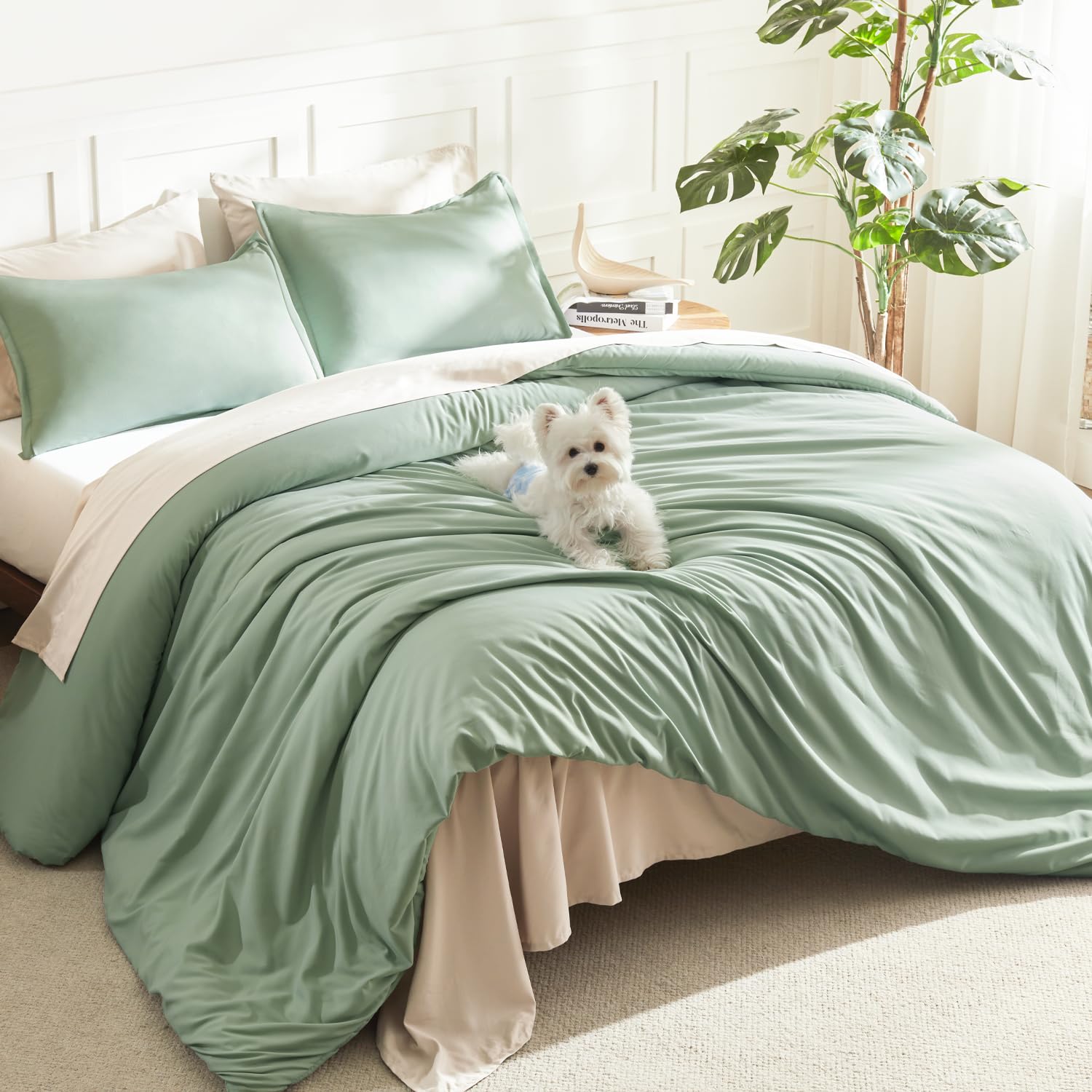
The Litanika comforter set delivers an incredibly soft, fluffy feel and a subdued sage green that suits airy, breathable bedding. It is lightweight enough for warm sleepers or summer layering without trapping excess heat. Sizing is the catch: the labeled dimensions can run small, so ordering a queen or king one size up is the practical fix for full mattress coverage. Once sized correctly, you get a gentle, budget-friendly set that nails softness and color. The size uncertainty keeps it from a higher tier, but for those who measure first, it’s a satisfying find.
Pros
- Incredibly soft and fluffy texture
- Lightweight and airy, perfect for warm weather or layering
Cons
- Labeled size can run small, requiring a size up for full mattress coverage
A smart buy for warm sleepers who don’t mind ordering a size up to get soft, lightweight comfort in a beautiful sage green.
Best for Budget Reversible
Homelike Moment Comforter

Key Features
- Fill: Down-like microfiber
- Shell Fabric: Breathable polyester
- Price: Budget
Soft, breathable microfiber delivers lightweight warmth that never feels heavy, making it a solid choice for warm sleepers and summer layering. The reversible grey design adds versatility, but sizing can be inconsistent — measure your mattress before ordering.
Pros
- Lightweight and warm without feeling heavy.
- Soft, fluffy microfiber feel.
Cons
- Queen and king sizes can run narrower than expected, leaving limited overhang on thicker mattresses.
For warm sleepers who want a reversible, no-bulk comforter and can double-check their mattress depth, this budget-friendly option delivers soft warmth with minimal weight.
Best for Guest Rooms
CozyLux Set

Key Features
- Fill: Polyester
- Shell Fabric: Polyester microfiber
- Price: Budget
This set offers a soft, lightweight black comforter and two pillowcases at the lowest price for guest beds, dorms, or kids’ rooms. Quality control isn’t flawless—units can arrive with missing pillowcases or lint shedding—so it’s best for low-stakes spaces where occasional quirks are acceptable.
Pros
- Soft and comfortable at a very low price
- Lightweight without feeling paper-thin
Cons
- Units can arrive with missing pillowcases or develop lint shedding
If you need an ultra-budget black comforter for a spare room, this set delivers soft, lightweight comfort—just check for missing pieces upon arrival.
Best for Moderate Climates
COHOME Cooling Comforter

Key Features
- Fill: Whole-piece polyfill
- Shell Fabric: 100% polyester
- Price: Mid-Range
Soft, well-made construction with box stitching provides cozy comfort, but the ‘cooling’ label doesn’t hold up for hot sleepers — you may overheat. It’s a better fit for moderate climates where breathability is enough and the cooling claim isn’t crucial.
Pros
- Soft and well-made with durable box stitching
- Comfortable, cozy feel for all-season layering
Cons
- Cooling label may mislead hot sleepers — you could feel too warm
A solid mid-range duvet insert for moderate climates, where breathability is enough. Avoid if you need proven cooling for warm nights.
How to Choose
A comforter’s label doesn’t guarantee breathability; the real cooling power depends on fill density, shell weave, and construction quality.
Fill Weight and Breathability
Lighter fills (250-300gsm) allow more airflow and sleep cooler, but they provide less insulation on chilly nights. Thicker fills trap more body heat, which can turn a ‘lightweight’ comforter into an oven for hot sleepers.
Down alternative polyester is the most common fill; it can feel lofty but often retains warmth unless specifically engineered with spiral or 4D fibers that promote air movement. If you sleep hot, prioritize fill types marketed with high-loft, open-structure fibers over dense, whole-piece polyfill.
Shell Fabric and Noiselessness
A brushed polyester shell feels buttery soft and completely silent, but it can hug the body and trap heat. Crispier, tightly woven shells—like those on hotel duvets—breathe better but may produce a slight rustle that disturbs sensitive sleepers.
The hidden trade-off: ultra-soft brushed shells often compromise on airflow. If you already run warm, choose a lightly brushed or microfiber shell with a lower denier that prioritizes air exchange over silkiness.
Box-Stitch vs. Baffle-Box Construction
Box stitching creates squares that hold the fill in place, preventing clumping and cold spots after washing. Baffle-box designs add internal walls between the top and bottom layers, giving more loft and eliminating pinched seams—but they cost more and can feel heavier.
For lightweight comforters, basic box stitching usually suffices if the fabric and thread quality are high. The risk is that poorly executed stitching can unravel at the edges, letting fill escape, so prioritize reinforced seams and double-stitched borders.
Corner Tabs for Duvet Cover Use
A comforter without corner tabs will shift and bunch inside a duvet cover, requiring daily fluffing. Tabs (usually 4-8) let you tie the corners securely, turning a plain insert into a stay-put all-season piece.
This feature matters only if you plan to use a duvet cover. Standalone comforters that are styled and colored won’t need tabs, but missing them on an insert adds a layer of daily frustration that’s easily avoided.
Seam Strength and Wash Durability
Inexpensive comforters often use single-needle seams that can unravel after just a few gentle cycles. Look for references to ‘reinforced stitching’ or double-stitched edges, and read feedback about post-wash performance.
The washing machine is the true test: a front-loader without an agitator is gentlest, and tumble drying on low with dryer balls prevents fill clumping. If a comforter’s seams can’t survive several washes, it’s not worth the initial savings.
FAQ
Why does my lightweight comforter still make me sweat at night?
Many synthetic polyester fills trap radiant body heat the same way a fleece jacket does, even when the comforter feels thin. Brushed microfiber shells also reduce airflow. Pick a model with a lower gsm (around 300) and a shell described as breathable or moisture-wicking, not just ultra-soft, to cut down on sweat.
Can I use a lightweight comforter in winter with layering?
Yes, a lightweight comforter works as the top layer over a heavier blanket or quilt. The key is trapping warm air between layers without compressing the fill. Keep the comforter on top and avoid tucking it tightly, so it can loft and insulate properly.
How do I prevent my new comforter from tearing in the washing machine?
Wash it separately on a gentle cycle in cold water using a front-loader without an agitator, then tumble dry on low with wool dryer balls. Before the first wash, check for loose threads and reinforce any weak seams—prevention beats repairing a torn seam later.
What’s the difference between a down alternative duvet insert and a standalone comforter for lightweight warmth?
Duvet inserts are usually plain white, have corner tabs for tying inside a cover, and use baffle-box stitching to maintain loft beneath a cover. Standalone comforters come in colors and patterns, often lack tabs, and are designed to be used as-is. Choose an insert if you want to protect it with a washable cover; pick a standalone comforter if you prefer a ready-made look without extra layers.