
This post contains affiliate links. We may earn a small commission when you buy through our links — at no extra cost to you.
Back sleepers need spinal alignment, but many mattresses that start off medium-firm soften within a year, triggering lower-back pain. Cooling claims add another layer of frustration: gel-infused foam often traps heat after the initial cool-to-the-touch sensation fades. The result is waking up achy and sweaty despite choosing a mattress that seemed right on paper.
The gap between marketing and real-world performance is widest when it comes to durability and temperature regulation. For back sleepers, sagging isn’t just a comfort issue—it directly undermines the lumbar support that keeps your spine neutral. Similarly, cooling that works for 30 minutes and then gives way to trapped body heat defeats the purpose.
This guide zeroes in on mattresses where firmness holds up over years and cooling tech actually maintains airflow all night. By prioritizing proven support—from zoned foam to reinforced coils—and temperature management that real users confirm, these picks help you sleep cooler and wake with less pain, without trial-and-error guesswork.


Best for Cooling & Support
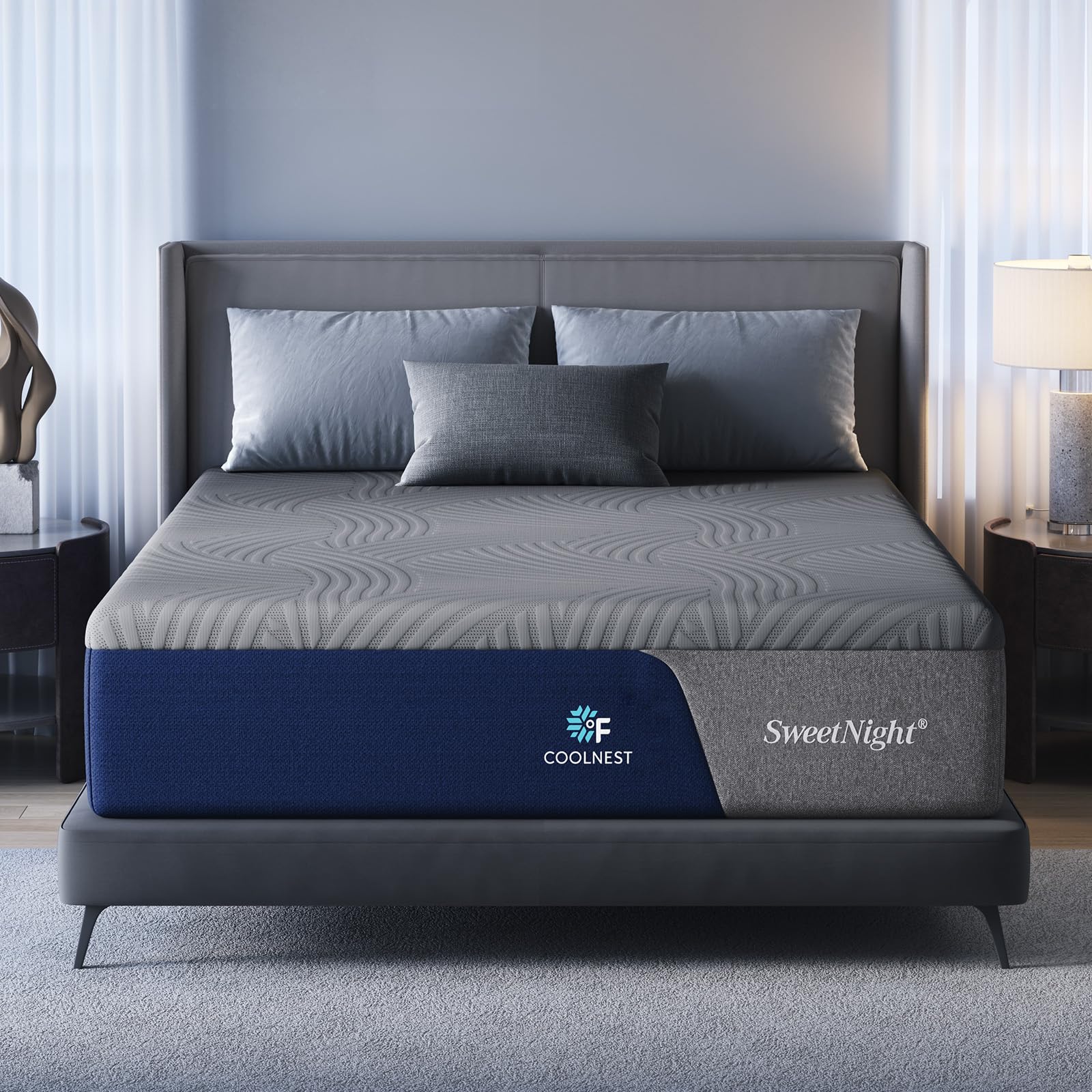
Sweetnight CoolNest
Key Features
- Firmness Level: Medium
- Lumbar/Zoned Support: 5-zone ergonomic (ACA recognized)
- Cooling Technology: PCM foam, gel, 3D ventilated cover
- Price: Mid-Range
The Sweetnight CoolNest uses PCM-infused foam and a ventilated 3D cover to keep the surface noticeably cooler than standard memory foam. The 14-inch medium-firm build combines a gel memory foam upper layer with a 5-zone base that reinforces the lumbar area, supporting spinal alignment without the common foam heat trap.
Back sleepers with lower-back pain will benefit from the zoned support that reduces pressure points, while hot sleepers get genuine heat dissipation throughout the night. Those who expect a rigid, extra-firm surface may find it slightly softer than anticipated — the foam conforms gently, and a mild sinking sensation is possible under heavier bodyweight. This mattress is best for back sleepers who prioritize cooling, targeted lumbar support, and clinical endorsement over a brick-like firmness.
Pros
- Medium-firm feel that suits back sleepers needing spinal alignment
- All-night cooling that keeps foam temperatures down
- Targeted pressure relief for lower-back pain
Cons
- Firmness may feel too soft for those wanting a rigid surface; some sinking sensation possible
Back sleepers who value effective cooling and lumbar zoning over an ultra-firm surface will find this mattress delivers clinical-level support without the premium price.
Best for Targeted Lumbar
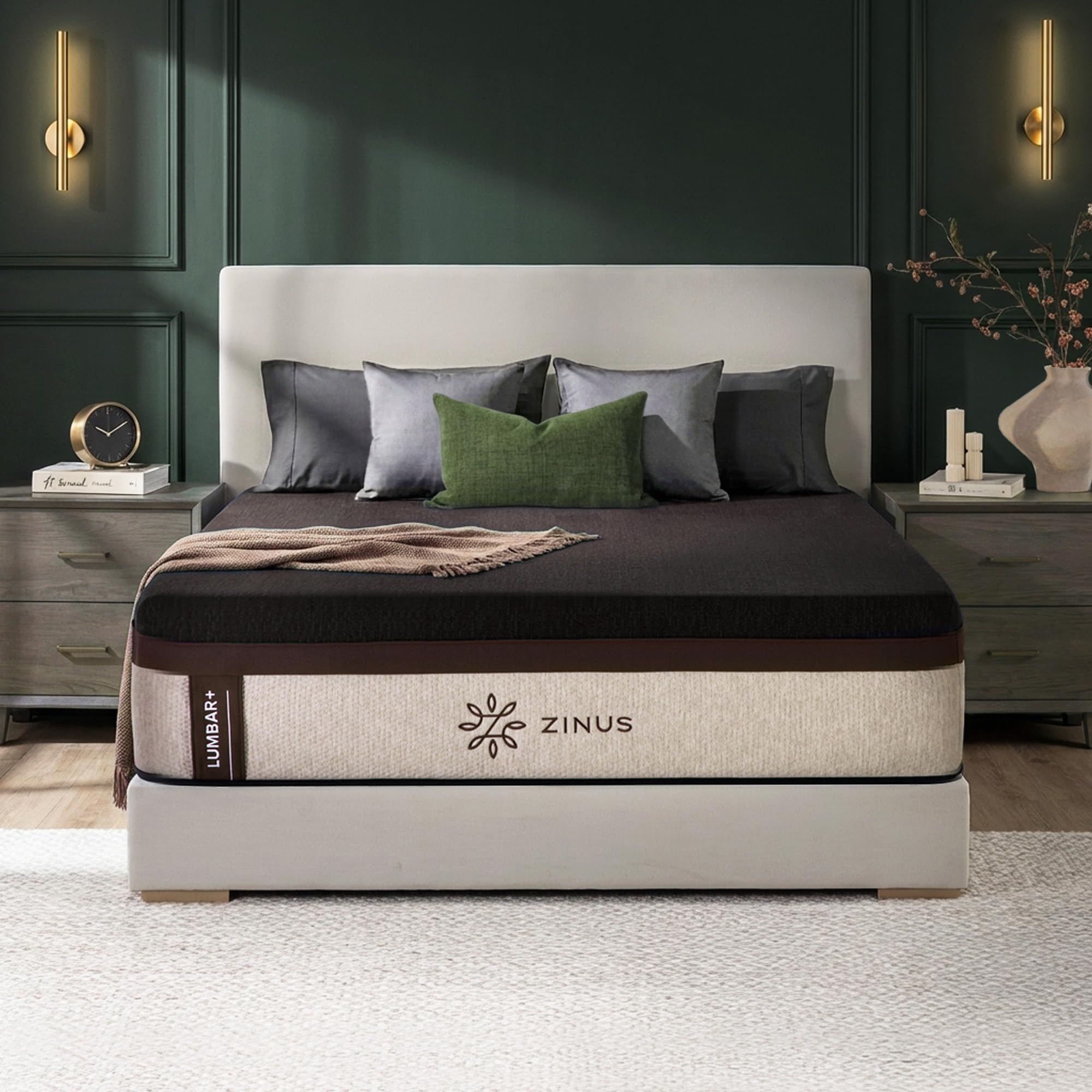
Zinus Lumbar+ 14"
Key Features
- Firmness Level: Medium Firm
- Lumbar/Zoned Support: 3-zone targeted lumbar
- Cooling Technology: Gel-infused, green tea extract
- Price: Mid-Range
Three distinct firmness zones give the Zinus Lumbar+ a targeted feel that back sleepers seeking lower-back contouring will notice immediately. Unlike the top pick’s all-night cooling and clinical endorsement, this mattress prioritizes zoned support and motion isolation at a mid-range price — ideal for couples who want minimal partner disturbance. The 14-inch foam build offers deep pressure relief, but the lumbar design is not a guaranteed cure for back pain; some sleepers actually develop new discomfort despite the engineering. Those who prefer a medium-firm, sink-in memory foam feel and accept that zoned support may not resolve every ache will find it a high-value pick.
Pros
- Deep pressure relief that reduces motion transfer for undisturbed sleep.
- 14-inch profile with gel-infused foam and green tea at a budget-competitive price.
- Consistent foam density that holds its supportive feel over the first months of use.
Cons
- Firmness can feel too hard for sleepers under 160 lbs, reducing pressure relief.
- Targeted lumbar zones do not guarantee back-pain relief and may cause new discomfort in some cases.
For back sleepers who value targeted lumbar contouring, motion isolation, and a thick all-foam profile without paying for hybrid springs, the Zinus Lumbar+ fits — as long as you don’t expect guaranteed back relief.
Best for Chiropractor-Approved
EGOHOME 14" Copper
Key Features
- Firmness Level: Medium Firm
- Lumbar/Zoned Support: ICA-endorsed, full-body
- Cooling Technology: Copper gel aero-fusion, graphene cover
- Price: Mid-Range
Unlike simpler gel foam options, the EGOHOME layers copper-infused aero-fusion memory foam with a graphene-enhanced cover for genuine heat dissipation, backed by ICA recognition for spinal alignment. The result is a firmer, cool-sleeping surface that holds its shape and resists hot spots for back sleepers with chronic pain.
Medium- to heavy-weight back sleepers seeking chiropractor-approved support and cooling will benefit most. Those under 130 lbs may perceive the firmness as too hard, turning intended support into uncomfortable pressure — so a preference for plushness rules this out.
Pros
- Chiropractor-endorsed support relieves back and hip pressure for chronic pain sufferers
- Copper-gel aero-fusion and graphene cover deliver all-night cooling without heat buildup
- Cushion-yet-supportive feel aligns the spine without sacrificing comfort
Cons
- Firmness may feel excessively hard for lightweight back sleepers (under 130 lbs), turning support into discomfort
For back sleepers who need a cool, medically endorsed sleep surface and can handle a firm feel, this copper-gel mattress delivers genuine pain relief. Lightweight individuals should look for a softer medium-firm alternative.
Best for Budget-Friendly
CHARME HOUSE Hybrid
Key Features
- Firmness Level: Medium
- Lumbar/Zoned Support: Reinforced edge, no zones
- Cooling Technology: Breathable design
- Price: Budget
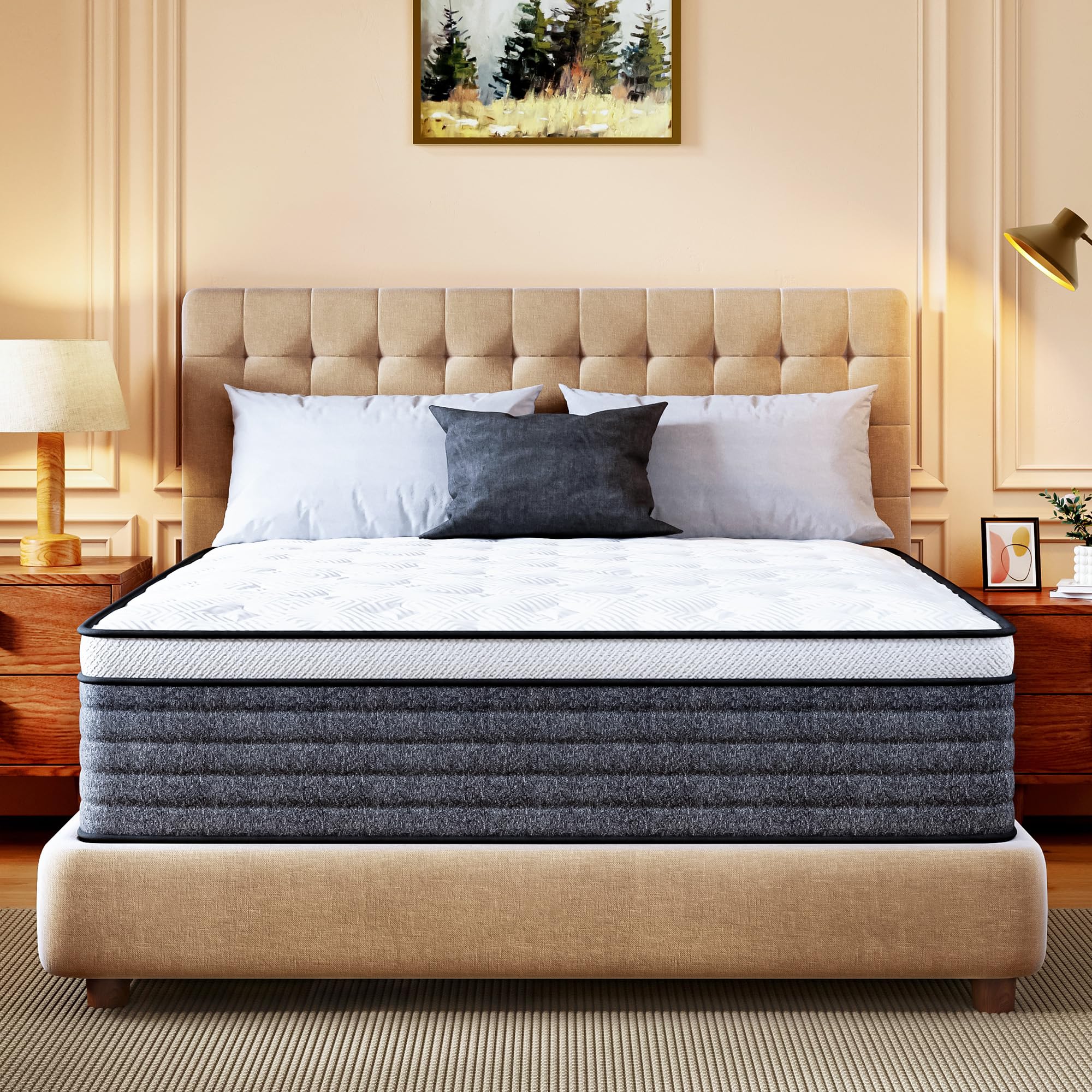
The CH CHARME HOUSE hybrid pairs a medium-firm foam top with individually wrapped coils to provide supportive alignment for back sleepers. It focuses on core comfort and pressure relief, trading specialized cooling gels and zoned lumbar designs for a simpler, more affordable build. The coil layer adds natural airflow and a responsive feel that avoids deep sinkage.
Edge support is the main trade-off: the perimeter lacks the reinforced foam of pricier hybrids, so sitting on the side feels less secure. Individuals over 250 pounds may eventually feel the coils through the comfort layer, though average-weight back sleepers get consistent all-night comfort. This makes it ideal for guest rooms, kids’ spaces, or anyone seeking a no-frills hybrid under $200.
Pros
- Medium firmness cushions back sleepers without sinking
- Pressure relief from hybrid design helps wake pain-free
- Outstanding value for a pocket-coil hybrid under $200
Cons
- Edge support may feel less sturdy than pricier hybrids
- Extremely heavy users can eventually feel the pocketed coils
For back sleepers under 200 pounds who want a supportive hybrid without overspending, this mattress delivers comfort where it counts.
Best for Heavy Duty Support
FLEXPEDIC 12" Hybrid
Key Features
- Firmness Level: Medium Firm
- Lumbar/Zoned Support: 7-zone reinforced lumbar, hips, shoulders
- Cooling Technology: Cooling gel-infused, breathable cotton cover
- Price: Budget
This mattress shifts the focus away from cooling to structural lumbar engineering. Its 7-zone spring system, reinforced edges, and gel-infused foam deliver targeted spinal alignment that back sleepers find noticeably relieving. The firmness, however, sits on the harder end of medium-firm; anyone under about 180 pounds may not compress the top layers enough to activate the zoning and might feel the coils underneath. That makes it a natural fit for heavier back sleepers who demand robust support and appreciate the long-term durability signaled by the lifetime warranty. Lightweight individuals or those who dislike a hybrid’s subtle bounce should look elsewhere.
Pros
- Targeted 7-zone lumbar design helps align the spine and reduce back pain.
- Reinforced edge support adds durability and prevents roll-off.
- Outstanding value for a hybrid mattress backed by a lifetime warranty.
Cons
- Lightweight back sleepers may find the surface too firm to engage the lumbar zones, and can feel the springs.
Designed for back sleepers over 180 lbs who need targeted zoned support and a durable build at a budget price. Lighter sleepers will find the surface unforgiving and should explore plusher alternatives.
Best for Risk-Free Trial
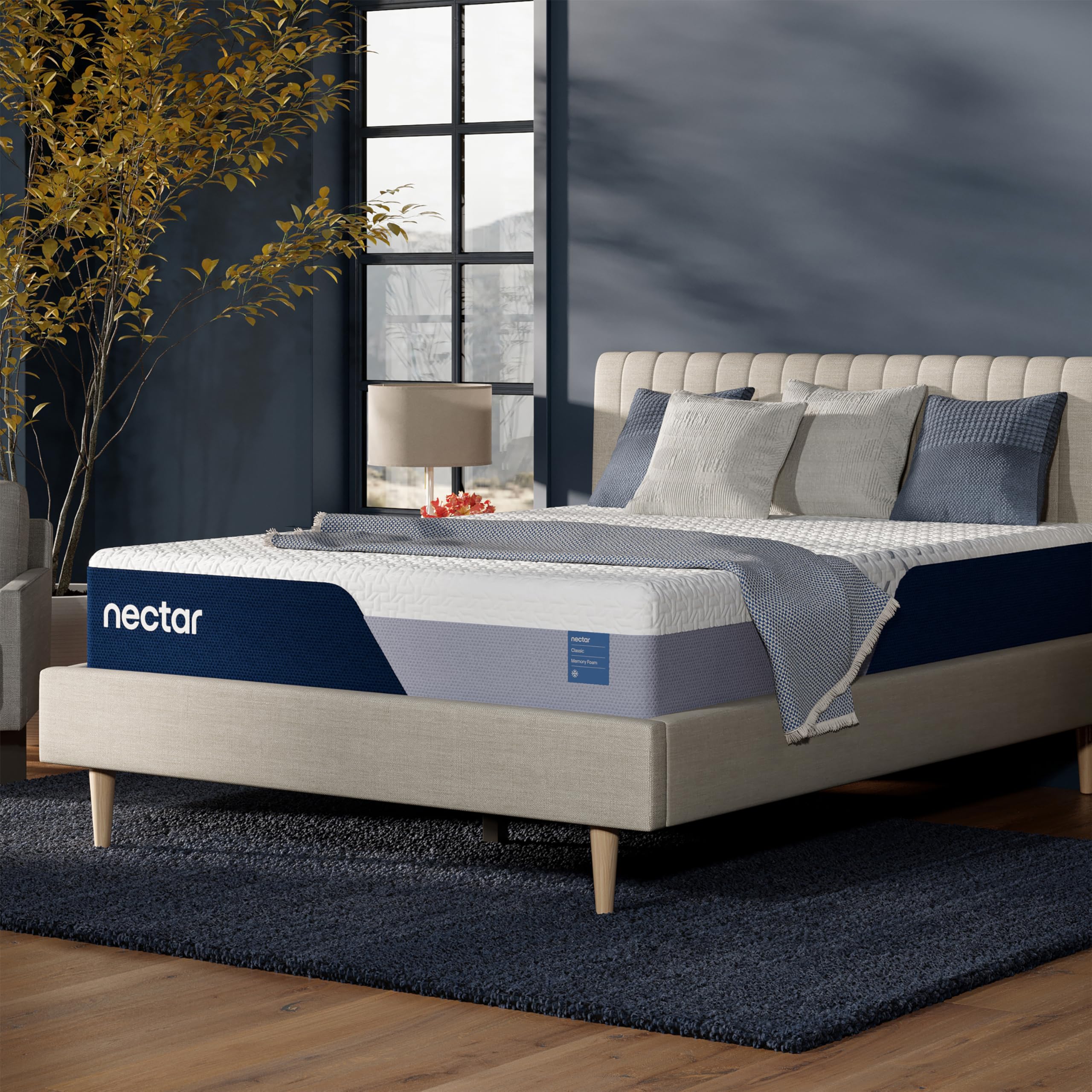
Nectar Classic 12"
Key Features
- Firmness Level: Medium Firm
- Lumbar/Zoned Support: Adaptive spinal alignment layer
- Cooling Technology: Cooling top fabric
- Price: Premium
The Nectar Classic 12" sets itself apart by eliminating commitment: a full year to test its slow-response memory foam and a forever warranty if you keep it. Unlike mattresses that chase active cooling or segmented support, the focus here is on deep, pressure-relieving contour that molds to the spine.
Back sleepers who want to verify long-term comfort before committing will value this risk-free window. Cooling can be inconsistent, and sagging may appear after about 18 months, so those over 230 lbs or who sleep hot should weigh these tradeoffs. Couples benefit from excellent motion isolation, and the medium-firm feel suits average-weight backs seeking a controlled sink.
Pros
- Memory foam conforms to the spine, relieving pressure at shoulders and hips.
- 365-night trial eliminates the risk of choosing the wrong mattress.
- Motion isolation is strong enough to prevent partner disturbance.
Cons
- Cooling top fabric can fall short, occasionally causing heat retention.
- Body impressions may develop after roughly 18 months, lessening support.
If the security of a year-long trial and lifetime warranty outweighs the need for cutting-edge cooling or long-haul durability, this mattress offers pressure-relieving comfort with a controlled memory-foam feel.
Best for Entry-Level
Ashley Chime 12"
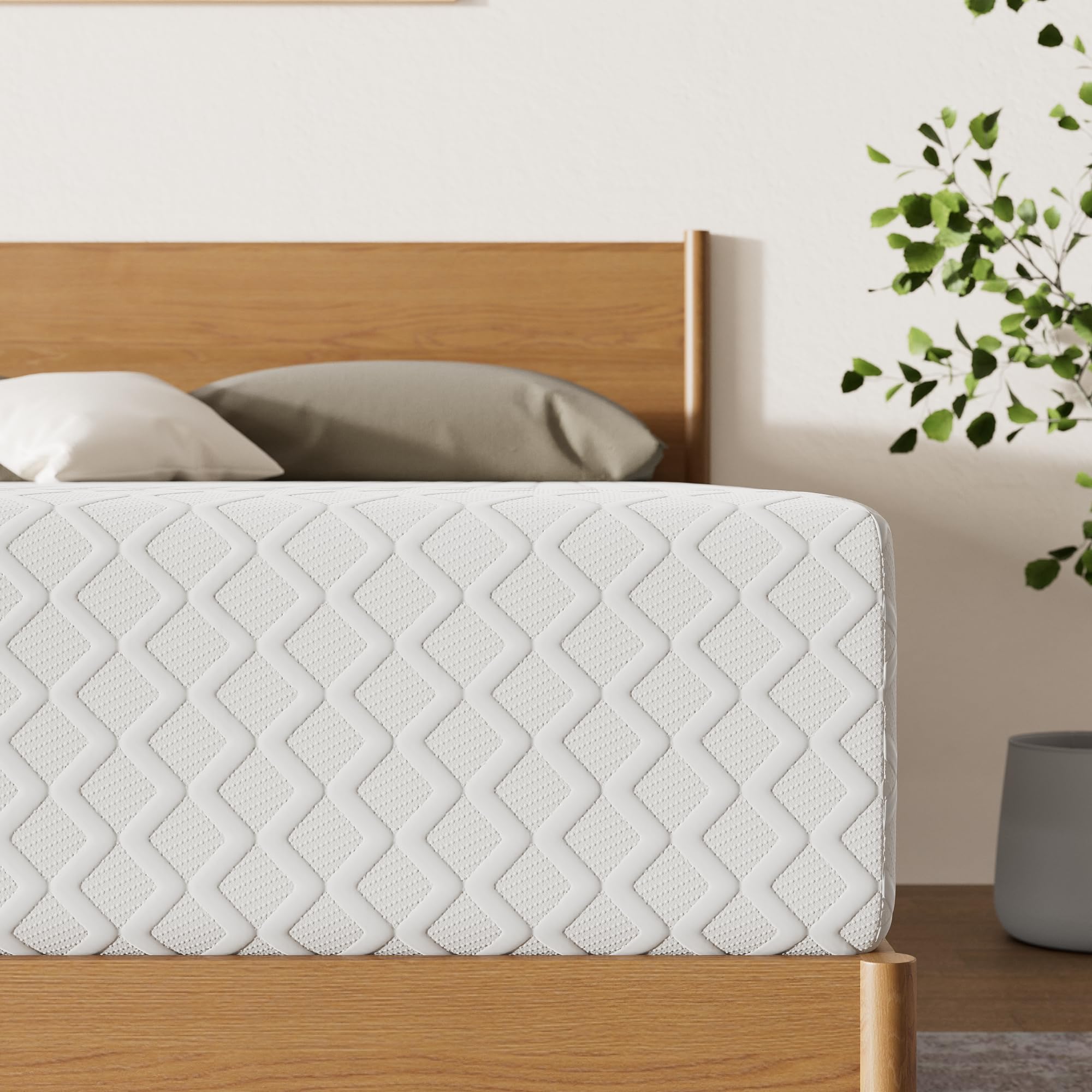
Key Features
- Firmness Level: Medium Firm
- Cooling Technology: None (basic foam)
- Price: Budget
The Ashley Chime 12" combines comfort and value that make it a popular entry-level memory foam pick. For back sleepers needing consistent spinal alignment, however, firmness can vary and occasional sagging may emerge over time—limits that confine it to guest rooms or light-use scenarios where those tradeoffs matter less.
Pros
- Exceptional comfort and value for a budget foam mattress.
- High perceived quality for its price point.
Cons
- Firmness can feel inconsistent—some back sleepers find it too soft to maintain proper spinal support.
This mattress fits guest rooms or occasional use where long-term support isn’t the priority; back sleepers needing consistent alignment should look to firmer, zoned options.
Best for Affordable Cooling
EGOHOME 12"
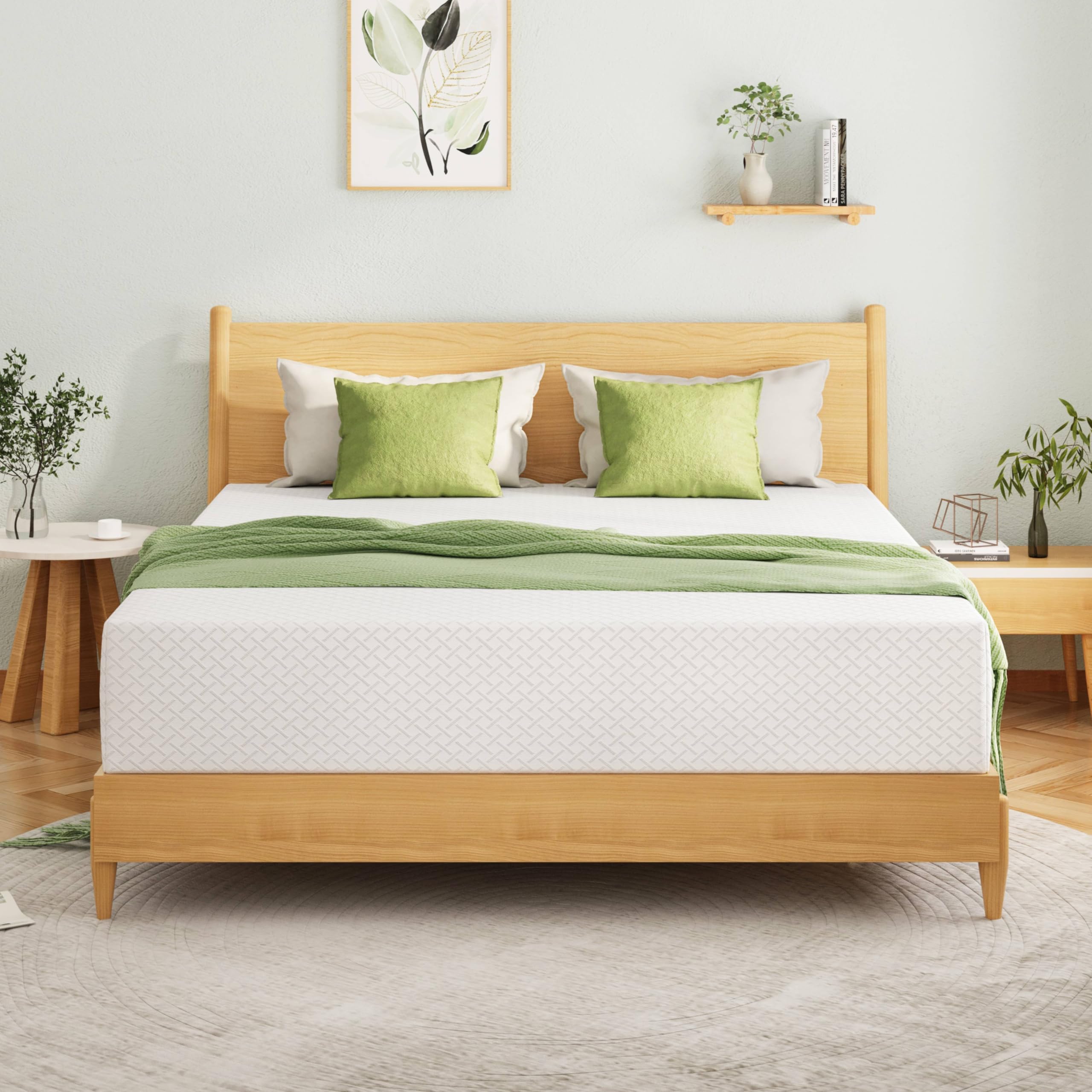
Key Features
- Firmness Level: Medium Firm
- Cooling Technology: Green tea gel, breathable
- Price: Budget
The 12-inch memory foam sleeps cool and odor-free, with a medium-firm surface that suits back sleepers up to average weight. Without lumbar zoning or advanced cooling, it leaves dedicated back-pain relief to pricier models. Lighter-weight back sleepers may find the firmness unforgiving, but for budget-minded buyers wanting a breathable, supportive bed without heat complaints, it works.
Pros
- Medium-firm layering balances support and pressure relief for back sleepers on a budget.
- Gel-infused foam with green tea extracts delivers genuinely cool sleep and negligible off-gassing.
Cons
- Lighter-weight back sleepers may find the medium-firm surface overly rigid, lacking the give needed for pressure relief.
A sensible pick for a guest room or first apartment where cooling and odor are priorities over targeted lumbar support.
Best for Deep Memory Foam
Cool Gel Chill 14"
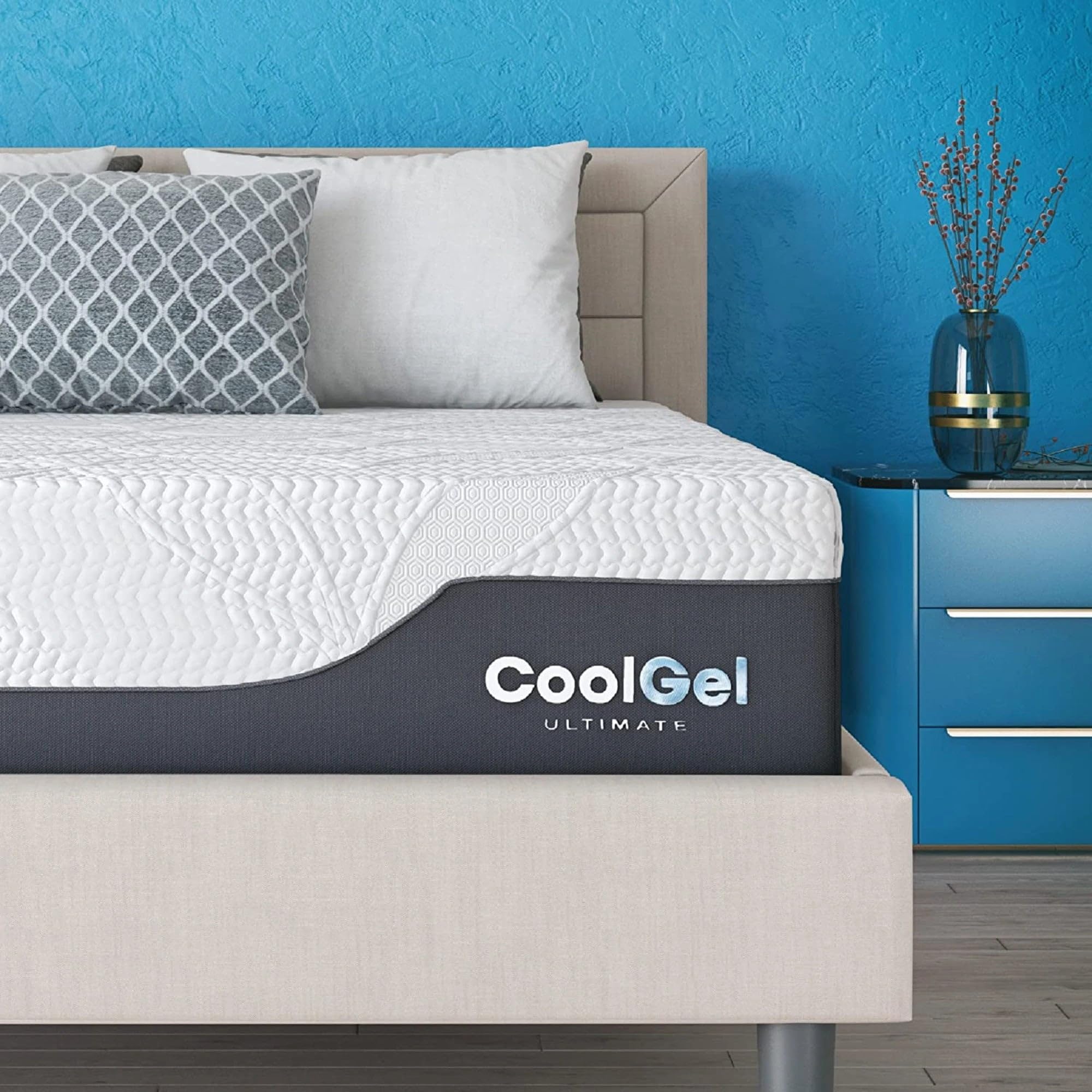
Key Features
- Firmness Level: Firm/Medium Firm
- Cooling Technology: Gel-infused, ventilated
- Price: Mid-Range
Thick 14-inch memory foam with a plush top and firm base isolates motion effectively and cushions pressure points. Cooling is hit-or-miss; some still feel warmth, and there’s no dedicated lumbar zone. For back sleepers, the top pick in this category delivers both cooler nights and targeted back support.
Pros
- Deep memory foam conforms to pressure points while a firm core maintains spinal alignment.
- Excellent motion isolation so a restless partner won’t disturb your sleep.
Cons
- The plush top can cause deeper sinkage than some back sleepers with lower-back concerns might want, reducing targeted lumbar lift.
For back sleepers who value motion isolation and deep contouring over active cooling or lumbar zoning, the 14-inch profile provides a plush, well-built surface at a mid-range price.
Best for Pillow-Top Hybrid
Mercer Hybrid 12"

Key Features
- Firmness Level: Firm (cushion-firm pillow top)
- Lumbar/Zoned Support: Pocket coils, no explicit zones
- Cooling Technology: Gel-infused memory foam
- Price: Mid-Range
Cushion-firm pillow top over pocketed coils provides a bouncy, responsive surface that back sleepers who dislike all-foam sink will like. Durability under daily use is a weak point — sagging can appear within months, and the comfort layers may not fully mask the coils. This suits occasional use, not a nightly spinal alignment solution.
Pros
- Cushion-firm hybrid feel with responsive bounce suits back sleepers who want support without all-foam quicksand.
- Strong value for a gel-infused hybrid with pocketed coils and initial build quality.
Cons
- Long-term sagging can compromise support within months, making it risky for nightly back-sleeper use.
Best suited for guest rooms or lighter-weight occasional sleepers who want a bouncy hybrid feel without counting on years of sag-free support.
Best for Casper Medium
Casper Element

Key Features
- Firmness Level: Medium
- Cooling Technology: Open-cell Flex Foam
- Price: Premium
Casper’s open-cell Flex Foam provides a balanced medium feel with notable motion isolation and straightforward setup. For back sleepers needing firm lumbar support, the 10-inch all-foam build may feel too soft and can lead to spinal misalignment. It suits combination sleepers and lightweight back sleepers who don’t require pronounced lumbar push.
Pros
- Balanced foam comfort and strong motion isolation reduce sleep disturbances.
- Quick no-hassle setup and solid build quality for a brand-name foam mattress.
Cons
- Medium feel lacks targeted lumbar push, potentially causing back discomfort for dedicated back sleepers.
A suitable brand-name pick for combination sleepers who value motion isolation and easy setup over firm spinal support, but back sleepers needing pronounced lumbar relief should look to firmer options.
How to Choose
The single most important factor for back sleepers is a mattress that maintains medium-firm support and genuine cooling over time, since sagging and heat buildup directly cause morning back pain.
Firmness Level
Medium-firm to firm is the ideal range for back sleepers—it keeps the spine aligned from head to hips without letting the lower back sink. However, firmness varies by manufacturer; a ‘medium’ from one brand can feel like a ‘firm’ from another. Too soft and your hips dip, creating a U-shaped arch; too hard and your shoulders don’t compress enough, causing pressure points.
Go beyond the label and check density specs: a base layer below 1.8 lb/ft³ in memory foam often leads to softening and sagging in 12–18 months. Heavier sleepers (over 200 lbs) should err on the firm side, while lighter individuals (<130 lbs) may need a slightly softer medium-firm to avoid feeling like they’re sleeping on a board.
Targeted Lumbar/Zoned Support
Zoned support places firmer foam, thicker coils, or reinforced sections under the lower back, hips, and shoulders to maintain the spine’s natural curve. The hidden trade-off is that if the zones don’t align with your body, you’ll feel a ridge under your back instead of support. This mismatch can actually worsen pain.
Look for confirmed placement of the lumbar zone between the 3rd and 5th lumbar vertebrae—roughly 6–10 inches from the head. Mattresses with adjustable firmness or those endorsed by chiropractors (such as models with American Chiropractic Association recognition) tend to have more universally compatible zone placements. If you’re between sizes or have atypical posture, a non-zoned but consistent density mattress may be a safer bet.
Cooling Technology
Plain gel infusions slow heat absorption but don’t dissipate it; you’ll still feel warmth build over the night. To genuinely sleep cool, look for phase-change materials (PCM) that absorb and release heat at a set temperature, copper or graphite infusions that conduct heat away, and open-cell foam structures. The cover matters equally: a 3D woven or phase-change cover can drop surface temperature by 3–5°F compared to a basic polyester knit.
Avoid mattresses that only mention ‘cool-to-touch’ tread patterns or a thin gel layer; these provide a brief sensation that disappears quickly. For hot sleepers, a hybrid construction adds another layer of airflow through the coil unit, which can be more effective than gel alone.
Durability & Sag Resistance
Sagging starts where you put the most pressure nightly—the hip area—and once a depression exceeds 1.5 inches, spinal alignment collapses. High-density foams (1.8 pcf or higher) and tempered steel pocketed coils resist this process. Budget foams below 1.5 pcf can show body impressions in under a year, especially under users over 200 lbs.
Check what the warranty considers ‘sagging’: many require a visible 1.5-inch indentation while the mattress is unoccupied. Rotating the mattress every 3 months and using a solid platform base can extend life, but the underlying material quality is the ultimate defense.
Motion Isolation
Memory foam naturally absorbs movement, making it the top choice for couples when one partner tosses. However, denser foams can retain heat, creating a trade-off. Innerspring hybrids with individually wrapped coils reduce motion transfer compared to old open-coil systems, but they’ll still transfer more movement than a pure foam bed.
If your partner’s movements wake you, test the ‘glass of water’ effect: the closer you can set a full glass without it tipping when someone gets out of bed, the better the isolation. A micro-coil layer above pocketed springs can further decouple motion without sacrificing bounce.
Trial Length & Warranty
Trials of 100 nights or more give your body time to adjust, but the return isn’t always free—some brands charge pickup fees or require you to donate the mattress. ‘Forever’ or lifetime warranties usually cover only manufacturing defects like a 1.5-inch sag with no stain, not normal softening. Read the fine print on what constitutes a claimable sag depth and whether you must provide a pristine mattress cover.
For back sleepers, a 365-night trial like Nectar’s offers extended evaluation across seasons, but if you’re between sizes, prioritize a brand with a straightforward exchange and no restocking fee. The warranty length matters less if the initial trial is painless to execute.
FAQ
What firmness level should a back sleeper choose?
Medium-firm to firm is generally best. It keeps the spine aligned from head to hips without letting the lower back sink. However, if you weigh under 130 lbs, a true firm mattress may not compress enough to cushion pressure points, so a medium feel with a dense support core can work better.
Do gel or cooling memory foam mattresses truly prevent overheating?
Gel alone often only delays heat build-up; for lasting coolness, look for phase-change materials (PCM), copper infusions, and open-cell structures. The Sweetnight CoolNest and EGOHOME 14" Copper models combine these technologies and receive consistent cooling praise. Avoid relying solely on ‘cool-to-touch’ claims unless the mattress has a ventilated design.
How soon can a mattress start sagging and cause back pain?
Lower-density foams can develop visible indentations in as little as 6–12 months, especially under the hips. Once comfort layers degrade, the spine loses support and morning aches return. To minimize risk, choose mattresses with high-density base foam (≥1.8 pcf) or reinforced coils, and rotate the mattress every 3 months.
Is a hybrid mattress better than memory foam for back support?
Hybrids combine coils and foam, offering more resilient support and better airflow than pure foam. For back sleepers over 200 lbs, hybrids reduce sag risk and maintain edge support. A high-quality all-foam mattress with targeted lumbar zones can still provide excellent alignment for lighter individuals who prefer motion isolation.
Why does my lumbar-support mattress sometimes cause more back pain?
The extra firmness under the lower back can create a ‘ridge’ that misaligns the spine if the zone doesn’t match your body’s natural curve. Lighter sleepers may find the lumbar zone too aggressive, while heavier users may bottom out above it. If pain persists after 30 days, the zoned placement likely conflicts with your specific posture.