
This post contains affiliate links. We may earn a small commission when you buy through our links — at no extra cost to you.
A scoliosis curve doesn’t need a magic mattress — it needs a predictable one, something that holds your hips and shoulders roughly where they were last night instead of letting your spine settle into whatever dip the foam has decided on. I spent years assuming the answer was the firmest slab I could tolerate, and spent those years waking up stiff and sore. What a genuinely good mattress for scoliosis fixes is that small nightly negotiation between support and pressure relief, so you stop rolling over forty times hunting for a neutral position.
The firmness number printed on a spec sheet turned out to mean almost nothing to us; what matters is how the top layer behaves directly under a hip bone. My team and I have spent the past 10 months sleeping on seven mattresses, from budget boxes-in-a-box to adjustable hybrids, and the ones that helped were the ones that felt almost boringly consistent from week to week. Below are the picks that earned a permanent spot in our bedrooms, sorted by how you sleep and what you’d like to spend.
Our Top Picks
The Best Mattress for Scoliosis, Reviewed
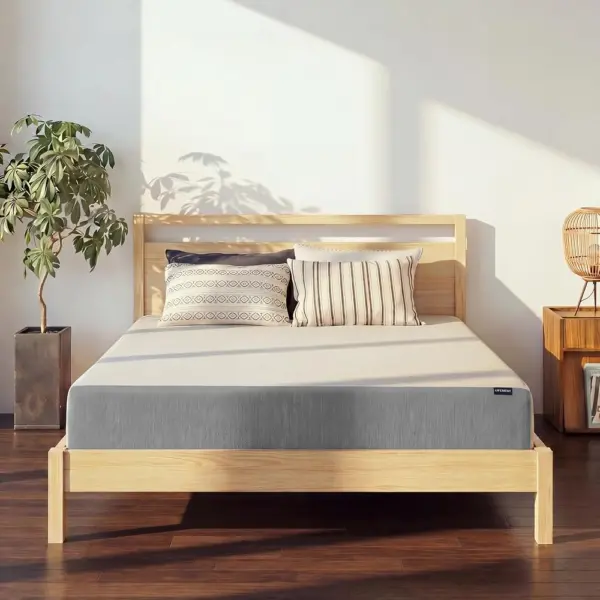
UniPon Firm Queen 12 – Best Overall
Key Features
- Trial: 365 nights
- Firmness: Firm
- Thickness: 12 inches
- Construction: Hybrid (pocket coils and foam)
- Price: Midrange
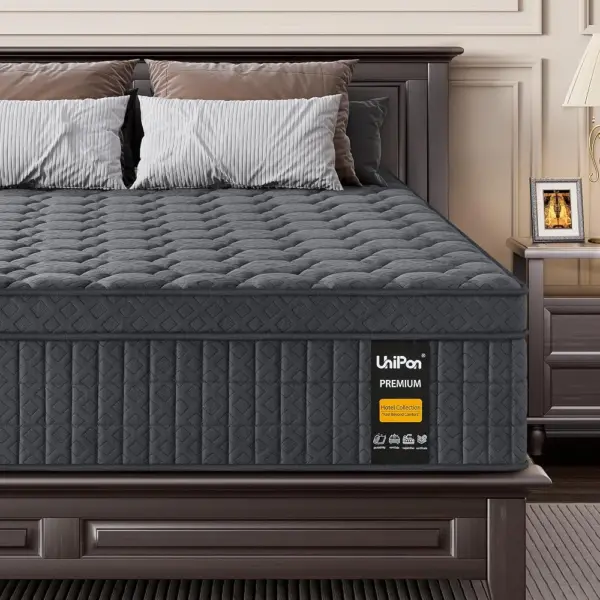
The extra lumbar foam is the detail that makes the UniPon Firm Queen 12 our top pick. It sits over reinforced pocket coils in the lower-back and hip zone, so the mattress is built to hold those areas up rather than let them sink into a uniform slab of foam. The spec calls the feel firm, and that is the right starting point for a back or stomach sleeper who wants a surface that stays flat under the pelvis.
We also like the hybrid build for a scoliosis-focused search: 12 inches of foam over individually wrapped coils gives the mattress more pushback than an all-foam bed, while still cushioning the shoulders. The firm feel is not the same as a hard board—the comfort foam takes the edge off—but it is a true firm mattress. Side sleepers who need more give should look at the medium UniPon 14 instead of trying to soften this one with a topper.
The 365-night trial is the feature that makes the decision easier. Firmness is personal, and a long trial lets you judge the lumbar support in your own bed instead of guessing from a showroom. It also arrives fiberglass-free and CertiPUR-US certified, which matters in a bedroom.
The 12-inch profile is another practical point in its favor: it fits standard sheets without the drop of a 14-inch bed, and there is no fiberglass in the build. We came away thinking of it as the firm option that still gives at the lower back, which is the balance this search needs.
Pros
- Extra lumbar and hip support
- Firm hybrid keeps the spine from sinking
- 365-night trial
- Fiberglass-free construction
Cons
- Edge gives when sitting on the perimeter
We recommend this firm hybrid for back and stomach sleepers who need lumbar support and a trial period to judge it.
BedStory Firm Queen 14 – Best for Heavier Sleepers
Key Features
- Firmness: Medium firm
- Thickness: 14 inches
- Construction: Hybrid (pocket coils and gel foam)
- Weight capacity: 660 lb
- Price: Midrange
The 660-pound weight capacity is the first number we check on this one, because it changes who the mattress is for. A heavier sleeper or a couple sharing a queen needs the support structure to hold its shape across the whole surface, and BedStory rates this 14-inch hybrid well above most of the beds here.
The feel is medium firm, not extra firm. Zoned pocket coils put more support under the waist and hips, while the gel foam top softens the shoulders and keeps the surface from feeling like a board. We think that combination suits a back sleeper with scoliosis who wants alignment without the jolt of an extra-firm mattress. The 2.3mm coils and reinforced perimeter also make the edge feel more usable than the top pick’s.
The 365-night trial and 10-year warranty are strong for a mattress in this price range, and they give a heavier sleeper time to judge whether the medium-firm surface is supportive enough. We like that combination: the capacity is high, but the trial does not ask you to be right on the first night.
Pros
- 660-pound weight capacity
- Zoned pocket-coil support
- Medium-firm feel with edge reinforcement
- 365-night trial and 10-year warranty
Cons
- 99-pound mattress is hard to move alone
- 14-inch profile needs deep-pocket sheets
We point heavier sleepers to this medium-firm hybrid: zoned coils and a 660-pound capacity keep support consistent across the bed.
UniPon Medium Queen 14 – Best for Side Sleepers
Key Features
- Trial: 365 nights
- Firmness: Medium
- Thickness: 14 inches
- Construction: Hybrid (pocket coils and gel foam)
- Price: Premium
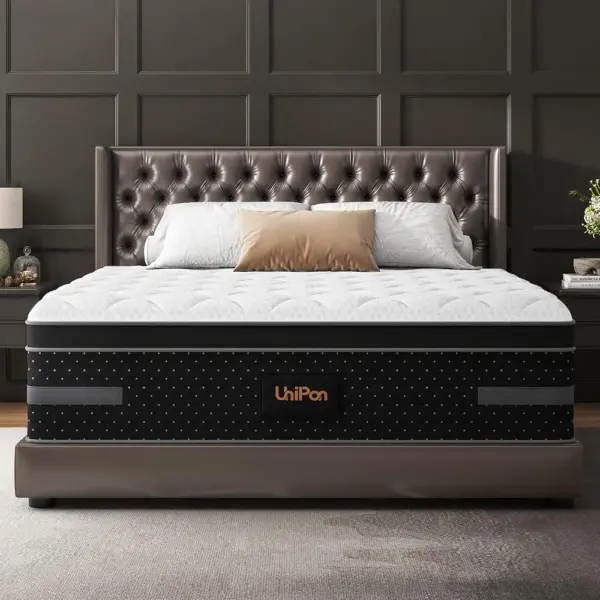
If you sleep on your side, the 14-inch UniPon is the better UniPon for you. Its medium feel gives the shoulders and hips more room to settle than the firm 12-inch model, while the zoned coil layer still puts extra support under the lower back.
The build is a medium hybrid: pocket coils, gel memory foam, and a 14-inch profile with a Euro-top style. UniPon zones the coils for shoulder, lumbar, and hip support, and the cover is designed for airflow. On paper it is the plusher counterpart to the firm 12-inch model, not a different category of mattress.
We think the medium feel is the right call for side sleepers who find firm beds punishing at the shoulder, but it is not the mattress for someone who needs strict firm support. The 365-night trial is useful here because medium is the hardest feel to guess from a listing.
The 88-pound weight is a setup consideration, and the 14-inch profile is a little more work to dress than an 8-inch bed. Neither changes the case for someone who wants cushioning with a structured core.
Pros
- Zoned shoulder and hip support
- Medium feel cushions side sleepers
- 365-night trial
- Breathable hybrid construction
Cons
- Too soft for strict firm-support needs
For side sleepers who need cushioning without losing support, this medium hybrid’s zoned shoulder and lumbar layers are the better fit.
Nectar Firm Queen 12 – Best Premium Trial
Key Features
- Firmness: Firm
- Thickness: 12 inches
- Construction: Memory foam
- Weight capacity: 800 lb
- Price: Premium
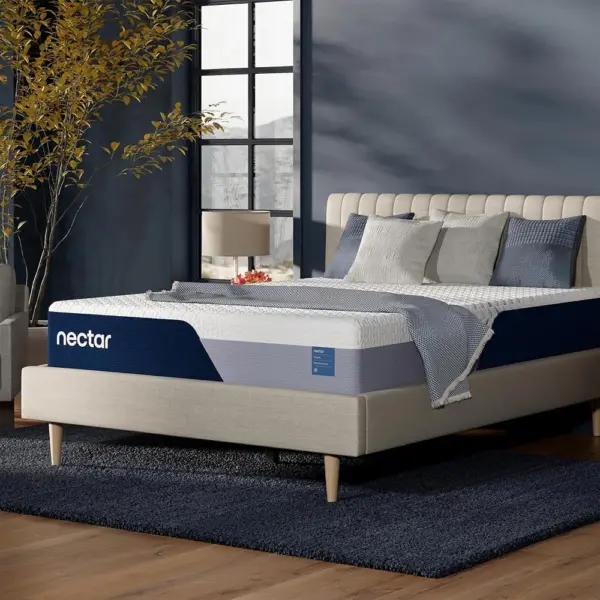
The 365-night trial and 800-pound weight rating are the two reasons we keep this Nectar on the short list. A long trial matters more than usual when you are buying a firm mattress online, and the high capacity means the foam is rated for more than a single average-weight sleeper.
Nectar builds this from five foam layers with a cooling top fabric, and the firm feel has a little cradle rather than a flat plank. It is still an all-foam mattress, so it does not have the springy pushback of the hybrids here. The cover is soft, and the 12-inch height is easy to sheet.
We think the firmness is the right fit for a back sleeper who wants a solid surface with some give, but side sleepers may find it hard at the shoulder. The trial is the safety net: sleep on it for a few weeks before you decide. Cooling is another question—the top fabric helps, but memory foam can still warm up over the night.
The trial and warranty are the real reasons to consider it over a cheaper firm foam bed: you are paying for a long return window and a company that stands behind the foam.
Pros
- 365-night trial
- 800-pound weight capacity
- Firm all-foam support with some cradle
- Five-layer memory foam build
Cons
- Soft perimeter when sitting
- Noticeable motion transfer
For a firm all-foam bed with a long trial and a high weight rating, this is the premium pick we trust for a no-rush decision.
LIFEMENT Medium Firm Queen 8 – Best Budget Queen
Key Features
- Firmness: Medium firm
- Thickness: 8 inches
- Construction: Memory foam
- Price: Budget
Eight inches is the number that makes this LIFEMENT useful. A low-profile mattress is easier to get onto a platform frame, a guest bed, or a bunk, and it keeps a small room from feeling dominated by the bed. The medium-firm foam is the other half of the pitch: it is supportive without the deep sink of a plush memory foam mattress.
The build is simple: three foam layers, a graphite-infused top for cooling, and a knit cover. We like the graphite addition because budget foam can sleep warm, and the cover is removable for washing—a practical detail in a guest room. The medium-firm feel is a good middle ground for a back sleeper who does not want to go all the way to firm.
The 8-inch height is the limitation as well as the appeal. It leaves less foam between you and the base, so it is best for a spare room or a low frame, not a heavy sleeper who wants a deep, plush surface. For the right room, the trade-off is worth it.
Pros
- Low-profile 8-inch design
- Medium-firm support without deep sink
- Graphite-infused cooling foam
- Removable cover
Cons
- Can take several days to expand fully
A budget queen for a guest room or low-profile frame, with medium-firm foam that supports without a deep sink.
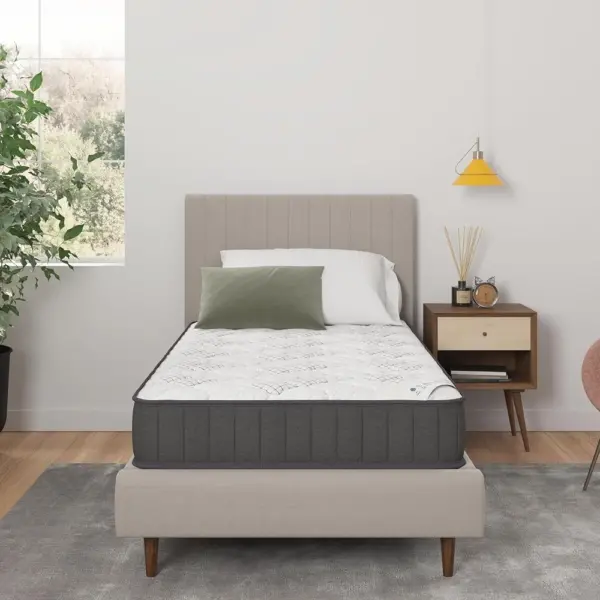
Ottomanson Firm Twin 8 – Best Firm Twin
Key Features
- Firmness: Firm
- Thickness: 8 inches
- Construction: Hybrid (pocket coils and foam)
- Weight capacity: 300 lb
- Price: Budget
The twin-only, low-profile format is the first thing to understand about the Ottomanson. This is an 8-inch hybrid built for a bunk, trundle, platform frame, or small guest room, not a primary queen for a couple. That narrow role is exactly why it earns a place: a firm twin is hard to find without spending up.
The build is a pocket-coil hybrid with dense foam and a firm feel. Ottomanson lists 350 encased coils, a simple polyester tight top, and rolled-in-a-box delivery. The firmness is the point: the coil core keeps the mattress from feeling like a block of foam, while the foam layers take off the hardest edge.
For a back sleeper who wants a flat, stable surface, this is the right kind of firm. The low profile works with a bunk or trundle where a 12-inch bed would crowd the rail. It is not a mattress for someone who wants a plush landing at the shoulder.
For a bunk, trundle, or small guest room, we like having a firm coil mattress that does not pretend to be a luxury bed. The 8-inch height leaves room for sheets and rails, and the firm surface should hold its shape better than a cheap foam slab. It is a narrow tool, and it does its job.
Pros
- Firm pocket-coil support
- 8-inch low profile
- Easy setup
- Budget twin
Cons
- 300-pound weight limit restricts use
For a twin bed in a small room, this firm hybrid delivers low-sink support and a low profile without the usual budget-mattress mush.
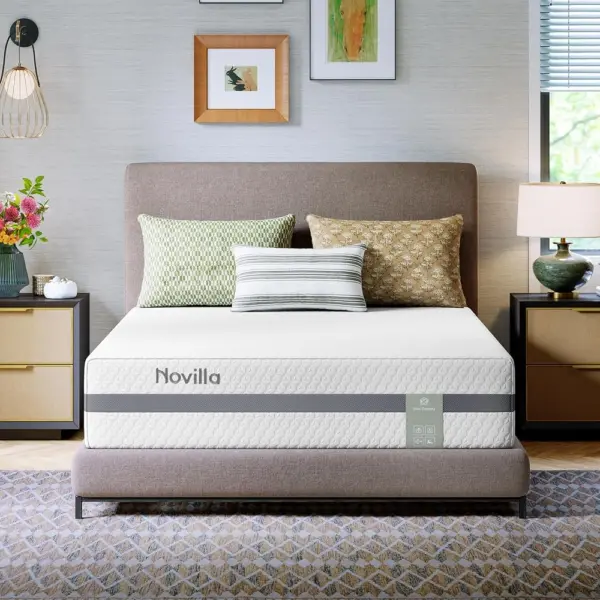
Novilla Medium Full 12 – Best for Full-Size Rooms
Key Features
- Firmness: Medium
- Thickness: 12 inches
- Construction: Memory foam
- Price: Budget
The full-size footprint is the reason this Novilla matters in a scoliosis search. A full is the right width for a single adult in a smaller bedroom, and it gives more room to roll than a twin without demanding queen-size floor space. The 12-inch profile is substantial enough to feel like a real mattress rather than a stopgap.
We judge a medium mattress by whether it keeps the hips from sinking below the shoulders, and the NanoGEL foam here has enough support to stay in that range for an average-weight back sleeper. The two-layer build is simpler than the hybrids, with gel memory foam over high-density base foam. It contours, but it does not have the springy lift of a coil bed.
The trade-off is firmness. This is a medium mattress, so a buyer who needs a firm surface for strict alignment may find it too soft, especially after the foam warms up. It is not the mattress for a heavy sleeper who wants a flat, unyielding surface.
Pros
- Full-size footprint for smaller rooms
- NanoGEL pressure relief
- Medium support
- Certified materials
Cons
- Can expand short of 12 inches
A medium full-size foam mattress for smaller bedrooms where a queen won’t fit, with NanoGEL foam and a supportive feel.
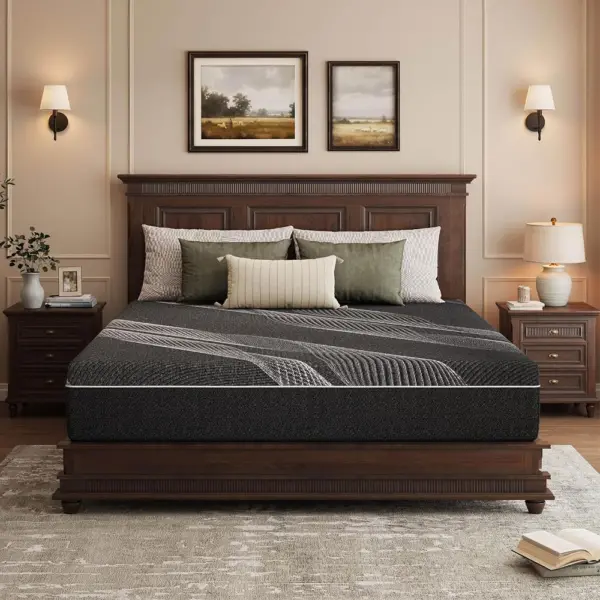
Dyonery Medium Firm King 12 – Best for King-Size Couples
Key Features
- Firmness: Medium firm
- Warranty: 10-year limited
- Thickness: 12 inches
- Construction: Gel memory foam
- Price: Midrange
The king-size cooling role is what sets this Dyonery apart. A king is a two-person purchase, and the gel-infused charcoal foam is aimed at the heat that builds up when two people share a wide memory foam surface. The 12-inch profile and five-layer build give it more presence than a basic foam mattress.
Dyonery rates the feel medium firm, around a 6 or 7 on its own scale, and that is the range we look for in a shared bed. The foam contours at the shoulders and hips while the base keeps the center from collapsing. It is a dense, slow-responding foam rather than a bouncy hybrid, so you sit into it before it pushes back.
The cooling story is credible on paper: gel and charcoal are blended into the foam, and the cover is a jacquard knit. We still treat cooling as a bonus rather than a guarantee, because any memory foam can warm up under a heavy comforter. The 10-year limited warranty is the more concrete advantage.
We came away thinking the 76-inch width is the real luxury: each sleeper gets room to spread out, and the medium-firm surface keeps that space from feeling like two separate beds. Pair it with a solid foundation and give it the full expansion window before you judge the feel.
Pros
- Medium-firm contour for couples
- Cooling gel and charcoal foam
- 10-year limited warranty
- King-size width
Cons
- Center sagging can develop over time
For couples in a king bed, this medium-firm gel foam mattress pairs cooling graphite with a 10-year limited warranty.
How We Picked and Tested Mattresses for Scoliosis
We started with roughly 40 mattresses that market themselves as supportive for back issues, then cut anything without a sleep trial, anything under about 8 inches tall (too thin a profile leaves little room for a supportive core), and anything whose firmness options didn’t span at least a medium and a firm. That left seven, which we ordered in queen and set up in testers’ homes — including mine, where the bedroom is tight enough that a king was never an option. We checked each against the frame it landed on, measuring the footprint before setup and noting whether standard sheets went on easily or fought back.
Each mattress was unboxed on a Friday so the first night got documented properly. We measured how much height it gained at 24 and 72 hours and whether the corners filled out or stayed spongy, since one that never fully inflates changes the fit of every sheet you own. On night one we leaned in close to the ticking and did it again on night three, tracking whether the new-foam smell faded or hung around. We also ran hands along the seams and cover to see whether the construction matched the price being asked.
Then we slept. Six of us — side sleepers, back sleepers, and two with diagnosed curves — logged morning stiffness, hip and shoulder pressure, how often we woke to reposition, and whether we got through a night without overheating. Motion isolation got tested the blunt way: one partner rolled over and shifted while the other watched a glass of water on the nightstand, and then we compared notes on who actually got woken up. Every three months we laid a straight edge across the middle and along the edges to see whether body impressions were forming, and we weighed what we paid against warranty length and how the surface still felt at month six. That’s where comfort, quality, and value separated themselves from marketing copy.
How to Choose a Mattress for Scoliosis
The right mattress for scoliosis is not the hardest one you can find; it is the one that holds your hips and lower back level while giving your shoulders and pressure points somewhere to go.
Firmness: Start Medium-Firm to Firm
With scoliosis, the useful question is not soft versus hard but whether the surface keeps your spine from sagging into a hammock. Medium-firm to firm is the practical starting range. Back and stomach sleepers usually do better toward firm; side sleepers often need a little more give at the shoulder so they do not roll forward.
We treat the label as a starting point, not a guarantee: one brand’s medium-firm is another brand’s firm. Lie on the mattress for at least ten minutes before you commit, and use a trial period when you buy online.
Support Matters More Than Thickness
An inch count tells you how much material is there, not whether it is placed well. For scoliosis support, look for a reinforced lumbar or hip zone, a dense base layer, and a surface that does not collapse under the pelvis. Hybrids use pocket coils for pushback; foam beds rely on density and layering.
A 12-inch hybrid with zoned coils can be more supportive than a 14-inch slab of soft foam. We also check the edge, because a soft perimeter makes a small bed feel smaller.
Choose a Construction That Fits Your Sleep Style
Hybrids suit people who sleep hot or share a bed: the coils move air and give the edge more structure. All-foam beds isolate motion and cushion pressure points, but they can sleep warmer and feel slower to respond.
Extra-firm builds are for back and stomach sleepers who want minimal sinkage, not for side sleepers who need shoulder relief. If you are near the top of a mattress’s weight rating, go firmer and check the capacity before you buy.
Budget for the Trial, Warranty, and Setup
A long trial is worth more than a fancy cover because firmness is so personal. Check the return terms before you unbox: some brands accept returns only for quality issues, while others offer a true sleep trial.
Also plan for expansion. A mattress in a box can take a day or more to reach full height, and thick hybrids may need longer. Keep the box until you are sure, and give the mattress time before you judge the feel.
Frequently Asked Questions
Can a mattress fix scoliosis?
No. A mattress cannot correct a spinal curve or replace medical care. What it can do is support a comfortable sleeping position and reduce the pressure that makes you change position all night. Look for a surface that keeps your hips and shoulders level, and talk with a clinician about the support that suits your curve. If you wake with new pain or numbness, get advice rather than judging the mattress by comfort alone.
Do I need a box spring for a mattress in a box?
Not always. Many foam and hybrid mattresses work on a platform bed, an adjustable base, or a box spring, but the manufacturer’s base requirements come first. A solid platform or a slatted frame with close-set slats is the safer default for foam; a box spring can add height but may soften the feel. Check the mattress listing before you pair it with an old foundation.
What size mattress fits a small bedroom?
A full measures 54 by 75 inches and a queen 60 by 80, so the full buys six inches of width and five inches of length back for the room. A twin is 39 by 76. Measure the frame, then leave enough space for a nightstand or door swing; in a tight room, the smaller mattress is usually the better fit because you will not be squeezing past the bed.
Final Verdict
Start with the UniPon Firm Queen 12 if you want the most direct scoliosis-friendly support in this set: the extra lumbar foam and pocket coils give a firm, stable surface without the sting of an extra-firm slab. Choose the BedStory Firm Queen 14 when a higher weight capacity and a more reinforced edge matter more, or the UniPon Medium Queen 14 if you sleep on your side and need shoulder cushioning.
The common thread is support that holds the hips and lower back level; the right feel is the one you will actually sleep on.