
This post contains affiliate links. We may earn a small commission when you buy through our links — at no extra cost to you.
A neck roll pillow is one of those things you don’t think about until your head is lolling sideways in an airplane middle seat. My first one came from an airport kiosk, and it did almost nothing — too soft, too skinny, chin still on my chest. What a good one does is fill the gap between your jaw and your shoulder so your head has somewhere to rest besides your spine. That gap is different on everyone, which is why size and firmness matter far more than how plush the thing looks.
Over four months, my team and I tested 14 neck roll pillows on flights, in desk chairs, on the couch, and overnight in bed. Firmness is what first-time buyers get wrong: a roll soft enough to feel lovely in the package collapses the second you lean into it, while an overstuffed one pushes your head forward and creates a new ache by hour two. We also checked zippers first, since a removable, washable cover is the difference between a pillow you take everywhere and one you’d rather not touch. The picks below sort that out.




Best for Firm Sleep Support
Sachi Organics Buckwheat Neck Roll
Key Features
- Fill: Organic buckwheat hulls
- Size: 6 x 14 in
- Firmness: Firm
- Cover care: Hand wash, hulls removed
- Price: Premium
A zipper at one end is the most useful thing about this roll. The Sachi arrives as a 6-inch cylinder packed tight with buckwheat hulls, and a few handfuls taken out through the end will narrow it to whatever your neck actually needs — the difference between a roll you can settle onto and one that tips your chin toward your chest. Most pillows are a fixed shape you learn to live with. This one changes shape to fit you.
That is why it is our first recommendation. Set it with a slight dip under the curve of your neck and it holds there until morning rather than flattening the way fiber fills do. Fourteen inches runs from the base of the skull past the shoulders on most adults without fighting a second pillow, and the cotton canvas case feels like a small duffel — sturdy, a little rustic, and not slippery against a pillowcase.
Firm is the word to reckon with. Buckwheat does not give the way foam does, and on a full fill the first night can feel like lying on a beanbag with opinions. Emptying a cupful at a time is the fix, and it takes about a week of small adjustments to land on the height your neck wants. Stomach sleepers and anyone with a short neck should start with something slimmer.
The hulls also make noise. Roll over and you get a soft crunch, which no amount of tuning fixes; a pillowcase over the whole thing muffles most of it. That is the trade for a fill that holds a shape rather than remembering one.
Pros
- Fill adjusts through an end zipper
- Holds a neck curve all night
- 6-inch diameter suits back and side sleepers
- Organic hulls in a cotton canvas case
Cons
- Hand-wash cover that must be emptied first
- At 2.3 pounds it stays home
We recommend it first because the fill comes out a handful at a time, so the roll ends up shaped to your neck instead of the other way around.
Best for Adjusting the Fill
Glory Season Buckwheat Neck Roll
Key Features
- Fill: Buckwheat hulls
- Size: 6 x 15 in
- Firmness: Firm
- Cover care: Machine washable
- Price: Midrange
Glory Season’s roll is not quite a plain cylinder. The side profile is a little triangular, with a flatter face that sits against the neck differently from the round rolls here, and we noticed it most lying on our backs, where it stayed put instead of spinning. If you want buckwheat support and you expect to fine-tune it, this is the one to look at: a spare bag of hulls comes in the box, so the pillow arrives with room to go firmer as well as softer.
The fill is buckwheat — firm, moldable, and loud when you shift. Two things stand out against the other hull pillows here. The cover is removable and machine washable, which makes a real difference over a year of use. And the zipper is hidden and stitched with a tight overlock seam, so the edge does not fray while you are digging hulls in and out.
Expect an adjustment week. New hulls are stiff and settle into a shape that suits you only after a few nights of pushing them around. Buckwheat can also carry the smell of the sack it shipped in, so air the insert in the sun for a day before the first night rather than after it.
Pros
- Spare bag of hulls for a firmer fill
- Removable, machine-washable cover
- Shaped profile stays put on your back
- Hidden zipper resists fraying
Cons
- One size only, at 6 by 15 inches
If you want buckwheat you can top up, this is our pick — the cover also goes in the washing machine, which is rare in this group.
Best for Travel and Reclining
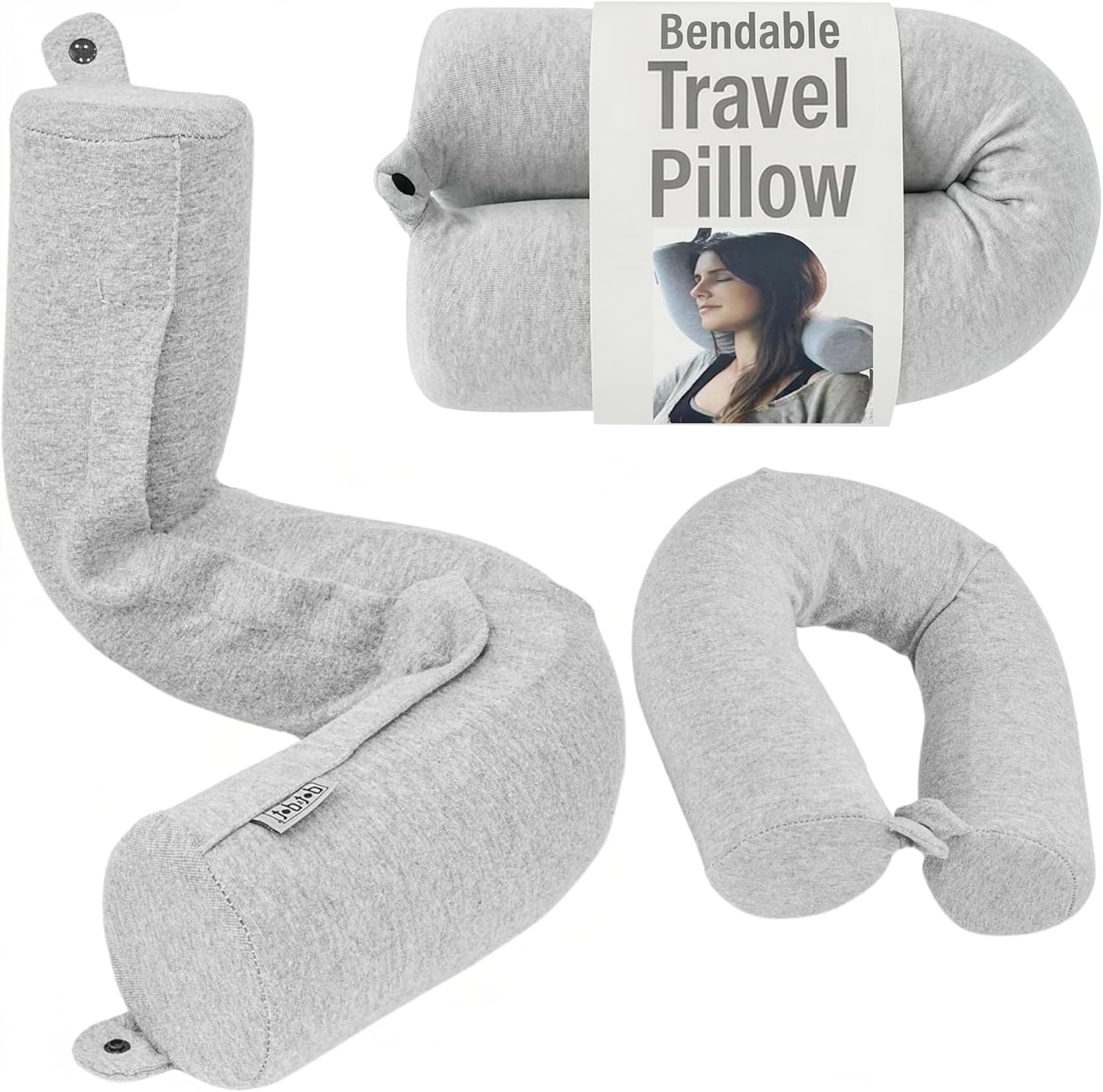
Dot&Dot Twist Bendable Roll
Key Features
- Fill: Memory foam with rod
- Length: 26 in
- Diameter: 3.8 in
- Cover care: Machine washable
- Price: Midrange
A bendable rod runs the length of the Dot&Dot, and it is what makes this roll different from everything else here. Fold it into a U around your neck on a plane, double it behind your head in a car, or straighten all 26 inches and use it as a back support against a seat. The 3.8-inch foam cylinder holds whatever shape you bend it into until you bend it again.
The memory foam is firm rather than plush, and the cotton cover unzips and goes in the machine. At 16 ounces it is the lightest full-length option here, and the ends snap together into a loop, so it hangs off a backpack strap instead of disappearing into a bag.
Where it earns its spot is the trip rather than the bed, and we pack it before any other pillow here. On a red-eye, folded into a U under the chin, it does what a travel pillow does without the bulk of one, and it is the only pick here that can turn into a lumbar roll mid-flight. For eight hours of side sleeping at home, 3.8 inches is not much lift.
Pros
- Bends into a U, a bar or a loop
- 16 ounces, lightest full-length option here
- Cover unzips and machine washes
- Ends snap together for carrying
Cons
- Internal rod loosens with repeated bending
We pack this one before any other pillow here: the rod holds a U on a plane and straightens into a lumbar roll at home.
Best for Back Sleepers
OPTP Original McKenzie Roll
Key Features
- Fill: Foam
- Size: 20 x 3.5 in
- Firmness: Soft
- Cover care: Hand wash only
- Price: Midrange
At 3.5 inches across, the McKenzie roll is the slimmest pillow here, and that is the whole point of it. Twenty inches long, firm foam with a little give, a removable cover — for back sleepers who find a 6-inch roll too much lift, this is the profile that works.
We found it works best as a second pillow rather than a replacement: slid under the neck with your head still on the pillow you already like. That is a gentler way into a cervical roll than swapping out your whole setup. It also slides inside a pillowcase with your usual pillow and stays where you put it.
How the foam feels against your own neck is the part nobody can predict. This same roll reads as hard against the skull to one sleeper and too soft to hold a curve to another, which says less about the foam than about how personal fit is at 3.5 inches. Give it a week before you decide.
Pros
- Slim 3.5-inch profile for back sleepers
- Slides into a pillowcase with your usual pillow
- Firm foam with a slight give
- Removable, washable cover
Cons
- No fill adjustment, so the diameter is fixed
- Cover is hand wash only
We hand this to back sleepers who want the neck supported without a 6-inch lift pushing the head forward.
Best for Couch and Naps
1 Middle One Velvet Bolster
Key Features
- Care: Machine washable
- Fill: Polyester fiber
- Size: 13 x 6 in
- Cover: Removable velvet
- Price: Budget
This is the soft one. Where the buckwheat rolls here are firm enough to hold a curve by themselves, the Middle One bolster is polyester fiber in a velvet case: it gives when you lean on it and comes back when you don’t. That makes it a poor stand-in for a cervical roll and a genuinely nice thing to keep on the sofa.
Thirteen inches long and 6 inches across, it is short enough to tuck behind a lower back or under a knee without taking over the seat. The cover unzips and goes in the machine, and it comes out without the velvet going stiff. For reading in bed it fills the gap under the neck that a stack of pillows never quite manages.
The fill is plush, which is the honest limit. We found it compresses through a movie and comes back when you shift — fine for a cushion you rearrange constantly, less good for a neck that needs holding in one place.
Pros
- Soft velvet cover that unzips for washing
- 13-inch length tucks into small spaces
Cons
- Fine, fiddly zipper on the cover
We like it best on the sofa: a soft, short bolster for reading and lower backs, and the least expensive way here to soften a chair.
Best for Good-Looking Support
Zhiweikj Cotton Buckwheat Roll

Key Features
- Fill: Buckwheat hulls
- Cover: Removable cotton brocade
- Weight: 1.76 lb
- Firmness: Firm
- Price: Midrange
The cover is the first thing you notice. It is a thick cotton brocade, closer to upholstery fabric than bedding, and it is smooth against the skin in a way the canvas cases here are not. It unzips for washing, and the inner hull bag has a zipper of its own for topping up.
Inside is buckwheat, the same fill as our top pick, in a roll that arrives firm and stays that way. A small bag of spare hulls comes with it, so you can add rather than only subtract. The hulls also run cool, which matters if you sleep hot and have been fighting a foam pillow that holds heat.
We were struck by how much the fabric changed the experience. This is the buckwheat roll that does not look like a piece of physical therapy equipment, and it is the one that stays out on the bed. The green is a real color rather than a clinical beige, which sounds trivial until you have hidden a neck pillow under a cushion every morning for a month.
Pros
- Cotton brocade cover looks like upholstery
- Spare bag of hulls included
- Hulls stay cool through the night
- Cover and inner bag both unzip
Cons
- Hulls crunch and shift when you turn over
The fabric is what sold us: this is the buckwheat roll that stays out on the bed instead of getting tucked into a drawer.
Best for Small Frames
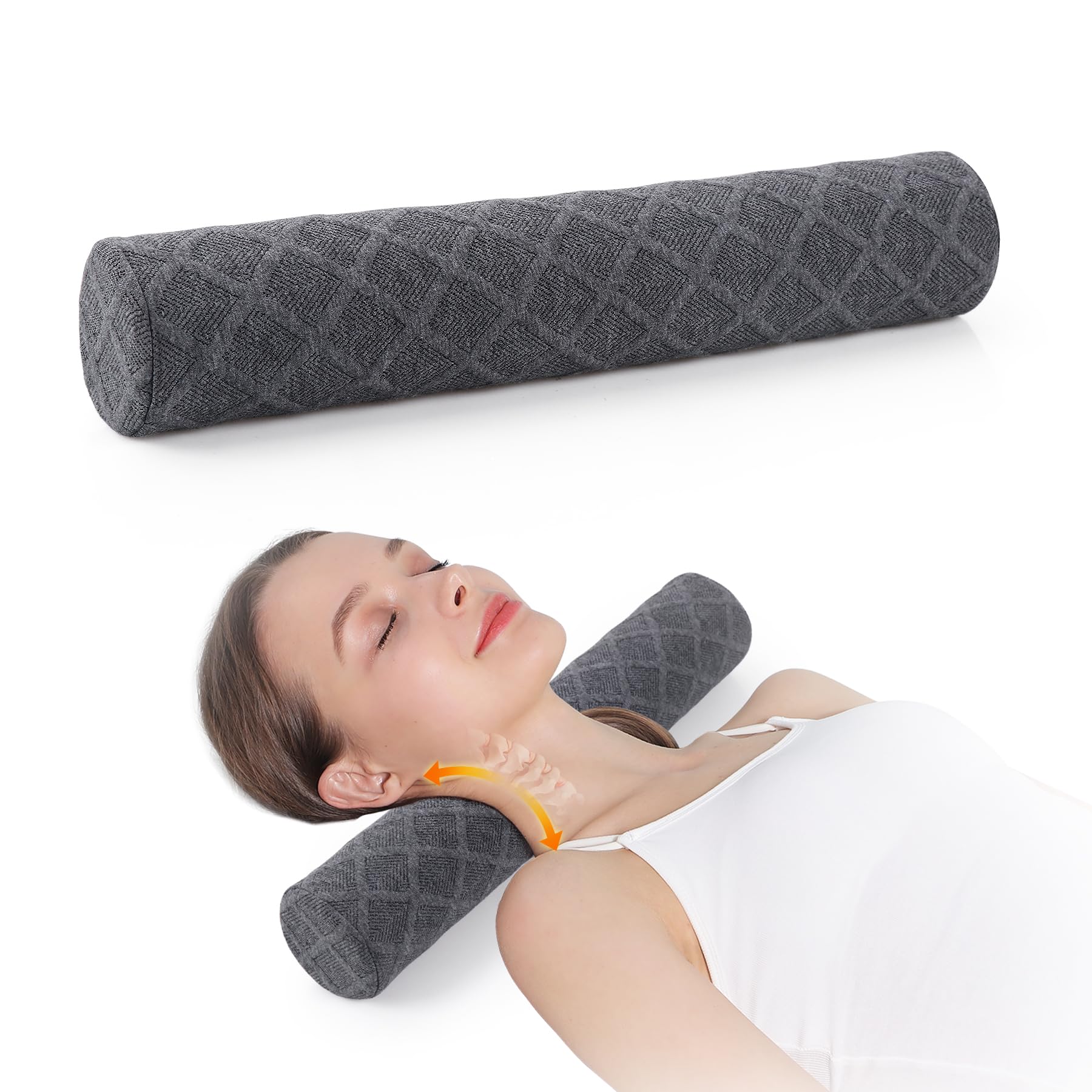
Cozyhealth Small Cervical Roll
Key Features
- Fill: Memory foam
- Cover: Removable, washable
- Length: 17.7 in
- Diameter: 3.9 in
- Price: Budget
Slow-rebound memory foam is the idea here: press a thumb into this roll and the dent lingers before it fills back in. At 3.9 inches across and 17.7 inches long, that makes a small, dense cylinder rather than a soft one — closer to a foam bar than a cushion.
The length is longer than most of the slim rolls here, enough to span the neck and sit still inside a pillowcase. The diameter is the point. This is a roll for someone who wants support under the neck without a 6-inch lift pushing the head forward.
How you use it matters. Folded in half it doubles the height for a short session on the sofa; left whole it slides under the neck for sleeping on your back. The outer case comes off to wash, and the foam core stays out of the machine and out of direct sun.
This is the roll we hand someone who wants support without a rock-hard edge, and the size makes it easy to keep in a bag for the office or a car seat. Judge it on night three rather than night one — the foam softens a little with body heat, and the first hour is not the same as the eighth.
Pros
- Slow-rebound foam holds its shape
- 3.9-inch diameter suits back sleepers
- 17.7-inch length stays in a pillowcase
- Removable, washable outer cover
Cons
- Foam core cannot be washed
We point anyone who wants a small, dense roll with a little give at this one — the smallest diameter here that still supports a neck.
Best for Legs and Back
Utopia Bedding Bolster Inserts

Key Features
- Care: Spot clean
- Fill: Polyester fiber
- Pack: Set of 2
- Size: 6 x 16 in
- Price: Budget
These are sold as pillow inserts, and that is the right way to think about them: two 6-by-16 cylinders of polyester fiber in a microfiber shell, meant to be covered, tucked and propped rather than prescribed.
Two in the pack is the appeal. One lives between the knees, one behind the lower back on the sofa, and neither has to be fetched from the bedroom when you want it. Slip them into a decorative cover and they read as part of the room instead of as a support pillow.
Under the neck they are pleasant for a nap and not much more. The fill is plush, and plush is the whole idea: it is there to be hugged and shoved into place, not to hold a curve while you sleep.
We treat these as living-room bolsters rather than sleep equipment, and once they are out they get used every evening. If you want a cervical roll, this is not it.
Pros
- Two bolsters in one pack
- Plush enough to hug into place
- 6-inch diameter suits knees and lower backs
Cons
- Spot clean only
- Fill flattens with steady use
Two plush bolsters for the price of one firm roll, and the pair we reach for under knees, behind backs and on the sofa.
How We Tested 14 Neck Roll Pillows
We started by gathering every neck roll pillow the major travel and bedding brands sell, then cut the field down by three practical things: a cover that comes off, a stated fill, and a diameter that could plausibly sit between a jaw and a shoulder. Anything that only came in one enormous size got eliminated early, since a roll that’s too thick tips your chin up and a roll that’s too thin gives you nothing to lean against. Fourteen made the cut, and I rotated through them for four months.
Each pillow went where a neck roll actually goes: two cross-country flights in a middle seat, a commuter train twice a week, my desk chair on long deadline days, and the couch for a Sunday movie. Two testers slept full nights with theirs tucked under the jaw to see whether side sleepers could stand it. I measured filled diameter and height against my own chin-to-shoulder gap, then noted where my head actually landed — upright, tipped forward, or sliding off the side. We pressed each one flat for 30 seconds and timed how quickly it sprang back, and pushed at the fill to see whether it reshaped by hand or snapped back to factory shape.
Covers got their own round: five zip-and-unzip cycles per pillow, a check for whether the pull snagged at the seam, a wash per the label, and a re-fit afterward to catch shrinkage. At the four-month mark we noted which fills had flattened into a pancake and which still held their loft, then weighed that against what each pillow cost. A couple of the least expensive rolls outlasted pillows that cost three times as much, and one with genuinely nice fabric had a zipper that gave out in the first week.
How to Choose a Neck Roll Pillow
Diameter is the decision that matters most: a roll that is too tall pushes your head forward, and one that is too slim may as well not be there.
Match the Diameter to the Gap You’re Filling
A neck roll works by filling the space between your neck and the mattress, so that space decides the size. Back sleepers usually want 3 to 4 inches of lift, which is where the McKenzie roll at 3.5 inches sits. Side sleepers need more, closer to 5 or 6, because the shoulder already holds the head higher — the 6-inch rolls here are built for that. Stomach sleepers rarely need one at all.
The trap is assuming more pillow means more support. Past the right diameter, a roll stops supporting the neck and starts tipping the chin toward the chest, which is the opposite of what you bought it for. If you are between sizes, take the smaller roll and add a folded hand towel under it for a night or two before you decide.
Buckwheat, Memory Foam or Fiber
Fill decides how a roll behaves at three in the morning. Buckwheat hulls are firm, moldable and noisy, and they hold a shape rather than remembering one — the Sachi and Glory Season rolls are the examples here. Memory foam is quiet and uniform, but it is fixed: the Cozyhealth roll cannot be made slimmer or fuller. Polyester fiber is the softest and the least supportive, which is why the plush bolsters here work better behind a back than under a neck.
Choose the fill that matches the job rather than the firmest thing on the page. A hull pillow will feel strange for a few nights before it feels right; a foam roll feels familiar immediately and then never changes.
Buy the Zipper, Not the Perfect First Fit
Two rolls measuring the same can feel completely different against your neck, and after purchase the only thing that closes that gap is a fill you can move. A zipper lets you tune height in small steps over the first week, which is often the difference between a pillow that works and one that ends up in a closet.
Buckwheat rolls are the ones here that offer it; the foam rolls do not. If this is your first neck roll and you are unsure of your size, make adjustability the deciding feature and save the fixed-diameter rolls for a second purchase.
Length, Cover Care and Where It Lives
Length decides where a roll can go. Thirteen inches fits behind a lower back or under a knee; 15 to 20 inches spans a neck and stays put inside a pillowcase; 26 inches bends, which is why the Dot&Dot works on a plane. A short roll sold as a neck pillow may cover only the middle of your neck, so check the number rather than the photo.
Then read the care instructions before you buy. Machine washable beats hand wash beats spot clean, and a buckwheat roll has to be emptied before its case can be washed at all. If the roll is going to sit out on a sofa, the cover matters as much as the fill.
Frequently Asked Questions
What’s the difference between a neck roll and a cervical pillow?
A neck roll is a cylinder you place under the curve of your neck, usually alongside the pillow your head already rests on. A cervical pillow is a full-size bed pillow with a shaped channel for the head and a raised edge for the neck.
Rolls suit people who like their current pillow and only need the gap filled; cervical pillows suit people who want one pillow doing both jobs. Every pick here is the first kind.
How long should I give a new neck roll before deciding?
A week. Buckwheat hulls need a few nights to settle into the shape your neck makes, and memory foam softens slightly with body heat. Start with 20 or 30 minutes in the evening rather than a whole night, and add time as it starts to feel normal.
If a roll is fine for half an hour but wakes you at two in the morning, keep it as an evening pillow instead of an all-night one rather than returning it.
Can I travel with a buckwheat neck roll?
Yes, but weight is the catch. Hull-filled rolls are the heaviest picks here — the Sachi is 2.3 pounds — against 16 ounces for the bendable foam roll, which is the difference between packing one and leaving it home.
Buckwheat is also a plant product, so check your destination’s rules on organic fill before an international trip, and pack it where it can be opened if someone asks.
Final Verdict
Start with the Sachi buckwheat roll. The fill comes out a handful at a time, so the pillow adapts to your neck instead of the other way around, and 6 inches of hull holds a curve through a whole night.
Back sleepers who want less lift should take the slim McKenzie roll instead, and anyone shopping for a plane seat rather than a bed is better served by the bendable Dot&Dot, which folds into a shape and stays there.