
This post contains affiliate links. We may earn a small commission when you buy through our links — at no extra cost to you.
Many shoppers searching for an organic mattress topper end up disappointed—not because the product is flawed, but because they unknowingly bought a thin quilted pad instead of a cushioning layer that can actually change how their bed feels. The term ‘organic mattress topper’ is used loosely online, covering everything from feather-light cotton protectors to dense latex slabs, which leads to mismatched expectations.
The key is recognizing that thickness and material dictate what a topper can do. A 300-GSM organic cotton pad adds a breathable, certified-organic surface but won’t fix a too-firm mattress. A 2-inch GOLS organic latex topper provides real pressure relief and cooling, while a dense wool layer offers springy support ideal for hot sleepers who don’t want sink.
This guide sorts through the options by function, not just labels, so you can match the right organic layer to your sleep position, firmness preference, and temperature needs.



Best for Pressure Relief
Pure Green Latex Topper
Key Features
- Certifications: GOLS, Fair Trade
- Material: Natural Latex
- Thickness: 2 inches
- Firmness: Soft
- Odor Potential: Possible rubber odor
- Price: Mid-Range
The 2-inch GOLS-certified organic latex layer gently cushions hips and shoulders while resisting the deep sink that disrupts spinal alignment. Back and side sleepers get genuine pressure relief that often eases morning stiffness. Unlike memory foam, the open-cell latex breathes to stay noticeably cooler through the night, and it holds its shape durably, avoiding body craters over time. The topper ships without a cover, so adding an organic cotton protector is wise; it’s also Fair Trade certified, reinforcing its eco-friendly credentials.
Eco-conscious back and side sleepers looking for a certified organic topper with real mattress transformation will find their match here. It’s ideal for those who need cushioning without sinking too far, and for hot sleepers seeking a cooler surface. Shoppers chasing marshmallow-soft plushness won’t get it — the latex is resilient. The initial rubbery odor can linger for several weeks, so those highly sensitive to smells should plan on airing it out before regular use.
Pros
- Delivers all-around comfort without the deep sink of memory foam.
- Eases back and hip pressure to reduce morning stiffness.
- Improves sleep quality and reduces nighttime wake-ups.
Cons
- Softness perception varies — lighter sleepers may find it too firm, while heavier sleepers may feel insufficient support.
If you want a GOLS-certified organic topper that meaningfully improves pressure relief and sleep temperature, the Pure Green is the obvious choice. Just don’t expect a pillowy-soft surface.
Best for Breathable Pad
Bioweaves Cotton Pad
Key Features
- Certifications: GOTS, Fair Trade
- Material: Organic Cotton
- Thickness: 300 GSM
- Price: Mid-Range
The Bioweaves pad strips away unnecessary bulk to deliver a pure organic cotton surface. With 300 GSM of wadding, it creates a sweat-free quilted feel that keeps you cool without synthetic foam or wool, unlike the thicker luxury pad in this set that prioritizes plushness. The deep pockets grip mattresses up to 20 inches, making installation simple.
It’s for sleepers who prioritize certified organic materials and a breathable cover over pressure relief. The cotton fill is a light layer, not a fix for a too-firm mattress — if you need softening, a latex or wool topper is a better route. For hot sleepers who want a non-toxic, washable pad that adds just a hint of softness, it delivers.
Pros
- Luxurious organic cotton feel with top-tier construction
- Pure, soft material free from synthetic additives
- Cool, breathable surface that prevents sweat buildup
Cons
- Minimal cushioning; not a substitute for a thick pressure-relieving topper
A cost-effective way to put a certified organic cotton shield between you and the mattress, ideal for hot sleepers who don’t need extra padding.
Best for Cooling Support
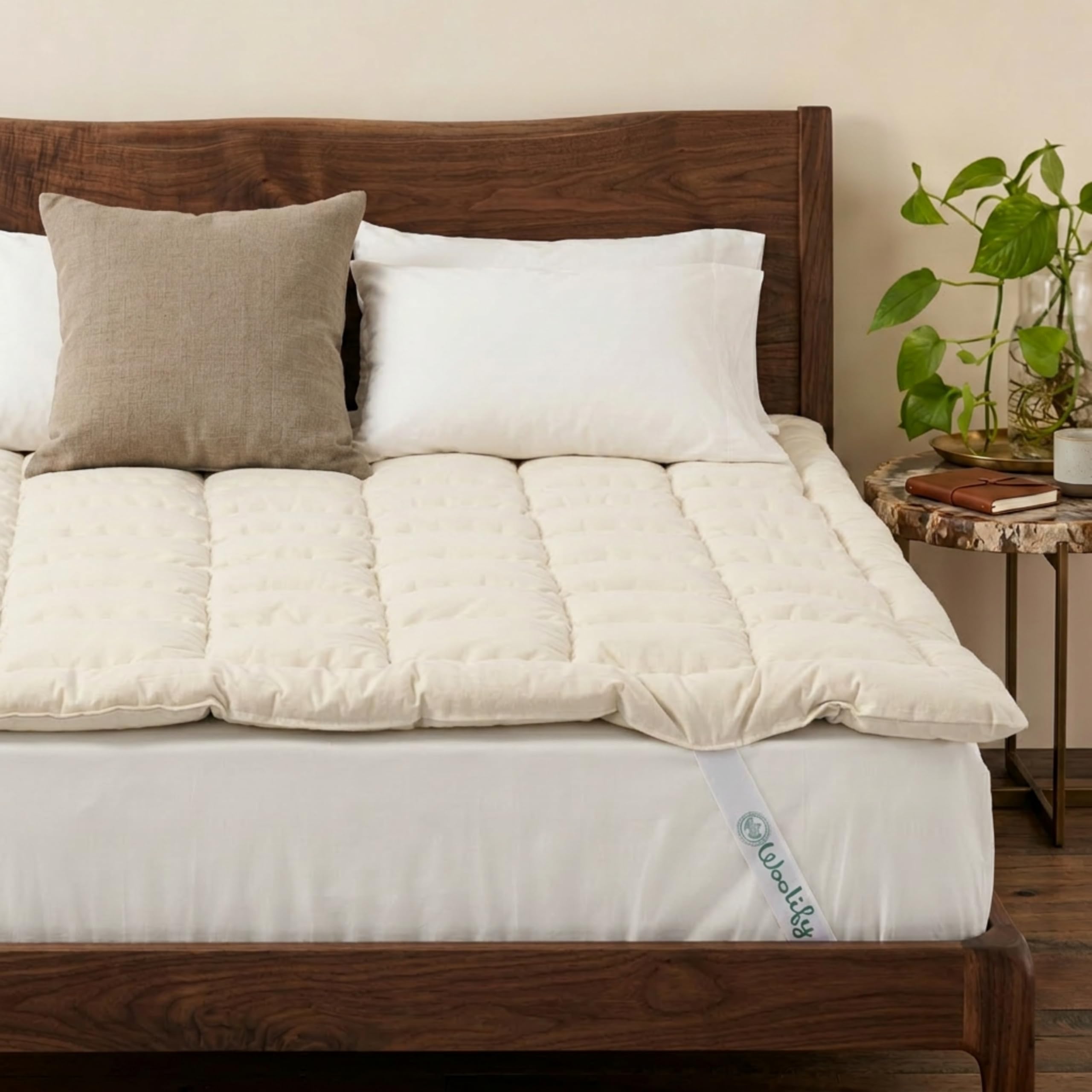
Woolify Pillow Top Topper
Key Features
- Certifications: Claimed organic
- Material: Merino Wool
- Thickness: 1650 GSM
- Firmness: Medium-Soft
- Price: Premium
The 1650 GSM fill creates a substantial cushion that naturally regulates temperature, pulling heat away from the body overnight. Unlike thinner wool pads that merely add a breathable layer, this pillow-top construction delivers genuine contouring while maintaining a medium-soft support level that suits back and stomach sleepers.
Strict side sleepers who need deep sink for pressure points may find the wool too firm — the dense structure provides lift rather than cradling. If you sleep hot and prefer a supportive, plastic-free surface, this topper’s craftsmanship and cooling performance are hard to beat.
Pros
- Plush organic wool feel with a breathable, non-toxic sleep surface.
- Handmade construction with premium organic materials and lasting durability.
- Wool actively wicks moisture away, keeping sleepers cool and dry through the night.
Cons
- Too firm for dedicated side sleepers — the dense wool provides support rather than sink-in softness.
If you’re a back or stomach sleeper looking for a cooling, chemical-free topper with exceptional craftsmanship, the Woolify delivers — side sleepers should look to a softer option.
Best for Soft Organic Cover
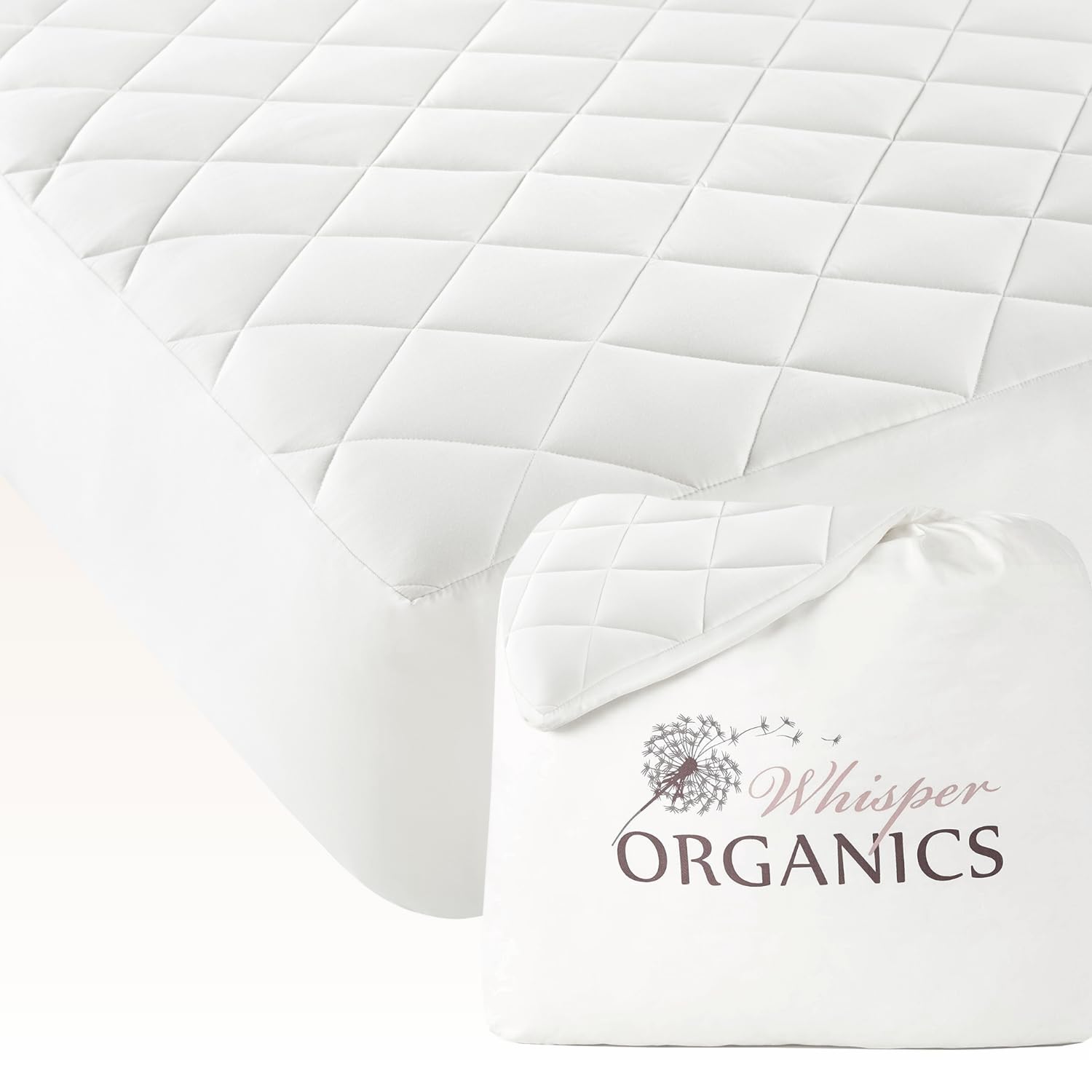
Whisper Organics Pad
Key Features
- Certifications: GOTS, Fairtrade
- Material: Organic Cotton
- Thickness: 400 GSM
- Price: Premium
Whisper Organics elevates the simple cotton pad with a 500-thread-count cover and a dense 400 GSM fill, both GOTS-certified organic from the outer shell to the internal batting. The result is a noticeably smoother, more plush surface than the 300 GSM organic cotton pad in this set, without adding meaningful height or altering mattress support.
Hot sleepers and eco-conscious buyers will appreciate the breathable, non-toxic layer that feels premium against the skin. The high price reflects Fairtrade and GOTS certification, making it a pricier pick than simpler cotton pads. Side sleepers needing deeper cushioning should look to thick wool or latex.
Pros
- Silky-soft, high-thread-count organic cotton cover that feels distinctly luxurious.
- Cover and fill are GOTS-certified organic, complete with Fairtrade certification.
- Cooling and breathable — avoids the warmth-trapping feel of synthetic pads.
Cons
- Thin profile provides only light loft — more of a protective cover than a true topper.
If organic certification and a silky surface are the priorities, and you’re not looking to fix a firm mattress, this pad delivers an exceptionally polished organic sleep experience.
Best for Firm Cooling Wool
Sleep & Beyond Wool Topper
Key Features
- Certifications: Organic (brand-certified)
- Material: Merino Wool
- Thickness: 1.5 inches
- Firmness: Medium (supportive)
- Price: Luxury
Unlike foam toppers that trap heat, this 1.5-inch organic merino wool layer wicks moisture and naturally regulates temperature, creating a consistently cool sleep surface without synthetic materials. The wool fill provides a firm-yet-resilient cushion that suits back and stomach sleepers and anyone seeking an organic, non-toxic upgrade. Strict side sleepers, though, may find it too unyielding for pressure relief, and the topper’s dimensions can run slightly large on standard mattresses, leading to overhang that needs tucking or a tight sheet.
Pros
- Dense organic merino wool resists flattening, offering firm support that holds up for years.
- Wool naturally adjusts to body temperature, keeping sleepers cool in summer and warm in winter.
- Active moisture wicking virtually eliminates night sweats, leaving the bed dry and comfortable.
Cons
- Standard sizing may overhang some mattresses, requiring tucking or deep-pocket sheets to prevent bunching.
- The firm, supportive surface lacks the plush contouring that side sleepers often need for pressure relief.
For eco-conscious hot sleepers who want an enduring, chemical-free cooling layer and don’t need deep sink, this wool topper delivers genuine, lasting performance.
Best for Oeko-Tex Wool Layer
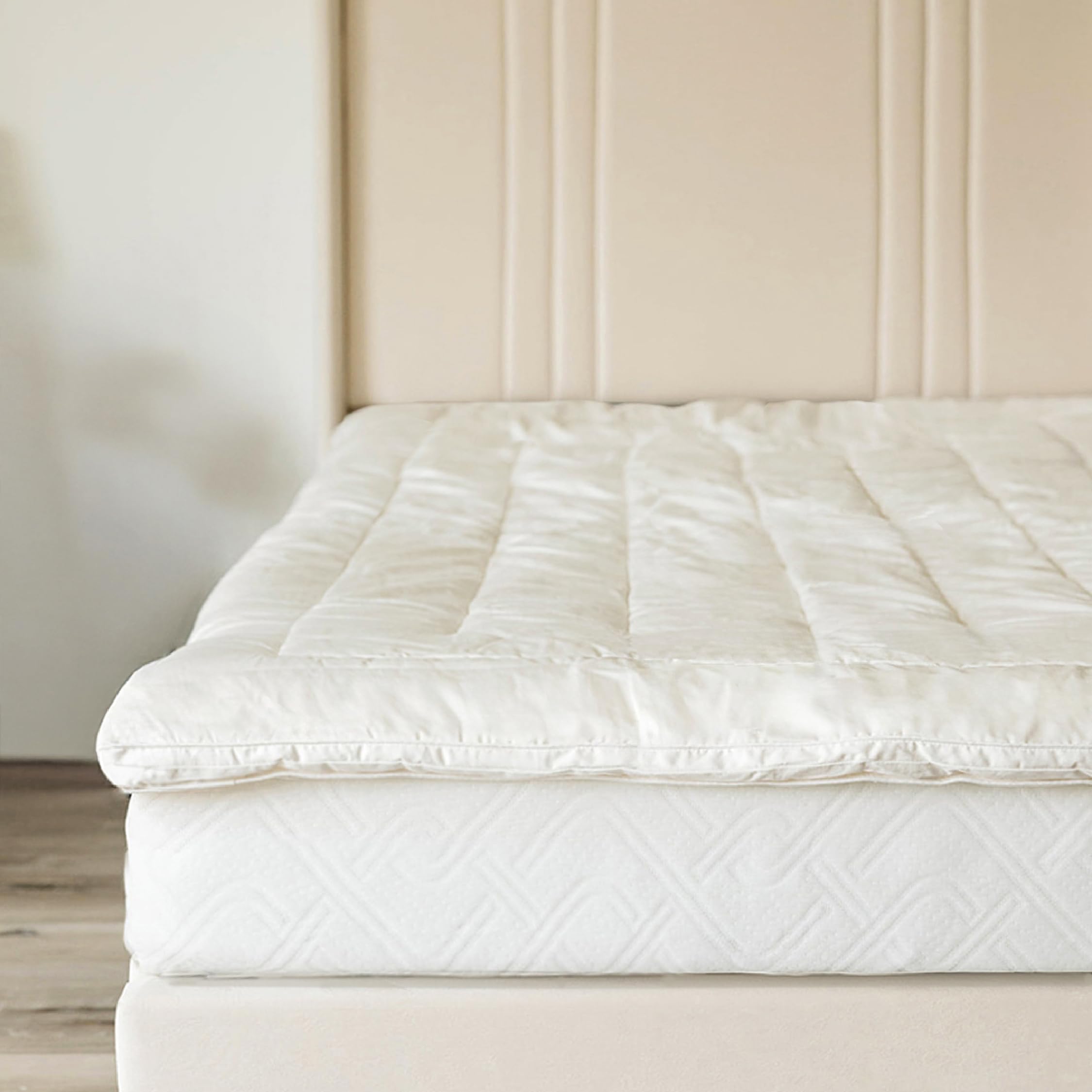
Woolino Wool Topper
Key Features
- Certifications: OEKO-TEX Standard 100
- Material: Merino Wool
- Thickness: 1.2 inch
- Price: Mid-Range
A comfortable wool layer with reliable temperature control, soft cotton sateen cover, and machine-washable design. But the merino fill is not certified organic, so it misses the mark for buyers who require fully organic materials. Cushioning is modest — it won’t dramatically soften a firm mattress. This makes sense for hot sleepers who value OEKO-TEX safety and washable care over organic certification.
Pros
- Comfortable sleep with notable temperature regulation
- Solid build quality with soft cotton sateen cover
Cons
- Modest cushioning; may not soften a firm mattress as expected
This topper suits hot sleepers who value OEKO-TEX safety and machine-washable wool, provided they don’t need certified organic fill or a plush, pressure-relieving layer.
How to Choose
The most critical choice is whether you need a topper that significantly changes your mattress’s firmness or simply adds an organic surface layer.
Organic Certification
GOLS (latex) and GOTS (cotton/wool) mean the entire supply chain—from farming to factory—met strict organic and social standards. OEKO-TEX Standard 100 only tests the final fabric for harmful substances, so it’s a safety marker, not a guarantee of organic farming. If purity matters, look for GOLS or GOTS seals; if just avoiding toxins is enough, OEKO-TEX suffices.
Material Type
Natural latex is buoyant and responsive, contouring to pressure points without the slow sink of memory foam, but it can off-gas a rubbery smell. Wool is springy and temperature-regulating, actively wicking moisture and feeling cooler to the touch, though it creates a firmer, less enveloping surface. Organic cotton batting is soft and breathable but provides only a whisper of cushioning—it won’t alter firmness.
Thickness and Fill Weight
For latex, a 2-inch profile noticeably softens a firm mattress; 1.4 inches offers subtler relief. With wool, pay attention to GSM (grams per square meter) rather than inches: 750 GSM is a light overlay, while 1650 GSM delivers dense, supportive plushness. Cotton pads typically range from 300 to 400 GSM—under 200 GSM is just a sheet. If your main goal is pressure relief, skip anything below 1.4 inches of latex or sub-1000 GSM wool.
Firmness and Sleep Position
Lightweight side sleepers need a soft latex or plush wool to prevent pressure on shoulders and hips, while heavier individuals may find soft latex bottoms out over time—opt for medium-soft or medium. Back and stomach sleepers generally do better with a firmer, more supportive surface like a dense wool topper. Always check the topper’s firmness rating alongside your body weight; softness is relative.
Odor Potential
All-natural latex toppers release a harmless rubber scent that can linger for days to weeks. To speed it up, unroll the topper in a well-ventilated room for 48–72 hours before use; some brands air out faster than others. Wool and cotton toppers have no inherent odor, making them a better choice if you’re sensitive to smells.
FAQ
Why does my organic latex mattress topper smell like rubber?
Natural latex is made from rubber tree sap, and the vulcanization process leaves a harmless scent. Air the topper in a well-ventilated room for a few days; the odor typically fades within one to two weeks. If the smell persists, occasional sunlight and baking soda can accelerate dissipation.
Is a wool mattress topper too firm for side sleepers?
Wool resists deep compression, so strict side sleepers may feel pressure on shoulders and hips. If you’re a lightweight side sleeper, opt for a softer wool topper with higher loft or a softer latex topper instead. Back and stomach sleepers usually find the supportive, springy feel of wool ideal.
What’s the difference between a mattress pad and a mattress topper for organic bedding?
A mattress pad (typically 300–400 GSM cotton) is a thin, quilted protector that adds breathability and a soft surface but minimal softness. An organic mattress topper (1.5–2 inches of latex or dense wool) actually alters the bed’s firmness and pressure-point relief. If your goal is comfort transformation, choose a topper, not a pad.
How long does it take for a natural latex topper to air out?
Most latex smells dissipate within 3 to 10 days with good ventilation. Unroll the topper in a room with open windows or a fan, and avoid covering it immediately. Some toppers may need up to two weeks, but the odor is non-toxic and will fade completely.