
This post contains affiliate links. We may earn a small commission when you buy through our links — at no extra cost to you.
A mattress that claims to fix your back is asking for a lot of trust — and a lot of money. What a genuinely supportive one fixes is quieter: the ache that creeps in by mid-afternoon, the pillow you keep punching flat, the 3 a.m. roll onto your side. "Orthopedic" on a product page means almost nothing on its own. What matters is whether the surface holds your hips and shoulders in line at 2 a.m., and whether it still does that six months in.
Over the past nine months my team and I have slept on six orthopedic mattresses, at least three weeks on each, in our own bedrooms and a spare room. Firmness was the first filter — a bed that’s too soft for a 230-pound back sleeper can be exactly right for a 125-pound side sleeper — followed by cooling, off-gassing, and how painless the delivery and setup actually were. The six picks below earned their spots. Start with the firmness notes before anything else; that’s where most returns begin.

Best for Back Support
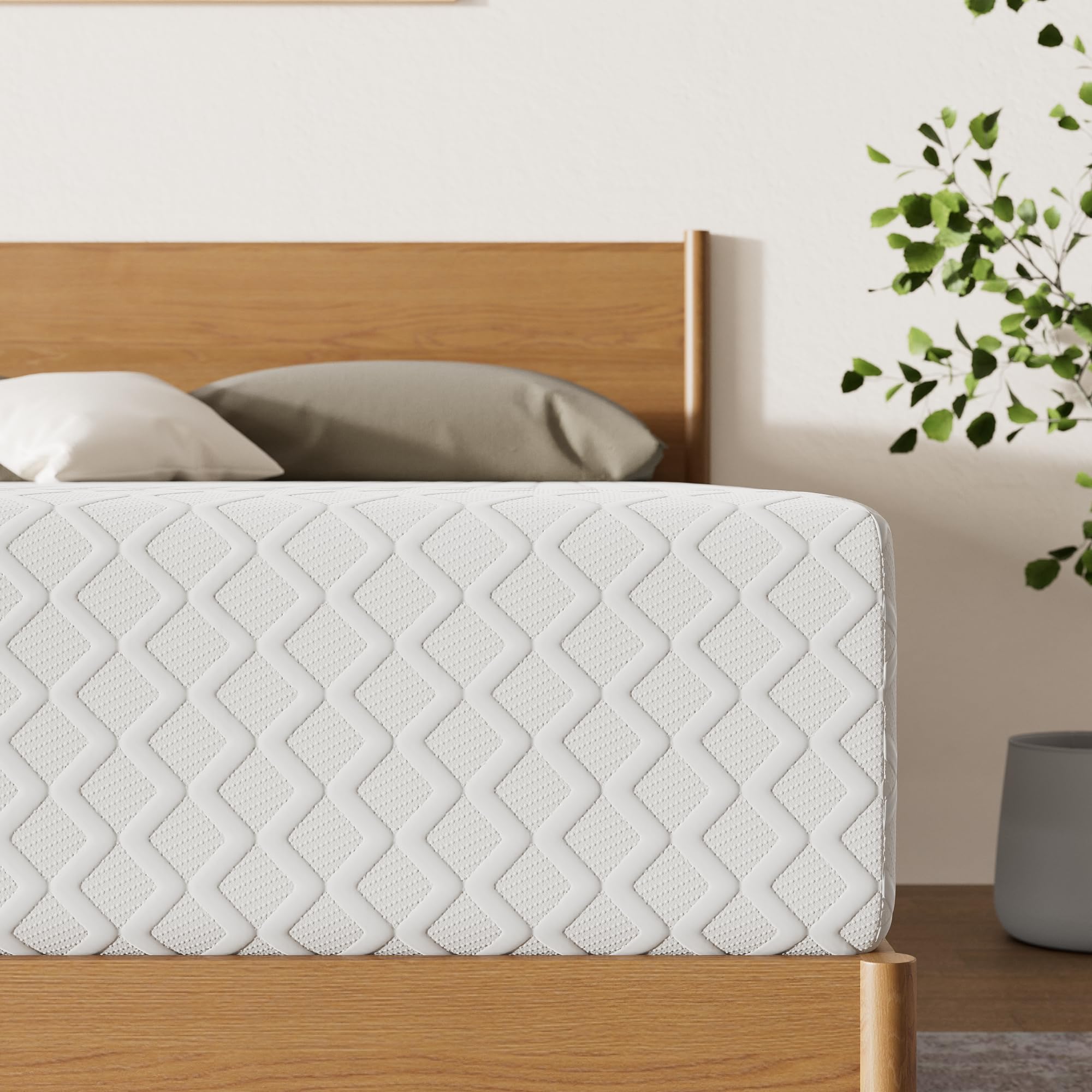
Ashley Chime 12" Memory Foam
Key Features
- Profile: 12 inches
- Firmness: Medium firm
- Construction: Memory foam, 3 layers
- Certification: CertiPUR-US
- Price: Midrange
If your back is the reason you’re shopping, start here. This is a 12-inch memory foam queen with a medium-firm feel and three layers under a stretch-knit cover, and what makes it our pick is the balance rather than any single number: enough support under your hips to keep your spine from sagging into a shallow U, without the slab-like firmness that sends side sleepers out for a topper. In a group where almost every mattress promises orthopedic support, this is the one that most reliably behaves like it.
The label says medium firm, and in practice it lands on the firmer half of that. Coming off a plush pillow-top, plan on a week or two of adjustment; coming off a sagging old innerspring, it will feel like a reprieve rather than a punishment. It also holds up on the practical side: platform beds, slatted bases, solid foundations, and adjustable frames are all fine, and the cover unzips, which makes spot-cleaning a much smaller job than it is on the sealed mattresses here.
Setup is the usual compressed-foam routine — cut the wrap, let it breathe, give it a day — and at 62 pounds it’s a two-person carry up a stairwell. The foundation or box spring is sold separately, so if you’re moving off an old frame with no slats, add that to the plan before delivery day.
One care note worth following: use a thin, breathable protector rather than a quilted pad. A quilted pad changes the feel of the foam you just paid for and traps the heat the knit cover is meant to let out. Do that and the CertiPUR-US foam underneath stays the mattress you bought.
Pros
- Medium-firm foam that keeps hips level
- CertiPUR-US certified foam
- Fits platform, slatted, and adjustable bases
- Removable knit cover for easier cleaning
Cons
- Foundation or box spring sold separately
Our top pick for back-pain shoppers: medium-firm memory foam that holds your hips level, works on any base, and skips the premium price of the thick mattresses here.
Best for True Medium Feel
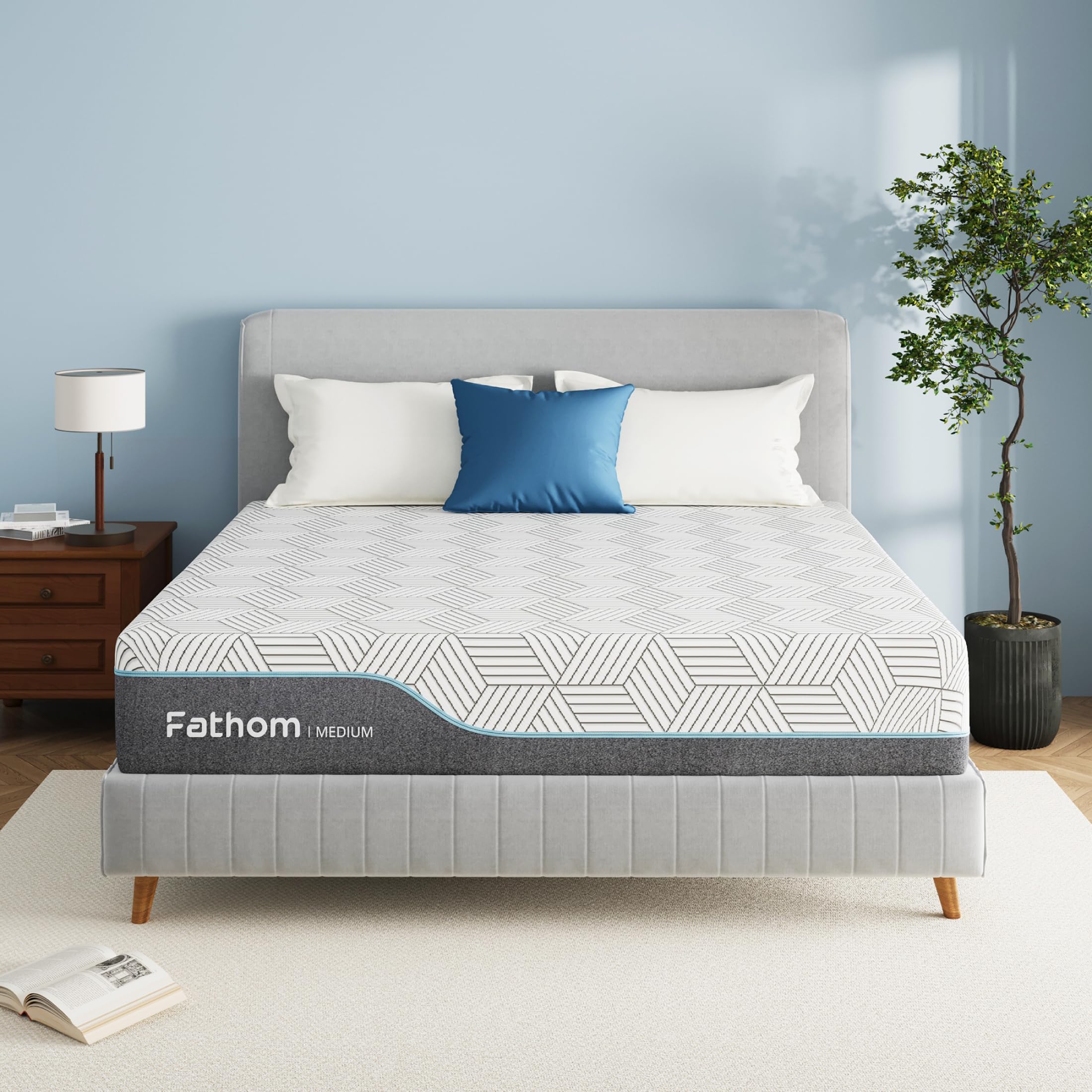
Fathom 12" Medium Memory Foam
Key Features
- Cover: Removable, fiberglass-free
- Profile: 12 inches
- Firmness: Medium
- Certification: CertiPUR-US, Oeko-Tex fabrics
- Price: Midrange
Where the Ashley leans firmer than its label, this one sits where medium says it will. The Fathom is a 12-inch, four-layer gel foam queen with a fiberglass-free cover, and it gives at the shoulder and hip without letting your lower back drop. That’s the feel most side sleepers are hunting for when they say they want support but can’t sleep on a board.
We’re taken with the cover, and not only for the pattern. It’s removable and made without fiberglass, which has become one of the first things we check on a foam mattress — a fiberglass barrier that escapes into a bedroom is a genuinely bad outcome, and paying attention to it narrows the field fast. The gel also runs through the comfort foam rather than sitting in the ticking, which is the version of cooling that does something.
At 68 pounds it’s a two-person unboxing, and the 750-pound weight capacity leaves room for two sleepers and then some. Fathom is a newer name than Ashley or Casper, with less history behind it, and that’s the main reason this sits behind our top pick rather than beside it.
Pros
- Medium feel that cushions shoulders and hips
- Removable, fiberglass-free cover
- 750-pound weight capacity for two
Cons
- Cover is spot clean only
The one we hand to anyone who wants support without a hard bed: a genuine medium, a fiberglass-free cover, and a weight rating that suits two sleepers.
Best for Risk-Free Trial
Egohome 14" Copper Gel
Key Features
- Trial: 100 nights
- Profile: 14 inches
- Firmness: Medium firm
- Warranty: 10 years
- Price: Premium
A hundred nights and a 10-year warranty is the longest no-risk window in this guide, and on a mattress you can’t lie on in a store, that’s the feature that matters most. The Egohome is a 14-inch, four-layer medium-firm queen from MLILY, with copper gel in the comfort foam and a graphite-infused cover — and the trial is why we start here when a shopper isn’t sure.
Fourteen inches buys real distance between your shoulder and the frame, which is what you notice when a thinner mattress bottoms out. The cooling setup is the most elaborate here, with copper in the foam and graphite in the cover, aimed at the sleeper who wakes with a hot patch under their hips. It’s fiberglass free and CertiPUR-US certified, and MLILY lists it as compatible with platform, slatted, box-spring, and adjustable setups.
The practical snag is moving day: at 84 pounds it’s the heaviest mattress in this guide and a two-person job on stairs. Otherwise this is the one for someone who wants to try medium firm without buying blind.
Pros
- 100-night trial and 10-year warranty
- Copper gel and graphite cover for hot sleepers
- 14 inches across four foam layers
- Fiberglass free and CertiPUR-US certified
Cons
- Queen listed to 250 pounds
- Runs firm before it breaks in
The pick for anyone who can’t commit without an exit: a hundred nights and a decade of warranty behind a thick, cool-sleeping medium-firm queen.
Best for Hot Sleepers
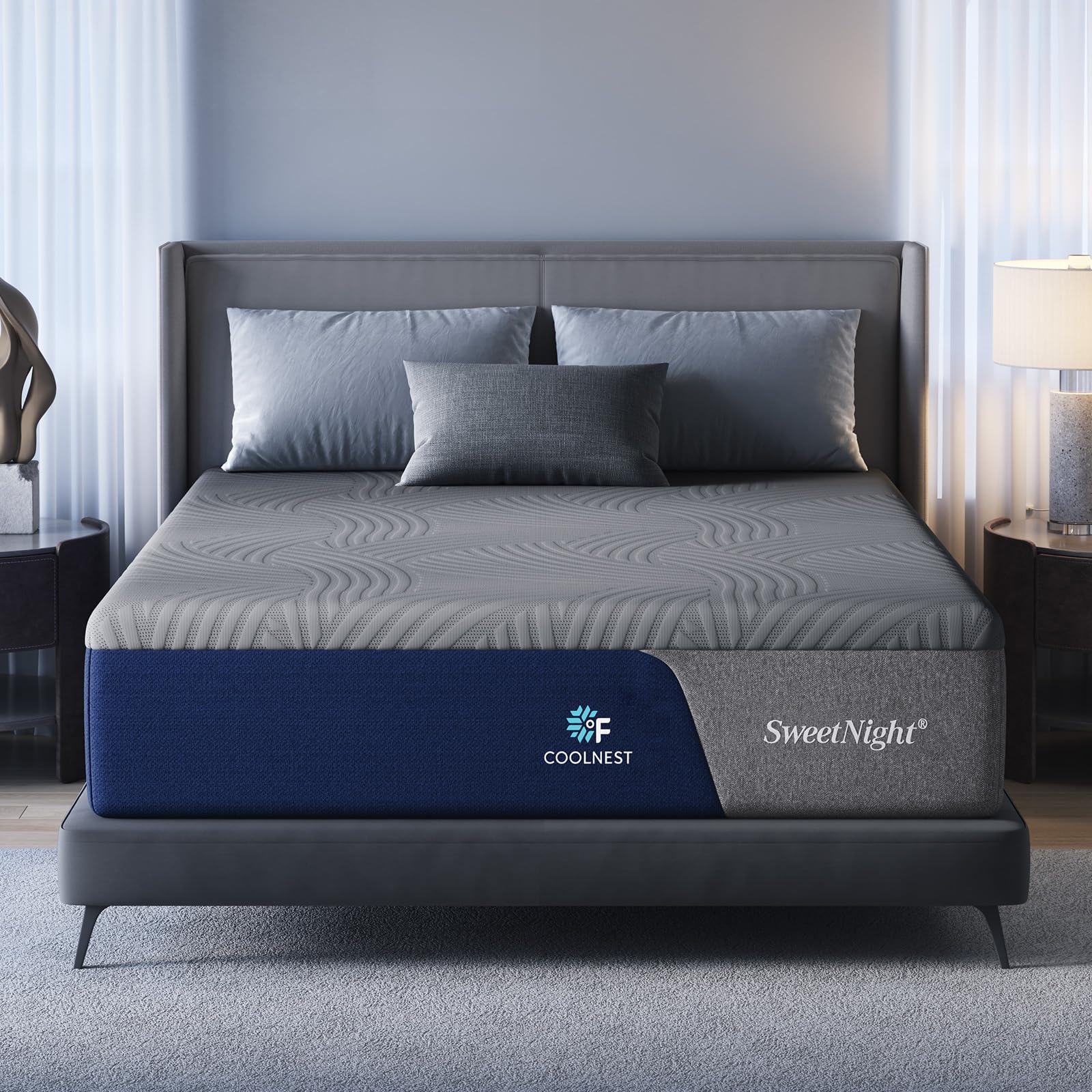
Sweetnight CoolNest 14" King
Key Features
- Cooling: Gel and PCM foam
- Profile: 14 inches
- Support: Five-zone foam
- Firmness: Medium
- Price: Premium
Phase-change material is the interesting part. The CoolNest layers PCM foam — the stuff that absorbs heat as you warm up and gives it back as you cool down — under gel-infused memory foam, then tops it with a 3D-woven cover full of ventilation pores. Whatever you make of the breathability numbers in the marketing, the design is aimed squarely at the thing that ruins sleep for hot sleepers: heat pooling under your hips and shoulders.
Beneath the comfort layers sits a five-zone core that firms up under the heaviest parts of you, and the whole stack comes to 14 inches across six layers. That’s a tall mattress — it changes the look of a bed frame and it wants deep-pocket sheets. Motion isolation is one of its stronger suits, which makes the king a sensible choice for two people on different schedules.
We choose it for a warm bedroom, a king frame, and a sleeper who wants medium rather than firm. Our one caution is the pairing of that slick cover with the tall profile: ordinary sheets slide. Deep-pocket sheets with a firm elastic hem fix most of it, and what you get in return is a surface designed to run cooler than a plain memory foam top.
Pros
- PCM and gel foams for hot sleepers
- Five-zone support across a 14-inch stack
- Strong motion isolation for couples
Cons
- 86.6-pound king is a two-person move
The king we point hot sleepers to: phase-change foam under a ventilated cover, with the deepest support stack of anything in this guide.
Best for Guest Rooms
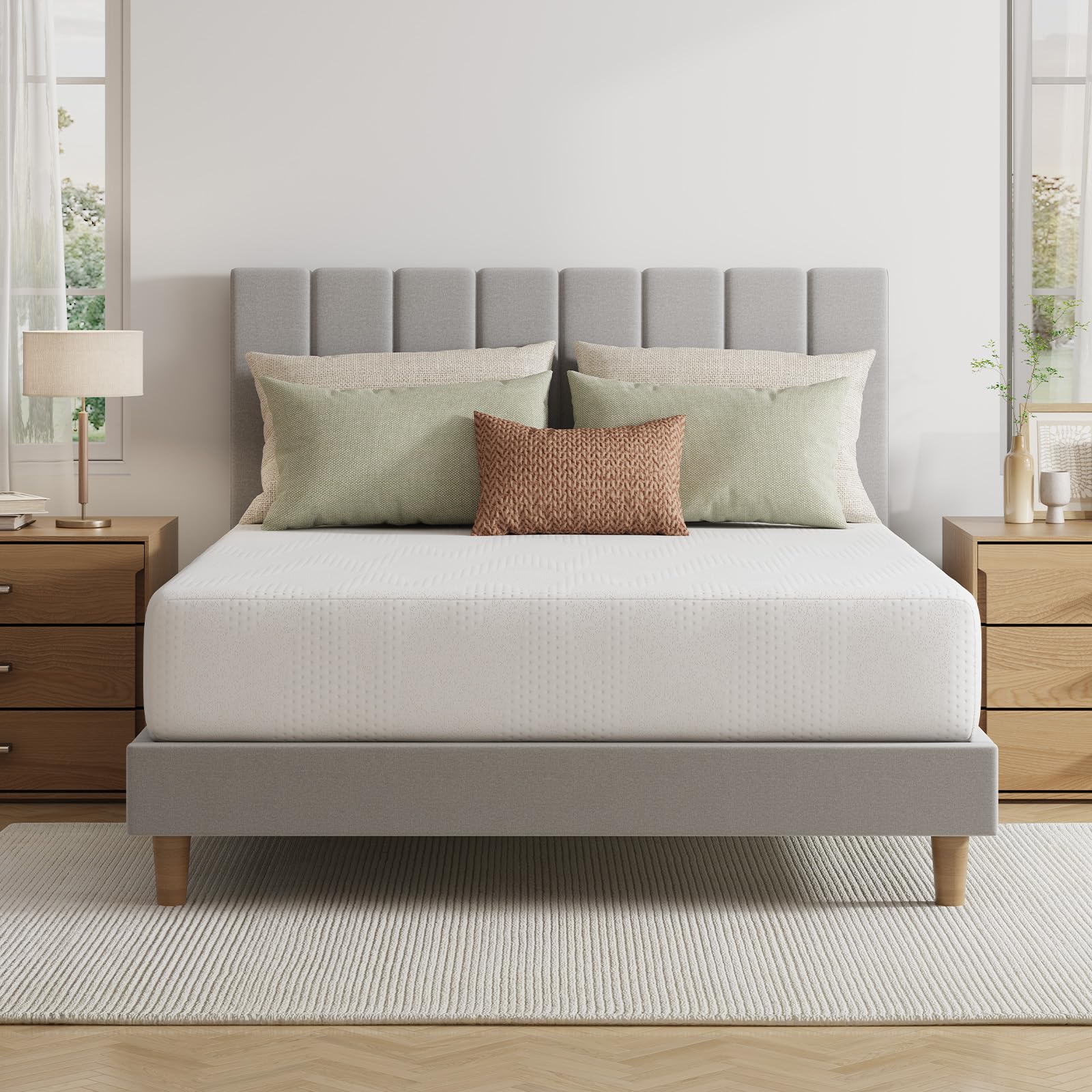
Novilla 10" Gel Memory Foam
Key Features
- Profile: 10 inches
- Firmness: Medium
- Construction: Gel memory foam, 3 layers
- Certification: CertiPUR-US
- Price: Budget
This is the least expensive queen in the guide, and the one we put in a guest room, a first apartment, or a teenager’s room without hesitating. It’s a 10-inch, three-layer gel memory foam mattress with a medium feel and a knitted cover, and it goes from box to bed in minutes — the setup is about as simple as this category gets.
Ten inches is where the trade-off lives. There’s less foam between you and the foundation than on the 12s and 14s here, so a heavier sleeper will feel the base sooner. For a spare room that gets used a few weeks a year, that’s a fair trade, and the CertiPUR-US foam is the same class of material as the pricier picks. For the mattress you sleep on every night with a bad back, spend more and get more foam under you.
Pros
- Lowest-priced queen in this guide
- Sets up in minutes
- CertiPUR-US gel memory foam
Cons
- Medium feel reads firm to some
Our budget queen: the least expensive mattress here, and a sensible one for a guest room, a first apartment, or a teenager’s bedroom.
Best for Pressure Relief
Novilla Bliss 14" Queen
Key Features
- Profile: 14 inches
- Firmness: Medium plush
- Construction: Gel memory foam, 4 layers
- Weight capacity: 600 lb
- Price: Midrange
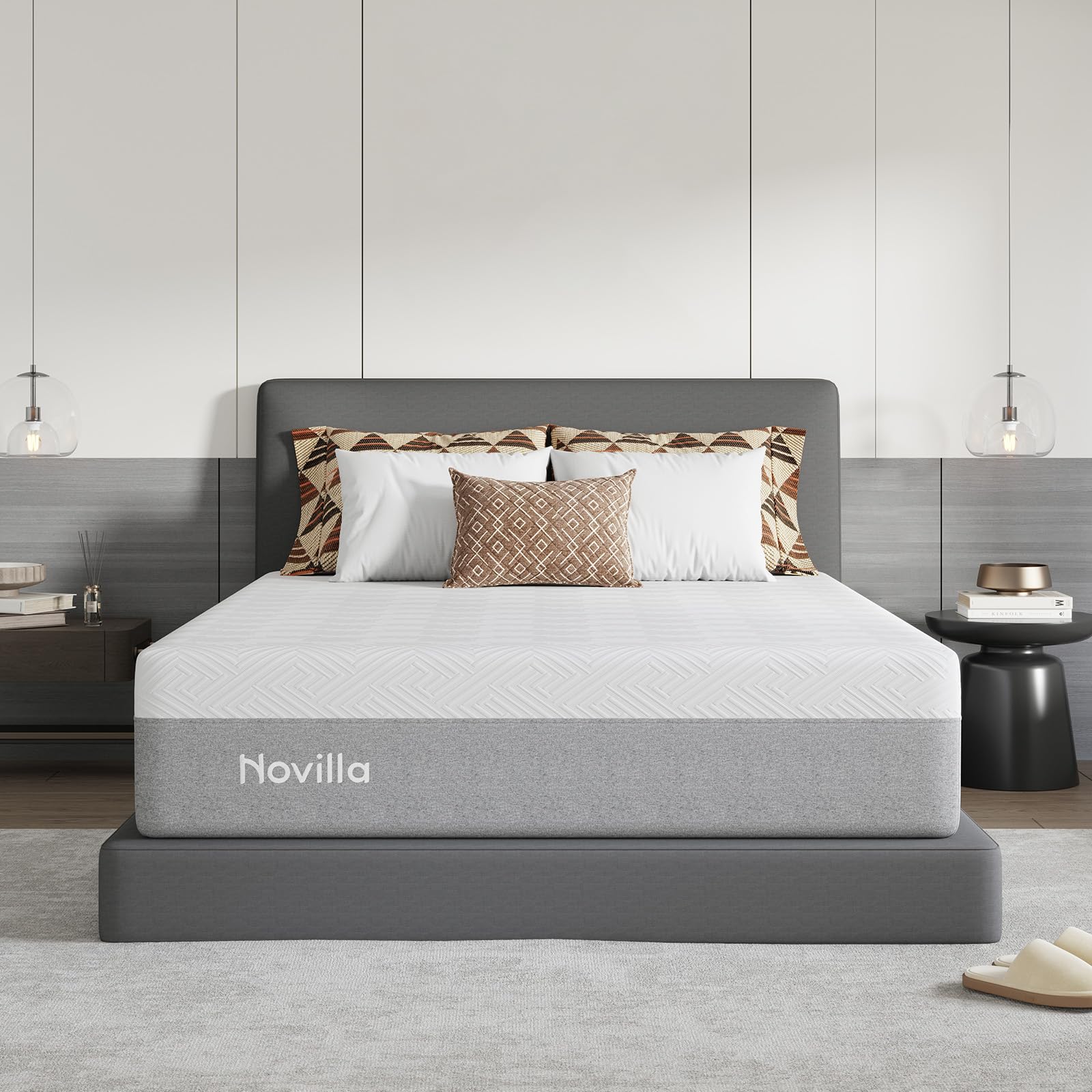
Fourteen inches and a medium-plush feel put the Bliss at the pressure-relief end of this list rather than the firm end. It stacks four layers of gel memory foam, claims reinforced edge support, and lists a 600-pound weight capacity — comfortably more than two adults need, and a hint at how much foam is in the thing.
The catch is expansion. Compressed foam has to come back, and a 14-inch mattress that stops short leaves you with a lumpy surface and a shorter profile than you paid for. Give it the full three days in a warm room before you judge it, and resist making the bed early — the foam needs air moving around it.
Where it earns its place is with side sleepers who want the pressure off their hips and shoulders. Pair it with a firm foundation and it keeps a plush surface you can still roll over on; put it on a flexing box spring and it turns into a hammock. If your spine wants to be held level rather than cradled, one of the medium-firm picks will serve you better.
Pros
- Plush surface for hip and shoulder pressure
- 600-pound weight capacity
- Claims reinforced edge support
Cons
- Too soft for a firm-preferring back
- Cover is hand wash only
For side sleepers who already know plush works for them and want the pressure off their hips — not for a back that wants holding level.
Best for Twin Beds
Casper Element 10" Twin
Key Features
- Profile: 10 inches
- Firmness: Medium firm
- Warranty: 10 years
- Construction: Memory foam, 2 layers
- Price: Premium
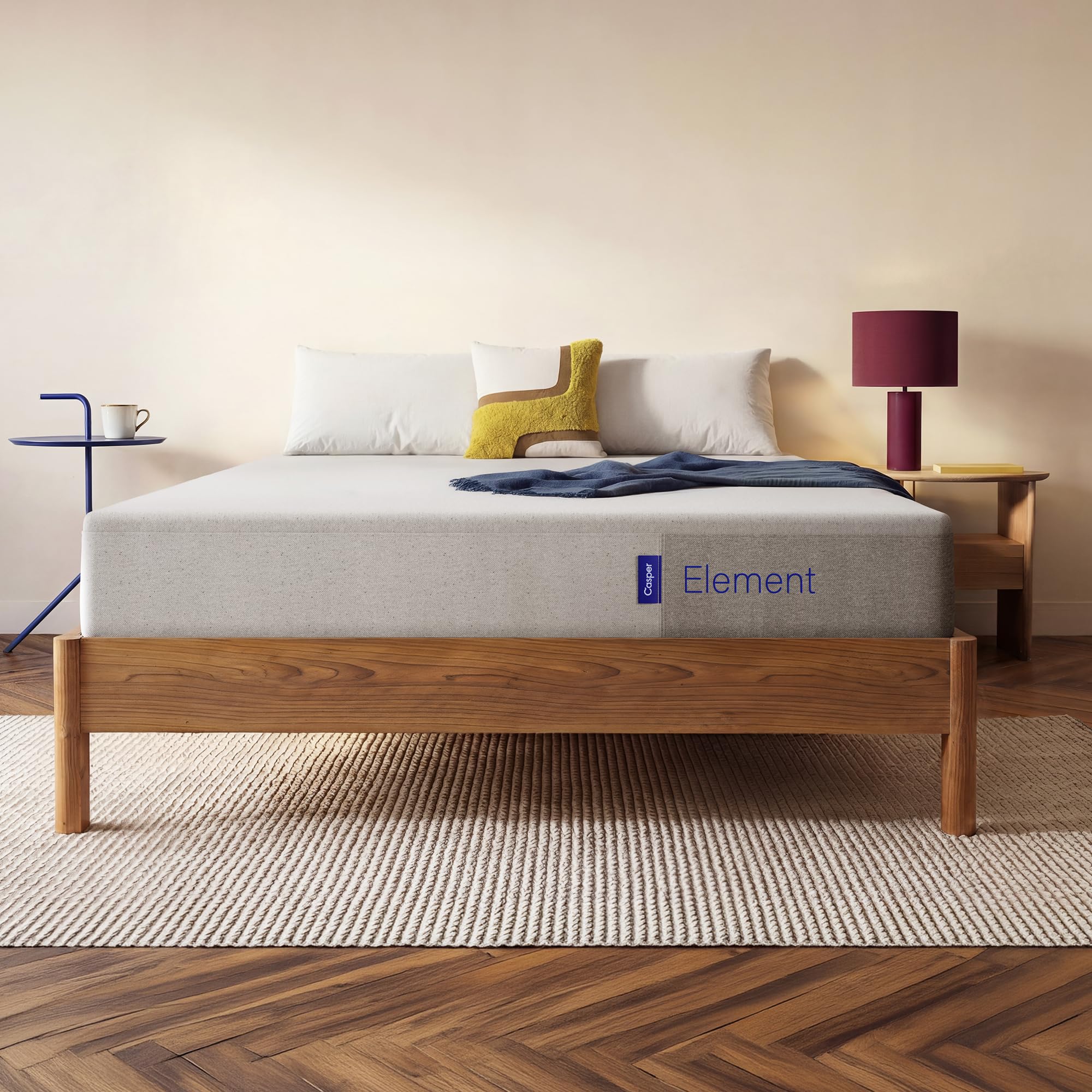
Ten inches, two layers, medium firm: on paper the Element is the simplest build in this guide, and that’s the honest way to read it. Casper’s open-cell Flex Foam is designed to let air move through the mattress rather than trap it, and at 41 pounds in a twin, one person can carry it up the stairs.
Part of what you’re paying for is the structure around the mattress: a 100-night trial, a 10-year limited warranty, and a cover that goes in the washing machine. That last one is rarer than it should be in this category, where spot cleaning is the norm for almost everything else.
The support question is where we slow down. Two layers at ten inches is the thinnest stack here, and while the mattress is listed to 1,000 pounds, that figure says more about the foundation than about how much foam is under your ribs. What decides whether it works is how much of you there is to hold: a lighter sleeper gets along with it fine, and as you add weight the medium feel reads softer. The twin size narrows the case further — this is a guest room, a kid’s room, or a dorm, not the master.
So it’s our pick if you need a twin and want a known name with a real trial behind it. If the point is your own bad back in a queen, the Ashley and the Fathom put more foam under you for less money, and that settles it.
Pros
- 100-night trial and 10-year warranty
- Machine-washable cover
- Open-cell foam for airflow
Cons
- Thinnest foam stack among these picks
A well-backed twin for a guest room or a kid’s room, with a real trial behind it — just don’t expect ten inches to carry an adult back.
How We Chose and Tested the Best Orthopedic Mattresses
We started with 22 mattresses marketed as orthopedic or back-support-focused, then cut anything with a trial period under 90 nights, a warranty under a decade, or only one firmness option. Six made the final cut. I ordered each one through the normal checkout process and tracked how delivery went — whether the window was accurate, whether the box arrived damaged, and what the return policy actually said about who pays shipping.
Every mattress got at least three weeks of nightly use in a real bedroom, with testers ranging from a 125-pound side sleeper to a 230-pound back sleeper, plus one couple sleeping together on each to see how much movement carried across the surface. We rated firmness on a 1–10 scale separately before comparing notes, then logged morning stiffness, whether the afternoon ache returned, and how often we woke up needing to change position. For support, a second person checked the gap behind the lower back and under the shoulder while each tester lay on their side.
Bed-in-a-box models were unboxed the day they arrived and sniffed at one hour, 24 hours, and 72 hours; we also timed how long each took to reach full height before anyone slept on it. On the mattresses themselves, we sat on the edges to see how far they sank, checked seams and cover stitching, and noted whether anyone woke up clammy on warm nights. Value came down to price measured against warranty and trial length, not the sticker alone.
How to Choose an Orthopedic Mattress
Orthopedic isn’t a regulated term on a mattress label — what actually supports your spine is the combination of firmness, how much foam sits beneath you, and what you put it on.
Firmness First, Then Everything Else
A level spine is the goal, not a hospital corner. As a starting point, back and stomach sleepers usually do best on medium firm, side sleepers on medium or medium plush. Anyone told to "sleep on something firm" should hear the caveat: a mattress hard enough to press into a shoulder and hip creates its own kind of back pain.
So buy the firmness you think you want from a seller with a real return window. The Egohome’s hundred nights exist for exactly that, and it beats guessing one notch too firm to be safe.
What 10, 12, and 14 Inches Actually Change
Loft is shorthand for how much foam sits between you and whatever is holding the mattress up. A 10-inch mattress can be genuinely supportive for a lighter sleeper; add weight and the same build bottoms out, which is why the 12- and 14-inch picks here suit heavier sleepers and couples better.
The trap is the foundation. A thick mattress on a flexing box spring loses the support you paid for, so put any of these on slats or a solid platform rated for the frame.
Read the Trial Terms Before the Specs
You can’t lie on a mattress in a box before it arrives, so the return policy is part of the product. A hundred-night trial with a 10-year warranty, like the Egohome’s and the Casper’s, gives you a full season to find out whether the firmness suits you.
Read two things before ordering: whether there’s a minimum break-in period before a return is allowed, and who handles shipping. Re-compressing a queen is not a one-person job, so ask about pickup.
Cooling, Off-Gassing, and the First Week
Nearly every foam mattress here has a cooling story — gel, copper, graphite, phase-change foam — and the ones that work put the material in the foam rather than the cover alone. Off-gassing is the more predictable experience: new foam smells, and it needs air.
Unbox in the room where the mattress will live, open the windows, and run a fan for a day or two. Judge firmness after a couple of weeks, not on the first night, when the foam is still opening up.
Certifications and What’s in the Cover
CertiPUR-US covers the foam itself — it’s tested for emissions and prohibited content, and every mattress we recommend here carries it. The cover is a separate question.
Fiberglass has been used as a fire barrier in some mattress covers, and when it escapes into a bedroom it is miserable to clean up, which is why the fiberglass-free covers on the Fathom and the Egohome count for something. Check whether the cover zips off, too; a removable cover is the difference between spot cleaning and a real wash.
Frequently Asked Questions
Can you put a mattress in a box on the floor?
Yes, on a flat, dry surface, and plenty of people do it while a frame is on order. Two things change down there: the mattress feels firmer because nothing gives underneath, and the cover picks up moisture and dust from the slab or carpet.
If it’s temporary, fine. For anything longer than a few weeks, get a slatted or platform base.
How long does it take to break in a foam mattress?
Longer than one night. Most of the change happens over the first few weeks as the comfort layer softens where you put weight. Walk on it in clean socks for a few minutes, sleep on it normally, and rotate it head-to-foot once a month early on so the foam compresses evenly.
Judge the firmness at the end of the trial window, not on the first morning.
Should you use a mattress protector on a memory foam mattress?
Yes, and a thin breathable one. A quilted pad changes how the foam feels under you and traps the heat the cover is designed to release — Ashley’s own care note says as much.
Choose a protector described as breathable rather than a plastic-backed waterproof layer, and wash it monthly. It is far easier than cleaning the mattress.
Final Verdict
Our pick for most people is the Ashley Chime 12-inch. Medium-firm foam that holds your hips and shoulders level, a cover you can unzip, and a midrange price that leaves room for a decent platform — that is the combination most back-pain shoppers are actually looking for.
If you know you want a softer landing at the shoulder, the Fathom is the truer medium and adds a fiberglass-free cover. And if committing blind makes you nervous, start with the Egohome’s hundred nights instead.