
This post contains affiliate links. We may earn a small commission when you buy through our links — at no extra cost to you.
Most pillow speakers promise private, peaceful listening, but under a thick memory foam pillow, many turn into a muffled whisper. The gap between marketing claims and real-world performance is especially wide with bone conduction models – several simply aren’t loud enough for anyone but the lightest sleepers.
The solution isn’t just a louder speaker. Thinness, pillow placement, and the type of audio source matter more than wattage. A well-designed ultra-thin Bluetooth speaker with auto-off timer and white noise can deliver clear sound at low volumes, while a wired option may serve radio listeners better.
This guide focuses on speakers that actually work under a pillow, ranked by real-world volume clarity, battery consistency, and comfort for side sleepers. The picks cover budget-friendly Bluetooth models, offline-capable options, and a few wired alternatives for specific use cases.
Best for Side Sleepers
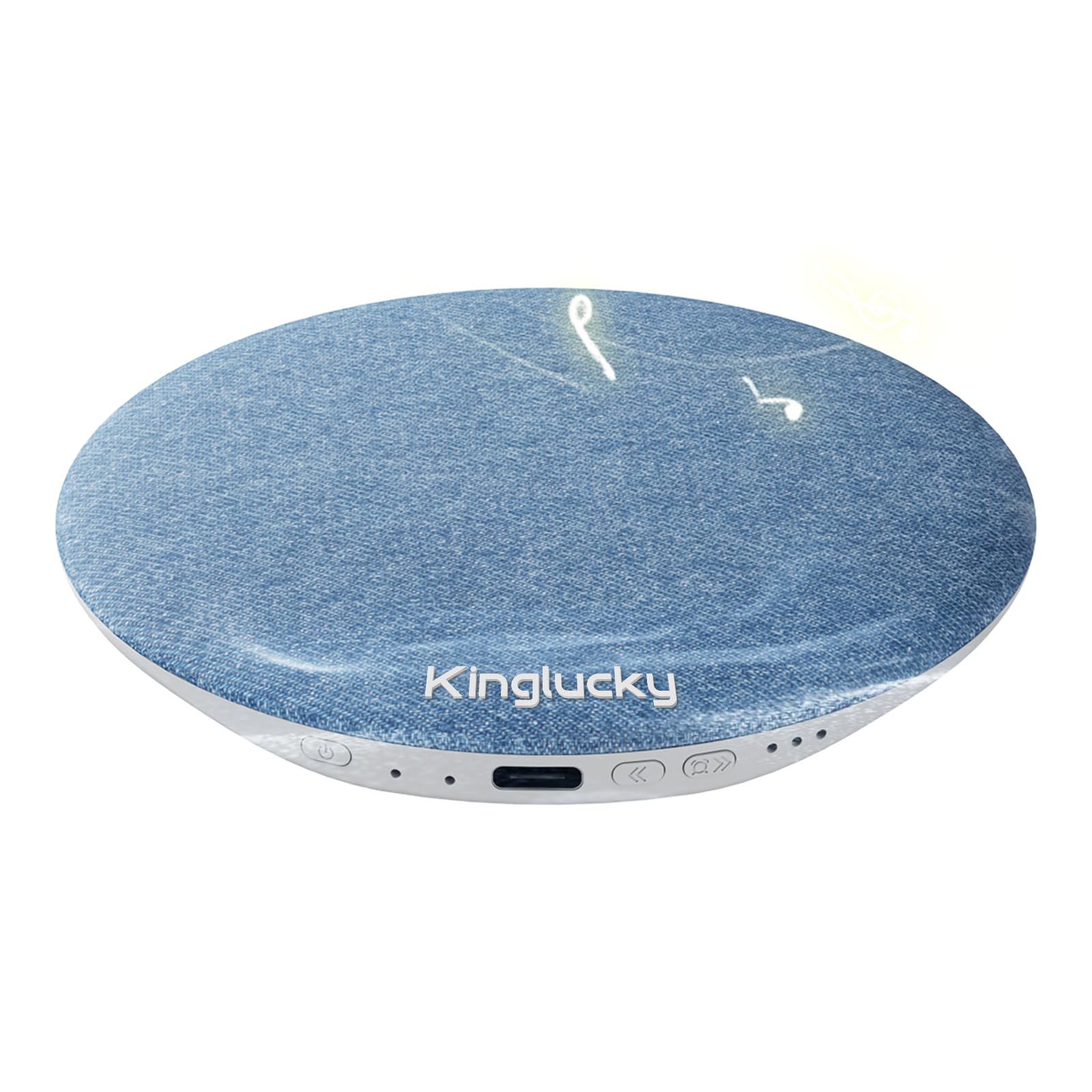
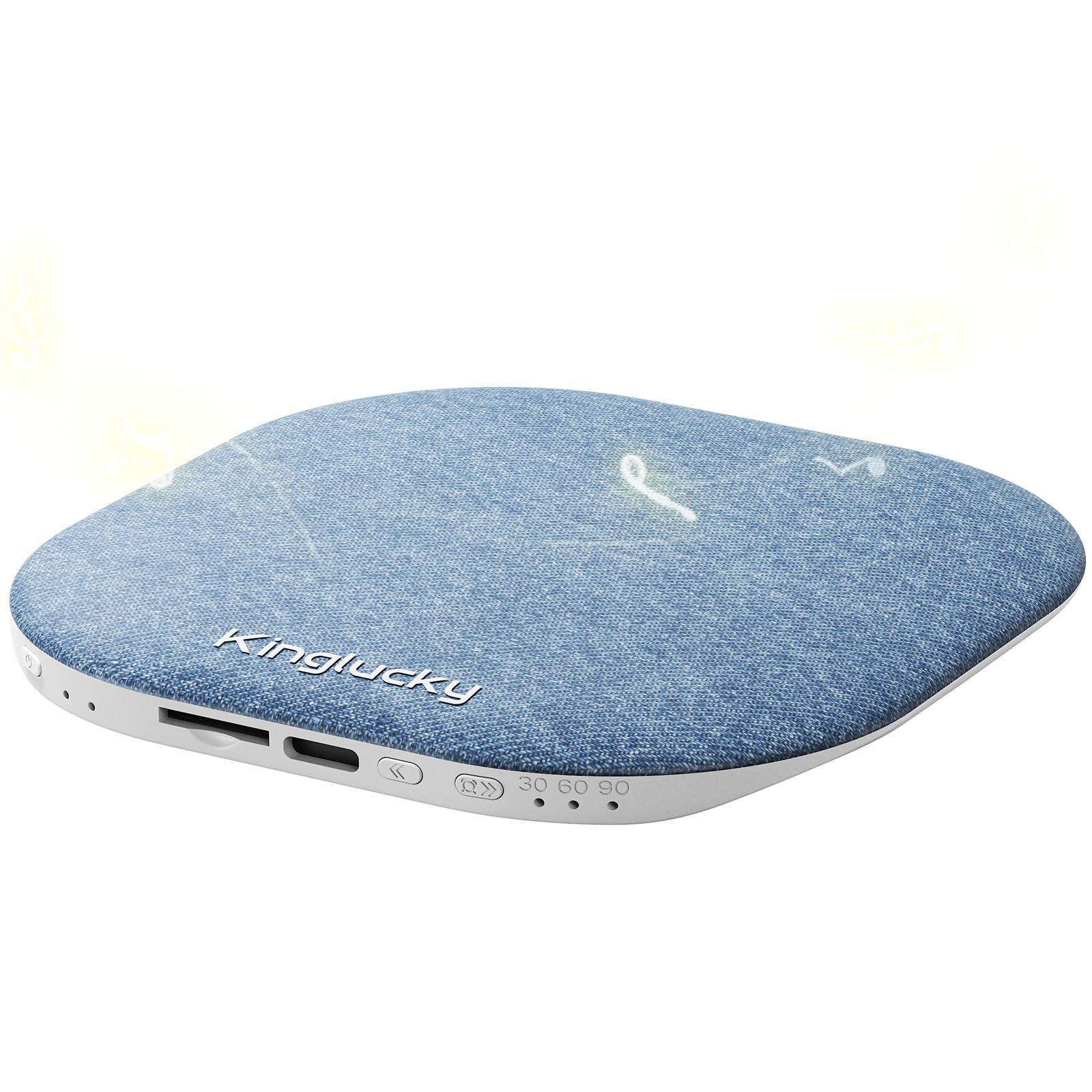
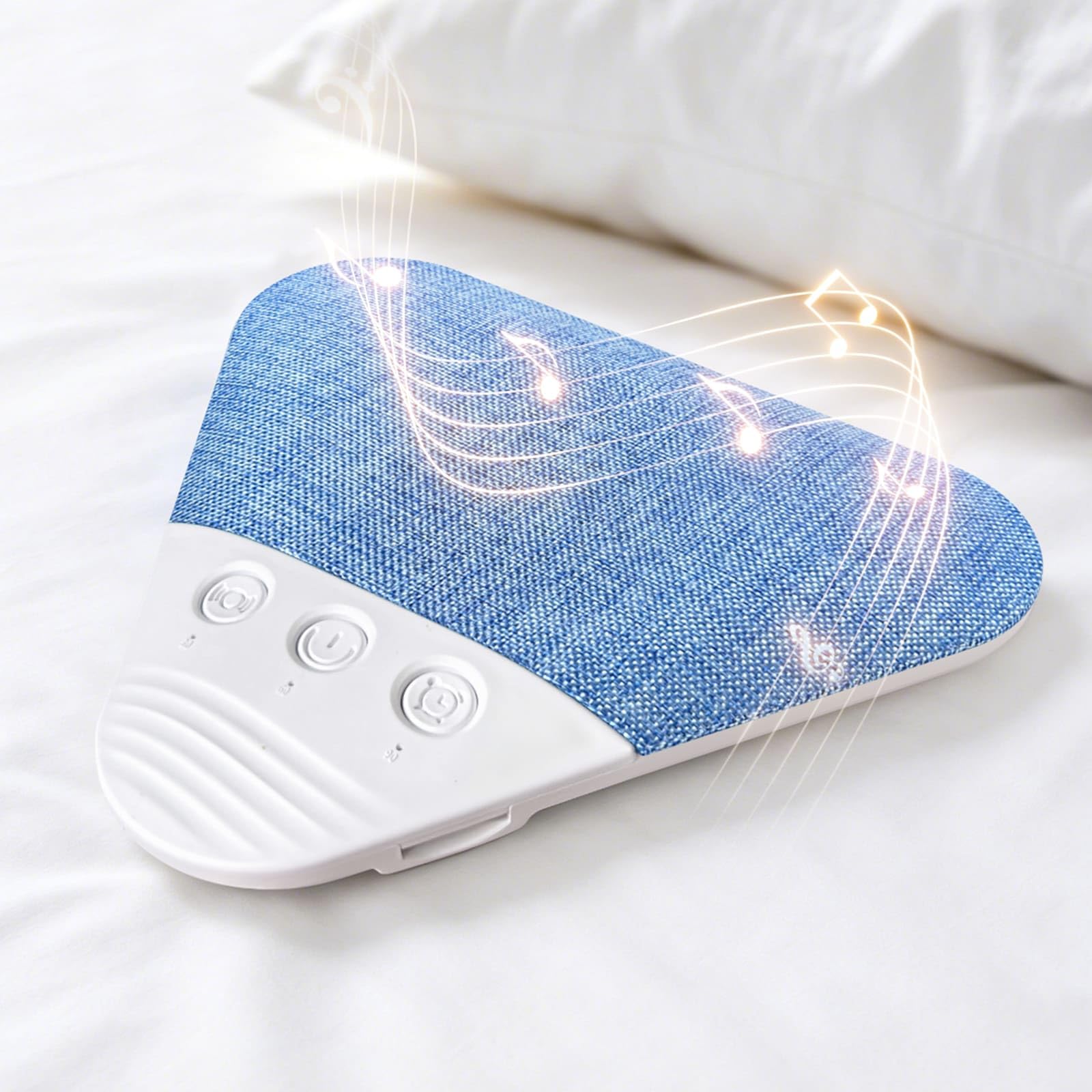
Kinglucky X50 Pillow Speaker
Key Features
- Wireless vs Wired: Bluetooth 6.0
- Thickness: 11mm
- Battery Life: 10 hours
- Auto-off Timer: 30/60/90 min
- Price: Budget
The Kinglucky X50 measures just 11mm thick, making it unobtrusive under a pillow while maintaining a stable Bluetooth 6.0 connection. It includes three built-in sleep sounds (white noise, ocean, rain) and an auto-off timer configurable to 30, 60, or 90 minutes — all controlled from the speaker itself without needing a phone.
Under a standard pillow, the sound is clear and soothing at low volumes, ideal for falling asleep. With thicker or memory foam pillows, the volume may be quieter than some listeners prefer; placing the speaker near the pillow edge improves audibility without compromising the thin profile.
This speaker suits side sleepers who need an unobtrusive audio source, couples sharing a bed who want private listening, and budget-conscious buyers looking for a feature-complete pillow speaker. Those who require very loud audio or use extra-thick pillows should check volume expectations first.
The 300mAh battery provides about 10 hours of playback, enough to cover a full night’s sleep and then some. Charging via USB-C is straightforward, and the speaker pairs quickly with most devices via Bluetooth 6.0.
Pros
- Clear, soothing sound at low volumes under a pillow
- Built-in white noise and timer help you fall asleep faster
- Battery lasts all night and charges quickly
- Ultra-thin 11mm design stays unobtrusive under the pillow
Cons
- Under thick or memory foam pillows, volume may be too quiet without repositioning near the pillow edge
For side sleepers and couples who need private, low-volume audio at night, the X50 delivers consistent performance without breaking the budget.
Best for Offline Listening
Kinglucky F50 Pillow Speaker
Key Features
- Wireless vs Wired: Bluetooth 6.0 + TF card
- Thickness: 11mm
- Battery Life: 10 hours
- Auto-off Timer: 30/60/90 min
- Price: Budget
The F50 keeps the same 11mm thin profile, Bluetooth 6.0, and 10-hour battery as the X50, then sets itself apart with a TF/microSD card slot that plays audiobooks, sleep sounds, or music without any phone connection. That offline capability is the whole reason to choose this model over the slightly cheaper X50 — if you aren’t loading files onto a card, the extra cost buys nothing you’ll use.
This makes the F50 a natural fit for travelers who want to pre-load a week of content, or anyone building a phone-free bedtime routine. The speaker’s sound is clear enough for white noise and spoken word, though volume can be lower than expected when buried under thick or memory foam pillows — listeners with heavy bedding may need to experiment with placement near the pillow edge. The TF card itself is not included, so factor in that small extra purchase.
Pros
- Clear sound quality for white noise and podcasts, with a soothing tone that won’t disturb a partner.
- Long battery life supports all-night use without needing a recharge mid-sleep.
- Offline playback via TF card reduces screen time and removes the need for a phone bedside.
- Ultra-thin 11mm design fits comfortably under most pillows without creating pressure points.
Cons
- In thick or memory foam pillows, the volume may drop enough to be hard to hear clearly.
- Costs a bit more than the X50 and does not include a microSD card, adding an extra expense for offline use.
If you want offline audio autonomy and don’t mind the small premium, the F50 is the right choice – but for streamers, the X50 delivers identical performance for less.
Best for Short Listening
LENRUE V3 ProMAX Pillow
Key Features
- Wireless vs Wired: Bluetooth 6.0
- Thickness: Ultra-slim
- Battery Life: Varies
- Auto-off Timer: 30/60/90 min
- Price: Budget
For under $25, the LENRUE V3 ProMAX delivers a surprising variety of built-in white noise options — eight nature sounds including rain, ocean, and fan — in a thin design that slides easily under most pillows. The audio clarity is well matched to the price, making it a capable option for winding down before sleep.
This speaker is best suited for short listening sessions: a single podcast episode, a 30-minute meditation, or falling asleep with the auto-off timer set to 60 minutes. The included timer (30/60/90 minutes) helps preserve what battery life there is, because the internal battery may not hold up for a full night. Users who need consistent power from bedtime to morning should look at the top pick’s longer-lasting design instead.
Bluetooth pairing can be touch-and-go with some devices — occasional dropouts or difficulty reconnecting after a gap in use. The Bluetooth 6.0 label doesn’t guarantee seamless performance, though once connected the audio remains stable for the duration of a session. These quirks are manageable if you keep the speaker close and paired before placing it under the pillow.
Pros
- Clear audio quality for the price range — voices and white noise come through without distortion.
- Eight built-in nature sounds offer variety without needing a phone or app.
- Ultra-slim design slips under most pillows without creating a noticeable bump.
Cons
- Bluetooth pairing can be inconsistent — some devices require repeated attempts or experience dropouts during use.
- Battery may not last a full night’s sleep — the auto-off timer helps, but all-night use requires a nearby power source.
A smart buy for anyone who needs a cheap, slim speaker with built-in sleep sounds for short pre-bed listening — just keep expectations realistic about battery endurance.
Best for Light Sleepers
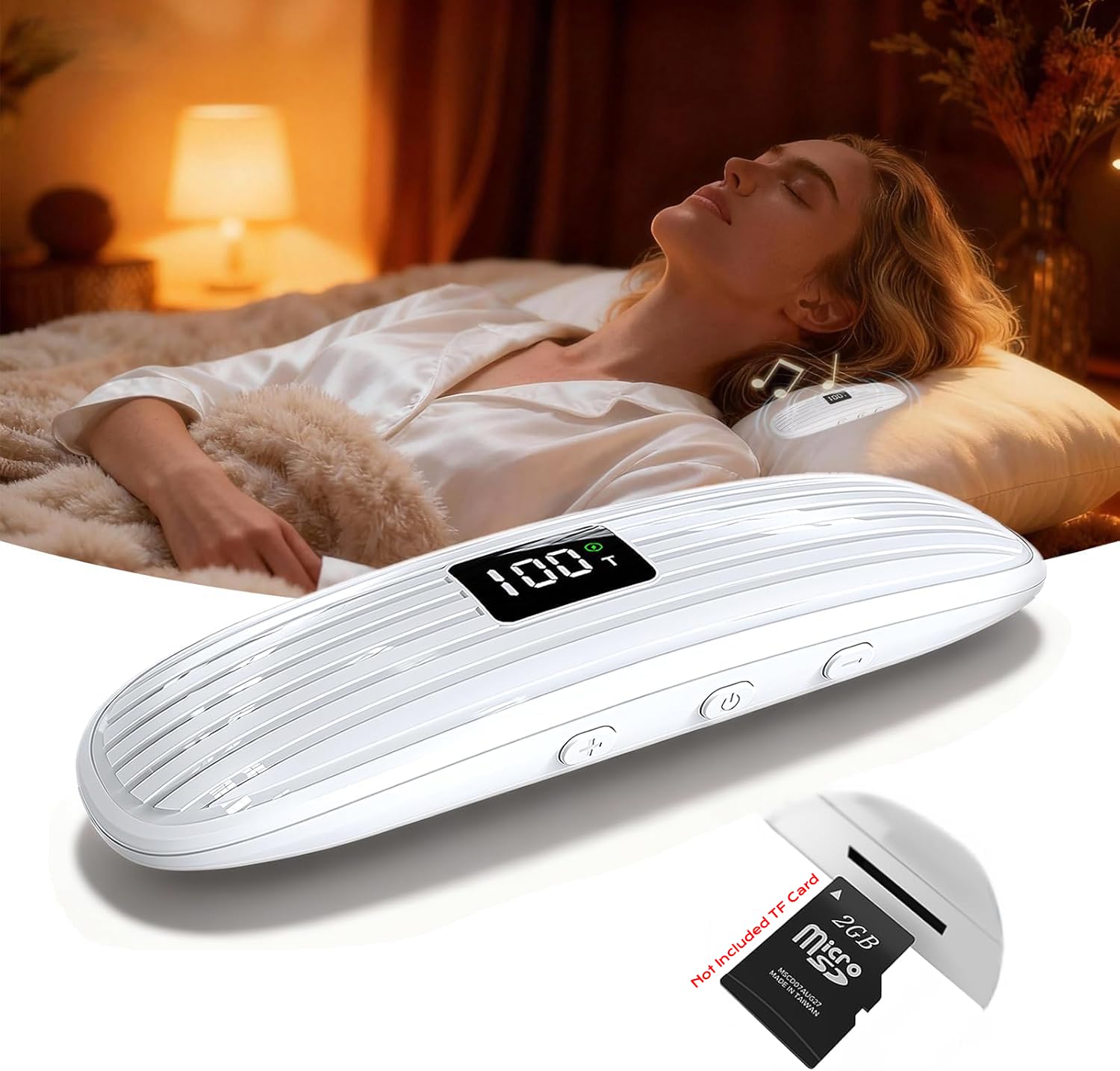
ByteWave Bone Conduction Speaker
Key Features
- Wireless vs Wired: Bluetooth 5.3
- Thickness: 10mm
- Battery Life: 15 hours (claimed)
- Auto-off Timer: 10/15 min
- Price: Budget
The ByteWave is the smallest speaker in this roundup, with a claimed 15-hour battery life that can go multiple nights between charges. Sound quality is surprisingly clear for its size. However, volume tops out so low that even under a thin pillow the audio can be lost to ambient noise, making it unsuitable for anyone who needs a clear voice or music. Its bone conduction label appears to be a marketing claim rather than a genuine technology—reviews report it functions as a standard tiny speaker. This trade-off limits its usefulness to extremely light sleepers who require only a whisper of sound and prioritize portability over volume.
Pros
- Surprisingly good sound quality and long battery life for its tiny size.
- Extremely compact and lightweight, easy to pack for travel.
Cons
- Volume can be too low to hear under a pillow, even a thin one.
- Bone conduction functionality is disputed; the device works as a standard speaker instead.
Best suited for extremely light sleepers who need only a whisper of sound and value compact portability over volume—this is not a speaker for clear audible content under a pillow.
Best for Wired Listeners
C Crane PS2 SoftSpeaker

Key Features
- Wireless vs Wired: Wired 3.5mm
- Thickness: Soft foam
- Battery Life: N/A (wired)
- Price: Budget
The C Crane PS2 SoftSpeaker offers a soft, washable cover and clear sound when placed directly on the ear, making it a comfortable choice for private listening. Its wired design eliminates battery worries and works with any bedside radio that has a 3.5mm jack.
However, the volume becomes too quiet when muffled by a pillow, and the cord’s junction can wear over time after repeated bending. These limitations make it a poor fit for sleepers who need Bluetooth, ultra-thin profiles, or under-pillow use. It suits listeners who prefer a stationary radio setup and don’t mind placing the speaker on the ear.
Pros
- Clear, quiet sound for private listening without disturbing others.
- Comfortable soft cover that feels pleasant on the ear and is removable for washing.
- Long-lasting construction that holds up over years of regular use.
Cons
- Cord junction can wear over time with regular bending at the connection point.
- Volume may be too quiet when placed under a pillow – best for direct ear placement.
This works well for those who want a wired speaker for ear-level listening with a bedside radio, but it’s not a suitable under-pillow solution for sleepers seeking Bluetooth or thin-profile designs.
Best for Hearing Loss
C Crane SoftSpeaker 3K

Key Features
- Wireless vs Wired: Wired amplified
- Thickness: Soft foam
- Battery Life: AAA-powered
- Auto-off Timer: Adjustable
- Price: Mid-Range
The SoftSpeaker 3K delivers up to three times the volume of standard pillow speakers — a genuine help for listeners with hearing loss. Its Kevlar-reinforced cord and adjustable timer add durability and convenience. However, sound clarity and amplifier reliability can vary between units; some owners report issues within weeks. The AAA battery-powered amp also drains cells quickly, adding ongoing expense. And unlike many current pillow speakers, this is a wired design — no Bluetooth or built-in sounds. For those who need amplified volume from a wired device and can accept these tradeoffs, it serves a specific purpose.
Pros
- Amplification provides noticeably louder audio under a pillow, aiding those with hearing loss.
- Soft material is comfortable for direct ear contact while lying down.
Cons
- AAA batteries may need replacement every few nights under regular use, adding recurring cost.
- In a quiet bedroom, the amplifier can produce uneven volume or stop working after several weeks of use.
A viable option for those with hearing loss who prioritize louder audio and accept wired operation, but only if you’re willing to gamble on unit consistency and manage battery changes.
How to Choose
The biggest mistake buyers make is assuming a pillow speaker will sound the same under any pillow — thickness and material dramatically affect clarity.
Wireless vs Wired Connection
Bluetooth speakers offer convenience and no cord tangles, but they require charging every night and can lose pairing if the device goes out of range. Wired speakers (3.5mm) never need a battery and work with any audio source that has a headphone jack, but the cord adds friction when turning over in bed and can fail at the connector junction after months of use.
For most sleepers, Bluetooth is the default choice because it allows phone-free operation with a timer. If you listen to a bedside radio or prefer zero charging, a wired model like the C Crane PS2 is a reliable alternative — just budget for a cord replacement after a year.
Thickness and Comfort
A speaker thicker than 12mm creates a noticeable lump under a standard pillow, which can wake side sleepers who shift positions. Ultra-thin models (10–11mm) spread the pressure more evenly and stay nearly invisible. Memory foam pillows compress around the speaker, so even a thin unit loses volume if placed dead center — always position it near the pillow edge.
Foam-covered wired speakers are softer but thicker; they work best placed directly on the ear rather than under a pillow. For under-pillow use, prioritize flat, rigid designs that don’t deform under weight.
Battery Life
Advertised battery life often assumes low volume and no sleep timer. In real use, a 10-hour rated Bluetooth speaker lasts 7–8 hours at moderate volume – enough for a full night’s sleep. Models with smaller batteries (300mAh) degrade faster; after 6 months, runtime may drop to 4–5 hours. Check recent reviews for battery consistency, especially with budget models.
If you sleep longer than 8 hours or want to avoid nightly charging, look for a wired option or a speaker with a replaceable battery. The LENRUE V3 ProMAX illustrates the risk: several users report battery failure within weeks, making it unsuitable for all-night use.
Auto-off Timer
An adjustable timer (e.g., 30/60/90 minutes) prevents the speaker from playing all night, saving battery and avoiding accidental podcasts playing until morning. Short fixed timers (10–15 minutes) are only useful for falling asleep quickly. A timer is a must-have for Bluetooth models because leaving them on drains the battery and can cause the speaker to stay active when you’re already asleep.
For wired speakers, a timer is less critical since they don’t run on battery, but it’s still helpful if you use a bedside radio with a separate sleep function.
FAQ
Why is my pillow speaker so quiet even at max volume?
The most common cause is pillow thickness and density. Memory foam and thick pillows act as acoustic dampeners, reducing perceived volume significantly. Move the speaker closer to the pillow edge, or switch to a flatter pillow. If the speaker is already thin, check if it’s a bone conduction model – many lack the driver power to penetrate any pillow.
Can I use a pillow speaker with a thick memory foam pillow?
Yes, but you will need to adjust placement. Slide the speaker under the pillow near the top edge rather than burying it in the center. An amplified wired model like the C Crane SoftSpeaker 3K provides louder output, but even that may not match the clarity of a thin Bluetooth speaker placed correctly.
Do bone conduction pillow speakers actually work through a pillow?
Most ‘bone conduction’ pillow speakers are standard flat speakers with a marketing label. True bone conduction requires direct contact with the skull, which a pillow prevents. If you want sound through a pillow, buy a traditional thin speaker – the bone conduction claim is rarely backed by actual performance.
How long does the battery last on a Bluetooth pillow speaker in real use?
Real-world battery life is typically 20–30% less than advertised. A speaker rated for 10 hours usually runs 7–8 hours at moderate volume. Budget models with small batteries degrade faster – expect 4–5 hours after 6 months of nightly use. For all-night reliability, choose a model with consistent positive reviews for battery longevity.