This post contains affiliate links. We may earn a small commission when you buy through our links — at no extra cost to you.
A sleep tracker should answer one question—how did I actually sleep?—without giving you a new thing to worry about at 2 a.m. I’ve worn bands that buzzed at the wrong moment, rings that felt fine until hour four, and apps that turned a restless night into a spreadsheet. What you want is simpler: something comfortable enough to forget, accurate enough to trust, and reliable enough that you don’t have to babysit it. That was the bar my team and I kept coming back to while testing 14 sleep trackers over seven months.
Here’s what surprised me: the most feature-packed tracker isn’t automatically the most useful. A device you stop wearing because it’s bulky, ugly, or dead by Thursday can’t tell you anything about your health, no matter how many metrics it promises. Battery life, fit, subscription fees, and whether the app explains its numbers in plain English matter as much as sleep-stage graphs. The picks below are the ones that survived real nights, not just spec sheets.

Best for Deepest Sleep Data
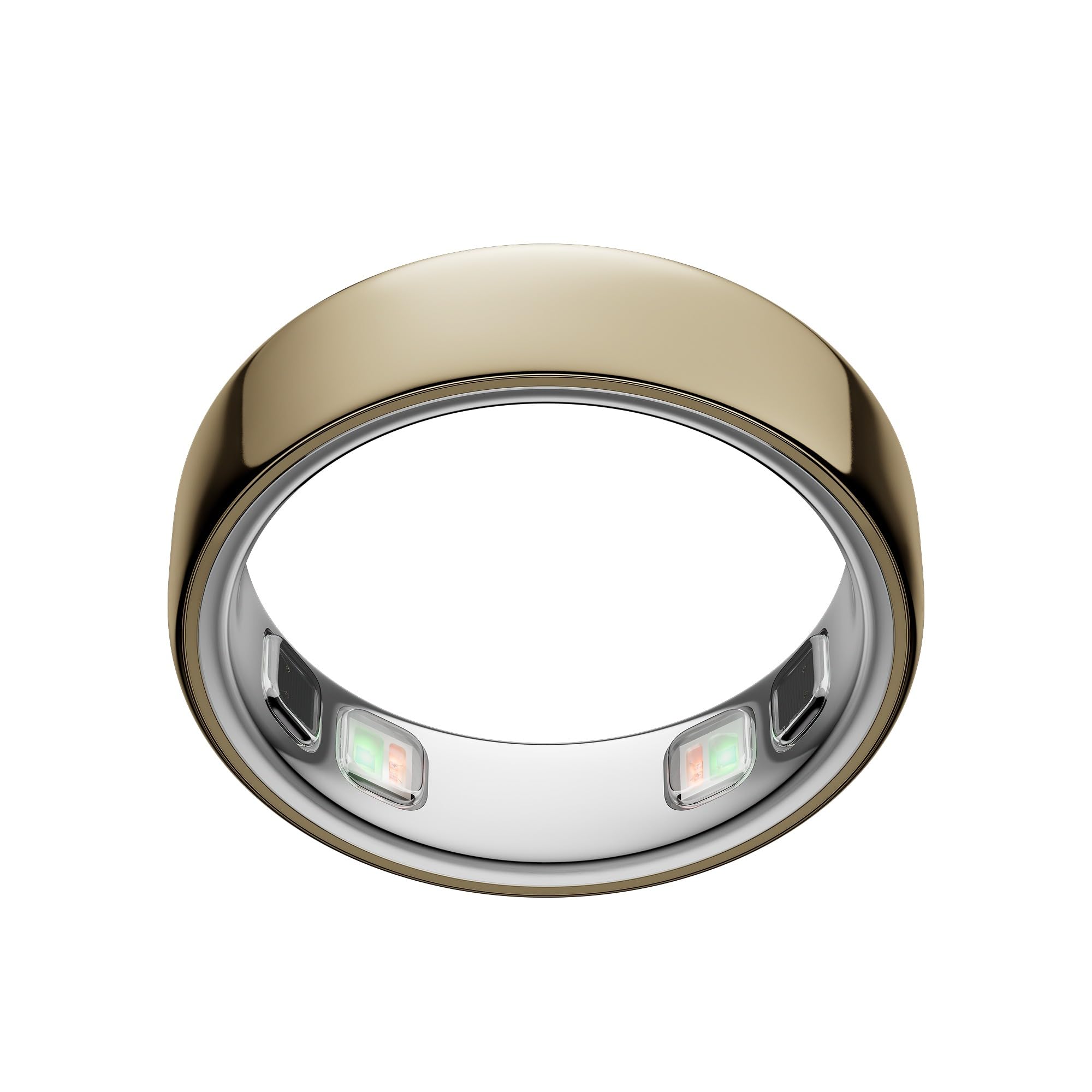
Oura Ring 5
Key Features
- Tracks: Sleep, heart rate, SpO2, temperature
- Membership: First month included, then $5.99/month
- Battery life: Up to 6 days
- Water resistance: 100 meters
- Price: Premium
Forty percent smaller than the ring it replaces, the Oura Ring 5 is the first smart ring we’ve worn that stops existing somewhere around 2 a.m. There’s no pressure on the fingers either side of it, nothing to catch on a pillowcase, and the all-titanium body in gold reads as a plain band rather than a gadget. That last part matters more than it sounds: the tracker you keep wearing is the one that doesn’t look like a commitment.
The sleep data is why it takes the top spot. Heart rate, heart rate variability, blood oxygen, and skin temperature all feed a single morning readout, and the ring tracks more than 50 metrics overall, so the app can tell you how a night compared with your own baseline instead of handing you a number with no context. Six days of battery makes charging a Sunday habit rather than a nightly one, and 100 meters of water resistance covers showers and pools without a second thought.
Two things to settle before ordering. The membership begins after the first included month and continues from there, which is an ongoing cost sitting on top of an already premium price. And sizing doesn’t transfer: Oura Ring 5 uses its own sizes, different from standard jewelry and from earlier Oura rings, and half sizes aren’t offered. Order the sizing kit, sleep in the sample, and make sure it slides off easily in the morning.
What we appreciate most is the restraint. No screen, nothing to tap, nothing lighting up the nightstand at 3 a.m. — the ring collects quietly and the app does the talking over coffee. For a device whose only job is measuring a night, staying out of the way is most of the work.
Pros
- Most detailed sleep picture in this set
- Small titanium ring you forget overnight
- Six days per charge, 100 m water resistance
- Looks like jewelry, not a tracker
Cons
- Premium price plus a monthly membership
- No half sizes, so fit can run slightly loose
For the deepest overnight data in a package you forget you’re wearing, this is the ring we point to — if the price and the monthly membership don’t put you off.
Best for Everyday Tracking
Google Fitbit Air
Key Features
- Weight: 0.18 oz
- Battery life: 5 days
- Water resistance: 50 meters
- Price: Midrange
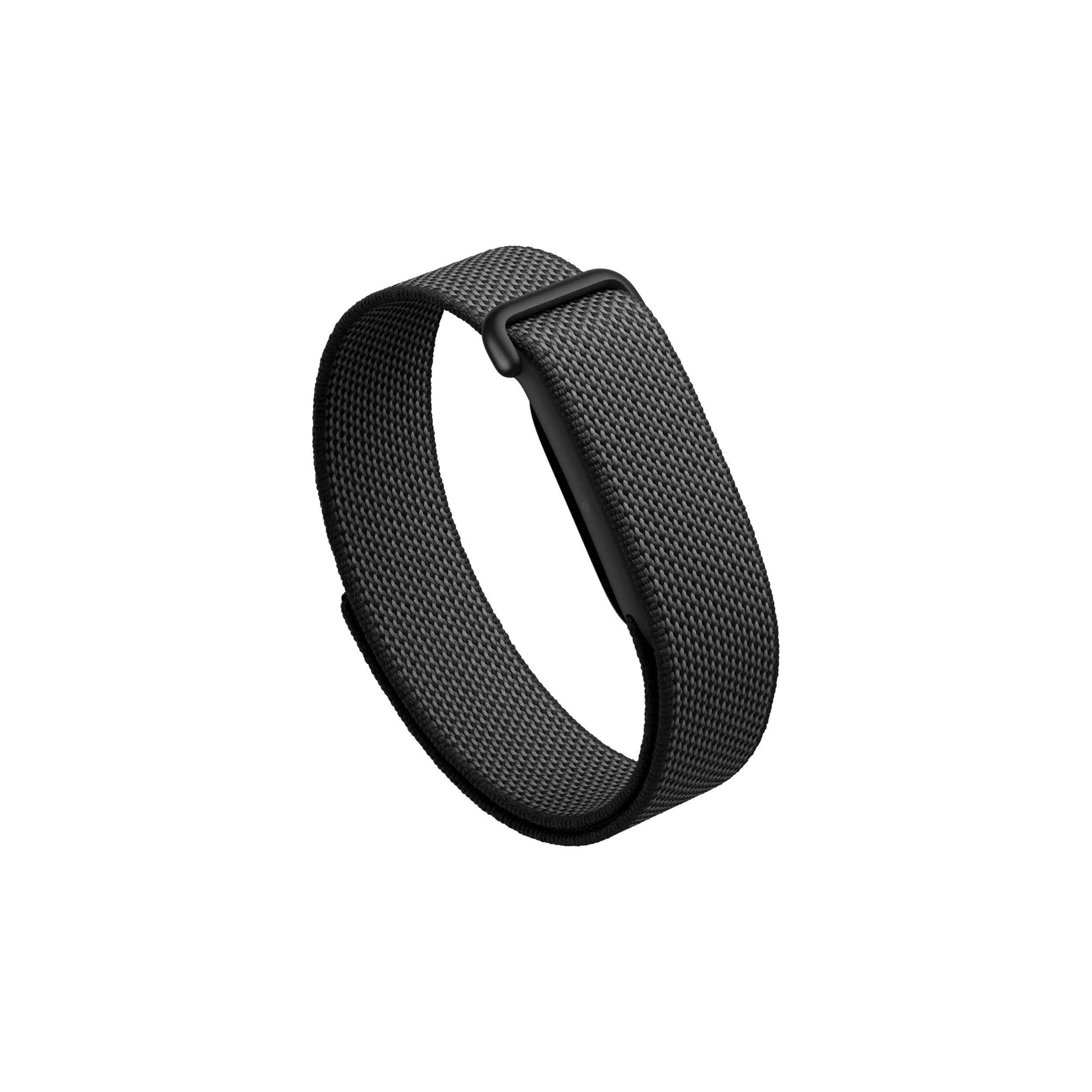
The Fitbit Air costs a fraction of what the Oura does, and for a lot of people it’s the smarter buy — provided you can live without a screen on your wrist. It’s a 5.07 g band with no display, a micro-adjustable strap spanning 130 to 210 mm, and a case thin enough to disappear under a sleeve.
Comfort is the whole design brief here, and it lands. Nothing rubs, nothing gets hot against the skin, and there’s no screen glowing when you turn over at 3 a.m. Overnight it logs heart rate, blood oxygen, skin temperature variation, and sleep stages, all of it landing in the Google Health app the next morning. The spec sheet puts battery at five days, and five minutes on the charger buys a full day, so forgetting to plug it in costs you an evening rather than a night’s data.
The catch is in the detail. Total sleep and resting heart rate hold up well, but the split between deep, light, and REM is the part to treat loosely, and arm movement can be read as steps — sanding a table by hand registers as a walk. Neither ruins the picture; both mean you should read the trend across a week rather than the single score from last Tuesday.
For a first sleep tracker, or a second one that lives in a travel bag, that’s a good trade. It’s the pick we reach for when someone wants the nightly record without rearranging their week around a charger.
Pros
- Barely-there weight for all-night wear
- Five days per charge plus a five-minute top-up
- No screen to disturb the room
- A fraction of the price of the top pick
Cons
- Sync sometimes takes a couple of tries
Most people should buy this one: it costs a fraction of the top pick, weighs almost nothing, and still records stages, heart rate, and blood oxygen every night.
Best for Recovery and Training
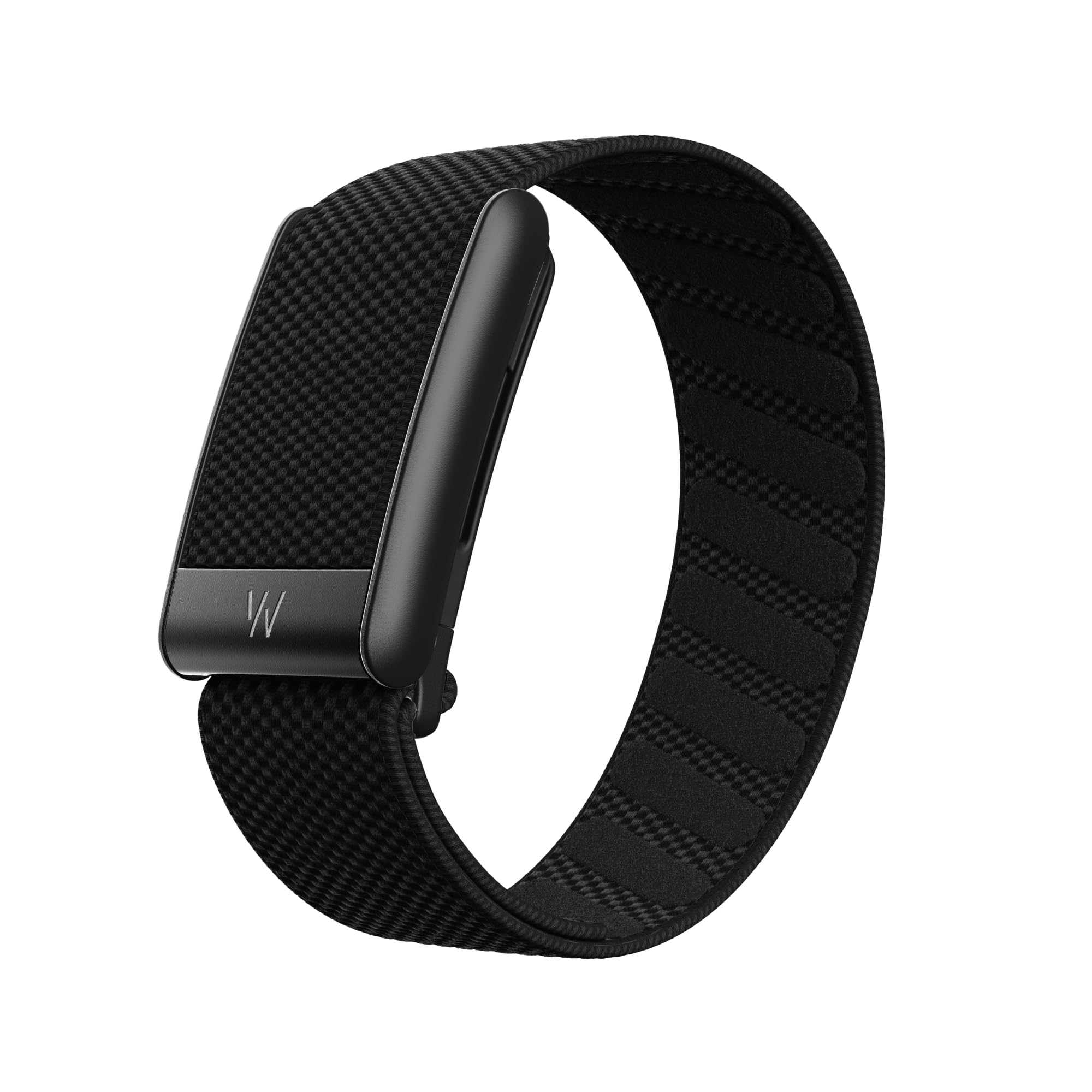
WHOOP 5.0
Key Features
- Included: 12-month membership
- Battery life: 14 days
- Sleep stages: REM, deep, light, awake
- Water resistance: IP68
- Price: Premium
Buying a WHOOP 5.0 means buying a year of membership; the band is the hardware that comes with it. That’s worth understanding before you compare prices, because the renewal rather than the strap is the real cost of ownership, and it’s why this lands as a specialist pick rather than the default.
What the membership buys is the most complete recovery picture here. It records REM, deep, light, and awake time overnight, then folds the night together with your strain into a morning recovery score, drawing on more than 140 metrics, an AI coach, and a healthspan figure that charts how your habits are aging you. Fourteen days of battery is the longest of any wearable on this list, and the Wireless PowerPack tops it up while you’re wearing it, so the band never spends a night on the nightstand.
We think the combination earns its place for a particular buyer: someone training hard who wants to be told to back off before a bad week becomes an injury. The sleep tab is detailed enough to be useful on its own, but the recovery score is the screen we actually opened every morning.
Two practical notes. The SuperKnit band is fabric, and fabric stays damp after a hard session, which is a nuisance if you wear it around the clock as intended. And if you’re already a WHOOP member, check that this prepaid year can attach to your existing account before you buy — the two don’t always merge.
Pros
- Charges on your wrist with the PowerPack
- Two weeks between charges
- Recovery, strain, and sleep in one score
- Screenless, so nothing glows at night
Cons
- The membership renews, so the cost repeats
- Fabric band stays damp after workouts
Worth the membership if you train hard and want a daily verdict on whether to push or back off; for plain sleep tracking alone, cheaper bands do the job.
Best for Strength Training
Amazfit Helio Strap
Key Features
- Weight: 0.64 oz
- Sport modes: 27
- Battery life: 10 days
- Water resistance: 50 meters
- Price: Midrange
Rep counting is what separates the Amazfit Helio Strap from every other screenless band here. Set it to a strength session and it logs sets, reps, and rest, with a dedicated HYROX race mode for anyone training that format, 27 sport modes in total, and training load and recovery time waiting in the Zepp app afterwards.
The rest of the package is quietly strong for the money. An 18.14 g band with a nylon hook-and-loop closure snugs down for overnight wear without a clasp digging into your wrist, the ten-day battery means you charge it less often than you do laundry, and the HybridCharge score reads your night and adjusts as the day goes on. We prefer Fitbit’s app to Zepp’s, but the hardware holds its own: continuous heart rate, blood oxygen, stress, skin temperature, and 50 meters of water resistance, with no membership attached.
The pool is where it stops making sense. Nylon holds water, so this isn’t the strap for regular swimming even though the case is rated for it — showers are fine, laps are not. Watch the first month closely for sleep tracking holding steady; the band’s long-term reliability is the open question in this set.
Pros
- Counts reps, sets, and rest in the gym
- Ten days between charges
- Recovery scoring without a membership
- Light nylon band that stays put overnight
Cons
- Sleep tracking can drop out after a week or so
- No built-in GPS
Our pick for lifters: it counts reps and sets, scores recovery each morning, and runs ten days between charges for less than a ring.
Best for No Wearable
Hatch Sleep Clock
Key Features
- Also: Sound machine and sunrise light
- Power: Corded electric
- Sensors: Contactless motion and breathing
- Connectivity: Wi-Fi and Bluetooth
- Price: Premium
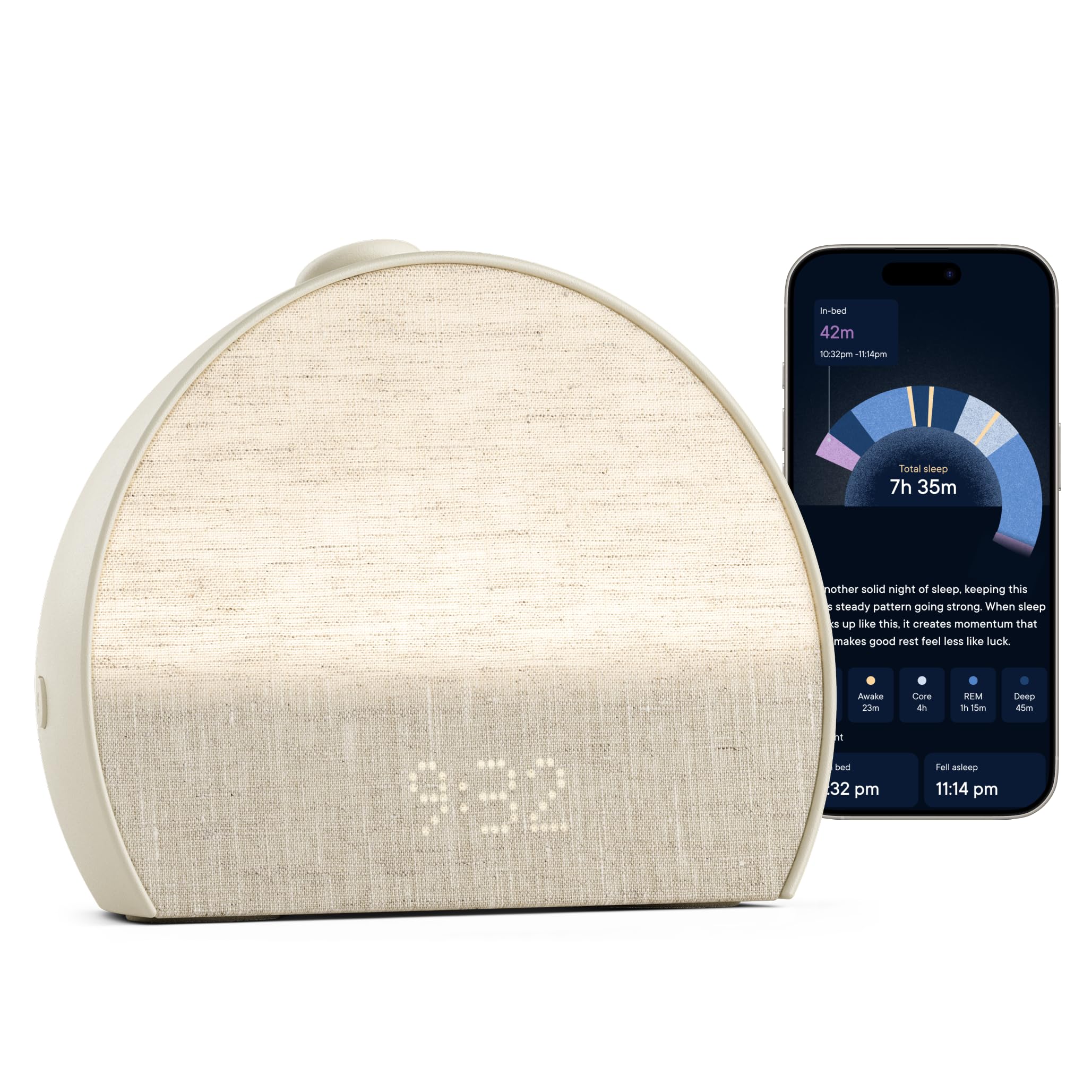
Nothing on your wrist, nothing on your finger, nothing to remember to charge: the Hatch Sleep Clock sits on the nightstand, senses micro-movements and breathing patterns, and has a summary waiting in the morning. If you’ve ever taken a watch off at 2 a.m., that’s the entire pitch.
It’s also the nicest object here. The putty finish looks like a small lamp rather than a sleep gadget, the sunrise wake-up ramps the light up gradually instead of jolting you, and the sound library runs from rain to brown noise — the tracking feels like a bonus on top of a genuinely good sound machine and alarm. Setup took us minutes, and the morning summary tells you how the night went and what shifted, with nothing strapped to your arm.
The limits are structural rather than annoying. It’s corded, so it’s a bedroom device that stays home; you can’t take it on a trip and get the same record. And the app is the weak point, crashing when you open the sleep diagnostics — which is the one screen you want over coffee. For a household that won’t wear anything to bed, though, it’s the only pick here that asks nothing of your body at all.
Pros
- Tracks a night with nothing on your body
- Doubles as a sound machine and sunrise alarm
- Reads movement and breathing, not just noise
- Setup takes minutes
Cons
- Corded, so it can’t travel
- App can crash when opening sleep data
The answer for anyone who won’t wear a device to bed — it tracks the room, wakes you with light, and never needs charging.
Best for First Smart Ring
BIEMHA Smart Ring
Key Features
- Size: 8
- Heart rate: Automatic every 30 minutes
- Subscription: None required
- Water resistance: 80 meters
- Price: Budget
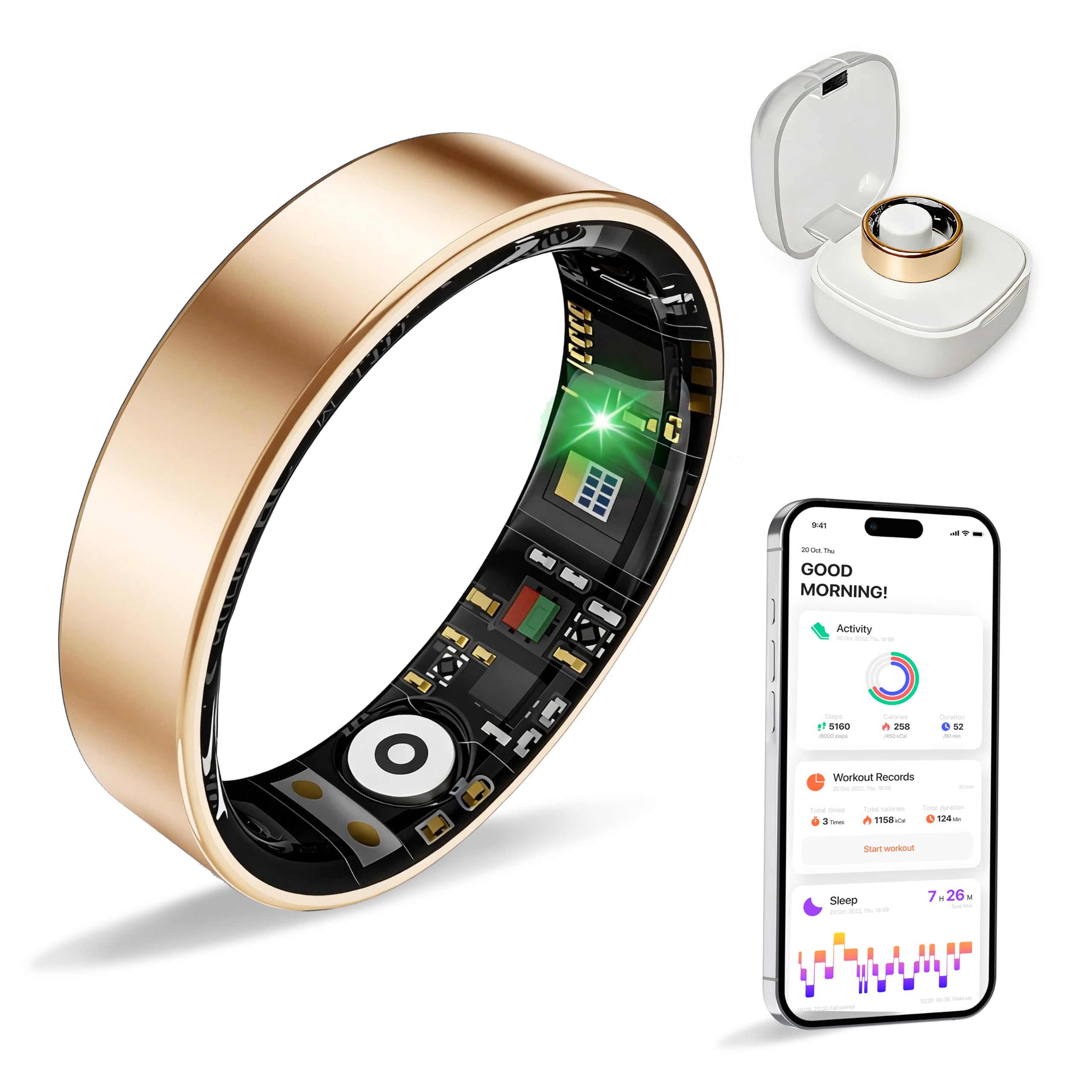
Sizing is the first hurdle with any budget ring, and this one is no exception: it doesn’t use standard sizes, and the listing asks you to measure your finger circumference against a chart before ordering. Get it wrong and it goes back — so open the size chart before you open the sensor specs.
Once it’s on, the appeal is obvious. The metallic rose gold finish looks like a ring you might wear anyway, it sits flat enough to forget overnight, and the app logs sleep quality and heart rate without a subscription standing between you and your own data. For someone curious whether a ring fits their life before spending Oura money, that’s a low-stakes experiment, and 80 meters of water resistance makes it an unusually carefree one.
The trade-offs are in the sampling and the lifespan. Heart rate is measured automatically every 30 minutes rather than continuously, so the overnight picture is coarser than a ring that samples second by second, and the battery is the shortest of the wearables here — the charging case helps, but you’ll be topping it up more than once a week. The case itself is the flakiest part of the package.
Pros
- No subscription at any point
- Metallic finish that passes as jewelry
- 80 m water resistance
- Low-cost way to try the ring format
Cons
- No manufacturer warranty
- Shortest battery life of the wearables here
A low-risk way to find out whether a ring suits you: it tracks sleep and heart rate, asks for no subscription, and costs very little.
How We Tested Sleep Trackers Night After Night
We built the shortlist by scanning specs, app compatibility, return policies, and owner reviews across wristbands, rings, and screen-based trackers, then narrowed it to 14 models that represented different approaches to sleep tracking. Every tracker spent at least two weeks with us over seven months—on wrists and fingers, through weeknight bedtimes, weekend lie-ins, naps, hot bedrooms, and the occasional 5 a.m. alarm. We kept a simple sleep log with bedtime, wake-ups, and how rested we felt, and wore two devices on the same nights whenever possible to see where their numbers diverged.
Comfort and size got judged at the least flattering hour: 3 a.m. We noted whether a band pressed into a side-sleeping cheek, whether a ring felt tight after a salty dinner, and whether either left marks by morning. We also wore the trackers to work and on errands to see if they looked like jewelry or a hospital bracelet, and checked straps, clasps, and finishes for fraying or loosening. Battery life was counted in nights, not hours: we charged each device to full, then logged how many nights it lasted and whether a low-battery warning arrived before bed or midway through a weekend trip.
For tracking and health data, we compared each morning’s sleep stages, heart rate, HRV, temperature, and breathing rate against our log and against the other device on the same wrist or finger; we paid attention to dropped nights, stalled syncs, and readings that changed wildly without a reason. We set smart alarms and tried nap modes, then noted whether those features worked without extra fiddling. We also mapped what each app included free versus behind a subscription, because value isn’t just the sticker price—it’s what you still get access to after the first month. The trackers that rose to the top were the ones we forgot we were wearing and trusted when we checked in the morning.
How to Choose a Sleep Tracker
The best sleep tracker is the one still on you at 4 a.m., so decide what you will wear or set up before you look at anything else.
Pick the form you’ll keep wearing
Rings, screenless bands, screen bands, and bedside units all record a night; they fail in different ways. A ring is the least noticeable overnight and the fussiest to size. A screenless band is the most forgiving — the Fitbit Air’s strap adjusts from 130 to 210 mm — but you give up the clock. A screen band doubles as a watch and puts a light in a dark room. A bedside unit asks nothing of your body and stays where its cord is.
If you’ve taken a watch off in the middle of the night before, don’t buy another watch. Choose a ring, a screenless band, or something that sits on the nightstand.
Stages are estimates; trends are what you act on
Light, deep, and REM are inferred from movement and heart rate rather than measured directly, which is why the split wanders between devices and between nights. The steadier signals are the ones built on longer averages: resting heart rate, heart rate variability, breathing rate, and skin temperature. The Oura Ring 5 and the WHOOP 5.0 lean hardest on those, which is why their morning readouts feel more like advice than a scoreboard.
Read the week, not the Tuesday, and treat one bad score as a prompt to look for a cause rather than a verdict on the tracker.
Battery, charging, and the monthly bill
Charging is where good trackers fall out of use. Five to six days is the norm among the ones here; the Amazfit Helio Strap runs about ten and the WHOOP 5.0 fourteen, and the WHOOP tops up on your wrist with its PowerPack so it never spends a night off your arm. Pick a rhythm you’ll actually keep — a Sunday top-up, not a nightly ritual.
Then add the ongoing cost. Oura charges a monthly membership once the first included month ends, and the WHOOP’s up-front price is a year that renews. Compare first-year totals, not stickers.
Get the size right before you order
Rings are where this goes wrong. Oura Ring 5 uses its own sizing, different from standard jewelry and from earlier Oura generations, and half sizes aren’t offered, so a slightly loose fit may be the best available. Order the sizing kit, wear the sample through a full day and night, and check it slides off in the morning.
The budget rings here use their own charts too. Measure the finger you intend to wear it on, not the one you assume matches.
Frequently Asked Questions
Can a sleep tracker tell me if I have sleep apnea?
No. A consumer tracker isn’t a diagnostic device, and none of these can confirm apnea. What they can show is a pattern worth taking to a doctor: blood-oxygen dips, nights that break up repeatedly, breathing that changes through the week.
If you snore, wake unrefreshed, or someone has seen you stop breathing, ask about a sleep study before you buy another gadget.
Will a bedside tracker work if I share a bed?
It records the room, not the person. A partner turning over, a dog relocating at 3 a.m., and a phone alarm all land in the same motion and breathing data, so the summary is the household’s night rather than yours.
If you share a bed and want stage-level detail about yourself, wear something — even the lightest band here is more attributable than a bedside sensor.
How many nights before the data is worth acting on?
One night is noise. Give it a couple of weeks so you have good and bad nights to compare, then look for the pattern rather than the number: a resting heart rate that climbs for three days, a temperature shift before a bad week, sleep that shortens on late-workout days.
Change one thing at a time, or you won’t know which one moved the line.
Final Verdict
The Oura Ring 5 is the tracker we recommend first. It gives the most detailed overnight picture in this group, in a titanium band small enough to forget, and six days of battery means it stays on your finger instead of a nightstand. You pay for that in price, in a monthly membership, and in one deliberate sizing step.
If that’s more than you want to spend, the Fitbit Air does the same core job — stages, heart rate, blood oxygen — for a fraction of the money, with five days between charges. Buy the Oura for depth; buy the Air if you want the habit without the invoice.