This post contains affiliate links. We may earn a small commission when you buy through our links — at no extra cost to you.
A weighted sleep mask promises a simple trade: a little pressure over the eyes, a little less light, better sleep. The catch is that a few extra ounces can turn into a hot, sliding brick by 3 a.m. if the fit and fabric are wrong. What you’re shopping for is a mask that settles onto your face without pressing on your eyes, stays put when you roll onto your side, and feels cool enough to forget. I spent six months with 12 weighted sleep masks, at home and on overnight trips, and the difference comes down to those details.
The best ones do more than block light: the gentle pressure can help you settle, and a proper nose cutout keeps padding off your eyes rather than squashing your lashes. Weight is not a bragging right—past a point, extra grams just mean more pressure on your cheekbones and a warmer face by morning. The masks that earned a place below stayed flat against the pillow, sealed off light at the nose bridge, and still felt comfortable when the bedroom got stuffy.


Best for Everyday All-Night Wear
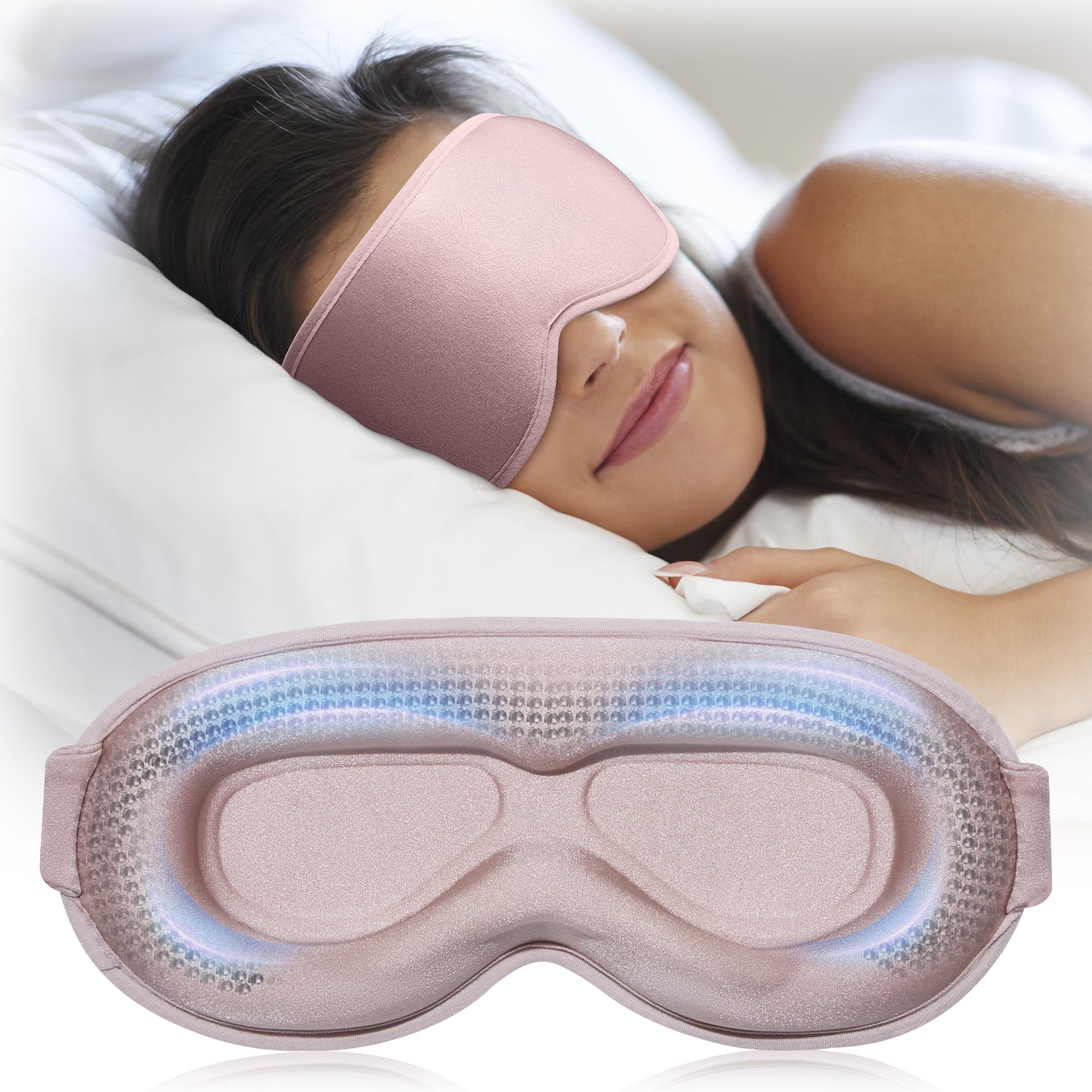
YFONG Weighted Sleep Mask
Key Features
- Strap: Adjustable elastic with slide adjuster
- Bead weight: 4.2 oz
- Eye pocket depth: 0.4 in
- Price: Budget
Four point two ounces of beads is the number that defines this mask, and it is less than the phrase weighted sleep mask suggests. The fill sits in a ring around the eye sockets rather than a slab across the center of your face, so what you feel is a light, even hug along the brow and cheekbones and almost nothing on the eyelids. That distribution is what we noticed first, and it is why this is the one we hand to people who find weighted masks claustrophobic. The pocket over the eyes is 0.4 inch deep, enough to blink and to open your eyes in the morning without lashes brushing fabric.
Blocking light is where it quietly beats the rest of this group. The nose piece is contoured rather than notched, so it sits close against the sides of the nose without being cranked tight, and the seal holds when you roll from your back onto your side. The strap is elastic with a sliding adjuster that grips without snagging hair on the way off — a detail we did not expect to care about and now do. It was still where we put it in the morning.
The trade-off is heft. Four ounces is the lightest fill here, and if you are chasing the blanketing pressure of a weighted blanket for your face, this will not be enough — the nodpod’s pods rest closer to the lids and read as more pressure. For a mask that feels like a hand resting on your forehead rather than a weight, this is the one, and it sits at the budget end of the group, so testing whether you like the light end of the category costs very little.
Pros
- Beads ring the eye sockets, not the lids
- 0.4-inch pocket clears lashes and blinks
- Contoured nose piece seals without overtightening
- Adjuster slides without catching hair
Cons
- Light fill is too gentle for deep-pressure fans
The default pick: enough weight to feel, not enough to smother, with a deep eye pocket and a strap that stays where you set it — and it costs less than most of this group.
Best for Side Sleeping
nodpod Gentle Pressure Sleep Mask
Key Features
- Fit: Strap-free; rests on the eyes
- Fill: BPA-free microbeads in four pods
- Fabric: Jersey cotton one side, microfleece the other
- Thermal: Freezer-friendly
- Price: Premium
There is no strap on the nodpod, and that is the entire proposition. Four weighted pods of BPA-free microbeads drape over your eyes and rest there; nothing circles your head, so nothing digs into a temple when you turn onto your cheek or creases your hair against the pillow. For side sleepers this changes more than any weight figure does, because the pods give where a strap would lever the whole mask sideways. It is built to go in the freezer and come out pliable, which makes it a different object on a hot night.
The trade-off is obvious the moment you put it on: with nothing anchoring it, the mask can relocate. Sometimes that is a nudge back into place; on a restless night you may find it somewhere near your ear. We think of it as the mask for people who hate masks — nothing on the back of the head, nothing behind the ears, the option to slide it up onto your forehead at three in the morning — and if you sleep mostly on your back or your side without much thrashing, that freedom is worth the occasional re-seat.
The materials are the other half of what you pay for. One side is breathable jersey cotton and the other plush microfleece, so you flip it for a cooler or warmer feel, and the blackout is strong as long as the pods sit flat against your brow and cheeks. It is the most expensive mask here by a wide margin, and the money goes into fabric and the absence of a strap rather than into more weight. If you want set-and-forget, the YFONG’s elastic does that job for far less.
Pros
- No strap pressing behind the head
- Four pods spread weight across the lids
- Jersey cotton one side, microfleece the other
- Freezer-friendly and stays flexible
Cons
- Can shift off the eyes overnight without a strap
- Highest price in this group
We recommend it to side sleepers and anyone who cannot stand a band around their head; the pods are genuinely soothing, provided you accept re-seating it during the night.
Best for Lash Extensions
Albatross 3D Weighted Eye Mask
Key Features
- Care: Hand wash below 40°C/104°F
- Fill: Memory foam with air holes
- Strap: Adjustable elastic buckle
- Eye clearance: 3D contoured cavity
- Price: Midrange
Sleeping in lash extensions, or sleeping through daylight after a night shift, is a specific problem: you need a cavity over your eyes, not fabric pressed against them. This mask’s shell is low-resilience memory foam, so it holds a dome over the eye area instead of collapsing onto your lashes the way a padded fabric mask does, and the foam is perforated with small air holes so the space over your eyes does not become a pocket of warm breath.
The buckle is the other thing we appreciated. It is an elastic strap with a slide buckle that adjusts in small steps, which is how you get a seal without a headache, and it sits flat enough to lie on. Care is the chore: hand wash in mild detergent and air dry, no machine, no dryer. That is a small ritual once a week rather than a reason to skip it.
Fit is where this one draws its line. The nose cutout is sized for an average bridge; if yours is broader or higher, the mask rides up toward your brow, and tightening the strap to stop it trades a light leak for pressure across the cheeks. If masks have always crept upward on you, watch for that here. When the cutout does match your face, the payoff is real: full blackout, no weight on your lashes, and a foam shell that holds its shape rather than needing constant re-seating.
Pros
- Memory-foam cavity keeps lashes off the fabric
- Perforated foam vents heat over the eyes
- Slide buckle adjusts in small steps
- Complete blackout at brow and cheeks
Cons
- Nose cutout can sit too small, pushing the mask upward
- Hand wash only, then air dry
Buy it if you sleep in lash extensions or need a deep, vented cavity over your eyes — but only if the nose cutout matches your face.
Best for Travel and Naps
FACEMOON Weighted Sleep Mask
Key Features
- Fill: Microbeads
- Strap range: 20.5–24.4 in
- Eye clearance: 3D contoured eye cups
- Price: Budget
This is the least expensive mask in the group, and it still arrives with a pair of earplugs and a storage bag — a fair summary of who it is for: a carry-on, a dorm room, a break room at four in the morning. The strap is a slide buckle with a stated range of 20.5 to 24.4 inches, the only number of its kind here, and it is worth checking against your own head before ordering if a strap has ever run out of adjustment on you.
Weighted is the loosest word in this category, and this mask shows why. The microbeads are sparse enough that it reads as lightly padded rather than weighted; if you want pressure you can feel, the YFONG’s bead ring delivers more of it. What the light fill buys you is a mask you can forget about, with contoured eye cups that keep fabric off your lashes and a fabric face that does not feel like equipment. Sleep on your side, though, and the beads gather where your cheek meets the pillow, and you will notice them.
We keep one in a travel bag for exactly that reason: it is the mask we do not mind losing, and it handles the two things a travel mask has to do — blackout and staying put through a nap in a bright room. The buckle holds its setting, which is what you need when you are adjusting it in the dark. If you already know you want real pressure, the YFONG is a small step up in money and a large one in sensation.
Pros
- Cheapest here, with earplugs and a bag included
- Stated 20.5-to-24.4-inch strap range
- 3D eye cups clear lashes
Cons
- Fill reads as light padding, not real weight
- Beads press into the cheek when side sleeping
A cheap way into the category: light pressure, a stated strap range, and earplugs in the bag make it a sensible travel spare.
Best for Hot and Cold
Sivio Weighted Eye Mask

Key Features
- Care: Removable insert; washable cover
- Fill: Glass microbeads, compartmented
- Sides: Cooling and plush, reversible
- Thermal: Microwave up to 1 min or freeze
- Price: Midrange
Only one mask in this group can go in the freezer, and only one can go in the microwave. The Sivio’s glass-bead insert lifts out of its cover, which does two useful things at once: it lets you chill the mask for a headache or warm it for a minute before bed, and it lets you wash the cover without soaking the fill. The beads sit in compartments rather than loose in a bag, so they stay spread across the brow instead of sliding to one end of the mask overnight.
The thermal part is a bonus rather than the reason to buy. A chilled insert warms up well before you are asleep, and a minute of microwave warmth is pleasant rather than therapeutic. What earns this mask its place is the combination of that removable insert and the reversible cover — a smooth, cooling face on one side and a plush one on the other, so the same mask works in July and in January. It is the most adaptable mask here, and the fussiest.
Fit is the weak point, and from what we have seen of how these wear, the elastic is what gives out rather than the shape: over months it can stretch enough that a smaller head no longer gets a snug seal, and the mask starts sliding during the night. The pressure itself is even and the blackout is good while it is seated. Buy it for the heat and cold, not as the only mask in the drawer.
Pros
- Removable insert for heat or cold
- Compartmented glass beads stay evenly spread
- Reversible cooling and plush sides
- Cover washes with the insert out
Cons
- Elastic strap can stretch out over time
- Cold fades before you fall asleep
Worth it if you want heat or cold from the same mask, since the insert lifts out and the beads stay spread; the elastic strap is the part to watch.
How We Tested Weighted Sleep Masks
We started by pulling together the weighted sleep masks that kept surfacing in customer reviews and retail listings, then narrowed the field by weight range, strap style, filler material, eye cutouts, and price. We ruled out anything that looked impossible to clean or adjust, and we avoided masks with hard inserts that pressed directly on the eyelids. The final group was 12 masks, and we tested all 12 over six months, rotating them through regular nights, afternoon naps, and a few overnight trips.
Most nights I wore one to bed in a room that gets warm by morning and noted whether the padding stayed cool or turned damp, whether the strap shifted when I rolled from my back to my side, and whether the mask pressed on my eyes or left enough room to blink. On weekends I used them for naps with the curtains open, which made light leaks at the nose and cheekbones easy to spot.
Comfort was judged over the full night, not the first five minutes: I checked for pressure points behind the ears, marks on my cheekbones, and whether the weight felt soothing or simply heavy. I also compared what each mask delivered for the money—how well it blocked light, how easily the strap adjusted, and whether the cover could be washed without losing shape. The masks that scored best were the ones I forgot I was wearing until morning.
How to Choose a Weighted Sleep Mask
Fill weight is the easiest thing to compare and the least useful, because what actually decides whether a mask survives the night is where the weight sits, how it is held on, and how much room your eyes get.
Weight Is a Sensation, Not a Score
A heavier mask is not a better one. The number tells you how much fill is inside, not where the pressure lands: the YFONG puts 4.2 ounces in a ring around the eye sockets, while the nodpod splits its microbeads across four pods that rest closer to the lids. The same total weight would feel completely different again in a single slab across the center of your face, pushing on your eyeballs every time you blink.
The trap is the word itself. Plenty of masks called weighted are an ordinary padded eye cover with a scattering of beads inside, and the FACEMOON here is the honest example — it reads as lightly padded rather than pressing. Decide what you want before you shop: a light hug around the eyes, or pressure you can actually feel.
Strap or No Strap
Almost every weighted mask ties around your head, which keeps it in place and creates its own problems: a buckle under your temple when you turn onto your side, elastic that creases your hair, and a band tight enough to seal light is often tighter than your head wants. The nodpod takes the other route and simply rests on your face. It is kinder to side sleepers and hairstyles, but with nothing anchoring it, it moves.
If you do want a strap, look for an adjustable buckle that holds a setting rather than one that creeps looser overnight. Check the stated fit range where there is one — the FACEMOON lists 20.5 to 24.4 inches — because no amount of adjusting rescues a strap that is the wrong length for your head.
Give Your Eyes Some Room
A flat mask presses your lashes back and transfers every blink to your eyelids. A 3D pocket — 0.4 inch deep on the YFONG, a molded foam cavity on the Albatross — keeps fabric off the lids, which is what makes a mask wearable with lash extensions and much easier to tolerate if pressure on the eye itself makes you clench.
The catch is the seal. The deeper the cavity, the harder the edges have to work, and a nose cutout that does not match your face will leak light at the bridge or push the whole mask up toward your hairline. If masks have always crept upward on you, a deeper cutout is not the fix.
Care, Temperature and the Extras
Work out how you will clean a mask before you buy it, because a mask you cannot wash gets retired fast. The Albatross is hand wash and air dry only; the Sivio solves it differently by making the bead insert removable, so the cover washes without soaking the fill.
Thermal features are worth paying for only if you will use them. The Sivio’s insert can be microwaved for up to a minute or frozen, and the nodpod can go in the freezer whole; both are pleasant against a headache, but neither holds its temperature long enough to change how you sleep. Earplugs and a travel bag, as with the FACEMOON, are the extras that genuinely earn a place in a carry-on.
Frequently Asked Questions
Do weighted sleep masks really help you sleep?
The pressure is the mechanism, and it works on comfort rather than chemistry: a light, even weight across the brow gives you something to settle into, which is the same reason people like weighted blankets. You feel it the moment you put the mask on, so the sensation matters far more than the specification on the box.
If you are dealing with insomnia or sleep apnea, treat a mask as a comfort item, not a treatment. Start with the lightest fill you can find — the YFONG’s 4.2 ounces is the gentlest here — because a mask that is too heavy is the one that ends up on the nightstand.
How long does it take to get used to a weighted sleep mask?
Usually a night or two, and the first test is where you feel the weight: on the brow and cheekbones, not on your eyeballs. If it feels confining rather than soothing, the fill is too heavy or the strap is one notch too tight.
Loosen the strap a step before you give up on the mask — most people cinch it tighter than they need for the weight to work. A nap is a fair trial; you will know by the second one.
Do weighted sleep masks help with headaches or migraines?
Cold is what helps here, and only two masks in this group deliver it: the Sivio by freezing its removable insert, the nodpod by going into the freezer whole. A chilled mask across the brow is real relief for the kind of headache that makes light unbearable.
Expect it to warm up well before morning, so treat it as comfort rather than a fix, and see a clinician if migraines are frequent.
Final Verdict
Buy the YFONG. It sits at the light end of the weight range, which is where most people should start: the beads ring the eye sockets instead of pressing the lids, the 0.4-inch pocket clears lashes, and the contoured nose piece seals without you cinching the strap hard. It is the mask we reach for on an ordinary night, and it costs less than most of the group.
Two requirements change the answer. If you sleep on your side and cannot stand a band around your head, the nodpod’s four free pods are the better call, as long as you accept nudging it back into place overnight. If you are buying a spare for a carry-on, the FACEMOON does the job for the least money.