This post contains affiliate links. We may earn a small commission when you buy through our links — at no extra cost to you.
The neighbor’s bass, the 5 a.m. garbage truck, the partner who saws logs—a white noise machine is supposed to erase all that. But the wrong one just trades street noise for a tinny hiss that sounds like a leaky radiator. I’ve slept with a fan on for years, so I’m picky about the difference between true white noise and the fan-sound imitations. Over the past six months, we’ve run 16 machines in bedrooms, a nursery, and a home office, listening for which ones mask noise without calling attention to themselves.
The best models help you fall asleep and stay there; the rest just add another sound to the room. You don’t need to spend a lot for better sleep—most of the ones we tested cost less than a takeout dinner for two. But cheap construction shows up fast: buttons that stick, volume dials that jump from whisper to jet engine, timers that don’t quite work. The picks below got the basics right—true white noise, a useful volume range, and durable controls—without asking you to download an app.


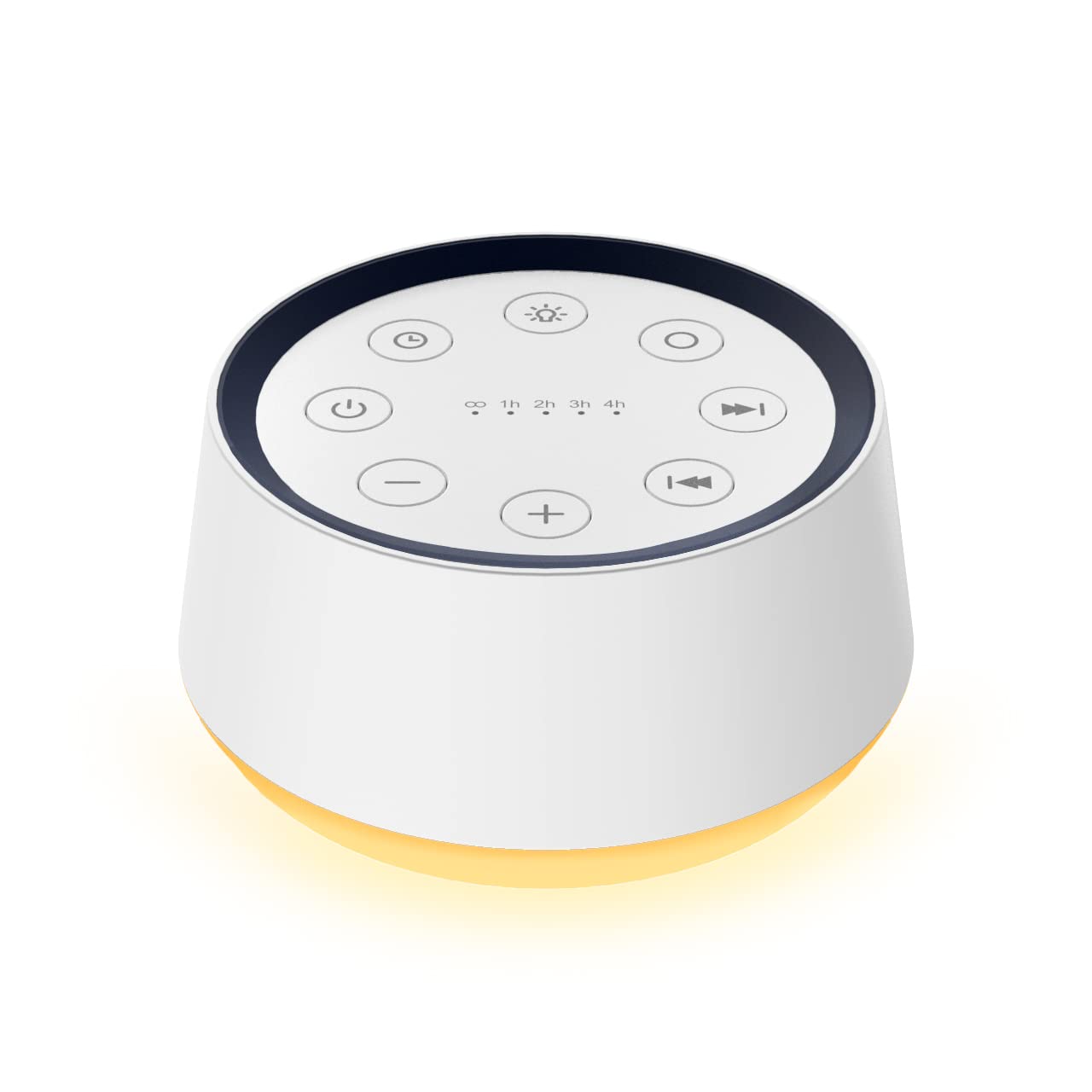
Best for Bedside Sleep
Yogasleep Dohm Classic
Key Features
- Power: 7-ft AC cord
- Weight: 1.6 lb
- Dimensions: 5.75 x 5.75 x 3.25 in
- Sound source: Real fan, two speeds
- Price: Midrange
A small fan is doing the work here, not a speaker track, and that is why this is the machine we recommend first. The Dohm Classic has two speeds and a switch, and the sound is a steady mechanical rush that blends into the room instead of announcing itself. We used it beside a bed and in a hallway, and it made traffic and conversation recede without the loop point you can sometimes hear in digital rain tracks.
The physical package is equally unfussy. At 5.75 by 5.75 by 3.25 inches and 1.6 pounds, it fits on a nightstand and is easy to move from room to room; the 7-foot cord gives you some latitude on placement. What we appreciate most is the restraint: there is no screen glowing at you and no menu to navigate when you’re half asleep. The two-speed switch is the whole interface, which is either the point or the limitation, depending on how much control you want.
For a bedroom where the goal is a consistent fan sound and nothing else, that simplicity is a feature. The Dohm masks snoring, street noise, and the general clatter of a shared building, and it does so with a tone that feels more like a room than a recording. If you want a library of nature tracks, look at the digital picks here; this one is for the person who wants to flip a switch and stop thinking about it.
Pros
- Real fan sound with no digital loop
- Simple two-speed switch
- Compact 1.6-pound body
- 7-foot cord gives placement room
Cons
- Top speed may not mask very loud snoring
- Long-term durability is mixed
For most bedrooms, the Dohm Classic is the machine we recommend: a real fan, two speeds, and no setup when you’re half asleep.
Best for Scheduled Routines
SNOOZ Original
Key Features
- Weight: 1.1 lb
- Control: App and 3-button
- Dimensions: 5.6 x 5.6 x 3.2 in
- Sound source: Real fan, 10 volume levels
- Price: Premium
Bedtime runs on a schedule in our house, which is why the SNOOZ earned a spot. The app lets you set the machine to turn on and off at the same time each night, so the sound is already there when you walk into the room and gone after you leave. The fan inside is real, not a digital loop, and the three-button top still works if you don’t want to open your phone.
We expected the app to be a gimmick and came away using it more than the buttons. The schedule is the useful part: it makes the SNOOZ feel like part of the room rather than another device to remember. The fan sound is full and even, with 10 volume levels, and the app doubles as a remote when you’re already in bed. It looks more like a small speaker than a baby product, which we appreciate on a grown-up nightstand.
The hardware is compact at 5.6 by 5.6 by 3.2 inches and 1.1 pounds, and the app schedule is the feature we kept using. It is a polished object rather than a nursery novelty, and that is part of why it stays out on the dresser instead of in a drawer.
Pros
- App schedule runs bedtime automatically
- Real fan sound with no digital loop
- 10 volume levels
- Clean, compact design
Cons
- Single fan sound only
- Premium price for app control
- Top volume may fall short for loud snoring
We recommend the SNOOZ for anyone who wants a real-fan sound and a bedtime schedule that runs itself, and who is willing to pay for the polish.
Best for Travel and Naps
Dreamegg D11 Max
Key Features
- Sounds: 21
- Weight: 10.2 oz
- Battery: 1800mAh rechargeable
- Dimensions: 4 x 3.7 x 1.8 in
- Price: Budget
Battery power is the first thing we check in a travel machine, and the D11 Max passes. It has an 1800mAh rechargeable battery, a USB connection, and a body small enough to tuck into a diaper bag or carry-on, so it keeps playing through a nap in a stroller or a night in an unfamiliar room. We used it without hunting for an outlet, which is the whole point of a portable machine.
For its size, the sound is surprisingly full. You get 21 sounds, including white noise, fan, and nature tracks, plus a volume range that goes lower than we expected. The 4 by 3.7 by 1.8-inch body and 0.29 kg weight make it easy to move between the nursery and the kitchen. USB charging is easy to fit into a travel bag, and the battery keeps playing when the outlet is across the room.
The lock button is the detail we appreciate most: it keeps a toddler from changing the setting mid-nap. That combination of battery, size, and child-proofing is why it is the portable pick here. It is not a substitute for a full-size bedside machine, but that is not what you buy it for. If it stays on a shelf and travels in a padded bag, it is an easy machine to live with.
Pros
- Rechargeable 1800mAh battery
- 21 sounds with toddler lock
- Compact travel size
- USB charging is easy to pack
Cons
- Durability is mixed after drops
For travel, naps, and rooms without a free outlet, the D11 Max is the portable machine we reach for, thanks to its battery and toddler lock.
Best for Low-Cost Bedrooms
Easysleep Sound Machine
Key Features
- Sounds: 25
- Timers: 5 settings
- Volume: 32 levels
- Night light: 4 brightness levels
- Price: Budget
A low-cost machine can still give you a timer, a night light, and a useful memory function, and the Easysleep is the proof. It packs 25 sounds, 32 volume steps, four night-light levels, five timer settings, and a memory function into a compact bedside box. For the money, that is a lot of control without a lot of clutter.
We found the controls easy to work in the dark, and the night light is genuinely useful because it can be dimmed or switched off. The sound library is broader than we need; we settled on a fan setting and ignored the lullabies, but the options are there if you want them. The memory function is the quiet hero — you don’t have to reset the same sound every night.
The timer options cover a nap or a full night, with continuous play when you want it. The case is light enough to move between rooms, but this is a machine that wants an outlet. For a spare room, a first apartment, or a child’s room where you want a timer and a light without spending much, it earns its place.
Pros
- 25 sounds and 32 volume steps
- Five timers and memory function
- Dimmable night light
- Compact bedside footprint
Cons
- A few nature tracks sound thin
We recommend the Easysleep for a low-cost bedroom setup where you want a timer, a dimmable light, and plenty of sound choices.
Best for Brown Noise
BrownNoise Sound Machine
Key Features
- Sounds: 30
- Volume: 36 levels
- Dimensions: 4.25 x 4.25 x 2.16 in
- Night light: 12 colors
- Price: Budget
Brown noise is the reason we keep this one in the mix. The machine has three brown-noise tracks, plus white and pink noise, fan sounds, and nature tracks, all in a box small enough for a nightstand. Brown noise sits lower and softer than white noise, and at low volume we found it easier to leave running than the brighter tracks.
The volume control is unusually fine, with 36 levels, and that matters at night: you can nudge it down until it disappears into the room instead of jumping from too quiet to too loud. We also liked the 12-color night light more than we expected, because it can be dimmed through 10 levels or turned off entirely. The memory function keeps your last sound and level, so the setup is a one-time job.
The 4.25 by 4.25 by 2.16-inch body is small enough for a crowded nightstand, and the controls are straightforward once you learn the button layout. If you already know you like a deeper rumble, the brown-noise settings are the reason to choose it; if you want a single switch and nothing else, the Dohm is simpler.
Pros
- Three dedicated brown-noise tracks
- 36 volume levels for fine adjustment
- 12-color dimmable night light
- Memory function
Cons
- Plug-in only
- Some sound tracks feel like filler
If you want deep brown noise with fine volume steps and a color night light, this is the machine we point you to.
Best for Kids’ Rooms
ColourNoise Soother

Key Features
- Sounds: 30
- Timers: 5 settings
- Dimensions: 4.25 x 4.25 x 2.1 in
- Night light: 12 colors, 10 brightness levels
- Price: Budget
Large buttons and a dimmable color light are what make this one a kid-room machine. The Soother has 12 light colors, 10 brightness levels, and controls simple enough to work in the dark, plus five timer settings and a memory function. We set it up on a dresser and found the light could go low enough for a child who wants a glow without a fully lit room.
We liked the flexibility of the light more than the sound library. Thirty sounds is plenty, but many of them are novelty nature tracks; the white noise and fan settings are the ones we kept returning to. The memory function is useful here, too, because it brings back the last sound and brightness without a bedtime negotiation.
The 4.25 by 4.25 by 2.1-inch body is compact, and the 6.4-ounce weight means it is easy to move from shelf to shelf. The light is the main event rather than the sound, and that is the right trade for a child’s room. If you want a fixed bedside machine that doubles as a night light, the Soother does that job cleanly.
Pros
- 12 colors with 10 brightness levels
- Large, easy-to-find buttons
- Five timers and memory
- Compact body
Cons
- Needs an outlet or USB port
For a child’s room where the night light matters as much as the noise, the Soother is the machine we recommend.
How We Tested (and Slept With) 16 White Noise Machines
We started by pulling together 30-plus models from major retailers and specialty sleep brands, then narrowed the list by price (under $100), size (nightstand-friendly), and the features that matter at 2 a.m.: adjustable volume, a timer that doesn’t reset, and true white noise rather than a short loop. That left 16 machines, which we tested over six months in bedrooms, a nursery, and a home office. Each one spent at least a week on a nightstand, and we also ran them during the day to see how they handled a home office and a nap-time nursery.
At night, we measured decibel output at every volume setting with a sound meter, then listened for whether the sound was flat and even or harsh and tinny. We played a recorded snore and a traffic loop in the same room and noted which machines masked them without introducing a new annoyance—a click, a whine, or a loop short enough to notice. We also checked the low end: some machines jump from barely audible to loud enough to wake a light sleeper, and we wanted fine control at whisper level.
During the day, we tested timers, lights, and app controls, and compared what each machine offered for the price. Durability got its own check: we dropped each unit from nightstand height onto carpet and hardwood, then looked for loose buttons, cracks, and cords that pulled free. After six months of nightly use, we noted any machine that had started to rattle, hum louder, or lose a button. The ones that made the list did all of this without asking for much attention—which is the whole point.
How to Choose a White Noise Machine
The best white noise machine is the one you stop noticing: its sound should settle into the room and its controls should work when you’re half asleep.
Listen for the sound, not the sound count
A real fan and a digital track can both mask noise, but they behave differently at low volume. Fan-based machines produce a steady mechanical rush with no loop point, which is why the Dohm Classic and SNOOZ are easy to leave running. Digital machines offer more variety, yet a short rain or ocean track can repeat in a way that pulls your attention. Before you commit, listen at the volume you will actually use, not at the demo level. If you can hear the pattern, you will hear it at 2 a.m.
Match the volume control to your room
Two speeds can be enough for a quiet bedroom, but they leave a gap between soft and loud. A machine with 32 or 36 steps lets you nudge the sound down until it blends in, which matters when a partner is sensitive to noise. More important than the number is headroom: if you are masking street traffic or a shared wall, check that the top end is forceful enough. Start low and raise the volume only until the intrusion recedes; a machine that has to run flat out is the wrong machine for that room.
Decide whether it stays put or travels
Corded machines are the simplest and usually the most powerful, but they need an outlet within reach and a stable surface. A rechargeable unit such as the Dreamegg D11 Max is the better choice for a diaper bag, a stroller, or a hotel room where you do not know the outlet situation. Check the charging method before you pack: USB is easier to top up on the road than a proprietary adapter. If the machine never leaves the nursery, spend the space and money on sound quality rather than battery hardware.
Pay for the controls you will actually use
A timer is useful for naps and for anyone who does not want sound all night; memory is more valuable than it sounds, because it saves you from resetting the same track and volume every evening. A night light earns its place in a child’s room if it dims low enough, and an app schedule is worth paying for only if your bedtime is consistent. The feature list can get long. We prefer three controls that work in the dark to 30 sounds we never touch.
Treat durability as part of the purchase
White noise machines run for hours every night, so the build matters more than the box suggests. Simple fan-based designs have fewer digital parts to fail, but they are not immune; the Dohm Classic’s long-term reliability is mixed. Budget digital machines can develop power or speaker faults. Buy from a seller with a return window you can actually use, keep the cord where it will not be yanked, and test the machine for a few nights before it becomes part of the bedtime routine.
Frequently Asked Questions
What is brown noise, and is it better for sleep?
Brown noise is a deeper, lower-frequency version of white noise; it sounds more like a distant rumble than a hiss. Some people find it easier to ignore than white noise, especially at low volume, but there is no rule that it is better. If you want to try it, choose a machine with dedicated brown-noise tracks and fine volume control, like the BrownNoise model here, and test it for a few nights before you make it your default.
Can I put a white noise machine in a crib?
No. Keep the machine and its cord out of the crib and beyond a baby’s reach; place it on a stable surface across the room instead. Keep the volume low enough that you can speak over it, and check that the cord is not draped where a child can pull it. A machine with a long cord belongs behind furniture, not clipped to the crib rail.
Will a white noise machine block snoring?
It masks snoring rather than canceling it. Place the machine between you and the sound, start with a low, steady fan or brown-noise setting, and raise the volume only until the snoring recedes. If you can still hear it at the machine’s top setting, you need a louder unit or a different room setup; no bedside machine will erase a very loud snore.
Final Verdict
The Dohm Classic is the machine we recommend first because it gets the fundamental job right: a real fan, two speeds, and a sound that settles into the room without a track to loop. If you want a schedule that runs itself, the SNOOZ is the upgrade; if the machine needs to travel, the Dreamegg is the one to pack.
Start with the Dohm unless one of those specific needs fits you better. It is the simplest machine here to live with night after night, and that is the point.